1. Zhrnutie
My C95400 is one of the most widely used cast aluminum bronzes because it combines vysoká sila, dobrý odpor, and strong corrosion performance, especially in marine and industrial service.
It is standardized as an aluminum bronze casting alloy under ASTM B148 and related specifications, and it is commonly referenced as CDA 954.
Prakticky, it is a “workhorse” alloy for heavily loaded parts such as gears, puzdro, telá ventilu, komponenty čerpadla, and bearing elements.
2. What is UNS C95400 Aluminum Bronze?
UNS C95400 aluminum bronz is a high-strength cast copper alloy designed for severe mechanical and corrosive service.
Jednoduché, it is a bronze whose performance has been significantly upgraded by alloying copper with aluminum, žehlička, and a small amount of nickel.
The result is a material that bridges two traditionally separate requirements: it is strong enough for heavily loaded machine parts, yet corrosion-resistant enough for marine and chemical environments.
This alloy is often described as a general-purpose aluminum bronze, but that label understates its engineering value.
C95400 is widely chosen when a component must survive wear, shock loading, posuvný kontakt, and exposure to seawater or other aggressive fluids.
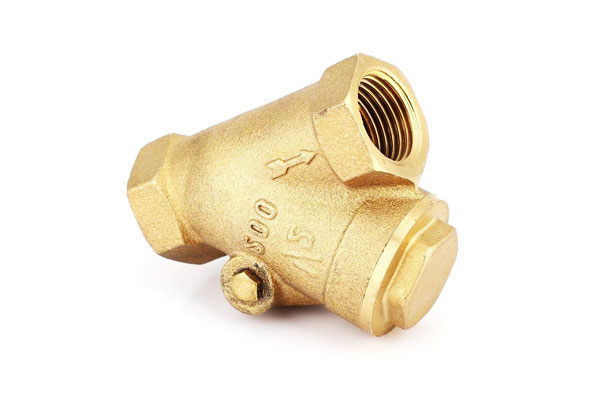
It is not a decorative bronze. It is a working material for pumps, ventily, puzdro, ložiská, výstroj, nosiť prúžky, and structural hardware where failure is costly.

Kľúčové funkcie
High strength for a copper alloy
Compared with many common bronzes, C95400 offers markedly higher tensile and yield strength.
That makes it suitable for parts subjected to heavy load, tlak, dopad, or repeated mechanical stress.
Excellent wear and galling resistance
One of the alloy’s defining advantages is its ability to resist metal-to-metal wear and deformation.
This is especially valuable in bearings, puzdro, ventilové sedadlá, and slow-moving sliding interfaces.
Strong corrosion resistance
C95400 performs well in seawater and many industrial environments because the aluminum in the alloy promotes a protective oxide film on the surface.
That is a major reason it is so common in marine and pump applications.
Good response to heat treatment
The alloy responds well to solution treatment, zhasnutie, and stress-relief procedures.
V praxi, heat treatment is used to improve strength, stabilize properties, and reduce the risk of corrosion-sensitive phase formation.
Castability and versatility
C95400 is commonly supplied as continuous cast, odstredivka, or sand cast stock.
That makes it available in a wide range of forms, including bars, rúrka, puzdro, wear plate, and custom cast shapes.
Reliable tribological behavior
In applications involving friction, boundary lubrication, or intermittent lubrication, the alloy performs well because it combines hardness with anti-seizure behavior.
This is why it is often used where a steel part must run against a bronze part.
3. Identita zliatiny a typická chémia
| Položka | Typický rozsah (wt.%) | Popis |
| Meď (Cu) | ≥ 83.0 | Základný prvok, providing corrosion resistance, tepelná vodivosť, and the fundamental toughness of the copper alloy. |
| hliník (Al) | 10.0–11.5 | Primary strengthening element; significantly increases strength and hardness and helps form a protective oxide film. |
| Žehlička (FE) | 3.0–5.0 | Zlepšuje silu, odpor, and contributes to microstructural stability. |
Nikel (V) |
≤ 1.5 | Zvyšuje odolnosť voči húževnatosti a korózii, especially in severe service environments. |
| Mangán (Mn) | ≤ 0.50 | Mainly used for deoxidation and auxiliary casting control. |
| Alloy identity | UNS C95400 / C954 Bronze / 9C Bronze | Commonly covered by ASTM B505, ASTM B271, and other cast copper alloy standards. |
4. Physical and mechanical properties of C95400 Alloy
C95400 is valued for high strength among cast copper alloys. Typical room-temperature properties depend on form and heat treatment, but representative values are:
Fyzikálne vlastnosti
| Physical property | Typická hodnota | Popis |
| Hustota | 7.45 g/cm³ | Equivalent to about 0.269 lb/in³; a copper alloy with relatively high density, though still lower than steel. |
| Specific gravity | 7.45 | Consistent with the density value. |
| Melting point – solidus | 1027 ° C | Useful for understanding the casting and heat-treatment temperature window. |
Melting point – liquidus |
1038 ° C | Indicates the upper end of the melting range. |
| Elektrická vodivosť | 13% IACS | Conductivity remains clearly higher than that of most steels, but it is not the alloy’s main advantage. |
| Tepelná vodivosť | 58.7 W/m · k | Relatively high among copper alloys, helping with heat dissipation and thermal load distribution. |
Koeficient tepelnej rozťažnosti |
15.5 × 10⁻⁶ /° C | Reflects dimensional sensitivity under temperature change. |
| Špecifická tepelná kapacita | 419 J/kg · k | Affects thermal response and thermal stability. |
| Modul pružnosti | 107 GPA | Stiffness is noticeably lower than steel, but still sufficient for many load-bearing parts. |
| Magnetická priepustnosť | 1.27 (ako cast), 1.2 (TQ50) | Can generally be regarded as a non-magnetic copper alloy. |
Mechanické vlastnosti
| Mechanical property | Norma / stav | Typická hodnota | Popis |
| Pevnosť v ťahu (Uts) | ASTM B505/B505M-23 minimum | 586 MPA | Common minimum tensile strength requirement in standard cast/supplied condition. |
| Výnosová sila | ASTM B505/B505M-23 minimum | 221 MPA | Based on the 0.5% extension-under-load criterion. |
| Predĺženie | ASTM B505/B505M-23 minimum | 12% | Indicates that the alloy retains a useful level of ductility in addition to high strength. |
| Tvrdosť podľa Brinella | ASTM B505/B505M-23 typical | 170 HB | Reflects its good indentation resistance and wear potential. |
Pevnosť v ťahu (tepelný) |
TQ50 / heat-treated typical | 655 MPA | Heat treatment can further increase strength. |
| Výnosová sila (tepelný) | TQ50 / heat-treated typical | 310 MPA | Heat treatment produces a clear improvement in yield strength. |
| Predĺženie (tepelný) | TQ50 / heat-treated typical | 10% | As strength increases after heat treatment, elongation usually decreases slightly. |
5. Odlievacie správanie a zlievarenská prax
Casting behavior
UNS C95400 is primarily valued as a cast aluminum bronze, and its performance begins long before machining or service.
From a foundry standpoint, it is not a “forgiving” alloy in the sense of low-performance bronzes; rather, it is a high-performance casting alloy whose quality depends heavily on melt control, kontrola tuhnutia, and post-cast thermal treatment.
Copper Development Association data describe its casting characteristics as having relatively low casting yield, high drossing tendency, medium fluidity, medium gassing tendency, a high shrinkage during solidification.
Those characteristics make melt cleanliness, proper risering, and careful feeding design especially important.
Bežné odlievacie cesty
In practical foundry work, C95400 is usually cast by odlievanie piesku, odstredivé odlievanie, continuous casting, or permanent mold methods, depending on the part geometry and service requirement.
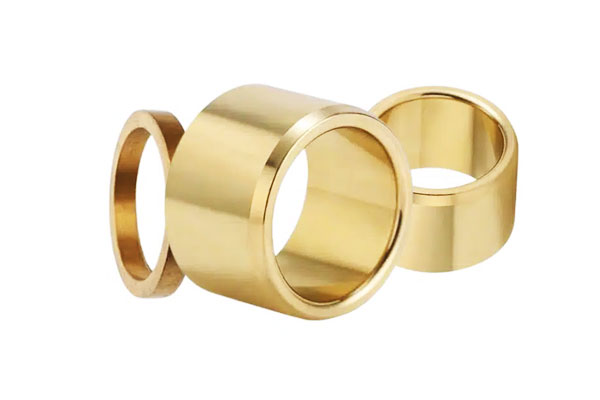
Centrifugal and continuous cast forms are especially common for bushings, ložiská, and wear components because they help produce a dense, more uniform structure with fewer internal discontinuities than poorly controlled conventional casting.
Copper Development Association guidance also lists C95400 as suitable for cast forms such as centrifugal castings, continuous castings, permanent mold castings, and sand castings under the relevant ASTM and SAE specifications.
Foundry practice considerations
Because the alloy contains significant aluminum, it is more sensitive to oxidation and melt loss than simpler copper alloys.
That means furnace atmosphere, melt superheat, čas držania, and transfer practice matter.
Excessive overheating should be avoided because it can increase dross formation and encourage compositional drift, while inadequate control can leave the casting more porous or less chemically uniform.
In the foundry, the goal is to maintain a clean melt, reduce inclusion pickup, and avoid section-to-section property scatter.
Copper.org’s alloy data also show that C95400 has relatively high shrinkage behavior, so sound gating and feeding practice are essential to prevent shrinkage cavities and internal defects.
Tepelné spracovanie po odliatí
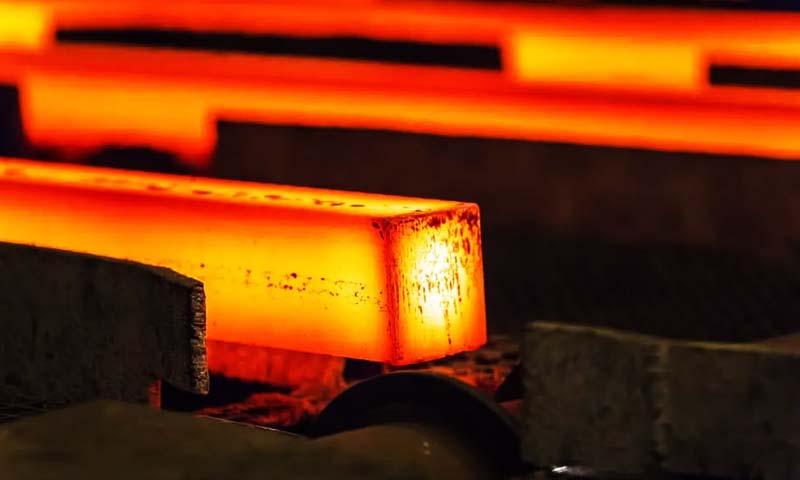
Post-cast heat treatment is a major part of the C95400 process window, not an optional refinement.
Copper.org lists úľava na stres pri 600 ° F, solution treatment at 1600–1675 °F followed by water quenching, a annealing at 1150–1225 °F for the alloy.
In engineering terms, these treatments are used to reduce residual stress, improve microstructural uniformity, and adjust the balance between strength and ductility.
The Copper Development Association notes more broadly that aluminum bronzes with aluminum content above about 9.5% môže byť ošetrený tepelne, and that manipulating the microstructure can produce properties that are not available in the as-cast condition.
6. Machináovateľnosť, príbuzný, a dokončenie
C95400 is reasonably machinable for a high-strength copper alloy, but it is not free-cutting.
Tool wear is higher than with softer bronzes, and cutting parameters should be chosen to avoid work-hardening, chatter, and built-up edge.
Obrábanie
For turning, mletie, and drilling:
- use rigid setups,
- keep tools sharp,
- apply generous coolant,
- favor carbide tooling for production work,
- avoid excessive dwell that can rub rather than cut.
Because the alloy can be hard and abrasive, machinability is good in an industrial sense but not outstanding.
Machining economics are often acceptable when balanced against the alloy’s service-life advantages.
Príbuzný
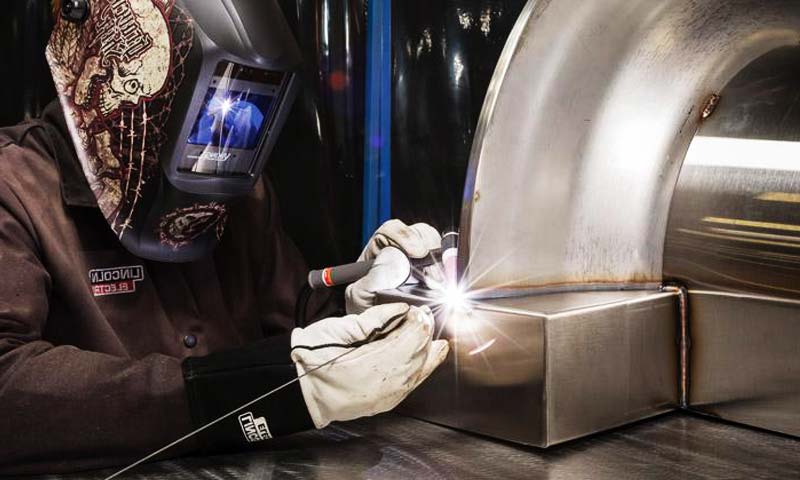
Joining is possible, but method matters.
- Brazing is generally acceptable.
- Gas-shielded arc welding and coated-metal arc welding are often used.
- Oxyacetylene welding is generally not recommended.
- Po zváraní, stress relief is usually advisable.
The main concern in welding is preserving microstructure and minimizing the risk of corrosion-sensitive phase formation in the heat-affected zone.
Post-weld stress relief helps reduce residual stress and improves reliability.
Dokončenie
Povrchová úprava commonly includes machining, leštenie, and in some cases coatings or controlled finishing for wear surfaces.
Because the alloy is used in bearings, výstroj, and valve parts, finish quality can matter as much as bulk strength.
Pre presné aplikácie, final machining after heat treatment is often preferred to preserve dimensional accuracy.
7. Korózia, obliecť sa, and tribological performance
This is where C95400 truly earns its reputation.
Odpor
The alloy has high corrosion resistance in many environments, including seawater and numerous industrial fluids.
A protective aluminum oxide film forms naturally on the surface, helping slow further attack.
That passive behavior is a major reason aluminum bronzes became standard materials in marine and pump service.
Avšak, the alloy is not invincible. In duplex aluminum bronzes, selective phase corrosion can occur, especially dealuminification, where aluminum is preferentially removed from the structure.
This is most likely in crevices, shielded areas, poorly heat-treated castings, and weld-repaired regions.
The risk is not that the alloy is “bad,” but that its performance depends strongly on microstructural quality and exposure conditions.
Odpor
C95400 is especially good in metal-to-metal wear situations. It resists galling better than many steels and many softer bronzes.
This makes it suitable for sliding interfaces, podložky, puzdro, a ložiskové povrchy.
Tribological behavior
Tribology is where the alloy’s value often becomes obvious. It has:
- strong seizure resistance,
- good load capacity,
- good fatigue resistance under repeated contact,
- reliable behavior in marginal lubrication conditions.
That combination explains its use in bearings, nosiť prúžky, and valve components. Skrátka, if the service environment is corrosive, drsný, and mechanically loaded, C95400 often sits near the top of the candidate list.
8. Typical applications of C95400 Aluminum Bronze
UNS C95400 aluminum bronze is widely used in industries where components must withstand combined mechanical loading, obliecť sa, a korozívne prostredie.
Its application profile is driven by three core attributes: vysoká sila, Vynikajúca odolnosť, and strong corrosion resistance—particularly in marine and industrial service.
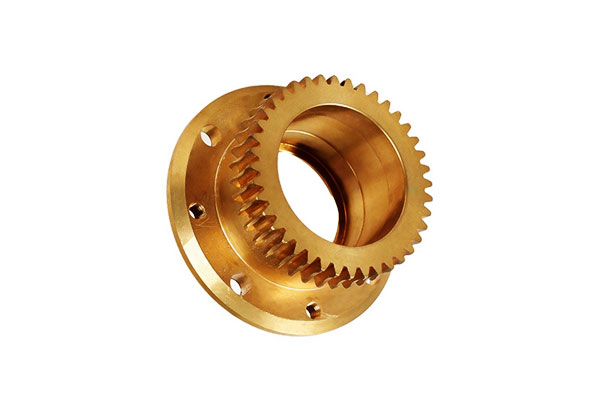
Pump and valve industry
C95400 is extensively used in fluid-handling systems due to its corrosion resistance and mechanical strength.
Typical components include:
- Čerpacie obežné kolesá
- Pump
- Telá ventilu
- Valve seats and guides
These components benefit from the alloy’s ability to resist erosion-corrosion a cavitation damage, especially in water and seawater systems.
Bearing and bushing systems
The alloy is a standard material for heavy-duty bearing applications where load capacity and wear resistance are critical.
Typické použitie:
- Klzné ložiská
- Sleeve bushings
- Podložky
- Guide bushings
Svoj anti-galling properties a good performance under boundary lubrication make it ideal for slow-speed, high-load applications.
Morské a pobrežné vybavenie
C95400 is widely used in marine environments due to its strong resistance to seawater corrosion.
Typické aplikácie zahŕňajú:
- Shipboard hardware
- Komponenty pohonného systému
- Panela
- Offshore structural components
Its ability to form a ochranná vrstva helps ensure long-term durability in saltwater exposure.
Power generation and heavy industry
In power plants and heavy industrial systems, components are often exposed to high stress and aggressive media.
Common applications:
- Turbína
- Wear plates
- Structural supports in high-load environments
- Industrial fittings and connectors
The alloy’s combination of strength and thermal stability makes it suitable for these demanding conditions.
Gears and mechanical transmission components
C95400 is frequently used in gear systems where resistance to wear and shock loading is required.
Príklady:
- Prevodový stupeň
- Medzery
- Drive components
V porovnaní s oceľou, the alloy offers better resistance to scoring and seizure in certain sliding contact conditions.
Sliding and wear-resistant components
The alloy is widely used in parts subject to continuous friction or abrasion.
Typical components:
- Wear strips
- Posúvacie dosky
- Guide rails
- Cam followers
Svoj high hardness and low tendency to seize make it reliable in dry or marginally lubricated systems.
| Majetok / Zliať | C95400 | C95500 | C93200 | C46400 | C86300 |
| Spoločný názov | Hliníkový bronz (9C) | Hliníkový bronz | Bronz (Šarvák 660) | Námorná mosadz | Bronzový mangán |
| Key Composition Features | Cu–Al–Fe–Ni | Cu–Al–Fe–Ni (higher Ni) | Cu–Sn–Pb | Cu -zn -sn | Cu–Zn–Mn–Al–Fe |
| Strength Level | Vysoký | Veľmi vysoký | Médium | Medium–low | Veľmi vysoký |
| Odpor | Vynikajúci (morská voda) | Nadradený (námorný, kavitácia) | Dobre | Dobre | Mierny |
Obliecť sa / Odolnosť voči opotrebeniu |
Vynikajúci | Vynikajúci | Dobre | Mierny | Dobre |
| Machináovateľnosť | Mierny | Moderate–low | Vynikajúci | Dobre | Mierny |
| Odlievateľnosť | Dobre (moderate fluidity) | Moderate–good (more sensitive to Ni) | Vynikajúci | Vynikajúci | Mierny |
| Typické aplikácie | Puzdro, ventily, čerpadlá, výstroj, morský hardvér | Marine propellers, offshore parts, heavy-duty pumps | Ložiská, puzdro | Morské vybavenie, ochranca | Heavy-duty bushings, výstroj |
Výhody |
Vyvážená sila, obliecť sa, a odolnosť proti korózii | Mimoriadne vysoká sila, excellent seawater resistance | Excellent machinability and embedability | Ľahko formovateľné, nižšie náklady | Veľmi vysoká sila, high load capacity |
| Obmedzenia | Sensitive to casting and heat treatment, moderate machinability | Vyššie náklady, harder to process, moderate machinability | Lower strength and wear resistance, obmedzený odpor korózie | Much lower strength, mierna odolnosť | Dolná odolnosť proti korózii, moderate machinability |
10. Závery
My C95400 aluminum bronze is a classic engineering alloy with a modern relevance that has not diminished.
Its appeal is rooted in a very practical combination: vysoká sila, strong wear resistance, good seawater performance, and dependable service in difficult mechanical environments.
The alloy is best understood as a system rather than a simple chemistry. Its performance depends on composition, casting practice, tepelné spracovanie, a servisné podmienky.
When those variables are controlled, C95400 can deliver long life in pumps, ventily, puzdro, výstroj, a morské vybavenie.
When they are not, selective corrosion and property scatter can erode its advantages.
From a design standpoint, C95400 is not the universal answer, but it is one of the most technically balanced answers available among cast copper alloys.
That is why it remains a standard material in industries that cannot afford premature failure.
Časté otázky
Is UNS C95400 the same as 954 bronz?
Áno. “954 bronze,” “C954,” and “UNS C95400” are common commercial names for the same aluminum bronze family alloy.
Is C95400 magnetic?
It is generally considered nonmagnetic in normal service, although minor responses can appear depending on processing and attached components.
Can C95400 be welded?
Áno, but welding practice matters. Gas-shielded arc welding and coated-metal arc welding are commonly used. Oxyacetylene welding is generally not preferred.
Is C95400 good in seawater?
Áno. It is widely used in marine service because of its strong seawater corrosion resistance, though crevice conditions and poor heat treatment can still cause trouble.
What is the main weakness of C95400?
Its main weakness is not low strength; it is sensitivity to microstructure and selective phase corrosion if the alloy is improperly cast, ošetrený tepelne, or repaired.