

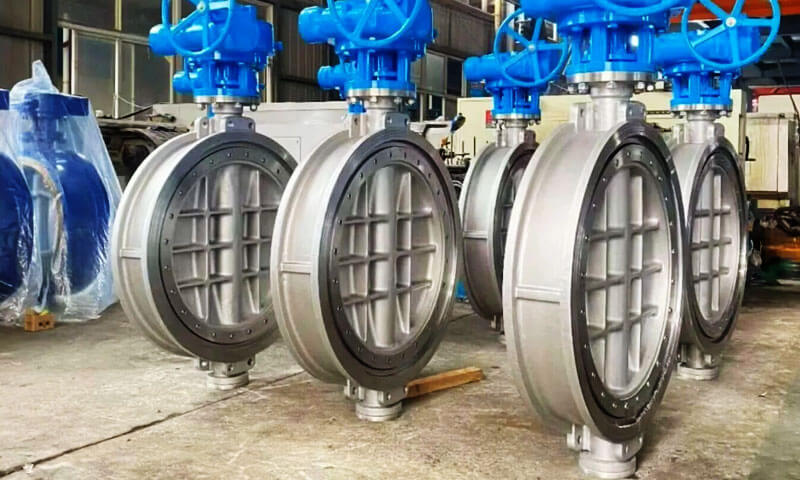
Vlinderkleppen behoren tot de meest gebruikte stroomregelapparaten in industriële leidingsystemen, het aanbieden van een eenvoudige, compact, en kosteneffectieve oplossing voor het reguleren van de gasstroom, vloeistoffen, en slurries.
Wanneer de toepassing kracht vereist, economie, en matige corrosieweerstand, vlinderkleppen van koolstofstaal de standaardkeuze worden, vooral bij waterbehandeling, olie en gas, stroomopwekking, en algemene industriële dienstverlening.
De productie van koolstofstalen vlinderklepcomponenten – lichamen, schijven, stengels, en beugels - vertrouwde traditioneel op zandgieten of fabricage.
Echter, Investeringsuitgifte (Lost -wax casting) is uitgegroeid tot een superieure productieroute voor veel koolstofstalen klepcomponenten, aanbieding bijna-netvormprecisie, Uitstekende oppervlakteafwerking, Strakke dimensionale toleranties, en consistente mechanische eigenschappen.
Dit artikel biedt een uitgebreide technische en strategische gids voor gietoplossingen voor koolstofstalen vlinderkleppen.
1. Wat is een koolstofstalen vlinderklep?
A koolstofstaal vlinderklep is een kwartslag roterende klep ontworpen om te starten, stop, of regel de vloeistofstroom door een cirkelvormige schijf rond een centrale as te draaien.
In tegenstelling tot lineair bewegende kleppen zoals schuifafsluiters of klepafsluiters, vlinderkleppen vereisen slechts een rotatie van 90 graden om te bewegen tussen volledig open en volledig gesloten posities, waardoor een snelle werking met minimaal koppel mogelijk is.
Hun eenvoudige maar efficiënte ontwerp maakt ze tot een van de meest veelzijdige kleptypen voor industriële vloeistofbehandelingssystemen.
Koolstofstalen vlinderkleppen worden veel gebruikt in pijpleidingen die water transporteren, stoom, olie, aardgas, gecomprimeerde lucht, en diverse niet-corrosieve of licht corrosieve media.
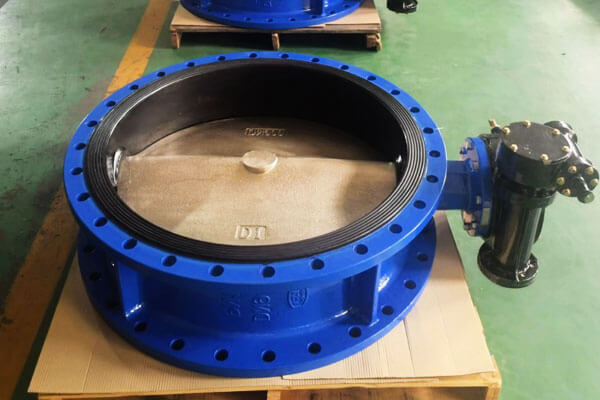
Basiscomponenten van een vlinderklep
| Onderdeel | Functie |
| Lichaam | Behuizing waarin de schijf zit, stoelen, en stam; zorgt voor leidingaansluitingen (flens, sjouwen, wafeltje). |
| Schijf | Roterend sluitelement; regelt de stroom door van open naar gesloten positie te draaien. |
| Stang (schacht) | Brengt koppel over van de actuator naar de schijf. |
| Stoelen | Zorg voor afdichting tussen de schijf en het lichaam; vervangbaar of integraal gegoten. |
| Actuator | Handmatig (hefboom, handwiel) of geautomatiseerd (pneumatisch, elektrisch, hydraulisch). |
| Motorkap / bovenste flens | Bevat de stuurpen en zorgt voor montage van de actuator. |
| Zeehonden | Voorkom lekkage langs de steel. |
Soorten vlinderklephuisontwerpen
| Lichaamstype | Beschrijving | Typische toepassingen |
| Wafelstijl | Dun lichaam met boutgaten; ingeklemd tussen pijpflenzen. | Lage druk, compacte systemen, HVAC, water lijnen. |
| Lug-stijl | Inzetstukken met schroefdraad aan elke kant; end-of-line service mogelijk. | Matige druk; toegang voor onderhoud. |
| Flens | Integrale flenzen aan beide uiteinden; rechtstreeks op de pijpflenzen vastgeschroefd. | Hoge druk, systemen met grote diameter, olie & gas. |
| Stomplas | Uiteinden ontworpen om in pijp te lassen. | Hoge temperatuur, hoge druk, lekkritische systemen. |
Kritieke functionele vereisten voor vlinderkleppen van koolstofstaal
| Vereiste | Technische implicatie |
| Drukintegriteit | Moet bestand zijn tegen interne druk (tot ASME-klasse 150-600 voor koolstofstaal). |
| Sterkte en taaiheid | Moet bestand zijn tegen mechanische belastingen, trilling, en thermisch fietsen. |
| Dimensionale nauwkeurigheid | Nauwkeurige boring, flens gericht, en uitlijning van de stemgaten zorgen voor afdichting en werking. |
| Corrosieweerstand | Matige weerstand tegen atmosferische omstandigheden, water, en milde chemische omgevingen. |
| Lasbaarheid | Koolstofstaalsoorten moeten lasbaar zijn voor installatie en reparatie. |
| Kosteneffectiviteit | Lagere materiaalkosten dan roestvrij staal; geschikt voor kleppen met grote diameter. |
2. Waarom investeringsgieten ideaal is voor vlinderklepcomponenten
Investeringsgieten, algemeen bekend als de verloren wasgietproces, wordt erkend als een van de meest geavanceerde productietechnologieën voor de productie van precisiemetalen componenten.
Vergeleken met conventionele gietmethoden, investeringsgieten biedt aanzienlijke verbeteringen in maatnauwkeurigheid, oppervlaktekwaliteit, structurele integriteit, en productieconsistentie, waardoor het bijzonder geschikt is voor hoogwaardige vlinderklepcomponenten.
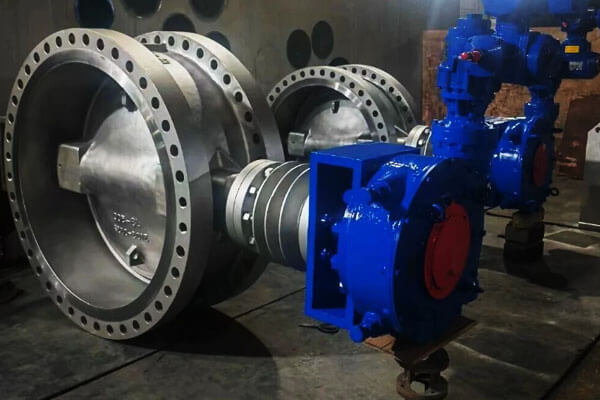
Uitzonderlijke dimensionale nauwkeurigheid
Vlinderkleppen bevatten talrijke nauwkeurig bewerkte interfaces, inclusief flensvlakken, STEM BORES, lagerstoelen, en verzegelingsoppervlakken.
Zelfs kleine maatafwijkingen kunnen tot lekkage leiden, overmatig bedrijfskoppel, of vroegtijdige slijtage.
Investeringsgieten produceert bijna netvormige componenten met nauwe toleranties, waardoor de noodzaak voor corrigerende bewerking aanzienlijk wordt verminderd en een uitstekende uitwisselbaarheid tussen onderdelen wordt gegarandeerd.
Voordelen omvatten:
- Verbeterde montage-efficiëntie
- Verlaagde bewerkingstoeslagen
- Betere afdichtingsprestaties
- Consistente productkwaliteit over alle productiebatches heen
Superieure oppervlakteafwerking
In tegenstelling tot zandgieten, waar grove schimmels vaak ruwe oppervlakken achterlaten, Bij investeringsgieten wordt gebruik gemaakt van fijne keramische schelpen die het waspatroon nauwkeurig reproduceren.
Typische oppervlakteruwheid varieert van RA 3.2-6.3 μm, verstrekken:
- Betere hechting van de coating
- Verminderde polijstvereisten
- Lagere vloeistofweerstand
- Verbeterd uiterlijk voor zichtbare klepcomponenten
Een soepeler intern stroompad draagt ook bij aan minder turbulentie en een lager drukverlies tijdens bedrijf.
Complexe geometrie zonder extra fabricage
Moderne vlinderkleplichamen bevatten vaak verstevigingsribben, montagepads voor actuatoren, stroomgeleidende contouren, en geïntegreerde ondersteuningsstructuren.
Het vervaardigen van deze kenmerken door machinale bewerking of fabricage verhoogt de complexiteit en kosten van de productie.
Door middel van investeringsgieten kunnen deze ingewikkelde geometrieën direct tijdens het gieten worden gevormd, het verminderen van het aantal lasverbindingen en het verbeteren van de structurele integriteit.
Verbeterde metallurgische kwaliteit
Omdat gesmolten metaal een precisie-keramische mal vult onder zorgvuldig gecontroleerde omstandigheden, investeringsgieten kan bereiken:
- Uniforme korrelstructuur
- Verminderde segregatie
- Lagere inclusie-inhoud
- Verbeterde dichtheid
- Verbeterde weerstand tegen vermoeidheid
Deze metallurgische voordelen zijn bijzonder waardevol voor kleppen die werken onder cyclische druk of fluctuerende thermische omstandigheden.
Hoger materiaalgebruik
Bij traditionele bewerking wordt vaak een aanzienlijk deel van de grondstof verwijderd om de uiteindelijke geometrie te bereiken, waardoor onnodig afval ontstaat.
Investeringsgieten produceert componenten die bijna hun uiteindelijke afmetingen benaderen, biedt verschillende economische voordelen:
- Minder materiaalverspilling
- Verminderde bewerkingstijd
- Lagere gereedschapsslijtage
- Kortere productiecycli
- Verbeterde duurzaamheid
Vergelijking van productiemethoden
| Productiemethode | Nauwkeurigheid | Oppervlakteafwerking | Materiaalgebruik | Productie -efficiëntie | Geschikte toepassingen |
| Investeringsuitgifte | Uitstekend | Uitstekend | Uitstekend | Hoog | Precisieklepcomponenten |
| Zandgieten | Gematigd | Ruw | Gematigd | Hoog | Groot, eenvoudige gietstukken |
| Smeden | Uitstekend | Goed | Gematigd | Medium | Hoge sterkte drukonderdelen |
| CNC -bewerking | Uitstekend | Uitstekend | Laag | Laag | Aangepaste componenten in kleine batches |
3. Materiaalkeuze van koolstofstaal voor investeringsgieten
Materiaalkeuze is een van de meest kritische technische beslissingen bij de productie van gegoten vlinderkleppen.
Terwijl het investeringsgietproces de maatnauwkeurigheid en structurele integriteit bepaalt, de koolstofstaal kwaliteit
Gangbare koolstofstaalkwaliteiten voor gegoten vlinderkleppen
Verschillende koolstofstaalsoorten zijn ontworpen om aan specifieke gebruiksomstandigheden te voldoen.
Standaard gegoten koolstofstaalsoorten zoals WCB En WCC worden veel gebruikt voor algemene industriële toepassingen, terwijl lage temperatuurkwaliteiten zoals LCB En LCC zijn geselecteerd voor cryogene service.
Voor omgevingen met hoge temperaturen, chroom-molybdeen gelegeerde gietstaal inclusief WC6 En WC9
De onderstaande tabel geeft een overzicht van de meest gebruikte kwaliteiten voor gegoten vlinderklepcomponenten.
| ASTM -cijfer | Amerikaans nummer. | Koolstof (%) | Levert kracht op (MPA) | Treksterkte (MPA) | Verlenging (%) | Maximale servicetemperatuur | Typische toepassingen |
| WCA | J02502 | ≤0,25 | ≥205 | ≥415 | ≥24 | 425° C | Voordelige kleppen voor lagedruk- en niet-kritieke toepassingen |
| WCB | J03002 | ≤0.30 | ≥250 | ≥485 | ≥22 | 425° C | Standaard vlinderkleppen voor water, olie, gas, en stoom |
| WCC | J02505 | ≤0,25 | ≥275 | ≥485 | ≥22 | 425° C | Zwaar uitgevoerde kleppen die een hogere sterkte en verbeterde lasbaarheid vereisen |
| LCB | J03003 | ≤0,25 | ≥240 | ≥450 | ≥22 | -46° C | Lagetemperatuurpijpleidingen en gekoelde systemen |
| LCC | J03005 | ≤0,25 | ≥275 | ≥485 | ≥22 | -46° C | LNG-faciliteiten, cryogene verwerking, en toepassingen in koude klimaten |
| WC6 | J12072 | 0.05–0.20 | ≥275 | ≥550 | ≥20 | 540° C | Hoge temperatuur stoom- en energieopwekkingssystemen |
| WC9 | J21890 | 0.05–0,18 | ≥310 | ≥585 | ≥20 | 595° C | Petrochemische en raffinaderijapparatuur voor hoge temperaturen |
Onder deze materialen, ASTM A216 WCB blijft de industriële benchmark voor vlinderkleplichamen van koolstofstaal vanwege de uitstekende balans tussen mechanische prestaties, gietbaarheid, machinaliteit, en kosteneffectiviteit.
Het heeft de voorkeur voor de meeste industriële toepassingen die werken bij omgevings- of matig verhoogde temperaturen.
4. Productieproces voor investeringsgieten voor vlinderkleppen
De prestaties van een koolstofstalen vlinderklep worden niet alleen bepaald door het ontwerp en de materiaalkeuze, maar ook door de precisie en stabiliteit van het productieproces..
Investeringsgieten, ook bekend als de verloren wasgietproces, is een zeer gecontroleerde productiemethode die complexe klepcomponenten met uitzonderlijke maatnauwkeurigheid kan vervaardigen, Uitstekende oppervlakteafwerking, en consistente metallurgische eigenschappen.
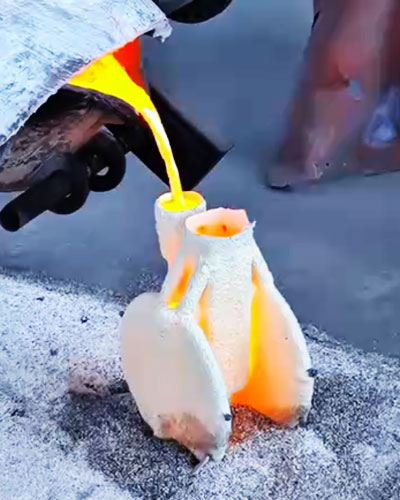
In tegenstelling tot conventioneel zandgieten, investeringsgieten produceert nabij-netvorm componenten die aanzienlijk minder bewerking vereisen en tegelijkertijd nauwere toleranties behouden.
Dit proces is bijzonder geschikt voor vlinderkleplichamen, schijven, montagebeugels, en andere structurele onderdelen waarbij precisie de afdichtingsprestaties en operationele betrouwbaarheid rechtstreeks beïnvloedt.
Overzicht van processtromen
| Fase | Stap | Belangrijk detail |
| 1 | Patroonproductie | Wasinjectie in precisiemetalen matrijs (hulpmiddel) repliceert de vorm van het kleplichaam. |
| 2 | Boom montage | Meerdere waspatronen bevestigd aan centrale spruw (boom). |
| 3 | Shell -gebouw | 6‑10 lagen keramische slurry (Silica sol) + stucwerk (zirkoon/aluminiumoxide). |
| 4 | Ontwricht | Stoomautoclaaf smelt was; schil blijft. |
5 |
Shell-schieten | Gebakken op 900-1100°C om keramiek te versterken en vluchtige stoffen te verwijderen. |
| 6 | Koolstofstaal smelt & gieten | Inductie of boogsmelten bij 1550‑1650°C; in een voorverwarmde schaal gegoten. |
| 7 | Koeling & knock -out | Gecontroleerde koeling; schaal verwijderd door trillingen of waterstraal. |
| 8 | Afgesneden & afwerking | Poorten en stootborden gesneden; slijpen, schot schieten, het tuimelen. |
| 9 | Warmtebehandeling | Normaliserend of stressverlichtend om gespecificeerde eigenschappen te bereiken. |
| 10 | Inspectie & testen | Visuele, dimensionaal, NDT (X‑ RAY, kleurstoffen), hydrostatische druktest. |
Kritieke procescontroles voor kleplichamen van koolstofstaal
| Factor | Doel | Waarom het ertoe doet |
| Giettemperatuur | 1550‑1650°C | Te laag → verkeerde uitvoering; te hoog → schelperosie, gasporositeit. |
| Shell voorverwarmen | 200‑600°C | Voorkomt thermische schokken; verbetert de vulling. |
| Koelsnelheid | Beheerd (lucht) | Voorkomt carbideneerslag; zorgt voor stevigheid. |
| Poortontwerp | Vermijdt turbulentie; bevordert directionele stolling | Vermindert insluitsels en krimpporositeit. |
| Warmtebehandeling | Normaliseren (870-930°C) of stressverlichting (600‑650°C) | Bereikt gespecificeerde mechanische eigenschappen; verlicht resterende stress. |
Warmtebehandeling van gietstukken van koolstofstalen kleppen
| Behandeling | Temperatuur | Koeling | Doel |
| Normaliseren | 870-930°C | Lucht koel | Verfijnt de graanstructuur; verbetert de sterkte en taaiheid. |
| Stressverlichting | 600‑650°C | Oven of luchtkoeling | Vermindert restspanning door gieten en lassen. |
| Blussen & temperen | 850-900°C (uitdoven) + 550‑650°C (woedeaanval) | Olie of water + lucht | Verhoogt de kracht en hardheid (voor toepassingen van hogere kwaliteit). |
5. Oplossingen voor corrosiebestendigheid en oppervlaktebescherming
Koolstofstaal wordt algemeen gewaardeerd vanwege zijn hoge sterkte, Uitstekende bewerkbaarheid, en kosteneffectiviteit. Echter, in tegenstelling tot roestvrij staal, Het bezit geen inherente corrosieweerstand.
Bij blootstelling aan zuurstof, vocht, zouten, of chemisch agressieve media, koolstofstaal is gevoelig voor oxidatie, uniforme corrosie, putje, en spleetcorrosie.
Zonder de juiste bescherming, deze corrosiemechanismen kunnen de wanddikte geleidelijk verminderen, verslechteren de afdichtingsprestaties, verhoog het bedrijfskoppel, en uiteindelijk de levensduur van de vlinderklep verkorten.
Gelukkig, vooruitgang op het gebied van oppervlaktetechniek heeft het voor koolstofstalen vlinderkleppen mogelijk gemaakt om duurzaamheid op de lange termijn te bereiken, zelfs onder veeleisende gebruiksomstandigheden, door het gebruik van beschermende coatings, Metalen afwerkingen, bedutten, en goede onderhoudsstrategieën.
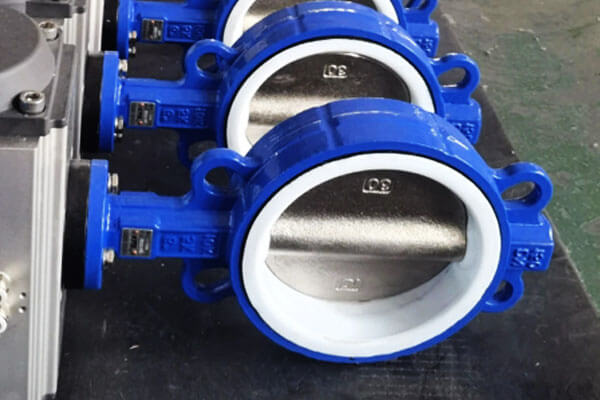
Algemene methoden voor corrosiebescherming
Voor koolstofstalen vlinderkleppen zijn verschillende oppervlaktebehandelingstechnologieën beschikbaar, elk biedt verschillende niveaus van corrosieweerstand, Draag bescherming, en economische efficiëntie.
| Beschermingsmethode | Procesbeschrijving | Typische coatingdikte (μm) | Geschatte levensduur* | Typische toepassingen |
| Epoxy schilderij / Vloeibare coating | Spuit- of kwastapplicatie van industriële epoxyverf | 100–300 | 5–15 jaar | Algemene industriële kleppen, water, lucht, HVAC |
| Poedercoating | Elektrostatisch poederspuiten gevolgd door uitharden in de oven | 60–120 | 10–20 jaar | Gemeentelijk water, industriële apparatuur, buiteninstallaties |
| Fusion-gebonden epoxy (FBE) | Elektrostatisch epoxypoeder aangebracht op verwarmd stalen oppervlak | 250–500 | 20–30 jaar | Waterleidingen, begraven pijpleidingen, brandbeveiligingssystemen |
| Hot-dip galvaniseren | Onderdompeling in gesmolten zink om een metallurgische zinklaag te vormen | 50–100 | 20–40 jaar | Buitenstructuren, kustfaciliteiten, maritieme uitrusting |
| Elektroplateren (Zink/nikkel) | Elektrochemische afzetting van metallische coatings | 5–25 | 5–15 jaar | Bevestigingsmiddelen, stengels, decoratieve of lichte bescherming |
Fosferen |
Chemische conversiecoating waardoor een fosfaatlaag ontstaat | 5–20 | 2–5 jaar | Voorbehandeling vóór het schilderen, tijdelijke corrosiebescherming |
| PTFE/FEP-voering of coating | Fluorpolymeervoering aangebracht op interne oppervlakken | 300–1000 | Afhankelijk van de serviceomstandigheden | Bijtende chemicaliën, zuren, alkalis |
| Kathodische bescherming | Opofferingsanodes of onder druk staande systemen | - | Ontwerp-afhankelijk | Begraven pijpleidingen, ondergedompelde kleppen |
| Corrosietoeslag | Extra wanddikte opgenomen tijdens het ontwerp | 1–3 mm | Ontwerp-afhankelijk | Industriële pijpleidingen op lange termijn |
Opmerking: De werkelijke levensduur varieert afhankelijk van de omgevingsomstandigheden, kwaliteit van de coating, onderhoudspraktijken, en bedrijfstemperatuur.
Onder deze methoden, Fusion-gebonden epoxy (FBE) is een van de meest toegepaste oplossingen geworden voor koolstofstalen vlinderkleppen in de gemeentelijke watervoorziening, afvalwaterbehandeling, en pijpleidinginfrastructuur vanwege de uitstekende hechting, chemische weerstand, en duurzaamheid op lange termijn.
Het juiste oppervlaktebeschermingssysteem selecteren
Geen enkel coatingsysteem is geschikt voor elke werkomgeving.
De selectie van een corrosiebeschermingsoplossing moet gebaseerd zijn op een uitgebreide beoordeling van de blootstelling aan het milieu, mediakenmerken, gebruikstemperatuur, mechanische slijtage, en onderhoudstoegankelijkheid.
De volgende aanbevelingen bieden praktische richtlijnen voor veelvoorkomende toepassingsscenario's.
| Bedrijfsomgeving | Aanbevolen oppervlaktebescherming | Technische grondgedachte |
| Binnen, droge omgevingen | Epoxyverf of poedercoating (100–150 μm) | Economische bescherming tegen atmosferische corrosie |
| Openlucht, niet-kustinstallaties | High-build epoxy coating of thermisch verzinken | Uitstekende weerstand tegen regen, vochtigheid, en UV -blootstelling |
| Kust- en mariene omgevingen | Thermisch verzinken met epoxy toplaag (duplex-coatingsysteem) | Zink biedt opofferingsbescherming, terwijl epoxy fungeert als een barrière tegen zoutnevel |
| Watervoorziening en afvalwaterzuivering | Interne en externe Fusion Bonded Epoxy (FBE) coating | Uitstekende weerstand tegen water, Milde chemicaliën, en microbiologisch beïnvloede corrosie |
Chemische verwerking |
PTFE- of FEP-voering; alternatief, roestvrij staal voor zwaar gebruik | Fluorpolymeervoeringen zijn bestand tegen agressieve zuren, alkalis, en oplosmiddelen |
| Begraven pijpleidingen | FBE-coating gecombineerd met kathodische bescherming | Voorkomt bodemcorrosie en verlengt de ondergrondse levensduur |
| Omgevingen met veel slijtage | Epoxy-keramische coating of slijtvaste polymeercoating | Verbetert zowel de corrosie- als slijtvastheid |
Ontwerpstrategieën voor verbeterde corrosieweerstand
Naast oppervlaktebehandelingen, Een doordacht technisch ontwerp speelt een belangrijke rol bij het verbeteren van de corrosieweerstand van koolstofstalen vlinderkleppen.
Belangrijke ontwerpoverwegingen zijn onder meer:
- Onderhouden uniforme wanddikte om plaatselijke corrosie te minimaliseren.
- Het elimineren van spleten waar vocht en verontreinigingen zich kunnen ophopen.
- Ontwerp van gladde interne stroomdoorgangen om erosie-corrosie te verminderen.
- Met royale radiussen om spanningsconcentratie en dunner worden van de coating te voorkomen.
- Isolatie van ongelijksoortige metalen om galvanische corrosie te voorkomen.
- Zorgt voor voldoende corrosietolerantie in toepassingen met voorspelbaar materiaalverlies.
- Het selecteren van compatibele afdichtingsmaterialen en bevestigingsmiddelen voor de serviceomgeving.
6. Veelvoorkomende gietfouten en technische oplossingen
Investeringsgieten staat bekend om het produceren van uiterst nauwkeurige componenten, toch is geen enkel productieproces volledig immuun voor defecten.
Variaties in matrijsontwerp, metaalkwaliteit, gietparameters, koelende omstandigheden, of procesbeheersing kan leiden tot onvolkomenheden die de mechanische eigenschappen beïnvloeden, dimensionale nauwkeurigheid, en afdichtingsprestaties van vlinderklepcomponenten.
Het begrijpen van de grondoorzaken van deze defecten – en het implementeren van passende technische oplossingen – is essentieel voor het bereiken van een consistente productkwaliteit en het minimaliseren van de productiekosten.
| Defect | Visuele/NDT-handtekening | Oorzaak | Preventie / remedie |
| Gasporositeit | Ronde interne holtes | Opgeloste waterstof/stikstof; onvoldoende deoxidatie. | Branden om te smelten; het verbeteren van de gietpraktijk; gebruik schone lading. |
| Krimp porositeit | Gekarteld, onregelmatige interne holtes | Onvoldoende voeding; slecht ontwerp van de stijgbuis. | Optimaliseer gating/risering; gebruik koude rillingen; stolling simuleren. |
| Hete scheuren | Scheuren met rafelige randen | Trekspanning tijdens uiteindelijke stolling; schimmelbeperking. | Verlaag de giettemperatuur; Verbeter de inklapbaarheid van de schaal. |
| Insluitsels (oxide/slak) | Onregelmatige niet-metalen deeltjes | Turbulente stortbuien; vuile smelt; geërodeerde schil. | Keramische filters; bodem gieten; schone lading. |
Egypte / koud dicht |
Onvolledige vulling; gevouwen oppervlak | Lage giettemperatuur; slechte vloeibaarheid. | Verhoog de giettemperatuur; poort verbeteren. |
| Oppervlakteruwheid / vinnen | Verhoogde lijnen op het oppervlak | Scheurvorming tijdens het vullen; lage schaalsterkte. | Vergroot de dikte van de schaal; gebruik een sterker bindmiddel. |
| Dimensionale afwijking | Afmetingen buiten tolerantie | Variatie in waskrimp; uitbreiding van de schaal; sterven slijtage. | Controle wasinjectie; de toestand van de matrijs behouden. |
Kwaliteitsborging voor gietstukken van koolstofstalen kleppen
| QA-element | Methode | Acceptatiecriteria |
| Chemische analyse | Spectrometrie | Voldoet aan de ASTM A216-specificatie. |
| Mechanisch testen | Trek, hardheid, invloed | Opbrengst ≥250 MPa; Verlenging ≥22%. |
| NDT | Kleurstoffen (PT) of radiografie (RT) | Geen scheuren, porositeit overtreft de specificatie. |
| Dimensionale inspectie | CMM, meters | Voldoet aan tekeningtoleranties; vlakheid van het flensvlak. |
| Druktest | Hydrostatisch (1.5× beoordeelde druk) | Geen lekkage; geen vervorming. |
| Oppervlakte -afwerking | Visuele, profielmeter | Ra ≤6,3 µm (of zoals gespecificeerd). |
7. Voordelen van investeringsgietende koolstofstalen vlinderklep
| Voordeel | Uitleg |
| Complexe geometrieën | Interne stroomdoorgangen, ribben, flenzen, en montagekenmerken integraal gegoten. |
| Bijna-netvorm | Vermindert de bewerkingstijd en materiaalverspilling (85‑95% material yield). |
| Uitstekende oppervlakteafwerking | Gegoten Ra 1,6-6,3 µm vermindert stromingsweerstand en afdichtingsproblemen. |
| Strakke dimensionale toleranties | ±0,1‑0,3 mm; zorgt voor flensuitlijning en lekdichte afdichting. |
| Consistente mechanische eigenschappen | Uniforme korrelstructuur; betrouwbare sterkte en taaiheid. |
| Flexibiliteit van legering | Casts WCB, WCC, LCB, LCC, WC6, WC9, and custom grades. |
| Kosteneffectiviteit | Lagere totale kosten dan smeden + bewerking van complexe vormen. |
| Drukintegriteit | Geluidsgietstukken zijn bestand tegen hoge drukken (Class 150‑600). |
| Lasbaarheid | Gegoten koolstofstaalsoorten zijn gemakkelijk lasbaar voor installatie en reparatie. |
| Schaalbaarheid | Geschikt voor batchgroottes vanaf 100 naar 10,000+ components per year. |
8. Industrietoepassingen van koolstofstalen vlinderkleppen
Koolstofstalen vlinderkleppen vervaardigd door middel van investeringsgieten worden veel gebruikt in industrieën die een betrouwbare stroomregeling vereisen, Hoge mechanische sterkte, en kosteneffectieve werking.
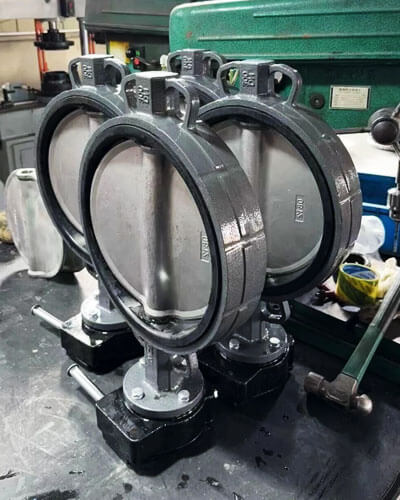
Hun uitstekende drukdragende vermogen, gecombineerd met precisieproductie en beschermende oppervlaktebehandelingen, stelt hen in staat efficiënt te presteren in een breed scala aan serviceomgevingen.
Olie- en gasindustrie
De olie- en gassector stelt enkele van de hoogste eisen aan de klepprestaties.
Vlinderkleppen worden gewoonlijk stroomopwaarts geïnstalleerd, middenstroom, en stroomafwaartse activiteiten waar ze de stroom ruwe olie reguleren, aardgas, verfijnde producten, en hulpprocesvloeistoffen.
Typische toepassingen omvatten:
- Transportsystemen voor pijpleidingen
- Olieraffinaderijen
- Gasverwerkingsfabrieken
- Opslagterminals
- Offshore platforms
- Pompstations
Watervoorziening en afvalwaterzuivering
De gemeentelijke waterinfrastructuur is sterk afhankelijk van vlinderkleppen omdat deze een economische stroomregeling bieden voor pijpleidingen met een grote diameter.
Veel voorkomende toepassingen omvatten:
- Distributie van drinkwater
- Waterzuiveringsinstallaties
- Afvalwaterzuiveringsinstallaties
- Pompstations
- Irrigatiesystemen
- Ontziltingsinstallaties
Chemische verwerkingindustrie
Chemische productiefaciliteiten hebben kleppen nodig die onder gecontroleerde omstandigheden een grote verscheidenheid aan vloeistoffen en gassen kunnen verwerken.
Koolstofstalen vlinderkleppen zijn geschikt voor licht corrosieve media wanneer ze zijn uitgerust met geschikte voeringen of beschermende coatings.
Typische toepassingen omvatten:
- Pijpleidingen voor chemische overdracht
- Opslagtanks
- Koelwatersystemen
- Utility pipelines
- Solvent handling systems
Afhankelijk van het procesmedium, klepschijven en zittingen kunnen bekleed zijn met PTFE of andere corrosiebestendige materialen.
Stroomopwekking
Elektriciteitscentrales werken onder hoge temperaturen en druk, waarvoor betrouwbare klepprestaties nodig zijn gedurende continue bedrijfscycli.
Vlinderkleppen worden veel gebruikt in:
- Koelwatercirculatie
- Condenser systems
- Boiler auxiliary systems
- Rookgasontdeling (FGD)
- Fire protection networks
Mijnbouw en minerale verwerking
Mijnbouwactiviteiten transporteren schurende slurries, afvalwater, en procesvloeistoffen die aanzienlijke slijtage veroorzaken aan pijpleidingapparatuur.
Vlinderkleppen worden veelvuldig ingebouwd:
- Slurry transport systems
- Tailings pipelines
- Ore processing plants
- Water recovery systems
- Dust suppression systems
Mariene en scheepsbouwindustrie
Maritieme omgevingen stellen apparatuur bloot aan vocht, zoutspray, en wisselende temperaturen.
Typische toepassingen omvatten:
- Ballastwatersystemen
- Koelwatercircuits
- Lenssystemen
- Brandstofoverdrachtlijnen
- Brandbeveiligingssystemen
HVAC en gebouwentechniek
Commerciële gebouwen en industriële faciliteiten gebruiken vlinderkleppen voor verwarming, ventilatie, en airconditioningsystemen.
Toepassingen omvatten:
- Gekoelde watersystemen
- Warmwatercirculatie
- Koeltorens
- Stadsverwarming
- Brandsprinklersystemen
Voedsel en algemene industriële nutsvoorzieningen
Hoewel roestvrij staal over het algemeen de voorkeur heeft voor hygiënische processen, Koolstofstalen vlinderkleppen worden veel gebruikt in nutssystemen voor voedsel- en drankfaciliteiten.
Typische toepassingen omvatten:
- Stoomverdeling
- Koelwater
- Gecomprimeerde lucht
- Utility pipelines
- Niet-productproceswater
9. Koolstofstaal VS. Roestvrijstalen vlinderklep
Kiezen tussen een koolstofstaal en een roestvrijstalen vlinderklep vereist dat er meer wordt geëvalueerd dan alleen de initiële aankoopprijs.
Ingenieurs moeten rekening houden met mechanische prestaties, corrosieweerstand, operationele omgeving, onderhoudsvereisten, levenscycluskosten, en naleving van industrienormen.
| Vergelijkingsfactor | Koolstofstalen vlinderklep | Roestvrijstalen vlinderklep |
| Gemeenschappelijke materiaalkwaliteiten | ASTM A216 WCB, WCC, LCB, LCC | ASTM A351 CF8, CF8M, CF3, CF3M |
| Mechanische sterkte | Uitstekende sterkte en stijfheid; ideaal voor middel- en hogedruksystemen | Hoge sterkte met uitstekende taaiheid; iets lagere vloeigrens voor sommige austenitische kwaliteiten |
| Corrosieweerstand | Gematigd; vereist beschermende coatings of voeringen om roest te voorkomen | Uitstekende inherente corrosieweerstand dankzij chroomrijke passieve film |
| Temperatuurmogelijkheden | Geschikt voor ca -46°C tot 425 °C (speciale kwaliteiten beschikbaar voor hogere temperaturen) | Geschikt voor zowel cryogene toepassingen als hoge temperaturen, afhankelijk van de legeringskwaliteit |
| Drukprestaties | Uitstekend drukdraagvermogen voor industriële leidingsystemen | Vergelijkbaar drukvermogen wanneer ontworpen volgens dezelfde normen |
Vereisten voor oppervlaktebescherming |
Epoxy-coating, FBE, het verzinken, PTFE-voering, of andere beschermende behandelingen zijn over het algemeen vereist | Meestal is er geen externe coating vereist, behalve vanwege esthetische of speciale gebruiksomstandigheden |
| Slijtage en slijtvastheid | Uitstekend na warmtebehandeling; geschikt voor schurende industriële media | Goede slijtvastheid; kan een harde bekleding vereisen bij toepassingen met ernstige slijtage |
| Lasbaarheid | Goed (vooral WCC); kan een warmtebehandeling na het lassen nodig zijn, afhankelijk van de dikte | Uitstekende lasbaarheid met minimale nabehandeling voor veel kwaliteiten |
| Machinaliteit | Betere bewerkbaarheid; lagere gereedschapsslijtage en hogere bewerkingssnelheden | Moeilijker te bewerken vanwege de hogere neiging tot verharding |
| Productiekosten | Lagere grondstof- en verwerkingskosten | Hogere materiaal- en bewerkingskosten |
| Onderhoudsvereisten | Periodieke coatinginspectie en corrosie-onderhoud zijn vereist | Minder onderhoud in corrosieve omgevingen dankzij zelfpassiverend oppervlak |
Verwachte levensduur |
Lange levensduur bij juiste coating en onderhoud | Zeer lange levensduur, vooral in corrosieve of maritieme omgevingen |
| Typische toepassingen | Olie & gas, waterbehandeling, HVAC, stroomopwekking, mijnbouw, gemeentelijke infrastructuur | Chemische verwerking, mariene engineering, farmaceutisch, voedsel & drank, ontzetting, offshore platforms |
| Primaire voordelen | Hoge kracht, zuinig, uitstekende drukweerstand, ideaal voor kleppen met grote diameter | Superieure corrosieweerstand, hygiënisch, onderhoudsarme, uitstekende duurzaamheid |
| Primaire beperkingen | Gevoelig voor corrosie zonder beschermende behandeling | Hogere initiële investerings- en bewerkingskosten |
| Best Selection Scenario | Kostengevoelige projecten met niet-corrosieve of licht corrosieve media | Highly corrosive, sanitair, chloride-rijk, of onderhoudskritische omgevingen |
| Overall Cost Performance | Lagere initiële investering en uitstekende waarde voor algemene industriële dienstverlening | Hogere initiële kosten maar lager onderhoud en langere levensduur bij corrosieve toepassingen |
10. Conclusie
Terwijl industriële systemen blijven evolueren naar een hogere efficiëntie, greater reliability, en lagere levenscycluskosten, de vraag naar nauwkeurig ontworpen apparatuur voor debietregeling is nog nooit zo groot geweest.
Eén van de vele klepproductietechnologieën die vandaag de dag beschikbaar zijn, investment casting has established itself as one of the most advanced and dependable processes for producing high-quality carbon steel butterfly valves.
Het vermogen om complexe componenten met uitzonderlijke maatnauwkeurigheid te vervaardigen, Superieure oppervlakteafwerking, en consistente metallurgische eigenschappen bieden een aanzienlijk concurrentievoordeel ten opzichte van conventionele gietmethoden.
Vooruitkijken, opkomende technologieën, waaronder de industrie 4.0, kunstmatige intelligentie (AI), Industrieel internet der dingen (IIOT), robotautomatisering, Digitale tweeling, en real-time procesmonitoring – zullen naar verwachting de investeringsgietindustrie verder transformeren.
Terwijl industrieën steeds hogere prestaties blijven eisen, langere levensduur, en lagere kosten, investeringsgegoten koolstofstalen kleppen zullen – met hun robuuste ontwerp en nauwkeurige productie – een cruciale oplossing blijven voor debietregeling.
Aangepaste koolstofstalen vlinderklep van LangHe Foundry
Langhe Foundry is gespecialiseerd in de productie op maat van vlinderklepcomponenten van gegoten koolstofstaal, het aanbieden van geïntegreerde oplossingen, van technisch ontwerp en precisiegieten tot CNC-bewerking, warmtebehandeling, oppervlakteafwerking, en kwaliteitsinspectie.
Of het nu om olie en gas gaat, waterbehandeling, stroomopwekking, chemische verwerking, mijnbouw, mariene engineering, of algemene industriële leidingsystemen,
LangHe Foundry biedt op maat gemaakte vlinderklepgietoplossingen die zijn ontworpen om te voldoen aan internationale normen en klantspecifieke technische vereisten.
De combinatie van technische expertise, precisieproductie, en strikte kwaliteitscontrole maken LangHe tot een betrouwbare partner voor OEM's, fabrikanten van kleppen, en leveranciers van industriële apparatuur die op zoek zijn naar duurzaamheid, hoogwaardige koolstofstalen vlinderklepcomponenten.
FAQ's
Wat is de meest voorkomende koolstofstaalsoort voor vlinderklephuizen??
WCB (ASTM A216) is de meest voorkomende kwaliteit voor vlinderkleplichamen voor algemeen gebruik, goede sterkte bieden (≥485 MPa treksterkte), lasbaarheid, en economie.
Wat is het verschil tussen wafer- en lug-stijl kleppen?
Wafervormige kleppen zijn dun en worden tussen flenzen geklemd; ze kunnen niet worden gebruikt als end-of-line-kleppen.
Kleppen in nokstijl hebben inzetstukken met schroefdraad en kunnen aan één zijde van de leiding worden vastgeschroefd voor service aan het einde van de leiding.
Kunnen koolstofstalen vlinderkleppen in het veld worden gelast??
Ja, WCB- en WCC-kwaliteiten zijn gemakkelijk lasbaar. Voorverwarming (100‑150°C) en warmtebehandeling na het lassen worden aanbevolen voor dikke delen.
Waarom wordt bij koolstofstalen vlinderkleppen de voorkeur gegeven aan investeringsgieten boven zandgieten??
Investeringsgieten biedt een aanzienlijk hogere maatnauwkeurigheid, gladdere oppervlakteafwerkingen, en nauwere productietoleranties dan traditioneel zandgieten.
Omdat componenten in een bijna-netvormige vorm worden geproduceerd, er is minder bewerking nodig, vermindering van de productietijd en materiaalverspilling.
In aanvulling, investeringsgieten produceert een meer uniforme microstructuur met minder interne defecten, wat resulteert in een verbeterde mechanische sterkte, Afdichtingsprestaties, and product consistency.
These advantages make it particularly suitable for butterfly valve components that require precision mating surfaces and reliable long-term operation.

