

1. Introduzzjoni
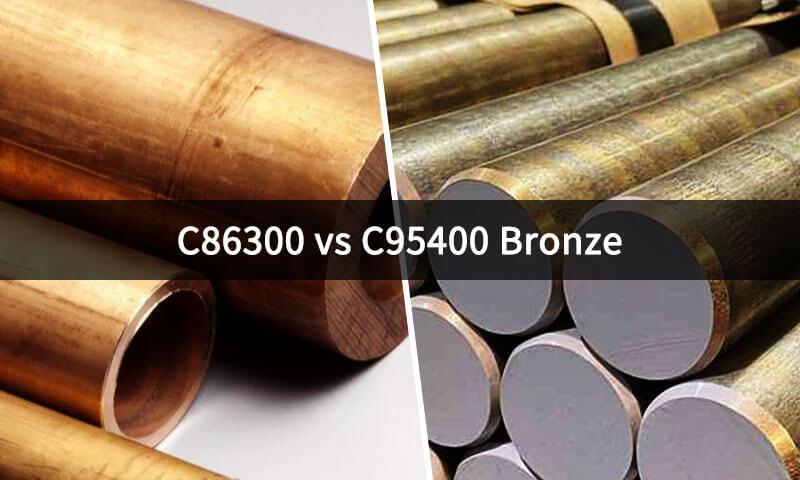
UNS C86300 and UNS C95400 are both cast copper alloys used in demanding mechanical service, but they are built around very different design philosophies.
C86300 is a manganese bronze, formally classified as a high-strength yellow brass, while C95400 is an Bronż tal-aluminju.
That difference is not just taxonomic; it affects strength, makkinabilità, imġieba tal-korrużjoni, casting response, heat-treatment options, and the kinds of components each alloy is best suited to carry.
This comparison matters because the two alloys often compete in the same functional space: bearings, boxxli, gerijiet, Komponenti tal-valv, ħardwer tal-baħar, and heavy-duty machine parts.
Yet one is more of a load-first, low-machinability structural bronze, while the other is a more balanced structural and wear bronze with much better machinability and greater thermal-processing flexibility.
The right choice depends on whether the design is driven more by mechanical loading or by manufacturing efficiency and process versatility.
2. What Is C86300 Manganese Bronze?
UNS C86300 huwa a manganese bronze developed for demanding mechanical service where strength, Reżistenza għall-ilbies, and corrosion resistance must work together.
Fl-industrija, it is often treated as a high-strength yellow brass rather than a conventional bronze in the narrow sense, because its chemistry includes a substantial zinc content alongside copper, Manganiż, aluminju, u ħadid.
That composition gives the alloy a very distinctive engineering profile: it is not designed for electrical conductivity or easy machining, but for durable performance under heavy load, slow speed, and repeated surface contact.
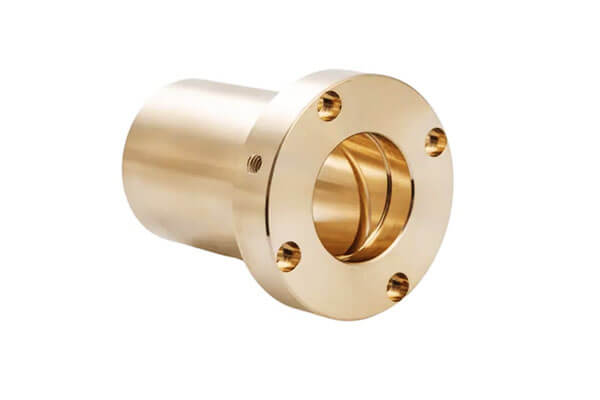
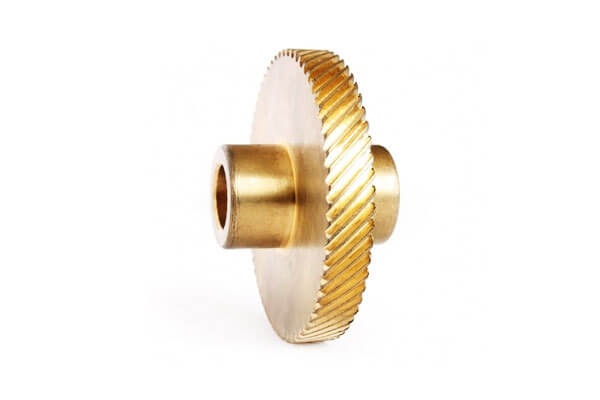
C86300 is widely used in parts such as bridge pins, boxxli, cams, gerijiet, zkuk tal-valv, Komponenti taċ-ċilindru idrawliku, skrejjen, and slow-speed bearings.
These applications reveal its core identity clearly: it is a severe-service alloy, chosen when a component must carry load, Irreżisti l-ilbies, and remain reliable in harsh operating environments.
Karatteristiċi
High strength and load-bearing capability
C86300 is one of the stronger copper-based cast alloys used in mechanical service.
Its strength level makes it suitable for parts that experience steady loading, shock loading, or significant compressive stress.
It is especially useful when the component must perform as a structural bronze rather than as a simple wear insert.
Reżistenza eċċellenti għall-ilbies
The alloy is well suited to slow-speed, high-load contact conditions.
That makes it valuable in bearings, boxxli, gerijiet, cams, and similar components where sliding contact and surface durability are more important than easy fabrication.
Its wear resistance is one of the main reasons it has remained a standard material for heavy-duty bronze applications.
Reżistenza tajba għall-korrużjoni
C86300 performs well in marine and industrial environments, including many applications where moisture, salt exposure, or general atmospheric corrosion would be a concern.
It is used in boat hardware, Fittings tal-baħar, and other service parts that must survive exposure while still carrying mechanical load.
Limited machinability
C86300 is not a free-machining bronze. It can be machined, but the process is significantly more demanding than with leaded bronzes or free-cutting brass grades.
This means it is better suited to applications where performance matters more than shop convenience.
Process-disciplined manufacturing
This alloy is best understood as a production material for serious foundry and machining environments.
It rewards controlled casting practice, careful feeding design, and appropriate secondary machining, but it is not a forgiving alloy for casual fabrication.
3. What Is C95400 Aluminum Bronze?
UNS C95400 is a classic Bronż tal-aluminju and one of the most widely used structural copper alloys in heavy-duty service.
It is designed to deliver a stronger balance of saħħa, Reżistenza għall-ilbies, Reżistenza għall-korrużjoni, u makkinabilità than many other bronzes.
Compared with C86300, it is less focused on extreme load-bearing alone and more focused on overall engineering balance.
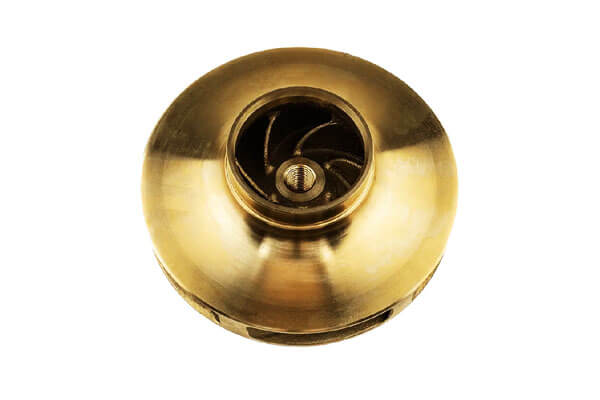
C95400 is used in a very broad range of components, inklużi bearings, boxxli, gerijiet, Partijiet tal-pompa, Korpi tal-valv, Partijiet tal-irkaptu tal-inżul, klampi, Qafliet, weld-gun components, and shipbuilding hardware.
That broad application range reflects its versatility. It is not just a bearing bronze or just a marine bronze; it is a multi-purpose structural bronze for demanding service.

Karatteristiċi
Saħħa u ebusija bilanċjata
C95400 offers strong mechanical performance without becoming excessively difficult to process.
It is not as load-focused as C86300, but it provides enough strength for many structural and wear applications while still remaining comparatively practical to manufacture.
Better machinability than many high-strength bronzes
One of C95400’s major advantages is that it is far easier to machine than C86300.
That makes it attractive in parts that need precise finish machining after casting.
In production environments, that difference can translate directly into lower tooling cost, better throughput, and fewer manufacturing headaches.
Strong corrosion resistance
C95400 has excellent corrosion resistance in many environments, which is one reason it is used in marine, Bini tal-vapuri, and industrial fluid-handling applications.
It is especially valuable where corrosion resistance must coexist with mechanical strength and wear resistance.
Good heat-treatment flexibility
Unlike C86300, C95400 can be solution treated and thermally processed in ways that help tune its properties.
That gives designers and manufacturers more flexibility when balancing strength, duttilità, u stabbiltà dimensjonali.
Broad industrial applicability
C95400 sits in a very practical middle ground. It is strong enough for heavy-duty parts, corrosion resistant enough for marine and industrial exposure, and machinable enough to be used efficiently in production.
That combination is what makes it one of the most versatile aluminum bronzes in engineering practice.
4. Kompożizzjoni kimika: C86300 vs C95400 Bronze
The chemical split between C86300 u C95400 is the fundamental reason the two alloys behave so differently in service.
| Element | UNS C86300 | UNS C95400 |
| Ram (Cu) | 60.0–66.0% | 83.0% min. |
| Żingu (Zn) | 22.0–28.0% | - |
| Aluminju (Al) | 5.0–7.5% | 10.0–11.5% |
| Manganiż (Mn) | 2.5–5.0% | 0.50% massimu. |
| Ħadid (Fe) | 2.0–4.0% | 3.0–5.0% |
| Nickel (Fi) | 1.0% massimu. (Ni includes Co) | 1.50% massimu. (Ni includes Co) |
| Ċomb (PB) | 0.20% massimu. | - |
| Landa (Sn) | 0.20% massimu. | - |
| Cu + named elements | 99.0% min. | 99.5% min. |
5. Physical and Mechanical Performance: C86300 vs C95400 Bronze
Representative values below are for continuous-cast material at 68° F. (20° C.) unless otherwise noted.
| Proprjetà | UNS C86300 | UNS C95400 |
| Melting point – liquidus | 1693° F. | 1900° F. |
| Melting point – solidus | 1625° F. | 1880° F. |
| Densità | 0.283 lb / in³ | 0.269 lb / in³ |
| Specific gravity | 7.83 | 7.45 |
| Konduttività elettrika | 8% IACS | 13% IACS |
| Konduttività termali | 20.5 Btu·ft/(hr·ft²·°F) | 33.9 Btu·ft/(hr·ft²·°F) |
| Koeffiċjent ta 'espansjoni termali | 12 × 10⁻⁶ /°F | 9 × 10⁻⁶ /°F |
| Kapaċità speċifika tas-sħana | 0.09 Btu/lb·°F | 0.10 Btu/lb·°F |
| Modulu ta 'elastiċità | 14,200 KSI | 15,500 KSI |
| Permeabilità manjetika | 1.09 | 1.27 kif imfittex; 1.2 in TQ50 |
| Qawwa tat-tensjoni | 110 KSI | 85 KSI |
| Saħħa tar-rendiment | 62 KSI | 32 KSI |
| Titwil | 14% | 12% |
| Ebusija Brinell | 223 Bnn | 170 Bnn |
| Machinability rating | 8 | 60 |
6. Processing and Manufacturing Behavior
Tidwib
Both alloys are castable, but neither behaves like an “easy” commodity metal.
C86300 shows baxx ikkastjar rendiment, high drossing, low gassing, medium fluidity, low effect of section size, and high shrinkage in solidification.
C95400 also shows low casting yield, high drossing, medium fluidity, medium gassing, low effect of section size, and high shrinkage in solidification.
Fi kliem ieħor, both require disciplined foundry practice, but C95400 is somewhat less punishing in gassing and considerably more forgiving in later machining.
Magni
This is the most dramatic difference in shop-floor behavior. C86300 has a machinability rating of 8, which places it in the difficult-machining class.
C95400 has a machinability rating of 60, which makes it substantially more production-friendly.
For parts that require significant finish machining, C95400 can reduce tool wear, ħin, and cost very materially.
Joining and fabrication
C86300 is poor in most joining categories: issaldjar, ibbrejkjar, oxyacetylene welding, and gas shielded arc welding are all rated poor, while coated metal arc welding is the one acceptable route listed.
C95400 is much more flexible: soldering and brazing are good, gas-shielded arc welding and coated metal arc welding are good, and oxyacetylene welding is not recommended.
That makes C95400 far more adaptable in real fabrication and repair workflows.
Trattament tas-sħana
C86300 has only serħan mill-istress listed, with no meaningful strengthening solution-treatment cycle.
C95400, B'kuntrast, jappoġġja solution treatment at 1600–1675°F for one hour, Quench tal-ilma, and annealing at 1150–1225°F, which gives engineers a real thermal-processing lever.
That alone is a major differentiator: C95400 can be tuned after casting in ways C86300 generally cannot.
7. Reżistenza għall-korrużjoni: C86300 vs C95400 Bronze
C86300 offers good corrosion resistance and is repeatedly used in marine hardware, boat parts, klampi, tkopri, and rudders, including salt-water-exposed service.
It is therefore a legitimate marine alloy, but its identity remains rooted in high-load mechanical service rather than broad corrosion specialization.
C95400 has a broader corrosion-oriented profile in the published uses.
Its application list includes weld guns, bearings, boxxli, gerijiet, pickling hooks, Partijiet tal-pompa, Korpi tal-valv, Bini tal-vapuri, u ħardwer tal-baħar,
and many of those uses are tied to corrosion resistance, including excellent corrosion resistance and resistance to numerous environments.
That makes C95400 the stronger choice when corrosion is important but not so extreme that a more specialized nickel-aluminum bronze is required.
8. Applikazzjonijiet tipiċi: C86300 vs C95400 Bronze
UNS C86300 manganese bronze is the better fit for slow-speed, heavy-load, wear-prone mechanical parts:
bridge pins, boxxli, cams, gerijiet, hydraulic cylinder parts, large valve stems, skrejjen, slow-speed bearings, and marine boat parts.
Its application profile is explicitly centered on high strength and wear resistance.
UNS C95400 aluminum bronze is the better fit for high-strength but more manufacturable structural bronze parts:
weld guns, Qafliet, bearing segments, bearings, boxxli, gerijiet, high-strength clamps, Partijiet tal-irkaptu tal-inżul, partijiet tal-magna, Partijiet tal-pompa, Korpi tal-valv, valve guides, siġġijiet tal-valv, valvi, gerijiet tad-dudu, and shipbuilding hardware.
Its application profile is broader because its material balance is broader.
9. Selection Logic: Which Alloy Should Be Used Where?
Start with the real engineering priority
Tagħżel bejn C86300 Bronż tal-Manganiż u C95400 aluminum bronze should never be reduced to a simple “which one is better?” question.
The correct choice depends on what the component must do in service. If the design problem is dominated by load capacity, Reżistenza għall-ilbies, and slow-speed mechanical durability, C86300 is usually the stronger candidate.
If the design problem is dominated by manifattura, machining efficiency, corrosion balance, and broader fabrication flexibility, C95400 is usually the more practical answer.
That distinction is the core of the selection logic: C86300 is the specialist; C95400 is the generalist.
Use C86300 when strength and wear are the primary mission
C86300 is the better choice when the part must carry heavy load and survive prolonged surface contact under demanding conditions.
Its much higher tensile strength, saħħa tar-rendiment, and hardness make it especially suitable for components such as:
- slow-speed, heavy-load bearings
- bushings under high unit pressure
- bridge pins and structural wear parts
- cams and gears with strong contact stress
- large valve stems and hydraulic cylinder components
- marine hardware where mechanical durability matters more than ease of machining
F'dawn il-każijiet, the alloy’s higher strength is not just a number on a datasheet. It directly translates into better resistance to deformation, better wear life, and stronger service reliability.
Use C95400 when manufacturing practicality matters more
C95400 becomes the better choice when the part still needs a bronze’s strength and corrosion resistance, but the production route must also remain efficient.
Its significantly better machinability, densità aktar baxxa, and more flexible fabrication behavior make it more attractive for parts that require substantial finishing after casting.
Typical C95400 applications include:
- bearing segments and bushings
- pump parts and valve bodies
- fasteners and clamps
- gears and industrial wear parts
- landing gear-related components
- weld gun parts and shipbuilding hardware
If the design needs a material that can be cast, Makinat, and integrated into a production line with less trouble, C95400 often provides the better total-cost outcome.
Consider the service environment, not just the strength
A common mistake is to choose C86300 simply because it is stronger. That is not always the best decision.
If the component operates in an environment where Reżistenza għall-korrużjoni, Stabbiltà termali, and dimensional practicality are equally important, C95400 may be the better engineering answer even though it is weaker than C86300 in the standard cast condition.
Bl-istess mod, if the component is exposed to heavy wear and contact stress but does not require extensive post-cast machining, C86300 may offer the better lifetime value because its strength and hardness directly support the service conditions.
10. Konklużjoni
UNS C86300 and UNS C95400 are both serious cast copper alloys, but they are optimized for different engineering priorities.
C86300 manganese bronze is the heavier-duty, aktar b'saħħithom, and far less machinable option, built for slow-speed load-bearing and wear service.
C95400 aluminum bronze is lighter, aktar faċli għall-magna, thermally more conductive, and more flexible in fabrication and heat treatment, while still offering high strength and excellent corrosion performance.
The right choice depends on where the risk sits. If the risk is mechanical overload, C86300 is compelling.
If the risk is Kumplessità tal-manifattura, C95400 is the safer and more efficient option.
That is the real difference between the two alloys: one is built to endure harder service, the other is built to deliver a better overall engineering balance.

