1. Introduzzjoni
Titanium CNC machining sits at the demanding end of precision manufacturing because titanium combines outstanding service performance with unusually difficult cutting behavior.
Titanium alloys are used in aerospace, bijomediku, Marine, chemical-processing, and other high-performance sectors because they provide a rare mix of low density, saħħa għolja, and strong corrosion resistance.
2. Why Titanium? Key Benefits of CNC Machining Titanium Parts
What Is Titanium CNC Machining
Titanju Makkinar CNC is the controlled subtractive shaping of titanium stock into precision parts using computer numerical control equipment such as milling machines, torn, drilling centers, boring systems, and threading tools.
In industrial production, titanium is typically supplied as bar, Billet, Forġa, platt, or near-net-shape stock,
and CNC machining is then used to convert that raw material into a finished component with precise dimensions, defined tolerances, and engineered surface quality.
Titanium is selected for CNC machining not because it is easy to process, but because the finished parts can deliver a level of performance that few other metals can match.
When the application demands a combination of low weight, saħħa strutturali, Reżistenza għall-korrużjoni, heat tolerance,
and service durability, titanium becomes one of the most compelling engineering materials available.
Why Choose Titanium Alloy?
Exceptional strength-to-weight ratio
One of titanium’s most defining advantages is its outstanding strength-to-weight ratio.
Titanium parts can achieve tensile strengths comparable to certain steels while weighing far less. In applications where every gram matters, this is a decisive benefit.
Reżistenza eċċellenti għall-korrużjoni
Titanium is highly resistant to corrosion, speċjalment fl-ilma baħar, kloruri, and many chemically aggressive environments.
This makes it a material of choice for marine equipment, Sistemi ta 'desalinizzazzjoni, offshore hardware, and chemical processing components.
Bijokompatibilità
Titanium is also known for its biocompatibility, which makes it highly suitable for medical implants, prostetiċi, surgical components, and other healthcare applications.
High-temperature resilience
Titanium performs well in environments where heat is a serious design constraint.
Magni bil-ġett, rocket components, and other high-temperature systems often require materials that can maintain useful mechanical properties while exposed to severe thermal conditions.
Long-term economic value
Titanium is undeniably expensive when compared with many common engineering metals.
Madankollu, the higher upfront material and machining cost must be viewed in the context of long-term performance.
Titanium parts often last longer, resist corrosion better, and require less replacement or maintenance over time.
3. Titanium CNC Machining Processes
Titanium CNC Milling
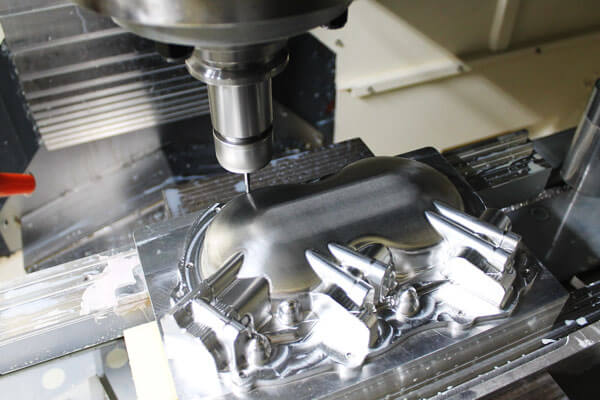
Proċess: Titanju tħin is the main shaping method for prismatic parts, bwiet, kustilji, Ħitan irqaq, Kontorni kumplessi, and 5-axis aerospace geometry.
It is the operation most often used to transform billet or forging stock into the final external form of the component.
In titanium, milling is especially sensitive to radial engagement, chip evacuation, and coolant delivery because the cutting zone heats quickly and the tool edge is exposed to severe thermal loading.
Titanium CNC Turning
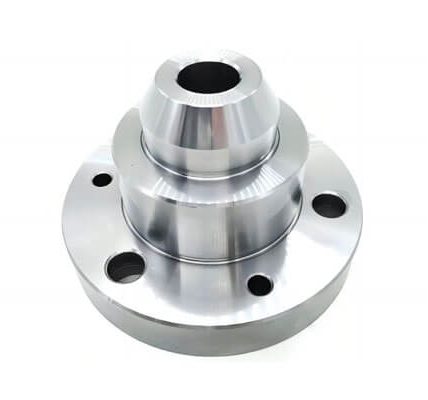
Proċess: Titanju tidwir is the preferred method for cylindrical and axisymmetric parts. It is used on shafts, ċrieki, kmiem, Hubs, konnetturi, and pressure-related rotational parts.
Titanium turning demands stable rigidity and strong chip control because the material can form long or serrated chips, and because heat remains concentrated near the tool tip instead of dissipating through the workpiece.
Titanium CNC Boring
Proċess: Titanium boring is used to refine an already existing hole. It is chosen when drilled or cast holes need better straightness, Roundness, diameter accuracy, or surface finish.
Boring in titanium is more demanding than in easier metals because the internal cutting zone traps heat and limits chip evacuation, so the tool must remove material cleanly without rubbing.
Titanium CNC Drilling
Proċess: Titanium drilling is one of the most technically sensitive holemaking operations because the drill is cutting deep into a confined zone where heat, chip packing, and tool wear can escalate quickly.
Titanium’s low thermal conductivity means the drill tip sees a large thermal load, while serrated chip formation can obstruct evacuation if the tool geometry and coolant strategy are not well matched.
High-volume and high-pressure coolant are especially important here.
Titanium CNC Tapping
Proċess: Titanium tapping is used to generate internal threads directly in the part.
It is more demanding than tapping in many other metals because the cutting edges or forming lands must work in a hot, reactive environment
where chip evacuation is limited and thread quality can degrade rapidly if the tool begins to wear.
Threading in titanium often benefits from careful pilot-hole preparation, rigid tapping cycles, and aggressive control of lubrication and chip removal.
Titanium CNC Threading
Proċess: Titanium threading includes both internal and external thread generation, often by threading tools or thread-turning operations.
The process requires stable cutting action because titanium’s low thermal conductivity and high tool reactivity can quickly undermine thread accuracy if the tool rubs, ċipep, or overheats.
Good thread cutting in titanium depends on precise tool geometry, rigid setup, and effective chip evacuation.
What it is used for: It is used for precision fasteners, konnetturi, għeluq, Housings tal-istrumenti, and any titanium part that must assemble reliably under load or in corrosive environments.
Threading is often the last high-value machining step before finishing or inspection, so it directly influences whether the part meets functional and dimensional requirements.
In many titanium applications, thread quality is not a minor detail; it is a primary performance feature.
4. Titanium CNC Machining Materials
Titanju materials used in CNC machining are typically divided into two broad groups:
commercially pure titanium grades, which prioritize corrosion resistance, duttilità, u weldabilità;
u titanium-based alloy grades, which emphasize strength, Reżistenza għall-għeja, elevated-temperature performance, and application-specific mechanical behavior.
Commercially Pure Titanium CNC Machining Materials
| Grad | Core material profile | Typical application fields |
| Grad 1 / CP4 | The softest and most ductile commercially pure titanium grade, with excellent corrosion resistance and impact resistance. It is highly formable and well suited to parts that must retain corrosion performance while remaining easy to shape. | Arkitettura, tal-karozzi, desalinizzazzjoni, dimensionally stable anodes, mediku, Marine, chlorate manufacturing, process equipment. |
| Grad 2 / CP3 | The most widely used commercially pure titanium grade, offering a strong balance of corrosion resistance, weldabilità, Formabilità, and practical strength. It is often treated as the standard CP titanium for industrial work. | Aerospazjali, arkitettura, tal-karozzi, Ipproċessar kimiku, chlorate manufacturing, desalinizzazzjoni, hydrocarbon processing, Marine, mediku, Ġenerazzjoni tal-Enerġija. |
| Grad 3 / CP2 | A higher-strength CP grade with improved mechanical properties compared with Grades 1 u 2. It preserves the corrosion benefits of CP titanium while adding more load-bearing capability. | Aerospazjali, arkitettura, tal-karozzi, Ipproċessar kimiku, chlorate manufacturing, desalinizzazzjoni, hydrocarbon processing, Marine, mediku, Ġenerazzjoni tal-Enerġija. |
Grad 4 / CP1 |
The strongest of the common commercially pure titanium grades. It retains very strong corrosion performance while offering noticeably higher strength than the lower CP grades. | Aerospazjali, Ipproċessar kimiku, Tagħmir industrijali, Marine, mediku. |
| Grad 7 | A CP-type titanium alloyed with palladium for enhanced corrosion resistance, especially in reducing acid environments. It is known for excellent chemical stability and strong weldability/fabricability. | Ipproċessar kimiku, desalinizzazzjoni, Ġenerazzjoni tal-Enerġija. |
| Grad 11 / CP TI-0.15Pd | A palladium-bearing titanium grade designed for improved corrosion resistance in a broad range of chemical environments. It combines good weldability and formability with enhanced chemical durability. | Ipproċessar kimiku, desalinizzazzjoni, Tagħmir industrijali, Ġenerazzjoni tal-Enerġija. |
Titanium-Based Alloy CNC Machining Materials
| Grad | Core material profile | Machining character |
| Grad 5 / Ti-6al-4v | The benchmark titanium alloy and the most widely used titanium-based machining material. It offers an excellent balance of strength, piż, u reżistenza għall-korrużjoni, making it the default engineering titanium for many high-performance parts. | This is the reference alloy for demanding titanium machining. It is not the easiest grade to cut, but its behavior is well understood, and it supports a broad range of precision CNC applications. |
| Grad 6 / 5Al-2.5Sn | An alpha-beta titanium alloy noted for good weldability, Formabilità, and reliable performance in corrosive environments. It is often selected where stability and service behavior matter more than maximum strength. | Usually machined with the same respect given to other titanium alloys, but it can be an attractive material when the design needs reliable processability and controlled mechanical behavior. |
| Grad 9 / 3Al-2.5V | A lower-alloy titanium grade with improved strength and corrosion resistance compared with CP titanium, while still maintaining good formability. It is frequently used when moderate strength and high manufacturability are both required. | Generally one of the more practical titanium alloys for tubing, Komponenti ta 'preċiżjoni, and light structural parts because it strikes a useful balance between performance and machinability. |
Grad 12 / Ta '-0.3Mo-0.8Fi |
A corrosion-resistant titanium alloy designed for outstanding resistance in oxidizing and mildly reducing environments. It is especially valued in harsh process conditions. | Selected primarily for environmental resistance rather than machining comfort, though it remains a workable CNC material when process parameters are well controlled. |
| Grad 23 / 6Al-4V ELI | The extra-low-interstitial version of Ti-6Al-4V, developed for excellent resistance to corrosion, għeja, and crack growth. It is widely used in high-integrity applications where reliability is critical. | Similar in machining logic to Grade 5, but often chosen when the part must preserve very high integrity and surface quality under demanding conditions. |
| 6Al-6V-2Sn / 6-6-2 | A high-strength alpha-beta alloy known for its combination of strength, Reżistenza għall-korrużjoni, and usable fabrication characteristics. It is used where performance margins are tight and the component must carry significant load. | More demanding than lower-strength titanium grades, particularly in tool loading and heat management, but valuable when the service requirement justifies the added machining effort. |
6Al-2Sn-4Zr-2Mo / 6-2-4-2 |
A heat-treated, high-strength alpha-beta alloy with excellent corrosion resistance, strong tensile performance, u weldabilità tajba. It is designed for severe aerospace service. | Typically used when the mechanical requirement is high enough to justify a more challenging machining process. Stability and thermal control are essential. |
| 6Al-2Sn-4Zr-6Mo / 6-2-4-6 | A high-strength alpha-beta titanium alloy with strong corrosion resistance and excellent weldability, often used in demanding aerospace and marine applications. | Demands disciplined machining because of its strength and service-oriented alloy design, but is very valuable in high-reliability applications. |
| 8Al-1Mo-1V / 8-1-1 | A high-strength alpha-beta alloy known for excellent weldability and superior creep resistance. It is designed for applications requiring both high temperature performance and strong mechanical stability. | More specialized and often more challenging to machine than general-purpose titanium grades, but highly effective for elevated-temperature service parts. |
5. Core Technical Challenges in Titanium CNC Machining
Heat concentration at the cutting edge
Titanium is one of the most difficult metals to machine because it does not dissipate heat efficiently.
Its low thermal conductivity causes the heat generated during cutting to remain concentrated in a very small region near the tool edge rather than flowing away through the chip or the workpiece.
The result is rapid temperature rise at the cutting interface, accelerated tool wear, and a narrower process window than is typical for aluminum or ordinary steels.
Chemical reactivity with the cutting tool
Titanium also reacts strongly with common tool materials under cutting conditions.
That reactivity contributes to adhesion, crater wear, and edge breakdown, especially when temperature rises and chip flow becomes unstable.
F'termini prattiċi, the cutting edge must survive both mechanical loading and a chemically aggressive interface, which makes tool selection and edge preservation central to process success.
Serrated chip formation and unstable cutting forces
Titanium alloys often form serrated or saw-tooth chips during machining.
This chip morphology is a visible sign of severe shear localization, and it is closely associated with fluctuation in cutting forces, vibrazzjoni, and increased thermal loading.
Once the force pattern becomes unstable, the tool experiences intermittent impact rather than smooth cutting, which shortens tool life and can reduce surface quality.
Work hardening and notch wear
Titanium can harden locally during machining, especially when the tool rubs instead of cutting cleanly.
That local hardening contributes to notch wear near the depth of cut and makes subsequent cutting more difficult.
The problem becomes more severe when the process uses a timid feed, poor engagement, or repeated passes that expose already affected material to the tool edge again.
Low modulus of elasticity and part deflection
Titanium’s low modulus of elasticity means the part can deflect under cutting load more readily than a stiffer material.
This is a major issue in thin-wall parts, long shafts, and complex aerospace features because tool pressure can push the workpiece away from the intended geometry.
If the setup is not rigid enough, the result may be chatter, dimensional error, and a poor surface finish even when the cutter itself is performing properly.
Chip evacuation in deep or enclosed features
Deep pockets, kavitajiet, and holemaking operations are especially challenging because chips must be evacuated from a hot, confined cutting zone.
If chips are not cleared quickly, they are likely to be recut, which increases heat, damages surface integrity, and reduces tool life.
High-pressure coolant and tool geometries designed for chip breaking are therefore not optional extras; they are fundamental process requirements in titanium machining.
High tooling cost and process sensitivity
Titanium machining is expensive not only because the material is costly, but because the process is highly sensitive to small changes in speed, feed, coolant delivery, and tool condition.
Studies on difficult-to-machine alloys consistently show that productivity, affidabilità, and surface integrity all depend on keeping the cut stable and controlling thermal load.
In titanium, a small process deviation can quickly become a tool-life problem or a part-quality problem.
6. Process Strategies for Better Machinability
Choose the right titanium grade for the function
The best machinability improvement often begins at the material-selection stage.
Commercially pure grades are generally more forgiving than high-strength alloyed titanium,
while Ti-6Al-4V remains the most common engineering titanium because it balances strength, Reżistenza għall-korrużjoni, and usability.
When the service environment allows it, selecting the least demanding grade that still meets performance requirements can reduce machining difficulty substantially.
Keep the cut decisive and stable
Titanium machining rewards a clean shear rather than a gentle rub.
A process that is too conservative can encourage heat buildup, edge adhesion, and work hardening, while a stable and decisive cut is more likely to maintain a consistent chip form and protect the tool.
The practical objective is to keep the tool engaged enough to cut cleanly without allowing the edge to dwell in one spot and overheat the interface.
Use advanced roughing toolpaths
For roughing, optimized toolpaths are often more effective than conventional full-width engagement.
Dynamic roughing or advanced roughing strategies adapt the cutter’s arc of contact so the chip load stays more consistent while the spindle avoids unnecessary strain.
This approach can reduce cycle time, control process temperature, and improve overall roughing stability in titanium.
Prioritize high-pressure coolant and through-tool delivery
Coolant is one of the most important variables in titanium machining because it helps control temperature and chip flow simultaneously.
High-pressure coolant improves chip breakability, supports tool life, and reduces the risk of recutting chips in both milling and drilling.
Through-tool delivery is especially valuable in deep holes, bwiet, and enclosed cavities where external coolant alone cannot reliably clear the cutting zone.
Match the machining method to the feature
Not every titanium feature should be produced the same way.
Milling is appropriate for contouring and pocketing, turning for round parts, drilling for initial hole creation, boring for final hole accuracy, and tapping/threading for assembly interfaces.
The process sequence should be chosen so that each operation prepares the part for the next one rather than compounding heat and distortion.
That is especially important in titanium because the material is less forgiving of repeated error correction.
Reduce radial engagement and manage chip load
In milling, titanium often performs better when the cutter engagement is controlled rather than excessive.
Lower radial engagement helps reduce heat concentration and keeps the cutter from being overloaded by long periods of sustained contact.
This is one reason high-feed and optimized engagement strategies are widely used in difficult titanium roughing work.
Build rigidity into the whole system
A successful titanium process is not just about the insert or the coolant nozzle. It depends on machine torque, fixture stability, workholding quality, and a setup that resists deflection.
Titanium’s lower modulus makes the workpiece itself part of the problem, so the machine system must compensate by being as rigid and stable as possible.
Design for machinability before cutting begins
The most economical titanium parts are usually designed with manufacturing in mind from the start.
Ħitan irqaq, deep pockets, inaccessible corners, and unnecessarily long overhangs all make the process more difficult.
A design that supports chip escape, tool access, and secure clamping will generally machine better, finish better, and cost less than a geometry that forces the cutter into unstable conditions.
Treat surface integrity as a process objective
In titanium, the goal is not only to reach the final dimensions, but to preserve fatigue performance, Reżistenza għall-korrużjoni, u l-kwalità tal-wiċċ.
Overheating, rubbing, chatter, or poor chip evacuation can leave behind a damaged surface layer even when the part measures correctly.
A strong process therefore includes tool-life monitoring, coolant verification, and careful inspection of critical surfaces, especially on aerospace and biomedical components.
7. Applications of Titanium CNC Machining Parts
Titanium CNC machining parts are selected when the application demands a combination of piż baxx, saħħa għolja, Reżistenza għall-korrużjoni, u ħajja twila ta 'servizz.
Aerospace and flight hardware
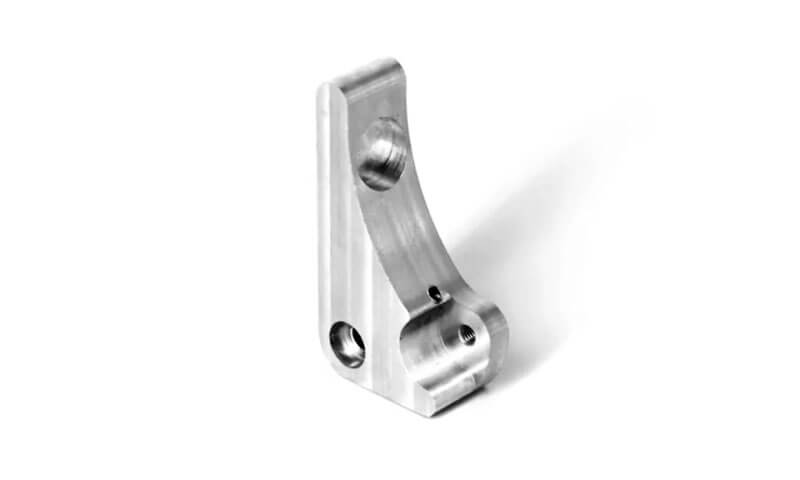
Typical titanium CNC parts in aerospace include structural brackets, Fittings, housings, precision connectors, rotating hardware,
and complex components that must preserve fatigue resistance under repeated loading.
Medical and biomedical components
Titanium is also a major material in medical manufacturing because of its inherent biocompatibility and durability.
F'dan is-settur, CNC machining is used for implants, prosthetic hardware, strumenti kirurġiċi, and precision medical fixtures.
Marine and desalination systems
Titanium CNC-machined parts are widely used in marine and desalination environments because titanium resists seawater corrosion exceptionally well.
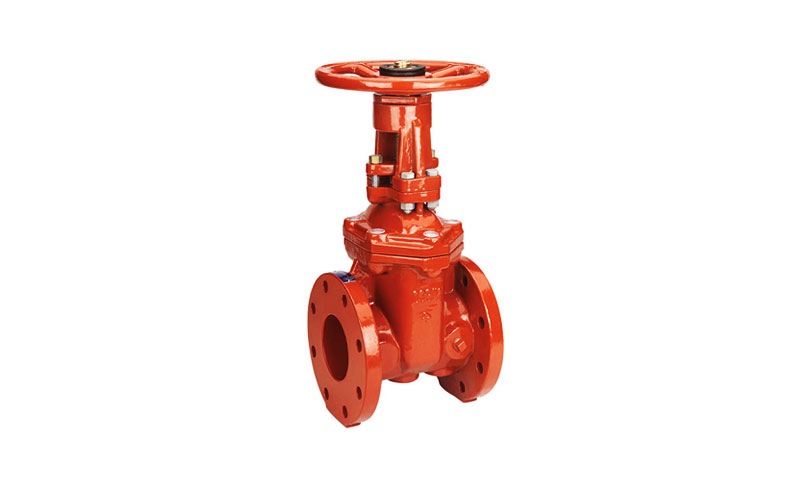
This makes titanium suitable for seawater valves, komponenti tal-pompa, housings, Qafliet, pressure-related hardware, and other parts that must survive long exposure to aggressive saltwater or brine.
Chemical processing and petrochemical equipment
Ipproċessar kimiku, raffineriji, organic synthetics, and petrochemicals are application areas, especially for pressure vessels and other corrosion-sensitive equipment.
Power generation and high-temperature service
Titanium is also used in power generation and other high-performance energy applications where temperature, korrużjoni, or long-term reliability are design constraints.
Titanium components may be used in systems that combine heat, pressjoni, and aggressive working media, making dimensional stability and corrosion resistance more important than raw machinability.
Industrial and land-based high-performance hardware
Beyond the best-known sectors, titanium CNC parts are also used in land-based industrial equipment.
This category includes precision housings, custom machine parts, Qafliet, Strutturi ta 'Appoġġ, and corrosion-resistant components in systems where failure is costly.
8. Magni CNC vs.. Precision Casting Titanium
| Comparison Aspect | CNC Machining Titanium | Ikkastjar ta 'preċiżjoni Titanju |
| Core manufacturing logic | Titanium parts are produced by removing material from bar, Billet, Forġa, or plate stock using milling, tidwir, tħaffir, boring, Tapping, u threading. This route is fundamentally about precision and controlled subtraction. | Titanium parts are produced by pouring molten titanium into a mold to form the component shape, with the casting route being a true shape-casting process rather than a subtractive one. |
| Eżattezza dimensjonali | Best when tight tolerances, coaxiality, and precise functional surfaces are critical. The process is well suited to final-machined interfaces, ħjut, bores, and sealing faces. | Good for near-net-shape geometry, but critical dimensions often still need finish machining because casting is optimized for shape formation, not final precision on every surface. |
Finitura tal-wiċċ |
Typically delivers the best control on machined faces when tool condition, likwidu li jkessaħ, and rigidity are well managed. Titanium machining guidance stresses that heat and tool wear directly affect surface quality. | As-cast surfaces generally require more finishing on functional zones. Titanium casting references include post-cast operations such as chemical milling, weld repair, and finishing-related processing, reflecting the need for downstream surface work. |
| Geometric freedom | Limited by cutter access, tool reach, and chip evacuation. Deep pockets, siltiet interni, and enclosed cavities are possible, but they become progressively more difficult and costly as geometry grows more complex. | Stronger fit for complex external forms and near-net-shape parts where the geometry is easier to cast than to machine from solid stock. |
Użu tal-materjal |
Lower when large amounts of stock must be removed. In titanium, this matters because the material is valuable and machining can generate significant scrap and long cycle times. | Better near-net-shape efficiency because the part is formed close to final shape, reducing removed material and supporting lower scrap. |
| Process stability | Highly sensitive to heat, likwidu li jkessaħ, riġidità, and chip control. Titanium machining guides repeatedly emphasize low thermal conductivity, high torque needs, chip recutting prevention, and the use of high-pressure coolant. | Sensitive to casting variables such as melting, tferrigħ, solidifikazzjoni, u kontroll tad-difetti. Titanium casting is a mature route, but the process depends on foundry control rather than tool-path control. |
Typical technical risks |
Heat concentration, built-up edge, chip re-cutting, Ilbies tal-għodda, vibrazzjoni, and part deflection are the dominant risks. Titanium’s low thermal conductivity and high chemical reactivity are the root causes. | Difetti tal-ikkastjar, including porosity, shrinkage-related issues, and the need for post-cast correction, are the main concerns. |
| L-aktar adattat għal | Precision aerospace parts, medical components, threaded hardware, bores, sealing interfaces, and any titanium part where final geometry and surface control dominate. | Complex titanium shapes where near-net formation can reduce machining burden, especially when a final finishing pass is acceptable on critical surfaces. |
Economic profile |
Usually more economical for precision-driven parts, prototipi, and lower-volume work where tooling flexibility matters more than mold investment. | Usually more attractive when the part geometry is complex enough that casting can remove major machining effort and reduce scrap, especially in stable production scenarios. |
| Engineering verdict | The better choice when accuracy, kwalità tal-wiċċ, and inspection control are the priority. Titanium CNC machining is the precision route. | The better choice when geometry complexity and near-net-shape efficiency dominate. Precision casting is the shape-efficient route. |
9. Why Choose LangHe for Your Precision Titanium Machining Project?
LangHe Industrija is a professional high-end precision metal processing factory focusing on titanium alloy, azzar li ma jissaddadx, and high-temperature alloy customized manufacturing.
It has mature technical accumulation in titanium CNC machining, with irreplaceable industrial advantages:
Advanced Processing Equipment
Equipped with 3-axis, 4-axis and 5-axis high-rigidity CNC machining centers, imported high-pressure cooling systems, and high-precision detection instruments to ensure micron-level tolerance stability.
Professional Titanium Processing Team
Senior engineers with more than 10 years of titanium processing experience formulate exclusive cutting parameter schemes for different titanium grades to avoid tool waste and part deformation.
Strict Quality Control System
Raw material inspection, semi-finished dimensional detection, and finished product performance testing are implemented layer by layer.
All titanium parts comply with ASTM B348 international titanium industry standards.
Customized One-Stop Service
Provide drawing optimization, CNC processing, surface passivation, precision polishing, and vacuum heat treatment services to meet diversified customized demands of medical, aerospace and marine clients.
Stable Delivery & Ottimizzazzjoni tal-ispejjeż
Optimize tool paths and processing sequences to shorten production cycles.
On the premise of guaranteed quality, reduce unnecessary processing procedures and control comprehensive production costs.
10. Konklużjoni
Titanium CNC machining is a high-standard, Preċiżjoni għolja, and high-barrier subtractive manufacturing technology.
Restricted by low thermal conductivity, high chemical activity, and elastic rebound characteristics, titanium has always been recognized as a difficult-to-cut metal in the machinery manufacturing industry.
Bħala aerospazjali, medical implantation, and deep-sea engineering industries continue to develop, the market demand for high-precision CNC titanium parts will keep growing.
Professional processing manufacturers represented by LangHe will continuously optimize titanium processing technology, tnaqqas l-ispejjeż tal-produzzjoni,
and promote the widespread application of titanium materials in more high-end industrial fields.
FAQs
Which titanium grade is the easiest to machine?
Grad tat-titanju kummerċjalment pur 1 u grad 2 have the lowest hardness and best machinability; Ti-6Al-4V is the hardest common titanium alloy for daily industrial processing.
Why is titanium more expensive to machine than stainless steel?
Titanium requires expensive carbide tools, low-efficiency low-speed cutting, and high-pressure cooling systems.
Its low material utilization rate and severe tool wear greatly increase comprehensive processing costs.
What is the standard tolerance of conventional CNC titanium parts?
Common industrial tolerance is controlled within ±0.02 mm; professional medical and aerospace titanium parts can achieve ultra-precision tolerance of ±0.005 mm.
Can titanium parts be anodized?
IVA. Titanium anodizing forms a dense oxide film with different colors, improving surface wear resistance and corrosion resistance without changing mechanical properties.
What is the key to avoid titanium workpiece deformation?
Adopt low cutting depth, layered cutting, short tool overhang, and customized auxiliary fixtures; strictly control cutting temperature to reduce thermal expansion and elastic rebound.