

Introduzzjoni
Investment casting is one of the few manufacturing routes that can combine tight dimensional control, Finitura tal-wiċċ tajba, and complex geometry, including thin-wall sections, in a single near-net-shape process.
For nickel alloys, that capability matters because many of the parts are not simple structural shapes but high-value components that must survive corrosion, sħana, pressjoni, and aggressive service conditions.
That is why nickel alloy investment casting is not just a materials topic; it is a reliability strategy.
1. What Investment Casting Nickel Alloy Means
The basic definition
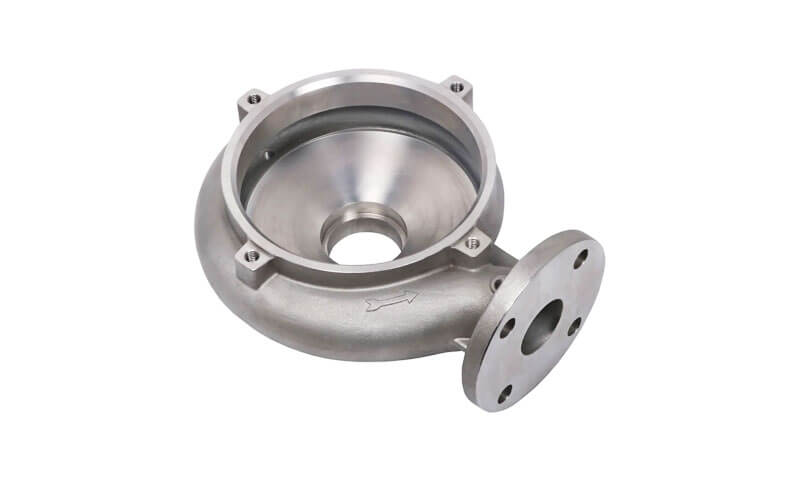
Ikkastjar ta 'investiment nickel alloy refers to cast components made from nickel-bearing alloys through the lost-wax process.
In practical industry use, this includes corrosion-resistant nickel castings under ASTM A494 and also high-performance nickel-base superalloy castings used in hot-section and highly corrosive service.
ASTM A494 explicitly treats nickel-based castings as corrosion-resistant service castings and requires heat treatment, which is a clear indicator that the alloy family is selected for performance, not just shape.
Why investment casting is used
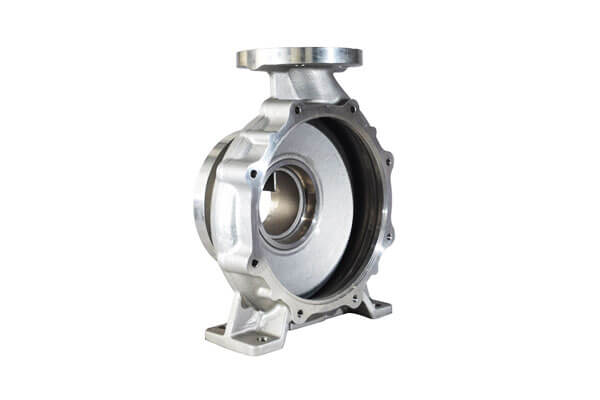
Investment casting is selected because nickel alloys often need complex passages, Ħitan irqaq, accurate interfaces, u l-kwalità tal-wiċċ that would be expensive to machine from solid stock.
The process is well known for narrow tolerances, Finitura tal-wiċċ tajba, Ġeometriji kumplessi, and thin-wall capability on the order of about 1 mm in suitable cases.
For nickel castings, that design freedom is critical because the parts are often valves, ħardwer tat-turbini, komponenti tal-pompa, chemical-service bodies, or high-temperature connectors rather than simple blocks.
Where the process boundary changes
Not every nickel alloy is processed the same way.
Corrosion-resistant nickel castings under ASTM A494 can often be handled with conventional foundry discipline,
whereas nickel-base superalloy castings for turbines and other severe-service applications are typically produced by investment casting under vacuum.
That vacuum requirement is a metallurgical decision: it protects the alloy from contamination and preserves the property set that makes nickel superalloys valuable in the first place.
2. Main Alloy Families of Investment Casting Nickel Alloys
Nickel-alloy investment casting is best understood as a family of materials with very different service roles, not a single metallurgy category.
| Familja tal-liga | Gradi rappreżentattivi | Main design role | Typical service focus |
| Monel | Monel 400, K-500, R-405 | Marine and reducing-media nickel-copper alloys | Ilma baħar, tnaqqis tal-midja, moderately corrosive environments. |
| Inconel | 600, 625, 718, C-276, 686 | Corrosion-resistant and high-temperature nickel alloys | Sħana, ossidazzjoni, Karburizzazzjoni tal-karburizzazzjoni, severe corrosion, and high-strength service. |
| Incoloy | 800, 800H, 800Ht, 825, 925 | Nickel-iron-chromium alloys for process and high-temperature service | Ossidazzjoni, Karburizzazzjoni tal-karburizzazzjoni, chloride SCC resistance, and strong general corrosion resistance. |
Hastelloy |
C-276, C-family high-alloy nickel grades | Extreme chemical-corrosion resistance | Gass qarsa, strong acids, kloruri, Pitting, korrużjoni tax-xquq, and broad chemical processing service. |
| Nikil pur / near-pure nickel | Nickel 200, Nickel 201 | High-purity nickel for specialized corrosion and thermal service | Kimika, elettroniku, and high-purity industrial environments. |
Monel Castings
Monel alloys are nickel-copper alloys.
The MONEL alloy 400 as resistant to corrosion by many reducing media and also generally more resistant to oxidizing media than higher-copper alloys, with especially strong relevance in marine applications.
That combination makes Monel one of the classic nickel-alloy families for seawater and reducing-service environments.
Gradi rappreżentattivi
The most common Monel grades in engineering use are Monel 400, Monel K-500, u Monel R-405.
Monel K-500 combines the corrosion resistance of 400 with greater strength and hardness through aluminum and titanium additions and controlled precipitation hardening, while R-405 is the free-machining grade of 400.
Karatteristiċi
Monel castings are valued for marine corrosion resistance, resistance to reducing media, and good general durability.
K-500 extends the family into higher-strength service while preserving much of the corrosion behavior of 400, which is why it is used when both corrosion resistance and strength matter.
R-405 is more machining-oriented and is mainly used where production efficiency is important rather than premium performance.
Applikazzjonijiet
Monel castings are commonly used in ħardwer tal-baħar, seawater service, pompi, valvi, Qafliet, and components exposed to reducing or mildly oxidizing environments.
The family is especially relevant where seawater exposure and corrosion durability dominate the selection criteria.
Inconel Castings
Inconel alloys are nickel-chromium-based alloys, often strengthened with molybdenum, Niobium, or other additions depending on the grade.
INC 625 as a high-strength, highly fabricable alloy with outstanding corrosion resistance,
u 718 as a high-strength, corrosion-resistant nickel-chromium material used from cryogenic temperatures up to 1300°F.
Gradi rappreżentattivi
The most important Inconel grades in investment casting are 600, 625, 718, C-276, u 686.
Liga 600 is a standard engineering nickel-chromium-iron alloy for corrosion and heat resistance, 625 is widely used for severe corrosion resistance and high-temperature oxidation resistance,
Inconel 718 is the classic high-strength age-hardenable nickel alloy, C-276 is the severe-environment corrosion alloy,
u 686 adds strong resistance to oxidizing and reducing conditions through a high Ni-Cr-Mo-W chemistry.
Karatteristiċi
Inconel is the most visibly performance-oriented nickel family.
Liga 625 is designed for high strength, excellent fabricability, and resistance to a wide range of severe corrosive environments, including oxidation and carburization.
Liga 718 adds very high strength and is widely used when the part must remain strong across a wide temperature span.
C-276 is especially strong in sour-gas and chloride-rich environments, waqt 686 pushes resistance further in very severe chemical media.
Applikazzjonijiet
Inconel castings are used for turbini, valvi, Skambjaturi tas-sħana, chemical-process equipment, seawater service, downhole and sour-gas systems, high-temperature connectors, and pressure-containing parts.
Inconel 625 for bubble caps, tubi, Bastimenti ta 'reazzjoni, Kolonni tad-distillazzjoni, Skambjaturi tas-sħana, transfer piping, u valvi, waqt 718 is a classic choice for high-strength aerospace and turbine-type applications.
Incoloy Castings
Incoloy alloys are nickel-iron-chromium alloys that sit between stainless steels and the more specialized Inconel superalloys.
Liga 800 as a ductile austenitic alloy in which chromium provides aqueous and heat resistance, iron contributes resistance to internal oxidation, and nickel maintains the ductile austenitic structure.
Gradi rappreżentattivi
The most common Incoloy grades are 800, 800H, 800Ht, 825, u 925.
Incoloy 800H and 800HT share the same basic nickel-chromium-iron chemistry as 800 but provide higher creep-rupture strength through tighter control of carbon, aluminju, and titanium and through high-temperature annealing.
Liga 825 is a nickel-iron-chromium alloy with molybdenum, ram, and titanium for exceptional corrosion resistance,
u 925 is an age-hardenable nickel-iron-chromium alloy with Mo, Cu, Ta ', and Al additions for high strength and excellent corrosion resistance.
Karatteristiċi
Incoloy castings are often chosen because they combine good corrosion resistance with better high-temperature stability than many stainless steels.
Liga 800 is readily formed, iwweldjat, u bil-makna; 800H and 800HT are selected when high-temperature creep strength matters;
Incoloy 825 is strong in reducing chemicals and chloride SCC resistance; u 925 is used when a balanced combination of strength and corrosion resistance is required.
Applikazzjonijiet
Incoloy castings are used in chemical and petrochemical processing, furnace hardware, heat-treating equipment, Komponenti tal-ġenerazzjoni tal-enerġija, seawater and sour-service hardware, and other high-temperature process equipment.
Chemical and petrochemical processing, impjanti tal-enerġija, super-heater and reheater tubing, furnaces, and heat-treating equipment for the 800-family,
u 825 is positioned for severe corrosive environments with resistance to chloride-ion stress-corrosion cracking.
Hastelloy Castings
Hastelloy-type alloys are extreme corrosion-resistance nickel alloys designed for the harshest chemical environments.
The defining logic is not just “good corrosion resistance,” but resistance to korrużjoni ġenerali, Pitting, korrużjoni tax-xquq, qsim tal-istress-korrużjoni, and sour-gas attack in aggressive chemical systems.
Hastelloy C-276 as one of the premier materials for sour natural gas, where hydrogen sulfide, dijossidu tal-karbonju, and chlorides can be extremely corrosive.
Gradi rappreżentattivi
For investment casting, the most important representative grade is HASTELLOY C-276.
Jiddependi fuq l-applikazzjoni, other high-alloy nickel grades may appear in the same severe-service category, but C-276 is the clearest benchmark for this family in corrosion-critical castings.
Karatteristiċi
Hastelloy castings are chosen when the environment is so severe that ordinary nickel-chromium alloys or stainless steels are not enough.
C-276 is distinguished by its broad resistance to chemical attack, including sour gas service and conditions that can cause brittle failure or SCC in less capable alloys.
It is a premium alloy family for environments where failure is unacceptable.
Applikazzjonijiet
Hastelloy castings are used in Ipproċessar kimiku, sour-gas handling, chloride-bearing systems, reatturi, severe-corrosion valves, pompi, and other components exposed to strong oxidizing or reducing media.
The family’s value is highest where corrosion severity overrides cost considerations.
Pure Nickel and Low-Alloy Nickel Castings
Pure nickel grades sit at the high-purity end of the nickel casting spectrum.
Nickel 200 u 201 as nickel materials used in highly specific applications, ma ' 200 family functioning as a foundational nickel reference alloy.
These grades are usually chosen not for extreme strength, but for purity, imġieba tal-korrużjoni, and compatibility with specialized process environments.
Gradi rappreżentattivi
The primary grades are Nickel 200 u Nickel 201. Nickel 201 is the lower-carbon version, generally selected where high-temperature graphitization concerns matter more.
Karatteristiċi
Pure nickel castings provide high corrosion resistance in selected environments, good thermal and electrical behavior, and high purity.
They are not the strongest nickel family, but they are valuable when chemical compatibility and stable performance matter more than maximum strength.
Applikazzjonijiet
Pure nickel castings are used in Tagħmir kimiku, high-purity process systems, specialty electrical hardware, and environments where contamination control and corrosion behavior are critical.
They are less common than Monel, Inconel, or Incoloy in structural use, but they remain important in specialist service.
3. Why Nickel Alloys Are Different Among Investment Casting Materials
Nickel alloys occupy a distinct position in investment casting because they are not selected primarily for ease of casting or low cost.
They are selected when the part must survive sħana, korrużjoni, ossidazzjoni, stress, and long service cycles at the same time.
Fi kliem ieħor, nickel alloys are not simply “strong metals.” They are environmental survival materials.
Qawwa ta 'temperatura għolja
One of the defining features of nickel alloys is their ability to retain mechanical integrity under prolonged heat exposure.
Unlike many metals that lose strength quickly as temperature rises, nickel alloys remain structurally stable over a much wider thermal window.
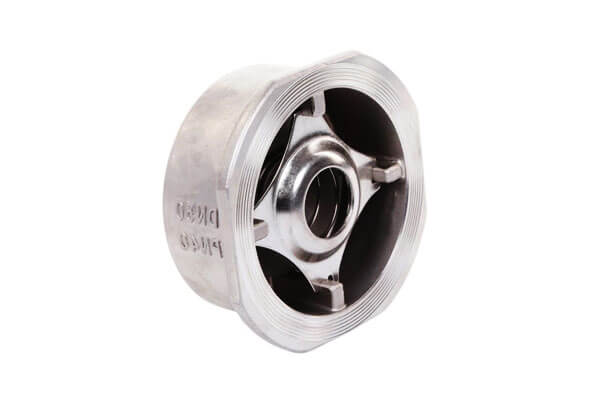
This makes them suitable for hot-section components, Sistemi ta 'kombustjoni, and other parts that must carry load while continuously exposed to elevated temperature.
Oxidation resistance at elevated temperature
F'temperatura għolja, many metals degrade through rapid oxidation.
Nickel alloys are different because they can resist oxidation much more effectively in air and reactive gas environments.
Even if the protective surface film is disrupted, it can regenerate and continue shielding the alloy.
This self-protective behavior is one reason nickel alloys are so valuable in thermal service.
Corrosion resistance in aggressive media
Nickel alloys are also distinguished by their strong resistance to chemical attack.
Their surfaces naturally develop protective oxide films that help slow degradation in acids, imluħa, alkaline media, and mixed corrosive environments.
This resistance is especially important in chemical processing, marine service, and sour or chloride-bearing environments where ordinary steels may fail prematurely.
Creep resistance and long-term dimensional stability
Another major difference is Reżistenza tal-creep. Under sustained load and high temperature, many materials gradually deform over time.
Nickel alloys are designed to suppress that slow deformation and maintain dimensional stability through long operating cycles.
This is critical in parts that must remain aligned, sealed, or load-bearing for long periods without distortion.
Mechanical toughness under repeated loading
Nickel alloys are not only strong in static service; they also offer good toughness under repeated loading.
That means they can absorb stress without brittle failure and maintain fatigue resistance in dynamic operating conditions.
For investment castings, this matters because many high-value components experience vibration, pressure cycling, Ċikliżmu termali, or repeated mechanical loading in service.
Thermal stability across wide temperature ranges
Nickel alloys are valued for their thermal stability, meaning their behavior remains comparatively predictable across heating and cooling cycles.
This reduces the risk of thermal shock failure and helps the part preserve its intended geometry and performance.
Fl-ikkastjar tal-investiment, that stability is especially important because the casting itself must not only survive the process but also remain reliable in service afterward.
Chemical stability in industrial systems
Nickel alloys are also chemically stable in the sense that they resist unwanted interaction with process fluids and gases.
This is essential in energy systems, pjanti kimiċi, and high-temperature equipment where the alloy may contact aggressive media over long periods.
Chemical stability helps ensure that the material remains functional rather than becoming a maintenance burden.
Fabrication compatibility with specialized methods
Although nickel alloys are demanding, they are still compatible with machining, iwweldjar, li jiffurmaw, and finishing when the correct process discipline is used.
That matters in investment casting because the cast part often still needs post-cast machining, jingħaqad, or surface treatment.
Nickel alloys therefore combine specialized processability ma ' specialized performance, which is part of what makes them industrially valuable.
Why this matters in investment casting
These characteristics make nickel alloys fundamentally different from many other investment-casting materials.
Carbon steels are often chosen for economy and general strength. Aluminum alloys are chosen for low weight. Stainless steels are chosen for corrosion resistance and fabricability.
Ligi tan-nikil, B'kuntrast, are chosen when the part must handle multiple severe conditions at once—especially temperature, korrużjoni, ossidazzjoni, and load.
4. Full-Chain Standardized Investment Casting Manufacturing Process
Nickel-alloy investment casting must be treated as a special-process chain, not as a generic version of steel or aluminum investment casting.
For nickel-superalloy castings, the process is therefore defined by atmosphere control, kimika tal-qoxra, Ġestjoni termali, and defect inspection, not by shape-making alone.
DFM Casting Structural Optimization Design
Wide freezing range of nickel alloy easily triggers interdendritic microporosity,
so structural design follows exclusive rules: wall thickness variation ratio limited within 2:1, all internal and external transition fillet ≥R1.0mm to eliminate sharp corner hot cracking origin;
centralized modulus-calculated risers arranged above thick-wall hot spots to realize sequential solidification feeding;
excessive isolated heavy hot spots split via structural optimization to reduce concentrated shrinkage risk.
Wax-pattern fabrication and tree layout
Once the design is fixed, the wax pattern and gating tree are built to preserve geometry and support stable filling.
Investment casting is specifically valued because it can produce complex geometries and thin-wall parts with less machining, so wax accuracy and tree layout must be managed as precision variables rather than simple tooling steps.
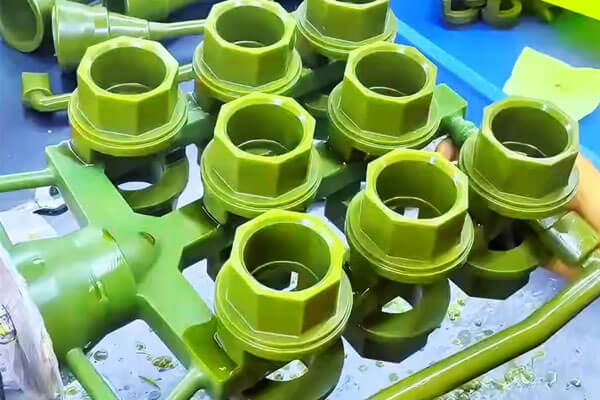
For nickel castings, the gating system should be arranged to encourage lixx, low-turbulence flow, because turbulent filling increases the risk of oxide film entrainment and internal reliability loss.
Studies on investment-cast alloys show that top and bottom filling systems can significantly affect porosity and property scatter, with bottom-filled systems often producing lower porosity in susceptible alloys.
For prototype or small-batch nickel parts, SLA-printed patterns can replace injection tooling when the economics of new tooling are not justified.
That approach is often used in investment casting because the process inherently supports rapid pattern development and complex near-net geometries.
Exclusive silica-sol ceramic shell production
For premium nickel-alloy casting, Silica-Sol ceramic shell technology is the preferred route.
Nickel superalloy casting literature shows that shell properties are critical for components cast around 1500–1550 °C,
and that zircon-based face coats are widely used because of their non-wetting behavior, low thermal expansion, u konduttività termali għolja.
Alumina-zircon and alumina-rich shell systems are also studied specifically for nickel-based superalloys because they reduce harmful metal–mold interaction.
The practical shell logic is clear:
- face coat: high-purity zircon or zircon-rich refractory to minimize reaction with the nickel melt,
- backup layers: Alumina, mullite, or alumina-bearing aggregates to raise shell strength and thermal stability,
- tnixxif: controlled temperature and humidity so the shell reaches stable strength before dewaxing and firing.
Water-glass shells are generally used for lower-cost, lower-precision alloy families
such as carbon steel, azzar b'liga baxxa, Liga tal-aluminju, and copper alloy, where the process can tolerate lower surface quality and dimensional precision.
B'kuntrast, nickel superalloy castings are typically paired with silica-sol or alumina/zircon-based shell systems because the higher refractoriness and lower chemical interaction are better suited to the alloy family.
Shell firing and preheating
After shell buildup, the mold must be dewaxed, fired, and stabilized.
Shell drying is one of the most critical stages in investment casting because temperature, umdità, and airflow determine shell integrity and defect risk.
For nickel-alloy work, the firing stage must remove residual moisture and organic residue while also stabilizing the refractory structure so the mold can survive the nickel pouring temperature without cracking or surface reaction.
The shell is then preheated before pouring to reduce thermal shock and to preserve fillability in thin or intricate sections.
Thin-wall investment casting studies show that increasing the melt temperature or exceeding the normal window can create adverse effects
such as metal–mold reaction and alloy burn-off, while insufficient thermal energy increases misrun and cold-shut risk.
Preheating is therefore part of the fill-control strategy, not merely a convenience step.
Induzzjoni bil-vakwu tidwib & Controlled Pouring
All industrial premium nickel alloy investment casting implements vacuum induction melting (Vim) under high vacuum environment below 1Pa to isolate air; molten nickel easily absorbs oxygen,
nitrogen and hydrogen under atmospheric condition to form brittle nitride/oxide inclusions deteriorating mechanical performance.
Strictly control pouring superheat within +35~50℃ above alloy liquidus; excessive superheat aggravates elemental segregation and enlarges microporosity scope,
while insufficient superheat causes incomplete thin-wall filling and cold shut defects.
Bottom laminar steady pouring is prioritized over top pouring to cut turbulent oxidation slag formation.
Post-casting finishing and nondestructive inspection
Wara solidifikazzjoni, the casting is cut off from the gating system, imnaddaf, and prepared for inspection.
For nickel-superalloy castings, inspection is not optional because internal defects can be hidden inside expensive, mission-critical parts.
The standard inspection toolkit for investment castings includes radiographic inspection for internal defects u fluorescent penetrant / liquid penetrant inspection for surface defects.
For critical nickel components, radiographic testing is especially important because it can reveal porosity, inklużjonijiet, and other internal discontinuities without destroying the part.
Surface inspection and penetrant testing complement radiography by screening for cracks and surface-connected defects before the part moves into heat treatment or final machining.
5. Key Technical Challenges of Investment Casting Nickel Alloy
Nickel-alloy investment casting is technically demanding because the alloy family combines high melting temperatures, strong solidification sensitivity, narrow defect tolerance, and severe service requirements.
Narrow process window during solidification
Nickel alloys are highly sensitive to the way they solidify.
In investment-cast nickel superalloys, macrostructure and microstructure depend strongly on cooling conditions, and that relationship directly affects the final mechanical performance.
This means the foundry must tightly control melt temperature, shell temperature, feeding design, and cooling path, because relatively small process deviations can materially change the casting outcome.
Microporosity and shrinkage control
One of the most persistent problems in nickel-alloy investment casting is mikroporożità.
Research on IN718 and other nickel-superalloy castings shows that porosity is detrimental to fatigue and stress-rupture performance, and that it is a recognized source of crack initiation in superalloy castings.
Nickel-superalloy casting studies also show that gating-system design has a direct effect on mold filling, solidifikazzjoni, and shrinkage-porosity prediction, which makes feeding design a core engineering issue rather than a secondary one.
Hot cracking and repair sensitivity
Nickel-based superalloys are also prone to Qsim sħun because their alloy chemistry and solidification behavior can create vulnerable grain-boundary conditions.
A study on IN718 investment castings found that weldability and hot-cracking susceptibility were influenced by chemical composition, rata ta 'solidifikazzjoni, and pre-weld heat treatment,
which is a reminder that the post-cast condition matters as much as the as-cast geometry.
Fil-prattika, this means nickel castings may require not only careful pouring, but also careful repair strategy and thermal management after casting.
Contamination control and vacuum discipline
For premium nickel-superalloy castings, atmosphere control is a major technical burden.
Vacuum processing is widely used because oxide inclusions and gas contamination can significantly harm mechanical performance;
one study found that lowering vacuum quality reduced tensile elongation and impact ductility sharply, while also increasing the importance of trace oxide inclusions in the melt cleanliness picture.
That is why vacuum induction melting and controlled atmosphere practice are central to nickel casting, especially for high-value components.
Thin-wall fillability and shell thermal stability
Nickel superalloy castings are often thin-walled, and that creates a second challenge: the part must fill fully before the metal loses heat and starts to freeze prematurely.
In thin-walled nickel superalloy castings, cooling rate and shell behavior strongly affect the final structure and mechanical properties,
and shell temperature disturbances can also increase shrinkage defects during investment casting more generally.
F'termini prattiċi, the shell must be hot enough and stable enough to support fillability, but not so thermally aggressive that it worsens reaction or segregation behavior.
Segregation and property scatter
Nickel alloys can develop segregation-related variability waqt is-solidifikazzjoni, and that variability matters because it can change both local microstructure and local fatigue response.
Research on centrifugal investment-cast IN713C components shows that microstructural characteristics are directly linked to fatigue life,
and that predicting fatigue behavior from defects and microstructure remains a major challenge.
The practical implication is that a nickel casting can meet nominal chemistry but still vary significantly in local performance if solidification is not well controlled.
Post-cast finishing, Spezzjoni, and repair burden
Nickel castings are usually expensive enough that defect escape is unacceptable, which means inspection requirements are stricter than for many commodity castings.
Radiographic inspection is commonly needed to detect internal microporosity and segregation-related flaws, while penetrant inspection is used to screen surface microcracks before heat treatment or further processing.
If the part must be repaired by welding or reworking, the process becomes even more sensitive because nickel-alloy hot cracking and weldability are chemistry- and thermal-history-dependent.
6. Diversified Industrial Application of Investment Cast Nickel Alloy
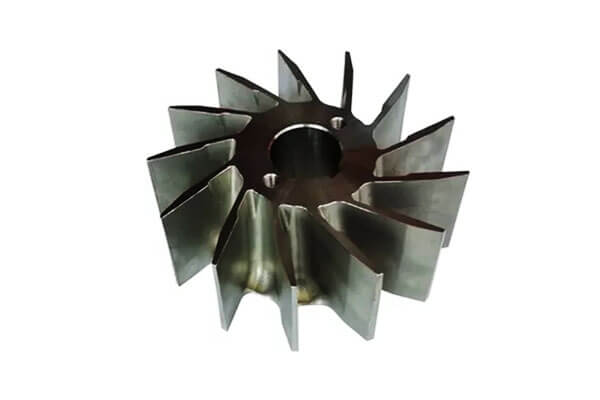
Nickel-base castings are generally used in very aggressive corrosive media and demanding applications.
That combination explains why nickel castings appear in so many critical industries rather than remaining a niche material choice.
| Industrija | Typical nickel-alloy casting role |
| Oil and gas | Downhole, wellhead, valv, pipeline, vessel, and heat-exchanger components. |
| Chemical and petrochemical | Pompi, valvi, reatturi, pajpijiet, and process vessels. |
| Nuclear and power | Heat-transfer systems, Sistemi ta 'tkessiħ, reactor-vessel components, bojlers, and turbines. |
| Marine and offshore | Offshore piping, seawater-exposed hardware, and marine service components. |
| Enerġija rinnovabbli | Riħ, hydro, geothermal, solar-thermal, and energy-storage hardware. |
| Farmaċewtiku / hygienic process | Product-contact and clean-process components. |
7. Performance Comparison: Investment Cast Nickel Alloy vs Stainless Steel & Liga tat-titanju
| Performance dimension | Cast Nickel Alloy (INCONEL 625 benchmark) | Cast Duplex Stainless Steel (ASTM A890 Grad 4A / CD3MN) | Cast Grade 5 Liga tat-titanju (Ti-6al-4v ) |
| Densità | 8.44 g / cm³. | 7.8 g / cm³. | 4.43 g / cm³. |
| Saħħa tar-rendiment | Rp0.2 ≥ 380 MPA. | Rp0.2 ≥ 415 MPA. | Saħħa tar-rendiment 1100 MPA. |
| Saħħa tat-tensjoni aħħarija | Rm ≥ 760 MPA. | Rm ≥ 620 MPA. | Uts 1170 MPA. |
| Titwil | A5 ≥ 35%. | A ≥ 25%. | 10%. |
| Temperatura tas-servizz / Stabbiltà termali | Used from cryogenic service to 982°C (1800° F.). | Typical service range shown as about -29°C to 316°C. | Can be employed up to around 400°C. |
| Korrużjoni / Reżistenza Ambjentali | Reżistenza pendenti tal-korrużjoni, inkluż l-ilma baħar, pitting/crevice corrosion, ossidazzjoni, and chloride-ion SCC resistance. | Good pitting and SCC resistance; duplex structure gives improved resistance over standard austenitic grades. | Excellent corrosion resistance in many media; rated very strong in seawater, weak acids, and weak alkalis. |
Fabbrikazzjoni / processing difficulty |
Very fabricable for a nickel superalloy and readily welded, but remains a premium high-performance alloy. | Higher strength means higher forming forces, more springback, and more machining effort than austenitic stainless steels. | Machining requires slow speeds, heavy feeds, rigid tooling, and non-chlorinated coolant; alpha case must be removed after processing, and welding needs strict shielding. |
| Best-fit role | Severe corrosion plus high-temperature service, especially chemical, Marine, and hot-section applications. | High-strength corrosion-resistant cast parts, especially pressure-bearing and chloride-exposed service. | Weight-critical, saħħa għolja, corrosion-sensitive components where low mass is decisive. |
8. Konklużjoni
Investment casting nickel alloy is a sophisticated multi-element engineered material system integrating solid-solution, precipitation and carbide composite strengthening mechanisms, occupying the high-end niche of precision investment casting industry.
The whole production chain strictly relies on full vacuum melting and high-purity silica sol ceramic shell manufacturing; water glass forming technology is fundamentally incompatible due to alkali impurity induced material brittleness defect.
From application matching perspective, solid-solution Hastelloy series dominates petrochemical corrosive equipment field,
precipitation-hardened Inconel superalloy becomes the backbone of aerospace high-temperature hot-end component manufacturing,
while carbide-reinforced nickel grades are specialized for high-temperature wear-resistant industrial furnace fittings.
Although plagued by high raw material cost, severe casting segregation and high production technical threshold, targeted microalloy modification,
casting simulation optimization and composite structural design effectively alleviate inherent drawbacks and expand economical application boundaries.
With continuous advancement of microalloy development and intelligent simulation foundry technology, investment casting nickel alloy will further lower comprehensive production cost and improve as-cast metallurgical compactness,
continuing to be the irreplaceable core high-performance casting material supporting global high-end industrial equipment upgrading in clean energy, aviation and advanced chemical engineering.
FAQs
Why is water glass shell forbidden for nickel alloy investment casting?
Residual sodium oxide inside cured water glass shell diffuses into high-temperature molten nickel,
generating intergranular alkali-induced brittleness and deteriorating high-temperature mechanical and corrosion resistance; only high-purity silica sol shell is permitted.
What heat treatment is required for Hastelloy C276 castings?
Single high-temperature solution quenching treatment to dissolve intergranular precipitated carbides and restore full solid-solution structure for maximum anti-corrosion performance, low-temperature aging is prohibited.
Can nickel alloy replace titanium alloy for marine lightweight components?
Nickel alloy features superior mixed acid corrosion resistance but higher density and cost;
prioritize titanium for weight-sensitive cold-section marine parts, nickel alloy for high-temperature corrosive marine fluid control fittings.

