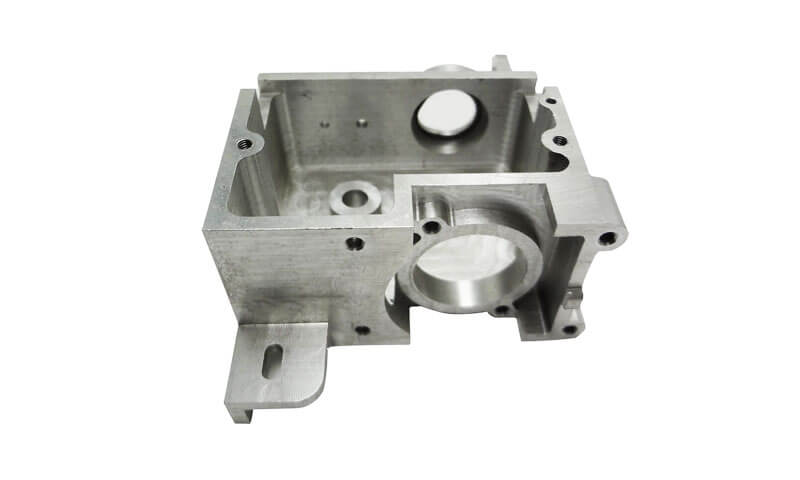
Introduzzjoni
Azzar liga investment casting is a precision manufacturing route that combines the near-net-shape capability of investment casting ma ' mekkaniku, ilbies, korrużjoni, and temperature performance of alloyed steels.
In ASTM’s steel-casting standards framework, investment castings are a formal category in their own right,
and the applicable specification set spans carbon steels, Azzar b'liga baxxa, austenitic manganese steels, heat-resistant iron-chromium and iron-chromium-nickel steels,
corrosion-resistant stainless families, duplex families, precipitation-hardening stainless, ligi tan-nikil, and high-strength structural grades.
That breadth is one of the strongest signals of how mature and metallurgically important the process is.
1. What Is Alloy Steel Investment Casting?
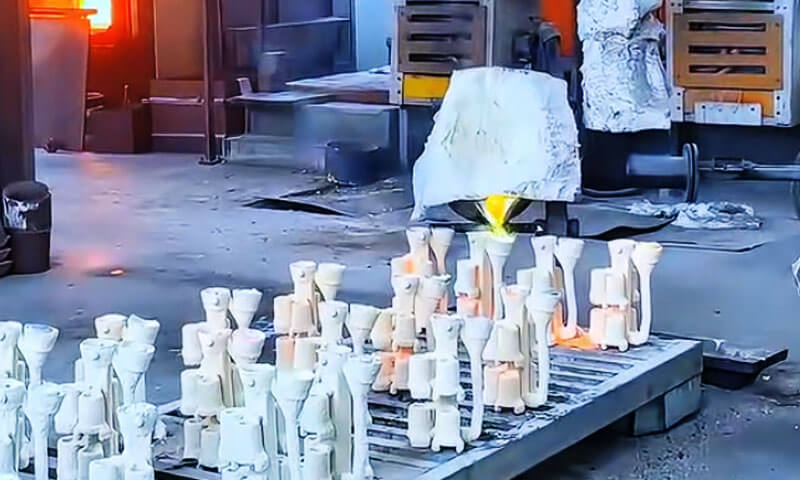
Azzar liga ikkastjar ta 'investiment is the process of making steel or alloy steel components by first producing a wax pattern, building a ceramic shell around it, dewaxing the shell, and then pouring molten metal into the cavity.
The method is also known as the Proċess ta 'xama' mitluf, and foundry references describe it as a precision casting route that can employ shell molds and, in some variants, vacuum or gravity pouring.
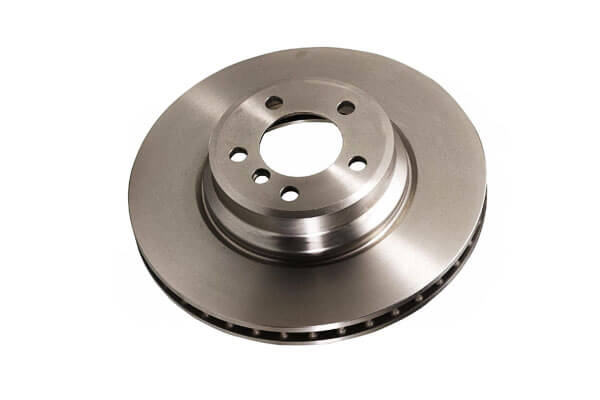
Minn perspettiva ta 'inġinerija, the process is best understood as a near-net-shape steel manufacturing strategy.
The ceramic shell captures fine geometry, while the steel alloy and subsequent thermal treatment deliver the final mechanical performance.
Because the casting is already close to its final dimensions, the process can reduce the amount of machining required later, especially on parts with intricate features that would be difficult to machine conventionally.
A useful way to summarize the process is that the shell makes the shape, the steel makes the properties, and the heat treatment finishes the metallurgy.
That is why alloy steel investment casting is used in applications where geometry and performance must be optimized together rather than separately.
2. Common Alloy Families and Representative Grades
| Familja tal-liga | Representative standards / gradi | Typical engineering character | Common service logic |
| Carbon steel investment castings | ASTM A27 grades such as 60-30, 70-36, 70-40; ASTM A216 grades such as WCA and WCB; ASTM A732 for carbon and low-alloy investment castings; ASTM A957 common requirements. | Baseline strength and economy, with heat treatment used to tune properties. | Partijiet industrijali ġenerali, makkinarju, pressure-related components, and structural hardware. |
| Low-alloy steel investment castings | ASTM A732 low-alloy investment castings; ASTM A958 grades such as 60-30, 65-35, 70-36, 70-40; ASTM A148 structural grades from 80-40 permezz 210-180. | Better hardenability and property tuning than plain carbon steels. | Heavier-duty parts that need quench-and-temper or normalize-and-temper response. |
| Austenitic manganese steel | ASTM A128/A128M listed under the A957 umbrella. | Work-hardening, impact-resistant behavior. | Wear-heavy service where toughness and resistance to deformation matter. |
Heat-resistant iron-chromium and iron-chromium-nickel steels |
ASTM A297/A297M, including grades used for heat-resistant service such as Hf, HH, HI, HK, HE, Ht in the standard family summarized by SFSA. | Designed for elevated-temperature stability and oxidation resistance. | Furnace hardware, hot-section components, and thermal-service parts. |
| Corrosion-resistant stainless / duplex families | ASTM A743/A743M, A744/A744M, A747/A747M; ASTM A890/A890M duplex castings. | Corrosion resistance and application-specific metallurgy. | Kimika, Marine, and pressure-containing environments. |
| Specialty high-temperature alloys | ASTM A447, A494, A560, A1002 listed in the A957 scope. | Narrowly targeted high-temperature or special-service performance. | Severe-service components where standard steels are not enough. |
The standards landscape itself tells the story: alloy steel investment casting is not a single-material niche,
but a broad family of steels governed by common requirements and specialized chemistry/performance categories.
ASTM’s A957 specification is especially important here because it functions as a common requirement framework for steel and alloy investment castings,
while A732 specifically covers carbon and low-alloy steel investment castings for general application.
3. Complete Production Workflow of Alloy Steel Investment Casting
| Pass | What happens | Għaliex huwa importanti |
| 1. Pattern making | A wax or plastic replica of the final part is produced. | This pattern defines the near-net geometry and dimensional basis of the casting. |
| 2. Assemblaġġ / gating | Patterns may be attached to a central sprue to form a cluster. | The cluster controls how metal enters and how shrinkage is managed. |
| 3. Bini tal-qoxra | The pattern assembly is repeatedly dipped in ceramic slurry and coated with refractory material until a shell is built. | The shell becomes the mold cavity and must be strong enough to hold the metal and thermal load. |
| 4. Dewaxing | Ix-xama tinħall, typically by steam autoclave or combustion-based burnout. | Leaves a hollow cavity that matches the pattern exactly. |
| 5. Shell firing / sħana minn qabel | The ceramic shell is fired before pouring. | Removes residue and preheats the mold for stable filling and solidification. |
6. Tferrigħ |
Molten alloy steel is poured into the hot shell. | This is where fillability, fluwidità, and thermal control begin to matter most. |
| 7. Solidifikazzjoni | The metal freezes inside the shell. | Solidification controls grain structure, jinxtorob, and much of the final quality. |
| 8. Knockout and cleaning | The shell is broken away and the casting is cleaned, trimmed, and prepared for inspection. | Turns the rough as-cast part into a usable steel component. |
| 9. Trattament tas-sħana | The casting may be normalized, normalized-and-tempered, or quenched-and-tempered depending on grade. | Tunes the final strength, ebusija, ebusija, u duttilità. |
| 10. Spezzjoni / irfinar | Kontrolli dimensjonali, surface checks, and any required machining are completed. | Confirms the part meets the specified material and geometry requirements. |
A strong way to think about the workflow is that alloy steel investment casting is le just “pouring steel into a mold.”
It is a sequence of shape transfer, shell engineering, Kontroll termali, and metallurgical property development. The final part is the result of all four working together.
4. Why Alloy Steel Investment Casting Matters
Alloy steel investment casting matters because it allows engineers to make parts that are kumpless ġeometrikament but still need steel-level performance.
Industry literature on investment casting emphasizes near-net-shape production, Finitura tal-wiċċ eċċellenti, Dettall fin, and the ability to eliminate or reduce costly milling, tidwir, tħaffir, and grinding steps.
That near-net-shape advantage becomes especially important when the material is difficult to machine or the geometry is too intricate to fabricate economically from stock.
In the investment-casting context, the designer can often achieve close tolerance and detailed shape in one process, then reserve machining only for critical faces, ħjut, or mating surfaces.
Fi kliem ieħor, alloy steel investment casting is valuable because it lets manufacturers optimize total part cost, not just raw material cost or machining cost in isolation.
That is why the process remains important in high-value steel applications where the full lifecycle of the part matters.
5. Core Technical Challenges and Quality Control
Kontroll tas-solidifikazzjoni
Solidification is the critical moment in any casting.
ASM’s solidification reference notes that solidification strongly affects microstructure and mechanical properties, which is why thermal control during freezing is so central to sound casting practice.
In alloy steel investment casting, solidification determines grain structure, shrinkage behavior, and the final distribution of defects.
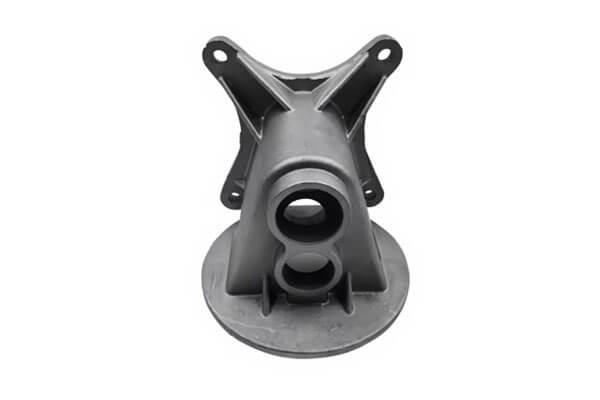
Jinxtorob u porożità
If feeding is insufficient or the thermal path is poorly designed, shrinkage cavities or porosity can form in the last-freezing areas.
This risk is especially important in complex steel investment castings because section changes, thick bosses, and isolated hot spots can trap liquid metal in ways that are not obvious from the outside.
A properly built sprue/tree system and a high-quality shell help keep porosities in the tree rather than in the casting.
Composition control
ASTM A957 explicitly requires chemical, sħana, and product analyses for elements such as carbon, Manganiż, Silikon, Fosfru, Kubrit, Nickel, kromju, molibdenu, vanadju, Tungstenu, ram, u aluminju.
That means alloy steel investment casting is chemically disciplined by design; it is not enough for a part to look right if its chemistry is off.
Heat-treatment sensitivity
Heat treatment is part of the quality system, not an afterthought.
SFSA’s steel-casting summary shows common investment-cast conditions such as A (Anzjan), N (Normalizzat), NT (normalized and tempered), u Qt (imkessaħ u ttemprat).
Those designations reflect the fact that the same casting can be tuned to very different property states depending on the intended service condition.
Surface and inspection control
Because investment castings are expected to be close to final shape, surface quality and visual acceptance are part of the process logic.
ASTM and SFSA reference frameworks both treat investment castings as precision steel products with defined acceptance and analysis requirements,
which is why inspection, tindif, and surface review are core elements of the process rather than optional finishing steps.
6. Heat Treatment and Property Tuning
Heat treatment is one of the most important value-adding steps in alloy steel investment casting.
The casting gives the part its shape, but heat treatment gives it its final balance of saħħa, ebusija, ebusija, duttilità, u stabbiltà dimensjonali.
For many alloy steel castings, the as-cast condition is only an intermediate state; the real engineering performance is established after the thermal cycle is completed.
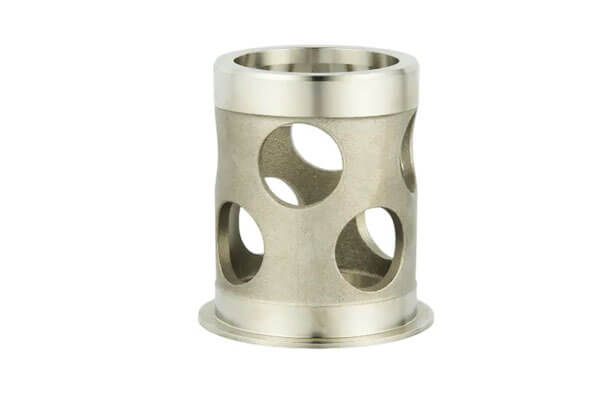
Common heat-treatment routes
Ttremprar
Used to soften the casting, ittejjeb il-makkinarju, and reduce internal stress.
It is often selected when the part needs further machining or when the casting must be stabilized before later processing.
Normalizzazzjoni
Used to refine grain structure and improve property uniformity.
Normalizing is especially useful when the casting needs a more balanced combination of strength and toughness than the as-cast structure can provide.
Normalizing and tempering
A common route for many carbon and low-alloy steel castings. The normalization step refines the structure, while tempering helps control brittleness and improve service toughness.
Tkessiħ u ttemprar
Used when higher strength and hardness are required. The quench produces a harder structure, and the temper adjusts the final balance between strength and toughness.
Trattament tas-Soluzzjoni / stabilization treatments
Used for selected stainless and specialty alloy castings to control corrosion resistance, Stabbiltà tal-fażi, and dimensional behavior.
Practical examples
- Carbon steel investment castings often use annealed, Normalizzat, or normalized-and-tempered conditions.
- Low-alloy steel castings may require quench-and-temper treatment to reach higher strength levels.
- Heat-resistant or stainless castings may need solution, stabilization, or special thermal cycles depending on the grade and service environment.
7. Typical Applications of Alloy Steel Investment Castings
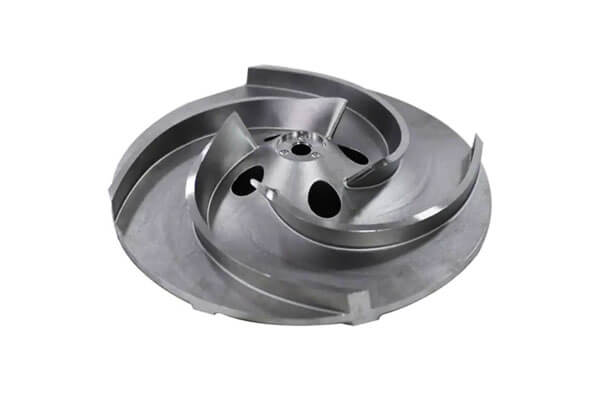
Alloy steel investment castings are used where Ġeometrija kumplessa, steel-level strength, and controlled service performance must coexist in the same component.
The process is especially valuable when the part would be too difficult, too wasteful, or too costly to machine from solid stock.
General industrial machinery
- Pump bodies and pump impellers
- Korpi tal-valv, bonnets, and internal flow components
- Gear housings and mechanical covers
- Machine brackets, jappoġġja, u konnetturi
These parts benefit from the ability of investment casting to produce detailed internal shapes, Uċuħ lixxi,
and near-net geometry, while the steel alloy provides structural reliability and service life.
Pressure and flow-control equipment
- Pressure-containing valve parts
- Pipeline connectors
- Flow nozzles and actuator housings
- Precision fittings for industrial systems
In this category, the process is attractive because sealing surfaces, passaġġi tal-fluss,
and mounting features can often be cast close to final shape, reducing later machining while preserving the required material performance.
Komponenti reżistenti għall-ilbies
- Levers and linkages subject to repeated loading
- Wear shoes and contact components
- Mining and material-handling parts
- High-impact machine parts
Low-alloy and manganese steel investment castings are often selected here because they can be heat treated for strength and toughness, or work-hardened where impact resistance is the priority.
High-temperature and furnace hardware
- Furnace fixtures
- Heat-resistant brackets and supports
- Burner-related components
- Thermal-service housings and internal hardware
Heat-resistant iron-chromium and iron-chromium-nickel castings are especially useful in this area
because they retain functional integrity in elevated-temperature environments where ordinary carbon steels would soften or oxidize too rapidly.
Corrosion-resistant and chemical-service parts
- Stainless steel pump and valve components
- Chemical-processing housings
- Marine-related fittings
- Duplex and corrosion-resistant service parts
Corrosion-resistant alloy steel investment castings are valuable where fluid compatibility, Reżistenza għall-korrużjoni, and dimensional precision must be combined in one part.
- Brackets and mounts
- Locking and support elements
- Structural connectors
- Load-bearing hardware with complex geometry
These parts often require a combination of geometry optimization and reliable mechanical properties.
Investment casting allows the designer to build function into the shape while keeping the alloy selection tied to the load case.
8. Unique Advantages of Alloy Steel Investment Casting
Alloy steel investment casting has a distinct value proposition.
It is not merely a way to make steel parts; it is a way to make steel parts with geometry and property control that would be difficult to achieve by other methods.
Near-net-shape efficiency
- Produces parts close to final geometry
- Reduces raw material waste
- Minimizes heavy machining on complex features
- Lowers total processing time for difficult shapes
This is one of the strongest reasons for choosing the process.
When a component has undercuts, Ħitan irqaq, kurvi, boxxli, jew dettall fin, the casting route often saves more than it costs.
Kapaċità kumplessa tal-ġeometrija
- Handles shapes that are difficult to machine conventionally
- Supports internal and external detail
- Allows consolidation of multiple features into one part
- Reduces the need for weldments or assemblies
In many applications, this means the casting can replace a multi-part fabricated structure with one integrated component.
Broad material flexibility
- Carbon steel for economy
- Low-alloy steel for strength tuning
- Heat-resistant steels for thermal service
- Stainless and duplex steels for corrosion resistance
- Specialty alloys for niche service conditions
This flexibility is a major advantage because the casting route is not tied to one metallurgy.
The designer can choose the alloy family that matches the part’s actual environment.
Heat-treatment compatibility
- Annealed states for machinability
- Normalized states for refined structure
- Quenched-and-tempered states for strength
- Special thermal cycles for stainless or heat-resistant grades
This gives manufacturers a second engineering lever after alloy selection.
The same basic casting can be adapted to very different performance targets through thermal processing.
Good surface quality
- Better detail reproduction than many rough-forming routes
- Reduced need for extensive cleanup on functional surfaces
- Suitable for parts where appearance and fit both matter
The shell mold captures fine details effectively, which is especially useful when the final part needs both functional precision and controlled appearance.
Design consolidation
- Replaces multiple machined or welded pieces
- Reduces joints and assembly interfaces
- Can improve repeatability across production runs
- Often improves part integrity by removing weld-related variability
This is one of the less obvious but highly important advantages. Fewer joins usually means fewer sources of failure.
Economic advantage at complexity
- Tooling and shell-making are justified by part complexity
- Lowers total cost when machining would be excessive
- Especially attractive for medium-volume production
- Can be more economical than billet machining for intricate steel parts
The key point is that cost should be judged at the component level, not only at the mold level or the machining-hour level.
9. Alloy Steel Investment Casting vs CNC Machining
Alloy steel investment casting and CNC machining are not competing methods in a simple sense; they solve different manufacturing problems.
Investment casting is a near-net-shape forming process that creates the part by pouring molten alloy steel into a ceramic shell.
CNC machining is a Proċess li jitnaqqas that removes material from a solid stock, Forġa, or preform until the final geometry is reached.
| Comparison Aspect | Alloy Steel Investment Casting | Azzar tal-liga Makkinar CNC |
| Core manufacturing logic | Builds the part by casting molten alloy steel into a ceramic mold made from a wax pattern. | Builds the part by cutting material away from solid stock. |
| Geometry capability | Excellent for complex shapes, sezzjonijiet irqaq, Undercuts, internal details, and integrated features. | Excellent for precision features and simple-to-moderately complex parts, but geometry is limited by tool access. |
| Effiċjenza tal-materjal | Very efficient for near-net-shape parts because little material needs to be removed later. | Less efficient for complex parts because much of the stock becomes chips. |
| Tolerance strategy | Good near-net-shape accuracy, with critical surfaces often finished by machining. | Superior precision on directly machined surfaces and critical datums. |
Surface condition |
Good as-cast detail reproduction; some surfaces may still require finish machining or cleaning. | Excellent on machined faces, bores, ħjut, u uċuħ li jissiġillaw. |
| Best volume range | Economical for low-to-medium and medium-volume parts with complexity. | Ekonomiku għall-prototipi, produzzjoni ta’ volum baxx, and parts with frequent design changes. |
| Għodda / setup | Requires patterns, bini tal-qoxra, and process control before pouring. | Requires fixtures, għodda, and machine time, but no casting mold is needed. |
| Ħin taċ-ċomb | Longer upfront because the pattern and shell process must be established. | Faster for early prototypes or design iterations. |
Flessibilità tal-materjal |
Broad alloy-family flexibility, including carbon steels, Azzar b'liga baxxa, Stainless, duplex, and heat-resistant families. | Can machine nearly any steel, but the starting stock must already exist in the required form. |
| Mechanical property development | Strength and toughness are tuned through alloy choice plus heat treatment after casting. | Final properties come mainly from the starting material and any post-machining thermal treatment. |
| Parti Konsolidazzjoni | Can combine multiple features into one integrated component, reducing assembly count. | Usually cannot eliminate part consolidation unless the geometry is simple or stock is already near final form. |
| Typical risks | Jinxtorob, porożità, shell defects, solidification issues, and heat-treatment distortion. | Ilbes tal-għodda, chatter, Burrs, distortion from clamping, and high scrap for complex shapes. |
10. Konklużjoni
Alloy steel investment casting is a process built on precision geometry and metallurgical control.
It combines the shape freedom of the lost-wax route with the performance potential of carbon steels, Azzar b'liga baxxa, Azzar li ma jissaddadx, and heat-resistant steel families.
The process is especially valuable when a designer needs near-net-shape efficiency without sacrificing the ability to specify a steel alloy for strength, ilbies, pressjoni, or temperature service.
Its technical success depends on three things: sound shell-making, Solidifikazzjoni kkontrollata, and correctly matched heat treatment.
When those three are aligned, alloy steel investment casting can produce parts that are complex, durabbli, and highly engineered.
That is why it remains a core manufacturing route for demanding industrial components.
FAQs
Is alloy steel investment casting the same as ordinary steel casting?
Nru. It is a specific steel-casting route that uses wax or plastic patterns and ceramic shells to create near-net-shape parts.
ASTM A732 explicitly identifies carbon and low-alloy steel castings made by the investment-casting process.
Why use investment casting instead of machining a steel part from solid stock?
Because investment casting can produce more complex shapes with less wasted material and fewer machining steps, especially when the geometry includes fine detail, Ħitan irqaq, or internal curvature.
The process description and standards framework show that the route is intended for complex, controlled steel castings.
Which alloy families are most common?
Azzar tal-karbonju, Azzar b'liga baxxa, austenitic manganese steels, and heat-resistant iron-chromium / iron-chromium-nickel steels are all represented in the steel investment-casting standards framework.
Why is heat treatment so important?
Because steel investment castings often require property tuning after solidification.
Standards and delivery conditions commonly allow annealing, Normalizzazzjoni, ittemprar, or quench-and-temper cycles depending on the grade.
What is the biggest technical risk?
Solidification-related defects are among the most important risks, because the freezing stage controls both microstructure and mechanical properties.
If feeding and thermal design are poor, shrinkage and porosity can develop in the casting’s last-freezing regions.