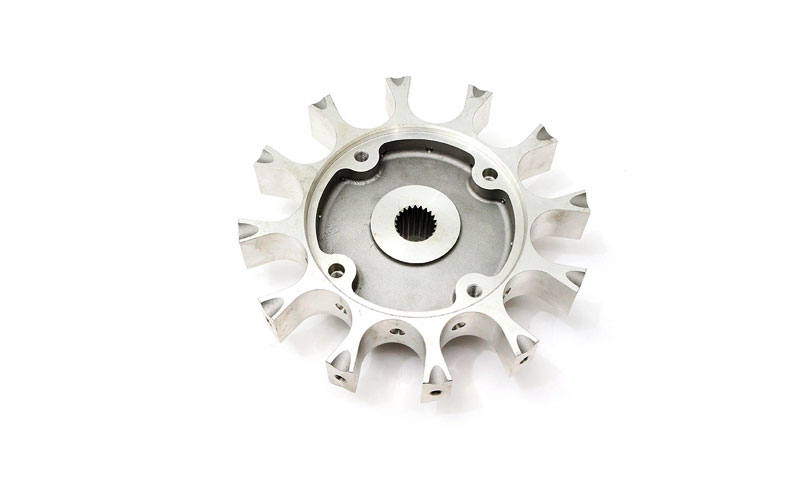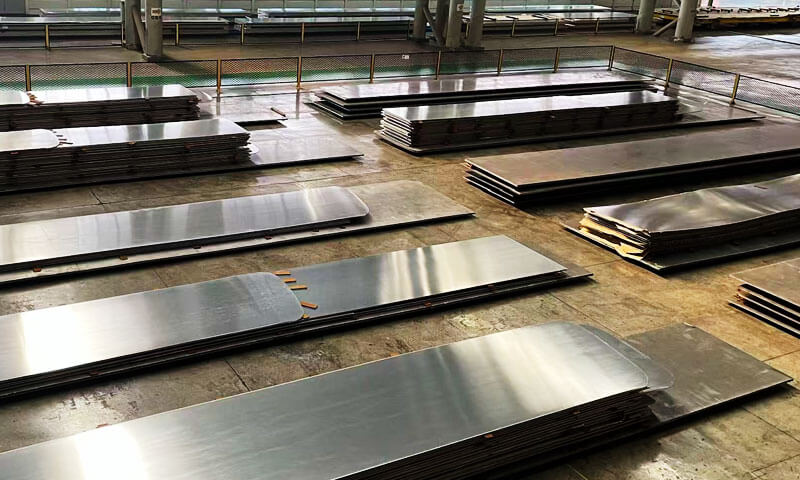
Sheet metal is one of the most widely used forms of engineering material in modern manufacturing.
From automotive body panels and aircraft structures to electrical enclosures, roofing systems, rūpnieciskā mašīna, virtuves aprīkojums, and precision components, sheet metal provides an efficient combination of izturība, Formīgums, dimensional versatility, un ražošanas ekonomika.
Tomēr, the term “sheet metal” does not refer to a single material.
It encompasses a broad range of metallic products manufactured in relatively thin, flat forms, ieskaitot oglekļa tēraudu, nerūsējošais tērauds, alumīnijs, vara, misiņš, titāns, niķeļa sakausējumi, and various coated or surface-engineered materials.
Each material family has a distinct combination of mechanical properties, izturība pret koroziju, blīvums, vadītspēja, Formīgums, un izmaksas.
This article provides a comprehensive classification of the major types of sheet metal and examines their characteristics, ražošanas metodes, un rūpnieciskās lietojumprogrammas.
1. What Is Sheet Metal?
Sheet metal is a flat metal product manufactured with a relatively small thickness compared with its length and width.
It is commonly supplied as individual sheets, spoles, sloksnes, or other continuously rolled forms and can be further processed through cutting, saliekšana, apzīmogošana, zīmēšana, štancēšana, metināšana, un virsmas apdare.
Unlike bulk metal products such as bars, sagataves, or castings, sheet metal is specifically designed to provide a combination of large surface area, kontrolēts biezums, and efficient formability.
These characteristics make it particularly suitable for manufacturing lightweight structures, iežogojums, paneļi, aptver, kanāli, iekavas, apvalki, and formed components.
Loksne, Foil, Strip, and Plate
The boundaries between foil, lapa, sloksne, and plate are not universally identical across all industries and standards.
Classification may depend on the material, regional standard, and manufacturing sector. Tomēr, these products can generally be distinguished by their relative thickness and form.
| Metal Product Form | General Characteristics | Tipiskas lietojumprogrammas |
| Metal Foil | Extremely thin and flexible flat metal product | Iesaiņojums, baterijas, izolācija, elektronika |
| Loksne | Mazs, flat metal product suitable for cutting and forming | Panels, iežogojums, ierīces, automobiļu komponenti |
| Metal Strip | Šaurs, continuously rolled flat product, often supplied in coils | Avoti, elektriskie kontakti, apzīmogoti komponenti |
| Plate Metal | Thicker flat product with greater structural capacity | Smagais aprīkojums, spiediena tvertnes, kuģu būve, strukturālās sastāvdaļas |
2. Types of Sheet Metal by Material
The most important classification method is based on the metal or alloy from which the sheet is produced.
Different material families provide fundamentally different combinations of strength, blīvums, izturība pret koroziju, vadītspēja, un ražojamība.
Carbon Steel Sheet Metal
Oglekļa tērauds is one of the most widely used and economical forms of sheet metal.
Its primary constituents are iron and carbon, with additional elements such as manganese, silīcijs, fosfors, and sulfur present in controlled quantities.
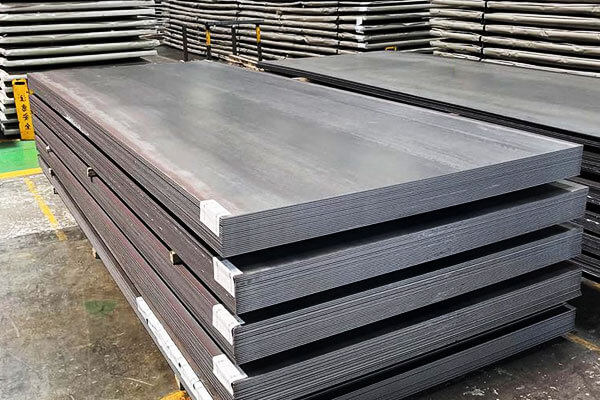
Low-carbon steel sheet is particularly important because of its good balance between strength, elastība, metināmība, un izmaksu efektivitāte.
It can be readily cut, bente, apzīmogots, and welded, making it suitable for a wide range of general manufacturing applications.
Carbon steel sheet is commonly available in both hot-rolled and cold-rolled forms.
Hot-rolled carbon steel is generally selected for structural and industrial applications where extremely tight dimensional tolerances or highly refined surface quality are not the primary requirements.
Cold-rolled carbon steel, turpretī, provides improved thickness control and surface finish. It is commonly used for automotive components, ierīces, skapīši, precision fabrications, and formed parts.
High-strength steel sheets are also used where improved load-bearing performance is required without a proportional increase in thickness.
The primary limitation of uncoated carbon steel is its susceptibility to atmospheric corrosion. Šī iemesla dēļ, it is frequently painted, pulverkrāsots, pārklāts, or galvanized.
Stainless Steel Sheet Metal
Nerūsējošais tērauds sheet is an iron-based alloy product containing sufficient chromium to form a passive surface film that improves resistance to corrosion and oxidation.
Its performance can be tailored through alloying elements such as nickel, molibdēns, slāpeklis, mangāns, un ogleklis.
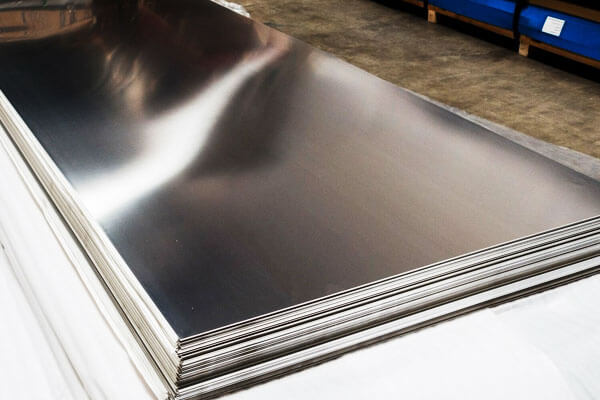
Different metallurgical structures create several major stainless steel families, each with different properties.
| Nerūsējošā tērauda tips | Tipiskas pakāpes | Galvenās īpašības | Tipiskas lietojumprogrammas |
| Austenīts | 304, 304Lukturis, 316, 316Lukturis, 904Lukturis | Lieliska izturība pret koroziju, laba formējamība un metināmība | Pārtikas aprīkojums, ķīmiskais aprīkojums, arhitektūras paneļi |
| Ferīta | 430, 409 | Magnētisks, laba pretestība pret oksidāciju, relatively economical | Ierīces, automobiļu komponenti, Dekoratīvie paneļi |
| Martensīts | 410, 420, 440 sērija | Termiski apstrādājams, high hardness and wear resistance | Asmeņi, industrial wear parts, specialized components |
| Divstāvu | 2205, 2507 | High strength and strong resistance to chloride environments | Jūras, ķīmiskā apstrāde, energy equipment |
Austenitic grades such as 304 un 316 are among the most commonly used stainless steel sheet materials because they combine corrosion resistance with good fabrication performance.
Stainless steel sheet is particularly suitable for applications where higiēna, izturība pret koroziju, tīrība, un ilgs kalpošanas laiks ir kritiski.
It is widely used in food processing, medicīniskais aprīkojums, ķīmiskā apstrāde, architectural construction, transports, un rūpnieciskā mašīna.
Aluminum Sheet Metal
Alumīnijs sheet is valued primarily for its low density, augsta izturība pret koroziju, Laba formablitāte, and favorable strength-to-weight ratio.
Compared with conventional steel, aluminum can significantly reduce component weight, making it important in transportation, avi kosmosa, autobūves, jūras, elektronika, and construction applications.
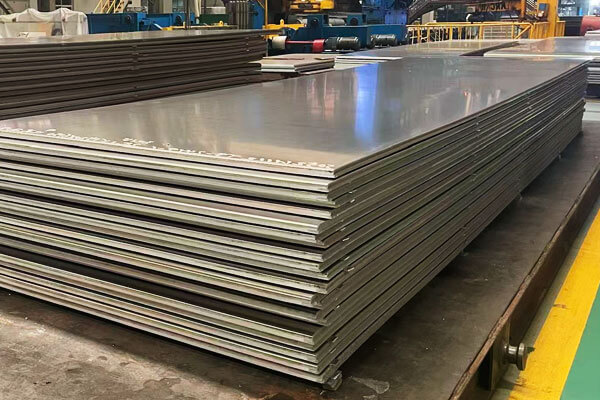
Different aluminum alloy series are selected according to required performance.
| Sakausējumu sērija | Representative Grades | Galvenās īpašības | Tipiskas lietojumprogrammas |
| 1xxx | 1050, 1060, 1100 | Augsta tīrība, excellent corrosion resistance and conductivity | Electrical and chemical applications |
| 3xxx | 3003, 3004 | Good formability and corrosion resistance | Jumta segums, beverage containers, general fabrication |
| 5xxx | 5052, 5083, 5754 | High corrosion resistance and good weldability | Jūras, transports, tvertnes |
| 6xxx | 6061, 6063 | Good strength and heat-treatability | Structural and engineering components |
| 7xxx | 7075 | Ļoti augstas izturības | Aerospace and high-performance applications |
The selection of aluminum sheet depends heavily on the manufacturing process.
Some alloys provide excellent formability but relatively moderate strength, while high-strength heat-treatable alloys may be more difficult to form.
Galvanized Steel Sheet
Galvanized steel is carbon steel or low-alloy steel protected by a zinc-based coating.
The coating acts as a corrosion-protection system by creating a physical barrier between the steel substrate and the environment.
Zinc can also provide sacrificial protection because it is more electrochemically active than iron.
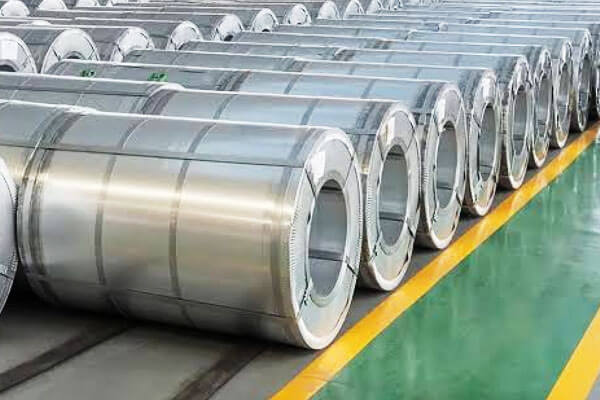
The two common categories are:
- Karstā dip cinkots tērauds, produced by coating the steel through immersion in molten zinc
- Electro-galvanized steel, produced through an electrolytic deposition process
Galvanized sheet is widely used in roofing, construction panels, HVAC sistēmas, automobiļu komponenti, agricultural equipment, and general outdoor structures.
Its main advantage is the combination of the structural strength and low cost of steel with improved corrosion resistance.
Copper Sheet Metal
Varš sheet is primarily selected for its exceptional electrical conductivity, siltumvadītspēja, izturība pret koroziju, un formablitāte.
It can be readily formed into complex shapes and is widely used in electrical equipment, heat-transfer systems, jumta segums, architectural applications, un elektroniskās sastāvdaļas.
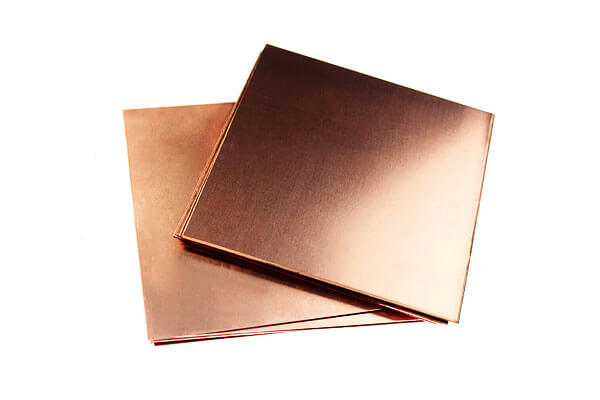
Copper also develops a natural surface patina during long-term atmospheric exposure.
In architectural applications, this characteristic may be considered a desirable aesthetic feature rather than a defect.
The relatively high material cost of copper generally limits its use to applications where its conductivity, korozijas uzvedība, or appearance provides a clear functional advantage.
Brass Sheet Metal
Brass is a copper-zinc alloy that combines good corrosion resistance with excellent formability, mašīnīgums, and a distinctive gold-colored appearance.
The properties of brass vary according to zinc content and additional alloying elements.
Different brass compositions can be optimized for deep drawing, apstrāde, izturība pret koroziju, or mechanical strength.
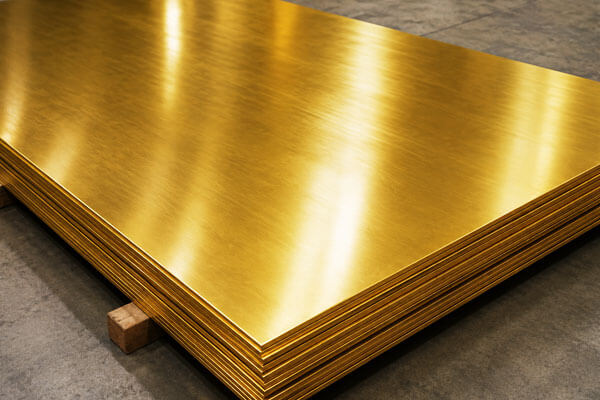
Brass sheet is frequently used for:
- Dekoratīvā aparatūra
- Elektriskās sastāvdaļas
- Precision fittings
- Musical instruments
- Architectural elements
- Patēriņa produkti
Salīdzinājumā ar nerūsējošo tēraudu, brass generally offers easier machining and higher electrical and thermal conductivity.
Tomēr, its strength and resistance to aggressive environments may be lower depending on the specific alloy.
Titanium Sheet Metal
Titanium sheet occupies a high-performance segment of the sheet metal market.
It provides an exceptional combination of high specific strength, izturība pret koroziju, un temperatūras spēja.
Its relatively low density compared with steel makes titanium particularly attractive when weight reduction is critical.
Titanium sheet is commonly used in:
- Kosmiskās aviācijas struktūras
- Lidmašīnu dzinēju sastāvdaļas
- Ķīmiskā apstrādes iekārta
- Jūras sistēmas
- Medicīniskās ierīces
- High-performance industrial equipment
The main challenges associated with titanium are its relatively high material cost and more demanding fabrication requirements.
Its machining, veidošanās, and welding processes require appropriate process control to avoid surface contamination, excessive tool wear, or material damage.
Nickel Alloy and Specialty Sheet Metals
For extreme service conditions, manufacturers may use nickel-based alloys and other specialty metals.
Nickel alloy sheets are designed for applications involving high temperatures, agresīvas ķīmiskas vielas, oksidācija, or severe corrosion.
Common examples include nickel-chromium and nickel-molybdenum alloy systems.
These materials are frequently used in:
- Gāzes turbīnas
- Ķīmiskā apstrāde
- Enerģijas ražošana
- Heat-treatment equipment
- Aviācijas un kosmosa motori
- Offshore and energy systems
Although specialty alloys are significantly more expensive than conventional steel or aluminum, their ability to maintain performance in severe environments can reduce maintenance requirements and extend component service life.
3. Types of Sheet Metal by Thickness
Sheet metal can also be classified according to its biezums, which has a direct influence on strength, stīvums, Formīgums, ražošanas metodes, and end-use applications.
Tomēr, the boundary between foil, lapa, sloksne, and plate is not completely universal.
Different standards, nozares, and material systems may use different thickness conventions.
Metal Foil
Metal foil represents the thinnest category of flat metal products. Because of its very low thickness, foil is highly flexible and is typically produced through multiple rolling stages.
Common foil materials include aluminum, vara, nerūsējošais tērauds, niķelis, un speciālie sakausējumi.
Alumīnija folija is widely used for packaging, siltuma izolācija, battery components, and heat-transfer applications.
Copper foil plays an important role in printed circuit boards, electrical shielding, and energy-storage systems.
The extremely small thickness of foil provides excellent flexibility and low material consumption, but it also makes handling, izmēru kontrole, and mechanical damage more challenging.
Thin-Gauge Sheet Metal
Thin-gauge sheet metal is widely used where mazs svars, efficient forming, and high production speed ir svarīgi.
Typical applications include automotive body panels, ierīču korpusi, electrical cabinets, ventilation systems, Patēriņa produkti, and precision stamped components.
Thin sheet is particularly suitable for manufacturing processes such as:
- Apzīmogošana
- Caurumošana
- Lāzera griešana
- Saliekšana
- Dziļa zīmēšana
- Veidošana
Tomēr, as thickness decreases, the material becomes more susceptible to distortion during cutting and welding.
Thin sheets may also require careful control of bending force, tooling clearance, siltuma ievade, and fixturing.
Vidējs- and Heavy-Gauge Sheet Metal
As sheet thickness increases, the material generally provides greater bending stiffness and load-bearing capability.
Vidējs- and heavy-gauge sheet products are commonly used for industrial equipment, machinery guards, structural panels, transportation equipment, and heavy-duty enclosures.
Thicker sheet metal may require higher-capacity fabrication equipment.
Processes such as bending and punching demand greater forming force, while welding parameters must be adjusted to ensure adequate penetration without excessive distortion.
Sheet Metal vs. Plate Metal
Although the exact boundary varies according to standards and industry practice, plate generally refers to a thicker flat metal product intended for applications requiring greater structural strength and section thickness.
| Raksturīgs | Loksne | Metal Plate |
| Relative Thickness | Thin to medium gauge | Generally thicker |
| Formīgums | Usually suitable for bending, stamping and drawing | More suitable for structural fabrication |
| Typical Processing | Griezt, štancēšana, saliekšana, apzīmogošana, veidošanās | Griezt, apstrāde, metināšana, smags izdomājums |
| Svars | Lower per unit area | Higher per unit area |
| Tipiskas lietojumprogrammas | Panels, iežogojums, automobiļu detaļas, kanāli | Pressure equipment, smagā mašīna, kuģu būve |
Thickness selection is therefore not simply a question of structural strength. Increasing thickness improves stiffness and load capacity but also increases material weight, forming force, instrumentu prasības, and manufacturing cost.
4. Types of Sheet Metal by Manufacturing Process
The manufacturing route used to produce sheet metal significantly affects its mikrostruktūra, Mehāniskās īpašības, virsmas stāvoklis, Izmēra precizitāte, and fabrication behavior.
The two most important categories are hot-rolled sheet un cold-rolled sheet, although additional processing routes can create specialized products for specific applications.
Hot-Rolled Sheet Metal
Hot-rolled sheet metal is produced by reducing the thickness of a metal slab or other starting stock at elevated temperatures.
Augstā temperatūrā, the metal has lower deformation resistance, allowing substantial thickness reduction with relatively high production efficiency.
Hot rolling is commonly used as the primary processing route for carbon steel, nerūsējošais tērauds, alumīnijs, and other metallic materials.
The main characteristics of hot-rolled sheet include:
- Efficient production of large volumes
- Significant thickness reduction capability
- Good material availability
- Lower processing cost compared with extensive cold reduction
- Surface oxide formation during high-temperature processing
- Generally lower dimensional precision and surface smoothness than cold-rolled products
Hot-rolled sheet is widely used in structural fabrication, mašīnas, rūpniecības aprīkojums, transports, and applications where surface appearance is not the primary requirement.
After rolling, additional processes such as pickling, izlīdzināšana, rūdīšana, or coating may be applied.
Cold-Rolled Sheet Metal
Cold-rolled sheet is produced by further reducing the thickness of previously rolled material at temperatures below its recrystallization temperature.
Cold deformation improves thickness consistency and surface quality. Depending on the amount of reduction and subsequent heat treatment, it can also increase material strength through strain hardening.
Cold-rolled sheet generally offers:
- Higher dimensional accuracy
- Labāka virsmas apdare
- More consistent thickness
- Improved flatness
- Increased strength in work-hardened conditions
For materials requiring high formability, the sheet may subsequently undergo annealing to restore ductility.
Cold-rolled steel is commonly used in automotive body panels, ierīces, electrical cabinets, iekārtas, precision stampings, and other products requiring good appearance and dimensional consistency.
Annealed and Tempered Sheet Metal
Annealing is often incorporated into sheet metal production to modify the mechanical properties created during rolling or cold working.
Atskrūšanas laikā, controlled heating and cooling can reduce residual stress, atjaunot elastību, and modify the material’s microstructure.
The resulting condition may be selected according to the intended fabrication process.
Piemēram, a deep-drawing application generally requires a softer and more ductile sheet than a component designed primarily for structural stiffness.
Temper processing may also be used to achieve a specific balance between:
- Izturība
- Cietība
- Elastība
- Springback behavior
- Virsmas kvalitāte
This is particularly important for aluminum alloys, nerūsējoši tēraudi, spring materials, and precision-formed components.
Pickled and Oiled Sheet Metal
During hot rolling, steel surfaces can develop oxide scale. Marinēšana removes these surface oxides through controlled chemical treatment.
The resulting product, bieži dēvē par pickled and oiled sheet, provides a cleaner and more uniform surface than untreated hot-rolled material.
A light oil film may then be applied to provide temporary corrosion protection during storage, transports, and subsequent fabrication.
This type of sheet is commonly selected when manufacturers require the economy of hot-rolled steel but need improved surface quality for laser cutting, veidošanās, vai metināšana.
5. Types of Sheet Metal by Surface Treatment
Surface treatment is an important method of classifying sheet metal because it directly influences corrosion resistance, nodilums pretestība, izskats, electrical performance, krāsas saķere, un kalpošanas laiks.
Galvanized and Galvannealed Sheet Metal
Typical Base Materials: Zema oglekļa satura tērauds, viegls tērauds, HSLA steel, and forming-grade steel.
Galvanized sheet metal is coated with zinc, typically by hot-dip galvanizing or electro-galvanizing.
The zinc layer provides barrier protection and sacrificial protection, making galvanized steel suitable for environments where atmospheric corrosion is a major concern.
Galvannealed steel undergoes additional heat treatment after galvanizing, producing a zinc-iron alloy coating with good paint adhesion and forming performance.
It is widely used in automotive panels, jumta segums, HVAC sistēmas, ierīces, and construction components.
Electroplated Sheet Metal
Typical Base Materials: Oglekļa tērauds, nerūsējošais tērauds, vara, misiņš, and other conductive metals.
Electroplating deposits a thin metallic layer onto the substrate to improve corrosion resistance, nodilums pretestība, electrical performance, solderability, vai izskats. Common plating materials include zinc, niķelis, hroms, un alva.
The process is particularly suitable for precision components requiring controlled coating thickness and specific surface properties.
Typical applications include automotive components, elektriskās daļas, electronic hardware, un dekoratīvie produkti.
Anodized Sheet Metal
Typical Base Materials: Aluminum and aluminum alloys.
Anodēšana electrochemically converts the aluminum surface into a durable aluminum oxide layer.
Unlike an applied coating, the oxide layer is integrated with the substrate, Labas pretestības nodrošināšana ar koroziju, virsmas cietība, nodilums pretestība, and decorative performance.
Anodized aluminum is commonly used for architectural panels, elektronika, transportation components, lighting products, un dekoratīvas lietojumprogrammas.
Powder-Coated Sheet Metal
Typical Base Materials: Oglekļa tērauds, galvanized steel, nerūsējošais tērauds, un alumīnijs.
Powder coating applies dry polymer powder to a prepared metal surface and cures it into a continuous protective film.
It provides a combination of corrosion protection, trieciena pretestība, ķīmiska izturība, un izskats.
Powder-coated sheet metal is widely used for equipment enclosures, electrical cabinets, mašīnas, ierīces, architectural products, and outdoor structures.
Painted and Coil-Coated Sheet Metal
Typical Base Materials: Cold-rolled steel, galvanized steel, alumīnijs, and zinc-aluminum-coated steel.
Painting provides extensive options for color, spīdēt, and protective performance.
Ražošanai ar lielu apjomu, coil coating applies and cures the coating continuously before the sheet is cut or formed, providing highly consistent surface quality.
These materials are widely used in roofing, wall cladding, ierīces, durvis, ceilings, transportation equipment, and architectural systems.
Elektroforētiskais pārklājums
Typical Base Materials: Oglekļa tērauds, galvanized steel, nerūsējošais tērauds, un alumīnijs.
Elektroforētiskais pārklājums, vai e-coating, uses an electric field to deposit an organic coating onto a conductive metal surface.
Its major advantage is relatively uniform coverage, including recessed and complex areas.
E-coated sheet metal and fabricated components are commonly used in automotive, rūpnieciskā mašīna, agricultural equipment, un elektrības pielietojumi, often as a corrosion-resistant primer beneath another coating.
Passivated Stainless Steel Sheet
Typical Base Materials: Austenīts, ferīta, martensīts, divstāvu, and precipitation-hardening stainless steels.
Passivation removes free iron and surface contaminants introduced during fabrication and promotes the formation of a stable chromium-rich passive film.
It is particularly important when surface cleanliness and corrosion resistance are critical.
Passivated stainless steel is widely used in food processing, farmaceitiskā iekārta, ķīmiskā apstrāde, medicīniskais aprīkojums, and precision industrial components.
Mechanical Surface Finishes
Typical Base Materials: Nerūsējošais tērauds, alumīnijs, oglekļa tērauds, vara, misiņš, un titāns.
Mechanical finishing changes surface texture through grinding, suku mazgāšana, pulēšana, slīpēšana, or blasting.
It can improve appearance, kontrolēt virsmas raupjumu, remove minor surface imperfections, or prepare the substrate for subsequent coating.
Common finishes include mirror, sakropļots, satīns, bead-blasted, and ground finishes.
These treatments are widely used for architectural panels, ierīces, rūpniecības aprīkojums, decorative products, and high-appearance sheet metal components.
6. Types of Sheet Metal by Form and Geometry
Sheet metal can also be classified according to its physical form, cross-sectional geometry, and surface configuration.
Beyond flat sheets, manufacturers produce coils, šķīvji, perforated sheets, expanded metal, corrugated sheets, and other engineered forms to meet specific structural, functional, and fabrication requirements.
Flat Sheet
Flat sheet is the most basic and widely used form of sheet metal. It has a relatively uniform thickness and a planar surface, making it suitable for cutting, saliekšana, apzīmogošana, metināšana, and other fabrication operations.
Common materials include carbon steel, nerūsējošais tērauds, alumīnijs, vara, and galvanized steel.
Flat sheet is extensively used for machine covers, iekavas, paneļi, iežogojums, automobiļu komponenti, and general fabricated parts.
Plāksne
Plate is a thicker flat metal product generally selected when greater structural rigidity, slodzes spēja, trieciena pretestība, or machining allowance is required.
Compared with thin sheet, plate is more commonly used for structural and heavy-duty components such as base plates, machinery frames, pressure equipment, rūpniecības aparāti, and structural assemblies.
The distinction between sheet and plate is primarily based on thickness classification, although the exact boundary varies among industry standards and product specifications.
Spole
Coil is sheet metal supplied in a continuous rolled form rather than individual flat pieces. It is particularly advantageous for high-volume manufacturing and continuous processing.
Coiled material can be fed directly into stamping presses, roll-forming lines, slitting equipment, and coil-coating systems.
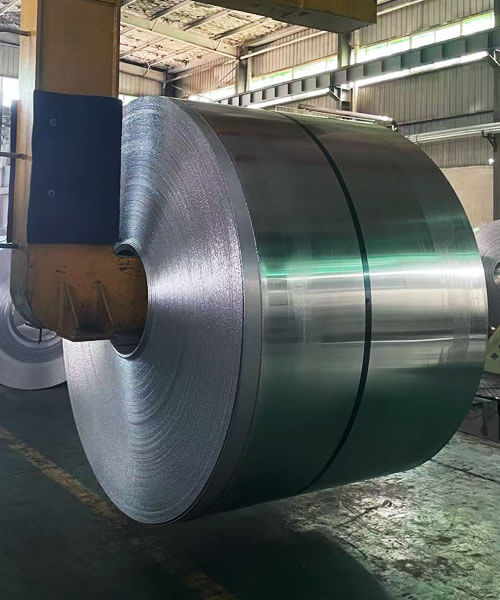
Common coil materials include cold-rolled steel, galvanized steel, nerūsējošais tērauds, un alumīnijs.
Its continuous format improves production efficiency and reduces material handling requirements in automated manufacturing.
Perforated Sheet
Perforated sheet contains a controlled pattern of holes produced by punching or other forming processes.
Hole shape, diametrs, atstarpe, and open-area ratio can be engineered according to the application.
The perforations provide a combination of airflow, acoustic control, filtrēšana, svara samazināšana, and visual design.
Perforated sheet is commonly used for ventilation covers, machine guards, acoustic panels, filtration systems, speaker grilles, and architectural façades.
Expanded Metal
Expanded metal is produced by simultaneously slitting and stretching a sheet, creating a continuous diamond, sešstūrains, or other patterned opening without removing material.
Because the resulting structure retains continuous metal strands, expanded metal provides a useful combination of low weight, stingrība, ventilācija, and material efficiency.
Typical applications include walkways, platformas, safety guards, ventilation panels, filtri, and architectural screens.
Corrugated Sheet
Corrugated sheet has a repeated wave, rib, or folded profile formed into the sheet surface.
The geometry significantly increases bending stiffness without requiring a proportional increase in material thickness.
This makes corrugated sheet particularly effective where structural stiffness, drainage, trieciena pretestība, or large unsupported spans are required.
Common applications include roofing, wall cladding, rūpniecības ēkas, transportation structures, and protective panels.
Ribbed and Embossed Sheet
Ribbed or embossed sheet incorporates raised or recessed geometric patterns formed by pressing or rolling.
These features can increase rigidity, improve slip resistance, provide drainage paths, or create a specific decorative appearance.
Embossed sheet is commonly used for flooring, equipment panels, vehicle components, aizsargapvalki, un arhitektūras pielietojumi. Diamond-pattern aluminum and steel sheets are typical examples of this category.
Precision-Formed Sheet
Precision-formed sheet metal includes products with deliberately engineered cross-sections or localized features produced through bending, Veidošana, apzīmogošana, or other forming processes.
Examples include channels, leņķi, hat sections, Z-sections, U-sections, and custom profiles.
These geometries increase structural efficiency by placing material where it contributes most effectively to stiffness and load resistance.
7. Common Sheet Metal Fabrication Processes
Sheet metal fabrication transforms flat or coil-fed metal into functional components through a sequence of cutting, veidošanās, pievienošanās, apdare, and post-processing operations.
Loksnes griešana
Cutting establishes the basic geometry of a sheet metal component. Different cutting technologies are selected according to material type, biezums, contour complexity, edge-quality requirements, un ražošanas apjoms.
Lāzera griešana
Lāzera griešana uses a concentrated high-energy laser beam to melt or vaporize material along a programmed cutting path.
It provides excellent dimensional accuracy and is particularly effective for complex contours, small holes, spraugas, and intricate profiles.
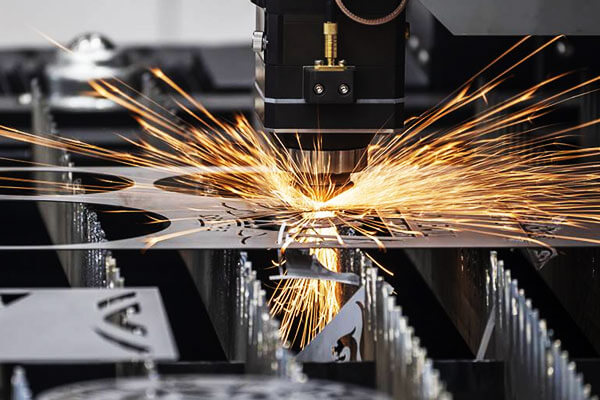
CNC laser cutting is widely used for prototypes, customized components, and small- to medium-volume production because it requires relatively little dedicated tooling and allows rapid design changes.
Griešana plazmā
Plasma cutting uses a high-temperature ionized gas jet to melt and remove electrically conductive metal.
It offers high cutting speed and is particularly suitable for medium- and heavy-gauge carbon steel, nerūsējošais tērauds, un alumīnijs.
Compared with laser cutting, plasma generally produces a wider heat-affected zone and lower fine-feature capability, but it can be more economical for thicker materials.
Ūdensjeta griešana
Waterjet cutting removes material using a high-pressure water stream, often combined with abrasive particles when cutting hard metals.
Because the process introduces minimal thermal input, it is suitable for heat-sensitive materials, biezas sekcijas, and applications where thermal distortion must be minimized.
Waterjet cutting can process stainless steel, alumīnijs, titāns, vara sakausējumi, and other difficult-to-cut materials while maintaining good edge quality.
Cirpšana
Shearing uses mechanical blades to separate sheet metal along straight or relatively simple cutting lines.
It is a highly productive process for preparing rectangular blanks and straight-edged components.
Its main advantages are high throughput, low operating cost, un minimāli materiālie atkritumi. Tomēr, it is not intended for complex internal contours or intricate profiles.
Caurumošana
CNC punching uses programmed punches and dies to produce holes, spraugas, žalūzijas, notches, embossments, and other repetitive features.
It is particularly effective for sheet metal components containing numerous standardized openings.
Modern CNC punch presses can combine multiple operations within one setup, making the process efficient for electrical enclosures, iekavas, paneļi, and equipment housings.
Loksnes metāla veidošanās
Forming changes the geometry of sheet metal without intentionally removing significant amounts of material.
The process must account for material ductility, saliekt rādiusu, Pavasaris, biezums, graudu virziens, and forming limits.
Saliekšana
Saliekšana is one of the most widely used sheet metal forming processes. CNC press brakes use punches and dies to produce flanges, kanāli, leņķi, boxes, iekavas, and other three-dimensional geometries.
Accurate bending requires compensation for Pavasaris, the elastic recovery that occurs after the forming load is removed.
Bend allowance and bend deduction calculations are also important for achieving the correct final dimensions.
Apzīmogošana
Apzīmogošana uses a press and dedicated tooling to perform operations such as blanking, piercing, saliekšana, reljefs, un veidošanās. It is particularly advantageous for medium- un liela apjoma ražošana.
Although tooling investment can be significant, stamping provides excellent repeatability and high production rates once the tooling has been established.
Dziļa zīmēšana
Deep drawing transforms a flat sheet blank into a hollow component by forcing the material into a die with a punch.
The process is commonly used for cups, konteineri, apvalki, tvertnes, automobiļu komponenti, and appliance parts.
Successful deep drawing depends on material ductility, blank-holder force, eļļošana, punch and die radii, and the relationship between blank diameter and drawn diameter.
Excessive forming can result in wrinkling, tearing, thinning, vai izmēru kropļojumi.
Veidošana
Roll forming progressively bends continuous sheet or coil through a series of rollers.
Because deformation occurs gradually across multiple forming stations, the process is highly efficient for producing long components with constant cross-sections.
Typical products include channels, sliedes, strukturālās sadaļas, jumta paneļi, durvju rāmji, and architectural profiles.
Roll forming is particularly attractive for high-volume production because material can be processed continuously.
Stretch Forming
Stretch forming combines tensile loading with controlled bending to produce large, smoothly curved sheet metal components.
The sheet is stretched beyond its yield point while being formed around a die.
The process is particularly useful for large panels, kosmiskās aviācijas struktūras, lidmašīnu ādas, transportation components, and architectural parts where smooth curvature and dimensional consistency are important.
Sheet Metal Joining
Joining processes assemble individual sheet metal components into a complete structure.
Selection depends on joint strength, materiāla savietojamība, pieejamība, ražošanas apjoms, termiskie kropļojumi, corrosion requirements, and whether disassembly is required.
Metināšana
Metināšana creates a permanent metallurgical joint by applying heat, spiediens, vai abi. Parastās metodes ietver Es/mags, TIG, resistance spot welding, and laser welding.
MIG/MAG welding is widely used for general fabrication, while TIG provides greater control for thin materials and high-quality joints.
Resistance spot welding is highly productive for overlapping sheet assemblies, particularly in automotive manufacturing. Laser welding can provide precise, narrow welds with relatively low heat input.
Riveting
Riveting uses mechanical fasteners to permanently join overlapping sheets. It is particularly useful when welding could cause distortion, coating damage, or metallurgical problems.
Riveted joints are common in aerospace structures, transportation equipment, iežogojums, and assemblies involving dissimilar materials.
Mehāniskā stiprinājums
Mechanical fastening includes bolts, skrūvju skrūve, rieksti, vītņoti ieliktņi, klipi, and other removable fasteners.
It allows components to be assembled and disassembled for maintenance or replacement.
This approach is especially useful for equipment housings, machinery frames, access panels, and products requiring field serviceability.
Līmējoša savienošana
Adhesive bonding joins sheet metal surfaces using structural or semi-structural adhesives. Unlike welding, it does not require concentrated heat, which helps minimize thermal distortion.
Adhesives can also distribute loads over a larger bonding area and provide electrical isolation or additional sealing.
Tomēr, joint performance depends strongly on surface preparation, adhesive chemistry, curing conditions, temperatūra, and environmental exposure.
8. Applications of Different Types of Sheet Metal
Sheet metal is used across a wide range of industries because its properties can be tailored through material selection, biezums, ģeometrija, fabrication method, and surface treatment.
| Rūpniecība | Tipiskas lietojumprogrammas | Common Sheet Metal Materials |
| Automašīna | Ķermeņa paneļi, šasijas komponenti, iekavas, izplūdes daļas, structural reinforcements, iekšējā apdare | Oglekļa tērauds, HSLA steel, nerūsējošais tērauds, alumīnijs |
| Aviācija | Fizelāžas paneļi, spārnu ādas, iekavas, strukturālās sastāvdaļas, aircraft interiors | 2024 un 7075 alumīnijs, titāns, nerūsējošais tērauds |
| Būvniecība | Jumta segums, wall cladding, façades, notekas, kanāli, structural panels | Cinkots tērauds, coated steel, alumīnijs, vara, nerūsējošais tērauds |
| Elektronika | Equipment enclosures, control cabinets, šasija, iekavas, heat-management components, EMI ekranēšana | Alumīnijs, nerūsējošais tērauds, galvanized steel, vara |
| Medicīnas | Iekārtu korpusi, paplātes, skapīši, instrumentu sastāvdaļas, medical equipment structures | 304/316L nerūsējošā tērauda, alumīnijs, titāns |
Pārtikas pārstrāde |
Tvertnes, konveijeri, worktables, sargi, apstrādes aprīkojums, apvalki | 304/316 nerūsējošais tērauds |
| Enerģija | Akumulatora iežogojumi, solar equipment, electrical cabinets, strukturālās sastāvdaļas | Alumīnijs, oglekļa tērauds, nerūsējošais tērauds, galvanized steel |
| HVAC | Ductwork, ventilācijas atveres, air-handling housings, equipment panels, heat-exchanger components | Cinkots tērauds, alumīnijs, nerūsējošais tērauds, vara |
| Jūras | Deck components, iekārtu korpusi, iekavas, virsbūves, jūras piederumi | Marine-grade aluminum, nerūsējošais tērauds, copper-nickel alloys |
| Patēriņa preces | Ierīču paneļi, furniture components, skapīši, aparatūra, decorative products | Tērauds, nerūsējošais tērauds, alumīnijs, misiņš |
9. Custom Sheet Metal Manufacturing Solutions from LangHe
Langhe rūpniecība nodrošināt custom sheet metal manufacturing solutions for customers requiring application-specific components rather than standard off-the-shelf products.
The manufacturing approach integrates material selection, fabrication-process planning, izmēru kontrole, apdare, and inspection into a single production workflow.
The process begins with engineering review of the customer’s 2D drawings, 3D CAD modeļi, materiālu specifikācijas, pielaides, surface requirements, un ražošanas apjoms.
Where appropriate, design-for-manufacturing analysis can identify unnecessary complexity, unfavorable bend configurations, excessive tolerances, or features that could increase tooling and processing costs.
| Spēja | Detaļa |
| Materiāli | Oglekļa tērauds, nerūsējošais tērauds, alumīnijs, vara, misiņš, bronza, titāns, specialty alloys. |
| Thicknesses | 0.1–60 mm. |
| Procesi | Cirpšana, štancēšana, saliekšana, Veidošana, apzīmogošana, dziļa zīmēšana, lāzera griešana, griešana ar ūdens strūklu, metināšana, apdare. |
| Apdare | Dzirnavu apdare, marinēšana, cinkošana, pārklājums, gleznošana, suku mazgāšana, pulēšana, anodising. |
| Pielaide | ± 0,05–0,1 mm (lāzera griešana); ± 0,1–0,2 mm (štancēšana); ± 0,2–0,5 mm (saliekšana). |
| Kvalitāte | Iso 9001:2015 sertificēts; 100% pārbaude; CMM; surface profilometer. |
| Sagatavošanās laiks | 1–2 nedēļas prototipiem; 2–4 weeks for production. |
| Pielāgošana | Custom shapes, custom finishes, custom alloys, custom tolerances. |
10. Secinājums
Sheet metal is not a single material category but a broad group of metallic products that can be classified by material, biezums, ražošanas process, virsmas apstrāde, and geometric form.
Oglekļa tērauds, nerūsējošais tērauds, alumīnijs, galvanized steel, vara, and specialty alloys each provide different combinations of mechanical, termisks, elektrības, un korozijai izturīgas īpašības.
From laser cutting and CNC punching to precision bending, apzīmogošana, metināšana, un virsmas apdare, modern sheet metal fabrication provides considerable flexibility for producing both simple panels and highly engineered assemblies.
The most effective manufacturing strategy is therefore one that considers the complete product lifecycle—from design and material selection through fabrication, pārbaude, uzstādīšana, un pakalpojums.
FAQ
What is the difference between sheet metal and plate?
Sheet metal is thinner (≤6 mm) and is used for forming, apzīmogošana, un saliekšana. Plate is thicker (>6 mm) and is used for structural applications where high strength is required.
Q3: What is the difference between hot-rolled and cold-rolled sheet metal?
Hot-rolled steel is rolled above the recrystallisation temperature, resulting in a rougher surface and lower dimensional accuracy.
Cold-rolled steel is rolled at room temperature, providing a smoother surface, stingrākas pielaides, and better mechanical properties.
What is galvanised sheet metal?
Galvanised sheet metal is steel coated with a layer of zinc to protect it from corrosion. The zinc coating can be applied by hot-dip galvanising or electro-galvanising.
Can stainless‑steel sheet metal rust?
Jā. Stainless steel resists general rust but may corrode under heavy salt‑spray, strong acid‑alkali conditions or when surface passive film gets mechanically damaged. For marine environment, 316L grade is preferred over 304.
Hot‑rolled or cold‑rolled sheet metal: which one should I choose?
Choose hot‑rolled for cost‑sensitive structural parts with secondary finishing. Select cold‑rolled when tight tolerance and smooth as‑fabricated surface are required.