介绍
Stainless steel ball valves are among the most reliable and versatile flow control devices used in modern industrial piping systems.
Their simple quarter-turn operation, excellent sealing performance, high pressure resistance, and outstanding corrosion resistance make them the preferred choice for applications ranging from water treatment and chemical processing to oil and gas, 药品, 食品加工, 和海洋工程.
The performance of a stainless steel ball valve depends not only on its design but also on the manufacturing process used to produce its critical components.
Among the various production methods available, 投资铸造, 也称为 失去蜡铸, has become the industry standard for manufacturing high-quality stainless steel valve bodies, 帽子, and other complex components.
Compared with sand casting or conventional machining, investment casting delivers superior dimensional accuracy, 出色的表面表面, 优异的冶金完整性, and greater design flexibility, making it particularly suitable for precision valve manufacturing.
1. What Is a Stainless Steel Ball Valve?
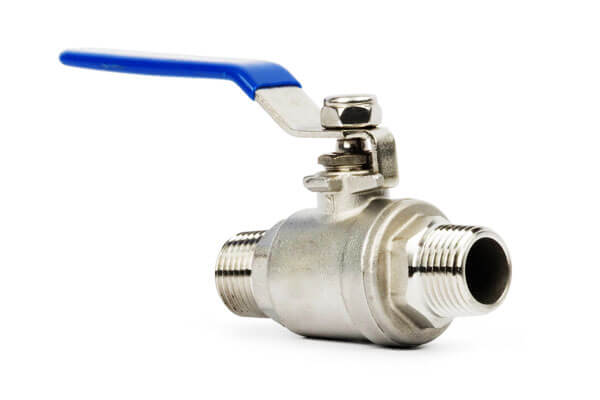
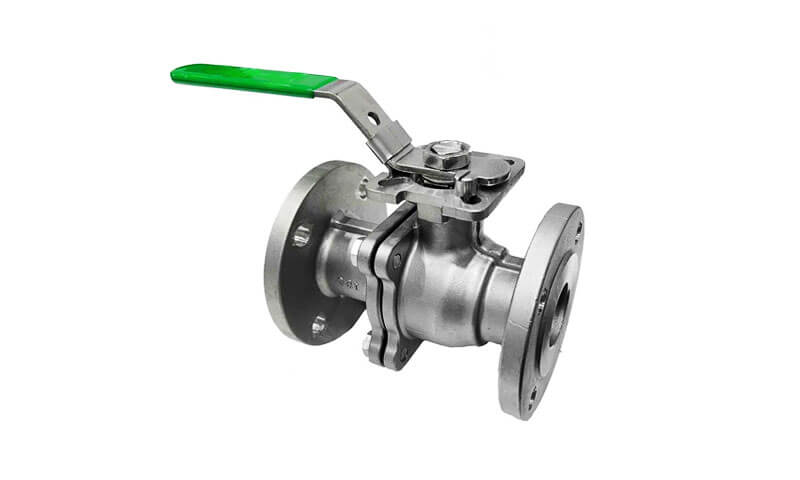
一个 不锈钢 球阀 is a quarter-turn shut-off valve that controls fluid flow by rotating a spherical ball with a precision-machined bore through 90 degrees.
When the bore aligns with the pipeline, the valve is fully open, allowing unrestricted flow.
Rotating the ball perpendicular to the flow path completely blocks the medium, providing bubble-tight shutoff.

Because of their low operating torque, rapid opening and closing, and minimal pressure loss, stainless steel ball valves are widely used in systems requiring reliable isolation, frequent operation, 和长期使用寿命.
Unlike gate or globe valves that require multiple turns to operate, ball valves provide immediate flow control with a simple quarter-turn movement, making them ideal for automated systems using pneumatic, 电的, 或液压执行器.
Main Components of a Stainless Steel Ball Valve
| 成分 | 功能 | Typical manufacturing method |
| 身体 | Pressure‑containing housing; contains the ball, 座位, and stem. | 熔模铸造 (最常见), 沙子铸造, 锻造. |
| 球 | Spherical closure member with a cylindrical bore. | 熔模铸造, 锻造, or machined from bar. |
| 干 (shaft) | Transmits torque from actuator to ball. | Machined from bar (不锈钢). |
| 座位 | Provide sealing between ball and body; replaceable. | ptfe, reinforced PTFE, 窥视, 或金属. |
| 执行器 | Manual lever, 手轮, 气动, or electric. | Commercial components. |
| 引擎盖 / top flange | Houses the stem and provides mounting for actuator. | Investment casting or machining. |
| 密封 / 包装 | Prevent leakage along the stem. | ptfe, 石墨. |
Common Types of Stainless Steel Ball Valves
| Valve type | 描述 | 典型的应用 |
| Full port (满是孔) | Ball bore diameter equals pipe diameter; minimal pressure drop. | General‑purpose, where flow restriction is undesirable. |
| Reduced port (reduced bore) | Ball bore diameter is smaller than pipe diameter; 较低的成本. | Cost‑sensitive applications; moderate pressure drop acceptable. |
| 3‑way ball valve | L‑port or T‑port ball; diverts or mixes flow. | Fluid switching, mixing, and distribution. |
| Floating ball valve | Ball is not fixed; seats hold it in position. | 中压 (≤Class 600). |
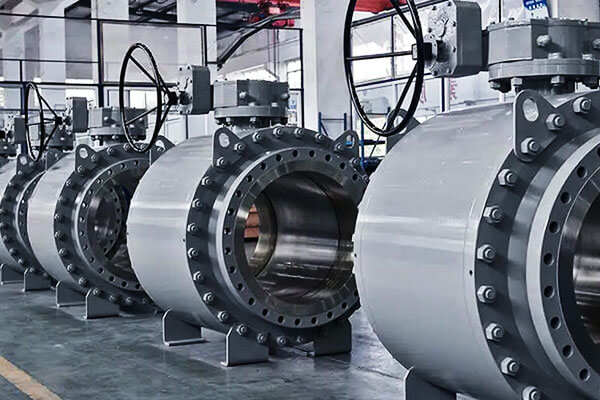
| Trunnion‑mounted | Ball is supported by a trunnion (fixed shaft); seats are spring‑loaded. | 高压 (≥Class 600), large diameters. |
| Top‑entry | Body opens from the top; allows in‑line maintenance. | Pipeline applications requiring minimal disassembly. |
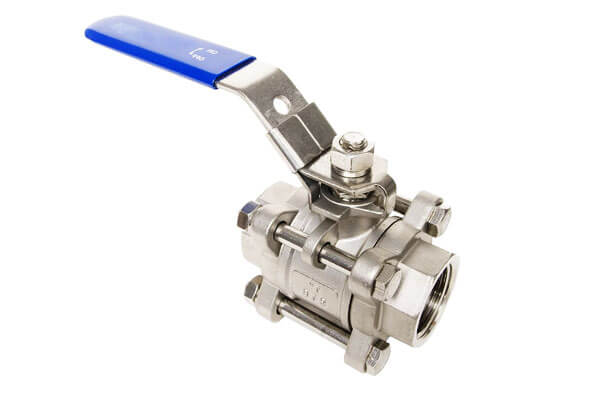
| Split‑body | Body assembled from two or three pieces. | 一般工业; easier to assemble and maintain. |
2. Why Investment Casting Is the Preferred Manufacturing Method
Manufacturing technology plays a decisive role in the performance, 可靠性, and service life of stainless steel ball valves.
Among the various production methods available, 投资铸造 has become the preferred choice for producing valve bodies and other complex components because it combines exceptional dimensional accuracy with excellent metallurgical quality and design flexibility.
与砂型铸造不同, which often requires extensive machining, 或锻造, which is limited in geometric complexity,
investment casting enables manufacturers to produce near-net-shape components with intricate internal passages, 光滑的表面, and consistent wall thicknesses.
These characteristics are particularly important for ball valves, where sealing performance, pressure integrity, and flow efficiency depend heavily on the precision of the valve body.
The process is especially well suited for medium- 进行大量生产, offering an optimal balance between manufacturing cost, 材料利用, 和产品质量.
Key Advantages of Investment Casting for Ball Valves
| 优势 | 解释 |
| 近净形状 | Parts are cast to near‑final dimensions, 减少加工和浪费. |
| 复杂的内部几何形状 | Internal flow passages, ports, and mounting features are cast integrally. |
| 出色的表面饰面 | As‑cast Ra 1.6‑6.3 µm reduces flow resistance and improves sealing. |
| 尺寸紧密的公差 | Ensures ball‑to‑body clearance, seat alignment, and leak‑tight sealing. |
| Uniform microstructure | Fine‑grained cast structure provides consistent mechanical properties. |
压力完整性 |
Sound castings with proper gating achieve pressure‑tight performance to Class 2500. |
| Alloy versatility | Casts almost any castable stainless steel: CF-8, CF-8M, CF‑3, CF‑3M, CN‑7M, 双工, superduplex, 和镍合金. |
| Cost‑effectiveness at medium volumes | 100‑10,000 parts/year; ideal for custom and standard valve sizes. |
| Reduced assembly | Integral casting of flanges, 老板, and mounting features eliminates welding/bolting. |
3. Stainless Steel Material Selection for Investment Casting
Material selection is one of the most critical engineering decisions in the manufacture of investment-cast stainless steel ball valves.
The chosen alloy directly influences the valve’s mechanical strength, 耐腐蚀性, pressure capability, 可焊性, 可加工性, 和服务寿命.
| ASTM Casting Grade | UNS编号 | Equivalent Wrought Grade | 材料类型 | 关键特征 | 典型的应用 |
| CF8 | J92600 | AISI 304 | 奥氏体不锈钢 | 优异的耐腐蚀性, 良好的可焊性, 经济 | 水处理, HVAC, 食品加工, general industrial service |
| CF8M | J92900 | AISI 316 | 奥氏体不锈钢 | Superior resistance to chlorides and chemicals due to molybdenum addition | 化学处理, 海洋工程, 离岸设备 |
| CF3 | J92500 | AISI 304L | Low-Carbon Austenitic Stainless Steel | Improved weldability and reduced risk of intergranular corrosion | Welded piping systems, pharmaceutical and sanitary applications |
CF3M |
J92800 | AISI 316L | Low-Carbon Austenitic Stainless Steel | Excellent corrosion resistance with enhanced weldability | 食物 & 饮料, 药物, 淡化, 化学植物 |
| CA15 | J91109 | AISI 410 | 马氏体不锈钢 | 高力量, 硬度, 并戴阻力 | Valve trim, 茎, 高压组件 |
| CD4MCU | J93370 | 双工不锈钢 | 双工不锈钢 | Outstanding strength and resistance to pitting, 缝隙腐蚀, 和应力腐蚀破裂 | 离岸平台, 海水系统, 油 & 气体 |
4. Investment Casting Manufacturing Process for Stainless Steel Ball Valve
The performance and reliability of a stainless steel ball valve depend heavily on the precision and consistency of its manufacturing process.
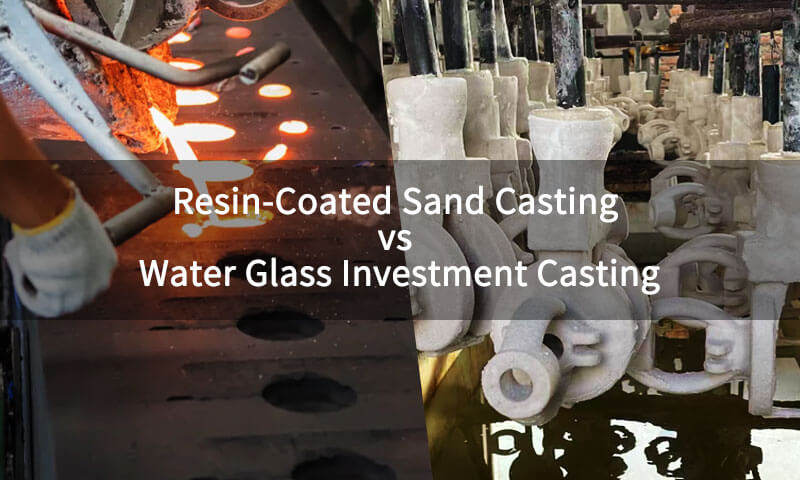
熔模铸造, also known as the lost wax casting process, is the preferred method for producing high-quality stainless steel valve bodies and complex structural components because it combines excellent dimensional accuracy, 上表面饰面, and high metallurgical integrity.
The complete manufacturing process involves a series of carefully controlled stages.

Manufacturing Process Flow
Engineering Design → Tooling → Wax Pattern → Wax Assembly → Ceramic Shell → Dewaxing → Shell Firing → Stainless Steel Pouring → Cooling → Shell Removal → Heat Treatment → CNC Machining → Surface Finishing → Inspection → Valve Assembly
Engineering Design and CAD Modeling
The process begins with detailed engineering design.
Engineers create a three-dimensional CAD model of the valve body and related components, taking into account:
- Pressure requirements
- Wall thickness distribution
- 机加工余量
- Casting shrinkage
- Flow characteristics
- Assembly interfaces
Modern manufacturers often perform casting simulation and solidification analysis before tooling is produced.
These simulations help identify potential defects such as shrinkage porosity, air entrapment, and uneven cooling, allowing optimization of the gating and feeding system in advance.
Tooling and Wax Pattern Production
Precision metal dies are manufactured for wax injection.
Molten wax is injected into the die under controlled pressure and temperature to create accurate wax replicas of the valve body.
Key control points include:
- Wax temperature
- 注射压力
- 冷却时间
- 尺寸稳定性
- 表面质量
Because the wax pattern directly determines the final casting geometry, pattern accuracy is essential for achieving tight tolerances.
蜡组件
Individual wax patterns are attached to a central wax runner system to form a casting tree.
The runner and gate arrangement must provide:
- Balanced metal flow
- Smooth cavity filling
- Adequate feeding
- 最小的湍流
- High casting yield
Proper wax assembly is a critical factor in reducing casting defects.
陶瓷外壳建筑
The wax assembly is repeatedly dipped into a ceramic slurry and coated with refractory sand.
Each layer is dried before the next layer is applied. Depending on the size and weight of the valve body, the shell typically consists of 6–10 ceramic layers.
The ceramic shell must provide:
- 高力量
- Good permeability
- Excellent refractoriness
- 抗热震性
- 尺寸稳定性
脱水和炮弹射击
After shell construction, the wax is removed using high-pressure steam in an autoclave.
The shell is then fired at high temperature, typically 900–1,100°C, 到:
- Remove residual wax
- Increase shell strength
- Eliminate moisture
- Improve thermal stability
A properly fired shell is essential for defect-free stainless steel casting.
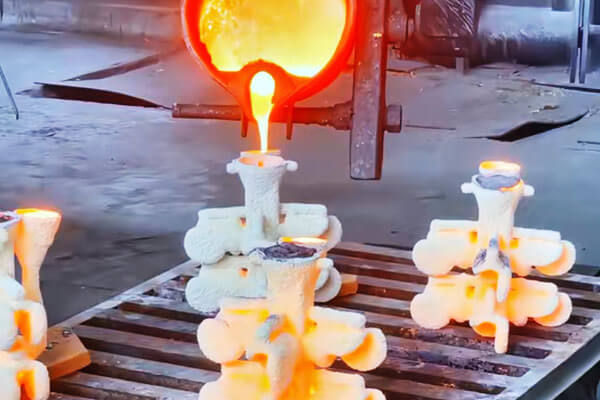
Stainless Steel Melting and Pouring
Stainless steel is melted in induction furnaces under carefully controlled conditions.
Chemical composition is monitored continuously to ensure compliance with ASTM specifications.
Critical pouring parameters include:
- Alloy composition
- 浇注温度
- Superheat temperature
- Oxygen control
- Inclusion control
- 浇注率
Because stainless steel is sensitive to oxidation, turbulence during pouring must be minimized.
Shell Removal and Cut-Off
冷却后, the ceramic shell is mechanically removed.
The casting tree is then separated into individual components.
Typical operations include:
- 昏死
- 射击
- 浇口拆除
- 研磨
- 表面清洁
热处理
Heat treatment optimizes the microstructure and corrosion resistance of the casting.
常见治疗包括:
| 热处理 | 目的 |
| 解决方案退火 | 恢复耐腐蚀性 |
| 缓解压力 | 减少残余应力 |
| 淬火 & 回火 | Improve strength for specific grades |
Proper heat treatment is especially important for CF8M, CF3M, and duplex stainless steels.
CNC Precision Machining
Although investment casting provides near-net-shape components, critical surfaces still require precision machining.
典型的加工操作包括:
- Flange face machining
- Thread machining
- Stem bore machining
- Seat pocket machining
- Actuator mounting surfaces
- Pressure-sealing interfaces
High-precision CNC equipment ensures excellent concentricity and sealing performance.
表面处理
取决于申请, the valve body may undergo:
- 腌制
- 钝化
- 机械抛光
- Electro-polishing
- 玻璃珠喷砂
These treatments improve corrosion resistance and surface cleanliness.
Precision Inspection and Finishing
Complete dimensional calibration, ultrasonic nondestructive testing (UT), magnetic particle testing (公吨), hydraulic pressure tightness test, and surface finishing to deliver qualified high-precision stainless steel ball valve castings.
5. Corrosion Resistance and Surface Treatment Solutions
One of the primary reasons for choosing stainless steel ball valves is their excellent corrosion resistance.
然而, the final corrosion performance depends not only on alloy composition but also on surface condition, 清洁, 热处理, 和整理过程.
Why Stainless Steel Resists Corrosion
Stainless steel contains at least 10.5% 铬, 形成薄的, 稳定的, and self-healing passive oxide layer on the surface.
This passive film:
- 防止进一步的氧化
- Repairs itself when damaged
- Protects against many chemicals
- Improves long-term durability
Higher chromium, 镍, 钼, and nitrogen contents further enhance corrosion resistance.
Common Surface Treatment Technologies
| 表面处理 | Main Purpose | Typical Surface Condition | 应用领域 |
| 腌制 | Remove scale and oxides | Clean metallic surface | General industrial service |
| 钝化 | Enhance passive film | Chemically stabilized surface | Chemical and sanitary industries |
| Electro-polishing | Reduce roughness and contamination | 像镜面饰面 | Pharmaceutical and semiconductor |
| 机械抛光 | Improve appearance and cleanliness | Smooth polished finish | 食品和饮料 |
| Glass Bead Blasting | Uniform matte appearance | Satin finish | Marine and architectural |
| 射击 | Remove surface residue | Clean textured surface | 通用工业阀 |
6. Common Investment Casting Defects and Engineering Solutions
Investment‑cast stainless steel ball valve components are susceptible to specific defect types. The table below lists them, their causes, and remedial measures.
| 缺点 | Visual/NDT signature | 根本原因 | 预防 / remedy |
| 气孔隙度 | Round internal voids | Dissolved hydrogen/nitrogen; poor deoxidation. | 真空脱气; use clean charge; improve pouring practice. |
| 收缩孔隙度 | Jagged internal voids | 喂食不足; 不良的立管设计. | Optimise gating/risering; use chills; simulate solidification. |
| 热撕裂 | Cracks with ragged edges | Tensile stress during solidification; shell constraint. | Reduce pouring temperature; improve shell collapsibility; modify alloy. |
| 包含 (oxide/slag) | 不规则非金属颗粒 | 湍流浇注; 脏熔体; eroded shell. | Ceramic filters; 底部浇注; clean charge. |
埃及 / 冷隔 |
填充不完全; 折叠面 | 浇注温度低; 流动性差. | 提高浇注温度; 改善门控; 抽空模具. |
| 表面粗糙度 / finning | Raised lines on surface | 填充过程中外壳破裂; 壳强度低. | 增加外壳厚度; use stronger binder. |
| Carbide precipitation (sensitisation) | Intergranular attack (corrosion test) | Slow cooling through 450‑850°C; high carbon. | Use low‑carbon grade (CF‑3/CF‑3M); 快速淬火. |
| Dimensional deviation | Out‑of‑tolerance dimensions | Wax shrinkage variation; shell expansion; 模具磨损. | Control wax injection; maintain die condition. |
质量保证
| QA element | 方法 | 验收标准 |
| 化学分析 | 光谱法 | Meets ASTM A351/A743/A890 specification. |
| 机械测试 | 拉伸, 硬度, 影响 | Meets grade requirements. |
| NDT | 染料渗透剂 (pt), 射线照相 (RT), ferrite measurement | No cracks, porosity exceeding specification; ferrite content 30‑60% for duplex. |
| 维度检查 | CMM, 仪表 | Meets drawing tolerances. |
| 压力测试 | 静液压 (1.5×额定压力) | No leakage; no deformation. |
| 表面饰面 | 视觉的, profilometer | Ra ≤6.3 µm (or as specified). |
7. Advantages of Investment Casting Stainless Steel Ball Valves
Investment casting has become the preferred manufacturing process for stainless steel ball valves because it delivers an exceptional balance of precision, 结构完整性, 生产效率, 和长期表现.

卓越的维度精度
One of the greatest strengths of investment casting is its ability to produce 近网状组件 with outstanding dimensional precision.
Compared with traditional casting processes, investment casting offers:
- 尺寸紧密的公差
- 优异的重复性
- 均匀的壁厚
- Accurate internal flow passages
- Reduced machining allowance
These characteristics are particularly important for ball valves because accurate body geometry directly affects seat alignment, stem positioning, 密封性能, and pressure integrity.
High dimensional consistency also simplifies assembly and ensures interchangeability of valve components in mass production.
上表面饰面
Investment casting naturally produces a much smoother surface than conventional sand casting.
A smoother casting surface offers several engineering benefits:
- Lower machining costs
- Better sealing surfaces
- Reduced fluid resistance
- Improved coating and passivation quality
- Enhanced product appearance
For sanitary applications such as pharmaceutical or food processing, smooth surfaces also minimize bacterial adhesion and simplify cleaning procedures.
Complex Geometry without Extensive Machining
Ball valve bodies contain numerous complex features, 包括:
- Internal flow passages
- Stem cavities
- Seat pockets
- Mounting bosses
- Flanged or threaded connections
Investment casting allows these intricate geometries to be produced in a single casting, significantly reducing secondary machining operations.
Compared with machining from forged blocks, 投资铸造:
- Reduces material waste
- Shortens production cycles
- Lowers tooling wear
- Improves manufacturing efficiency
Excellent Pressure Integrity
Pressure-containing components require a dense and homogeneous internal structure.
With properly designed gating systems, 方向固化, and controlled pouring conditions, investment-cast stainless steel valve bodies achieve:
- High structural integrity
- 均匀的壁厚
- Excellent pressure resistance
- Low internal defect rates
- Reliable sealing performance
After pressure testing and non-destructive inspection, these castings meet stringent industrial standards for pressure-retaining equipment.
出色的耐腐蚀性
The combination of premium stainless steel alloys and appropriate surface treatments provides exceptional resistance to:
- Atmospheric corrosion
- Freshwater corrosion
- Seawater exposure
- Chloride attack
- Organic chemicals
- Mild acids and alkalis
等级,例如 CF8M (316 不锈钢) offer excellent resistance to chloride-induced pitting and crevice corrosion, 使它们非常适合海洋, 离岸, 和化学处理应用.
Long Service Life and Low Maintenance
Stainless steel investment-cast ball valves are designed for decades of reliable operation.
Their advantages include:
- 出色的耐磨性
- Stable sealing performance
- 低工作扭矩
- Minimal corrosion-related maintenance
- 高疲劳性抗性
These characteristics significantly reduce maintenance frequency and operational downtime.
8. Industrial Applications of Stainless Steel Ball Valves
| 行业 | 典型的应用 | Valve type | Alloy grade | Key requirements |
| 油 & 气体 | Pipeline isolation, wellhead, refinery, 离岸 | Trunnion, floating, 3‑way | CF-8M, CD‑3MN | 高压, 酸气 (h₂s), chloride SCC resistance. |
| 化学处理 | Acid handling, solvent transfer, reactor isolation | 法兰, 全端口 | CN‑7M, CF-8M | Acid resistance, leak‑tight shut‑off. |
| 海军陆战队 / 离岸 | Seawater cooling, 压载系统, 淡化 | 法兰, lug | CF‑3M, CD‑3MN | Seawater corrosion, 点抗性. |
| 食物 & 饮料 | Sanitary processing, CIP systems, bottling | 卫生, 法兰 | CF‑3M (316l) | FDA‑approved, 电抛光, 易于清洁. |
| 药物 | WFI systems, clean steam, sterile processing | 卫生, 法兰 | CF‑3M (316l) | Ultra‑clean, non‑porous, sterilisable. |
发电 |
冷却水, 蒸汽线, condensate | 法兰, butt‑weld | CF-8, CF-8M | 高温, pressure cycling. |
| 水 & 废水 | Treatment plants, 分配, 灌溉 | 晶圆, 法兰 | CF-8, CF-8M | 耐腐蚀性, 长期使用寿命. |
| 纸浆 & 纸 | Chemical recovery, bleach lines, stock handling | 法兰, 3‑way | CN‑7M, 双工 | Chlorine dioxide resistance. |
| 半导体 | Ultra‑pure water, chemical delivery | 袖珍的, 法兰 | CF‑3M (316l) | Ultra‑clean, low particle generation. |
| 航天 | 液压, 燃料, and pneumatic systems | 袖珍的, trunnion | 17-4ph, 304l | 高力量, leak‑tight, 轻的. |
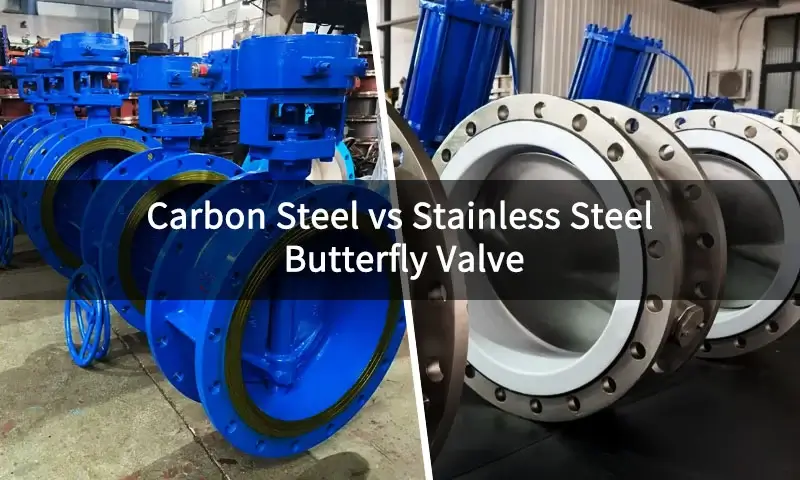
9. Stainless Steel Ball Valve vs. Carbon Steel Ball Valve
Both stainless steel and carbon steel ball valves are widely used in industrial piping systems.
然而, each material offers distinct advantages depending on the operating environment, process medium, maintenance requirements, and budget considerations.
| Comparison Item | Stainless Steel Ball Valve | Carbon Steel Ball Valve |
| 典型材料 | CF8, CF8M, CF3, CF3M, 双工不锈钢 | WCB, WCC, LCB, LCC |
| 耐腐蚀性 | 出色的; naturally resistant to rust, 化学物质, 和氯化物 | 一般; requires coatings or linings for corrosion protection |
| 机械强度 | High strength with excellent toughness | High strength and excellent structural rigidity |
| 温度能力 | Suitable for cryogenic service and elevated temperatures (取决于成绩) | Suitable for general industrial temperatures; special alloy grades required for extreme conditions |
| Pressure Capability | Excellent for medium- and high-pressure systems | Excellent for high-pressure industrial applications |
| 表面保护 | Generally requires only passivation or polishing | Typically requires epoxy coating, 镀锌, or other protective coatings |
维护要求 |
Low maintenance due to inherent corrosion resistance | Periodic inspection and coating maintenance required |
| Manufacturing Cost | Higher material and machining costs | Lower manufacturing cost |
| 生命周期成本 | Lower over long-term operation because of durability and reduced maintenance | Lower initial investment but potentially higher maintenance costs |
| 典型的应用 | 化学处理, 海洋, 食物, 药物, 水处理 | 油 & 气体, 发电, HVAC, municipal infrastructure, 一般行业 |
| 主要优势 | 耐腐蚀性, 卫生, 长期使用寿命 | 成本效益, 高力量, excellent pressure resistance |
| Primary Limitations | Higher initial investment | Lower corrosion resistance without protective treatment |
10. Custom Investment Casting Stainless Steel Ball Valve from LangHe Foundry
Selecting the right manufacturing partner is just as important as choosing the appropriate valve material and design.
A reliable investment casting foundry not only produces high-quality castings but also provides engineering expertise, 过程优化, 精确加工, and comprehensive quality assurance throughout the entire manufacturing cycle.

Langhe Foundry specializes in precision investment casting solutions for stainless steel ball valve components, offering integrated manufacturing services from product design and rapid prototyping to mass production.
With extensive experience in precision casting, 数控加工, 热处理, 和表面饰面,
LangHe delivers custom-engineered valve components that meet the demanding requirements of industries such as oil and gas, 化学处理, 水处理, 食品加工, 海洋工程, 药品, 和发电.
Whether customers require standard valve bodies or highly customized castings with complex geometries, LangHe provides cost-effective, high-quality manufacturing solutions backed by strict quality control and international manufacturing standards.
OEM and ODM Manufacturing Services
| 能力 | 细节 |
| 合金 | CF-8, CF-8M, CF‑3, CF‑3M, CN‑7M, CD‑3MN, CE‑8MN, CB7Cu‑1 (17-4ph). |
| Part weight | 0.05 公斤到 100 公斤. |
| 方面 | 到 600 毫米直径. |
| 公差 | ±0.1‑0.3 mm (CT5‑CT7 per ISO 8062). |
| 表面饰面 | Ra 1.6‑6.3 µm as‑cast; electropolishing available. |
| 热处理 | 解决方案退火, 老化, 压力缓解. |
| 质量 | ISO 9001:2015 经认证; 100% NDT and pressure testing. |
| 交货时间 | 8‑12 weeks for tooling and first articles; 2‑4 weeks for repeat orders. |
| 认证 | PED 2014/68/EU, 出生于MR0175/ISO 15156 (双工). |
11. 结论
Stainless steel ball valves are key high-reliability components for high-end industrial fluid control, and investment casting has become the only high-efficiency, 高精度, and high-reliability manufacturing solution for such products.
By overcoming the inherent defects of traditional sand casting, forging welding, and solid bar machining,
investment casting realizes integrated near-net-shape forming, high-purity dense metallurgical structure, ultra-precision spherical sealing surface, and excellent anti-corrosion performance of stainless steel ball valves.
As industrial equipment continues to evolve toward higher efficiency, greater automation, and more demanding service environments, precision investment casting will play an increasingly important role in valve manufacturing.
Advanced technologies such as casting simulation, 自动化的外壳建筑, intelligent machining, digital quality control, and smart manufacturing systems are further improving product consistency and production efficiency.
By partnering with an experienced investment casting manufacturer such as Langhe Foundry, customers gain access to comprehensive engineering support, premium stainless steel materials, advanced manufacturing technologies, and strict quality assurance.
From prototype development to large-scale production, precision investment casting remains one of the most reliable and cost-effective solutions for manufacturing high-performance stainless steel ball valves that meet the highest international industry standards.
常见问题解答
What is the most common stainless steel alloy for ball valve castings?
CF-8M (316 相等的) is the most common alloy for ball valve components due to its excellent corrosion resistance, 优势, 和中等成本. CF‑3M (316l) is preferred when welding is required.
Can investment‑cast ball valves be used in seawater?
是的. CF-8M (316) offers good seawater resistance, 但 双工不锈钢 (CD‑3MN / 2205) is preferred for long‑term seawater service due to its superior chloride pitting resistance and stress corrosion cracking resistance.
What surface finish is required for sanitary ball valves?
Sanitary ball valves typically require electropolished or mechanically polished surfaces with Ra ≤0.8 µm (and sometimes Ra ≤0.4 µm) to prevent bacterial adhesion and ensure cleanability.
What is the difference between full port and reduced port ball valves?
Full port valves have a ball bore equal to the pipe diameter, resulting in minimal pressure drop. Reduced port valves have a smaller bore, offering lower cost but higher pressure drop.
Investment casting can produce both types.