编辑翻译
经过 Transposh - translation plugin for wordpress
黄铜CNC加工服务

黄铜数控加工

黄铜 数控加工 is one of the most efficient forms of precision metalworking because brass combines 出色的可加工性, 有用强度, 耐腐蚀性, and attractive surface character in a single material family.

Free-cutting brass C36000 is widely treated as the benchmark for machinability in copper alloys, and copper-alloy references note that leaded brasses are used for screw-machine stock because lead improves machinability by acting as a microscopic chip breaker and tool lubricant.

That does not mean “brass” is one material.

Brass is a family of copper-zinc alloys, and different grades are chosen depending on whether the priority is free machining, 成型, 锻造, 耐腐蚀性, or appearance.

In CNC work, that alloy selection is often as important as the machining program itself.

1. What Is Brass CNC Machining?

黄铜 CNC machining is the process of using computer-controlled machine tools to cut, 钻头, turn, 磨, tap, and thread brass into precision parts.

It is widely used in industries that need a material that machines cleanly, holds tolerances well, and delivers a polished final appearance.

实践, brass is one of the most production-friendly metals for CNC work because it cuts with low resistance, produces manageable chips, and often gives excellent surface finish with relatively modest tool wear.

Brass is not a single material. It is a family of copper-zinc alloys, and different grades are selected according to the required balance of machinability, 力量, 耐腐蚀性, 形成性, 和视觉质量.

In CNC applications, this means the alloy choice is part of the process strategy, not just a material specification.

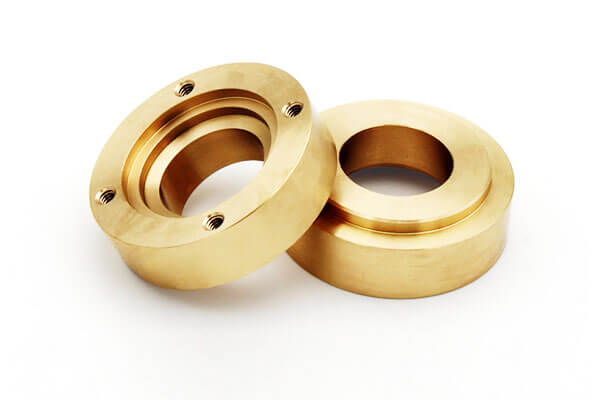
Brass CNC Machining Parts

2. Common Brass Alloy Families and Representative Grades

合金族 代表成绩 / UNS No. Technical character Typical machining logic
自由切割黄铜 / leaded brass C36000 The industry standard for machinability; widely used in motion, 流动, 和压力组件. Best when high-speed turning, 钻孔, and thread cutting are primary requirements.
墨盒黄铜 C26000 强的, 公爵, and easy to cold work; less centered on free-machining than C36000. Used when formability matters more than absolute machinability.
Forging brass C37700 Designed for hot forging and hot heading; a forging alloy rather than a pure machining alloy. Used when parts are forged first and then finish-machined.
Leaded architectural brass / leaded brass
C38500 Suitable for high-speed screw machining. Good for machined hardware, 配件, and appearance-sensitive parts.
海军黄铜 C46400 Good corrosion resistance and hot forgeability; often used in marine-related service. Used where corrosion resistance matters and machining follows forming or casting.
Cast brass / bronze-related copper-zinc families Common cast brasses in the C83xxx–C89xxx range Used in plumbing fixtures, 装饰硬件, 建筑装饰, low-pressure valves, 齿轮, 和轴承. Often finish-machined after casting when close tolerances are required.

3. Why Brass Is a Preferred CNC Material

高可加工性

Brass is preferred in CNC machining first and foremost because it cuts exceptionally well.

Free-machining brass grades, especially the common leaded machining alloys, are known for low cutting resistance, clean chip breakage, and stable tool behavior.

In production terms, that means faster cycle times, less chatter, 降低刀具磨损, and more predictable results across repeated runs.

出色的表面饰面

Brass naturally produces a clean, sharp machined surface.

Edges are crisp, details reproduce well, and the finished part often needs less secondary finishing than harder or more ductile metals.

This makes brass especially attractive for visible parts, 精密配件, and components where surface quality matters as much as dimensional accuracy.

Good Dimensional Stability

Brass machines with relatively low internal stress and a predictable cutting response, which helps it hold tolerances well.

用于精密零件, this is a major advantage because it reduces the risk of distortion during machining and supports consistent batch-to-batch repeatability.

Strong Balance of Strength and Workability

Brass is not just easy to machine; it is also mechanically useful.

It offers enough strength for many functional parts while remaining much easier to cut than many steels.

That balance is one reason it is widely used in valves, 连接器, 衬套, threaded parts, and small mechanical assemblies.

Useful Corrosion Resistance

Many brass grades perform well in indoor, 干燥, and moderately corrosive environments.

For CNC parts used in plumbing, general hardware, 电气系统, or decorative applications, that corrosion resistance adds real service value without complicating the machining process.

良好的热电导率

Brass conducts heat and electricity better than many common structural alloys.

That makes it a practical choice for electrical terminals, 连接器, heat-related hardware, and precision components that benefit from stable thermal behavior during service.

Cost-Effective Production

For many small and medium-sized precision parts, brass is one of the most economical CNC materials because it machines quickly and reliably.

The combination of high productivity, 刀具磨损低, and reduced post-processing often lowers the total manufacturing cost, even when the raw material itself is not the cheapest option.

4. Core CNC Processes for Brass

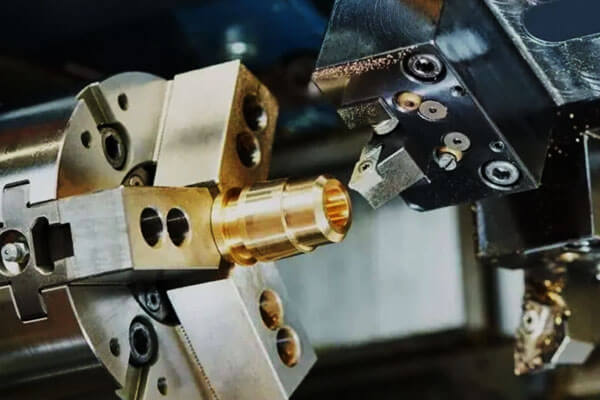
CNC Machining Brass Parts

数控车削

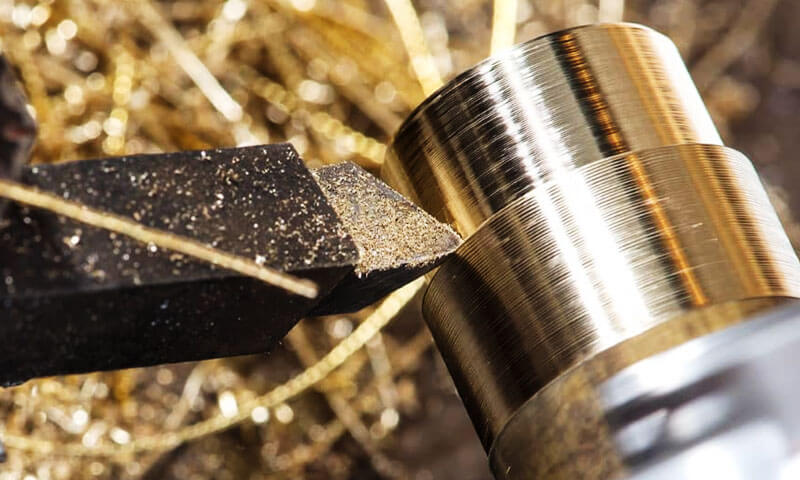
数控车削 is one of the most common brass machining operations because brass bar stock is especially well suited to rotational cutting.

Free-machining brass cuts cleanly on lathes, supports high spindle speeds, and typically produces stable chip formation.

This makes it ideal for parts such as bushings, 袖子, threaded connectors, 阀体, and precision cylindrical components.

数控铣削

数控铣削 brass is generally efficient and predictable.

Brass does not usually require the same conservative cutting strategy as more ductile or abrasive metals, so pockets, 面孔, 老虎机, and contours can often be produced with excellent productivity.

For multi-feature parts, milling is commonly used to create flat surfaces, mounting features, and precision recesses.

钻孔

Brass is particularly favorable for drilling because the chips tend to break cleanly rather than forming long, stringy swarf.

This improves hole quality, reduces tool loading, and supports high repeatability in both shallow and deep-hole operations.

Brass is therefore widely used for connector bodies, mounting parts, and flow-control components that require many precision holes.

Tapping and Threading

Brass is widely used in threaded parts because it forms threads cleanly and with good dimensional consistency.

Tapping performance is usually strong, especially in free-cutting grades, which is why brass is so common in fittings, 紧固件, 歧管, and threaded inserts.

Boring and Reaming

When higher precision is required on internal diameters, boring and reaming are effective finishing operations.

Brass responds well to these processes because the material is stable and cuts with relatively low resistance, allowing the machinist to achieve tight dimensional control and smooth internal surfaces.

5. 工具, 冷却液, 和切割策略

Tooling Strategy

Brass machining is generally straightforward, but the right tool geometry still matters.

锋利的切割边缘, stable tool holding, and proper rake geometry are important for keeping the cut smooth and preventing rubbing.

In most brass work, the goal is not to force the material; it is to let the tool remove it efficiently.

For free-cutting brass, carbide tooling is often used in production, while high-speed steel can still be practical in lower-volume or specialized operations.

The key is maintaining a clean cutting edge and avoiding dull tools, which can degrade surface quality even in a material as machinable as brass.

冷却液策略

Brass usually does not demand heavy coolant flow in the same way that more difficult metals do.

In many operations, light coolant, 薄雾, or even dry cutting can be sufficient depending on the machine, 工具, 和零件几何形状.

The main purpose of coolant in brass machining is often chip evacuation, temperature control in long runs, and surface stability rather than aggressive heat removal.

就是说, coolant choice should still match the operation.

线程, deep drilling, or tight-tolerance machining may benefit from more deliberate lubrication and chip flushing, especially when tool life or surface finish is critical.

Cutting Strategy

The main cutting strategy for brass is to maintain a stable, uninterrupted cut. Brass generally performs best when:

  • the tool is sharp,
  • the feed is sufficient to prevent rubbing,
  • chip evacuation is clean,
  • and the setup is rigid enough to avoid chatter.

A common mistake is to use too light a cut.

Brass may seem easy to machine, but shallow or poorly controlled cutting can create surface tearing, tool rubbing, and poor dimensional consistency.

在生产中, stable engagement is usually better than timid cutting.

6. Core Technical Challenges and Quality Control

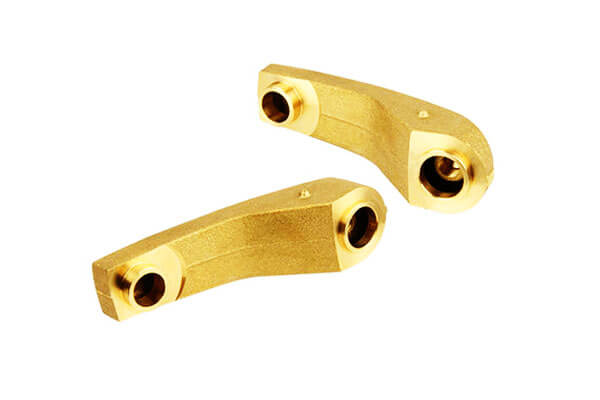
CNC Machining Brass Castings

Alloy selection is the first control point

The most important technical issue in brass CNC machining is choosing the correct alloy for the job.

Brass is a family of materials, not one uniform alloy, and machinability can vary significantly from grade to grade.

A free-cutting grade may be ideal for a turned fitting, while a corrosion-resistant or formability-focused grade may be better for the final service condition even if it machines less efficiently.

Burr formation and edge quality

Even though brass is generally clean-cutting, burrs can still appear on edges, especially around exit holes, 薄部分, or interrupted cuts.

Burr control matters because brass parts are often used in visible or precision-fit applications where edge quality is part of the product value.

Thread quality and fit consistency

Brass is widely used in threaded parts, so thread form accuracy is a major quality concern.

Poor tool condition, incorrect tapping strategy, or weak chip evacuation can affect thread class, 同心, 和可重复性.

Good QC must include thread gauging, surface checks, and functional fit verification.

Surface finish control

Brass usually produces a clean machined surface, but finish can deteriorate if the cutting edge dulls, the setup vibrates, or the operation causes rubbing instead of cutting.

For decorative or sealing applications, surface finish should be checked as a critical characteristic rather than assumed.

尺寸稳定性

Although brass is stable to machine, precision parts still require control of tool wear, machine thermal drift, and workholding consistency.

This is especially important for connector bodies, valve parts, and other parts that must maintain close tolerance across multiple features.

Material and compliance considerations

Some brass grades contain lead for machinability.

That improves chip breaking and tool life, but it also means the designer must consider the intended application, 监管要求, and any downstream policy constraints.

The machining program should be aligned with the material specification, not just with cutting efficiency.

7. Typical Applications of Brass CNC Machined Parts

部门 Typical brass CNC parts Why brass fits
Plumbing and fluid control 阀体, 配件, faucet parts, 耦合, 和连接器. 良好的可加工性, 压力紧张, 耐腐蚀性, and thread quality.
Electrical and 电子的 硬件 Contacts, 终端, 封面, 连接器, precision conductive parts. Brass combines conductivity with high-speed machinability.
Hardware and fasteners 螺钉, 坚果, lock parts, 装饰硬件, specialty fittings. Brass machines cleanly and supports repeatable thread quality.
Mechanical components
衬套, 小齿轮, 齿轮, 袖子, moving precision parts. Good machinability and moderate strength make brass practical for small functional parts.
海军陆战队 / corrosion-sensitive service Naval-brass and copper-alloy hardware, salt-water-adjacent components. Selected grades offer corrosion resistance in demanding environments.
建筑 / 装饰零件 修剪, 手柄, 固定装置, visible hardware, design elements. Brass offers appearance, finish quality, and easy machining.

8. Advantages and Limitations of Brass CNC Machining

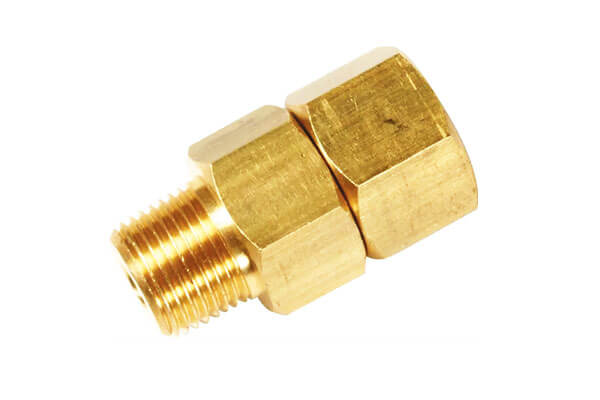
CNC Machining Brass Adapter Fitting

优点

  • Benchmark machinability in C36000.
  • High-speed production and lower per-part cost in suitable grades.
  • Good corrosion resistance in many service environments.
  • Good finish quality for visible and functional parts.
  • Excellent for threading, 窃听, and screw-machine parts.

限制

  • Not all brass grades are equally machinable; C26000 and C46400 are far less free-cutting than C36000.
  • Lead-free brasses can raise cutting forces and make process tuning more important.
  • Brass is not the right choice when the job is dominated by very high structural strength rather than machinability or finish.
    That is an engineering inference from the role of brass grades in the copper-alloy families above.
  • High Raw Material Cost Brass raw material price is higher than aluminum and ordinary steel.
    Enterprises optimize material utilization rate via nesting programming to control comprehensive processing cost.

9. 比较: Brass CNC Machining vs. 铝 & Steel CNC Machining

黄铜, 铝, and steel are all common CNC materials, but they serve very different manufacturing priorities.

Comparison Aspect 黄铜数控加工 铝数控加工 Steel CNC Machining
可加工性 Excellent in free-machining grades; low cutting resistance and clean chip breakage. 非常好, especially in common machining grades; generally fast and efficient. Moderate to difficult depending on grade; higher cutting loads and more tool wear.
芯片形成 短的, controlled chips in free-machining brass; generally easy to manage. Usually manageable, but chip control depends strongly on alloy and cutter setup. Can produce tougher chips, 更多热量, and more demanding chip evacuation.
表面饰面 Naturally clean, 锋利的, and visually attractive. 良好的表面饰面, especially in well-controlled machining. Good finish is possible, but often requires more effort and tool discipline.
尺寸稳定性
Excellent for precision hardware and threaded components. 非常好, especially for lightweight functional parts. Strong dimensional performance, but cutting forces can increase distortion risk.
重量 比铝重, lighter than many steel parts only by comparison of geometry, not density. Very light and ideal for weight-sensitive components. Heaviest of the three in most applications.
力量 一般; enough for many fittings, 连接器, and small mechanical parts. 一般; lower than steel, but often sufficient for lightweight structures. Highest structural strength and load capacity among the three.
耐腐蚀性 Good in many indoor, 管道, and moderate-service applications. 良好的一般耐腐蚀性; often improved by anodizing. Highly dependent on alloy and coating; plain steels need protection.
热的 / 电行为
良好的电导率; useful for electrical and fluid-control parts. Very good thermal conductivity; useful in heat-sensitive parts. Lower conductivity; chosen more for mechanical performance than heat flow.
刀具磨损 Usually low in free-cutting brass. 低至中等. 更高, especially in harder or alloyed steels.
典型的应用 阀, 配件, 连接器, 装饰硬件, threaded parts, 衬套. 外壳, lightweight brackets, 散热器, 结构曲线. 轴, 括号, tooling parts, high-load fixtures, 穿零件.

10. 结论

Brass CNC machining is one of the most efficient and versatile forms of precision metalworking because brass combines excellent machinability with useful corrosion resistance, 可工作性, 和服务表现.

Free-cutting brass C36000 remains the benchmark machining alloy, while C26000, C37700, C38500, and C46400 show how the brass family can be tuned for forming, 锻造, 耐腐蚀性, or production machining.

The practical value of brass lies in fit-for-purpose selection. Choose the right alloy, and CNC machining becomes fast, 干净的, 和成本效益.

Choose the wrong alloy, and the same material family can become less efficient or less suitable than expected.

That is why brass CNC machining should always be approached as both a material-selectionprocess-selection decision.


常见问题解答

What is the best brass for CNC machining?

自由切割黄铜 C36000 is the standard machining benchmark and is widely used for high-speed screw machining.

Is brass easy to machine?

是的. Brass is widely regarded as one of the easiest metals to machine, and its machinability sets the standard for other metals.

Is brass good for threaded parts?

是的. Brass is widely used for screws, 配件, 阀, and specialty fasteners because it machines threads cleanly and efficiently.

Is all brass the same for machining?

不. Some grades are optimized for free machining, some for forging or forming, and some for corrosion resistance or appearance.

Why is leaded brass so common in CNC work?

Because lead improves machinability by helping chips break up and by acting as an internal lubricant, which supports high-speed cutting and longer tool life.

发表评论

您的邮箱地址不会被公开。 必填项已用 * 标注

滚动至顶部

获取即时报价

请填写您的信息,我们会及时与您联系.