编辑翻译
经过 Transposh - translation plugin for wordpress
Aluminum CNC Machining Services Manufacturer

Aluminum CNC Machining

内容表 展示

1. 介绍

Aluminum CNC machining occupies a central position in modern manufacturing because it combines a highly workable material system with the precision, 可重复性, and geometric freedom of computer numerical control.

Aluminum is valued across industries for its low density, 耐腐蚀性, 导电性和导电性, and strong suitability for lightweight design.

It is also a highly recyclable metal, with the material remaining in circulation through repeated recovery and reuse.

2. What Is Aluminum CNC Machining?

数控加工 is a subtractive manufacturing process in which aluminum stock is shaped by computer-controlled cutting operations such as milling, 转动, 钻孔, 无聊的, 窃听, 锯, and deburring.

实际上, the process converts aluminum in extrusion, 锻, or cast form into a finished functional component with controlled dimensions, defined tolerances, and a specific surface condition.

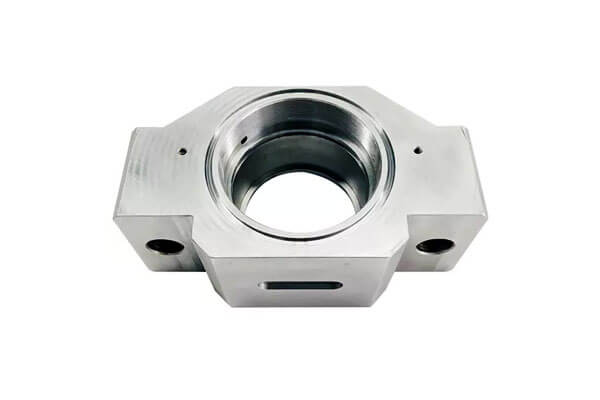
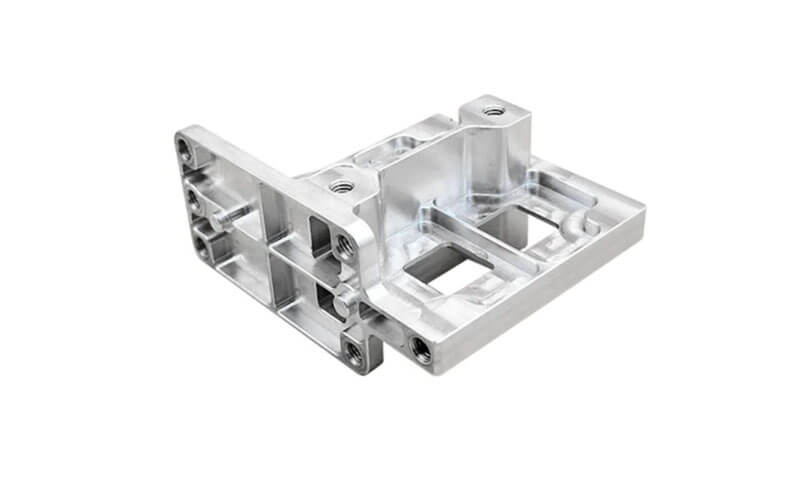
CNC Machining Aluminum Parts

Industry machining guidance treats aluminum as a distinct workpiece class because its cutting behavior, 芯片形成, and tooling requirements differ materially from those of steel.

从工程角度来看, the value of aluminum CNC machining lies in the combination of high geometric freedomhigh process efficiency.

Aluminum can be machined at very high cutting speeds, and in high-speed milling, speeds above roughly 2500 m/min are commonly treated as high-speed machining for aluminum.

同时, a large portion of the heat generated during cutting is carried away by the chip, which helps keep the workpiece thermally stable and supports fast, productive material removal.

Why Aluminum Is One of the Core CNC Materials

Aluminum is also a core CNC material because it supports a complete manufacturing ecosystem.

It can be milled, turned, 钻了, 螺纹, deburred, 抛光, blasted, and anodized with strong results.

That makes it suitable not only for mechanical parts, but also for parts where appearance, 耐腐蚀性, 表面纹理, or post-machining treatment are part of the design requirement.

换句话说, aluminum is valuable not simply because it is machinable, but because it integrates well with downstream finishing and product-performance requirements.

3. Key CNC Processes for Aluminum

Aluminum is one of the most versatile metals in CNC production because it can be machined efficiently across multiple operations, from rough material removal to fine finishing.

The main value of aluminum machining lies not only in speed, but also in the way the material responds consistently to milling, 转动, 钻孔, 和表面饰面.

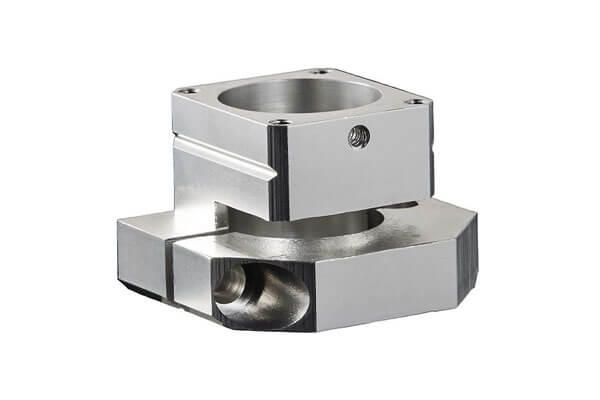
Aluminum CNC Machining

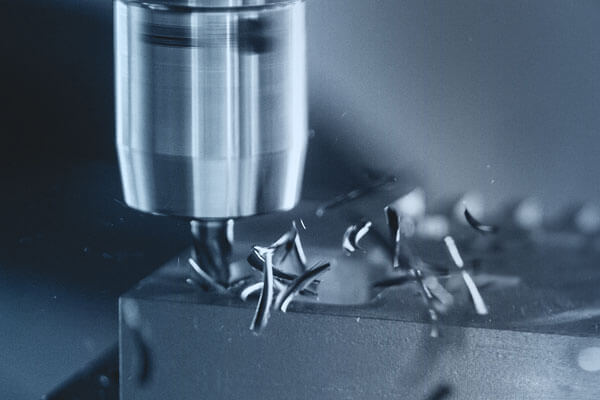
CNC Milling Aluminum

CNC铣削 is the most widely used process for aluminum parts with prismatic geometry, 口袋, 腔, contours, 肋骨, and thin-wall structures.

It is especially suitable for housings, 括号, 外壳, 散热器, fixture bodies, and structural components that require multiple faces and complex geometry.

Aluminum milling is generally characterized by high material removal rates, low cutting resistance, and strong compatibility with high spindle speeds.

Because the material is relatively soft compared with steel, the cutter can engage the workpiece aggressively without excessive force, provided the tool path is stable and chip evacuation is effective.

This makes milling particularly efficient for prototype work and for production parts that demand both speed and precision.

The main challenge in aluminum milling is not force, but surface control. If the tool edge is dull, the material may smear or build up on the cutter, reducing finish quality and increasing burr formation.

为此原因, milling aluminum typically favors sharp cutting edges, polished flute geometry, and carefully controlled engagement.

Thin walls and deep pockets require additional attention because the part may deflect if the cutting load is not balanced properly.

CNC Turning Aluminum

CNC turning is the preferred process for rotationally symmetric aluminum components such as shafts, 集线器, 袖子, 戒指, 连接器, and cylindrical housings.

It is particularly effective when the part has a uniform outer profile, coaxial internal features, or repeated circular geometry.

Turning aluminum is usually highly productive because the material cuts cleanly and supports fast spindle speeds.

The process also tends to generate good surface finish when the tool geometry is appropriate.

在许多情况下, turning can achieve the final dimensional accuracy and surface condition in a single setup, which improves repeatability and reduces handling errors.

The key technical issue in turning aluminum is chip formation. If the cutting edge is not sharp enough or the feed is too low, the material may form long, continuous chips or stick to the tool edge.

That can affect surface quality and disrupt production flow.

A stable turning strategy therefore depends on correct insert geometry, proper chip breaker selection, and a feed rate that encourages clean chip breakage without sacrificing finish.

钻孔, 无聊的, and Tapping Aluminum

Hole-making operations are essential in aluminum CNC machining because many parts require threaded holes, dowel bores, fluid passages, fastener interfaces, or alignment features.

钻孔, 无聊的, and tapping each serve a distinct purpose, and each carries its own process concerns.

Drilling aluminum is usually straightforward, but accuracy depends heavily on chip evacuation and tool sharpness.

Deep holes and blind holes can create chip packing if the process is not managed carefully.

Boring is used when tighter positional accuracy, better roundness, or improved surface quality is needed after drilling.

Tapping aluminum is often efficient, but thread quality depends on avoiding chip welding, 毛刺, and tool drag.

用于大批量生产, the main priority is consistent hole quality across repeated parts.

For precision assemblies, the priority may shift toward concentricity, thread integrity, and bore finish.

In both cases, the best results come from aligning tool type, hole depth, coolant delivery, and feed strategy with the exact feature being produced.

表面整理选项

Aluminum is especially well suited to secondary finishing because the base material responds predictably to both mechanical and electrochemical surface treatments.

Finishing is not just cosmetic; it often determines corrosion resistance, 磨损行为, dimensional appearance, and perceived product quality.

阳极氧化

阳极氧化 is one of the most important finishing options for machined aluminum parts.

It converts the natural surface oxide into a thicker and more controlled oxide layer, 改善耐腐蚀性, 表面硬度, 和耐用性.

It can also be used to create decorative finishes in a range of colors.

For many aluminum products, anodizing is the finishing step that transforms a functional part into a durable and market-ready component.

抛光

Polishing is used when the part must have a smooth, 明亮的, or premium appearance.

It can remove tool marks, reduce visible surface defects, and improve the visual quality of exposed parts.

在某些应用中, polishing is also used before anodizing when a more refined final appearance is required.

珠子喷砂

Bead blasting creates a uniform matte surface by gently impacting the part with fine media.

It is often used when a non-reflective, 甚至, and technical-looking finish is desired.

Bead blasting can also help hide minor machining marks and provide a consistent surface texture before final coating or assembly.

Functional Finishing Considerations

The choice of finish should always be made together with the machining strategy.

例如, a part intended for anodizing should be machined with the final surface condition in mind, because scratches, 毛刺, or contamination can affect the result.

同样地, a part intended for polished or bead-blasted appearance must be machined cleanly enough that the finishing step does not exaggerate defects.

4. Common Aluminum Alloy Families and Machining Behavior

Commercial structural products are often selected from the 2xxx, 5xxx, 6xxx, and 7xxx groups because they provide useful combinations of strength, 耐腐蚀性, 可焊性, 和织造性.

合金族 普通成绩 Machining behavior Typical engineering use
2XXX系列 (copper-bearing, 高强度, 热处理) 2014, 2024 Strong and widely used for stressed parts. Machining is usually good, but compared with 6xxx alloys the grades are more demanding because of higher strength and, 在许多情况下, poorer corrosion resistance. 航空航天结构, high-load mechanical parts, fatigue-sensitive components.
5XXX系列 (magnesium-bearing, 非热处理) 5052, 5083, 5086, 5754 Machining is generally stable, but these grades are selected primarily for corrosion and fabrication performance rather than maximum cutting speed. 海洋结构, 压力容器, vehicle panels, transport components, corrosion-critical parts.
6XXX系列 (magnesium-silicon, 热处理) 6060, 6061, 6063, 6082 This is the most common CNC family for general-purpose machining. In machining terms, this family offers one of the best balances of machinability, finish quality, 可焊性, 和成本. 精密住房, 机器框架, 固定装置, 汽车零部件, 消费产品, general structural components.
7XXX系列 (zinc-bearing, 高强度, 热处理)
7050, 7075 Highest-strength common wrought aluminum family. 7075 is widely used in CNC machining and offers exceptional strength-to-weight ratio, but it is generally less weldable and less corrosion-resistant than 6061. 航空航天结构, defense parts, high-load sporting equipment, performance mechanical components.
Cast aluminum alloys 356, 319, A380 They are routinely machined after casting, although the actual machining response depends strongly on alloy chemistry and the amount of silicon present. 泵主体, 住房, 复杂的盖子, 压铸部件, 近网状零件.

5. Advantages of CNC Machining Aluminum

High machining efficiency

Aluminum is one of the most productive metals to machine because it supports high cutting speeds, relatively low cutting forces, and fast stock removal.

Excellent dimensional flexibility

CNC machining makes it possible to convert aluminum into precise parts with complex pockets, 薄壁, 肋骨, contours, and multi-face geometry.

Strong surface finish potential

Aluminum can achieve an excellent as-machined surface finish when the tool edge is sharp, the feed strategy is appropriate, and chip evacuation is stable.

This is especially valuable for visible consumer parts, 密封表面, and precision mechanical interfaces.

Broad finishing compatibility

A major advantage of aluminum is its compatibility with a wide range of post-machining finishes.

It can be anodized for corrosion resistance and hardness, polished for visual clarity, bead blasted for a uniform matte effect, or combined with coating and decorative processes.

Lightweight performance

Aluminum’s low density is one of the main reasons it remains central to CNC production.

Parts can be made lighter without sacrificing structural usefulness, which is crucial in transportation, 航天, 机器人技术, 便携式设备, and thermal management applications.

Economical prototyping and scalable production

Aluminum is well suited to both low-volume and production-scale CNC work.

Prototypes can be made quickly because the material is easy to remove, while repeat production remains efficient because tooling wear is usually manageable for many common aluminum grades.

This combination makes aluminum one of the most economically flexible CNC materials available.

6. Core Technical Challenges in Aluminum CNC Machining

CNC Milling Aluminum Parts

Built-up edge and material adhesion

One of the most common problems in aluminum machining is built-up edge, where material adheres to the cutting tool and distorts the cutting action.

This can degrade surface finish, change chip flow, and reduce tool life.

The issue is particularly important in soft alloys or in conditions where the cutting edge is not sufficiently sharp. Effective cutting fluid and clean tool surfaces help reduce this tendency.

Chip evacuation

Chip control is a fundamental machining issue in aluminum, not a secondary concern.

If chips are not removed efficiently, they can be recut by the tool, scratch the surface, clog flutes, or damage hole quality.

Deep pockets, 盲孔, and drilling operations are especially sensitive to chip evacuation problems. Internal coolant and well-designed toolpaths are often necessary to maintain stable cutting conditions.

Burr formation

Aluminum has a strong tendency to produce burrs at edges, intersections, and hole exits if the feed, tool geometry, or exit strategy is not properly controlled.

Burrs are not just cosmetic defects. They can interfere with assembly, 密封, deburring cost, and part safety.

In precision components, burr control is part of process design rather than a post-process afterthought.

Tool wear in abrasive alloys

Not all aluminum behaves the same way. High-silicon aluminum alloys are much more difficult to machine because hard silicon particles accelerate tool wear.

Alloys containing more than 10% Si are among the most difficult aluminum alloys to machine for this reason.

As silicon content rises, tool material, edge geometry, and cutting strategy become much more important.

Dimensional distortion in thin-walled parts

Aluminum is often used for thin-wall and lightweight structures, but those same structures can deflect during machining if the part is not supported correctly.

Wall vibration, fixture pressure, and uneven stock removal can create taper, waviness, or loss of flatness.

Thin-section aluminum machining therefore requires more than speed; it requires deliberate control of part stiffness and cutting load.

7. Process Strategies for Better Machinability

Select the right aluminum family

Machinability begins with alloy choice. General-purpose wrought grades such as 6xxx series alloys are often preferred for CNC work because they offer a strong balance of machinability, 力量, and finishing flexibility.

High-strength 7xxx alloys are also widely used, while high-silicon cast alloys require much more careful tool control because of abrasive wear.

The best alloy is therefore the one that matches the part’s mechanical, 热的, and finishing requirements rather than simply the one that cuts fastest.

Design the toolpath around chip flow

Aluminum machining is most stable when chips can escape freely. Toolpaths should avoid packing chips into pockets, re-cutting chips in deep cavities, or trapping material at the flute.

In drilling and boring, chip evacuation should be designed into the operation from the start, not solved later with rework. Well-planned chip flow improves surface finish, 工具寿命, and hole quality.

Use aggressive but controlled cutting conditions

Because aluminum generally supports high-speed machining, the process should be run decisively rather than conservatively to the point of rubbing.

A weak cut can encourage built-up edge, 表面效果不佳, and unstable chip formation.

The right strategy is to remove material cleanly with sufficient feed and speed to produce stable chips while keeping the tool engagement smooth and predictable.

Match finishing to the final function

If a part will be anodized, 抛光, or bead blasted, the machining strategy should be chosen with that finish in mind.

Machining marks, 毛刺, 污染, and poor edge quality can all affect the final appearance and performance of the surface treatment.

为此原因, finishing requirements should be specified before production rather than after machining is complete.

Reinforce part support for thin sections

Thin-wall aluminum parts should be clamped and machined in a way that minimizes vibration and local deformation.

This may mean reducing overhang, supporting the part near the cutting zone, or planning roughing and finishing passes to preserve stiffness until late in the process.

In lightweight designs, the machining plan must respect the structural limits of the part during manufacturing, not only in service.

Treat coolant as a process variable

Coolant is useful not only for temperature control but also for chip evacuation and surface protection.

In aluminum machining, the right coolant approach helps prevent smearing, supports cleaner cutting, and improves tool life in deeper or more demanding operations.

For operations such as drilling and tapping, effective coolant delivery can make the difference between consistent output and recurring chip-related defects.

Separate roughing and finishing logic

Roughing should prioritize stock removal and chip control, while finishing should prioritize surface condition, feature accuracy, and edge quality.

Trying to use one parameter set for both usually produces compromise results.

A better approach is to rough efficiently, then finish with tighter control over feed, engagement, and tool condition.

That separation improves consistency and reduces the risk of dimensional drift or poor surface texture.

8. 工具, 冷却液, and Cutting Strategy

工具

Tool selection is central to successful aluminum CNC machining.

Aluminum generally responds best to sharp, polished cutting edges with positive geometry, because the material cuts cleanly when the tool shears rather than rubs.

A tool that is too blunt or too aggressive can encourage built-up edge, poor chip flow, and surface smearing.

For most aluminum jobs, carbide tools are the standard choice, while diamond-tipped tools become especially attractive in high-volume or high-silicon applications.

The key is not only tool hardness, but also edge quality, flute design, and chip evacuation capability.

冷却液

Coolant plays a dual role in aluminum machining: it controls heat and helps clear chips.

In many operations, the main objective is not simply lowering temperature, but preventing chip recutting and maintaining a clean cutting zone.

This is especially important in drilling, 窃听, deep pockets, and long-cycle milling.

The most effective coolant strategy depends on the feature being machined.

洪水冷却液, internal coolant, or directed coolant may all be appropriate, provided chip evacuation remains stable and the workpiece surface stays clean.

Cutting Strategy

Aluminum generally allows high cutting speeds, but speed only works when the process remains controlled.

The cutting strategy should prioritize stable engagement, sufficient feed to form clean chips, and toolpaths that avoid trapping chips in pockets or holes.

For roughing, the goal is efficient stock removal. For finishing, the goal shifts toward clean surface generation and dimensional precision.

These two stages should not be treated the same way. A well-planned aluminum process uses aggressive cutting where the geometry allows it, then shifts to tighter control for the final passes.

9. Surface Integrity and Quality Control

表面完整性

In aluminum machining, surface integrity includes more than surface roughness. It also covers burrs, edge quality, smearing, 划痕, and local deformation.

A part can meet tolerance on paper and still be unsuitable if the surface is damaged or inconsistent.

This matters especially in sealing faces, visible surfaces, and parts that will later be anodized or coated.

Machining marks and contamination can reduce final appearance and affect downstream processing.

Burr Control

Burr formation is one of the most common quality issues in aluminum CNC work. Burrs often appear at hole exits, 锋利的角落, and edge transitions.

They may seem minor, but in practice they can interfere with assembly, compromise safety, and increase finishing cost.

A good machining process reduces burrs at the source through proper tool geometry, stable cutting, and appropriate exit strategy.

Deburring should then be used as a finishing step, not as the primary solution.

Inspection and Process Control

Quality control should check dimensions, edge condition, and surface consistency together.

In aluminum parts, visual finish and tactile quality often matter almost as much as dimensional accuracy.

For production work, repeatability is especially important: the process must produce the same result from part to part, not only a single acceptable sample.

10. Applications of Aluminum CNC Machining Parts

Aluminum CNC machining is used wherever low weight, 精确, and production efficiency must come together.

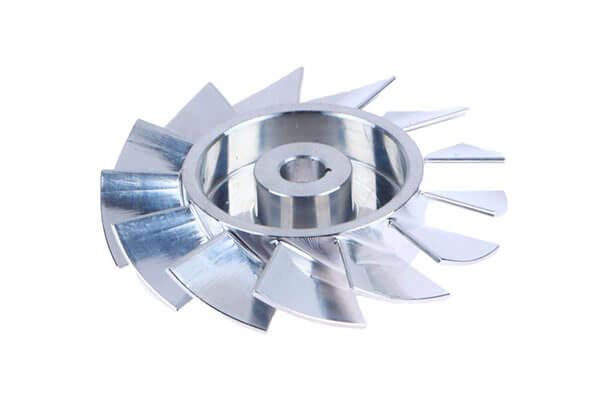
CNC Machining Aluminum Impeller

Common application areas

  • 航空航天组件 例如括号, 肋骨, 住房, 和结构支持
  • 汽车零件 such as engine-related housings, 坐骑, 封面, and lightweight structural elements
  • 电子外壳 and thermal management parts
  • Industrial fixtures and machine frames
  • 消费产品 that require both appearance and performance
  • Robotics and automation parts where stiffness-to-weight ratio matters
  • Medical and laboratory equipment that benefits from precision and clean finishing

The appeal of aluminum in these fields is straightforward: it is light, 可加工, and compatible with a wide range of final finishes.

That makes it a practical choice for both functional and visually exposed components.

11. How to Optimize Your Aluminum CNC Project

Start with the right alloy

The best aluminum machining project begins with material selection.

6061 和 6082 are often strong general-purpose choices, 7075 is better when strength is the priority, and cast alloys are better when geometry is more complex than machining efficiency.

Design for manufacturability

Geometry should support machining, not fight it. Deep pockets, fragile thin walls, and inaccessible holes increase cost and risk.

A design that considers tool access, chip evacuation, and fixture support will usually be easier and cheaper to produce.

Match the finish to the function

If the part will be anodized, 抛光, or bead blasted, that choice should influence both machining and inspection.

The part should be machined with the final surface in mind, especially on visible or functional faces.

Control toolpath and setup stability

A stable fixture, clean datum strategy, and consistent tool engagement are essential.

Many aluminum machining problems come not from the material itself, but from part movement, poor chip flow, or inconsistent tool loading.

Plan for production stage

Prototype machining and production machining are not identical.

A one-off part may tolerate more manual control, while volume production requires repeatability, predictable cycle time, and controlled finishing.

The process should be designed according to the intended production scale from the beginning.

12. CNC加工与. Precision Casting Aluminum

Comparison Aspect CNC加工铝 Precision Casting Aluminum
Manufacturing principle Material is removed from wrought or cast stock by controlled cutting operations such as milling, 转动, 钻孔, 和敲击. Aluminum alloys can be machined rapidly and economically. Molten aluminum alloy is poured into a mold to form a near-net-shape part. Aluminum casting alloys are noted for high castability, 良好的流动性, 低熔点, rapid heat transfer, and good as-cast surface finish.
维度的准确性 Generally the better choice when tight tolerances and precise functional surfaces are required. This is an engineering inference from the controlled subtractive nature of CNC machining and the near-net-shape nature of casting. Good for near-net-shape geometry, but final critical dimensions often still need machining because casting is primarily a shape-formation process.
表面饰面 Typically provides a cleaner, more controlled as-machined surface, especially on sealing faces, 孔, and precision interfaces. Good as-cast finish is one of the main advantages of aluminum casting alloys, but critical surfaces may still require finishing or machining.
Geometric complexity
Best for shapes that are tool-accessible and can be reached by cutters, 演习, and boring tools. Complex internal forms are limited by access. This is an engineering inference. Better for complex contours, 薄部分, and near-net-shape parts that would be expensive to machine from solid stock. Aluminum casting alloys are especially valued for castability.
物质利用 Lower for complex parts because more material is removed as chips. Aluminum machining is efficient, but chip generation is inherent to the process. Higher for complex parts because the part is formed close to final shape, reducing removed material. This follows directly from the near-net-shape nature of casting.
Tooling and setup cost Lower upfront cost for prototypes and design iterations because no mold tooling is required. Higher upfront cost because molds or tooling must be prepared before production begins. This is an inference from the casting process itself.
交货时间
Usually faster for prototypes and small batches because production can begin directly from stock. Usually slower at the start because mold preparation and process setup are required before casting can begin.
Typical technical risks 建立边缘, 工具穿, chip evacuation problems, 毛刺, and poor surface quality when silicon content is high or cutting conditions are not controlled. Casting defects such as porosity, 收缩, or incomplete filling are the main concerns, along with the need to control hydrogen and solidification behavior.
最适合 精密住房, 括号, 配件, machined interfaces, 原型, and parts where tolerance and surface quality are the priority. 泵主体, 住房, 复杂的盖子, 结构铸件, and parts where shape complexity and material efficiency are the priority.

13. 结论

Aluminum CNC machining is a mature, 高效的, and highly flexible subtractive manufacturing technology tailored for lightweight metal components.

铝的密度低, 高热电导率, and excellent ductility endow it with superior machinability,

while its soft texture, chip adhesion tendency, and thermal expansion characteristics bring unique processing difficulties.

With the rapid development of five-axis linkage machining, intelligent stress monitoring, and ultra-precision finishing technology, aluminum CNC machining will further expand its application boundaries in extreme fields.

In future industrial production, engineers should select reasonable alloy grades and processing schemes based on working conditions, abandon rough empirical processing methods,

and rely on standardized parameter control to maximize the lightweight advantages and economic benefits of aluminum components.

LangHe Aluminum CNC Machining Services

ngHe Industry provides high-precision aluminum CNC machining services tailored to a wide range of industrial and manufacturing applications.

With strong capabilities in milling, 转动, 钻孔, 窃听, and custom surface finishing, 狼河 can produce aluminum components with tight tolerances, excellent dimensional consistency, lightweight performance, and a clean surface finish.

From rapid prototypes to small-batch production and high-volume manufacturing, the service is designed to support complex geometries, 快速周转, and stable repeatability across various aluminum grades.

Request a Quote Now>>


常见问题解答

Is aluminum easier to machine than steel?

是的, in general aluminum is easier to machine and can be cut at much higher speeds, but the exact behavior depends on alloy family and silicon content.

Which aluminum alloys are hardest to machine?

High-silicon aluminum alloys are among the most difficult because hard silicon particles drive rapid tool wear.

Why is anodizing so common on machined aluminum parts?

Because anodizing reinforces the natural oxide film and increases hardness, 耐腐蚀性, 和耐磨性, while also allowing decorative color finishing.

When is precision casting better than CNC machining for aluminum?

Precision casting is often better when the geometry is complex, the part benefits from near-net-shape formation, and material utilization is a priority.

CNC machining is better when precision, 结束, and design flexibility dominate.

What is the biggest machining issue in aluminum?

建立边缘, smearing, and poor chip evacuation are among the most common causes of finish problems and tool wear.

发表评论

您的邮箱地址不会被公开。 必填项已用 * 标注

滚动至顶部

获取即时报价

请填写您的信息,我们会及时与您联系.