经过多年生产球墨铸铁件(从制动卡钳和轮毂到阀体和重型齿轮毛坯),我可以告诉您这一点: 您浇注的每一个球墨铸铁件的质量都始于一个铸造厂以外没有人见过的决定.
从球化开始 (球化) 你选择的方法.
球墨铸铁不仅仅是“更好的灰铸铁”。这是完全不同的材料, 当镁与铁水反应将片状石墨转变为球形结核时产生.
Those spherical nodules eliminate the stress-concentrating cracks that make gray iron brittle, and they give ductile iron its famous combination of steel-like strength and cast iron-like fluidity.
Get the nodulization wrong — too much magnesium, too little, uneven distribution, or excessive fade — and you end up with chunky graphite, 碳化物形成, or a casting that looks fine but fails in service.
This guide breaks down all six methods from the shop floor: how they work, what they cost, how well magnesium is absorbed, and when to choose each.
It is the kind of knowledge you build through decades of troubleshooting faded nodules, cracked reactors, and dust-covered foundry floors.
1. Why Is Nodulizing Treatment Essential in Ductile Iron Casting?
Nodulizing treatment, also known as magnesium treatment or spheroidization, is the key metallurgical process that distinguishes 延性铁 from gray iron.
Without effective nodulizing, graphite tends to form flakes, which create stress concentrations and reduce ductility.
With proper treatment, graphite forms predominantly as spheroids, significantly improving the iron’s tensile strength, 伸长, 和韧性.
从铸造工程师的角度来看, graphite morphology is the foundation of ductile iron performance.
Nodulizing treatment must therefore be carefully controlled to ensure consistent casting quality and mechanical properties.
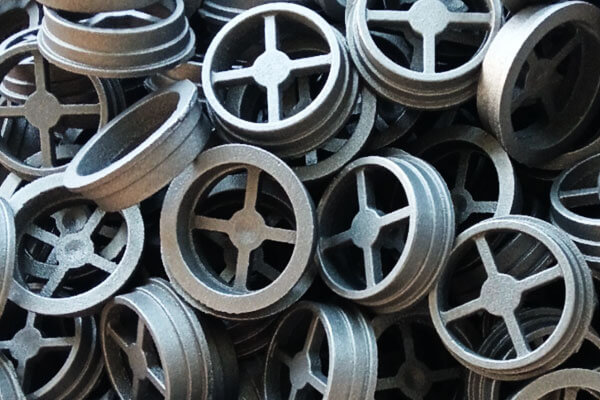
The Role of Graphite Morphology
In gray iron, flake graphite acts as internal notches, concentrating stress at the flake tips and promoting brittle fracture.
在球墨铸铁中, spheroidal graphite reduces stress concentration, allowing the metallic matrix to carry loads more effectively and undergo greater plastic deformation before fracture.
| Graphite morphology | 典型的拉伸强度 | 典型伸长率 | Engineering behavior |
| 薄片 石墨 (灰色的 铁) | 150–350 MPA | Less than 1% | Relatively brittle, 有限的延展性 |
| 球体 石墨 (公爵 铁) | 400–900 MPA | 2–18% | Higher strength and ductility, depending on grade and matrix structure |
These ranges are indicative rather than universal; actual properties depend on the iron grade, 矩阵结构, 铸件断面厚度, and applicable testing standards.
Magnesium and Key Process Parameters
Magnesium is the principal nodulizing element used in commercial ductile iron production. It reacts with sulfur and oxygen while modifying graphite growth during solidification.
Effective treatment requires sufficient residual magnesium in the melt without excessive addition, which can increase dross formation and other casting risks.
Typical process reference values include:
| 范围 | Typical target or range | 重要性 |
| 残留 镁 | Approximately 0.03–0.05% | Supports graphite spheroidization; the target depends on iron chemistry and casting requirements |
| 石墨 结节性 | Typically ≥85% for critical applications, 如有指定 | Indicates the effectiveness of spheroidization |
| 硫 后 治疗 | Approximately 0.01–0.02% | Excess sulfur consumes magnesium and can impair nodulizing |
| 治疗 温度 | Usually 1,450–1,550°C | Influences magnesium recovery, 反应强度, and temperature loss |
| Treatment-to-pouring 时间 | As short as practical | Helps limit nodulizing fade and deterioration in graphite morphology |
The appropriate values must be validated against the casting grade, 初始硫含量, treatment alloy, and production conditions.
Insufficient residual magnesium can lead to degenerated graphite, while excessive magnesium may increase dross and slag formation and contribute to casting defects.
Because magnesium has a relatively low boiling point and reacts readily with molten iron, the choice of nodulizing method directly affects magnesium recovery, reaction stability, 和最终铸造质量.
Controlling alloy addition, treatment temperature, and pouring time is therefore essential for producing consistent ductile iron.
2. Pressure Magnesium Treatment
Working principle
压力镁处理是基于压力与镁沸腾行为之间的关系.
在大气压下, 镁的沸点约为 1,107°C, 大大低于球化处理时铁水温度.
当镁直接添加到热熔体中时, 它可以迅速蒸发, 产生剧烈反应并减少铁中保留的比例.
增加镁周围的压力会提高其沸腾温度并抑制过度汽化.
这一原理使得该工艺比传统的开包方法更有效地使用金属镁.
使用了两种主要配置:
- 外部加压处理: 将装有铁水的钢包放置在密封压力容器内. 压缩空气或氮气建立所需的压力.
- 自压治疗: 将金属镁引入密封处理钢包中. 镁蒸气在容器内产生压力, 帮助调节进一步的汽化和吸收.
在自压布置中, 部分镁蒸气被铁吸收, 而其余部分在密封空间内建立压力.
由此产生的压力限制了不受控制的镁沸腾并有助于稳定反应.
Magnesium recovery and process advantages
据报道镁回收率可达 70%–80%, 在镁的利用是主要成本考虑因素的情况下,使压力处理具有吸引力.
主要优点包括:
- 高镁回收率并减少球化剂消耗.
- 更有效地利用金属镁.
- Reduced visible smoke and magnesium flare when the equipment is properly sealed and operated.
- Potentially more controlled reaction behavior than open-ladle treatment.
Because the system relies on a sealed pressure vessel, 然而, its performance depends on equipment integrity, pressure-control accuracy, sealing reliability, and strict adherence to operating procedures.
Limitations and engineering considerations
Pressure magnesium treatment requires more sophisticated equipment and higher capital investment than conventional sandwich treatment.
The operating procedure is also more demanding, and treatment cycles can be relatively long.
Heat loss during handling and treatment must be considered, particularly when the foundry is working with thin-walled castings or a narrow pouring-temperature window.
The most important concern is safety. Magnesium vapor, molten iron, and a pressurized vessel create a combination of serious hazards if pressure is released unexpectedly or the equipment is improperly sealed.
Interlocks, pressure monitoring, preventive maintenance, operator training, and approved operating procedures are essential.
工程推荐: Pressure treatment is worth evaluating when high magnesium recovery and controlled reaction conditions justify the equipment cost.
It should not be selected solely because its reported recovery is high; total cycle time, 维护要求, 能源使用, and safety management must also be assessed.
3. Sandwich Treatment
Working principle
Sandwich treatment is one of the most widely used nodulizing methods in ductile iron foundries because of its relatively simple equipment and flexible operation.
The method typically uses a treatment ladle with a raised dam or partition that separates the nodulizer chamber from the main iron-pouring area.
The geometry helps delay direct contact between the magnesium-bearing alloy and the incoming molten iron.
Before treatment, the nodulizer is placed in the designated chamber, usually covered with ferrosilicon and then with clean, suitable steel scrap, iron filings, or another approved covering material.
The cover reduces direct exposure and moderates the initial reaction.
The molten iron is then poured as continuously as practicable into the opposite side of the ladle. As the iron level rises, it reaches the nodulizer and initiates the reaction.
The sequence and pouring rate are important. If the iron is poured too slowly, too rapidly, or directly onto the alloy bed, the reaction may become less predictable.
Typical magnesium recovery: 30%–50%
The magnesium recovery of conventional sandwich treatment is generally around 30%–50%.
Although this is lower than the values associated with several covered or pressure-controlled methods, the process remains popular because the equipment is straightforward, operating costs are relatively low, and the treatment can accommodate a range of production volumes and casting types.
其优点包括:
- Simple ladle design and relatively low capital investment.
- Straightforward operation after appropriate process training.
- Flexibility for different casting batches and alloy requirements.
- Relatively easy integration into existing foundry production.
For foundries with limited capital budgets or frequent changes in casting specifications, these practical benefits can outweigh the lower magnesium recovery.
How to improve sandwich treatment
Several process adjustments can improve reaction stability and magnesium utilization.
第一的, optimize the ladle geometry.
A suitable ladle height-to-diameter ratio helps maintain sufficient iron depth and provides better control over the contact between the molten iron and the nodulizer.
The exact ratio must be established for the actual ladle capacity and alloy system.
第二, select the nodulizer according to the iron chemistry.
Lower-magnesium treatment alloys are commonly used to moderate the reaction. The correct alloy depends on the initial sulfur level, required residual magnesium, and casting specification.
第三, control the covering material.
The cover must be suitable for molten iron service, sufficiently clean and dry, and compatible with the treatment practice.
An inadequate cover can allow premature magnesium vaporization, while an unsuitable or excessive cover can complicate reaction control and slag management.
第四, maintain a controlled pouring temperature and rate.
Excessively high temperatures can increase magnesium vaporization and oxidation, while temperatures that are too low can impair alloy dissolution and leave insufficient thermal capacity for subsequent pouring.
限制
The principal disadvantages are relatively low magnesium recovery and the potential for intense magnesium flare and fumes.
These conditions require effective ventilation, suitable ladle shielding, appropriate personal protective equipment, and disciplined operator practices.
The method also depends heavily on operator consistency. Variations in alloy placement, 覆盖, 浇注率, or treatment temperature can produce fluctuations in residual magnesium and graphite nodularity.
工程推荐: 三明治处理仍然是通用球墨铸铁生产的明智选择.
在投资新的处理系统之前, 铸造厂应首先确定是否改进钢包设计, 合金选择, 浇注练习, 和过程监控可以以更低的成本提供所需的质量.
4. Tundish-Cover Treatment
Working principle
中间包盖处理, 其既定形式也称为乔治费休转移钢包法, 是一种专门的工艺,使用封闭的反应室来控制铁水和金属镁之间的接触.
处理钢包最初水平放置并装入测量数量的铁水.
金属镁被放置在专用反应室中, 然后固定腔室并安装盖子.
然后钢包旋转到其操作位置. 铁水通过一个小开口进入反应室.
流量取决于开口面积和钢包内铁的静水压力.
当镁被加热时, 它蒸发并在反应室内产生压力.
当压力上升到熨斗的局部静水压力以上时, 进一步的铁进入暂时受到限制.
然后,随着镁在汽化过程中吸收热量,反应室冷却, 导致蒸气压降低. 铁水随后可以再次进入.
这种压力和流量的相互作用产生了一个自我调节的反应循环,可以缓和镁和铁块之间的直接接触.
Recovery and metallurgical benefits
在合适的操作条件下镁回收率可达60%~80%.
与传统开包处理相比, 该方法有几个优点:
- 通过控制反应条件获得相对较高的镁回收率.
- 在合适的工艺配置中减少温度损失.
- 与不受控制的直接添加相比,镁-铁相互作用更加渐进.
- 处理硫含量相对较高的铁时,可能提高镁的利用率.
当铸造厂需要控制镁消耗而不依赖大量过量的球化剂时,受控反应特别有用.
Common problems
尽管具有冶金优势, 中间包盖处理有几个实际局限性.
连接钢包和反应室的小开口可能会被凝固的铁或炉渣堵塞.
存款还可以改变有效开放面积, 破坏预期的流量和压力平衡.
最后, 反应室需要仔细检查和维护.
开口必须保持在指定的尺寸公差范围内, 必须使用批准的程序清除积聚的炉渣.
该方法还会产生镁耀斑和烟雾, 因此不应将其视为无烟工艺.
此外, 其钢包配置和操作顺序使其不太方便连续处理连续的铁料.
工程推荐: 当铸造厂具有维护反应室的技术能力并受益于受控镁添加时,中间包盖处理是最合适的.
如果堵塞,其优势可能会丧失, 室磨损, 或维护不一致会改变反应条件.
5. Cored-Wire Feeding
Working principle
包芯线喂料最初是为炼钢而开发的,后来适用于球墨铸铁生产.
它现在广泛应用于工业化铸造厂,其中自动化合金添加和可重复过程控制是优先考虑的.
包芯线由填充有粉末状镁合金的金属护套和, 如有需要, 其他合金添加剂.
焊丝以受控的速度和深度连续送入铁水中.
常见的线径包括 9 毫米和 13 毫米, 而内部粉末合金通常含有约 25%–30% 的镁.
取决于所需的冶金响应, 核心还可能含有稀土元素 (关于), 钙 (CA), 钡 (BA), 或其他合适的成分.
喂料机控制参数,例如:
- 送丝速度.
- 线材总长度或质量.
- 喂食深度和持续时间.
- 送料顺序及操作方式.
- 焊丝添加量与实测铁水质量的关系.
护套在进料过程中保护芯体,并有助于在内容物释放之前将合金输送到熔体表面以下.
适当控制喂养可减少失控的可能性, 表面瞬时镁反应.
Why cored-wire feeding is attractive
关键优势是受控添加和自动化的结合.
当电线规格, 喂料设备, 和熔化条件匹配得当, 该工艺可实现相对稳定的镁回收率和残余镁含量.
Its principal benefits include:
精密合金添加.
焊丝长度和进给速度可根据铁料的质量和化学性质进行编程, 减少与手动合金称重和放置相关的变化.
提高工艺重复性.
自动喂料有助于标准化不同班次和生产批次的处理.
减少可见的镁耀斑和烟雾.
将合金引入表面下方并控制释放速率可以减少镁的突然蒸发, 尽管仍然需要适当的排烟和保护措施.
合适的配置可降低温度损失.
该过程可以集成到受控的处理序列中, 减少不必要的处理和延误.
潜在有效的硫管理.
含镁丝有助于脱硫和球化, 取决于铁基化学成分和处理设计.
Factors that determine treatment success
自动化并不能自动保证球墨铸铁的质量. 电线的质量和操作条件仍然至关重要.
| 控制因素 | 工程考虑 |
| 线材构成 | 镁含量和任何稀土, CA, or Ba additions must match the iron chemistry and product requirements. |
| Wire quality | Core filling consistency, sheath integrity, 直径, and dimensional stability affect feeding reliability. |
| Feed speed | Excessively fast or slow feeding can alter the reaction and magnesium recovery. |
| Feed quantity | The wire length or mass must be based on the charge mass, initial sulfur level, and required residual magnesium. |
Feeding depth |
The release point must be appropriate for the ladle geometry and molten iron depth. |
| Iron temperature | Must be sufficient for reliable alloy release and dissolution while maintaining the required pouring temperature. |
| Ladle cover and sealing | Where a covered system is used, cover fit and gas-flow behavior affect treatment stability. |
| Treatment timing | Delays before pouring can reduce the effectiveness of nodulizing and inoculation. |
一个常见的错误是在不调查初始硫含量或实际残留镁的情况下调整送丝长度.
如果铁基化学成分因批次而异, 固定的线材数量可能不再提供相同的冶金结果.
限制
包芯线处理需要专用的送料设备, 可靠的电线供应, 和训练有素的人员.
电线本身必须符合一致的质量标准, 并且必须针对特定的钢包和铁化学成分验证喂料参数.
该方法在重复生产中非常有效, 但其经济优势取决于设备利用率, 电线成本, 节省劳动力, 以及废品铸件的减少.
工程推荐: 包芯线送丝是介质的有力候选者- 和大量生产, 特别是当铸造厂需要可追溯的合金添加和批次之间的一致处理时.
最有效的实施方式是将自动进料与常规化学分析和金相验证相结合.
6. Covered-Ladle Treatment
Working principle
盖包处理由英国铸铁研究协会开发,并在球墨铸铁生产中广泛采用.
以类似于夹层处理的方式将球化剂装入处理钢包中.
然后给钢包盖上盖子, 盖子和钢包之间的连接处按照工艺设计的规定进行密封.
铁水通过盖子上的开口倒入. 进入的流应远离球化剂床,以便合金不会遭受不必要的强烈初始反应.
盖子限制钢包内部与周围大气之间的气体自由交换.
这有助于减少镁的氧化和损失, 提高镁回收率.
球化反应完成后, 按照操作程序拆掉盖子.
Typical magnesium recovery: 60%–65% or higher
有盖钢包处理通常可实现约 60%–65% 或更高的镁回收率, 取决于设备设计和操作条件.
其主要优点包括:
- 与传统夹层处理相比,镁回收率提高.
- 减少镁的氧化和损失.
- 当系统设计正确时,可以更好地控制烟雾和镁耀斑.
- 基于现有钢包生产的相对简单的处理原理.
- 球化剂消耗量的潜在减少和残留镁的变化.
对于许多铸造厂来说, 盖包处理在传统夹层处理的简单性和更专业方法的更高设备要求之间提供了实用的折衷方案.
The importance of the pouring opening
浇注口的直径和位置对于工艺至关重要.
如果开口太大, 铁水可能进入得太快, 缩短反应周期并减少对镁添加的预期控制.
如果太小, 熨斗可能进入得太慢, 导致治疗时间过长和不必要的温度损失.
因此,必须根据钢包容量选择开口, 预期浇注速度, 球化剂用量, 和所需的反应持续时间.
理想情况下, 将铁水转移到有盖钢包中所需的时间应与处理反应时间相适应.
这种关系必须通过过程试验来建立,而不是从一般规则中假设.
限制
有盖钢包处理引入了额外的机械和操作要求.
盖子可能很重并且难以提起, 提升机构的设计必须能够在高温铸造环境下安全搬运.
当从冲天炉或其他连续出钢操作连续供应铁水时,准确的装料测量也可能很困难.
炉料质量的变化会影响球化剂的数量,并可能破坏处理的一致性.
密封条件, 盖开口, 钢包几何形状, 和浇注技术都必须保持在既定的工艺窗口内.
工程推荐: 对于寻求更好的镁回收率而不更换整个处理系统的铸造厂来说,有盖钢包处理是一项有吸引力的升级.
当工厂能够标准化电荷测量时,它特别有效, 封面处理, 以及浇铁顺序.
7. In-Mold Treatment
Working principle
模内处理将球化反应从处理钢包转移到模具浇注系统内专门设计的反应室中.
球化机位于指定的室中, 通常在浇道下方的流道系统内.
当铁水在浇注过程中通过腔室时, 在进入铸造型腔之前与球化合金接触并发生球化.
因为处理是在模具填充过程中进行的, 该工艺可以消除对相关铁流进行单独的常规球化操作的需要.
还可以缩短球化与凝固的间隔时间, 有助于降低与延长保存时间相关的球化褪色风险.
然而, 模内处理不仅仅是将镁合金放入流道中那么简单.
反应室和浇注系统的设计必须能够提供正确的流量, 反应持续时间, 合金溶解, 和渣分离.
Magnesium recovery and production benefits
据报道镁回收率可达 70%–80%.
主要优点是:
- 在适当控制的条件下镁回收率高.
- 正常操作期间,处理包处没有直接的镁耀斑.
- 减少与开包镁添加相关的可见烟雾.
- 减少因治疗后过度延迟而导致的结节褪色.
- 与机械化成型和重复大批量生产的潜在兼容性.
- 将处理整合到铸造和模具填充序列中的机会.
适用于大批量生产的标准化铸件, 这些优点使得模内处理特别有吸引力.
Why gating-system design is critical
模内处理比传统钢包处理对工艺设计更敏感.
合金成分变化小, 合金粒度, 反应室尺寸, 或浇注条件会改变铁吸收的镁量.
铸造厂必须控制几个相互关联的因素:
反应室尺寸.
腔室必须容纳所需的合金量,并在铁水和球化剂之间提供充分的接触,而不会产生过多的流动阻力.
浇注系统几何形状.
浇口, 跑步者, 室, 和内浇口必须共同工作以维持合适的填充条件. 设计不当的过渡可能会导致湍流, 侵蚀, 或过早凝固.
球化剂用量和粒度.
合金必须在可用的填充时间内溶解并发生反应. 正确的数量取决于铁的质量, 化学, and required residual magnesium.
浇注温度和浇注速度.
熨斗必须保持足够的流动性才能通过处理室并填充模具,而不会出现冷隔或运行不良的情况.
行程控制.
如果浇注系统不能提供足够的分离或流动变得不稳定,反应产物和炉渣可能会进入铸件.
Common risks
主要限制是工艺窗口狭窄. 模内处理对基铁的变化特别敏感, treatment alloy, 和浇注条件.
对于一种铸件几何形状可靠地工作的工艺可能不会直接转移到另一种铸件几何形状上.
当反应产物没有与进入型腔的铁有效分离时,夹渣是一种公认的风险.
合金溶解不充分, 治疗不彻底, 或不稳定的模具填充也会损害石墨形态.
为此原因, 模内处理需要严格控制浇注系统和稳定的上游铁化学物质.
工程推荐: 模内处理最适合铸造几何形状的重复生产, 模具设计, 浇注条件, 和基铁化学可以保持在经过验证的工艺窗口内.
对于高度可变的, 低体积生产, 其工具和工艺开发要求可能超过其好处.
8. The Real Lesson: No Single Best Method
多年后, 我可以告诉你这个: 没有普遍适用的“最佳”球化方法.
正确的方法取决于您的铁化学性质, 您的产量, 您的自动化水平, 您的环境法规, 和您的资本预算.
我最常看到的错误是铸造厂出于习惯而坚持使用三明治法, 即使他们的排烟成本, 镁消耗量, 不一致的结核质量使他们付出的代价比送丝机还要高.
反过来, 我见过小型加工店购买昂贵的送丝机,但他们从未充分使用过, 因为它们的零件种类繁多,使得自动化不切实际.
正确的方法是根据您的实际生产条件评估每种方法:
- 您的基础铁硫含量是多少?
- 您每天的吨位是多少?
- 你们的环境法规有多严格?
- 您对批次间差异的容忍度是多少?
- 您的资本预算是多少?
诚实地回答这些问题, 正确的方法通常是显而易见的.
9. 结论
六种典型的球化方法——压力镁处理, 三明治处理, 中间包盖处理, 包芯线送入, 盖包处理, 和模内处理——使用不同的方法来控制镁和铁水之间的反应.
从经验丰富的铸造工程师的角度来看, 决定性因素不仅仅是哪种方法实现最高回收率.
是该工艺是否能够始终如一地生产所需的石墨形态和机械性能,同时保持可接受的生产成本, 浇注温度, 和工作场所安全.
最可靠的做法是根据实际铸件和生产要求选择处理方法, 通过对照试验对其进行验证, 并严格控制铁化学, 球化剂添加, 接种, 和处理至浇注时间.
这就是铸造厂如何将球化从孤立的冶金操作转变为稳定的, 可重复的生产过程.
常见问题解答
哪种方法最适合小型作业铸造厂?
夹层法是实用的起点——最小的设备成本和最大的灵活性.
如果工作条件或镁成本成为问题, 升级到盖浇包方法是成本最低的改进.
为什么包芯焊丝送丝成为行业标准?
它结合了高且稳定的吸收 (60–75%), 最小烟雾, 全自动化, 并放宽了对基铁硫的要求.
送丝机的资本投资通过降低镁消耗和稳定的结核质量得到回报.
即使使用正确的方法,也会导致球化不良的原因是什么?
常见原因包括高基铁硫, 镁过度褪色 (处理和浇注之间的时间太长), 处理温度低, 受污染的球化剂合金, 或钢包盖密封不良.
方法选择只是一个因素——过程控制同样重要.
模内球化可以用于所有铸件尺寸吗?
模内成型最适合机械化造型线上的中小型铸件.
大型铸件需要过多的铁流过反应室, 夹渣风险增加. 不适合变量, 低体积生产.