

Giới thiệu
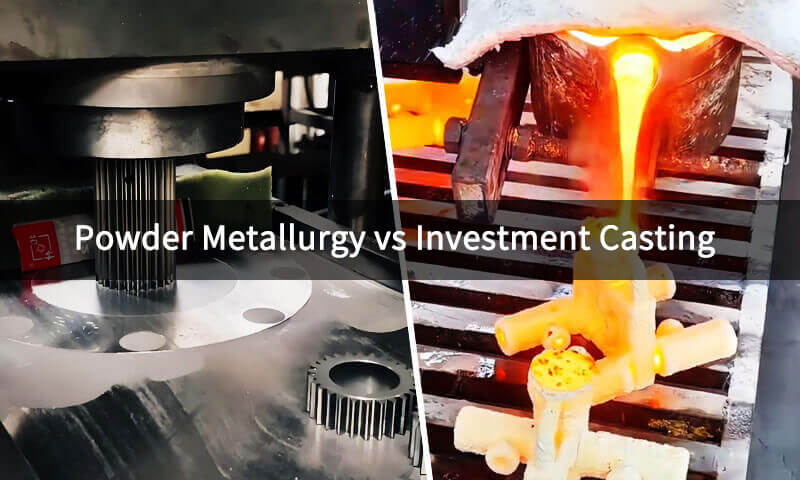
Trong số vô số phương pháp sản xuất, hai công nghệ khác nhau rõ rệt—nhưng thường cạnh tranh nhau—nổi bật: đúc đầu tư và luyện kim bột (PM).
Đúc đầu tư, một quá trình hàng nghìn năm tuổi được tinh chỉnh thông qua khoa học vật liệu hiện đại, mang đến sự tự do hình học tuyệt vời và tính linh hoạt của hợp kim.
Lớp luyện kim bột, một sự đổi mới của thế kỷ 20, mang lại hiệu quả vật liệu đặc biệt, tỷ lệ sản xuất cao, và độ xốp được kiểm soát cho các ứng dụng chuyên dụng.
Thoạt nhìn, cả hai quy trình đều tạo ra các bộ phận kim loại có hình dạng gần như lưới với gia công tối thiểu.
Nhưng các nguyên tắc cơ bản của họ – hóa rắn từ kim loại nóng chảy so với nung kết bằng áp suất của bột rắn – dẫn đến các quy tắc thiết kế hoàn toàn khác nhau, khả năng vật chất, tính chất cơ học, và quy mô kinh tế.
Việc lựa chọn giữa hai công nghệ này đòi hỏi sự hiểu biết toàn diện không chỉ về chi phí sản xuất mà còn về các yêu cầu cơ học., Độ phức tạp hình học, Khối lượng sản xuất, Lựa chọn vật chất, và hiệu suất dịch vụ lâu dài.
1. Hiểu về đúc đầu tư
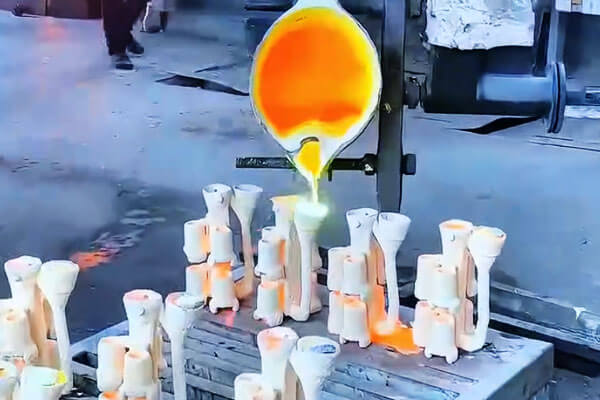
Đúc đầu tư, còn được gọi là đúc sáp bị mất, là một quá trình tạo hình kim loại chính xác trong đó mẫu sáp được phủ một lớp vỏ gốm chịu lửa, Sáp bị tan chảy, và khoang tạo thành được lấp đầy bằng kim loại nóng chảy.
Sau khi hóa rắn, vỏ gốm được loại bỏ, để lộ bộ phận kim loại có hình dạng gần như lưới với độ hoàn thiện bề mặt đặc biệt và độ chính xác về kích thước.
Quá trình ngày trở lại 5,000 năm tới nền văn minh cổ đại ở Ai Cập, Trung Quốc, và Lưỡng Hà, nơi nó được sử dụng cho các bức tượng và đồ trang sức bằng đồng.
Hôm nay, nó là một phương pháp sản xuất công nghệ cao cho cánh tuabin hàng không vũ trụ, Cấy ghép y tế, linh kiện súng, và van công nghiệp.
Quá trình nguyên tắc cơ bản
| Sân khấu | Bước chân | Chi tiết khóa |
| 1 | Sản xuất hoa văn | Sáp (hoặc nhựa nhiệt dẻo) tiêm vào khuôn kim loại chính xác (dụng cụ). |
| 2 | Tập hợp cây | Nhiều mẫu được gắn vào một đường dẫn trung tâm (Cây sáp). |
| 3 | Xây dựng vỏ | 6-10 lớp bùn gốm (Silica sol) + vữa chịu lửa (zircon/nhôm). |
| 4 | Sương | Nồi hấp làm tan chảy sáp; vỏ vẫn rỗng. |
| 5 | Bắn vỏ | 900- Nung ở 1100°C để tăng cường độ bền cho gốm và loại bỏ chất dễ bay hơi. |
| 6 | Tan chảy & rót | Kim loại nóng chảy trong lò cảm ứng; đổ vào vỏ đã được làm nóng trước. |
| 7 | Loại trực tiếp & sự cắt đứt | Vỏ được loại bỏ bằng rung động; các thành phần cắt từ cây. |
| 8 | Hoàn thiện | Nghiền, bắn nổ, Điều trị nhiệt, Kiểm tra NDT. |
Đặc điểm chính
| Tính năng | Sự miêu tả |
| Hình học | Độ phức tạp rất cao; undercuts, đoạn văn nội bộ, tường mỏng (≥0,5 mm). |
| Bề mặt hoàn thiện | As‑cast Ra 1,6‑6,3 µm; có thể được đánh bóng để Ra <0.4 Sọ. |
| Sức chịu đựng | ±0,1‑0,3 mm mỗi 25 mm điển hình. |
| Nguyên vật liệu | Hầu hết mọi hợp kim đúc được: Thép carbon, không gỉ, Superalloys, titan, nhôm, đồng. |
| Kích thước phần | Gam đến ~150 kg (Thép). |
| Âm lượng | Kinh tế từ 100 ĐẾN 10,000+ các bộ phận/năm. |
| Phế liệu | Tối thiểu (hình dạng gần lưới). |
2. Tìm hiểu về luyện kim bột
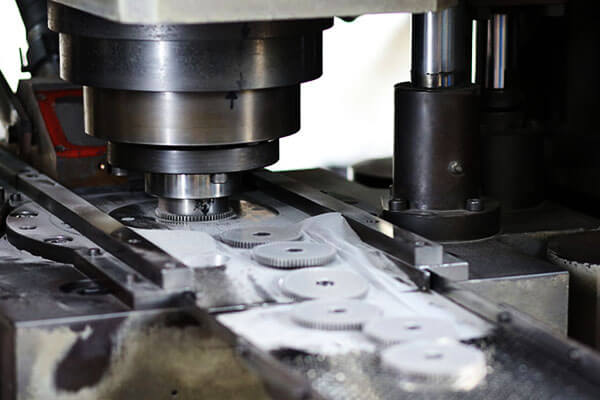
Lớp luyện kim bột là một quá trình sản xuất trong đó bột kim loại mịn được nén chặt (ép) trong một khuôn cứng và sau đó được nung nóng (thiêu kết) dưới điểm nóng chảy để liên kết các hạt thành thành phần rắn.
Không giống như đúc mẫu—bao gồm sự thay đổi pha từ lỏng sang rắn—PM là một quy trình ở trạng thái rắn giữ lại các đặc tính cấu trúc và hóa học của bột.
Ngành công nghiệp PM hiện đại nổi lên vào những năm 1920 với việc sản xuất vòng bi tự bôi trơn và dây tóc đèn vonfram.
Hôm nay, nó là một người trưởng thành, công nghệ sản xuất số lượng lớn, với ngành công nghiệp ô tô tiêu thụ hơn 70% của tất cả các bộ phận PM màu trên toàn cầu.
Quá trình nguyên tắc cơ bản
| Sân khấu | Bước chân | Chi tiết khóa |
| 1 | Sản xuất bột | Nguyên tử hóa nước hoặc khí, điện phân, sự giảm bớt; kích thước/hình dạng hạt được kiểm soát. |
| 2 | pha trộn | Bột trộn với chất bôi trơn (0.5‑1,5%) và bổ sung hợp kim (VÍ DỤ., than chì). |
| 3 | Nén (nhấn) | Ép một trục trong khuôn cứng; áp suất 200‑800 MPa; mật độ xanh 70‑85%. |
| 4 | Thiêu kết | Sưởi ấm trong bầu không khí được kiểm soát (khí thu nhiệt, N₂‑H₂) đến 70‑90% điểm nóng chảy (thường là 1120‑1150°C đối với sắt). |
| 5 | Hoạt động phụ tùy chọn | Định cỡ, đúc tiền, Điều trị nhiệt, sự xâm nhập, gia công, tẩm nhựa. |
Đặc điểm chính
| Tính năng | Sự miêu tả |
| Hình học | Độ phức tạp vừa phải (2hình chữ D); giới hạn gạch dưới; góc dự thảo hạn chế. |
| Bề mặt hoàn thiện | As‑thiêu kết Ra 3‑12 µm; có thể được cải thiện bằng cách định cỡ/đúc. |
| Sức chịu đựng | ±0,05‑0,1 mm mỗi 25 mm (sau khi định cỡ). |
| Nguyên vật liệu | Chủ yếu là sắt (sắt, Thép, không gỉ), dựa trên đồng, vonfram, và hợp kim đặc sản. Titan và nhôm cũng có thể dùng được nhưng ít phổ biến hơn. |
| Kích thước phần | Tiêu biểu <10 kg, <300 đường kính mm. |
| Âm lượng | Kinh tế từ 5,000 đến hàng triệu bộ phận/năm. |
| Phế liệu | >95% sử dụng vật liệu. |
3. Nguyên tắc sản xuất: Các quy trình khác nhau như thế nào
| Diện mạo | Đúc đầu tư | Lớp luyện kim bột |
| Nguyên liệu ban đầu | Kim loại nóng chảy (pha lỏng). | Bột kim loại (pha rắn). |
| Thay đổi pha | Chất lỏng → Chất rắn (hóa rắn). | Chất rắn → Chất rắn (liên kết khuếch tán). |
| Nguồn năng lượng | Nhiệt độ nóng chảy + rót. | Áp lực + nhiệt (thiêu kết). |
| Yêu cầu khuôn | Vỏ gốm dùng một lần (mỗi phần). | Khuôn kim loại có thể tái sử dụng (hàng ngàn chu kỳ). |
| Thời gian chu kỳ | Giờ (Xây dựng vỏ) đến ngày. | Giây (nhấn) + giờ (mẻ thiêu kết). |
| Chi phí dụng cụ | Vừa phải (sáp chết $5‑20k). | Cao (khuôn dập $10‑50k). |
| Cường độ lao động | Cao (xây dựng vỏ là thủ công). | Thấp (ép tự động). |
| Kiểm soát kích thước | Thông qua sự co rút của vỏ + mẫu sáp. | Thông qua độ chính xác của khuôn + sự co ngót thiêu kết. |
Sự khác biệt cơ bản: Đúc đầu tư là một đúc chính xác hình dạng lưới quá trình; Thủ tướng là một cố kết bột quá trình.
Cái trước mang lại sự tự do hình học gần như vô hạn; cái sau mang lại hiệu quả vật liệu gần như vô hạn.
4. Khả năng tương thích vật liệu và tính linh hoạt của hợp kim
| Gia đình vật chất | Đúc đầu tư | Lớp luyện kim bột |
| Thép carbon | Đúng (phạm vi rộng) | Đúng (vật liệu PM phổ biến nhất) |
| Thép hợp kim thấp | Đúng | Đúng (Fe-Cu-C, Fe-Ni-Mo-Cu) |
| Thép không gỉ | Xuất sắc (CF‑8, CF‑8M, 17--4PH) | Đúng (304L, 316L, 410L, 17--4PH) |
| Superalloys niken | Xuất sắc (Bất tiện 718, 625, Rene) | Giới hạn (chi phí cao; chuyên) |
| Hợp kim coban | Xuất sắc (Co‑Cr‑Mo) | Giới hạn |
| Titan | Xuất sắc (Cấp 5, Cp) | Khả thi (chi phí cao, hồi đáp nhanh) |
| Nhôm | Đúng (A356, 380) | Giới hạn (vấn đề oxit; hiếm) |
| đồng / đồng | Đúng (C90500, C93200) | Xuất sắc (Cu, thau, đồng) |
| Vonfram / hợp kim nặng | Khó (Điểm nóng chảy cao) | Xuất sắc (W-Ni-Fe, W‑Ni‑Cu) |
| Vật liệu tổng hợp gốm-kim loại | Không thể | Đúng (gốm kim loại, WC‑Co) |
Thông tin chi tiết quan trọng: Ưu đãi đúc đầu tư tính linh hoạt của hợp kim rộng hơn đáng kể, đặc biệt cho sự nóng chảy cao, hồi đáp nhanh, hoặc hợp kim khó ép (titan, Superalloys, coban-crom).
Luyện kim bột vượt trội về kim loại màu, dựa trên đồng, và vật liệu làm từ vonfram, cũng như các vật liệu tổng hợp không thể đúc được do không thể trộn lẫn hoặc phân tách.
5. Độ chính xác kích thước và hoàn thiện bề mặt
| Tiêu chí | Đúc đầu tư | Lớp luyện kim bột |
| Dung sai điển hình (mm/25mm) | ±0,1‑0,3 | ±0,05‑0,1 (như thiêu kết) ±0,025‑0,05 (có kích thước/đúc) |
| Bề mặt hoàn thiện (Ra, Sọ) | 1.6‑6.3 (như cascast) | 3‑12 (như thiêu kết) 0.8‑3 (có kích thước/đúc) |
| Độ ổn định dung sai | Tốt (co rút vỏ phù hợp) | Xuất sắc (độ chính xác chết; biến thiêu kết) |
| Yêu cầu góc nháp | KHÔNG (mẫu sáp loại bỏ mà không có bản nháp) | Đúng (để loại bỏ một phần khỏi khuôn) |
| Chủ đề / Các tính năng nội bộ | Truyền trực tiếp | Phải được gia công (không thể nhấn chủ đề) |
Cái nào tốt hơn? Dành cho hình học phức tạp với chi tiết đẹp và độ hoàn thiện bề mặt cao, đúc đầu tư là vượt trội.
Đối với hình học đơn giản yêu cầu dung sai cực kỳ chặt chẽ (đặc biệt là sau các hoạt động thứ cấp), PM có lợi thế.
6. Sự phức tạp của hình học và tự do thiết kế
| Tính năng thiết kế | Đúc đầu tư | Lớp luyện kim bột |
| Undercuts | Đúng (mẫu sáp có thể được lắp ráp) | KHÔNG (quá trình chiết khuôn yêu cầu kéo thẳng) |
| Lối đi nội bộ | Đúng (lõi gốm) | KHÔNG (không thể nhấn các tính năng rỗng) |
| Tường mỏng | 0.5‑1,5 mm có thể đạt được | 1.5‑2,5 mm tối thiểu |
| tính năng tốt (chữ viết, logo) | Tái tạo xuất sắc | Giới hạn (phải được đặt ra hoặc gia công) |
| Độ dày phần thay đổi | Đúng (có thể thon gọn một cách trơn tru) | Giới hạn (yêu cầu mật độ đồng đều) |
| Bất đối xứng / Hình dạng hữu cơ | Xuất sắc | Nghèo (nhấn thích những bức tường đồng nhất) |
| 3độ phức tạp D | Cao | Vừa phải (về cơ bản là 2,5D) |
Đúc đầu tư thắng quyết định về độ phức tạp hình học.
Khả năng tạo undercut, kênh nội bộ cong, đường viền hữu cơ, và các chi tiết bề mặt mịn không thể so sánh được với luyện kim bột, bị hạn chế bởi khuôn ép và yêu cầu nén một trục.
7. Tính chất cơ học và hiệu suất kết cấu
| Tính chất cơ học | Đúc đầu tư | Lớp luyện kim bột |
| Mật độ điển hình | 99‑100% lý thuyết | 85‑98% (tùy thuộc vào cách ép và thiêu kết) |
| Độ bền kéo | Tốt (rèn giống như trong đúc âm thanh) | Trung bình-tốt (phụ thuộc vào mật độ) |
| Sức mạnh năng suất | Có thể so sánh với rèn | 10- Thấp hơn 30% so với rèn (hiệu ứng xốp) |
| Kéo dài | 10‑35% (Austenitic) | 2‑15% (phụ thuộc vào mật độ) |
| Độ cứng | 80‑600 HB (phụ thuộc vào hợp kim) | 60‑400 HB (tùy thuộc vào vật liệu) |
| Sức mạnh mệt mỏi | Vừa phải (nhạy cảm) | Thấp hơn (độ xốp đóng vai trò là tác nhân gây căng thẳng) |
| Tác động đến độ dẻo dai | Tốt (Tùy thuộc vào hợp kim) | Thấp hơn (độ xốp ôm ấp) |
| Tính đồng nhất | Cấu trúc đúc (đuôi gai) | Cấu trúc thiêu kết (xốp, đẳng hướng) |
| Phản ứng tăng cường công việc | Giới hạn (như cascast) | Cấu trúc thiêu kết có thể được xử lý nhiệt |
So sánh khóa: Các bộ phận đúc đầu tư là hoàn toàn dày đặc Và, khi đúc đúng cách, cách tiếp cận tài sản rèn (90‑95% giá trị giả mạo).
Bộ phận luyện kim bột, ngay cả ở các lớp có mật độ cao (≥95% lý thuyết), có độ xốp dư làm giảm độ dẻo, độ dẻo dai, và hiệu suất mệt mỏi.
Để đảm bảo an toàn-quan trọng, tải cao, hoặc các ứng dụng dễ bị va đập, đúc đầu tư được ưa thích.
8. Tỉ trọng, Độ xốp, và chất lượng nội bộ
| Diện mạo | Đúc đầu tư | Lớp luyện kim bột |
| Mật độ điển hình | 99‑100% (hoàn toàn dày đặc) | 85‑98% (độ xốp còn lại) |
| Loại độ xốp | Co ngót hoặc khí (ngẫu nhiên, có thể tránh được) | Kết nối và khép kín (vốn có) |
| Kiểm soát độ xốp | Thiết kế cổng/tăng; HÔNG Giảm độ xốp | Áp suất nén; bầu không khí thiêu kết |
| Độ kín áp suất | Xuất sắc (có thể đúc kín) | Nghèo (xốp, yêu cầu niêm phong) |
| Phân bố mật độ | Đồng phục xuyên suốt | Khuôn mặt gần cú đấm dày đặc; thấp hơn gần trung tâm (độ dốc nén) |
| Khả năng ứng dụng HIP | Chung (đóng độ xốp) | Hiếm (lỗ chân lông đã đóng lại rồi; HIP thêm chi phí) |
| Vệ sinh bên trong | Tốt (có thể bao gồm) | Xuất sắc (bột sạch) |
Thông tin chi tiết quan trọng: Đúc mẫu chảy tạo ra các bộ phận hoàn toàn dày đặc, chịu áp lực chặt và có thể được xử lý nhiệt mà không bị phồng rộp.
bộ phận PM, trừ khi được xử lý đặc biệt (VÍ DỤ., nén ấm, nhấn đúp, HÔNG), có độ xốp còn lại làm hạn chế độ kín áp suất và phản ứng xử lý nhiệt nhất định.
9. Khối lượng sản xuất và kinh tế sản xuất
| Yếu tố kinh tế | Đúc đầu tư | Lớp luyện kim bột |
| Chi phí dụng cụ | Vừa phải ($5‑20k khuôn sáp) | Cao ($10‑50k khuôn ép) |
| Cuộc sống dụng cụ | 50,000‑200.000 chu kỳ sáp | 500,000‑1.000.000 chu kỳ ép |
| Chi phí nguyên liệu | Cao hơn (sáp, gốm, kim loại) | Thấp hơn (Bột, chất bôi trơn) |
| Sử dụng vật liệu | 85‑95% | >95% (phế liệu gần như bằng không) |
| Thời gian chu kỳ | Phút đến giờ (thủ công) | <1 thứ hai (nhấn) |
| Cường độ lao động | Cao (Xây dựng vỏ) | Thấp (tự động) |
| Khối lượng hòa vốn | ~100‑1.000 bộ phận/năm | ~5.000‑10.000 bộ phận/năm |
| Thời gian dẫn đầu (tay sai) | 8‑16 tuần | 6‑10 tuần |
| Chi phí từng phần (khối lượng thấp, <500) | Trung bình-cao | Rất cao (dụng cụ được khấu hao) |
| Chi phí từng phần (khối lượng trung bình, 5k‑50k) | Thấp | Rất thấp |
| Chi phí từng phần (âm lượng lớn, >100k) | Thấp (nhưng PM thấp hơn) | Thấp nhất |
Nguyên tắc quyết định chi phí:
- <1,000 các bộ phận/năm → Đúc đầu tư (dụng cụ được khấu hao).
- 1,000‑5.000 bộ phận/năm → Cả hai đều có thể; so sánh độ phức tạp.
- >10,000 các bộ phận/năm → Luyện kim bột (tiết kiệm chi phí đáng kể).
- >100,000 các bộ phận/năm → PM là người chiến thắng rõ ràng.
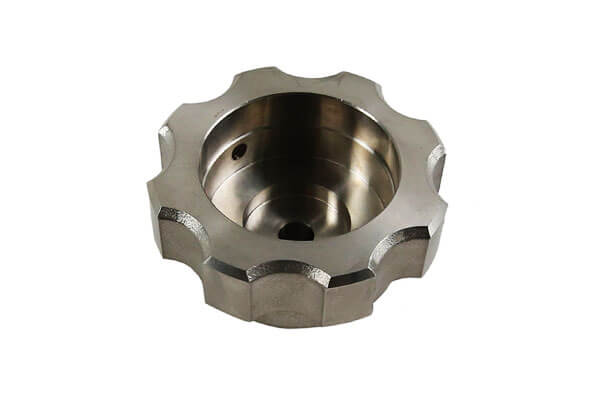
10. Ứng dụng công nghiệp: Đúc đầu tư và luyện kim bột
| Ngành công nghiệp | Đúc đầu tư | Lớp luyện kim bột |
| ô tô | Bánh xe tăng áp, ống xả (không gỉ) | Bánh răng, Sprockets, trung tâm đồng bộ, kết nối thanh (PM dựa trên Fe) |
| Hàng không vũ trụ | Lưỡi dao tuabin, Vòi phun nhiên liệu, nhà ở kết cấu (Superalloys, titan) | Ứng dụng nhẹ hơn: vòng đệm lực đẩy, ống lót, bộ lọc |
| Thuộc về y học | Cấy ghép chỉnh hình (Thân cây, khay đầu gối), dụng cụ phẫu thuật | Vít chỉnh hình (MIM, một dẫn xuất PM), Tấm xương |
| Dầu & khí | Thân van, Máy bơm bơm, Đầu nối dưới đất (không gỉ/song công) | Lọc phần tử, quả cân cân bằng hợp kim nặng vonfram |
Súng |
Người nhận, yếu tố kích hoạt, thành phần ức chế (17--4PH) | Cơ chế kích hoạt, người theo dõi tạp chí, lò xo giật lại |
| Máy móc công nghiệp | Vỏ bơm, thân van, Hộp số (không gỉ/gang) | Bánh răng, cam, con lăn, Vòng bi, Mặc tấm |
| Điện | Linh kiện thiết bị đóng cắt, tản nhiệt | Địa chỉ liên lạc điện, lõi từ, người giữ bàn chải |
| Hàng tiêu dùng | Trường hợp xem, phụ kiện phần cứng, vật dụng trang trí | Khóa thành phần, bộ phận dây kéo, dấu ngoặc nhỏ |
11. Ưu điểm và hạn chế của đúc đầu tư
Thuận lợi
- Độ phức tạp hình học đặc biệt – gạch dưới, đoạn văn nội bộ, tường mỏng, Hình dạng hữu cơ.
- Tính linh hoạt của hợp kim rộng – hầu hết mọi kim loại có thể đúc được, bao gồm siêu hợp kim và titan.
- Hoàn thiện bề mặt tuyệt vời – Ra 1,6‑6,3 µm khi đúc; có thể được đánh bóng đến gần gương.
- Hình dạng gần lưới - chất thải vật liệu tối thiểu; tỷ lệ mua-bay <1.5:1.
- Không cần dự thảo – có thể có tường thẳng đứng.
- Vật đúc chịu áp lực – có thể hàn và xử lý nhiệt.
- Di sản đã được chứng minh – hàng ngàn năm; dữ liệu và tiêu chuẩn mở rộng.
Giới hạn
- Cường độ lao động cao – xây dựng vỏ là thủ công, phụ thuộc vào kỹ năng.
- Thời gian chu kỳ chậm – ngày từ mẫu đến phần hoàn thiện.
- Giới hạn kích thước – tối đa thực tế ~150 kg.
- Chi phí cao hơn ở khối lượng thấp - khấu hao dụng cụ.
- Rủi ro về độ xốp – độ co ngót và độ xốp của khí yêu cầu kiểm soát quy trình mạnh mẽ.
- Giới hạn ở các hợp kim đúc được – độ nóng chảy cao, không thể sử dụng vật liệu không đúc được.
12. Ưu điểm và hạn chế của luyện kim bột
Thuận lợi
- Sử dụng vật liệu vượt trội - >95% không có phế liệu; bền vững.
- Tỷ lệ sản xuất cao - chu kỳ ép <1 thứ hai; thiêu kết liên tục.
- Tính nhất quán kích thước tuyệt vời – độ chính xác được kiểm soát bằng khuôn.
- Chi phí mỗi bộ phận thấp ở mức âm lượng cao.
- Kiểm soát độ xốp - cho bộ lọc, vòng bi tự bôi trơn, điện cực pin.
- Khỏe, Cấu trúc hạt đồng đều - không có khuyết tật đúc.
- Khả năng pha trộn hợp kim – tạo ra các tác phẩm độc đáo không thể thực hiện được bằng cách nấu chảy.
- Khả năng gia công tốt – nhiều hợp kim PM chứa các thành phần giúp nâng cao khả năng gia công.
Giới hạn
- Độ phức tạp hình học hạn chế – về cơ bản là 2,5D; không có undercut, đoạn văn nội bộ.
- Yêu cầu góc dự thảo - để đẩy một phần ra khỏi khuôn.
- Tính chất cơ học thấp hơn – độ xốp còn lại làm giảm độ dẻo và độ mỏi.
- Hạn chế về kích thước và trọng lượng - <10 kg, <300 mm điển hình.
- Độ xốp hạn chế độ kín áp suất – yêu cầu niêm phong cho các ứng dụng xử lý chất lỏng.
- Tính linh hoạt của hợp kim bị hạn chế – titan, nhôm, siêu hợp kim rất khó hoặc tốn kém.
- Chi phí dụng cụ cao – bộ khuôn đắt tiền; khối lượng hòa vốn cao.
13. Đúc đầu tư và luyện kim bột: Bảng so sánh toàn diện
| Tiêu chí | Đúc đầu tư | Lớp luyện kim bột |
| Nguyên tắc quy trình | Sự hóa rắn kim loại lỏng trong khuôn gốm | nén bột + thiêu kết |
| Nguyên liệu ban đầu | Mẫu sáp + kim loại nóng chảy | Bột kim loại + chất bôi trơn |
| Độ phức tạp hình học | Rất cao (3D, undercuts) | Vừa phải (2.5D, không có undercut) |
| Độ dày tường tối thiểu | 0.5‑1,5 mm | 1.5‑2,5 mm |
| Bề mặt hoàn thiện (Ra, Sọ) | 1.6‑6.3 (như cascast) | 3‑12 (như thiêu kết) |
| Dung sai kích thước | ±0,1‑0,3 mm/25mm | ±0,05‑0,1 mm/25mm (sau khi định cỡ) |
| Tỉ trọng | 99‑100% | 85‑98% |
| Độ xốp | Thấp (co rút/khí) | vốn có (dư) |
| Độ kín áp suất | Xuất sắc | Nghèo (yêu cầu niêm phong) |
| Phạm vi hợp kim | Rất rộng (Thép, không gỉ, Superalloys, Của, Al, đồng) | Giới hạn (Fe, Cu, W, một số không gỉ; Ti/Al hiếm) |
| Độ bền kéo | giống như rèn (Tốt) | Vừa phải (phụ thuộc vào độ xốp) |
| Độ dẻo | Tốt (10‑35%) | Thấp hơn (2‑15%) |
| Sức mạnh mệt mỏi | Vừa phải | Thấp hơn (tăng ứng suất từ độ xốp) |
| Chi phí dụng cụ | Vừa phải | Cao |
| Cuộc sống dụng cụ | 50chu kỳ k‑200k | 500chu kỳ k‑1.000k |
| Sử dụng vật liệu | 85‑95% | >95% |
| Thời gian chu kỳ (mỗi phần) | Phút đến giờ | <1 thứ hai (nhấn) |
| Cường độ lao động | Cao | Thấp |
| Khối lượng hòa vốn | ~100‑1.000/năm | ~5.000-10.000/năm |
| Chi phí từng phần (âm lượng lớn) | Vừa phải | Rất thấp |
| Trọng lượng phần tối đa điển hình | 150 kg | 10 kg |
| Hoạt động phụ | Cắt, mài, Điều trị nhiệt, Ndt | Định cỡ, Điều trị nhiệt, gia công (giới hạn) |
14. Phần kết luận
Đúc mẫu chảy và luyện kim bột không phải là công nghệ cạnh tranh trong mọi tình huống; hơn là, họ giải quyết những thách thức sản xuất khác nhau.
Đúc mẫu chảy vượt trội khi các kỹ sư yêu cầu hình học phức tạp, lựa chọn hợp kim rộng, tính chất cơ học vượt trội, Mật độ cao, và độ tin cậy của kết cấu.
Nó vẫn là sự lựa chọn ưa thích cho các thành phần hàng không vũ trụ, thân van, Bộ phận bơm, thiết bị y tế, và thiết bị công nghiệp hiệu suất cao.
Luyện kim bột vượt trội trong môi trường sản xuất quy mô lớn, nơi có tính nhất quán về kích thước, Hiệu quả vật chất, Tự động hóa, và chi phí đơn vị thấp là mục tiêu chính.
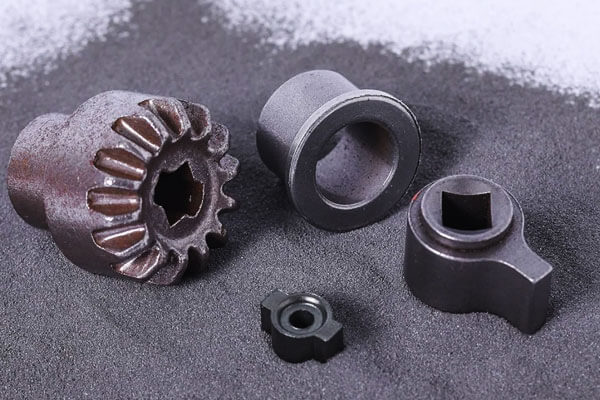
Nó thống trị các ứng dụng như bánh răng ô tô, Vòng bi, ống lót, và các linh kiện cơ khí được sản xuất hàng loạt.
Sự lựa chọn tối ưu phụ thuộc vào việc cân bằng năm yếu tố quan trọng:
- Hình học thành phần
- Hiệu suất cơ học cần thiết
- Yêu cầu về vật liệu
- Khối lượng sản xuất
- Tổng chi phí vòng đời
Hiểu được các yếu tố này cho phép các nhà sản xuất lựa chọn quy trình cạnh tranh kinh tế và phù hợp nhất về mặt kỹ thuật..
Câu hỏi thường gặp
Đúc đầu tư có mạnh hơn luyện kim bột không?
Trong hầu hết các ứng dụng kết cấu, Đúng. Các thành phần đúc đầu tư thường đạt được mật độ cao hơn, Độ xốp thấp hơn, và khả năng chống mỏi tốt hơn các bộ phận luyện kim bột thông thường.
Quá trình nào cung cấp độ chính xác về chiều tốt hơn?
Để đơn giản, Các bộ phận khối lượng lớn, luyện kim bột thường mang lại khả năng lặp lại chặt chẽ hơn. Đối với hình học phức tạp, đúc đầu tư thường cung cấp khả năng chiều tổng thể tốt hơn.
Cả hai quá trình có thể sản xuất các thành phần thép không gỉ?
Đúng. Cả hai công nghệ đều hỗ trợ sản xuất thép không gỉ, mặc dù việc đúc mẫu mang lại sự linh hoạt cao hơn về cấp độ hợp kim và độ phức tạp của thành phần.
Quá trình nào hiệu quả hơn về mặt chi phí?
Luyện kim bột thường tiết kiệm chi phí hơn cho khối lượng sản xuất rất cao. Đúc mẫu chảy thường tiết kiệm hơn cho các hoạt động sản xuất từ thấp đến trung bình và các bộ phận phức tạp.
Những ngành nào phụ thuộc nhiều nhất vào đúc đầu tư?
Hàng không vũ trụ, Dầu và khí, Xử lý hóa học, Thiết bị y tế, sản xuất điện, chế biến thực phẩm, và máy móc công nghiệp là một trong những đối tượng sử dụng lớn nhất các bộ phận được đầu tư.

