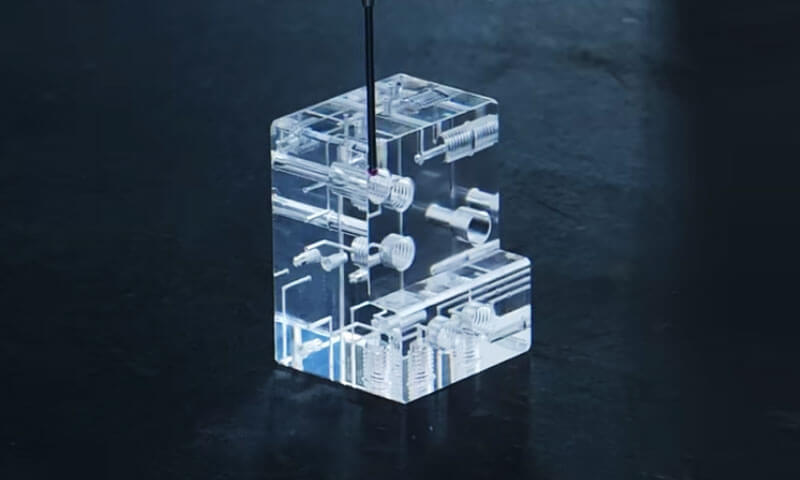
Acrylic, or polymethyl methacrylate (PMMA), is one of the most versatile engineering plastics in modern manufacturing.
It is transparent, bền, and dimensionally stable—three properties that rarely coexist in a single material.
From medical device housings and laboratory equipment to automotive light lenses, point-of-purchase displays, and precision fluidic components, acrylic parts perform functions that glass, polycacbonat, and other polymers cannot match on their own.
But acrylic is not a single material. It exists in cast and extruded forms with significantly different properties, and it can be shaped by CNC machining, Đúc phun, Cắt laser, Thermoforming, and bonding.
Choosing the right material form and the right manufacturing process is the difference between a part that performs flawlessly and one that cracks, crazes, or fails dimensional inspection.
This article examines precision custom acrylic parts from the perspective of a specialized manufacturer.
1. What Is Acrylic (PMMA)?
Polymethyl methacrylate (PMMA) is a transparent, amorphous thermoplastic polymer produced by the polymerization of methyl methacrylate (MMA) monomer.
It was first commercialized in the 1930S and has since become one of the world’s most widely used transparent plastics.
PMMA is commonly known simply as “acrylic”, but the material is also marketed under well-known trade names such as Plexiglas, Perspex, Lucite, Acrylite, and Altuglas.
These trade names refer to commercial products or brands based on acrylic materials; the underlying polymer is PMMA.
The appeal of PMMA lies in its combination of high optical transparency, Mật độ thấp, good surface hardness, Kháng UV, khả năng chịu thời tiết, và dễ chế tạo.
High-quality clear PMMA can provide visible-light transmission of approximately 90–92%, giving it a glass-like appearance while weighing only about half as much as conventional glass by volume.
2. What Are the Different Types of Acrylics (PMMA)?
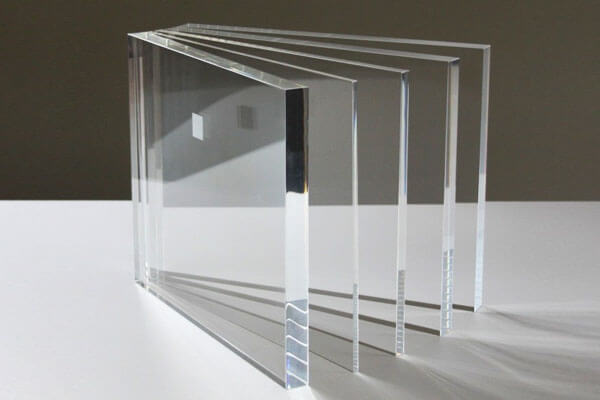
For precision acrylic parts, PMMA stock is commonly divided into cast PMMA and extruded PMMA according to how the material is manufactured.
Although both are based on the same polymer, their processing history can produce differences in molecular weight, Ứng suất dư, Hành vi nhiệt, optical quality, and machining performance.
Cast PMMA
Cast PMMA is produced by polymerizing liquid methyl methacrylate (MMA) between molds, commonly glass plates for sheet production.
Compared with extruded material, cast PMMA generally offers higher molecular weight, lower residual stress, ổn định nhiệt tốt, and excellent optical clarity.
These characteristics make cast PMMA particularly suitable for Gia công CNC.
Under properly controlled cutting conditions, it can produce relatively clean chips and well-defined machined edges, while reducing the tendency toward excessive softening or smearing at the cutting zone.
Cast PMMA is therefore commonly selected for precision components such as optical covers, transparent housings, inspection windows, Nguyên mẫu, and custom-machined acrylic parts.
Extruded PMMA
Extruded PMMA is manufactured by continuously melting acrylic resin pellets and forcing the polymer through a die.
The extrusion process provides efficient production of standardized sheets, que, ống, và hồ sơ, but it can introduce molecular orientation and higher residual internal stress.
During aggressive CNC machining, these characteristics can increase the risk of heat-related deformation, edge melting, and stress crazing, particularly when cutting conditions are poorly controlled or the component contains sharp internal features.
Extruded PMMA remains widely useful for general fabricated acrylic products and standardized stock, but for demanding subtractive machining, cast PMMA is often preferred when dimensional stability, chất lượng bề mặt, and low machining stress are critical.
3. Core Material Properties of Acrylic (PMMA) for Precision Components
Understanding the material properties of PMMA is essential for designing parts that perform reliably. The following properties are particularly relevant for precision components.
Optical properties.
PMMA transmits approximately 92% ánh sáng nhìn thấy được, compared with about 90% for glass.
It has a refractive index of 1.49 and low dispersion, making it suitable for lenses, light guides, and optical windows. It does not yellow significantly under UV exposure, unlike many other plastics.
Tính chất cơ học.
PMMA is rigid and hard. Typical tensile strength is 65–75 MPa, flexural strength is 90–110 MPa, and tensile modulus is 2.4–3.2 GPa.
It is brittle compared with polycarbonate, with notched Izod impact strength of 15–25 J/m.
This means acrylic parts must be designed to avoid stress concentrations that could initiate cracks.
Tính chất nhiệt.
The glass transition temperature of PMMA is approximately 105°C, and the heat deflection temperature is around 95°C at 0.45 MPA.
Service temperature is typically limited to 80°C for continuous use. Thermal expansion coefficient is approximately 70 × 10⁻⁶ /° C., which is higher than most metals but lower than many other plastics.
Kháng hóa chất.
PMMA resists dilute acids, kiềm, hydrocacbon béo, and mineral oils.
It is attacked by ketones (acetone, MEK), esters, chlorinated hydrocarbons, and aromatic hydrocarbons.
Alcohols can cause stress cracking in stressed parts. This must be considered when selecting cleaning agents and adhesives.
Hấp thụ độ ẩm.
PMMA absorbs approximately 0.3–0.4% water at saturation. This is low compared with nylon or polycarbonate, but it can still cause dimensional changes in precision parts.
Cho các ứng dụng quan trọng, parts should be conditioned before final machining.
Tính chất điện.
PMMA has good dielectric strength (khoảng 20 kV/mm) and volume resistivity (approximately 10¹⁵ Ω·cm), making it suitable for electrical and electronic applications.
Weather resistance.
PMMA is highly resistant to UV radiation and outdoor weathering. It is widely used in outdoor signage, Trang trí ô tô, and architectural glazing.
Tuy nhiên, prolonged exposure to UV can cause surface degradation in some formulations, so UV-stabilized grades are recommended for outdoor use.
Khả năng tương thích sinh học.
Medical-grade PMMA is available and is used in dental prosthetics, bone cement, and medical device components.
It can be sterilized by ethylene oxide, gamma radiation, or autoclaving (with limitations).
4. Precision CNC Machining of Acrylic (PMMA) Các bộ phận
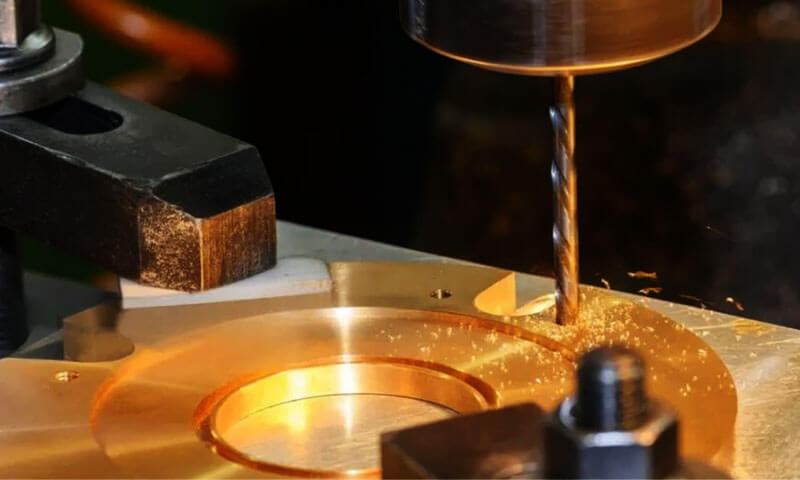
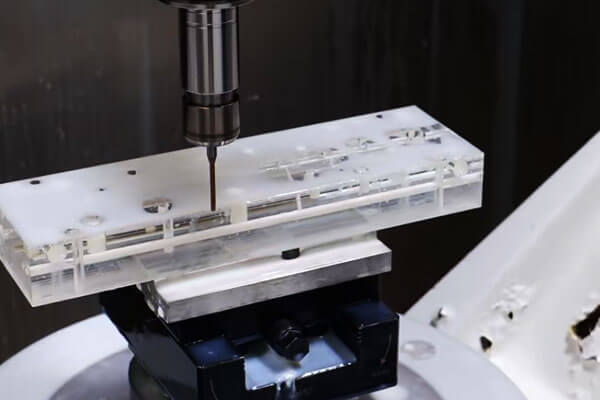
Gia công CNC is one of the most flexible methods for producing precision custom acrylic (PMMA) các bộ phận, particularly when the required quantity is relatively small, the geometry is highly customized, or the design must be changed frequently.
Unlike injection molding, CNC machining does not require a dedicated production mold.
The finished component is produced directly from PMMA sheet, đĩa, que, khối, or other suitable stock by removing material with computer-controlled cutting tools.
Common CNC operations for PMMA include xay xát, quay, khoan, nhạt nhẽo, ream, lộ trình, chamfering, and engraving.
Depending on the geometry and required optical quality, machining can be followed by polishing or other surface-finishing operations.
The main challenge is thermal management. PMMA has relatively low thermal conductivity, so heat generated at the cutting zone can accumulate rapidly.
Excessive heat may soften the polymer and cause melting, burr formation, surface smearing, dimensional distortion, or stress crazing.
Sharp tooling, appropriate cutting parameters, efficient chip evacuation, and rigid but low-stress fixturing are therefore essential.
CNC Machining Process for PMMA
A typical precision workflow is:
Material Selection → CAD/CAM Programming → Workholding → Rough Machining → Finish Machining → Deburring → Polishing/Surface Finishing → Dimensional Inspection
The material should be selected according to the application and machining requirements.
Cast PMMA is often preferred for demanding subtractive machining because its material characteristics can provide favorable dimensional and machining behavior,
while extruded stock can also be successfully machined when residual stress and thermal effects are properly controlled.
During CAM programming, the tool path should avoid unnecessary heat accumulation.
High tool engagement, prolonged rubbing, and repeated passes over the same area can generate excessive temperature even when the nominal cutting parameters appear reasonable.
Advantages of CNC Machining PMMA
High Design Flexibility
CNC machining can produce highly customized geometries without requiring injection-molding tooling.
Design modifications can normally be implemented through CAD/CAM changes rather than by manufacturing a new mold.
This makes the process especially suitable for engineering prototypes, functional samples, linh kiện thay thế, and customized low-volume parts.
Excellent Feature Accessibility
CNC machining can directly produce precision features such as:
- Holes and bores
- Slots and pockets
- Threads where appropriate
- Bề mặt lắp đặt
- Các thông tin
- Chamfers
- Engraved markings
Complex combinations of features can be machined in a single setup when the machine and workholding arrangement permit.
Suitable for Prototypes and Low Volumes
CNC machining is economically attractive when the production quantity does not justify injection-molding tooling.
It also allows the manufacturer to move relatively quickly from a finished CAD design to a physical component.
High Dimensional Control
Modern CNC equipment can provide tight dimensional control when the PMMA stock, máy móc, dụng cụ, nhiệt độ, and measurement conditions are properly managed.
Critical features can also be inspected using CMMs, hệ thống tầm nhìn, or precision gauges.
Limitations of CNC Machining PMMA
The principal limitation is material removal efficiency. A significant portion of the original stock may become machining waste, particularly when the finished component has a small material-to-volume ratio.
CNC machining can also become expensive for large production quantities because cycle time and machine occupancy scale with the number of parts.
Other limitations include:
- Heat accumulation during cutting
- Risk of burrs or edge melting
- Potential release of residual stress
- Higher unit cost at high volumes
- Need for additional polishing for optical surfaces
- Increased handling requirements for scratch-sensitive transparent parts
Vì những lý do này, CNC machining is generally strongest at the prototype and low-volume end of the production spectrum.
5. Injection Molding of Custom Acrylic (PMMA) Các bộ phận
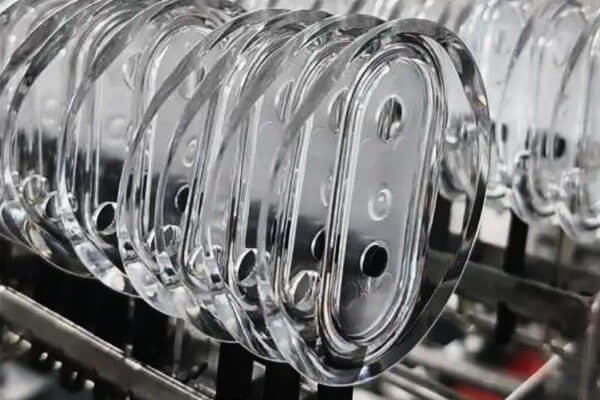
Đúc phun forms PMMA parts by heating the thermoplastic above its processing range, injecting the molten polymer into a precision mold under pressure, allowing the material to cool and solidify, and then ejecting the finished component.
Không giống như gia công CNC, which removes material from a solid blank, injection molding creates the required geometry directly through the mold cavity.
This makes it particularly effective for repeat production of complex shapes and high-volume components.
A typical PMMA injection-molding cycle is:
Resin Drying → Plasticizing → Injection → Packing/Holding → Cooling → Ejection → Inspection
PMMA requires appropriate moisture control before processing. Excessive moisture in the resin can contribute to bubbles, silver streaks, haze, and other surface or optical defects.
Drying conditions should follow the resin manufacturer’s specification.
Optical-Quality Injection Molding
When the PMMA part is intended for optical or transparent applications, dimensional accuracy alone is insufficient.
The process must also control:
Flow behavior + cooling uniformity + Ứng suất dư + mold surface condition
Poorly controlled filling or cooling can create optical distortion even when the part dimensions remain within tolerance.
The mold surface itself acts as a direct replica surface. Any defect, sự ô nhiễm, cào, or inappropriate texture on a critical mold surface can be transferred to the finished acrylic part.
Vì lý do này, optical PMMA molding often requires particularly careful control of mold polishing, resin drying, filling conditions, trút giận, and cooling.
Advantages of Injection Molding PMMA
Thuận lợi:
- Low per-unit cost at volume: Once tooling is amortized, unit cost is low.
- High production rate: Thousands of parts per day are possible.
- Độ lặp lại tuyệt vời: Consistent dimensions and properties.
- Hình học phức tạp: Các tính năng tích hợp, xương sườn, Ông chủ, and snap fits can be molded.
- Bề mặt hoàn thiện: Mold texture is replicated on the part.
- Material variety: Colored, điền, and specialty grades are available.
- Tự động hóa: The process can be fully automated.
Giới hạn:
- Chi phí công cụ cao: Molds can cost tens of thousands of dollars.
- Long lead time: Mold fabrication takes weeks to months.
- Thiết kế ràng buộc: Dự thảo góc, wall thickness uniformity, and gate location must be considered.
- Material limitations: Very high molecular weight cast acrylic cannot be molded.
- Ứng suất dư: Molded parts may have residual stress and birefringence.
- Minimum volume: Not economical for low volumes.
6. Technical & Economic Comparison: CNC Gia công vs. ép phun
CNC machining and injection molding can both produce precision custom PMMA parts, but they are optimized for different production conditions.
The main distinction is that CNC machining removes material from solid PMMA stock, while injection molding forms the part directly in a mold.
Kết quả là, their cost structure, Thiết kế linh hoạt, Hiệu quả sản xuất, and material utilization are quite different.
| Key Factor | Gia công CNC | ép phun |
| Nguyên tắc sản xuất | Subtractive machining from PMMA sheet, đĩa, que, or block | Forming molten PMMA inside a precision mold |
| Best Production Volume | Nguyên mẫu, vật mẫu, và sản xuất khối lượng thấp | Trung bình- và sản xuất khối lượng lớn |
| Chi phí công cụ ban đầu | Thấp; mainly standard cutting tools and fixtures | Cao; dedicated mold required |
| Chi phí đơn vị | Relatively high because machining time increases with quantity | Relatively low after mold investment is amortized |
| Thiết kế linh hoạt | Xuất sắc; CAD changes can usually be implemented without new tooling | Limited after tooling; major design changes may require mold modification |
| Development Speed | Nhanh; suitable for rapid prototypes | Slower because mold design, chế tạo, and trials are required |
Complex 3D Geometry |
Tốt, but constrained by tool access and machining strategy | Xuất sắc for molded ribs, Ông chủ, clip, và các tính năng tích hợp |
| Độ chính xác kích thước | High and directly controlled by CNC tool paths | High after process stabilization, but affected by shrinkage and molding conditions |
| Optical Surface Quality | Excellent potential with controlled machining and polishing | Excellent potential with high-quality mold surfaces and stable molding |
| Sử dụng vật liệu | Thấp hơn; removed material becomes machining waste | Cao hơn; part is formed near net shape, although runners and sprues create some waste |
| Wall Thickness Flexibility | Excellent for variable-thickness machined components | Requires careful control to minimize sink marks, WARPAGE, và căng thẳng dư |
| Tính năng bên trong | Excellent for accessible holes, khe cắm, and pockets | Excellent for molded bosses, xương sườn, and complex integrated features |
| Hoàn thiện bề mặt | Easy to combine with polishing, mài, or other secondary operations | Mold surface largely determines the as-molded finish; secondary finishing may still be required |
Ứng suất dư |
Can be introduced or released during machining, especially in stressed stock | Molding can introduce residual orientation and thermal stress |
| Material Waste Cost | More significant for heavily machined geometries | Generally lower for high-volume near-net-shape parts |
| Part-to-Part Repeatability | Very high with stable CNC programming and process control | Very high after mold and molding parameters are stabilized |
| Economic Break-Even | Usually favorable at lower quantities | Becomes increasingly economical as production volume rises |
| Typical PMMA Applications | Nguyên mẫu, optical parts, custom housings, thành phần khối lượng thấp | Bao gồm, vỏ, hiển thị, lighting components, high-volume custom parts |
| Ưu điểm chính | Flexibility with low upfront investment | High productivity and low unit cost at scale |
| Hạn chế chính | Higher unit cost and material removal | High tooling investment and lower design flexibility after tooling |
7. Acrylic Surface Finishing and Post-Processing
Surface finishing is critical for acrylic parts, especially when optical clarity or appearance is important. Common finishing operations include:
đánh bóng
Acrylic can be polished to a high optical finish using a sequence of abrasive papers, hợp chất, and buffing wheels. Flame polishing and vapor polishing are also used for edge finishing.
Ủ
Machined or molded acrylic parts may be annealed to relieve internal stresses.
Annealing is typically performed at 70–80°C for several hours, tiếp theo là làm mát chậm. This reduces the risk of crazing and cracking.
Vapor polishing
The part is exposed to solvent vapor, which smooths the surface. This produces a very high-gloss finish but requires careful control to avoid distortion.
Flame polishing
A controlled flame is passed over the surface, melting a thin layer and producing a smooth, kết thúc bóng. This is commonly used for edges.
Diamond Polishing
For demanding transparent components, diamond polishing can provide a highly refined surface. It is particularly useful where low surface roughness and high optical clarity are required.
Compared with conventional abrasive polishing, diamond-based processes can provide more controlled removal of very small amounts of material.
This makes them attractive for precision optical surfaces and components where visible machining marks must be minimized.
Painting and coating
Acrylic can be painted, screen printed, or coated with anti-reflective, anti-static, or hard-coat finishes.
Texturing and Matte Finishing
Not every PMMA part needs a transparent, bề mặt bóng. A controlled matte or textured finish can be used where glare reduction, visual appearance, light diffusion, or tactile characteristics are more important than maximum transparency.
Laser cutting and engraving
Laser processing is used for cutting, khắc, and marking acrylic. It produces a polished edge in some cases.
Bonding and assembly
Acrylic can be joined by solvent welding, liên kết dính, ultrasonic welding, or mechanical fastening. Solvent welding produces a transparent joint but requires careful control.
Làm sạch
Acrylic should be cleaned with mild soap and water or specialized plastic cleaners. Solvents such as acetone and alcohol should be avoided, as they can cause crazing.
8. Applications of Custom Acrylic (PMMA) Các bộ phận
The combination of optical transparency, xây dựng nhẹ, weather resistance, Cách điện điện, and machinability makes PMMA suitable for a broad range of custom components.
Optical and Photonics Components
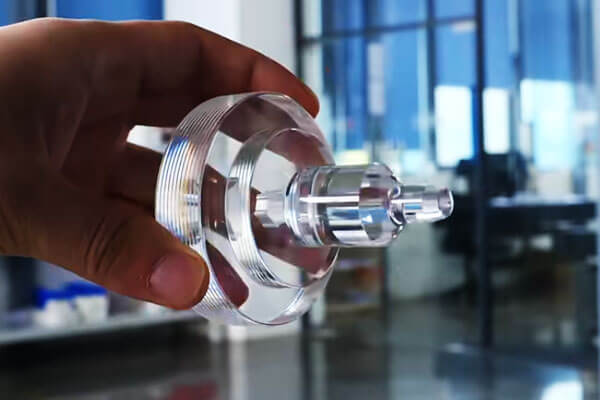
PMMA is widely used where controlled light transmission is required. Its optical clarity makes it suitable for components where visual transparency or light distribution is part of the function.
Các ứng dụng điển hình bao gồm:
- Light guides
- Optical covers
- Transparent windows
- Display lenses
- Light-management components
- Protective optical housings
Electronics and Electrical Equipment
PMMA provides good electrical insulation and can create lightweight transparent protective structures.
Custom components may include:
- Transparent equipment covers
- Indicator windows
- Display housings
- Protective panels
- Vỏ điện
- Insulating spacers and fixtures
Thiết bị công nghiệp
Industrial machinery often requires operators to observe internal processes without exposing moving or hazardous components.
PMMA can therefore be used for:
- Inspection windows
- Bảo vệ máy
- Vỏ bảo vệ
- Fluid-view components
- Transparent process housings
- Observation panels
Laboratory and Medical Equipment
PMMA’s transparency, clean appearance, and ease of fabrication make it useful for selected laboratory and medical equipment components.
Ứng dụng có thể bao gồm:
- Instrument covers
- Fluid-view chambers
- Laboratory enclosures
- Sample inspection components
- Vỏ thiết bị
Ô tô và vận chuyển
PMMA can be used in selected Ô tô and transportation applications where transparency, khả năng chịu thời tiết, and appearance are important.
Ví dụ bao gồm:
- Lighting-related components
- Indicator covers
- Display elements
- Interior transparent parts
- Thành phần trang trí
Lighting and Display Products
This is one of PMMA’s strongest commercial application areas. The material can transmit light efficiently while allowing considerable design flexibility.
Custom PMMA components can be produced as:
- Bộ khuếch tán
- Light guides
- Display panels
- Illuminated signs
- Decorative lighting components
- Transparent housings
Architectural and Commercial Products
PMMA is widely used for visual and decorative products because it can combine transparency with relatively low weight.
Ví dụ bao gồm:
- Biển báo
- Display fixtures
- Retail structures
- Tấm trang trí
- Architectural lighting elements
- Exhibition components
9. Cost Factors for Custom Acrylic Parts
Vật liệu
Material selection has a direct impact on cost. Cast PMMA is generally more expensive than standard extruded PMMA,
while specialty grades such as UV-stabilized, anti-static, quang học, or medical-grade materials can carry additional costs.
Part thickness and stock dimensions are also important, particularly for CNC machining. A thick or oversized PMMA blank may increase both material consumption and machining waste.
Thiết kế sự phức tạp
Complex geometry increases manufacturing time and process requirements.
For CNC-machined parts, features such as deep pockets, undercuts, tường mỏng, multiple setups, and complex 3D surfaces can increase machining hours and tooling requirements.
For injection molding, complicated geometry can increase mold design and manufacturing costs.
Undercuts may require slides or other mechanisms, while thin or uneven walls can require more sophisticated mold-flow and cooling design.
Tolerance Requirements
Tighter tolerances require greater process control and more inspection.
A general PMMA component may not need the same tolerance level as an optical or precision-fit component.
Over-specifying tolerances can therefore increase manufacturing cost without providing additional functional value.
For PMMA specifically, dimensional control may also be influenced by temperature, Ứng suất dư, and material processing history, so critical tolerances should be defined according to actual functional requirements.
Khối lượng sản xuất
Production volume is one of the most important factors when choosing between CNC machining and injection molding.
Low-volume production generally favors CNC machining because the process requires relatively little dedicated tooling.
Higher-volume production generally favors injection molding, because the initial mold investment can be spread across many parts.
There is no universal break-even quantity. It depends on the part size, hình học, thời gian gia công, mold cost, Thời gian chu kỳ, and annual production requirement.
Hoàn thiện bề mặt
Surface finishing can significantly affect the cost of transparent acrylic parts.
Basic CNC finishing requires less processing than fine polishing, trong khi optical polishing can involve multiple stages and additional inspection.
Additional processes such as flame polishing, vapor-related finishing where applicable, bức vẽ, or functional coatings can further increase processing cost.
For transparent PMMA, the required finish should be clearly specified because polishing unnecessary surfaces can add substantial cost without improving component performance.
Hoạt động thứ cấp
Operations performed after the primary machining or molding process also contribute to the finished-part price. These may include:
- Annealing or stress-relief treatment
- Liên kết
- Cuộc họp
- Drilling or secondary machining
- Printing or marking
- Protective coating
- Special packaging
The cost impact depends on the number of operations and the degree of manual handling required.
Dụng cụ
Tooling is a major difference between CNC machining and injection molding.
CNC machining generally requires fixtures rather than a dedicated production mold, so the initial tooling investment is relatively low.
Đúc phun, bằng cách so sánh, requires a dedicated mold, and the mold cost can be significant for complex PMMA components or parts requiring highly polished optical surfaces.
Cho sản xuất khối lượng lớn, Tuy nhiên, the higher initial mold cost can be offset by the lower unit manufacturing cost.
Thời gian dẫn đầu
Standard production lead times normally have a predictable cost structure.
Expedited production or urgent delivery may require additional machine scheduling, overtime, expedited material sourcing, or accelerated finishing and inspection, which can increase the total cost.
Vì lý do này, realistic delivery planning is often more economical than requesting an unnecessarily compressed production schedule.
Quality Requirements
Inspection and documentation requirements also affect cost.
Basic dimensional inspection is less demanding than a production program requiring CMM measurement, optical inspection, surface-roughness verification, Chứng nhận vật chất, Kiểm tra chức năng, or full traceability.
For high-value or optical PMMA components, additional inspection may be justified because defects such as scratches, haze, crazing, or dimensional distortion can affect product acceptance even when the basic geometry is correct.
10. Value of a Specialized Precision PMMA Parts Manufacturer
A specialized precision PMMA manufacturer contributes more than machining or molding capacity.
For transparent acrylic components, hành vi vật chất, Kiểm soát nhiệt, độ chính xác chiều, optical quality, and finishing are closely connected.
Choosing a supplier with experience in these areas can reduce development risk and improve consistency from prototype through production.
Material Expertise
PMMA is available in different grades and stock forms, and cast and extruded acrylic can behave differently during machining and thermal processing.
A specialized manufacturer can select the appropriate material according to transparency, Độ dày, Yêu cầu cơ học, Tiếp xúc với tia cực tím, bề mặt hoàn thiện, and manufacturing method.
Ví dụ, cast PMMA is often preferred for demanding CNC-machined components because of its favorable machining and optical characteristics, while extruded stock can be more economical for standardized applications.
Process Selection
The appropriate manufacturing process depends heavily on production volume and part geometry.
Gia công CNC is generally well suited to prototypes, sản xuất khối lượng thấp, and highly customized geometries.
Đúc phun becomes increasingly attractive when the design is stable and production quantities are sufficiently high to justify dedicated tooling.
A specialized manufacturer can also combine the two approaches, for example using CNC machining for prototype validation before transferring a finalized design to injection molding.
Thiết kế cho sản xuất
PMMA parts require careful attention to wall thickness, góc bên trong, lỗ, clamping areas, trợ cấp gia công, bản nháp, and thermal deformation.
Transparent parts add another layer of complexity because gate marks, dòng chia tay, Dấu gia công, and residual stress can become visually or optically significant.
Early DFM review can identify these issues before tooling or production begins, reducing the likelihood of expensive redesign or mold modification.
Precision Machining Capability
Precision PMMA machining requires more than a CNC machine.
Sharp tooling, controlled cutting conditions, effective chip evacuation, công việc ổn định, and thermal management are necessary to prevent melting, burr formation, crazing, and dimensional drift.
Đối với các thành phần chính xác, the manufacturer should be able to control critical dimensions according to the actual drawing requirements and verify them using appropriate measurement equipment.
Surface Finishing Expertise
The final appearance and optical performance of acrylic parts can depend heavily on post-processing. Tùy thuộc vào ứng dụng, a manufacturer may provide:
- Fine CNC finishing
- Đánh bóng cơ học
- Cá nhân đánh bóng
- Flame polishing for suitable applications
- Sanding and surface preparation
- Texturing
- Functional surface coatings
For optical components, finishing must be carefully controlled because excessive polishing can change dimensions or optical geometry.
Thermal and Stress Control
PMMA is sensitive to heat and residual stress. Poor machining, đúc, or handling can lead to crazing, bẻ khóa, WARPAGE, hoặc sự bất ổn về chiều.
A specialized manufacturer can incorporate appropriate process controls such as optimized cutting parameters, controlled molding conditions, annealing where required, and careful handling of transparent surfaces.
Quality Control and Traceability
Precision PMMA production may require more than basic dimensional inspection.
Tùy thuộc vào ứng dụng, quality control can include CMM or vision measurement, surface inspection, roughness measurement, optical appearance checks, material verification, và kiểm tra chức năng.
For production components, documented inspection records and material-batch traceability provide additional control over consistency.
Production Flexibility
A supplier capable of supporting nguyên mẫu, khối lượng thấp, và sản xuất khối lượng lớn can reduce the need to transfer the product between manufacturers as demand increases.
Choose LangHe for Custom Acrylic (PMMA) Các bộ phận
Công nghiệp Langhe provides integrated CNC machining and injection molding solutions for custom acrylic (PMMA) các thành phần, supporting projects from prototype development through production.
Our manufacturing approach combines material selection, Đánh giá DFM, precision processing, bề mặt hoàn thiện, and quality inspection to address the specific requirements of transparent and precision plastic parts.
For CNC-machined PMMA, LangHe can support customized geometries, lỗ chính xác, túi, tính năng gắn kết, and polished surfaces.
For repeat production, injection molding can be developed for stable, complex geometries with efficient per-part manufacturing.
Send us your 2D drawing, 3Mô hình CAD D, PMMA grade, Số lượng, sức chịu đựng, and surface-finish requirements.
Công nghiệp Langhe can evaluate the design and recommend a suitable CNC machining, Đúc phun, or combined manufacturing solution for your custom acrylic parts.
11. Phần kết luận
Precision custom acrylic parts are essential in industries where transparency, độ bền, and dimensional stability are required.
The choice between cast and extruded acrylic, and between CNC machining and injection molding, depends on the application requirements, âm lượng, và chi phí.
CNC machining offers design freedom, dung sai chặt chẽ, and fast turnaround, making it ideal for prototypes and low-volume production.
Injection molding offers low per-unit cost and high repeatability at volume, làm cho nó trở nên lý tưởng cho sản xuất khối lượng lớn. A hybrid approach can combine the best of both.
Choosing the right manufacturing partner is essential.
A specialized manufacturer with material expertise, precision capabilities, finishing know-how, and a strong quality system can help ensure that every acrylic part meets its performance and appearance requirements.
LangHe is positioned as such a partner, offering the technical depth and production flexibility needed for custom acrylic projects.
Câu hỏi thường gặp
What is the difference between acrylic and polycarbonate?
Acrylic (PMMA) offers better optical clarity, Kháng UV, and scratch resistance.
Polycarbonate is much stronger and more impact-resistant but is more prone to scratching and yellowing.
Acrylic is preferred for optical and display applications; polycarbonate for impact-resistant applications.
Is Acrylic Plastic or Glass?
Acrylic is a plastic, not glass. It is a transparent thermoplastic made from polymethyl methacrylate (PMMA).
It is often called “acrylic glass” because it can provide glass-like transparency and appearance, but its material properties and manufacturing methods are fundamentally different from those of inorganic glass.
Acrylic is lighter, easier to machine and thermoform, while glass generally offers higher hardness and heat resistance.
Can PMMA Parts Be Polished to an Optical-Grade Finish?
Đúng. Precision PMMA parts can be mechanically or diamond polished to achieve very low surface roughness and high optical clarity.
Depending on the PMMA grade, Độ dày, polishing process, and measurement method, clear PMMA can achieve approximately 90–92% visible-light transmittance.
With properly controlled polishing and stress management, PMMA can provide excellent optical surfaces while weighing approximately 50% as much as conventional glass.