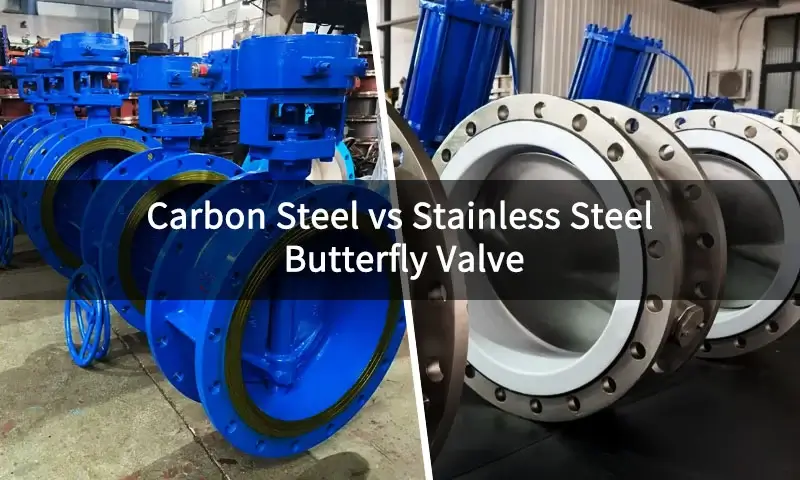
Van bướm là một trong những thiết bị kiểm soát dòng chảy được sử dụng rộng rãi nhất trong hệ thống đường ống công nghiệp, có giá trị nhờ thiết kế nhỏ gọn, trọng lượng nhẹ, hoạt động quay vòng nhanh chóng, và hiệu quả chi phí.
Tuy nhiên, hiệu suất, độ tin cậy, và tuổi thọ của van bướm phụ thuộc rất nhiều vào một quyết định cơ bản: sự lựa chọn vật liệu thân và đĩa.
Hai họ vật liệu chủ yếu cho van bướm là Thép carbon Và thép không gỉ.
Thép carbon mang lại sức mạnh vượt trội và tiết kiệm chi phí, làm cho nó trở thành lựa chọn mặc định cho các ứng dụng công nghiệp nói chung như nước, không khí, hơi nước, và dịch vụ dầu khí.
Thép không gỉ, với khả năng chống ăn mòn vượt trội, Thuộc tính vệ sinh, và khả năng chịu nhiệt độ cao, là tài liệu được lựa chọn cho các phương tiện truyền thông tích cực, môi trường biển, chế biến thực phẩm, và các ứng dụng dược phẩm.
Việc lựa chọn giữa van bướm bằng thép carbon và thép không gỉ không chỉ đơn thuần là vấn đề chi phí mà còn là một quyết định chiến lược ảnh hưởng đến tuổi thọ của thiết bị, yêu cầu bảo trì, tuân thủ quy định, và tổng chi phí sở hữu.
1. Van bướm là gì?
MỘT Van bướm là a van chuyển động quay một phần tư điều khiển dòng chất lỏng bằng cách quay một đĩa tròn gắn trên trục trung tâm.
Khi tay cầm, Hộp số, thiết bị truyền động khí nén, hoặc bộ truyền động điện làm quay thân cây bằng cách 90 độ, đĩa quay đồng thời:
- Hoàn toàn mở (0°): Đĩa song song với hướng dòng chảy, cho phép dòng chảy tối đa với tổn thất áp suất tương đối thấp.
- Mở một phần: Đĩa cản trở một phần đường ống, điều chỉnh tốc độ dòng chảy.
- Đóng hoàn toàn (90°): Đĩa vuông góc với dòng chảy, bịt kín vào đế van để ngăn chất lỏng đi qua.
Không giống như van cổng yêu cầu vận hành nhiều vòng, van bướm có khả năng đóng mở cực nhanh, khiến chúng trở nên lý tưởng cho các ứng dụng điều khiển quy trình tự động và tắt khẩn cấp.
Hiệu suất của van bướm không chỉ phụ thuộc vào thiết kế cấu trúc của nó mà còn phụ thuộc vào việc lựa chọn vật liệu thân van, vật liệu đĩa, vật liệu gốc, thành phần niêm phong, và độ chính xác sản xuất.
Trong số những yếu tố này, vật liệu thân xe—đặc biệt là thép carbon so với thép không gỉ—thường là yếu tố chính quyết định độ bền, kháng ăn mòn, cuộc sống phục vụ, và chi phí vòng đời tổng thể.
Các loại van bướm thông dụng
| Loại van bướm | Đặc điểm kết cấu | Các ứng dụng điển hình |
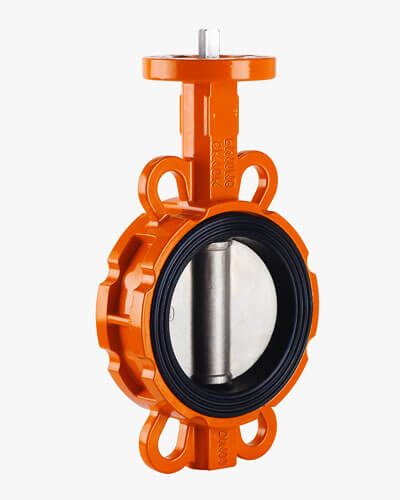
| Van bướm wafer | Được lắp đặt giữa hai mặt bích ống và được cố định bằng bu lông mặt bích đi qua đường ống. Nhỏ gọn, nhẹ, và kinh tế. | cấp nước, Hệ thống HVAC, Thủy lợi, Không khí nén, phòng cháy chữa cháy, và dịch vụ công nghiệp tổng hợp. |
| Van bướm lug | Được trang bị vấu ren ở hai bên thân van, cho phép mỗi mặt bích được bắt vít độc lập. | Quá trình các ngành công nghiệp, Cây hóa học, chế biến thực phẩm, hệ thống dược phẩm, và đường ống cần bảo trì thường xuyên. |
| Van bướm mặt bích đôi | Có mặt bích tích hợp ở cả hai bên thân van để kết nối bắt vít trực tiếp với mặt bích giao phối. Cung cấp độ cứng và sự liên kết cấu trúc tuyệt vời. | Truyền nước thành phố, nhà máy điện, Kỹ thuật hàng hải, Khai thác, dầu & Đường ống dẫn khí, và các hệ thống công nghiệp nặng khác. |
Đồng tâm (Đường trung tâm) Van bướm |
Đĩa và thân được đặt trên cùng một đường tâm, với một chỗ ngồi đàn hồi đàn hồi cung cấp khả năng bịt kín trong suốt quá trình quay. | Xử lý nước, HVAC, nước làm mát, hệ thống xử lý nước thải, và các ứng dụng công nghiệp đa năng. |
| Van bướm bù đắp đôi | Thân van lệch khỏi cả tâm đĩa và đường tâm của thân van, giảm ma sát giữa đĩa và ghế trong quá trình vận hành. | Nhà máy hóa dầu, hệ thống hơi nước, sản xuất điện, Nền tảng ngoài khơi, và đường ống xử lý áp suất trung bình đến cao. |
| Van bướm bù đắp ba lần | Kết hợp phần bù hình học thứ ba, tạo ra cơ chế bịt kín kim loại với kim loại hình nón giúp loại bỏ hầu như sự cọ xát trong quá trình vận hành. | Nhà máy lọc dầu, Cơ sở LNG, Xử lý hóa học, hệ thống hơi nước nhiệt độ cao, kỹ thuật ngoài khơi, và các ứng dụng dịch vụ nghiêm trọng khác. |
Tại sao chất liệu cơ thể lại quan trọng
Chất liệu thân van bướm quyết định:
- Kháng ăn mòn: Khả năng chịu được chất lỏng dịch vụ và điều kiện môi trường.
- Khả năng nhiệt độ: Nhiệt độ sử dụng tối đa và tối thiểu.
- Đánh giá áp suất: Áp suất làm việc tối đa cho phép.
- Sức mạnh cơ học: Khả năng chịu được áp lực của đường dây, Đạp xe nhiệt, và rung động.
- Trị giá: Chi phí vật liệu ảnh hưởng đáng kể đến giá van tổng thể.
- Sự tuân thủ: Liệu van có đáp ứng các yêu cầu quy định hay không (đồ ăn, Dược phẩm, hạt nhân, vân vân.).
2. Van bướm thép carbon
Thép carbon là gì?
Thép carbon là một hợp kim sắt-cacbon chứa một lượng tương đối nhỏ các nguyên tố hợp kim.
Sức mạnh của nó chủ yếu đạt được thông qua hàm lượng carbon và xử lý nhiệt thay vì bổ sung crom hoặc niken.
Bởi vì nó thiếu màng oxit crom thụ động có trong thép không gỉ, thép carbon có khả năng chống ăn mòn vốn có hạn chế nhưng mang lại độ bền cơ học tuyệt vời, khả năng gia công, và hiệu quả chi phí.
Đối với van bướm, Thép carbon vẫn là một trong những vật liệu cơ thể được sử dụng rộng rãi nhất trong các ngành công nghiệp nơi độ ăn mòn vừa phải và hiệu suất cơ học là yêu cầu chính.
Lớp phủ bảo vệ, lớp lót, hoặc hệ thống sơn thường được áp dụng để cải thiện độ bền môi trường.
Các loại thép cacbon phổ biến cho van bướm
Các loại sau đây thường được quy định trong tiêu chuẩn van quốc tế:
| Cấp | Tiêu chuẩn | Ứng dụng điển hình | Đặc trưng |
| ASTM A216 WCB | Thép cacbon đúc | Van công nghiệp nói chung | Sức mạnh tuyệt vời và khả năng hàn |
| ASTM A216 WCC | Thép cacbon đúc | Thiết bị chịu áp lực | Cải thiện độ bền va đập |
| ASTM A352 LCB | Thép đúc nhiệt độ thấp | Dịch vụ đông lạnh và nhiệt độ thấp | Độ dẻo dai cao |
| ASTM A105 | Thép carbon rèn | Van rèn áp suất cao | Độ bền cơ học vượt trội |
| ASTM A350 LF2 | Thép rèn nhiệt độ thấp | Đường ống nhiệt độ thấp | Độ dẻo dai ở nhiệt độ thấp tuyệt vời |
Trong số này, ASTM A216 WCB là tiêu chuẩn công nghiệp dành cho van bướm thép cacbon đa năng vì nó mang lại sự kết hợp cân bằng giữa các tính chất cơ học, có sẵn, và nền kinh tế sản xuất.
Đặc điểm của Van bướm thép Carbon
Cường độ cao và khả năng chịu áp lực
Van bướm thép carbon mang lại độ bền cơ học và độ cứng tuyệt vời, làm cho chúng phù hợp với hệ thống đường ống áp suất cao và van đường kính lớn.
Các vật liệu phổ biến như ASTM A216 WCB, A352LCB, Và A105 cung cấp hiệu suất kết cấu đáng tin cậy trong điều kiện vận hành đòi hỏi khắt khe.
Khả năng thích ứng nhiệt độ rộng
Tùy thuộc vào cấp vật liệu, van thép carbon có thể hoạt động trong phạm vi nhiệt độ rộng.
WCB tiêu chuẩn được sử dụng phổ biến cho các dịch vụ công nghiệp tổng hợp, trong khi LCB được thiết kế cho các ứng dụng nhiệt độ thấp, làm thép carbon thích hợp cho hơi nước, dầu, khí, và hệ thống tiện ích.
Khả năng sản xuất tuyệt vời
Thép carbon có khả năng đúc tốt, khả năng gia công, và khả năng hàn, cho phép sản xuất hiệu quả thông qua đúc, rèn, Gia công CNC, và hàn. Quy trình sản xuất hoàn thiện của nó cũng giúp giảm chi phí sản xuất.
Giải pháp hiệu quả về chi phí
So với thép không gỉ, thép carbon tiết kiệm hơn trong khi vẫn mang lại hiệu suất cơ học tuyệt vời.
Nó thường là lựa chọn ưu tiên cho các môi trường không ăn mòn hoặc ăn mòn nhẹ, nơi khả năng chống ăn mòn cao là không cần thiết.
Khả năng chống ăn mòn hạn chế
Thép carbon không có khả năng chống ăn mòn một cách tự nhiên và thường yêu cầu lớp phủ bảo vệ như epoxy, Fbe, hoặc lớp phủ giàu kẽm.
Trong môi trường hung hăng, bảo vệ chống ăn mòn bổ sung là điều cần thiết để đảm bảo tuổi thọ lâu dài.
3. Van bướm bằng thép không gỉ
Thép không gỉ là gì?
Thép không gỉ là một hợp kim gốc sắt chứa tối thiểu khoảng 10.5% crom, tạo thành màng thụ động crom oxit ổn định trên bề mặt.
Lớp thụ động này liên tục tái tạo khi bị hư hỏng, cung cấp khả năng chống oxy hóa và ăn mòn vượt trội mà không cần lớp phủ bảo vệ bổ sung.
Tùy thuộc vào thành phần hợp kim, thép không gỉ cũng có thể chứa niken, Molypden, nitơ, Mangan, titan, Niobi, hoặc đồng để tăng cường khả năng chống ăn mòn, sức mạnh cơ học, độ dẻo dai, Khả năng hàn, hoặc hiệu suất nhiệt độ cao.
Đối với van bướm, thép không gỉ là vật liệu được ưa chuộng mỗi khi có tuổi thọ cao, kháng ăn mòn, độ sạch của sản phẩm, hoặc yêu cầu thực hiện vệ sinh.
Nó được sử dụng rộng rãi trong xử lý hóa học, Dược phẩm, sản xuất thực phẩm và đồ uống, kỹ thuật ngoài khơi, Cây khử muối, và hệ thống chất lỏng có độ tinh khiết cao.
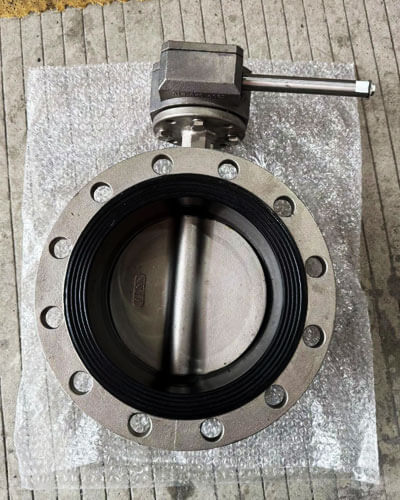
Các loại thép không gỉ phổ biến cho van bướm
Các loại thép không gỉ khác nhau được lựa chọn theo khả năng chống ăn mòn, sức mạnh cơ học, khả năng nhiệt độ, và môi trường dịch vụ.
| Thép không gỉ | Vật liệu tương đương | Đặc điểm chính | Các ứng dụng điển hình |
| CF8 | Dàn diễn viên 304 thép không gỉ (TRONG 1.4308) | Kháng ăn mòn chung tuyệt vời, Độ cứng tốt, Khả năng hàn tốt, tiết kiệm | Xử lý nước, HVAC, chế biến thực phẩm, dịch vụ hóa chất tổng hợp |
| CF8M | Dàn diễn viên 316 thép không gỉ (TRONG 1.4408) | Khả năng chống ăn mòn được tăng cường bằng molypden, khả năng chống clorua và nước biển tuyệt vời | Xử lý hóa học, Kỹ thuật hàng hải, Nền tảng ngoài khơi, khử muối |
| CF3 | Đúc thép không gỉ 304L (TRONG 1.4306) | Hàm lượng carbon thấp giảm thiểu lượng mưa cacbua và cải thiện khả năng hàn | Hệ thống đường ống hàn, Thiết bị dược phẩm, ngành công nghiệp thực phẩm và đồ uống |
CF3M |
Đúc thép không gỉ 316L (TRONG 1.4404) | Phiên bản carbon thấp của CF8M có khả năng chống ăn mòn mối hàn vượt trội | Hệ thống xử lý có độ tinh khiết cao, Công nghệ sinh học, nhà máy dược phẩm và hóa chất |
| Thép không gỉ song công | ASTM A890 Lớp 4A (2205) | Sức mạnh cao, khả năng chống rỗ tuyệt vời, Ăn mòn kẽ hở, và vết nứt ăn mòn căng thẳng | Dầu ngoài khơi & khí, đường ống dẫn nước biển, bột giấy & giấy, Hệ thống áp lực |
| Thép không gỉ siêu song song | ASTM A890 Lớp 5A/6A (2507) | Kháng ăn mòn nổi bật, độ bền cơ học rất cao, hiệu suất nước biển đặc biệt | Nền tảng ngoài khơi, thiết bị dưới đất, Cây khử muối, xử lý hóa học tích cực |
Đặc điểm của Van bướm inox
Kháng ăn mòn tuyệt vời
Ưu điểm chính của van bướm thép không gỉ là khả năng chống ăn mòn vượt trội.
Màng thụ động giàu crom bảo vệ van chống rỉ sét, quá trình oxy hóa, và nhiều hóa chất, làm thép không gỉ phù hợp với môi trường khắc nghiệt và ăn mòn.
Hiệu suất hóa học và vệ sinh vượt trội
Các lớp như CF8M (316), song công, và thép không gỉ siêu song công giúp tăng cường khả năng chống clorua, axit, và nước biển.
mịn màng của họ, bề mặt không xốp cũng khiến chúng trở nên lý tưởng để chế biến thực phẩm, Dược phẩm, và các ứng dụng vệ sinh khác.
Hiệu suất đáng tin cậy ở nhiệt độ cao
Thép không gỉ Austenitic duy trì độ bền tốt và khả năng chống oxy hóa ở nhiệt độ cao, cho phép vận hành ổn định trong hệ thống hơi nước, Cây hóa học, và các dịch vụ nhiệt độ cao khác.
Cuộc sống phục vụ lâu dài
Vì thép không gỉ có khả năng chống ăn mòn, mặc, và oxy hóa, nó thường đòi hỏi ít bảo trì hơn và có tuổi thọ dài hơn thép carbon, đặc biệt là trong môi trường hoạt động đòi hỏi khắt khe.
Chi phí ban đầu cao hơn
Mặc dù van bướm inox có giá mua cao hơn van bướm thép cacbon, yêu cầu bảo trì thấp hơn và tuổi thọ dài hơn thường dẫn đến tổng chi phí vòng đời thấp hơn cho các ứng dụng ăn mòn.
4. Sản xuất và gia công van bướm
Hiệu suất và tuổi thọ của van bướm không chỉ phụ thuộc vào việc lựa chọn vật liệu mà còn phụ thuộc vào chất lượng sản xuất.
Từ đúc hoặc rèn thân van đến gia công chính xác và thử nghiệm cuối cùng, mọi giai đoạn sản xuất đều ảnh hưởng trực tiếp đến độ chính xác về kích thước, hiệu suất niêm phong, kháng áp lực, và độ tin cậy hoạt động.
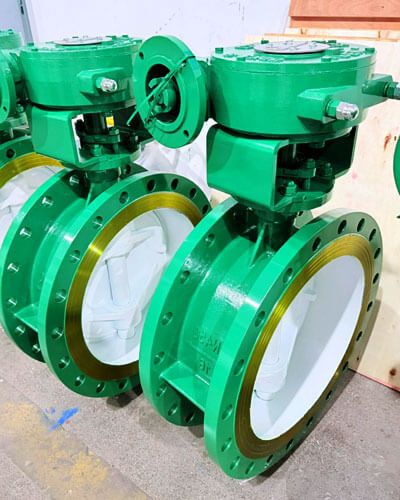
Đúc chính xác
Van bướm thép cacbon
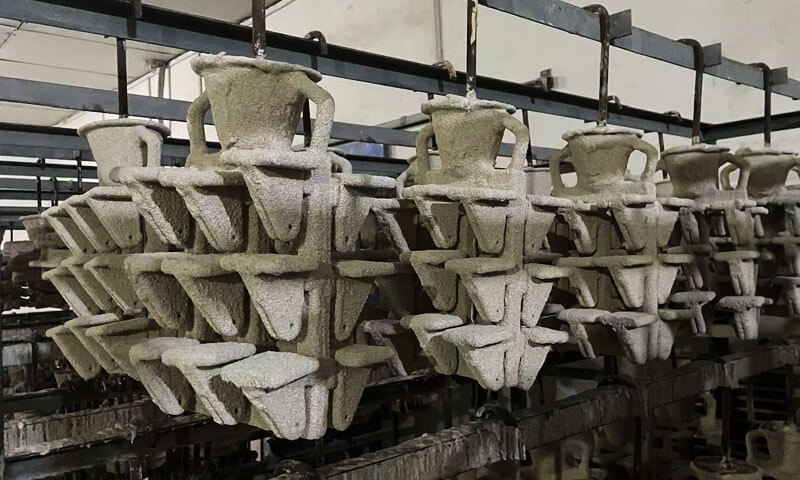
Trung bình- và kích thước lớn van bướm thép carbon cơ thể thường được sản xuất bằng cách sử dụng Đúc cát, bao gồm các quá trình cát xanh và cát liên kết nhựa.
Những công nghệ này được thiết lập tốt để sản xuất các bộ phận chịu áp lực tương đối lớn và mang lại sự cân bằng thuận lợi giữa hiệu quả sản xuất., năng suất đúc, chi phí dụng cụ, và yêu cầu về kích thước.
Thép carbon thường dễ đúc hơn thép không gỉ hợp kim cao vì yêu cầu nấu chảy và đổ của nó ít đòi hỏi hơn.
Quá trình tương đối hoàn thiện cũng làm cho thép carbon trở nên hấp dẫn để sản xuất van công nghiệp số lượng lớn.
Đối với các thành phần nhỏ hơn hoặc phức tạp về mặt hình học, Đúc đầu tư có thể được sử dụng khi độ chính xác về chiều được cải thiện, chất lượng bề mặt, và giảm trợ cấp gia công được yêu cầu.
Van bướm thép không gỉ
Van bướm inox các thành phần được sản xuất bằng cách sử dụng cả hai Đúc đầu tư và đúc cát, với phương pháp thích hợp được xác định chủ yếu bởi kích thước thành phần và hình dạng.
Đúc đầu tư, còn được gọi là quá trình mất sàng lọc, đặc biệt thích hợp cho nhỏ- đến các thành phần cỡ trung bình có hình dạng phức tạp.
Nó có thể cung cấp kích thước tương đối chính xác và bề mặt nhẵn, giảm yêu cầu gia công tiếp theo.
Thân van bằng thép không gỉ có lỗ khoan lớn thường được sản xuất bằng cách đúc cát vì những hạn chế thực tế của việc đúc đầu tư cho các bộ phận rất lớn.
Gia công chính xác CNC
Sau khi quá trình đúc hoặc rèn thô đã được sản xuất, Gia công CNC tạo ra các tính năng chính xác cần thiết cho hiệu suất lắp ráp và niêm phong.
Các hoạt động gia công quan trọng bao gồm:
- Gia công mặt bích đạt tiêu chuẩn quốc tế (Asme, TRONG, ISO)
- Chán lối đi nội bộ
- Gia công lỗ thân chính xác
- Gia công bề mặt làm kín đĩa
- Xử lý các vị trí ổ trục và ống lót
- Gia công ren cho van kiểu vấu
- Hoàn thiện bề mặt của giao diện niêm phong
Các trung tâm gia công CNC hiện đại thường xuyên đạt được dung sai trong khoảng ±0,02–0,05 mm, đảm bảo độ đồng tâm tuyệt vời giữa thân van, thân cây, và đĩa.
Độ chính xác gia công cao làm giảm mô-men xoắn vận hành, cải thiện độ tin cậy niêm phong, và kéo dài tuổi thọ sử dụng.
5. So sánh tính chất cơ học: Van bướm thép carbon và thép không gỉ
Tính chất cơ học xác định thân và đĩa van phản ứng như thế nào với áp suất bên trong, tải bên ngoài, thay đổi nhiệt độ, và chu kỳ hoạt động lặp đi lặp lại.
Tuy nhiên, Chỉ riêng đặc tính vật liệu không thiết lập được mức áp suất của van bướm.
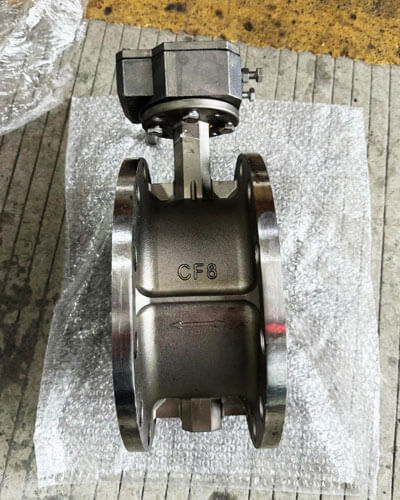
Khả năng chịu áp lực thực tế còn phụ thuộc vào Độ dày tường, hình học van, đường kính, tiêu chuẩn thiết kế, nhiệt độ, lớp áp lực, cấu hình đĩa, và chất lượng sản xuất.
Bảng sau đây cung cấp các giá trị tối thiểu hoặc được chỉ định đại diện cho các vật liệu van đúc thông thường.
Các yêu cầu chính xác phải luôn được xác minh theo tiêu chuẩn và phiên bản vật liệu hiện hành.
| Tài sản | Thép cacbon A216 WCB | CF8 không gỉ (304-kiểu) | CF8M không gỉ (316-kiểu) | CD3MN song công (2205-kiểu) |
| 0.2% Sức mạnh năng suất, Tối thiểu. | ≥ 250 MPA | ≥ 205 MPA | ≥ 205 MPA | ≥ 450 MPA |
| Độ bền kéo | 485MP655 MPa | ≥ 485 MPA | ≥ 485 MPA | ≥ 655 MPA |
| Độ giãn dài khi nghỉ, Tối thiểu. | ≥ 24% | ≥ 35% | ≥ 30% | ≥ 25% |
| Phạm vi độ cứng điển hình* | ~130–180 HB | ~140–190 HB | ~150–200 HB | ~220–280 HB |
| Mô đun đàn hồi | ~206 GPa | ~ 193 GPA | ~ 193 GPA | ~ 200 GPa |
*Các giá trị độ cứng mang tính biểu thị chứ không phải là phạm vi chấp nhận chung và có thể thay đổi tùy theo quá trình xử lý nhiệt, đặc điểm kỹ thuật sản phẩm, và điều kiện kiểm tra.
6. So sánh khả năng chống ăn mòn
Khả năng chống ăn mòn được cho là sự khác biệt quan trọng nhất giữa van bướm thép carbon và thép không gỉ.
Van có thể duy trì đủ độ bền cơ học khi còn mới nhưng dần dần mất đi tính toàn vẹn giới hạn áp suất nếu sự ăn mòn làm giảm độ dày thành hiệu dụng của nó..
Do đó, khả năng chống ăn mòn có thể có tác động trực tiếp đến độ tin cậy của van lâu dài.
| Môi trường dịch vụ | WCB thép cacbon | CF8 / 304 Không gỉ | CF8M / 316 Không gỉ |
| Không khí khô / khí trơ | Có thể chấp nhận được | Xuất sắc | Xuất sắc |
| Nước ngọt sạch | Yêu cầu kiểm soát ăn mòn | Xuất sắc | Xuất sắc |
| Nước tuần hoàn nóng | Nghèo không được bảo vệ | Tốt–Rất tốt | Rất tốt – Xuất sắc |
| Nước biển / nước muối đậm đặc | Nghèo | Nguy cơ rỗ cao | Tốt hơn, nhưng vẫn phụ thuộc vào ứng dụng |
| Axit hữu cơ yếu | Nói chung là nghèo | Tốt cho phương tiện đã chọn | Tốt hơn cho nhiều dịch vụ |
| Axit khoáng mạnh | Nói chung là không phù hợp nếu không có sự bảo vệ chuyên dụng | Phụ thuộc vào ứng dụng cao | Phụ thuộc vào ứng dụng cao |
| Không khí ven biển ngoài trời | Yêu cầu lớp phủ và bảo trì | Rất tốt | Xuất sắc |
| Chất lỏng xử lý chứa clorua | Tho kém hiện đại | Trung bình–Rủi ro cao tùy theo điều kiện | Nói chung là tốt hơn 304 |
7. Hiệu suất nhiệt độ: Van bướm thép carbon và thép không gỉ
Nhiệt độ là yếu tố quan trọng trong việc lựa chọn vật liệu van bướm vì nó ảnh hưởng trực tiếp đến Sức mạnh năng suất, độ bền kéo, Tác động đến độ dẻo dai, Khả năng chống creep, Mở rộng nhiệt, hành vi oxy hóa, hiệu suất niêm phong, và đánh giá nhiệt độ áp suất.
Vật liệu hoạt động tốt ở nhiệt độ môi trường có thể có những thay đổi đáng kể về tính chất cơ học khi nhiệt độ vận hành tăng hoặc giảm.
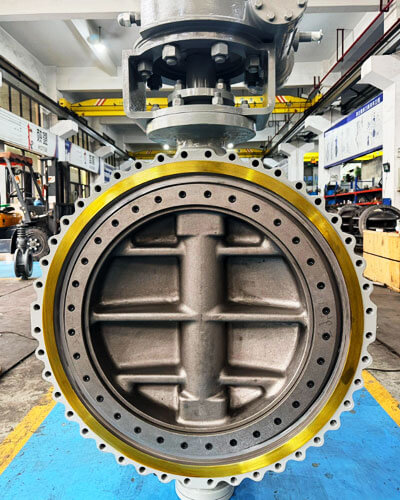
Đặc điểm nhiệt độ điển hình
| Vật liệu | Nhiệt độ làm việc liên tục tối đa điển hình* | Nhiệt độ làm việc tối thiểu điển hình* | Điện trở sốc nhiệt | Giới hạn nhiệt độ chính |
| WCB thép cacbon | ~425°C | ~−29°C | Vừa phải | Giảm cường độ và oxy hóa ở nhiệt độ cao; độ dẻo dai ở nhiệt độ thấp hạn chế |
| LCB thép carbon nhiệt độ thấp | ~425°C | ~−46°C | Vừa phải | Độ bền nhiệt độ thấp tốt hơn WCB, nhưng vẫn bị hạn chế về độ bền ở nhiệt độ cao |
| Thép không gỉ Austenitic 304 / 316 | ~800–850°C trong các ứng dụng nhiệt độ cao được chọn | Giảm xuống ~−196°C khi đủ tiêu chuẩn | Xuất sắc | Leo, quá trình oxy hóa, và những thay đổi về luyện kim trở nên quan trọng ở nhiệt độ cao |
Thép không gỉ song công 2205 |
~ 300 ° C. | ~−40°C, phụ thuộc vào ứng dụng | Tốt | Sự giòn và kết tủa pha không mong muốn sau khi tiếp xúc kéo dài với nhiệt độ cao |
| Thép không gỉ siêu song song 2507 | ~ 300 ° C. | ~−40°C, phụ thuộc vào ứng dụng | Tốt | Các hạn chế luyện kim ở nhiệt độ cao tương tự như các lớp song công |
*Những giá trị này là phạm vi vật liệu-dịch vụ chỉ định, giới hạn hoạt động của van bướm không phổ biến.
Nhiệt độ thực tế cho phép phải được thiết lập từ thông số kỹ thuật vật liệu hiện hành, đánh giá áp suất-nhiệt độ van, vật liệu chỗ ngồi, hệ thống niêm phong, tiêu chuẩn thiết kế, và dữ liệu của nhà sản xuất.
8. Hiệu suất áp suất: Van bướm thép carbon và thép không gỉ
Hiệu suất áp suất được điều chỉnh bởi sự tương tác giữa sức mạnh vật chất, hình học thành phần, Độ dày tường, nhiệt độ, lớp áp lực, và tiêu chuẩn thiết kế.
Đối với van công nghiệp, ASME B16.34 là một trong những tiêu chuẩn chính được sử dụng để xếp hạng nhiệt độ áp suất, kích thước, nguyên vật liệu, kiểm tra, và các yêu cầu liên quan đối với kết cấu van có mái che.
Hiệu suất áp suất: So sánh thực tế
| Nhân tố | Thép cacbon | CF8 / CF8M Thép không gỉ Austenitic | Thép không gỉ song công |
| Sức mạnh năng suất nhiệt độ phòng | Cao | Vừa phải | Rất cao |
| Ngăn chặn áp lực | Xuất sắc | Xuất sắc | Xuất sắc |
| Tỷ lệ sức mạnh trên chi phí | Xuất sắc | Vừa phải | Tốt |
| Tiềm năng cho thiết kế nhẹ | Tốt | Vừa phải | Xuất sắc |
| Duy trì độ bền ở nhiệt độ cao | Vừa phải | Tốt | Nhiệt độ giới hạn |
| Mất áp suất liên quan đến ăn mòn | Rủi ro cao hơn | Rủi ro thấp hơn | Rất thấp trong môi trường thích hợp |
| Sự phù hợp với áp suất cao | Tuyệt vời với thiết kế phù hợp | TỐT TỐT | Xuất sắc |
| Lợi thế kỹ thuật điển hình | Sức mạnh cơ cấu kinh tế | Kháng ăn mòn + độ dẻo dai | Sức mạnh cao + kháng ăn mòn |
Nguyên tắc kỹ thuật chính
Sự so sánh đúng là không:
Vật liệu nào có mức áp suất cao nhất?
Thay vì, nó phải như vậy:
Thiết kế vật liệu và van nào có thể duy trì ranh giới áp suất cần thiết một cách an toàn và tiết kiệm trong suốt thời gian sử dụng dự kiến?
Sự khác biệt đó rất quan trọng trong kỹ thuật van công nghiệp.
Van bướm bằng thép carbon có thể cung cấp ranh giới áp suất kinh tế nhất trong môi trường sạch sẽ, dịch vụ không ăn mòn, trong khi van hai chiều hoặc thép không gỉ có thể mang lại tính toàn vẹn áp suất lâu dài vượt trội khi ăn mòn là cơ chế suy thoái chủ yếu.
9. Mang sức đề kháng và tuổi thọ phục vụ
Khả năng chống mài mòn là yếu tố quan trọng cần cân nhắc khi lựa chọn giữa van bướm thép carbon và thép không gỉ, đặc biệt là trong các ứng dụng liên quan đến việc đạp xe thường xuyên, Các hạt mài mòn, tốc độ dòng chảy cao, hoặc điều tiết lặp đi lặp lại.
Tuy nhiên, hiệu suất mặc không nên chỉ được đánh giá bởi chất liệu cơ thể.
Trong van bướm, các Đĩa, thân cây, ghế, bề mặt chịu lực, niêm phong các cạnh, và lớp phủ bên trong có thể trải nghiệm các cơ chế hao mòn rất khác nhau.
Do đó, tuổi thọ sử dụng thực tế được xác định bởi sự tương tác của vật liệu, dịch, thiết kế van, tần số hoạt động, chênh lệch áp suất, vận tốc dòng chảy, và điều kiện bảo trì.
| Nhân tố | Thép cacbon | thép không gỉ (Austenitic) | Thép không gỉ song công |
| Chống mài mòn | Tốt (điểm khó hơn) | Vừa phải | Tốt-Xuất sắc |
| Ăn mòn-xói mòn | Nghèo (phụ thuộc vào lớp phủ) | Tốt | Xuất sắc |
| Kháng dồn dập | Tốt | Nghèo (xu hướng giận dữ) | Xuất sắc |
| Tuổi thọ sử dụng dự kiến (ăn mòn) | 5‑20 năm (với lớp phủ) | 30‑60+ năm | 30‑60+ năm |
| Tần suất bảo trì | Cao (kiểm tra lớp phủ) | Thấp | Thấp |
10. Khả năng tương thích chất lỏng và phù hợp vệ sinh
Khả năng tương thích chất lỏng
- Van thép cacbon tương thích với hydrocarbon khô, dầu nhiên liệu, chất bôi trơn, khí nén và khí trơ.
Chúng thường không phù hợp với dung dịch nước, axit, chất kiềm và nước muối không có lớp lót bên trong. - Van thép không gỉ tương thích với rất nhiều loại hóa chất, chất lỏng gốc nước, dòng sản phẩm thực phẩm và dược phẩm. Lựa chọn lớp dựa trên hàm lượng clorua, pH và nhiệt độ.
Hiệu suất vệ sinh và vệ sinh
Đây là lĩnh vực có lợi thế tuyệt đối cho thép không gỉ:
- Thép cacbon không được sử dụng trực tiếp làm thực phẩm, liên hệ với sản phẩm đồ uống hoặc dược phẩm.
Các sản phẩm ăn mòn và ion sắt làm ô nhiễm dòng chảy của quá trình, và thậm chí các bề mặt được phủ cũng bị hỏng khi lớp phủ bị hư hỏng. - Thép không gỉ có tính chất không xốp, Bề mặt trơ về mặt hóa học chống lại sự hình thành màng sinh học và chịu được CIP lặp đi lặp lại (sạch sẽ tại chỗ) và SIP (khử trùng tại chỗ) chu kỳ.
Van bướm bằng thép không gỉ cấp vệ sinh với phần bên trong được đánh bóng đáp ứng 3-A, Tiêu chuẩn tiếp xúc thực phẩm EHEDG và FDA.
11. So sánh chi phí: Van bướm thép carbon và thép không gỉ
Chi phí thường là yếu tố quyết định khi các yêu cầu kỹ thuật của một ứng dụng có thể được đáp ứng bằng nhiều loại vật liệu..
Tuy nhiên, Chỉ so sánh giá mua có thể dẫn đến quyết định sai lầm.
Sự so sánh đúng đắn về mặt kinh tế dựa trên Tổng chi phí sở hữu (TCO).
Tổng chi phí sở hữu
TCO = Chi phí mua hàng + Chi phí lắp đặt + Chi phí bảo trì + Bảo vệ ăn mòn + Thời gian ngừng hoạt động + Chi phí thay thế
So sánh chi phí vòng đời
| Yếu tố chi phí | Thép cacbon | 304 / CF8 | 316 / CF8M | Song công / Siêu song công |
| Chi phí vật liệu ban đầu | Thấp | Trung bình | Trung bình cao | Cao–Rất Cao |
| Chi phí sản xuất | Thấp | Trung bình | Trung bình cao | Cao |
| Chi phí gia công | Thấp | Cao hơn | Cao hơn | Cao hơn |
| Bảo vệ chống ăn mòn | Thường được yêu cầu | Thường tối thiểu | Thường tối thiểu | Thường tối thiểu |
| Bảo trì lớp phủ | Có khả năng đáng kể | Thấp | Thấp | Thấp |
| Rủi ro thay thế liên quan đến ăn mòn | Cao hơn | Vừa phải | Thấp trung bình | Thấp trong môi trường thích hợp |
| Chi phí dài hạn trong dịch vụ ăn mòn | Có khả năng cao | Vừa phải | Thường thuận lợi | Có thể thuận lợi |
| Trường hợp kinh tế tốt nhất | Không ăn mòn / môi trường được kiểm soát | Dịch vụ chống ăn mòn chung | clorua / môi trường hóa học | Ăn mòn nghiêm trọng + yêu cầu cơ khí cao |
12. Hướng dẫn lựa chọn ứng dụng: Van bướm thép carbon và thép không gỉ
Không có vật liệu nào vượt trội hơn hẳn. Việc lựa chọn đúng phụ thuộc vào sự tương tác giữa hóa học chất lỏng, nhiệt độ, áp lực , nguy cơ ăn mòn, tải cơ khí, yêu cầu sạch sẽ, và kinh tế dự án.
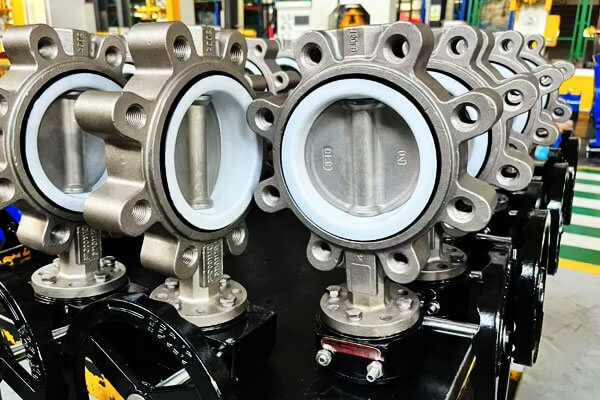
Khi thép Carbon là sự lựa chọn tốt hơn
Van bướm thép carbon thường là giải pháp được ưu tiên khi:
- Chất lỏng tương đối không bị ăn mòn
- Nhiệt độ hoạt động nằm trong phạm vi đủ tiêu chuẩn của vật liệu
- Hệ thống ở trong nhà hoặc được bảo vệ đầy đủ
- Lớp phủ bảo vệ có thể được duy trì
- Chi phí vốn ban đầu là yếu tố quan trọng cần cân nhắc
- Kích thước van lớn khiến thép không gỉ đắt đỏ một cách không tương xứng
- Cần có độ bền cơ học cao ở nhiệt độ vừa phải
Các ứng dụng điển hình bao gồm:
- Hệ thống HVAC
- Hệ thống nước chữa cháy
- Phân phối nước chung
- Hệ thống làm mát công nghiệp
- Hệ thống khí nén
- Tiện ích dầu khí
- Đường ống quy trình chung
Khi 304 / Thép không gỉ CF8 phù hợp
304-Loại thép không gỉ thường được lựa chọn khi cần có khả năng chống ăn mòn từ trung bình đến cao nhưng môi trường không giàu clorua nghiêm trọng.
Các ứng dụng phù hợp có thể bao gồm:
- Thiết bị chế biến thực phẩm
- Hệ thống hóa học tổng hợp
- Xử lý nước
- Chất lỏng công nghiệp sạch
- Thiết bị kiến trúc và ngoài trời
- Ứng dụng vệ sinh chung
Nó nên được sử dụng thận trọng trong môi trường clorua nóng vì sự ăn mòn rỗ và kẽ hở cục bộ có thể trở nên đáng kể..
Khi 316 / Thép không gỉ CF8M được ưa chuộng
316-loại thép không gỉ thường là lựa chọn tốt hơn khi tiếp xúc với clorua, ô nhiễm hóa chất, hoặc môi trường ven biển là quan trọng.
Các ứng dụng điển hình bao gồm:
- Hệ thống hàng hải
- Nhà máy chế biến ven biển
- Xử lý hóa học
- Chế biến thực phẩm và dược phẩm
- Nước có độ tinh khiết cao
- Tiện ích dược phẩm
- Một số hệ thống nước muối
Sự hiện diện của molypden giúp cải thiện khả năng chống ăn mòn cục bộ so với thép không gỉ loại 304.
Khi thép không gỉ song công là lựa chọn tốt hơn
Thép không gỉ song đặc biệt hấp dẫn khi cả độ bền cơ học và khả năng chống ăn mòn đều quan trọng.
Nó thường được xem xét cho:
- Hệ thống ngoài khơi
- Khử muối
- Dịch vụ nước biển
- Hệ thống nước áp lực cao
- Sản xuất dầu khí
- Chất lỏng xử lý giàu clorua
- Xử lý hóa học
Sức mạnh năng suất cao hơn của nó có thể mang lại lợi thế về cấu trúc, trong khi khả năng chống ăn mòn của nó có thể cải thiện đáng kể tuổi thọ sử dụng trong môi trường khắc nghiệt.
Khi thép không gỉ siêu kép được chứng minh
Siêu song công thường được xem xét khi môi trường hoạt động quá khắc nghiệt đối với thép không gỉ austenit thông thường hoặc khi đồng thời yêu cầu cường độ cao.
Các ứng dụng tiềm năng bao gồm:
- Dịch vụ nước biển nghiêm trọng
- Dầu khí ngoài khơi
- Nước muối có hàm lượng clorua cao
- Khử muối
- Hệ thống dưới biển
- Chất lỏng ăn mòn áp suất cao
Chi phí vật liệu và sản xuất cao hơn phải được giải thích bằng tuổi thọ sử dụng cần thiết và hậu quả hư hỏng.
13. Van bướm thép carbon và thép không gỉ: Bảng so sánh toàn diện
Bảng sau đây tóm tắt những khác biệt kỹ thuật chính giữa van bướm thép carbon và thép không gỉ, bao gồm cả các lớp song công nếu có liên quan.
| Yếu tố lựa chọn | WCB thép cacbon | 304 / CF8 không gỉ | 316 / CF8M không gỉ | Song công 2205 | Siêu song công 2507 |
| Gia đình vật chất | Thép carbon | Austenitic không gỉ | Austenitic không gỉ | Duplex không gỉ | Thép không gỉ siêu song công |
| Sức mạnh năng suất điển hình | ≥250 MPa | ≥205 MPa | ≥205 MPa | ~450 MPa hạng tối thiểu | Nói chung là rất cao |
| Độ bền kéo | 485MP655 MPa | ≥485 MPa | ≥485 MPa | ≥655 MPa | Thông thường rất cao |
| Độ dẻo | Tốt | Xuất sắc | Xuất sắc | Tốt | Tốt |
| Độ dẻo dai ở nhiệt độ thấp | Giới hạn cho WCB | Xuất sắc | Xuất sắc | Phụ thuộc vào lớp | Phụ thuộc vào lớp |
| Hướng nhiệt độ thấp điển hình | WCB ~−29°C; LCB ~−46°C | Có thể đủ điều kiện cho dịch vụ đông lạnh | Có thể đủ điều kiện cho dịch vụ đông lạnh | Thường giới hạn ở khoảng −40°C tùy theo cấp độ | Thường giới hạn ở khoảng −40°C tùy theo cấp độ |
| Khả năng chịu nhiệt độ cao | Vừa phải | Cao | Cao | Hạn chế hơn | Hạn chế hơn |
| Mối quan tâm luyện kim nhiệt độ cao | Mất sức mạnh, quá trình oxy hóa, leo | Leo, quá trình oxy hóa, hiệu ứng liên quan đến giai đoạn | Leo, quá trình oxy hóa, hiệu ứng liên quan đến giai đoạn | Kết tủa pha liên kim loại | Kết tủa pha liên kim loại |
Kháng ăn mòn nói chung |
Thấp mà không cần bảo vệ | Cao | Rất cao | Rất cao | Xuất sắc |
| Kháng clorua | Nghèo | Vừa phải | Tốt | Rất tốt | Xuất sắc |
| Sự phù hợp của nước biển | Nghèo không có sự bảo vệ mạnh mẽ | Giới hạn | Tốt hơn nhưng phụ thuộc vào ứng dụng | Rất tốt | Xuất sắc |
| Kháng hóa chất | Giới hạn | Tốt cho các hóa chất được lựa chọn | Rất tốt cho nhiều ứng dụng | Rất tốt | Tuyệt vời cho các môi trường khắc nghiệt được lựa chọn |
| Đang đeo điện trở | Tốt; có thể cứng rắn | Vừa phải | Vừa phải | Tốt | Tốt |
| Khả năng gia công | Xuất sắc | Phân tích vừa phải | Phân tích vừa phải | Khó | Khó |
| Chi phí đúc | Thấp trung bình | Trung bình cao | Cao | Cao | Rất cao |
| Chi phí gia công | Thấp | Cao hơn | Cao hơn | Cao | Cao |
Bảo vệ bề mặt |
Thông thường cần có lớp phủ | Thường không có lớp phủ | Thường không có lớp phủ | Thường không có lớp phủ | Thường không có lớp phủ |
| Yêu cầu thụ động | KHÔNG | Thường có lợi sau khi chế tạo | Thường có lợi sau khi chế tạo | Quan trọng đối với hiệu suất ăn mòn | Quan trọng đối với hiệu suất ăn mòn |
| Phù hợp vệ sinh | Nói chung là hạn chế | Tuyệt vời khi được chế tạo đúng cách | Xuất sắc | Phụ thuộc vào ứng dụng | Phụ thuộc vào ứng dụng |
| Chi phí mua ban đầu | Thấp nhất | Vừa phải | Trung bình cao | Cao | Cao nhất |
| Chi phí bảo trì trong dịch vụ ăn mòn | Có khả năng cao | Thấp trung bình | Thấp | Thấp | Thấp |
| Kinh tế vòng đời | Tuyệt vời trong dịch vụ không ăn mòn | Tốt trong ăn mòn vừa phải | Tuyệt vời trong môi trường clorua/hóa chất | Tuyệt vời trong ăn mòn nghiêm trọng + sức mạnh cao | Hợp lý cho môi trường khắc nghiệt |
Các ứng dụng điển hình |
Nước, HVAC, nước chữa cháy, tiện ích, dầu & khí | Đồ ăn, Nước, dịch vụ hóa chất tổng hợp | Hàng hải, đồ ăn, dược phẩm, hóa chất | Ngoài khơi, nước biển, khử muối, dầu & khí | Nước biển đậm đặc, ngoài khơi, dưới đất, nước muối |
| Ưu điểm chính | Chi phí thấp + sức mạnh tốt | Kháng ăn mòn + độ dẻo dai | Cải thiện kháng clorua | Sức mạnh + kháng ăn mòn | Khả năng chống ăn mòn tối đa trong số các tùy chọn này |
| Hạn chế chính | Ăn mòn | Rủi ro rỗ clorua | Chi phí cao hơn 304 | Độ nhạy nhiệt độ + trị giá | Chi phí cao + độ nhạy nhiệt độ |
14. Cách lựa chọn giữa van bướm thép carbon và thép không gỉ
Thực hiện theo khung quyết định có cấu trúc này để chọn vật liệu tối ưu cho từng ứng dụng:
- Xác định đầy đủ các điều kiện hoạt động Tài liệu thành phần chất lỏng, PH, hàm lượng clorua, nhiệt độ, áp lực , tải chất rắn và nhiệm vụ tuần hoàn. Đừng dựa vào những mô tả dịch vụ chung chung.
- Thiết lập tuổi thọ thiết kế cần thiết Xác định tuổi thọ mục tiêu của quá trình cài đặt. Đối với các cơ sở tạm thời có tuổi thọ ngắn, thép carbon thường tiết kiệm hơn.
vĩnh viễn 20+ cài đặt năm, thép không gỉ hầu như luôn có chi phí thấp hơn theo thời gian. - Tính toán tổng chi phí vòng đời Bao gồm mua hàng, cài đặt, BẢO TRÌ, chi phí thay thế và thời gian ngừng hoạt động dự kiến trong toàn bộ thời gian thiết kế. Tránh đưa ra quyết định chỉ dựa vào giá trả trước.
- Đánh giá các yêu cầu tuân thủ và an toàn Đối với thực phẩm, Dược phẩm, dịch vụ nước uống và đông lạnh, thép không gỉ thường là bắt buộc theo quy định hoặc tiêu chuẩn ngành.
- Đánh giá khả năng tiếp cận bảo trì Để chôn cất, cài đặt từ xa hoặc khó tiếp cận, ưu tiên thép không gỉ có tuổi thọ cao để giảm thiểu các biện pháp can thiệp bảo trì tốn kém.
- Xem xét các giải pháp trung gian cho các trường hợp biên giới Đối với các ứng dụng mà toàn bộ thép không gỉ có chi phí rất cao, xem xét van thép carbon với viền bằng thép không gỉ (đĩa và thân cây), hoặc thân bằng thép carbon lót bên trong.
15. Tại sao chọn LangHe cho linh kiện van bướm?
LangHe Foundry chuyên đúc chính xác chất lượng cao cho các bộ phận van bướm, cung cấp các giải pháp toàn diện từ lựa chọn vật liệu đến thành phần hoàn thiện.
Liên hệ với chúng tôi cho van bướm tùy chỉnh.
| Khả năng | Chi tiết |
| Nguyên vật liệu | Thép carbon (WCB, WCC, LCB), Thép không gỉ (CF‑8, CF‑8M, CF‑3, CF‑3M), Song công (CD‑3MN, CE‑8MN). |
| Phương pháp đúc | Đúc đầu tư, Đúc cát. |
| trọng lượng một phần | 0.05 kg đến 100 kg. |
| Dung sai | ±0,1‑0,3 mm (CT5‑CT7 theo ISO 8062). |
| Bề mặt hoàn thiện | Ra 1,6‑6,3 µm khi đúc; đánh bóng điện có sẵn. |
| Điều trị nhiệt | Giải pháp ủ, bình thường hóa, Cứu trợ căng thẳng. |
| Chất lượng | ISO 9001:2015 được chứng nhận; 100% NDT và thử nghiệm áp suất. |
| Thời gian dẫn đầu | 8‑12 tuần đối với dụng cụ; 2‑4 tuần cho các đơn hàng lặp lại. |
Tại sao hợp tác với LangHe?
- Dụng cụ trong nhà: Khuôn sáp và các mẫu được thiết kế và sản xuất trong nhà.
- Mô phỏng quá trình: Mô phỏng quá trình hóa rắn cho vật đúc không có khuyết tật.
- Xây dựng vỏ tự động: Chất lượng vỏ ổn định và tính thấm.
- nóng chảy chân không: Có sẵn cho các loại hợp kim cao.
- Truy xuất nguồn gốc đầy đủ: Tài liệu về nguyên liệu và quy trình cho mỗi lô.
- Hỗ trợ kỹ thuật: Lựa chọn vật liệu và hỗ trợ tối ưu hóa thiết kế.
16. Phần kết luận
Van bướm bằng thép carbon và thép không gỉ mỗi loại phục vụ riêng biệt, vai trò được xác định rõ ràng trong kiểm soát chất lỏng công nghiệp, và không có cái nào vượt trội hơn cái kia.
Van thép carbon mang lại hiệu suất kết cấu đặc biệt với chi phí ban đầu thấp, làm cho chúng trở thành công cụ kinh tế cho việc giặt khô, dịch vụ tiện ích không ăn mòn trong đó ăn mòn không phải là yếu tố hạn chế.
Van thép không gỉ có khả năng chống ăn mòn chưa từng có, hiệu suất vệ sinh và tuổi thọ dài, biện minh cho chi phí trả trước cao hơn của họ trong chất ăn mòn, các ứng dụng quan trọng về vệ sinh và bảo trì.
Lựa chọn hiệu quả nhất về mặt chi phí không bao giờ được xác định chỉ bằng giá mua.
Đánh giá có hệ thống về hóa học chất lỏng, điều kiện hoạt động, tuổi thọ thiết kế và tổng chi phí vòng đời sẽ luôn mang lại sự lựa chọn vật liệu tối ưu.
Khi các quy trình công nghiệp tiếp tục đòi hỏi độ tin cậy cao hơn, khoảng thời gian dịch vụ dài hơn và tuân thủ quy định chặt chẽ hơn, van bướm inox sẽ tiếp tục tăng thị phần, trong khi van thép carbon vẫn là nền tảng không thể thiếu cho các dịch vụ hydrocarbon và tiện ích chung.
Câu hỏi thường gặp
Chất liệu nào tốt hơn cho van bướm, thép carbon hoặc thép không gỉ?
Nó phụ thuộc vào ứng dụng. Thép carbon tốt hơn cho các dịch vụ không ăn mòn trong đó chi phí là động lực chính.
Thép không gỉ tốt hơn cho môi trường ăn mòn, các ứng dụng quan trọng về vệ sinh, và dịch vụ nhiệt độ cao.
Không có vật liệu nào tốt hơn trên toàn cầu—chỉ có vật liệu phù hợp cho ứng dụng cụ thể.
Van bướm inox có đắt hơn thép cacbon không?
Đúng. Van thép không gỉ thường có giá cao gấp 3-5 lần so với van thép carbon.
Tuy nhiên, tuổi thọ dài hơn và chi phí bảo trì thấp hơn thường làm cho thép không gỉ tiết kiệm chi phí hơn trong tổng vòng đời.
Sự khác biệt giữa thép không gỉ CF‑8 và CF‑8M là gì?
CF‑8 tương đương với 304 thép không gỉ (không có molypden).
CF‑8M tương đương với 316 thép không gỉ, chứa 2‑3% molypden để cải thiện khả năng chống rỗ clorua. CF‑8M được ưu tiên cho các dịch vụ hàng hải và hóa chất.
Van bướm inox có bền hơn thép cacbon không?
Không nhất thiết.
Các loại thép không gỉ austenit tiêu chuẩn như CF8 và CF8M có thể có cường độ năng suất thấp hơn thép carbon A216 WCB, mặc dù chúng thường có độ dẻo cao hơn và độ dẻo dai tuyệt vời.
Thép không gỉ song công, Ngược lại, có thể có cường độ năng suất cao hơn đáng kể so với cả WCB và thép không gỉ austenit thông thường.
Vì thế, thép không gỉ không nên được coi là một loại cơ khí duy nhất.