

Introdução
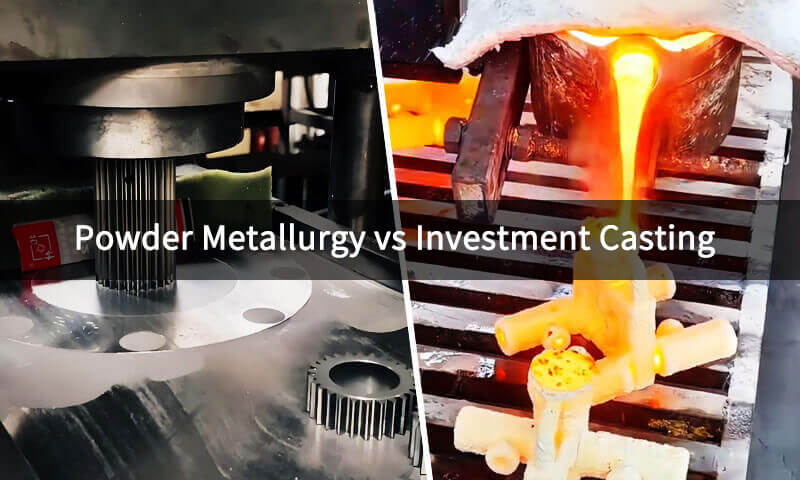
Entre a miríade de métodos de fabricação, duas tecnologias distintamente diferentes, mas muitas vezes concorrentes, se destacam: fundição de investimento e metalurgia do pó (PM).
Fundição de investimento, um processo milenar refinado através da moderna ciência dos materiais, oferece liberdade geométrica incomparável e versatilidade de liga.
Metalurgia em pó, uma inovação do século XX, oferece excepcional eficiência de material, altas taxas de produção, e porosidade controlada para aplicações especializadas.
À primeira vista, ambos os processos produzem peças metálicas quase perfeitas com usinagem mínima.
Mas os seus princípios subjacentes – solidificação a partir de metal fundido versus sinterização sob pressão de pós sólidos – levam a regras de projeto radicalmente diferentes., capacidades materiais, propriedades mecânicas, e escalas econômicas.
A escolha entre essas duas tecnologias requer uma compreensão abrangente não apenas dos custos de produção, mas também dos requisitos mecânicos, Complexidade da geometria, volume de produção, Seleção de material, e desempenho de serviço a longo prazo.
1. Compreendendo a fundição de investimento
Fundição de investimento, também conhecida como fundição por cera perdida, é um processo de conformação de metal de precisão no qual um padrão de cera é revestido com um revestimento cerâmico refratário, A cera é derretida, e a cavidade resultante é preenchida com metal fundido.
Após a solidificação, a casca de cerâmica é removida, revelando um componente metálico quase perfeito com acabamento superficial excepcional e precisão dimensional.
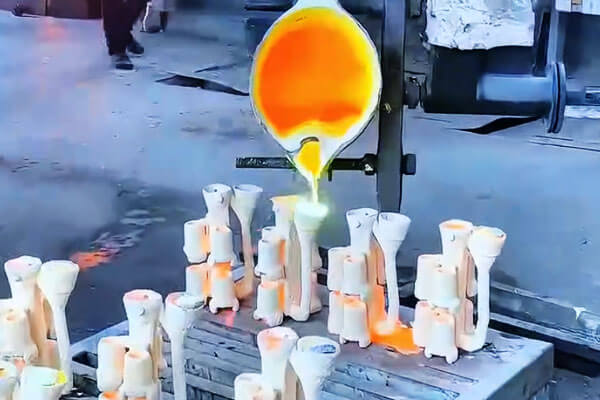
O processo remonta 5,000 anos para civilizações antigas no Egito, China, e Mesopotâmia, onde foi usado para estátuas de bronze e joias.
Hoje, é um método de fabricação de alta tecnologia para pás de turbinas aeroespaciais, implantes médicos, componentes de armas de fogo, e válvulas industriais.
Fundamentos do processo
| Estágio | Etapa | Detalhe principal |
| 1 | Produção de padrões | Cera (ou termoplástico) injetado em matriz de metal de precisão (ferramenta). |
| 2 | Montagem de árvore | Vários padrões anexados a um canal central (árvore de cera). |
| 3 | Construção da concha | 6-10 camadas de pasta cerâmica (Sílica sol) + estuque refratário (zircão/alumina). |
| 4 | DeWaxing | Autoclave a vapor derrete cera; a casca permanece oca. |
| 5 | Disparo de projétil | 900Queima de -1100°C para fortalecer a cerâmica e remover voláteis. |
| 6 | Fusão & derramando | Metal derretido em forno de indução; derramado em casca pré-aquecida. |
| 7 | Suprimir & cortar | Shell removido por vibração; componentes cortados da árvore. |
| 8 | Acabamento | Moagem, tiro jateando, tratamento térmico, Inspeção END. |
Principais características
| Recurso | Descrição |
| Geometria | Complexidade muito alta; Undercuts, passagens internas, paredes finas (≥0,5 mm). |
| Acabamento superficial | As‑cast Ra 1,6‑6,3 µm; pode ser polido para Ra <0.4 µm. |
| Tolerância | ±0,1‑0,3 mm por 25 mm típico. |
| Materiais | Quase qualquer liga moldável: aço carbono, inoxidável, Superlloys, titânio, alumínio, bronze. |
| Tamanho da peça | Gramas a ~150 kg (aço). |
| Volume | Econômico de 100 para 10,000+ peças/ano. |
| Sucata | Mínimo (formato quase líquido). |
2. Compreendendo a metalurgia do pó
Metalurgia em pó é um processo de fabricação no qual pós metálicos finos são compactados (pressionado) em uma matriz rígida e depois aquecida (sinterizado) abaixo do ponto de fusão para ligar as partículas em um componente sólido.
Ao contrário da fundição de precisão – que envolve uma mudança de fase líquida para sólida – o PM é um processo de estado sólido que retém as características químicas e microestruturais do pó.
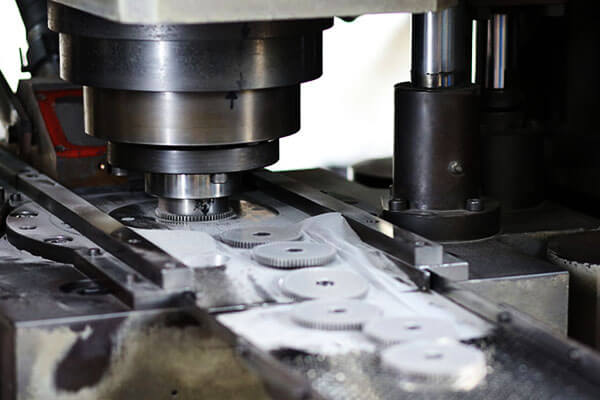
A moderna indústria de PM surgiu na década de 1920 com a produção de rolamentos autolubrificantes e filamentos de lâmpadas de tungstênio.
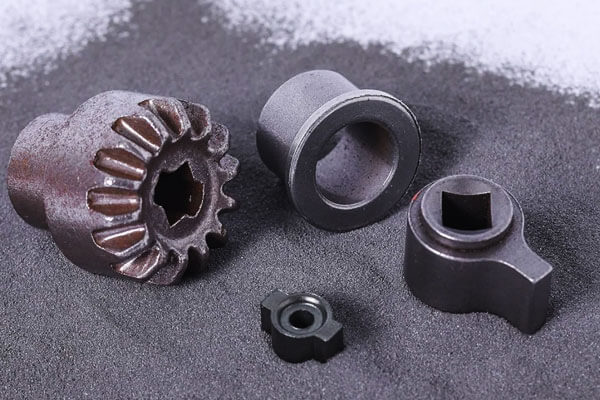
Hoje, é um maduro, tecnologia de fabricação de alto volume, com a indústria automotiva consumindo mais 70% de todas as peças ferrosas PM em todo o mundo.
Fundamentos do processo
| Estágio | Etapa | Detalhe principal |
| 1 | Produção de pó | Atomização de água ou gás, eletrólise, redução; tamanho/formato de partícula controlado. |
| 2 | Mistura | Pós misturados com lubrificantes (0.5-1,5%) e adições de liga (Por exemplo, grafite). |
| 3 | Compactação (pressionando) | Prensagem uniaxial em matriz rígida; pressão 200‑800 MPa; densidade verde 70‑85%. |
| 4 | Sinterização | Aquecimento em atmosfera controlada (gás endotérmico, N₂-H₂) até 70-90% do ponto de fusão (normalmente 1120-1150°C para ferro). |
| 5 | Operações secundárias opcionais | Dimensionamento, cunhando, tratamento térmico, infiltração, usinagem, impregnação de resina. |
Principais características
| Recurso | Descrição |
| Geometria | Complexidade moderada (2Formas D); cortes limitados; ângulos de inclinação restritos. |
| Acabamento superficial | As‑sinterizado Ra 3‑12 µm; pode ser melhorado dimensionando/cunhando. |
| Tolerância | ±0,05‑0,1 mm por 25 mm (depois do dimensionamento). |
| Materiais | Principalmente ferroso (ferro, aço, inoxidável), à base de cobre, tungstênio, e ligas especializadas. Titânio e alumínio são possíveis, mas menos comuns. |
| Tamanho da peça | Tipicamente <10 kg, <300 mm diâmetro. |
| Volume | Econômico de 5,000 para milhões de peças/ano. |
| Sucata | >95% utilização de materiais. |
3. Princípios de Fabricação: Como os processos diferem
| Aspecto | Elenco de investimento | Metalurgia em pó |
| Material inicial | Metal fundido (fase líquida). | Pó metálico (fase sólida). |
| Mudança de fase | Líquido → Sólido (solidificação). | Sólido → Sólido (ligação por difusão). |
| Fonte de energia | Calor para derreter + derramando. | Pressão + aquecer (sinterização). |
| Requisito de molde | Invólucro cerâmico de uso único (por parte). | Matriz de metal reutilizável (milhares de ciclos). |
| Tempo de ciclo | Horas (Construção da concha) para dias. | Segundos (pressionando) + horas (lote de sinterização). |
| Custo de ferramentas | Moderado (matrizes de cera $ 5-20 mil). | Alto (prensa morre $ 10-50k). |
| Intensidade de trabalho | Alto (construção de shell é manual). | Baixo (prensagem automatizada). |
| Controle dimensional | Através do encolhimento da casca + padrão de cera. | Através da precisão da matriz + contração de sinterização. |
Diferença fundamental: A fundição de investimento é um fundição de precisão em forma de rede processo; PM é um consolidação de pó processo.
O primeiro oferece liberdade geométrica quase infinita; o último oferece eficiência de material quase infinita.
4. Compatibilidade de materiais e flexibilidade de liga
| Família de materiais | Elenco de investimento | Metalurgia em pó |
| Aço carbono | Sim (ampla gama) | Sim (material PM mais comum) |
| Aço de baixa liga | Sim | Sim (Fe-Cu-C, Fe-Ni-Mo-Cu) |
| Aço inoxidável | Excelente (CF-8, CF-8M, 17-4ph) | Sim (304L, 316L, 410L, 17-4ph) |
| Superlloys de níquel | Excelente (Inconel 718, 625, RENE) | Limitado (alto custo; especializado) |
| Ligas de cobalto | Excelente (Co-Cr-Mo) | Limitado |
| Titânio | Excelente (Nota 5, Cp) | Possível (alto custo, reativo) |
| Alumínio | Sim (A356, 380) | Limitado (problemas de óxido; cru) |
| Cobre / bronze | Sim (C90500, C93200) | Excelente (Cu, latão, bronze) |
| Tungstênio / ligas pesadas | Difícil (Alto ponto de fusão) | Excelente (W-Ni-Fe, W-Ni-Cu) |
| Compósitos cerâmico-metálicos | Não é possível | Sim (cermets, WC‑Co) |
Visão principal: Ofertas de fundição de investimento flexibilidade de liga substancialmente mais ampla, particularmente para alto ponto de fusão, reativo, ou ligas difíceis de prensar (titânio, Superlloys, cromo-cobalto).
A metalurgia do pó se destaca em ferrosos, à base de cobre, e materiais à base de tungstênio, bem como compósitos que não podem ser fundidos devido à imiscibilidade ou segregação.
5. Precisão dimensional e acabamento superficial
| Critério | Elenco de investimento | Metalurgia em pó |
| Tolerância típica (mm/25mm) | ±0,1‑0,3 | ±0,05‑0,1 (como sinterizado) ±0,025‑0,05 (dimensionado/cunhado) |
| Acabamento superficial (Ra, µm) | 1.6-6,3 (AS -CAST) | 3-12 (como sinterizado) 0.8-3 (dimensionado/cunhado) |
| Estabilidade de tolerância | Bom (encolhimento da casca consistente) | Excelente (precisão do molde; variáveis de sinterização) |
| Ângulo de inclinação necessário | Não (padrões de cera removem sem rascunho) | Sim (para remoção de peças da matriz) |
| Tópicos / Recursos internos | Transmitir diretamente | Deve ser usinado (não é possível pressionar tópicos) |
O que é melhor? Para geometrias complexas com detalhes finos e alto acabamento superficial, fundição de investimento é superior.
Para geometrias simples que exigem tolerâncias extremamente restritas (especialmente após operações secundárias), PM tem uma vantagem.
6. Complexidade da Geometria e Liberdade de Design
| Recurso de design | Elenco de investimento | Metalurgia em pó |
| Undercuts | Sim (padrão de cera pode ser montado) | Não (a extração da matriz requer tração direta) |
| Passagens internas | Sim (núcleos cerâmicos) | Não (não é possível pressionar recursos ocos) |
| Paredes finas | 0.5-1,5 mm alcançável | 1.5-2,5 mm no mínimo |
| Recursos finos (letras, Logos) | Excelente reprodução | Limitado (deve ser cunhado ou usinado) |
| Espessura de seção variável | Sim (pode diminuir suavemente) | Limitado (densidade uniforme necessária) |
| Assimétrico / formas orgânicas | Excelente | Pobre (prensagem prefere paredes uniformes) |
| 3Complexidade D | Alto | Moderado (essencialmente 2,5D) |
A fundição de investimento vence decisivamente em complexidade geométrica.
A capacidade de criar cortes inferiores, canais internos curvos, contornos orgânicos, e detalhes finos de superfície são incomparáveis pela metalurgia do pó, que é limitado pela matriz de prensagem e pela exigência de compactação uniaxial.
7. Propriedades Mecânicas e Desempenho Estrutural
| Propriedade mecânica | Elenco de investimento | Metalurgia em pó |
| Densidade típica | 99-100% do teórico | 85-98% (dependendo da prensagem e sinterização) |
| Resistência à tracção | Bom (forjado em fundições sonoras) | Moderado-bom (depende da densidade) |
| Força de escoamento | Comparável ao forjado | 10-30% menor que o forjado (efeito de porosidade) |
| Alongamento | 10-35% (austenítico) | 2-15% (dependente da densidade) |
| Dureza | 80-600 HB (dependente de liga) | 60-400 HB (dependendo do material) |
| Força de fadiga | Moderado (sensível a entalhe) | Mais baixo (a porosidade atua como geradora de estresse) |
| Tenacidade de impacto | Bom (dependendo da liga) | Mais baixo (porosidade fragiliza) |
| Uniformidade | Estrutura fundida (dendrítico) | Estrutura sinterizada (poroso, isotrópico) |
| Resposta de endurecimento do trabalho | Limitado (AS -CAST) | A estrutura sinterizada pode ser tratada termicamente |
Comparação de chaves: Peças fundidas de investimento são totalmente denso e, quando lançado corretamente, abordagem de propriedades forjadas (90-95% dos valores forjados).
Peças de metalurgia do pó, mesmo em classes de alta densidade (≥95% teórico), têm porosidade residual que reduz a ductilidade, resistência, e desempenho de fadiga.
Para segurança crítica, carga alta, ou aplicações propensas a impactos, fundição de investimento é preferida.
8. Densidade, Porosidade, e Qualidade Interna
| Aspecto | Elenco de investimento | Metalurgia em pó |
| Densidade típica | 99-100% (totalmente denso) | 85-98% (porosidade residual) |
| Tipo de porosidade | Encolhimento ou gás (aleatório, evitável) | Interconectados e fechados (inerente) |
| Controle de porosidade | Projeto de portão/risering; QUADRIL reduz a porosidade | Pressão de compactação; atmosfera de sinterização |
| Estanqueidade à pressão | Excelente (são possíveis fundições estanques) | Pobre (poroso, requer vedação) |
| Distribuição de densidade | Uniforme por toda parte | Densa perto de faces de soco; inferior perto do centro (gradiente de compactação) |
| Aplicabilidade HIP | Comum (fecha a porosidade) | Cru (poros já fechados; HIP adiciona custo) |
| Limpeza interna | Bom (inclusões possíveis) | Excelente (os pós estão limpos) |
Visão principal: A fundição de precisão produz peças totalmente densas que são estanques à pressão e podem ser tratadas termicamente sem formar bolhas.
Peças PM, a menos que seja especialmente processado (Por exemplo, compactação quente, prensagem dupla, QUADRIL), têm porosidade residual que limita a estanqueidade à pressão e certas respostas ao tratamento térmico.
9. Volume de produção e economia de manufatura
| Fator econômico | Elenco de investimento | Metalurgia em pó |
| Custo de ferramentas | Moderado ($5- molde de cera de 20k) | Alto ($10-50k pressione o dado) |
| Vida útil da ferramenta | 50,000-200.000 ciclos de cera | 500,000-1.000.000 de ciclos de impressão |
| Custo da matéria-prima | Mais alto (cera, cerâmica, metal) | Mais baixo (pó, lubrificante) |
| Utilização de materiais | 85-95% | >95% (sucata quase zero) |
| Tempo de ciclo | Minutos a horas (manual) | <1 segundo (pressionando) |
| Intensidade de trabalho | Alto (Construção da concha) | Baixo (automatizado) |
| Volume de equilíbrio | ~100-1.000 peças/ano | ~5.000-10.000 peças/ano |
| Tempo de espera (ferramentado) | 8-16 semanas | 6-10 semanas |
| Custo por peça (baixo volume, <500) | Moderado-alto | Muito alto (ferramental amortizado) |
| Custo por peça (volume médio, 5k‑50k) | Baixo | Muito baixo |
| Custo por peça (alto volume, >100k) | Baixo (mas PM é menor) | Mais baixo |
Regra de decisão de custos:
- <1,000 peças/ano → Fundição de investimento (ferramental amortizado).
- 1,000-5.000 peças/ano → Ambos possíveis; comparar em complexidade.
- >10,000 peças/ano → Metalurgia do pó (economias drásticas de custos).
- >100,000 peças/ano → PM é o vencedor claro.
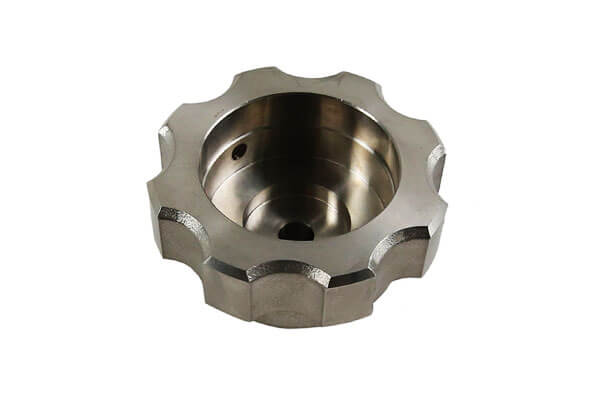
10. Aplicações do setor: Fundição de Investimento vs Metalurgia do Pó
| Indústria | Elenco de investimento | Metalurgia em pó |
| Automotivo | Rodas do turbocompressor, coletores de escape (inoxidável) | Engrenagens, Salhetas, centros de sincronização, bielas de conexão (PM baseado em Fe) |
| Aeroespacial | Blades de turbina, bicos de combustível, caixas estruturais (Superlloys, titânio) | Aplicações mais leves: arruelas de empuxo, buchas, filtros |
| Médico | Implantes ortopédicos (hastes do quadril, bandejas de joelho), instrumentos cirúrgicos | Parafusos ortopédicos (MIM, um derivado PM), Placas ósseas |
| Óleo & gás | Corpos da válvula, Impeladores da bomba, conectores submarinos (inoxidável/duplex) | Elementos de filtro, pesos de balanceamento em liga pesada de tungstênio |
Armas de fogo |
Receptores, gatilhos, componentes supressores (17-4ph) | Mecanismos de gatilho, seguidores da revista, molas de recuo |
| Máquinas industriais | Altas da bomba, corpos da válvula, caixas de câmbio (inoxidável/ferro fundido) | Engrenagens, cames, rolos, rolamentos, use pratos |
| Elétrica | Componentes do quadro, Afotos de calor | Contatos elétricos, núcleos magnéticos, porta-escovas |
| Bens de consumo | Assistir casos, acessórios de hardware, itens decorativos | Componentes de bloqueio, peças de zíper, colchetes pequenos |
11. Vantagens e limitações da fundição de investimento
Vantagens
- Complexidade geométrica excepcional – cortes inferiores, passagens internas, paredes finas, formas orgânicas.
- Ampla flexibilidade de liga – quase qualquer metal moldável, incluindo superligas e titânio.
- Excelente acabamento superficial – Ra 1,6‑6,3 µm fundido; pode ser polido até ficar quase espelhado.
- Formato Near-Net – desperdício mínimo de material; Relação comprar para voar <1.5:1.
- Não é necessário rascunho – paredes verticais possíveis.
- Fundições estanques à pressão – pode ser soldado e tratado termicamente.
- Herança comprovada – milhares de anos; dados e padrões extensos.
Limitações
- Alta intensidade de trabalho – a construção da casca é manual, dependente de habilidade.
- Tempo de ciclo lento – dias desde o padrão até a peça acabada.
- Limitação de tamanho – máximo prático ~150 kg.
- Custo mais alto em volumes baixos – amortização de ferramentas.
- Risco de porosidade – a contração e a porosidade do gás exigem um controle robusto do processo.
- Limitado a ligas fundíveis – alto ponto de fusão, materiais não fundíveis não podem ser usados.
12. Vantagens e limitações da metalurgia do pó
Vantagens
- Utilização superior de materiais - >95% sem sucata; sustentável.
- Altas taxas de produção – ciclo de prensagem <1 segundo; sinterização contínua.
- Excelente consistência dimensional – precisão controlada por matriz.
- Baixo custo por peça em grandes volumes.
- Porosidade controlada – para filtros, rolamentos autolubrificantes, eletrodos de bateria.
- Multar, Estrutura de grão uniforme – sem defeitos de fundição.
- Capacidade de misturar ligas – criar composições únicas que não são possíveis através da fusão.
- Boa máquinabilidade – muitas ligas PM contêm elementos que melhoram a usinagem.
Limitações
- Complexidade geométrica limitada – essencialmente 2,5D; sem cortes inferiores, passagens internas.
- Ângulos de inclinação necessários – para ejeção de peças das matrizes.
- Propriedades mecânicas mais baixas – a porosidade residual reduz a ductilidade e a fadiga.
- Restrições de tamanho e peso - <10 kg, <300 mm típico.
- A porosidade limita a estanqueidade à pressão – vedação necessária para aplicações de manuseio de fluidos.
- Flexibilidade da liga limitada – titânio, alumínio, superligas são difíceis ou caras.
- Custo de ferramentas alto – conjuntos de matrizes são caros; volumes de equilíbrio elevados.
13. Fundição de Investimento vs Metalurgia do Pó: Tabela de comparação abrangente
| Critério | Elenco de investimento | Metalurgia em pó |
| Princípio do processo | Solidificação de metal líquido em molde cerâmico | Compactação de pó + sinterização |
| Material inicial | Padrão de cera + Metal fundido | Pó metálico + lubrificante |
| Complexidade geométrica | Muito alto (3D, Undercuts) | Moderado (2.5D, sem cortes inferiores) |
| Espessura mínima da parede | 0.5-1,5mm | 1.5-2,5mm |
| Acabamento superficial (Ra, µm) | 1.6-6,3 (AS -CAST) | 3-12 (como sinterizado) |
| Tolerância dimensional | ±0,1‑0,3 mm/25 mm | ±0,05‑0,1 mm/25 mm (depois do dimensionamento) |
| Densidade | 99-100% | 85-98% |
| Porosidade | Baixo (encolhimento/gás) | Inerente (residual) |
| Estanqueidade à pressão | Excelente | Pobre (requer vedação) |
| Gama de ligas | Muito amplo (aço, inoxidável, Superlloys, De, Al, bronze) | Limitado (Fe, Cu, C, algum inoxidável; Ti/Al raro) |
| Resistência à tracção | Forjado (bom) | Moderado (dependente da porosidade) |
| Ductilidade | Bom (10-35%) | Mais baixo (2-15%) |
| Força de fadiga | Moderado | Mais baixo (risers de estresse da porosidade) |
| Custo de ferramentas | Moderado | Alto |
| Vida útil da ferramenta | 50ciclos k-200k | 500k‑1.000 mil ciclos |
| Utilização de materiais | 85-95% | >95% |
| Tempo de ciclo (por parte) | Minutos a horas | <1 segundo (pressionando) |
| Intensidade de trabalho | Alto | Baixo |
| Volume de equilíbrio | ~100-1.000/ano | ~5.000-10.000/ano |
| Custo por peça (alto volume) | Moderado | Muito baixo |
| Peso máximo típico da peça | 150 kg | 10 kg |
| Operações secundárias | Corte, moagem, tratamento térmico, Ndt | Dimensionamento, tratamento térmico, usinagem (limitado) |
14. Conclusão
Fundição de precisão versus metalurgia do pó não são tecnologias concorrentes em todas as situações; em vez de, eles resolvem diferentes desafios de fabricação.
A fundição de precisão é excelente quando os engenheiros exigem geometrias complexas, ampla seleção de ligas, propriedades mecânicas superiores, alta densidade, e confiabilidade estrutural.
Continua a ser a escolha preferida para componentes aeroespaciais, corpos da válvula, peças da bomba, dispositivos médicos, e equipamentos industriais de alto desempenho.
A metalurgia do pó se destaca em ambientes de produção em larga escala onde a consistência dimensional, eficiência do material, automação, e baixos custos unitários são objetivos principais.
Domina aplicações como engrenagens automotivas, rolamentos, buchas, e componentes mecânicos produzidos em massa.
A seleção ideal depende do equilíbrio de cinco fatores críticos:
- Geometria do componente
- Desempenho mecânico necessário
- Requisitos de materiais
- Volume de produção
- Custo total do ciclo de vida
A compreensão desses fatores permite que os fabricantes selecionem o processo mais tecnicamente adequado e economicamente competitivo..
Perguntas frequentes
A fundição de precisão é mais forte do que a metalurgia do pó??
Na maioria das aplicações estruturais, sim. Componentes fundidos geralmente atingem maior densidade, porosidade inferior, e melhor resistência à fadiga do que peças convencionais de metalurgia do pó.
Qual processo fornece melhor precisão dimensional?
Para simples, peças de alto volume, a metalurgia do pó geralmente oferece maior repetibilidade. Para geometrias complexas, fundição de precisão normalmente fornece melhor capacidade dimensional geral.
Ambos os processos podem produzir componentes de aço inoxidável?
Sim. Ambas as tecnologias suportam a fabricação de aço inoxidável, embora a fundição de precisão ofereça maior flexibilidade nos graus de liga e na complexidade dos componentes.
Qual processo é mais econômico?
A metalurgia do pó é geralmente mais econômica para volumes de produção muito elevados. A fundição de precisão costuma ser mais econômica para tiragens de produção baixas a médias e peças complexas.
Quais indústrias dependem mais fortemente de fundição de investimento?
Aeroespacial, petróleo e gás, Processamento químico, Equipamento médico, geração de energia, processamento de alimentos, e máquinas industriais estão entre os maiores usuários de componentes fundidos.

