Surface quality of cast-steel components is governed primarily by two interrelated factors in the moulding phase: mould-cavity cleanliness u l- surface condition of the mould.
For large castings—where pouring systems are long and metallurgical/process complexity is high—ingress of loose sand, dross and other contaminants into ceramic riser/runner pipes and deterioration or damage of the pattern/mould surface are the dominant sources of visible surface defects.
This article analyses these factors in depth, presents practical protective measures and test evidence for the impact of mould surface defects, and provides an implementation roadmap for improving as-cast surface state and reducing rework.
1. Background and importance of surface quality
Large cast-steel parts (komponenti tat-turbina, large valves, hydroturbine runners, eċċ.) are produced under high pouring temperatures and complex gating systems.
Surface appearance is not only a commercial attribute but also an indicator of process control and internal soundness.
Poor surface quality drives costly grinding, machining rework or rejection and negatively affects customer perception.

In practice many factors influence appearance (metallurgical inclusions, macro-segregation, sand fusion, SCACS), but two factors consistently dominate for large ikkastjars during moulding and pouring:
- Mould-cavity cleanliness — ingress of loose sand, dross and inclusions into ceramic feeder/runner pipes and the cavity; u
- Mould surface condition — mechanical damage, repair build-up, and surface roughness of the pattern and core components.
Based on years of practical production experience in large cast steel parts such as gas turbines,
Turbini tal-fwar, and hydraulic turbine runners, this article systematically analyzes the influence mechanism of mold cavity cleanliness and mold surface condition on the surface quality of cast steel parts.
Combined with comparative tests and engineering practice, targeted improvement measures are proposed to effectively improve the surface quality of castings and provide technical support for the stable production of high-quality cast steel parts.
2. Influence of Mold Cavity Cleanliness on the Surface Quality of Cast Steel Parts
The mold cavity is the “mold” that shapes the cast steel parts. Its cleanliness directly determines whether there are inclusions, Inklużjonijiet tar-ramel, and other defects on the surface of the castings.
During the pouring process of cast steel parts, molten steel flows into the mold cavity at high speed.
Slag inclusions generated during the smelting process, scattered sand entering the pipeline during the laying of the gating system, and other pollutants will be washed into the mold cavity along with the molten steel.
During the cooling and solidification process of molten steel, due to their lower density, most slag inclusions and scattered sand will float upward and be discharged through the riser or venting system.
Madankollu, a part of the inclusions will still condense at the variable cross-sections, fletti, and other positions of the castings, forming surface defects such as sand inclusions and slag inclusions.
These defects need to be removed by grinding, which not only increases the production workload and cost but also may affect the dimensional accuracy of the castings if the grinding amount is too large.
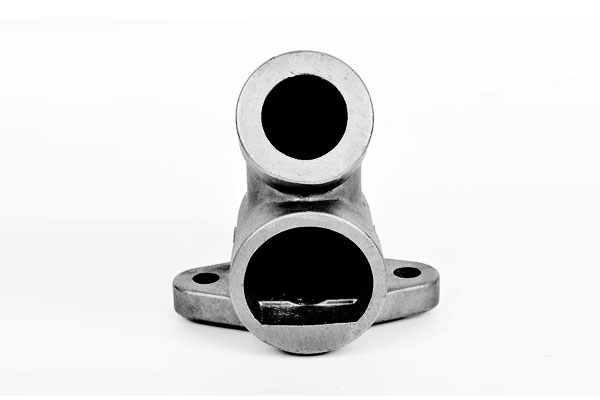
The main source of scattered sand in the mold cavity is the gating system.
The gating system of cast steel parts is usually composed of ceramic pipes (porcelain pipes) to ensure high-temperature resistance and avoid molten steel erosion.
For large cast steel parts, the total length of the laid gating system can reach more than 40 miters, and the laying process involves multiple sections of porcelain pipes connected.
Due to the long length and high laying difficulty, the probability of scattered sand entering the porcelain pipes is relatively high.
Għalhekk, it is particularly important to protect each section of the porcelain pipe during the laying process to prevent scattered sand from entering the mold cavity along with the molten steel.
Through practical verification on three types of cast steel products (turbini tal-gass, Turbini tal-fwar, and hydraulic turbine runners),
three types of protective materials and methods have been developed to effectively improve the cleanliness of the mold cavity. The following is a detailed analysis of each method:
2.1 PVC Plastic Film Protection Method
PVC (Klorur tal-polivinil) plastic film is widely used in the protection of the gating system due to its high cost performance, convenient operation, and good sealing performance.
The recommended thickness of the film is 0.4–1 mm, and the specific thickness can be selected according to the on-site molding operation requirements.
To facilitate the observation and inspection of the internal cleanliness of the porcelain pipes, transparent PVC film is preferred.
The specific operation steps are as follows: L-ewwel, check the internal cleanliness of each section of the porcelain pipe before protection, and remove any existing scattered sand or other pollutants.
Imbagħad, wrap the PVC film around the opening of the porcelain pipe to be protected. The tightness of the film should be appropriate to not affect the connection between the porcelain pipes.
During the butt joint of the porcelain pipes, the floating sand and other pollutants are blocked outside the film and cannot enter the porcelain pipes.
After the laying of the gating system is completed, the film does not need to be removed.
During the pouring process, when the molten steel rushes into the mold cavity, the air in the porcelain pipes is discharged from the system under pressure, and the PVC film is blown out from the air outlet system along with the air in the mold cavity.
Since the PVC film will be completely burned and decomposed at high temperatures (the decomposition temperature of PVC is about 200–300°C,
which is much lower than the pouring temperature of molten steel), it will not cause pollution to the molten steel or leave residues on the surface of the castings.
2.2 Thin Steel Sheet Protection Method
Thin steel sheets with a thickness of less than 1 mm can also be used for the protection of porcelain pipes.
The advantage of thin steel sheets is that they can be reused, which can reduce the long-term material cost to a certain extent.
Before use, the thin steel sheets need to be processed into appropriate sizes slightly larger than the outer diameter of the porcelain pipes according to the size and shape of the porcelain pipes to ensure that they can completely cover the connection part of the porcelain pipes.
The operation process is: L-ewwel, check whether there are foreign objects inside the porcelain pipes.
Imbagħad, sleeve the processed thin steel sheets on the connection part of the porcelain pipes to be protected.
After the upper part of the porcelain pipes is completely covered with molding sand, manually pull out the thin steel sheets.
Madankollu, this method has high requirements for construction operations: on the one hand, due to the large amount of sand around the porcelain pipes,
it is easy to miss pulling the thin steel sheets; Min-naħa l-oħra, the process of pulling out the steel sheets may drive the already laid porcelain pipes, resulting in misalignment of the gating system.
Barra minn hekk, if secondary cleanliness inspection is required after the laying of the gating system, the operation difficulty is relatively large because the thin steel sheets have been removed and the connection part of the porcelain pipes is covered by sand.
It should be noted that if the thin steel sheet is not pulled out in time or is missed, it will enter the mold cavity along with the molten steel during pouring,
which will block the flow of molten steel and cause serious defects such as cold shuts and misruns on the surface of the castings.
2.3 Polystyrene Foam Board Protection Method
Polystyrene foam board has the advantages of low cost and light weight, and is also a common protective material for the gating system.
The key to this method is the processing accuracy of the foam board: the foam board needs to be processed into a cylindrical shape with the same diameter as the inner diameter of the porcelain pipe, and then placed at the nozzle of the porcelain pipe for protection.
The processing size of the foam board has high requirements: if the diameter is too large, the foam board cannot be inserted into the nozzle of the porcelain pipe;
if the diameter is too small, the sealing performance will be poor, and sand will easily enter the interior of the porcelain pipe from the gap.
At the same time, the foam board should have sufficient thickness (usually 5–10 mm) to avoid tilting inside the porcelain pipe, which will affect the protective effect.
Similar to the PVC plastic film protection method, the foam board does not need to be taken out after the laying of the gating system.
During the pouring process, when a large amount of molten steel rushes into the mold cavity, the foam board is blown out of the mold cavity through the air outlet system under the pressure of the air in the mold cavity.
Polystyrene foam will decompose at high temperatures (the decomposition temperature is about 100–150°C) and will not produce harmful substances, so it will not pollute the molten steel or affect the surface quality of the castings.
2.4 Comparison of Protection Effects of Three Materials
The core principle of the three protection methods is to prevent scattered sand from entering the porcelain pipes and mold cavity on the premise of not affecting the flow of molten steel during pouring and not introducing foreign substances into the mold cavity.
To select the optimal protection scheme, the cost, construction difficulty, and protection effect of the three materials are compared, as shown in Table 1.
| Materjal | Kost unitarju (¥/m²)* | Jista 'jerġa' jintuża | Ease of installation | Impact on steel flow | Protection effectiveness |
| PVC plastic film | 1.2 | Nru | Faċli | Xejn | Eċċellenti |
| Thin steel sleeve | 120 | IVA | Diffiċli | Potential if not removed | Tajjeb |
| EPS foam plug | 2 | Nru | Moderat (sizing required) | Xejn | Tajjeb |
Tabella 1 Comparison of Cost and Performance of Protective Materials
It can be seen from Table 1 that both thin steel sheets and polystyrene foam boards have good protection effects, but their processing difficulty is relatively high, which is not convenient for on-site construction and use to a certain extent.
The PVC plastic film has the best protection effect, with simple on-site operation and high cost performance.
Għalhekk, combined with the actual production needs, the PVC plastic film with a thickness of 0.4–1 mm is recommended as the preferred protective material for the gating system of cast steel parts,
which can effectively improve the cleanliness of the mold cavity and reduce the surface defects caused by sand inclusions.
3. Influence of Mold Surface Condition on the Surface Quality of Cast Steel Parts
The mold is the core tool for the molding of cast steel parts, and its surface condition directly affects the surface finish and flatness of the castings.
For large cast steel parts, wood molds are mostly used due to their advantages of easy processing, spiża baxxa, u makkinabilità tajba.
Madankollu, wood molds have the characteristics of large volume and a large number of loose blocks (movable blocks), which require high positioning accuracy and connection tightness between the loose blocks.
In the actual production process, with the increase in the number of mold uses, the damage to the mold surface and loose blocks during mold stripping will also increase.
If these defects are not maintained in time, they will not only affect the shape and surface quality of the castings but also shorten the service life of the mold.
3.1 Generation of Natural Defects on Mold Surface
The natural defects of the mold surface mainly include wear, grif, xquq, and unevenness at the connection gaps. These defects are mainly caused by the following reasons:
- Mold Stripping Damage: During the mold stripping process, due to the adhesion between the molding sand and the mold surface,
the mold surface and loose blocks are easily scratched or worn when the mold is pulled out, especially at the fillets and edges of the mold. - Environmental Factors: The mold is stored in the production workshop for a long time, and the surface is easily affected by moisture, leading to wood swelling and deformation, resulting in uneven surface.
- Maintenance Not Timely: After the mold is used, if the surface sand and pollutants are not cleaned in time, or the damaged parts are not repaired in time, the defects will gradually expand with the increase in the number of uses.
Among these natural defects, the uneven surface at the connection gaps and fillets of the mold has the greatest impact on the surface quality of the castings.
After the mold is repaired, if the surface is not ground to be flat and smooth, groove-like or rat-tail-like defects will be formed on the surface of the castings, which seriously affect the appearance quality of the castings.
3.2 Test on Artificial Defects on Mold Surface
To quantitatively verify the relationship between mold surface flatness and casting surface defects, a comparative test was carried out.
Three types of artificial defects with different depths were fabricated on the mold surface, which were 1–2 mm, 2–4 mm, and 4–6 mm respectively.
The distribution range of the defects covers the plane, arc surface, and fillet part of the flange root, which are the key positions prone to surface defects in cast steel parts.
The test plan is as follows: Three areas are selected for each position, and the area of each area is set to 300 mm × 300 mm.
Artificial defects are fabricated in the selected areas and marked.
Convex defects are made by adding materials such as putty or gypsum on the mold surface, and concave defects are ground and formed on the mold surface with tools such as alloy rotary files.
The depth of all artificial defects is measured with a height gauge and recorded by photography.
During the molding process, the artificial defect parts are inspected to ensure that there is no floating sand or other substances that affect the shape of the defects.
The compaction degree and strength of the sand filled around the defects are implemented in accordance with the molding operation requirements.
After the castings are poured and formed, they are subjected to quality heat treatment and the first shot blasting process, and the surface areas of the castings corresponding to the artificial defects are inspected and verified.
The test results show that different depths of artificial defects on the mold surface lead to different levels of casting surface roughness.
The specific corresponding relationship is shown in Table 2.
| Tip | Artificial Defect Size on Mold Surface (mm) | ||
| 1~2 | 2~4 | 4~6 | |
| Casting Surface Roughness Grade | A1 | A2/A3 | A4 |
Tabella 2 Comparison Table of Artificial Defects on Mold Surface and Casting Surface Roughness
Nota: The surface roughness grades in the table are divided according to the enterprise internal standard for cast steel parts: A1 grade (Ra ≤ 6.3 μm) is the highest surface quality, suitable for key appearance parts;
A2/A3 grade (6.3 μm < Ra ≤ 12.5 μm) is the general surface quality, suitable for ordinary structural parts; A4 grade (Ra > 12.5 μm) is the low surface quality, which needs to be reworked by grinding.
According to the test results, to meet the different surface roughness grade requirements of cast steel parts, the mold surface must be inspected before each use.
For defects exceeding the specified depth (Normalment 2 mm for general parts and 1 mm for key parts), repair and grinding must be carried out to ensure that the overall mold surface condition is qualified.
For the connection gaps and fillets of the mold, special attention should be paid to inspection and maintenance to avoid the formation of groove-like or rat-tail-like defects on the casting surface.
4. Konklużjoni
For large cast-steel parts the two most impactful, controllable contributors to poor as-cast surface quality are contamination ingress via gating/piping u mould surface defects.
Sempliċi, low-cost protection methods—most notably use of transparent PVC film of 0.4–1.0 mm thickness to cap/cover pipe openings during piping installation—significantly reduce loose sand ingress.
Diligent inspection and timely repair of mould surfaces (with a conservative defect depth acceptance of ≤2 mm) prevent transfer of mould damage into cast components.
Combined with first-article NDT and a documented maintenance/inspection program, these measures materially improve surface state, reduce rework and raise customer-visible quality.
Referenzi
[1] Zhang Chaohui. Quality Analysis and Quality Improvement Measures of Cast Steel Parts [J]. China Journal Network, 2018(01): 75-77.
[2] Wang Chengbin. Discussion on the Influence of Mold Structure on Casting Quality and Optimization Design [J]. Modern Business and Trade Industry, 2011, 23(01): 303.
[3] Soċjetà Amerikana tal-Funderija (AFS). Steel Castings Handbook [M]. 11th Edition. AFS, 2017.