Introduzzjoni
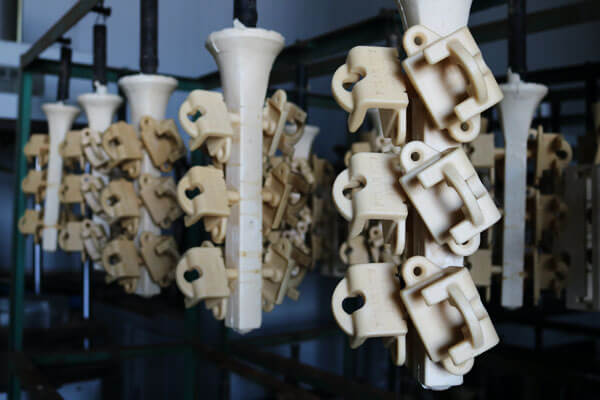
Precision investment casting is a near-net-shape manufacturing process extensively applied in aerospace, tal-karozzi, mediku, and high-end industrial equipment sectors.
F'dan il-proċess, the wax pattern functions as the geometric prototype of the final casting; its dimensional fidelity and surface integrity directly determine the accuracy, finitura tal-wiċċ, and structural reliability of the metal component.
Any defect introduced at the wax stage will be replicated during shell building and metal pouring, often resulting in elevated production costs or scrapping of high-value parts.
Surface imperfections—such as short shot, marki tal-sink, bubbles, Linji tal-fluss, flash, and sticking—as well as dimensional deviations arise from complex interactions among material properties, Parametri tal-Proċess, disinn tal-għodda, u kundizzjonijiet ambjentali.
Barra minn hekk, the interactive effects between mold design, wax shrinkage, and environmental conditions are revealed,
providing authoritative technical guidance for optimizing the wax pattern manufacturing process, improving defect control capabilities, and ensuring the stability of investment casting quality.
The research is based on a large number of production practices and technical literature, with strong practicality, professionalism, and originality, and is of great significance for promoting the technological upgrading of the investment casting industry.
1. Typical Surface Defects of Wax Patterns: Characteristics and Identification
In the wax pattern manufacturing process of ikkastjar ta 'investiment, surface defects are the primary visual indicators affecting the final quality of castings.
These defects not only damage the appearance integrity of the wax pattern but also are directly transferred to the ceramic shell and metal castings, resulting in a sharp increase in the cost of subsequent processes.
Based on extensive production practice and technical research, wax pattern surface defects can be systematically classified into six categories: short shot, sink mark/shrinkage cavity, bubble, flow line/wrinkle, flash/burr, and sticking.
Each type of defect has unique macro and micro morphological characteristics, and its accurate identification is the first step in quality control.

Short Shot
Short shot is the most typical filling defect, characterized by incomplete filling of thin-walled areas, truf li jaqtgħu, or ends of complex structures of the wax pattern, forming a blunt, missing corner, or blurred contour, which is highly similar to the misrun phenomenon in metal castings.
Its typical macro characteristics are: in areas with a wall thickness of less than 0.8mm, the edges show a smooth arc transition instead of a sharp right angle; in multi-cavity structures, only some cavities are not completely filled.
This defect is visible to the naked eye and often occurs at the root of blade cores, the tips of gears, or the ends of slender tubular structures.
Microscopically, the edges of the defect show a smooth transition without sharp contours, which is a direct manifestation of insufficient wax flow.
The occurrence of short shot is closely related to the fluidity of the wax material and is an early signal of process parameter imbalance.
Sink Mark / Shrinkage Cavity
Sink mark or shrinkage cavity is manifested as local depression on the surface of the wax pattern, forming pits with diameters ranging from 0.5mm to 5mm, which are mostly found at the junction of thick and thin walls, the root of ribs, or near the gate.
The surface of the defect is usually smooth with rounded edges, which is completely opposite to the bulging shape of bubbles.
Under strong side lighting, the depressed area shows obvious shadows, and its depth can be perceived by touch.
Microscopically, the surface of the sink mark is smooth without obvious pores, which is an external manifestation of ineffective compensation for internal volume shrinkage during the cooling and solidification of the wax material.
The distribution of sink marks has obvious hot spot characteristics, I.e., concentrated in thick and large parts with the slowest cooling rate.
Unlike surface blemishes, sink marks are essentially caused by internal shrinkage, which directly reflects the defects in the pressure holding and feeding process.
Bubbles
Bubbles are divided into two categories: surface bubbles and internal bubbles.
Surface bubbles are visible to the naked eye, presenting as round or oval bulges with diameters usually between 0.2mm and 1.5mm, which can be isolated or dense, mostly located on the upper surface of the wax pattern or areas far from the gate.
Microscopically, surface bubbles have thin walls and internal cavities, which are formed by the expansion of gas trapped in the wax material.
Internal bubbles are more hidden and invisible to the naked eye, but they can cause local bulging deformation of the wax pattern, especially in the center of the wax pattern or the thick-walled area that solidifies last, forming a bulge phenomenon.
If you lightly press the bulge with your fingernail, you can feel elastic rebound, which is caused by the thermal expansion of gas inside the wax pattern.
The shape and distribution of bubbles are the key basis for judging their sources (Tqajjem bl-ajru, degassing fqir, or moisture vaporization).
Flow Lines / Wrinkles
Flow lines or wrinkles are direct evidence of discontinuous flow of wax material in the mold cavity.
Their macro characteristics are parallel or radial wavy, striped traces on the surface of the wax pattern, with a depth usually between 0.05mm and 0.3mm, which can be clearly felt by touch.
Under a low-power magnifying glass, the lines can be observed as V or U shaped grooves, and there are slight welding marks at the bottom of the grooves.
When two streams of wax flow meet in the mold cavity, if the temperature or pressure is insufficient to fully fuse them, a cold shut shaped concave joint is formed, which is an extreme manifestation of flow lines.
This defect is particularly common on the parting surface of complex curved surfaces or symmetric structures, and is a typical sign of poor mold exhaust or improper injection speed control.
Microscopically, the grooves of flow lines have obvious fusion defects, and the molecular chain entanglement between the two streams of wax is insufficient, resulting in low bonding strength.
Flash / Burrs
Flash or burrs are direct products of poor mold closure, manifested as extremely thin wax flakes (usually less than 0.1mm in thickness) overflowing at the joint positions such as the parting surface, ejector pin holes, and core head fits, which look like burrs.
The edges of the flash are sharp, showing an obvious step shape with the main wax pattern, which is easily mistaken for normal excess material during trimming.
The occurrence position of flash is highly regular, usually directly corresponding to mold wear, pollution, or insufficient clamping force.
If flash appears in non-parting surface areas, it may indicate mold structure deformation or foreign objects in the mold cavity.
Microscopically, the flash is thin and uneven, with a clear boundary between the flash and the main body of the wax pattern, and no obvious fusion with the main body.
Sticking
Sticking is characterized by difficulty in demolding the wax pattern, and after demolding, the surface shows scratches, tears, or local residual wax.
Its macro characteristics are irregular scratches, rough areas, or burrs left after local wax layers are torn on the surface, and sometimes slight wire drawing phenomena can be seen on the contact surface between the wax pattern and the mold.
This defect is often accompanied by local deformation of the wax pattern, which is a comprehensive manifestation of mold release agent failure, excessive mold surface roughness, or insufficient cooling time.
Microscopically, the scratched area of the wax pattern has uneven surfaces, and there are residual wax particles on the mold contact surface, which is caused by the occlusion between the wax pattern and the micro-rough structure of the mold surface during demolding.
Standard Identification Methods and Tools
Accurate identification of the above defects is the premise for subsequent mechanism analysis and process correction.
In actual production, a standardized visual inspection process should be established, equipped with 10x magnifying glasses and side lighting devices, u 100% full inspection should be performed on key parts to ensure that defects do not flow into subsequent processes.
The following table summarizes the identification indicators of each type of surface defect:
| Tip ta 'difett | Macro Characteristics | Micro Characteristics | Typical Occurrence Positions | Identification Tools |
| Short Shot | Missing corners in thin walls, blunt edges | Smooth edge transition, no sharp contour | Blade root, gear tip, end of slender tube | Naked eye, magnifying glass |
| Sink Mark/Shrinkage Cavity | Local depressed pits | Smooth surface, rounded edges, no pores | Junction of thick and thin walls, root of ribs | Naked eye, side lighting, touch |
| Surface Bubble | Round/oval bulges | Internal cavity, thin wall | Upper surface, area far from gate | Naked eye, magnifying glass |
| Internal Bubble | Local bulging deformation | No surface opening, internal gas expansion | Wax pattern center, thick-walled area | Touch (elastic rebound), Spezzjoni tar-raġġi X |
Flow Lines/Wrinkles |
Wavy stripes, Skanalaturi | V or U shaped grooves with welding marks | Parting surface, complex curved surface, symmetric structure | Magnifying glass, side lighting |
| Flash/Burrs | Overflow of thin wax flakes, truf li jaqtgħu | Ħxuna < 0.1mm, step with main body | Parting surface, ejector pin hole, core head fit | Naked eye, caliper measurement |
| Sticking | Surface scratches, ħruxija, residual wax | Irregular scratches, local tearing | Mold contact surface, bottom of deep cavity | Naked eye, magnifying glass |
2. Formation Mechanisms of Surface Defects: Process and Material Perspectives
The generation of wax pattern surface defects is not caused by a single factor, but the result of complex interactions between process parameters, proprjetajiet materjali, and mold conditions.
In-depth analysis of its physical and process mechanisms is the key to achieving precise control.
Mechanism of Short Shot
The core mechanism of short shot lies in insufficient fluidity of the wax material and lack of filling power.
The fluidity of the wax material is determined by its viscosity, which is affected by both temperature and formula.
When the wax injection temperature is lower than 55℃, the viscosity of the paraffin-stearic acid system increases sharply, and the wax material is difficult to flow to the end of the mold cavity even under high pressure.
At the same time, if the mold temperature is too low (<20℃), the wax material undergoes rapid cooling at the moment of contact with the mold cavity wall, forming a condensation layer.
The resistance of this layer is much greater than the flow resistance of the unsolidified wax material, leading to the stagnation of the flow front.
Barra minn hekk, when the injection speed is too slow (<10mm / s) or the injection pressure is insufficient (<0.2MPA), the kinetic energy of the wax material in the mold cavity is not enough to overcome the flow resistance.
Especially in long-flow and multi-corner structures, the flow front will freeze due to cooling, forming a dead zone.
The too small cross-section or improper position of the wax injection hole in the mold design will aggravate the resistance of the flow path, making the wax material lose sufficient pressure and temperature before reaching the thin-walled area.
Għalhekk, the essence of short shot is the double attenuation of thermodynamic energy (temperatura) and kinetic energy (pressjoni, veloċità), resulting in the wax material being unable to reach the energy threshold required for full mold filling.
Mechanism of Sink Mark / Shrinkage Cavity
The mechanism of sink mark or shrinkage cavity originates from the failure of the volume shrinkage compensation mechanism.
The wax material undergoes significant volume shrinkage during cooling and solidification, and its linear shrinkage rate is usually between 0.8% u 1.5%.
In the initial stage of solidification, the wax material solidifies layer by layer from the mold cavity wall to the center.
At this time, if the injection pressure has been removed or the pressure holding time is insufficient, the liquid wax material in the center area cannot flow back to the solidified surface layer to fill the shrinkage gap due to the lack of external pressure supplement.
This process is particularly serious in thick-walled areas because of their long cooling time, wide solidification time window, and large cumulative shrinkage.
When the internal shrinkage stress exceeds the strength of the wax pattern itself, the surface will sink. Barra minn hekk, too high wax material temperature (>70℃) will significantly increase its inherent shrinkage rate, exacerbating this effect.
Excessive use of mold release agent will form a lubricating film, which hinders the close contact between the wax material and the mold wall,
making the mold wall unable to effectively transmit the pressure holding pressure, and further weakening the feeding effect.
Għalhekk, shrinkage cavity is an inevitable result of the combined action of thermal shrinkage, pressure transmission failure, and material intrinsic properties.
Mechanism of Bubbles
The formation mechanism of bubbles involves three stages: gas entrainment, retention, u espansjoni.
L-ewwel, air is inevitably entrained in the wax material during melting and stirring. If the degassing and standing time is insufficient (<0.5 sigħat), or the stirring speed is too fast (>100rpm) to generate turbulence, a large number of tiny bubbles will be wrapped in the wax matrix.
Secondly, during the injection process, if the injection speed is too high (>50mm / s), the wax material is injected into the mold cavity in a turbulent state, which will entrain the air in the mold cavity and wrap it inside the wax material, forming invasive bubbles.
Poor mold exhaust (blocked exhaust groove, insufficient depth, or wrong position) prevents these gases from being discharged and forces them to stay in the mold cavity.
Fl-aħħarnett, when the wax pattern is taken out of the mold, if the ambient temperature rises sharply or the storage is improper, the trace moisture or low-boiling additives remaining in the wax pattern will vaporize when heated,
or the residual stress inside the wax material will be released, leading to the expansion of bubble volume and the formation of visible bulges.
Għalhekk, bubbles are the product of the triple action of material gas content, process air entrainment, and environmental gas induction.
Mechanism of Flow Lines / Wrinkles
The essence of the mechanism of flow lines or wrinkles is the manifestation of poor melt merging (weld line).
When the wax material flows into the mold cavity from two or more gates, the two melt fronts meet in the middle of the mold cavity.
If the wax material temperature is too low (<55℃) or the mold temperature is too low (<25℃) at this time, the temperature of the melt front has dropped below its softening point,
resulting in the two melts being unable to fully melt, diffuse, and entangle molecular chains, only forming a physical lap joint.
The bonding strength at this lap joint is much lower than that of the bulk material.
During the subsequent cooling process, due to the difference in shrinkage stress, a visible concave groove is formed in this area.
Barra minn hekk, uneven or excessive application of mold release agent will form an oil film on the mold cavity surface, which hinders the wetting and spreading of the wax material,
making the melt slide on the oil film instead of fusing, which aggravates the formation of flow lines.
Too low injection speed (<15mm / s) also prolongs the cooling time of the melt front, increases the temperature difference during merging, and leads to poor welding.
Għalhekk, flow lines are welding failure phenomena under the combined action of temperature gradient, interface wettability, and flow dynamics.
Mechanism of Flash / Burrs
The mechanism of flash or burrs is directly related to the rigidity and sealing performance of the mold closing system.
When the clamping force of the mold is insufficient (<100kN) or the mold guide mechanism (guide pillars, guide sleeves) is worn with excessive clearance, the mold parting surface cannot be completely attached, forming a tiny gap (>0.02mm).
Under high-pressure (>0.6MPA) injection, the liquid wax material will be squeezed out from these gaps like a water gun, forming paper-thin flash.
Scratches, sadid, or residual wax chips on the mold surface will also damage the flatness of the sealing surface, becoming a channel for flash.
Barra minn hekk, too high wax material temperature or too high injection pressure will enhance the fluidity of the wax material, making it easier to drill into tiny gaps.
Għalhekk, flash is a direct manifestation of mechanical seal failure and process parameter exceeding the limit.
Mechanism of Sticking
The mechanism of sticking is the result of the imbalance between interfacial friction and adhesion.
The role of the mold release agent (such as transformer oil, turpentine) is to form a low surface energy lubricating film between the wax pattern and the mold, reducing the adhesion between them.
If the mold release agent is not used, the dosage is insufficient, or it has deteriorated (such as oxidation, polimerizzazzjoni), the lubricating film will fail, and the wax pattern will be in direct contact with the mold surface.
At the moment of demolding, the wax pattern engages with the micro-rough structure of the mold surface due to its own elasticity, resulting in local scratches.
At the same time, if the mold temperature is too high (>45℃), the surface of the wax pattern has not been fully solidified, and its strength is insufficient, so it is easy to be torn during demolding;
insufficient cooling time (<10 minuti) makes the internal stress of the wax pattern not released, and elastic rebound occurs during demolding, which aggravates adhesion.
Għalhekk, sticking is a comprehensive manifestation of lubrication failure, temperature out of control, and insufficient cooling.
3. Analysis of Influencing Factors for Wax Pattern Dimensional Deviation
Wax pattern dimensional deviation is the most complex and difficult-to-control quality problem in investment casting. Its influencing factors form a multi-level, strongly coupled system.
Unlike the locality of surface defects, dimensional deviation is a global deviation, whose root cause lies in the cumulative errors and non-linear responses of multiple links in the entire dimensional transmission chain of the wax pattern from the mold cavity to the final product.

Mold Design and Manufacturing Accuracy: The Source of Dimensional Transmission
The size of the mold cavity is the master template of the wax pattern size, and its manufacturing accuracy directly determines the theoretical size of the wax pattern.
According to industry experience, the dimensional accuracy of the mold should be 2~3 tolerance grades higher than the requirements of the final casting.
Pereżempju, if the casting requires a tolerance of ±0.05mm, the mold manufacturing tolerance should be controlled within ±0.02mm.
Misalignment of the mold parting surface, wear of the guide mechanism, and core positioning deviation (>0.03mm) will directly lead to dimensional offset or asymmetry of the wax pattern.
More importantly, the accuracy of shrinkage compensation. The linear shrinkage rate of the wax material is not a constant value, but is affected by multiple factors such as formula, temperatura, u pressjoni.
If the shrinkage compensation value adopted in mold design (bħal 1.2%) is inconsistent with the actual shrinkage rate of the wax material in production (bħal 1.5%), it will lead to systematic dimensional deviation.
Pereżempju, the wax pattern of an aerospace blade was designed with 1.0% compensation, but the actual high stearic acid formula (shrinkage rate 1.4%) was used,
so the final wax pattern size will be 0.4% smaller than the design value, resulting in insufficient casting wall thickness and direct scrapping.
Wax Material Formula and Shrinkage Characteristics: The Internal Cause of Dimensional Stability
The linear shrinkage rate of the wax material is its inherent physical property, which is mainly determined by the ratio of paraffin to stearic acid.
Studies have shown that when the mass fraction of stearic acid is in the range of 10%~20%, the strength of the wax pattern is significantly improved, but its shrinkage rate also increases accordingly.
When the stearic acid content increases from 10% biex 20%, the linear shrinkage rate can increase from 0.9% biex 1.4%.
If different batches of wax materials are replaced in production, or the proportion of recycled wax materials is too high (>30%), its shrinkage rate may drift due to aging and impurity pollution.
During the multiple melting processes of recycled wax materials, stearic acid is prone to saponification, and paraffin may be oxidized, leading to unpredictable shrinkage behavior.
Barra minn hekk, if moisture or low molecular weight additives are mixed into the wax material, they will vaporize when heated, forming tiny pores, which will damage the dimensional consistency.
Għalhekk, the formula consistency and batch stability of the wax material are the cornerstone for controlling dimensional deviation.
Fluctuations in Process Parameters: The Amplifier of Dimensional Deviation
In actual production, small fluctuations in process parameters will be significantly amplified through non-linear relationships. Injection pressure and holding pressure are core variables.
As shown in practical tests, for every 0.1MPa increase in injection pressure, the linear shrinkage rate of the wax pattern can be reduced by 0.05%~0.1%.
This is because high pressure can force the wax material to fill the mold cavity more closely, reduce internal gaps, and thus reduce the shrinkage space.
On the contrary, insufficient pressure leads to loose filling of the wax material and increased shrinkage.
The role of holding time is to continuously supplement the wax material to the solidification front to compensate for shrinkage.
If the holding time is insufficient (<15 sekondi), the shrinkage of the thick-walled area cannot be compensated, and the size will be too small.
The influence of wax material temperature and mold temperature is more complex.
For every 10℃ increase in wax temperature, the shrinkage rate can increase by 0.1%~0.2%; every 10℃ increase in mold temperature also increases the shrinkage rate due to prolonged cooling time and increased thermal expansion.
This positive correlation between temperature and shrinkage makes the stability of temperature control the lifeline of dimensional accuracy.
Any failure of the equipment temperature control system or fluctuation of ambient temperature may cause dimensional drift of the entire batch of wax patterns.
Environmental Conditions: The Invisible Killer of Dimensional Stability
During the storage stage of the wax pattern from demolding to tree assembly, its size is still in dynamic change.
Wax is a poor conductor of heat, and its internal stress is released slowly.
If the temperature fluctuation of the storage environment exceeds ±5℃, or the humidity changes drastically (>±10%RH), the wax pattern will undergo slow dimensional changes due to thermal expansion and contraction or moisture absorption/dehumidification.
Pereżempju, in Dongwan, Guangzhou, the weather is hot and humid in summer. If the wax pattern is stored in a workshop without temperature and humidity control, its size may drift by ±0.03mm within 24 sigħat, which is enough to affect precision assembly.
Għalhekk, the standard requires that the wax pattern should be stored in a constant temperature (23±2℃) and constant humidity (65±5%RH) environment to ensure dimensional stability.
Barra minn hekk, the storage method of the wax pattern is also crucial. If it is not placed flat on the reference surface or squeezed by heavy objects, plastic deformation will occur, leading to dimensional deviation.
4. Interactive Effects of Mold Design, Wax Shrinkage, and Environmental Conditions
The final accuracy of the wax pattern size is the comprehensive result of the non-linear, dynamic interaction between mold design, wax shrinkage characteristics, u kundizzjonijiet ambjentali.
Optimization of a single factor cannot ensure system stability. Only by understanding its synergistic effect can real source control be achieved.

Synergy between Mold Design and Wax Shrinkage: The Core of Dimensional Compensation
The size of the mold cavity is not simply obtained by multiplying the casting size by a fixed shrinkage rate.
For wax patterns with complex geometric shapes, such as aero-engine turbine blades, the wall thickness distribution is extremely uneven,
and the cooling rate difference between the thin-walled area (0.5mm) and the thick-walled area (5mm) is huge, resulting in different local shrinkage rates.
If a unified linear shrinkage rate compensation is adopted, the thick-walled area will be too small due to large shrinkage, and the thin-walled area will be too large due to fast cooling and small shrinkage, eventually leading to uneven casting wall thickness and affecting aerodynamic performance.
Għalhekk, modern mold design must adopt regional compensation technology, that is, set different shrinkage compensation rates for different regions according to the solidification sequence and temperature field simulated by CAE (Computer-Aided Engineering).
Pereżempju, 1.5% compensation is applied to the thick-walled blade root area, while only 0.9% compensation is applied to the thin-walled blade tip area.
At the same time, the design of the mold gating system must match the fluidity of the wax material.
If the gate is too small, the pressure loss of the wax material during the filling process is too large, leading to insufficient filling in the distal area.
Even if the overall shrinkage rate is correct, the size of this area will still be too small. Għalhekk, mold design must be a collaborative optimization of structure-process-material.
Modulation of Environmental Conditions on Wax Shrinkage Behavior: An Often Overlooked Link
The shrinkage rate of the wax material depends not only on its chemical composition but also on its thermal history.
If the wax material is stored at low temperature before melting (such as the workshop temperature <10℃ in winter), its internal crystal structure may change, leading to deviations in fluidity and shrinkage behavior after melting from the standard value.
Bl-istess mod, if the wax pattern is exposed to a high-humidity environment after demolding, the stearic acid in the wax material may absorb trace moisture to form hydrates, changing the intermolecular forces, and thus affecting its subsequent shrinkage behavior.
Pereżempju, under the climate conditions of Zhuzhou, Hunan, which is hot and humid in summer and dry and cold in winter, the seasonal fluctuations of ambient temperature and humidity pose a continuous challenge to the dimensional stability of the wax pattern.
When the ambient humidity increases from 40%RH to 80%RH, the post-shrinkage rate of the wax pattern within 24 hours can increase by 0.02%~0.05%.
Għalhekk, environmental control is not only a storage requirement but also part of the process parameters.
An independent constant temperature and humidity wax pattern storage room must be established, and its temperature and humidity control accuracy should reach ±1℃ and ±5%RH to eliminate the interference of the environment on the physical state of the wax material.
Systemic Consequences of Interactive Effects: Non-Linear Drift and Inter-Batch Differences
In production practice, the systemic consequences of interactive effects are manifested as non-linear drift and inter-batch differences.
Pereżempju, to reduce costs, an enterprise increased the proportion of recycled wax in the wax material from 10% biex 30%.
This led to an increase in the wax material shrinkage rate from 1.1% biex 1.4%.
To compensate for this change, the process engineer increased the mold temperature from 30℃ to 35℃, expecting to slow down cooling and reduce shrinkage by increasing the mold temperature.
Madankollu, after the mold temperature increased, the residence time of the wax material in the mold cavity was prolonged, the internal stress release was more sufficient, and the post-shrinkage of the wax pattern after demolding was instead aggravated.
At the same time, the high-temperature mold made the mold release agent more volatile, the lubrication effect decreased, and the risk of sticking increased.
In the end, although the size of a single wax pattern may meet the standard, the inter-batch size dispersion (CPK) dropped sharply from 1.67 biex 0.8, and the yield decreased significantly.
This reveals the side effects of adjusting a single parameter: the optimization of one parameter may trigger a chain reaction at the system level, leading to new problems.
Għalhekk, to achieve long-term stability of wax pattern size, a data-based closed-loop control system must be established.
By deploying temperature, pressjoni, and humidity sensors in key processes (such as wax pressing, Tkessiħ, and storage),
real-time data is collected and correlated with the wax pattern size measurement results (Cmm) to establish a mathematical model of process parameters-environmental conditions-dimensional deviation.
Using this model, the dimensional change trend under different combinations can be predicted, realizing a fundamental transformation from post-correction to pre-prediction.
5. Konklużjoni
The surface quality and dimensional accuracy of the wax pattern are the core prerequisites for ensuring the quality of investment castings.
The surface defects of the wax pattern, such as short shot, sink mark, bubble, flow line, flash, and sticking, are the result of the combined action of wax material properties, Parametri tal-Proċess, and mold conditions.
Their formation mechanisms are closely related to the fluidity, jinxtorob, and interfacial interaction of the wax material.
The dimensional deviation of the wax pattern is a systemic problem involving mold design, wax material characteristics, process fluctuations, u kundizzjonijiet ambjentali, and its control requires multi-link and multi-factor collaborative optimization.
Achieving high-precision, stable wax pattern production requires integrated optimization of structure, materjal, proċess, and environment, supported by data-driven predictive modeling.
As industries such as aerospace and new energy demand increasingly stringent tolerances, intelligent mold design, advanced CAE simulation, high-performance wax formulations, and smart environmental control systems will become indispensable pillars of next-generation precision investment casting.