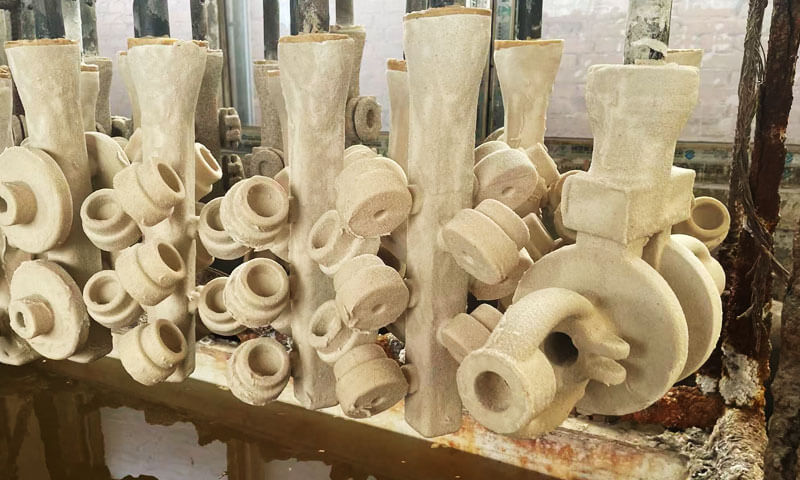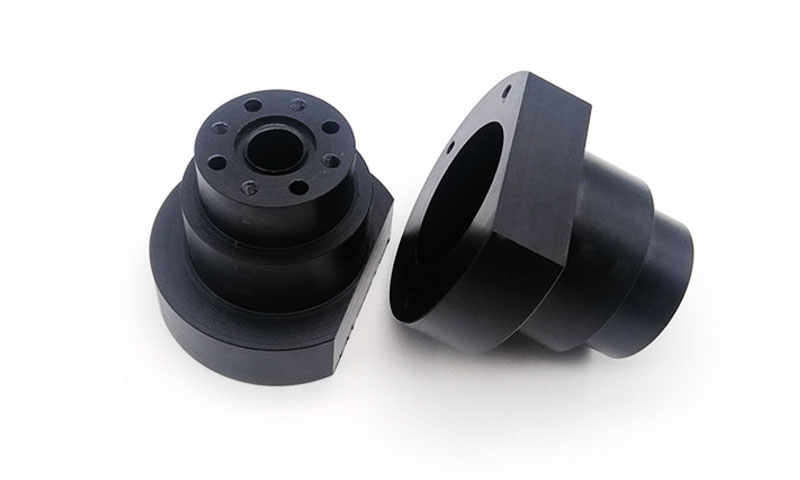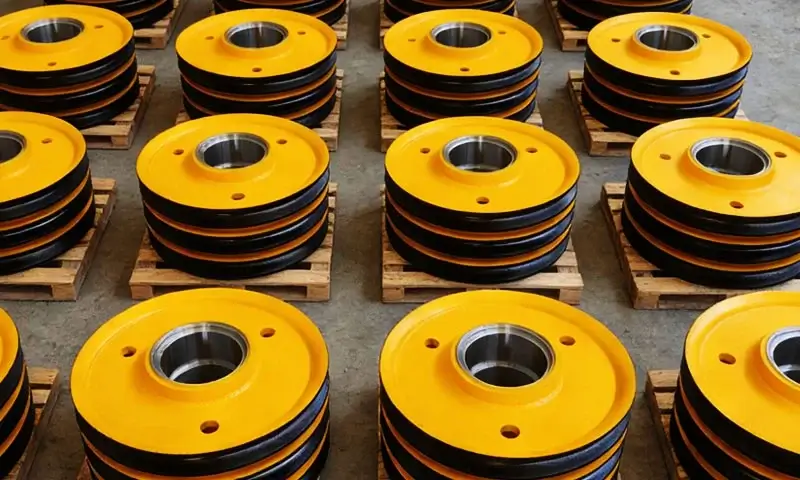
Pengecoran presisi memberikan rute produksi yang efektif untuk berkas derek khusus karena dapat mereproduksi geometri logam yang relatif kompleks sambil mempertahankan konsistensi dimensi yang terkontrol dan memberikan titik awal bentuk mendekati jaring untuk pemesinan berikutnya.
Bila dipadukan dengan pemilihan paduan yang sesuai, Perlakuan Panas Terkendali, pemesinan CNC, dan inspeksi non-destruktif, pengecoran presisi dapat menghasilkan berkas gandum yang disesuaikan dengan sistem tali kawat dan aplikasi pengangkatan tertentu.
Tujuan rekayasa bukan sekadar menghasilkan katrol yang sesuai dengan perakitan.
Tujuannya adalah untuk memproduksi komponen yang integritas pengecorannya, sifat mekanik, geometri alur, akurasi dimensi, dan kondisi permukaan tetap sesuai selama siklus servis berulang.
Artikel ini memeriksa berkas derek pengecoran presisi dari perspektif desain komponen, rekayasa material, produksi pengecoran, pemesinan, kontrol kualitas, dan kinerja aplikasi.
1. Apa Itu Sheave Derek?
A derek derek adalah roda beralur yang digunakan untuk memandu, mengarahkan ulang, mendukung, atau mendistribusikan tali kawat di dalam derek atau mekanisme pengangkatan lainnya.
Tali kawat melingkari keliling katrol, sementara katrol berputar mengelilingi poros, pin, atau hub yang didukung bantalan.
Tergantung pada konfigurasi derek, satu atau lebih berkas gandum dapat dipasang dalam satu blok berkas gandum, sistem pengangkat, kepala booming, perakitan troli, atau mekanisme pengangkatan lainnya.
Tujuan mendasar dari berkas gandum sangatlah jelas: itu mengubah arah tali kawat dan memungkinkan tali bergerak di bawah beban dengan mengurangi gesekan dan tekukan yang terkontrol.
Fungsi mekanis sebenarnya, Namun, jauh lebih menuntut.
Ketika tali kawat yang dibebani melewati sebuah katrol, talinya berulang kali ditekuk dan dilepas. Alur sheave menopang tali dan mendistribusikan gaya kontak pada wilayah tertentu.
Pada saat yang sama, katrol itu sendiri harus menahan gaya yang disalurkan melalui tali tanpa deformasi yang berlebihan, retak, memakai, atau hilangnya keselarasan.
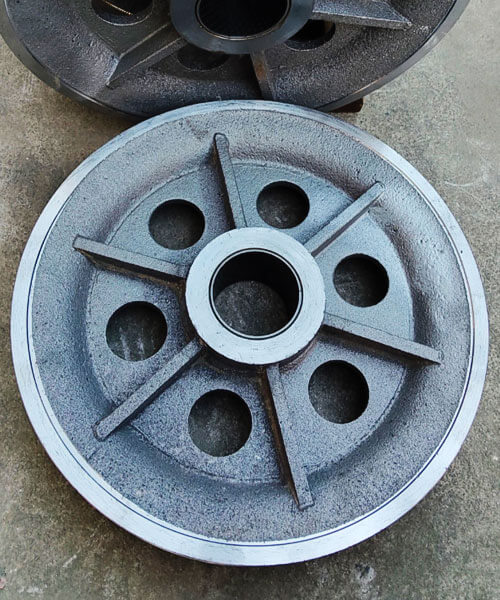
Struktur Dasar Derek Sheave
Sheave crane konvensional umumnya terdiri dari beberapa area fungsional:
| Komponen | Fungsi utama | Pertimbangan Rekayasa Utama |
| Tubuh Sheave | Mendukung tali dan mentransmisikan beban | Kekuatan, kekakuan, integritas pengecoran |
| Alur Tali | Menerima dan memandu tali kawat | Radius, kedalaman, profil, permukaan akhir |
| Pusat | Menghubungkan sheave ke penyangga berputar | Transmisi beban, ketebalan dinding |
| Membosankan | Mengakomodasi pengaturan poros atau bantalan | Diameter, toleransi, konsentrisitet |
| Flensa | Membantu mempertahankan tali kawat | Tinggi, kekakuan, izin |
| Bantalan Kursi | Mendukung bantalan jika ada | Akurasi dimensi, permukaan akhir |
| alur pasak / Fitur Pemasangan | Mentransfer torsi atau mengamankan rakitan | Posisi, geometri, penyelarasan |
2. Bahan Umum untuk Berkas Derek
Pemilihan material adalah salah satu keputusan terpenting dalam pembuatan sheave derek khusus karena material mempengaruhi kekuatan, kekerasan, Pakai ketahanan, perilaku kelelahan, resistensi korosi, kemampuan mesin, respon perlakuan panas, dan kinerja casting.
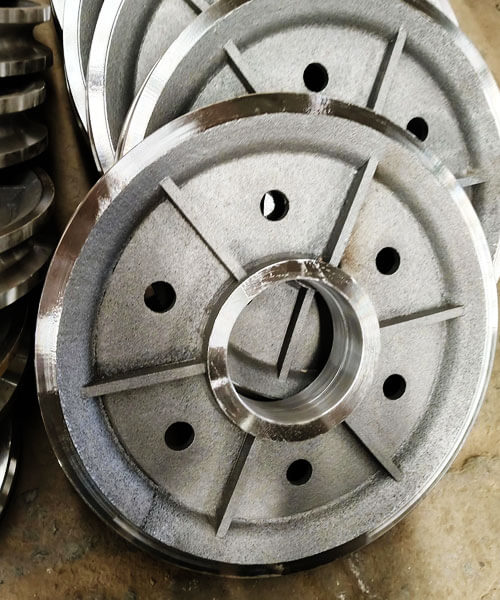
Coran baja karbon
Baja karbon banyak digunakan pada komponen industri umum karena memberikan kombinasi kekuatan yang berguna, kekerasan, kemampuan mesin, kemampuan las, dan efisiensi biaya.
Untuk berkas derek, baja karbon mungkin cocok jika kondisi pelayanan tidak memerlukan peningkatan kekuatan, Hardenability, atau ketahanan korosi yang terkait dengan bahan dengan paduan lebih tinggi.
Kelas baja yang tepat harus dipilih sesuai dengan sifat mekanik yang diperlukan, ukuran bagian pengecoran, kondisi perlakuan panas, lingkungan operasi, dan spesifikasi teknis yang berlaku.
Pengecoran Baja Paduan
Baja paduan menjadi menarik ketika sheave dikenakan pembebanan yang lebih berat atau ketika kemampuan pengerasannya meningkat, kekerasan, kekuatan, atau ketahanan aus diperlukan.
Unsur paduan seperti mangan, kromium, Molybdenum, dan nikel dapat digunakan dalam kombinasi berbeda untuk mengubah respons material terhadap perlakuan panas dan pembebanan servis.
Untuk berkas derek tugas berat, manfaat baja paduan bukan hanya sekedar kekuatan yang lebih tinggi. Desain paduan yang benar dapat membantu mencapai kombinasi yang lebih seimbang:
Kekuatan + kekerasan + resistensi kelelahan + Hardenability + Pakai ketahanan
Keseimbangan ini sangat penting ketika sheave mengandung bagian yang relatif tebal dimana respon perlakuan panas yang seragam dapat menjadi lebih sulit.
Baja Tahan Karat
Baja tahan karat dapat dipertimbangkan untuk berkas derek khusus yang terkena kondisi korosif, termasuk Marinir, Pesisir, di lepas pantai, kimia, atau lingkungan pencucian.
Namun, baja tahan karat tidak secara otomatis dianggap sebagai pilihan terbaik hanya karena memiliki ketahanan terhadap korosi yang unggul.
Pemilihan material harus mempertimbangkan pembebanan mekanis, perilaku memakai, biaya, persyaratan pemesinan, dan korosifitas lingkungan yang sebenarnya.
Untuk banyak aplikasi pengangkatan tugas berat, baja karbon atau baja paduan yang direkayasa dengan baik dengan sistem pelindung yang sesuai bisa lebih praktis daripada baja tahan karat.
Besi ulet
Besi ulet dapat memberikan karakteristik pengecoran yang menarik serta kekuatan yang bermanfaat, kekerasan, Pakai ketahanan, redaman getaran, dan stabilitas dimensi.
Penerapannya sangat bergantung pada persyaratan desain dan beban.
Ini tidak boleh dipilih semata-mata karena kemampuan pengecorannya menguntungkan; konsekuensi pembebanan mekanis dan kegagalan aplikasi secara menyeluruh harus dievaluasi.
3. Proses Pengecoran Presisi untuk Berkas Derek
Pengecoran presisi adalah metode manufaktur yang efektif untuk memproduksi berkas derek dengan profil yang rumit, hub terintegrasi, transisi struktural, dan geometri lain yang mahal atau tidak efisien untuk diproduksi seluruhnya dengan pemesinan.
Untuk berkas derek yang disesuaikan, casting investasi (casting longgar) sangat berharga karena proses ini dapat mereproduksi geometri yang rumit dengan toleransi pengecoran yang relatif ketat dan struktur bentuk mendekati jaring, sementara pemesinan CNC selanjutnya menetapkan dimensi fungsional penting.
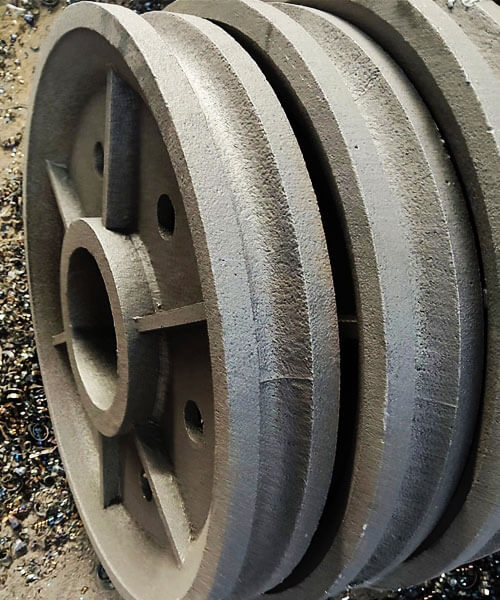
Pengecoran Investasi (Casting longgar) Proses
| Panggung | Langkah Proses | Keterangan | Kontrol Kunci |
| 1. Rekayasa & Perkakas | Analisis DFM | Gambar 2D atau model CAD 3D ditinjau untuk kelayakan pengecoran, ketebalan dinding, transisi, penyusutan, tunjangan pemesinan, dan persyaratan gerbang. | Simulasi pengecoran; persyaratan dimensi; draf; radius fillet; tunjangan pemesinan |
| 2. Produksi Pola | Injeksi lilin | Lilin disuntikkan ke dalam alat presisi untuk menghasilkan pola pengorbanan akurat yang mewakili geometri katrol derek. | Suhu lilin; tekanan injeksi; menahan tekanan; waktu siklus; dimensi pola |
| Inspeksi pola | Pola lilin diperiksa distorsinya, pengisian tidak lengkap, kilatan, variasi dimensi, dan cacat permukaan. | Dimensi pola; inspeksi visual; konsistensi dimensi | |
| 3. Perakitan pola | Perakitan pohon | Pola lilin individu dilekatkan pada sistem sariawan pusat dengan pelari dan gerbang yang dirancang untuk memberikan aliran logam yang terkontrol. | Tata letak gerbang; orientasi pola; jarak; dimensi pelari |
| 4. Bangunan Shell | Lapisan bubur | Rakitan lilin berulang kali dicelupkan ke dalam bubur keramik dan ditutup dengan plesteran tahan api untuk membuat cangkang keramik berlapis-lapis. | Viskositas bubur; ketebalan lapisan; waktu pengeringan; kelembaban; ukuran partikel plesteran |
| Penguatan cangkang | Lapisan keramik tambahan diterapkan sampai cangkang memiliki kekuatan dan permeabilitas yang cukup untuk penuangan logam. | Ketebalan cangkang; kondisi pengeringan; integritas cangkang | |
5. Dewaxing |
Autoclave / flash dewaxing | Cangkang yang sudah dirakit dipanaskan untuk menghilangkan pola lilin dan meninggalkan rongga keramik yang bersih. | Suhu; tekanan uap; tingkat pemanasan; waktu dewaxing |
| 6. Tembakan shell | Penembakan keramik | Cangkang keramik dibakar pada suhu tinggi untuk menghilangkan sisa lilin, memperkuat cetakan, dan membangun stabilitas termal. | Suhu tungku; tingkat pemanasan; waktu penahanan; suhu cangkang |
| 7. Meleleh | Peleburan induksi | Paduan yang dipilih dilebur dalam tungku terkontrol dan dibawa ke komposisi kimia dan kondisi penuangan yang diperlukan. | Kimia paduan; suhu leleh; waktu penahanan; kebersihan leleh |
| 8. Verifikasi Logam | Analisis kimia | Logam cair dianalisis untuk memverifikasi bahwa komposisinya memenuhi kadar paduan yang ditentukan sebelum dituang. | Analisis spektrometri; pengendalian muatan-bahan; nomor panas |
9. Penuangan |
Gaya berat / penuangan terkontrol | Logam cair dimasukkan ke dalam cangkang keramik yang dipanaskan melalui sistem gerbang yang direkayasa. | Tuang suhu; tuangkan tarif; cetakan dipanaskan terlebih dahulu; stabilitas pengisian |
| 10. Solidifikasi | Pendinginan terkontrol | Pengecoran mengeras di dalam cetakan keramik. Pengumpanan dan pemadatan terarah dikontrol untuk meminimalkan penyusutan dan diskontinuitas internal lainnya. | Gradien termal; efisiensi penambah; laju pendinginan; ketebalan bagian |
| 11. Pukulan knockout | Pelepasan shell | Setelah pendinginan secukupnya, cangkang keramik dihilangkan secara mekanis dari pengecoran logam. | Intensitas getaran; metode penghapusan cangkang; perlindungan pengecoran |
| 12. Cut-off | Penghapusan gerbang dan riser | Sariawan, pelari, gerbang, dan riser dipisahkan dari pengecoran sheave crane. | Lokasi pemotongan; parameter gergaji abrasif; penanganan bagian |
13. Penyelesaian Pengecoran |
Menggiling / tembakan peledakan | Gerbang sisa, sirip, kilatan, dan keramik yang menempel dihilangkan dan permukaannya disiapkan untuk pemrosesan selanjutnya. | Tipe abrasif; tekanan peledakan; tunjangan penggilingan; kondisi permukaan |
| 14. Perlakuan panas | Menormalkan / Q&T / menghilangkan stres | Pengecoran diberi perlakuan panas sesuai dengan paduan dan sifat mekanik yang diperlukan. | Suhu tungku; waktu rendam; laju pendinginan; kekerasan |
| 15. Pemesinan CNC | Berbalik / membosankan / pemesinan alur | Fitur fungsional seperti bore, pusat, bantalan kursi, alur tali, dan permukaan pemasangan dikerjakan hingga dimensi akhir. | Toleransi dimensi; konsentrisitet; kehabisan; kekasaran permukaan |
| 16. Inspeksi akhir | Inspeksi dimensi dan NDT | Berkas yang sudah jadi diperiksa untuk memverifikasi geometri, sifat mekanik, kondisi permukaan, Dan, dimana ditentukan, integritas internal. | CMM; kekerasan; UT/MT/PT/RT sebagaimana berlaku; inspeksi visual |
4. Pemesinan Alur Tali dan Penyelesaian Permukaan
Alur tali adalah salah satu fitur fungsional terpenting dari katrol derek karena menentukan bagaimana tali kawat ditopang, dipandu, dan bengkok selama pengoperasian.
Bahkan ketika badan pengecoran memiliki integritas metalurgi yang sangat baik, alur yang dikerjakan secara tidak tepat dapat mempercepat keausan tali, meningkatkan stres kontak lokal, mempromosikan pemuatan yang tidak merata, dan mengurangi masa pakai tali dan katrol.
Pemesinan Alur Setelah Pengecoran
Pengecoran investasi atau proses pengecoran presisi lainnya dapat menghasilkan sheave yang bentuknya mendekati jaring, namun alur tali akhir biasanya memerlukan pemesinan ketika geometri yang terkontrol dan penyelesaian permukaan sangat penting.
Urutan pemesinan mungkin termasuk:
Inspeksi pengecoran → penetapan datum → pembubutan kasar → pemesinan alur → pembubutan akhir → verifikasi dimensi
Katrol pertama-tama ditempatkan dengan aman menggunakan data yang sesuai. Referensi pemesinan harus ditetapkan dari garis tengah fungsional komponen, bukan dari permukaan cetakan yang berubah-ubah.
Hal ini sangat penting untuk berkas yang besar atau asimetris karena variasi pengecoran dapat berpindah langsung ke posisi alur akhir.
Konsentrisitas dan Runout Alur
Hubungan antara alur tali dan lubang katrol sangat penting.
Jika alurnya tidak konsentris dengan lubangnya, tali dapat mengalami perubahan posisi radial seiring dengan putaran katrol.
Runout yang berlebihan dapat mengakibatkan variasi siklik pada kontak tali dan pembebanan serta dapat menyebabkan getaran atau percepatan keausan komponen.
Untuk berkas derek presisi, oleh karena itu produsen harus menetapkan kriteria inspeksi untuk:
- Konsentrisitas alur-ke-lubang
- Kehabisan radial
- Kehabisan aksial
- Diameter lubang
- Diameter alur
- Profil alur
- Dimensi flensa
Nilai yang diperbolehkan harus berasal dari gambar teknik atau spesifikasi yang berlaku dan bukan ditetapkan secara universal.
Permukaan Akhir Alur Tali
Permukaan akhir harus dikontrol secara memadai untuk mencegah abrasi yang tidak perlu pada tali kawat sambil mempertahankan geometri kontak yang diinginkan.
Kasar, robek, berpori, atau alur tanah yang tidak tepat dapat menimbulkan kekasaran lokal yang bertindak sebagai konsentrasi tegangan atau titik abrasif.
Sebaliknya, penyelesaian permukaan tidak boleh digunakan untuk mengimbangi profil alur yang salah.
Urutan persiapan permukaan mungkin melibatkan:
- Pemesinan kasar
- Pemesinan setengah jadi
- Selesaikan pemesinan
- Deburring
- Pemolesan atau penggilingan terkontrol jika ditentukan
- Pembersihan akhir
Kekasaran permukaan yang diperlukan harus ditentukan sesuai dengan spesifikasi tali dan katrol.
Nilai numerik Ra tunggal tidak boleh dianggap berlaku secara universal karena konstruksi tali dan kondisi layanan yang berbeda memerlukan kriteria permukaan yang berbeda.
5. Perlakuan Panas pada Berkas Derek Cor
Perlakuan panas merupakan tahap kritis dalam pembuatan berkas derek cor, terutama bila baja karbon atau baja paduan digunakan.
Pengecoran menetapkan geometri dasar komponen, namun struktur mikro as-cast belum tentu merupakan struktur optimal untuk menuntut servis mekanis.
Proses perlakuan panas yang dikontrol dengan baik dapat mengubah struktur mikro dan meningkatkan kombinasi yang diperlukan kekuatan, kekerasan, kekerasan, resistensi kelelahan, dan stabilitas dimensi.
Rute perlakuan panas yang tepat bergantung pada kimia paduan, ukuran bagian pengecoran, sifat mekanik yang diperlukan, dan spesifikasi pelanggan.
Proses Perlakuan Panas Umum
Menormalkan
Normalisasi melibatkan pemanasan baja hingga kisaran suhu yang sesuai di atas suhu transformasinya, memegangnya dalam waktu yang cukup, dan kemudian mendinginkannya di udara.
Untuk baja tuang, normalisasi dapat membantu memperbaiki dan menghomogenisasi struktur mikro dan mengurangi beberapa ketidakseragaman yang terkait dengan pengecoran.
Ini dapat digunakan ketika diperlukan kekuatan sedang hingga tinggi dikombinasikan dengan ketangguhan yang wajar dan stabilitas dimensi.
Anil
Annealing umumnya melibatkan pemanasan diikuti dengan pendinginan terkontrol.
Hal ini dapat mengurangi kekerasan, meningkatkan kemampuan mesin, meringankan tekanan internal, dan menghasilkan yang lebih lembut, kondisi metalurgi yang lebih stabil.
Annealing mungkin berguna sebagai proses perantara dimana persyaratan pemesinan selanjutnya sangat menuntut.
Pendinginan dan temper
Untuk baja paduan dan karbon yang cocok, memadamkan dan marah (Q&T) perlakuan dapat digunakan untuk memperoleh peningkatan kekuatan dan kekerasan secara substansial serta ketangguhan yang terkendali.
Proses dasarnya adalah:
Austenitisasi → Quenching → Tempering
Tahap quenching menghasilkan struktur mikro yang lebih keras, sementara temper mengurangi kerapuhan yang berlebihan dan menyesuaikan keseimbangan akhir antara kekuatan dan ketangguhan.
Untuk komponen crane dengan beban berat, tahap temper sangat penting karena kekerasan maksimum belum tentu setara dengan kinerja servis optimal.
Menghilangkan stres
Perlakuan panas penghilang stres dapat digunakan untuk mengurangi tegangan sisa yang dihasilkan selama pengecoran, pengelasan, pemesinan yang luas, atau pemrosesan termal sebelumnya.
Hal ini khususnya berguna untuk berkas berkas besar yang mengutamakan stabilitas dimensi.
6. Cacat Pengecoran Sheave Derek Umum dan Akar Penyebabnya
Cacat pengecoran dapat secara signifikan mempengaruhi keandalan struktural berkas derek.
Karena sheave adalah komponen yang dibebani secara siklis, diskontinuitas internal yang mungkin ditoleransi dalam pengecoran dekoratif bertekanan rendah dapat menjadi penting ketika komponen tersebut mengalami beban pengangkatan yang berulang-ulang..
| Cacat | Keterangan | Akar Penyebab | Tindakan Pencegahan |
| Porositas penyusutan | Kekosongan internal | Pemberian pakan tidak mencukupi selama pemadatan. | Optimalkan desain riser; gunakan kedinginan; simulasi. |
| Porositas gas | Rongga bulat kecil | Jebakan gas; gas terlarut dalam lelehan. | Bakar hingga meleleh; meningkatkan latihan menuangkan; biaya bersih. |
| Air mata panas | Retak | Tegangan tarik selama pemadatan. | Kurangi suhu penuangan; meningkatkan keruntuhan shell. |
| Inklusi pasir | Pasir yang tertanam | Erosi pada cangkang keramik. | Meningkatkan kekuatan cangkang; mengurangi turbulensi. |
Mesir |
Pengisian tidak lengkap | Suhu penuangan rendah; logam yang tidak mencukupi. | Tingkatkan suhu penuangan; meningkatkan gerbang. |
| Dingin ditutup | Putaran permukaan | Dua aliran bertemu tanpa menyatu. | Tingkatkan suhu penuangan; meningkatkan gerbang. |
| Variasi dimensi | Dimensi di luar toleransi | Keausan pola; perluasan cangkang. | Pertahankan perkakas; mengontrol proses shell. |
| Permukaan akhir yang buruk | Permukaan kasar | Keramik kasar; cacat cangkang. | Gunakan cangkang yang lebih halus; meningkatkan proses shell. |
7. Aplikasi Berkas Derek Pengecoran Presisi
Berkas derek pengecoran presisi digunakan di seluruh sistem pengangkatan di mana tali kawat harus dialihkan, didukung, atau ditarik kembali dengan tetap menjaga kontak tali yang terkendali dan keandalan mekanis.
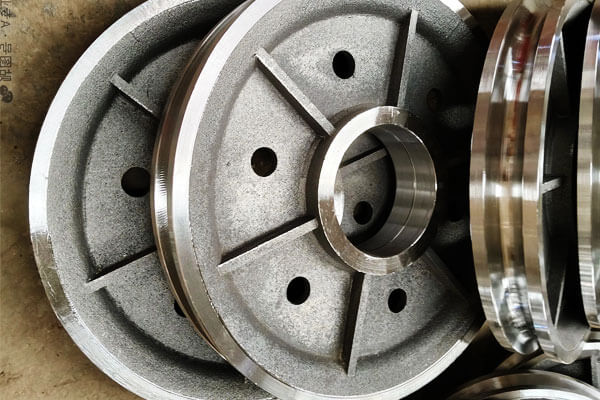
Derek Overhead dan EOT
Derek di atas kepala dan perjalanan di atas kepala listrik (EOT) crane biasanya menggunakan berkas gandum di blok pengait, mekanisme pengangkatan, dan sistem reeving.
Aplikasi ini biasanya memerlukan:
- Ketahanan tinggi terhadap pemuatan berulang
- Geometri alur tali yang akurat
- Keseimbangan rotasi yang baik
- Antarmuka bantalan yang andal
- Konsentrisitas terkendali antara lubang dan alur
- Ketahanan lelah yang memadai
Untuk derek produksi yang sering bersepeda, Daya tahan sheave dapat mempunyai pengaruh langsung pada interval perawatan karena keausan alur dan kelelahan tali berkaitan erat.
Berkas pengecoran khusus sangat berguna ketika produsen derek memerlukan dimensi yang dioptimalkan untuk drum tertentu, blok kait, tali kawat, atau amplop instalasi.
Gantry dan Portal Crane
Gantry dan portal crane banyak digunakan untuk penanganan kontainer, galangan kapal, pekarangan industri, pabrik baja, dan penanganan material berat.
Berkasnya mungkin mengalami tegangan tali dan pembebanan dinamis yang relatif tinggi.
Selain itu, instalasi di luar ruangan membuat komponen terkena hujan, kelembaban, debu, fluktuasi suhu, dan kondisi atmosfer yang berpotensi korosif.
Oleh karena itu, pemilihan material menjadi bagian penting dalam desain.
Baja cor karbon atau paduan mungkin cocok untuk aplikasi tugas berat secara umum, sementara paduan tahan korosi atau sistem finishing pelindung bisa menjadi lebih relevan di lingkungan laut.
Untuk derek portal besar, stabilitas dimensi dan integritas pengecoran struktural sangat penting karena dimensi sheave dapat menjadi besar.
Menara Crane
Tower crane menggunakan berkas gandum dalam pengangkatannya, troli, dan mekanisme luffing. Keterbatasan ruang, perutean tali, dan siklus operasi yang relatif tinggi menjadikan pengoptimalan dimensi menjadi penting.
Sheave khusus mungkin perlu memenuhi beberapa persyaratan yang bersaing:
Cukup besar untuk mengurangi pembengkokan tali yang parah, namun cukup kompak untuk dimasukkan ke dalam selubung mekanis derek.
Profil alur juga harus sesuai dengan tali kawat yang dipilih, sedangkan susunan hub dan bearing harus menyatu dengan komponen crane yang ada.
Pengecoran presisi dapat memberikan fleksibilitas dalam mengembangkan konfigurasi hub dan flensa yang kompleks tanpa memerlukan seluruh komponen dikerjakan dari billet besar.
Pelabuhan, Pelabuhan, dan Derek Kontainer
Derek pelabuhan beroperasi dalam kombinasi yang menuntut:
- Beban angkat yang tinggi
- Pemanfaatan tinggi
- Tugas kontinyu atau semi kontinyu
- Suasana yang sarat garam
- Pemuatan dinamis
- Persyaratan pemeliharaan yang ketat
Oleh karena itu, berkas gandum yang digunakan dalam sistem ini mungkin memerlukan kombinasi kekuatan mekanis, Pakai ketahanan, resistensi kelelahan, perlindungan korosi, dan pemesinan yang presisi.
Dimana korosinya parah, coran stainless tahan karat atau dupleks dapat dipertimbangkan untuk komponen tertentu, meskipun pemilihannya harus didasarkan pada persyaratan mekanis dan lingkungan yang lengkap, bukan hanya ketahanan terhadap korosi saja.
Pembuatan Kapal dan Derek Laut
Derek laut biasanya beroperasi di tempat yang lembab, lingkungan yang mengandung air asin di mana korosi dapat mempengaruhi umur komponen secara signifikan.
Berkas derek cor presisi dapat digunakan:
- Sistem pengangkatan kapal
- Derek galangan kapal
- Derek dek
- Sistem penanganan laut
- Peralatan pendukung lepas pantai
Untuk aplikasi ini, pabrikan harus mempertimbangkan tidak hanya material curah tetapi juga kondisi permukaan mesin, pengencang, bantalan, pelapis pelindung, drainase, dan pemeliharaan.
Korosi terlokalisasi pada alur, pusat, atau antarmuka bantalan bisa sangat tidak diinginkan karena area ini secara fungsional sangat penting.
Derek Lepas Pantai
Sistem pengangkatan lepas pantai menerapkan kondisi servis yang sangat menuntut karena menggabungkan beban mekanis yang tinggi dengan korosi laut, gerakan yang disebabkan oleh angin, getaran, dan efek dinamis yang berpotensi parah.
Mungkin diperlukan derek derek cor presisi untuk layanan lepas pantai:
- Ketangguhan patah tulang yang tinggi
- Komposisi kimia terkontrol
- Perlakuan panas yang memenuhi syarat
- Bahan atau pelapis tahan korosi
- NDT yang luas
- Sertifikasi bahan yang dapat dilacak
- Kontrol dimensi yang ketat
Untuk aplikasi seperti itu, spesifikasi teknik harus menentukan kriteria inspeksi dan penerimaan yang diperlukan secara rinci. Kualitas material saja tidak cukup untuk menentukan kesesuaian.
Crane Pertambangan dan Industri Berat
Fasilitas pertambangan, pabrik baja, pengecoran logam, pembangkit listrik, dan operasi manufaktur berat sering kali menggunakan derek di lingkungan yang banyak debu, getaran, suhu tinggi, pemanfaatan yang tinggi, dan beban berat.
Berkas gandum untuk aplikasi ini mungkin memerlukan peningkatan ketahanan terhadap:
- Kelelahan siklik
- Dampak mekanis
- Keausan alur
- Kontaminasi
- Suhu pengoperasian yang tinggi
- Lingkungan yang abrasif
Pengecoran baja paduan dengan perlakuan panas yang tepat dapat memberikan kombinasi sifat mekanik yang kuat yang memerlukan kinerja tugas berat.
Peralatan Konstruksi dan Penanganan Material
Derek konstruksi, kerekan, derek, dan sistem penanganan material juga menggunakan berkas gandum untuk mengarahkan tali kawat dan mempertahankan reeving yang terkendali.
Persyaratannya sangat bervariasi. Hoist sheave yang relatif kecil mungkin memprioritaskan biaya dan kekompakan, sedangkan derek konstruksi berkapasitas tinggi mungkin memerlukan antarmuka alur dan bantalan yang dirancang dengan baik.
Keberagaman aplikasi ini adalah salah satu alasan produsen kustom yang mampu harus mampu mendukung banyak material dan rute produksi dibandingkan memaksakan setiap aplikasi ke dalam satu desain standar..
8. Keuntungan Pengecoran Presisi untuk Berkas Derek
| Keuntungan | Nilai Rekayasa |
| Kemampuan bentuk mendekati jaring | Mengurangi pemesinan yang tidak perlu |
| Geometri kompleks | Mendukung hub yang dioptimalkan, flens, dan fitur struktural |
| Fleksibilitas material | Memungkinkan pemilihan paduan khusus aplikasi |
| Produksi terintegrasi | Pengecoran dan pemesinan CNC dapat dirancang bersama |
| Pengulangan | Berguna untuk produksi OEM dan suku cadang pengganti |
| Mengurangi limbah material | Penghapusan lebih sedikit dibandingkan pemesinan dari stok besar |
| Kustomisasi desain | Mendukung geometri khusus aplikasi |
| Produksi yang terukur | Cocok untuk produksi berulang ketika perkakas dibenarkan |
9. Berkas Derek Cor Presisi vs. Berkas Berkas yang Ditempa dan Dibuat
Pilihan di antara casting presisi, penempaan, dan fabrikasi harus didasarkan pada persyaratan teknik crane sheave yang sebenarnya dan bukan asumsi bahwa satu proses manufaktur lebih unggul secara universal.
Setiap metode menciptakan keseimbangan geometri yang berbeda, pemanfaatan material, sifat mekanik, fleksibilitas produksi, persyaratan pemesinan, dan biaya.
Untuk berkas derek khusus, Oleh karena itu, pertanyaan utamanya bukanlah pertanyaan sederhana “Proses mana yang lebih kuat?” melainkan:
Proses manufaktur manakah yang paling efisien dapat menghasilkan kapasitas beban yang dibutuhkan, kinerja kelelahan, akurasi alur tali, integritas struktural, ukuran, volume produksi, dan keandalan layanan?
Perbandingan berikut berfokus pada perbedaan teknik inti yang penting ketika memilih rute produksi berkas derek.
| Perbedaan Utama | Berkas Derek Cor Presisi | Berkas Derek yang Ditempa | Dibuat / Berkas Berkas yang Dilas |
| Paling Cocok | Kompleks, berkas gandum khusus yang memerlukan geometri bentuk mendekati jaring dan produksi berulang | Aplikasi berkekuatan tinggi dan kritis terhadap kelelahan | Sangat besar, volume rendah, atau berkas gandum yang sangat disesuaikan |
| Geometri & Desain Kebebasan | Bagus sekali untuk hub yang kompleks, flensa, tulang rusuk, dan transisi | Sedang; geometri harus kompatibel dengan penempaan | Bagus sekali melalui konstruksi multi-bagian |
| Kinerja mekanis | Sangat baik jika kualitas pengecoran dan perlakuan panas dikontrol dengan benar | Bagus sekali, khususnya untuk aplikasi berkekuatan tinggi dan menuntut kelelahan | Bagus, tetapi sangat bergantung pada desain dan kualitas las |
| Efisiensi material | Tinggi, dengan kelebihan bahan yang relatif sedikit | Sedang; tunjangan pemesinan umumnya diperlukan | Variabel; tergantung pada piring, cincin, dan tata letak komponen |
| Persyaratan Pemesinan | Sedang; terutama permukaan fungsional yang kritis | Sedang hingga tinggi | Sedang hingga tinggi |
| Kemampuan Diameter Besar | Bagus, tetapi tergantung pada peralatan dan proses pengecoran | Dibatasi oleh kapasitas dan perkakas tempa | Sangat baik untuk struktur yang sangat besar |
Volume produksi |
Sangat cocok untuk mengulang produksi OEM | Paling cocok untuk produksi berulang jika perkakas dibenarkan | Sangat cocok untuk produksi bervolume rendah atau berbasis proyek |
| Biaya perkakas | Sedang | Tinggi | Relatif rendah |
| Masalah Kualitas Utama | Cacat pengecoran seperti penyusutan, porositas, dan inklusi | Kualitas bahan, menempa integritas, dan kontrol perlakuan panas | Cacat las, stres residual, dan distorsi |
| Keuntungan Utama | Geometri kompleks + Kustomisasi + Bentuk dekat jaring | Kinerja mekanik yang tinggi | Ukuran besar + fleksibilitas struktural |
| Batasan Utama | Memerlukan kontrol pengecoran dan NDT yang ketat | Biaya perkakas dan pemrosesan lebih tinggi | Lebih banyak tantangan pengelasan dan kontrol dimensi |
10. Mengapa Memilih Industri LangHe untuk Berkas Derek Pengecoran Presisi Kustom?
Memilih pemasok crane-sheave harus lebih dari sekadar membandingkan harga pengecoran.
Karena komponennya menggabungkan pengecoran struktural, perlakuan panas, pemesinan presisi, geometri kontak tali, dan inspeksi, kemampuan pemasok untuk mengendalikan seluruh rantai produksi seringkali lebih penting daripada proses pengecoran nominal itu sendiri.
Industri Langhe dapat mendekati berkas derek cor presisi khusus sebagai proyek manufaktur terintegrasi, menghubungkan tinjauan teknik, pengembangan pengecoran, pemesinan, finishing, dan inspeksi kualitas.
| Kemampuan | Detail |
| Bahan | Baja karbon (WCB), baja cor, Besi ulet (60-40-18, 65-45-12, 80-55-06), baja tahan karat (CF-8, CF-8M, 17-4Ph), baja paduan (4140, 4340) |
| Proses pengecoran | Pengecoran investasi, casting pasir. |
| Bagian berat | 0.5 kg ke 500 kg. |
| Toleransi | ± 0,1-0,3 mm (CT5-CT7 per ISO 8062). |
| Kualitas | Iso 9001:2015 bersertifikat; 100% inspeksi; CMM; profilometer permukaan; Ndt (X-ray, penetran pewarna). |
| Waktu tunggu | 6–12 minggu untuk perkakas; 2–4 minggu untuk pesanan berulang. |
11. Kesimpulan
Crane sheave adalah komponen yang tampak relatif sederhana dengan fungsi mekanis yang menuntut. Itu harus memandu dan membengkokkan tali kawat berulang kali saat mentransmisikan beban melalui hub, bantalan, dan struktur pendukung.
Akibatnya, geometri alur, integritas material, kondisi perlakuan panas, akurasi pemesinan, konsentrisitet, dan kualitas permukaan semuanya berkontribusi pada kinerja sheave di dunia nyata.
Pengecoran presisi menawarkan rute produksi yang menarik untuk berkas derek khusus ketika geometrinya rumit, produksi berbentuk hampir bersih, fleksibilitas material, dan pengulangan itu penting.
Hal ini dapat mengurangi pemesinan yang tidak perlu sekaligus memungkinkan para insinyur untuk mengintegrasikan hub, flensa, tulang rusuk, transisi, dan fitur struktural lainnya ke dalam casting.
LangHe Industry menyediakan pendekatan manufaktur khusus untuk berkas derek cor presisi, menggabungkan teknik pengecoran, pemilihan materi, pemesinan CNC, perlakuan panas, finishing, dan inspeksi untuk mendukung persyaratan OEM khusus aplikasi.
FAQ
Apa itu sheave derek pengecoran presisi?
Sheave derek pengecoran presisi adalah sheave tali kawat yang diproduksi menggunakan proses pengecoran terkontrol, biasanya investasi atau metode pengecoran berorientasi presisi lainnya, diikuti dengan pemesinan permukaan fungsional kritis.
Pengecoran menciptakan geometri utama, sementara pemesinan CNC menghasilkan fitur seperti alur tali, membosankan, dan bantalan kursi.
Mengapa menggunakan pengecoran presisi daripada mengerjakan derek derek dari baja padat?
Pengecoran presisi dapat menghasilkan sebagian besar geometri akhir sebelum pemesinan.
Hal ini dapat mengurangi pembuangan material, waktu pemesinan, dan limbah material sekaligus memberikan kebebasan yang lebih besar untuk pusat-pusat yang kompleks, flensa, tulang rusuk, dan transisi struktural.
Apakah sheave crane cor sekuat sheave tempa?
Tidak ada jawaban universal. Sheave baja tuang yang dirancang dan diproses dengan benar dapat memberikan kinerja mekanis yang sangat baik,
tetapi penempaan mungkin menawarkan keuntungan dalam aplikasi yang memerlukan struktur tempa yang sangat terkonsolidasi dan sifat kelelahan yang spesifik.
Kesesuaiannya tergantung pada bahannya, geometri, Ukuran Bagian, perlakuan panas, memuat, dan persyaratan pemeriksaan.
Apa faktor kualitas terpenting untuk crane sheave?
Tidak ada parameter tunggal yang menentukan kualitas. Mentransmisikan integritas, sifat mekanik, geometri alur, penyelarasan lubang, kondisi permukaan, dan akurasi dimensi harus bekerja sama.
Untuk aplikasi yang kritis terhadap keselamatan, karakteristik ini harus diverifikasi berdasarkan spesifikasi teknik dan rencana inspeksi yang disetujui.
Bagaimana umur layanan crane sheave dapat ditingkatkan?
Masa pakai dapat ditingkatkan melalui pengukuran sheave-to-rope yang benar, geometri alur yang sesuai, pemilihan bahan yang sesuai, pelumasan dan perawatan yang tepat,
keselarasan yang akurat, kualitas produksi yang terkendali, dan penggantian tepat waktu bila keausan alur atau kerusakan lainnya melebihi batas yang ditentukan.