1. مقدمه
ریخته گری سرمایه گذاری شیشه ای آب (also known as sodium silicate investment casting) is a precision casting technology that uses water glass as the binder for the shell, combined with refractory materials to form a high-strength mold, and then casts molten carbon steel to obtain complex-shaped valves.
Carbon steel valves, as core components in fluid conveying systems, are widely used in petroleum, شیمیایی, قدرت, municipal and other fields, and their manufacturing precision, structural integrity and corrosion resistance directly determine the safety and stability of industrial systems.
Compared with traditional sand casting and silica sol investment casting, water glass investment casting has the advantages of low cost, short production cycle, and strong adaptability to complex structures, making it the mainstream process for mass production of medium and low-precision carbon steel valves.
2. ریخته گری سرمایه گذاری شیشه آب چیست?
ریخته گری سرمایه گذاری شیشه ای آب, همچنین به عنوان شناخته می شود sodium silicate shell casting, است precision casting method widely used for manufacturing carbon steel valves.
The process is a multi-step, systematic operation designed to produce high-quality valve blanks with complex geometries and reliable mechanical properties.
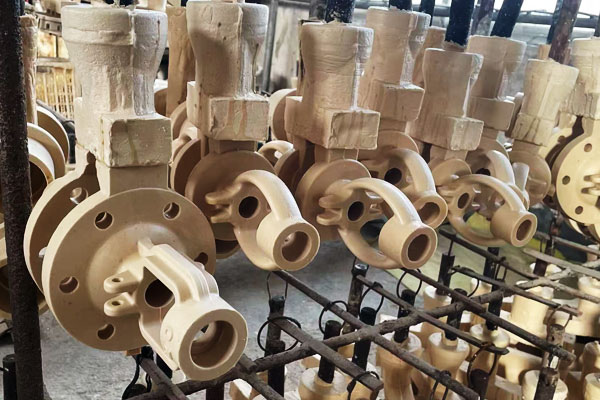
Its core principle is to replicate the valve geometry using a fusible wax pattern, form a high-temperature resistant shell through successive coating and refractory layers, remove the wax to create a cavity, and finally cast molten carbon steel into the mold.
This technique integrates دقت, کیفیت سطح, and adaptability to complex internal structures, making it suitable for medium- to high-performance valves in industrial and petrochemical applications.
Process Characteristics and Adaptability
Water glass investment casting has obvious technical advantages and application boundaries in the production of فولاد دریچه:
- Cost Advantage: The price of water glass is only 1/20-1/30 of that of silica sol, and the requirements for production environment (temperature and humidity) are not strict,
which can reduce the production cost by 30-40% compared with silica sol investment casting.
It is suitable for mass production of medium and low-end carbon steel valves. - Adaptability to Complex Structures: Through the use of soluble cores, it can accurately form complex internal structures of valves such as curved flow channels, multi-stage cavities, and narrow sealing surfaces, which is difficult to achieve with traditional sand casting.
- کارایی تولید: The chemical hardening method of the back layer of the shell enables rapid hardening and establishes wet strength,
with a shorter process cycle and higher production efficiency than silica sol investment casting, and the daily output of a single production line can reach thousands of valve blanks. - محدودیت ها: The dimensional accuracy (IT11-IT13) و پایان سطح (Ra6.3-12.5μm) of the castings are lower than those of silica sol investment casting,
and the shell has poor air permeability, which is prone to defects such as porosity and sand sticking, requiring strict process control.
3. انتخاب مواد: Carbon Steel Grades for Valves and Casting Suitability
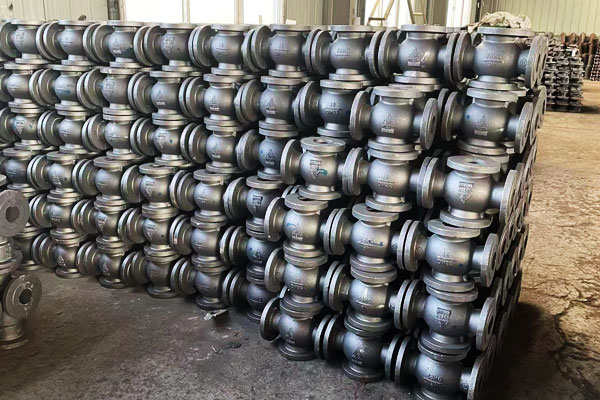
The selection of carbon steel for water glass investment-cast valves must balance service requirements—such as pressure, درجه حرارت, and medium compatibility—with the عملکرد ریخته گری needed for the water glass process.
Different steel grades offer varying mechanical properties, ترکیبات شیمیایی, and casting behaviors, making grade selection critical for both performance and manufacturability.
Core Carbon Steel Grades and Standards
The primary carbon steel grades used for valves conform to ASTM A216 وت GB/T 12229 معیارها, با WCB being the most widely applied.
Key characteristics of common grades are summarized below:
| درجه فولادی | استاندارد | ترکیب شیمیایی (وزنی ٪) | خصوصیات مکانیکی (عادی شده) | Typical Working Conditions |
| WCB | ASTM A216 / GB/T 12229 | C ≤0.30, Mn 0.60–1.05, Si ≤0.60, P ≤0.040, S ≤0.045 | کشنده: 485-655 MPa; Yield ≥250 MPa; Elongation ≥22%; Impact ≥27 J (-29درجه سانتیگراد) | Medium/low pressure, -29درجه سانتیگراد تا 427 درجه سانتیگراد, non-corrosive media (اب, بخار, روغن) |
| WCA | ASTM A216 | C ≤0.25, Mn ≤0.70, Si ≤0.60, P ≤0.040, S ≤0.045 | کشنده: 415–585 MPa; Yield ≥220 MPa; Elongation ≥28% | Normal temperature, فشار کم, ≥20°C, general industrial water and gas |
WCC |
ASTM A216 | C ≤0.25, Mn 0.80–1.20, Si ≤0.60, P ≤0.040, S ≤0.045 | کشنده: 485-655 MPa; Yield ≥300 MPa; Elongation ≥25% | Medium/high pressure, -46درجه سانتیگراد تا 427 درجه سانتیگراد, low-temperature and high-pressure media |
| ZG280-520 | GB/T 12229 | C 0.20–0.30, Mn 0.50–0.80, Si 0.20–0.50, P ≤0.040, S ≤0.040 | Tensile ≥480 MPa; Yield ≥280 MPa; Elongation ≥20% | Domestic medium/low pressure valves; equivalent to WCB |
Casting Suitability for Water Glass Investment Casting
The water glass investment casting process imposes specific requirements on carbon steel grades to ensure successful filling, تثبیت, and defect-free components.
The main considerations include سیالیت, انقباض, and hot cracking susceptibility:
- سیالیت: نمرات مانند WCB وت ZG280-520 exhibit good fluidity due to balanced carbon and manganese levels, allowing molten steel to fill narrow valve channels and sealing surfaces.
WCA, with lower manganese content, shows slightly reduced fluidity, making it more suitable for simpler valve geometries. Proper control of pouring temperature is essential to avoid cold shuts or incomplete fills. - انقباض: Carbon steel typically shrinks 4.5–5.5% در حین استحکام. Since the water glass shell has low elasticity, risers must be carefully designed—typically 15–25% of the casting volume—to compensate for shrinkage and prevent cavities in critical areas like valve bodies and bonnets.
- Hot Cracking Tendency:WCC contains higher manganese content, which increases its susceptibility to hot cracking.
Mitigation strategies include controlling cooling rates during solidification and designing smooth transition fillets in the valve geometry to reduce stress concentration.
4. Fundamental Principles and Process System of Water Glass Investment Casting
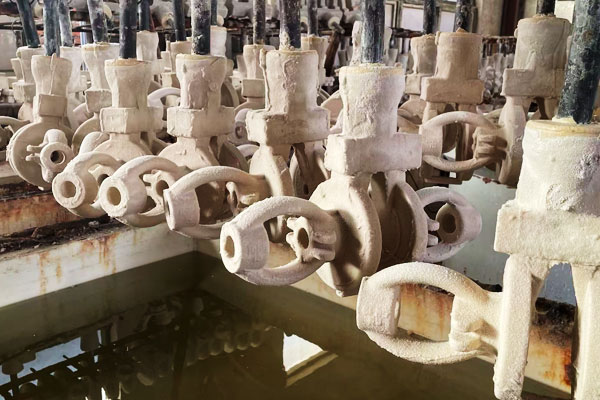
The water glass investment casting process for carbon steel valves is a multi-step systematic project, which mainly includes mold making, shell making, موهای زائد, ریختن, cleaning and heat treatment.
Its core principle is to use the fusible wax mold to replicate the valve structure, form a high-temperature resistant shell through multiple layers of coating and sanding, remove the wax mold by heating to form a cavity, and finally cast molten carbon steel to obtain the valve blank.
Core Process Flow and Key Parameters
The process flow of water glass investment casting carbon steel valves is highly standardized, and each link has strict parameter control to ensure the quality of the blank.
The key steps and technical parameters are as follows:
1. Wax Mold Preparation:
The wax mold is the basis for ensuring the dimensional accuracy of the valve. The commonly used mold material is a mixture of paraffin and low-molecular polyethylene wax, with a melting point of 52-56℃.
The injection parameters are strictly controlled: injection temperature 55-58℃, injection pressure 1-2MPa, holding time 3-5s, and standing time after injection 2-4h to eliminate internal stress of the wax mold.
For valves with complex internal flow channels, soluble cores (urea-sugar mixture, نسبت 95:5) استفاده می شود, which can be dissolved and removed with water after shell making, avoiding the difficulty of core removal for complex structures.
2. Wax Mold Assembly (Tree Grouping):
The qualified wax molds are welded to the sprue cup in a reasonable arrangement, considering the convenience of coating, ventilation and drying, and sequential solidification during pouring.
The distance between wax molds is controlled to avoid mutual influence during shell making and pouring, and the welding temperature is based on the dark red color of the welding knife to prevent scalding the wax mold.
3. Shell Making:
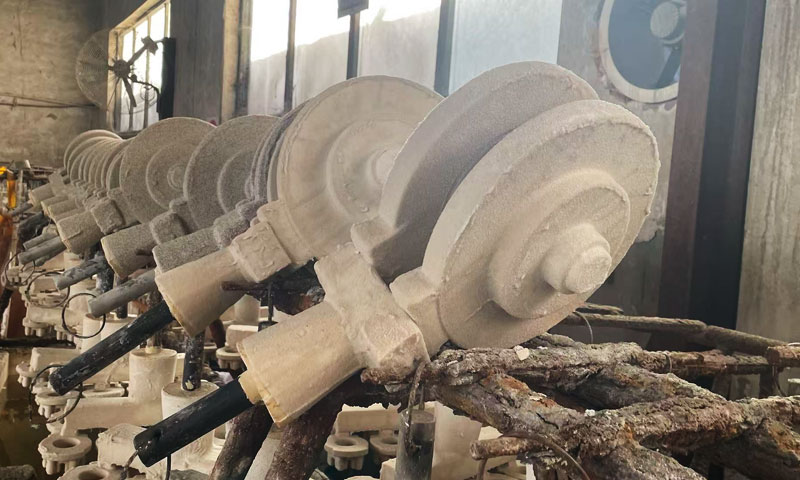
This is the core link to ensure the strength and surface quality of the mold. The shell is composed of a surface layer, a transition layer and a back layer.
The surface layer and transition layer adopt a silica sol-water glass composite process to balance surface quality and cost: the surface layer uses silica sol and 300-mesh zircon powder (نسبت 1:3.65) to improve surface finish, and the back layer uses water glass and 200-mesh gangue powder to enhance shell strength.
The key parameters of shell making are: room temperature 25±2℃, surface layer humidity 50-60%, ویسکوزیته دوغم (surface layer 38±3s, transition layer 35±3s, measured by Jane’s No. 4 viscosity cup), and each layer of sanding is dried until the shell is hard before the next layer is applied.
4. موهای زائد:
The wax mold is removed by steam dewaxing, with steam pressure 0.6-0.8MPa and dewaxing time 15-20min.
The wax removal rate should be ≥98% to avoid residual wax in the cavity, which will cause carbon defects in the valve blank.
5. Roasting and Pouring:
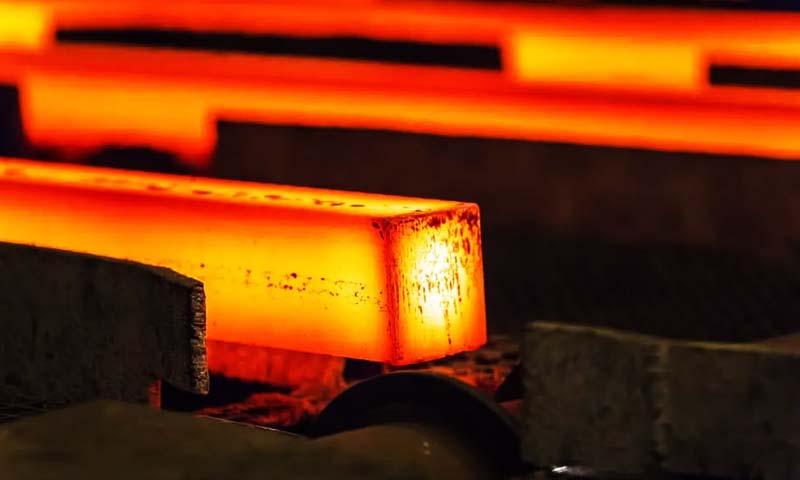
The shell is roasted at 850-950℃ for 2-3h to remove moisture and residual carbon, and improve the high-temperature stability of the shell.
The pouring temperature of carbon steel (taking WCB as an example) is 1520-1560℃, and the pouring speed is controlled according to the wall thickness of the valve: 0.5-1.0m/s for thin-walled parts and 0.3-0.5m/s for thick-walled parts to avoid splashing and porosity.
6. تمیز کردن و اتمام:
After the casting is cooled to room temperature, the shell is removed by sandblasting (aluminum oxide sand, اندازه ذرات 100-120 مش), and then the sprue, riser and burrs are removed.
For the sealing surface and flow channel of the valve, further grinding and polishing are required to meet the dimensional accuracy requirements.
5. Post-Casting Treatment of Water Glass Investment Casting Carbon Steel Valves
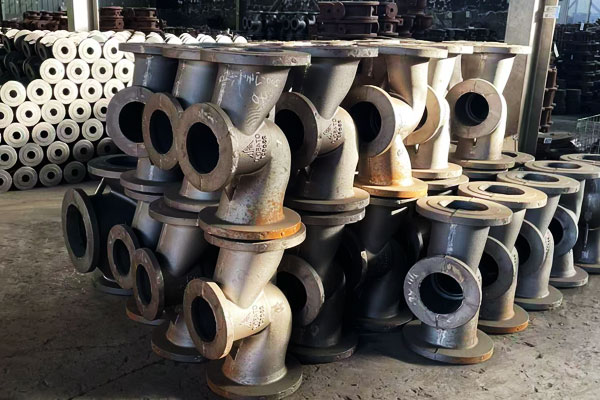
After water glass investment casting, carbon steel valves require systematic post-casting treatments to ensure ثبات ابعادی, optimized mechanical performance, کیفیت سطح, and long-term service reliability.
Stress Relief and Heat Treatment
Heat treatment is essential to relieve استرسهای باقیمانده caused by uneven cooling and solidification and to refine the ساختار for improved toughness, انعطاف پذیری, و سختی.
Key treatments include:
کاهش استرس حرارتی
- عینی: Reduce internal stresses from solidification and uneven cooling.
- پارامترها: دمای معمولی: 550–650°C for medium-carbon steels (به عنوان مثال, WCB), مدت: 1-2 ساعت, به دنبال خنک کننده آهسته.
- اثر: Residual stresses are reduced by 30–50%, minimizing پیچش دهنده, تحریف, and dimensional deviation during machining or assembly.
عادی سازی
- Procedure: Heating the casting above AC3 (~850–900°C) به دنبال خنک کننده هوا.
- هدف: ساختار دانه را اصلاح می کند, homogenizes the microstructure, سختی را بهبود می بخشد, and reduces brittleness.
- کاربرد: Especially important for high-carbon WCC valves, which are used in high-pressure or low-temperature applications where brittleness could lead to catastrophic failure.
خاموش کردن و مزاج
- Applicable Grades: High-carbon or specialized steels (به عنوان مثال, WCC) requiring higher strength and hardness.
- فرآیند: Quenching followed by tempering to achieve a balance of high yield strength and ductility.
- Critical Considerations: Cooling rates must be carefully controlled, مخصوصاً برای complex valve geometries, برای جلوگیری از cracking or distortion.
خلاصه: Heat treatment ensures uniform mechanical properties, تسکین استرس, and preparation for subsequent machining and surface finishing.
Surface Cleaning and Defect Removal
بعد از عملیات حرارتی, آماده سازی سطح ensures that the valve meets ابعادی, مهر و موم, و الزامات کیفیت سطح:
انفجار شات / انفجار
- Removes residual sand, اکسید, و مقیاس from the casting surface.
- فراهم می کند controlled surface roughness that enhances adhesion for coatings or paint.
Machining and Trimming
- Critical surfaces, صورت, سوراخ های رزوه ای, and flanges are machined to تحمل های تنگ using CNC or conventional milling.
- تضمین کردن دقت ابعادی and proper assembly fit.
Welding Repairs (در صورت لزوم)
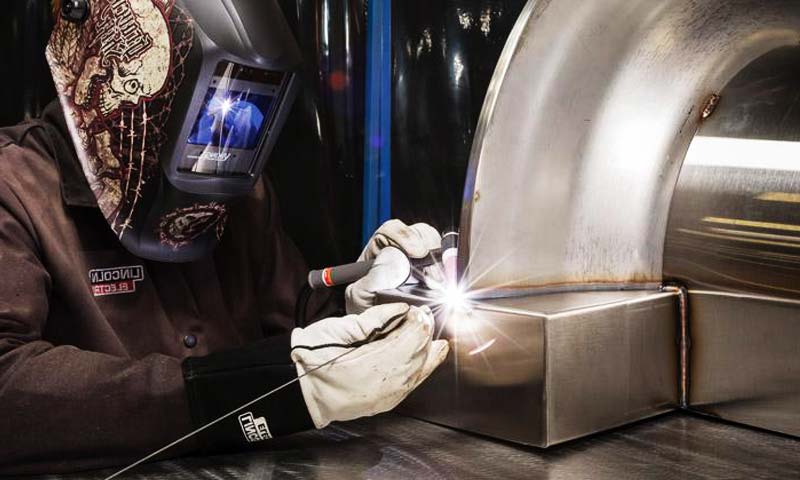
- بزرگ حفره های کوچک شدن, سوراخ, یا ترک may be repaired using TIG or MIG welding with compatible filler metals.
- Post-weld stress relief is mandatory to prevent localized distortion or stress concentrations.
This stage guarantees that valves are structurally sound and dimensionally ready for final finishing and coating.
Surface Protection and Coating
Carbon steel is susceptible to خوردگی, especially in water, بخار, روغن, or mild chemical environments. Surface treatment protects the valve and extends service life.
Typical methods include:
| Treatment Type | هدف | یادداشت ها / پارامترهای معمولی |
| Primer and Paint Coatings | Corrosion protection, especially for mild media | Epoxy-based or polyurethane coatings; thickness 50–150 µm |
| پوشش پودری | Durable and uniform protective layer | Suitable for industrial and outdoor applications; salt spray resistance ≥500 h after proper surface prep |
پوشش الکترونیکی (Electrophoretic Coating) |
Uniform coverage for complex geometries | Excellent adhesion and corrosion protection; ideal as base for additional paint layers |
| Hard-Facing / Overlay Welding | Wear resistance on sealing surfaces or valve seats | Tungsten carbide or Stellite alloys applied in critical areas |
Additional Notes:
- Surface treatments also enhance hydraulic performance, تلاطم را کاهش دهید, and prevent تخریب مواد in long-term service.
- Proper آماده سازی سطح (نظافت, blasting, چربی زدایی) is crucial for coating adhesion and corrosion resistance.
آزمایش غیر مخرب (NDT) and Functional Verification
Before final assembly, valves undergo comprehensive inspection برای اطمینان از یکپارچگی و رعایت مشخصات طراحی:
- تست اولتراسونیک (در): ترک های داخلی را تشخیص می دهد, حواس, و اجزاء.
- آزمایش رادیوگرافی (اشعه ایکس): Reveals porosity, حفره های کوچک شدن, and hidden internal defects.
- آزمایش نفوذ رنگ (PT): Detects surface cracks, particularly on sealing faces.
- Hydrostatic and pressure testing: Confirms leak-tightness and operational integrity under design pressure.
These inspections are critical for با فشار زیاد, low-temperature, or corrosive-service valves, where failure can have serious safety and economic consequences.
6. Application Scenarios and Market Positioning
Water glass investment casting carbon steel valves, with their cost-effectiveness and process adaptability, occupy an important position in the industrial valve market, and their application scenarios are closely related to their performance and precision levels.
Main Application Fields
- Petroleum and Chemical Industry: Used in medium and low-pressure pipelines for oil, gas and chemical light oil conveying,
such as gate valves, globe valves and check valves of ASTM A216 WCB material, suitable for working temperatures -29℃ to 427℃ and pressure Class 150-300. - Power Industry: Used in circulating water systems, steam pipelines and auxiliary systems of thermal power plants,
with WCB and ZG280-520 as the main materials, bearing medium pressure and medium temperature steam. - Municipal Engineering: Used in water supply and drainage pipelines, heating pipelines and natural gas pipelines,
with WCA and WCB valves as the main products, requiring low cost and reliable sealing performance. - ماشین آلات عمومی: Used in hydraulic systems, cooling systems and fuel supply systems of machinery and equipment, suitable for valves with complex structures and small batches.
Market Positioning and Competitive Advantage
Compared with other casting processes, water glass investment casting carbon steel valves have a clear market positioning:
- Compared with Silica Sol Investment Casting: The cost is 30-40% پایین, but the precision is lower.
It is suitable for medium and low-end valves with no strict requirements on surface finish, and occupies 60-70% of the medium and low-pressure valve market. - Compared with Sand Casting: It has higher precision and better surface quality, can form complex structures,
and is suitable for valves with high requirements on internal flow channels and sealing surfaces, gradually replacing sand casting in the medium-precision valve market.
7. Development Trends and Technological Innovations
With the increasing requirements of industrial systems for valve quality, efficiency and environmental protection,
water glass investment casting technology for carbon steel valves is constantly innovating, and the development trends are mainly reflected in the following aspects:
- Environmentally Friendly Binder Development: Develop low-modulus, low-toxicity water glass binders to replace traditional sodium silicate, reduce wastewater discharge and environmental pollution.
در عین حال, promote the recycling of waste sand and wax to improve resource utilization. - Process Combination Optimization: Further optimize the silica sol-water glass composite process, improve the surface quality and dimensional accuracy of castings (reach IT10-IT12),
and narrow the gap with silica sol investment casting, expanding the application in medium and high-end valves. - Digital and Intelligent Production: Introduce digital simulation technology (such as CASTsoft) to simulate the pouring and solidification process, predict and eliminate defects in advance.
Adopt automated production lines for wax injection, shell making and sandblasting to improve production efficiency and quality stability. - Material Upgrade and Performance Improvement: Develop low-temperature and high-strength carbon steel grades to expand the application of water glass investment casting valves in low-temperature (-60℃) and high-pressure (طبقه 600) working conditions,
and improve corrosion resistance through surface treatment (such as galvanizing and phosphating).
8. پایان
Water glass investment casting is a قابل اعتماد, دقیق, and environmentally friendly method for producing carbon steel valves with complex geometries.
By carefully controlling binder chemistry, shell construction, and thermal management, manufacturers can achieve high-quality valves with excellent mechanical performance, دقت ابعادی, و پایان سطح.
With the development of environmentally friendly binders, digital simulation and intelligent production,
water glass investment casting carbon steel valves will further expand their application in medium and high-end industrial fields, and play a more important role in the safety and stability of industrial fluid systems.
متداول
What is water glass investment casting?
Water glass investment casting is a precision casting process that uses a fusible wax mold coated with a water glass-based shell to create complex carbon steel valve shapes.
The wax is removed through dewaxing, and molten steel is poured into the cavity.
What are the typical carbon steel grades used for valves?
Common grades include WCB, WCA, WCC (ASTM A216) and ZG280–520 (GB/T 12229). Selection depends on pressure, درجه حرارت, and medium.
WCB is widely used for medium- and low-pressure applications, while WCC is suitable for high-pressure or low-temperature service.
How does water glass investment casting compare with silica sol casting?
Water glass casting is more cost-effective, has faster production cycles, and is suitable for medium- and low-end valves, while silica sol casting offers higher surface finish and dimensional accuracy, making it ideal for high-end valves.
What post-casting treatments are required?
Key treatments include: تسکین استرس, normalizing or tempering, ماشینکاری, defect repair, surface cleaning, و روکش (حکیم, روکش پودری, or e-coating) to ensure mechanical integrity, مقاومت در برابر خوردگی, و دقت بعدی.