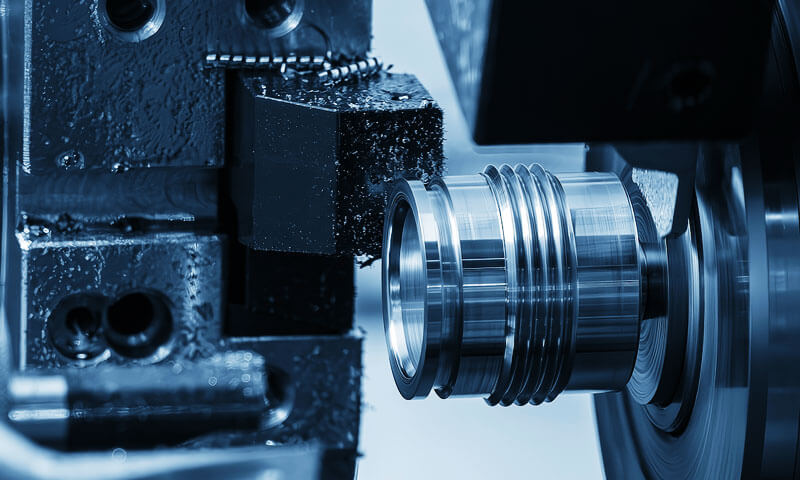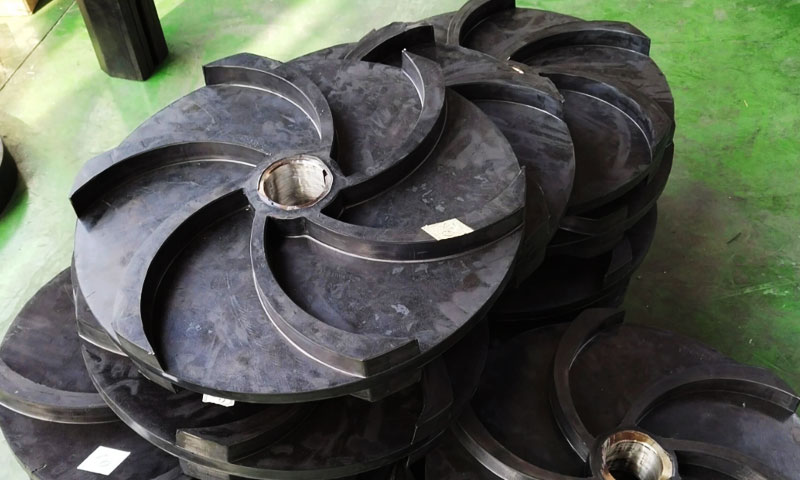
In the mining industry, component reliability is not a back-office cost concern — it is a core driver of production output and profitability.
A single failed casting — a worn slurry pump volute, a cracked crusher jaw plate, a broken lift hook — can shut down an entire processing circuit, costing operations $100,000 en exceso $500,000 per day in lost production and emergency maintenance.
Por esta razón, mining castings are far more than generic metal shapes: they are engineered wear and structural components that must perform reliably under some of the harshest operating conditions on earth: abrasive ore, acidic mine water, heavy impact loads, fatiga cíclica, y temperaturas extremas.
Too many mining operations treat wear castings as disposable commodities, sourcing the cheapest available part and accepting short service life as unavoidable.
En realidad, casting performance is highly controllable through targeted alloy selection, optimized casting process engineering, Diseño para la fabricación, and application-specific surface protection.
En la fundición LangHe, we have spent decades designing and producing custom high-performance castings for surface and underground mining, mineral processing, and bulk material handling operations.
1. What Are Mining Castings?
Mining castings are metal components produced by pouring molten metal into a mold to create parts used in extraction, aplastante, conveying, molienda, pumping, classification, and mineral-processing equipment.
Unlike simple general-purpose castings, mining components are usually designed around one or more demanding service conditions:
- Altas cargas estáticas y dinámicas
- Impact and shock loading
- Desgaste abrasivo
- Fatiga cíclica
- Erosión de lodos
- Corrosion in wet-processing environments
- Elevated local stresses
- Long operating hours with limited maintenance opportunities
The casting process is particularly valuable for the mining industry because many mining components are large, pesado, structurally complex, or difficult to manufacture economically from billet or plate.
A properly designed casting can integrate ribs, jefe, ubicaciones de montaje, pasajes de flujo curvos, thick structural sections, and complex external geometry into one component.
This reduces the need for multiple fabricated pieces and can simplify assembly while maintaining the required structural integrity.
2. Materials for Mining Castings: Choosing the Right Alloy for the Job
Material selection is one of the first decisions that determines the performance of a mining casting.
The correct alloy should be selected according to the dominant failure mechanism rather than simply choosing the hardest or strongest available material.
Por ejemplo, a component exposed to severe impact may require a stronger emphasis on toughness, while a component operating continuously in abrasive slurry may require a different microstructure and hardness level.
Carbon and Low-Alloy Steel Castings
Carbon and low-alloy steels are widely used for heavy mining components that require a combination of strength, tenacidad, y confiabilidad estructural.
Las aplicaciones típicas incluyen:
- Cajas de equipos
- Frames and supports
- Large brackets
- Wheel and hub components
- Structural connection components
- Heavy-duty machinery bodies
Their major advantage is the ability to achieve useful combinations of strength and toughness through alloy design and heat treatment.
For large mining castings, sin embargo, espesor de sección, ritmo de enfriamiento, and heat-treatment uniformity must be considered carefully because the mechanical properties obtained at the surface may not represent those in heavier sections.
High-Alloy and Wear-Resistant Steel Castings
Where abrasive wear dominates the service condition, higher-alloy cast steels may provide a better solution.
These materials are commonly selected for components exposed to:
- Sliding abrasion
- Gouging abrasion
- Repeated mineral impact
- High-velocity particle contact
- Severe ore handling
Wear resistance does not simply increase in proportion to hardness. If a component is made excessively hard without sufficient toughness, impact can result in chipping or cracking.
Por lo tanto, the practical target is usually a balance between hardness, tenacidad, microestructura, and actual wear mode.
Hierro fundido y hierro dúctil
Cast iron and ductile iron can be highly effective for selected mining applications where the combination of castability, amortiguación de vibración, maquinabilidad, and cost is favorable.
Ductile iron is particularly useful when higher mechanical performance is required compared with conventional gray iron.
It can be applied to housings, cubiertas, componentes estructurales, and other machinery parts where extreme impact or abrasion is not the dominant concern.
Material selection should still consider section size, estructura matricial, tratamiento térmico, y entorno de servicio.
Stainless and Specialty Alloys
Wet mineral processing creates a different set of challenges.
En estos entornos, components may encounter water, chloride-containing solutions, químicos corrosivos, and abrasive solids simultaneously.
Aceros inoxidables, aceros inoxidables dúplex, and other specialty alloys may therefore be considered for:
- Tripa de la bomba
- Impulsores
- Cuerpos de válvula
- Múltiples
- Flow-control components
- Equipos de procesamiento químico
En estas aplicaciones, corrosion and wear may act simultaneously, so selecting an alloy solely for mechanical strength is not sufficient.
3. The Main Failure Mechanisms in Mining Castings
Mining castings fail in predictable, diagnosable patterns. Understanding these failure modes is the first step to extending service life.
Desgaste abrasivo
Abrasive wear is the single most common failure mode, accounting for roughly 45% of all mining casting replacements.
It occurs when hard ore particles, arena de sílice, or slurry scours across component surfaces, progressively removing material.
In high-tonnage slurry systems, unlined cast iron elbows can wear through in as little as 3–6 months when handling high-silica ore. Wear rate scales with particle hardness, velocidad, and impingement angle.
Impact Fatigue & Fractura
Repeated impact loading — from crushing, dumping, or heavy material impact — initiates microcracks at stress concentrations, which propagate with each cycle until catastrophic fracture.
This is the most common failure mode for crusher hammers, dientes de cubo, and grizzly bars.
Brittle alloys such as white iron are particularly susceptible to impact fracture under heavy or large-particle loading.
Erosion-Corrosion
In acidic or sulfidic mine water and slurry environments, corrosion and abrasion act synergistically.
Corrosion weakens the surface layer, which is then quickly abraded away by slurry, exposing fresh material to further corrosion.
This combined mode degrades components 2–4x faster than either mechanism alone, and is the leading cause of premature failure in slurry pump and piping components.
Structural Overload
Sudden heavy loads — such as bucket impact, hoist lifting events, or jammed crushers — can exceed yield strength and cause permanent deformation or catastrophic fracture.
These failures are often sudden and carry significant safety and production risk.
Thermal Fatigue
In high-temperature processing operations such as kilns, roasters, and smelting feed systems, cyclic heating and cooling creates thermal stress that initiates surface cracking.
Con el tiempo, cracks propagate and component integrity is lost.
4. How Casting Process Selection Affects Mining Component Performance
For mining components, casting process selection directly affects casting soundness, estabilidad dimensional, requisitos de mecanizado, calidad de la superficie, y confiabilidad del servicio.
A crusher housing, slurry pump casing, valve body, or large structural casting may all be manufactured by casting, but their process requirements can be very different.
The correct casting route should be determined by the component’s size, geometría, aleación, espesor de la pared, service load, volumen de producción, requisitos dimensionales, internal quality requirements, and machining strategy.
No single casting process is universally superior.
Comparison of Major Casting Processes for Mining Components
| Proceso de fundición | Typical Mining Applications | Ventajas clave | Principales limitaciones |
| Fundición de arena | Large pump casings, carcasas de trituradoras, marcos, cubiertas, heavy structural parts | Highly flexible; suitable for large and heavy castings; supports a wide range of alloys; relatively economical tooling | More machining may be required; surface finish and dimensional accuracy are generally lower than precision casting processes |
| V-Process Casting | Large pump bodies, cuerpos de válvula, alojamiento, cubiertas, marcos, complex heavy industrial castings | Dry unbonded sand; vacuum molding; good surface reproduction and dimensional consistency; low binder-related gas generation; Adecuado para moldes grandes; high sand reclaimability | Requires vacuum equipment and dedicated process control; internal cores and complex passages require careful design |
| Casting de inversión | Small-to-medium precision valve parts, corchetes, impeller-related components, complex flow-control parts | Excellent geometric detail; alta precisión dimensional; forma cercana a la red; reduced machining allowance | Higher tooling and process cost; unsuitable for many very large components |
Casting de espuma perdida |
Carcasas complejas, selected pump components, customized heavy industrial parts | Can reproduce complex geometry; flexible pattern design; useful for integrated shapes | Sensitive to pattern quality, revestimiento, relleno, and gas evacuation |
| Casting de died de gravedad | Selected aluminum and other non-ferrous mining components | Good repeatability; relatively good surface finish; suitable for repetitive production | Mayor costo de herramientas; limited by die geometry and component size |
| Fundición de moho permanente | Selected non-ferrous housings, cubiertas, y componentes mecánicos | Consistent mold dimensions; buena calidad superficial; repeatable production | Higher tooling investment; less flexible for large or highly complex parts |
5. Surface Finishing and Wear Protection
The bulk properties of the casting provide the foundation for mining-service performance, but the surface is often where the most severe wear, impacto, fatiga, or corrosion occurs.
Por esta razón, targeted surface treatment can significantly improve component durability when it is matched correctly to the actual failure mechanism.
The objective is not to apply the most aggressive treatment to the entire component.
A more effective approach is often to combine a tough, cost-effective base alloy with localized surface protection on the areas exposed to the highest wear or corrosion.
| Tratamiento superficial | Función & Mecanismo | Potential Performance Benefit* | Typical Mining Applications |
| Hardfacing Overlay | A wear-resistant alloy is deposited onto selected working surfaces to provide high hardness and resistance to abrasive or impact wear. Typical overlay materials include Stellite and chromium-carbide-based systems. | About 50–150% longer wear life in suitable applications | Crusher wear edges, labios de cubo, slurry elbows, localized wear zones |
| Disparó a Peening | Produces controlled compressive residual stress at the surface, helping reduce the tendency for fatigue cracks to initiate and propagate. | About 30–70% improvement in fatigue life in suitable applications | Impact-loaded components, martillo, manos, componentes de suspensión |
| Goma & Polyurethane Lining | A bonded elastomer layer provides a sacrificial wear surface and helps absorb particle impact while reducing direct contact between the slurry and metal substrate. | Up to 2–4× longer service life for suitable slurry components | Slurry pipes, alza de bombas, classifier tanks |
Chemical Passivation |
Creates a more uniform passive surface on stainless steel and duplex alloys by removing free iron and surface contamination. | Resistencia a la corrosión mejorada where proper surface preparation and process control are maintained | Corrosive slurry components, dewatering valves, flotation equipment |
| Thermal Spray Coating | Flame- or plasma-sprayed ceramic or cermet coatings provide a hard protective surface for selected wear and temperature conditions. | About 60–120% longer service life in suitable elevated-temperature applications | Kiln components and high-temperature process wear parts |
*Actual improvement depends strongly on the base material, coating or treatment system, condiciones de funcionamiento, wear mechanism, and application quality.
These figures should therefore be treated as representative rather than universal performance guarantees.
6. Key Products We Make for the Mining Casting Industry
LangHe Foundry provides custom cast components for mining machinery and mineral-processing equipment.
The specific alloy and casting route are selected according to component geometry and service conditions.
Crusher and Crushing Equipment Components
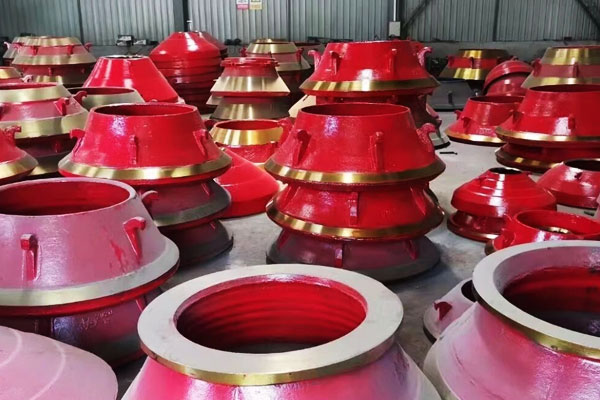
Crushing equipment experiences some of the most severe impact and abrasion conditions in mining.
Typical custom cast components include:
- Crusher housings
- Marcos
- Wear-related components
- Mounting components
- Soportes estructurales
- Custom brackets and connecting parts
Mining Pump Casings and Flow Components
Mining pumps can handle abrasive slurry, making erosion resistance and hydraulic performance particularly important.
LangHe can manufacture custom:
- Tripa de la bomba
- Cubiertas
- Impulsores
- Múltiples
- Flow bodies
- Mounting components
Valve Bodies and Flow-Control Components
Mining and mineral-processing systems use valves for slurry, agua, químicos, and process fluids.
Typical cast components include:
- Cuerpos de válvula
- Cubiertas
- Bonnet components
- Custom manifolds
- Flow-control housings
- Connection components
Alojamiento, Marcos, Hubs, and Structural Components
Large mining machines rely on numerous structural castings to transfer loads and maintain alignment.
Los productos típicos incluyen:
- Cajas de rodamientos
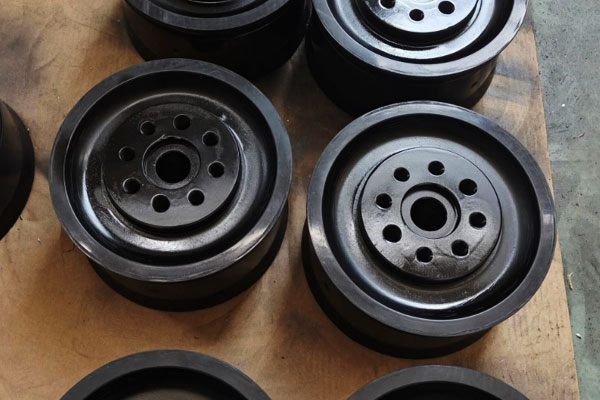
- Wheel hubs
- Carcasa de equipo
- Marcos estructurales
- Soporte de soporte
- Cubiertas
- Mounting bases
- Mechanical connection components
Custom Mineral-Processing Components
Mineral-processing equipment may contain complex flow passages and highly localized wear areas.
Custom castings allow these geometries to be integrated into the component while maintaining the required structural strength.
7. Benefits of Our Products for the Mining Casting Industry
Engineered custom mining castings can provide clear operational and economic advantages over standard commodity castings, especially in equipment exposed to severe abrasion, impacto, vibración, and continuous-duty conditions.
The main value comes from matching the material, casting design, and manufacturing process to the actual working environment.
Vida útil extendida
Based on field data from our mining customers, LangHe application-engineered castings have achieved approximately 30–60% longer service life than standard imported commodity castings in comparable applications.
Longer service life reduces replacement frequency and can also reduce the labor and maintenance effort associated with component changeouts.
Reduced Unplanned Downtime
Consistent and predictable casting performance can help reduce unexpected failures caused by premature wear or casting-related defects.
Our customer data indicates approximately 45% fewer unplanned breakdown events related to casting failure after switching to LangHe-engineered mining components in applicable applications.
For continuously operating mining equipment, this reliability is particularly important because an unexpected component failure can interrupt not only one machine but also connected production operations.
Menor costo total de propiedad
Engineered mining castings may involve a 15–30% higher initial cost than the lowest-priced commodity alternatives. Sin embargo, purchase price alone does not reflect the actual operating cost of a component.
In applicable customer cases, the combination of longer service life and reduced downtime has resulted in an estimated 25–40% lower cost per operating hour compared with lower-cost alternatives.
For mining operators, this makes total cost of ownership a more useful measure than unit price alone.
Batch-to-Batch Consistency
Mining equipment requires predictable component performance from one production run to the next.
Controlled alloy verification, casting parameters, tratamiento térmico, mecanizado, and inspection help maintain consistent mechanical and dimensional properties across batches.
This is particularly important for wear components and heavily loaded castings.
Variations in hardness, microestructura, Calidad de fundición, or dimensions can otherwise lead to inconsistent wear rates, premature failure, and less predictable maintenance intervals.
Site-Specific Engineering
LangHe does not treat mining castings as one-size-fits-all catalog products. Components can be engineered according to the actual service conditions, incluido:
- Ore type and abrasiveness
- Slurry characteristics and pH
- Processing capacity and tonnage
- Impact and loading conditions
- Component geometry and installation requirements
- Dominant wear mechanism
This approach allows material selection, casting design, tratamiento térmico, mecanizado, and surface protection to be considered as one complete manufacturing solution.
The result is a mining casting designed not only to meet the required drawing and dimensions, but also to provide predictable performance, extended service life, and lower operating cost in its intended mining environment.
8. LangHe Foundry’s Approach to Custom Mining Castings
Langhe Foundry follows a structured, customer-focused approach for every mining casting project.
Proceso paso a paso
| Escenario | Actividad | Entregable |
| 1. Consultation | Understand application, loads, ambiente, and failure history | Requirements specification |
| 2. Selección de material | Recommend optimal alloy and heat treatment | Material datasheet |
| 3. DFM & simulación | Optimize design for casting and performance | Design review report |
| 4. Estampación | Design and manufacture patterns, matrices, and cores | Tooling package |
| 5. Fundición | Produce castings using the optimal process | Sound castings |
| 6. Tratamiento térmico | Achieve specified microstructure and properties | Heat treatment certificate |
| 7. Mecanizado | CNC machine critical features | Dimensional report |
| 8. Acabado superficial | Apply wear protection or corrosion protection | Finish specification |
| 9. Inspección | NDT, dimensional, mecánico, and chemical testing | Quality certificate |
| 10. Entrega | Package and ship to customer | On-time delivery |
Seguro de calidad
LangHe Foundry maintains a rigorous quality management system:
- ISO 9001:2015 certificado
- Full material traceability
- Spectrometry for chemical analysis
- De tensión, dureza, and impact testing
- radiografía, ultrasónico, and dye penetrant inspection
- CMM dimensional inspection
9. Conclusión
Mining castings are far more than disposable metal consumables.
They are critical engineered components whose performance directly drives mine productivity, maintenance cost, y seguridad.
Abrasión, impacto, corrosión, and fatigue are not inevitable — they are predictable failure modes that can be managed and minimized through targeted alloy selection, optimized casting process design, DFM optimization, and targeted surface protection.
The biggest mistake mining operations can make is sourcing castings on purchase price alone.
The 10–20% saved on a cheap casting will be lost many times over in premature replacement, unplanned downtime, and lost production.
Working with an experienced foundry partner that understands mining operating conditions and engineers components for specific failure modes delivers a far lower total cost of ownership and higher overall equipment availability.
As global mining operations continue to push for higher production rates, deeper ore bodies, and lower operating costs, high-performance custom castings will remain a foundational driver of reliability and efficiency.
Foundries that combine application engineering expertise, process versatility, and rigorous quality control will remain central to enabling this performance.
Preguntas frecuentes
How can mining castings be made more wear-resistant?
Wear resistance can be improved through appropriate alloy selection, tratamiento térmico, microstructural control, optimized geometry, y, donde se aplica, hardfacing or other surface-protection methods.
Is casting better than forging for mining components?
Neither process is universally better. Casting is particularly advantageous for large, pesado, or geometrically complex components, while forging can be preferred for certain high-strength applications.
The correct choice depends on component geometry, material, cargando, volumen de producción, y requisitos de rendimiento.
Can you reverse engineer and replace obsolete mining castings?
Sí. We can reverse engineer existing worn or broken castings via 3D scanning and dimensional measurement, reproducing the original geometry or upgrading the alloy and design for improved performance.
This is particularly valuable for older mining sites with obsolete OEM part numbers.
What materials are best for mining crusher wear parts?
Acero alto manganeso (Hadfield) is best for high-impact crushing. High chrome white iron is best for high-stress abrasion with low impact. The choice depends on the specific crushing application.
Can LangHe produce large mining castings?
Sí. LangHe produces castings from 0.1 kg to over 10,000 kg, dependiendo del proceso y aleación.
Does LangHe provide design support?
Sí. LangHe provides DFM analysis, simulación de fundición, selección de material, and reverse engineering support.