

Introducción
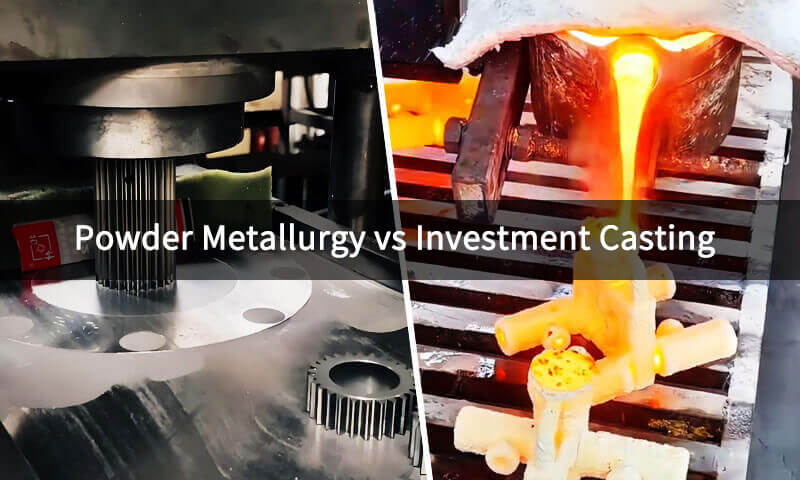
Entre la infinidad de métodos de fabricación, Se destacan dos tecnologías claramente diferentes, aunque a menudo competitivas.: fundición a la cera perdida y metalurgia de polvos (P.M).
Fundición a la cera perdida, Un proceso milenario perfeccionado gracias a la moderna ciencia de los materiales., Ofrece libertad geométrica y versatilidad de aleaciones incomparables..
Metalurgia en polvo, una innovación del siglo XX, ofrece una eficiencia material excepcional, altas tasas de producción, y porosidad controlada para aplicaciones especializadas.
A primera vista, Ambos procesos producen piezas metálicas casi en forma con un mecanizado mínimo..
Pero sus principios subyacentes (solidificación a partir de metal fundido versus sinterización a presión de polvos sólidos) conducen a reglas de diseño radicalmente diferentes., capacidades materiales, propiedades mecánicas, y escalas económicas.
Elegir entre estas dos tecnologías requiere una comprensión integral no solo de los costos de producción sino también de los requisitos mecánicos., complejidad de la geometría, volumen de producción, selección de material, y rendimiento del servicio a largo plazo.
1. Comprender la fundición a la cera perdida
Fundición a la cera perdida, también conocido como fundición a la cera perdida, Es un proceso de formación de metales de precisión en el que un patrón de cera se recubre con una capa de cerámica refractaria., La cera se derrite, y la cavidad resultante se llena con metal fundido.
Después de la solidificación, se retira la cubierta de cerámica, revelando un componente metálico con forma casi neta con un acabado superficial y una precisión dimensional excepcionales.
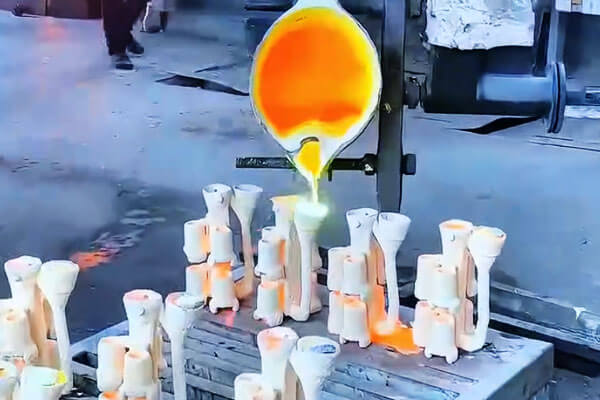
El proceso se remonta a 5,000 años a las civilizaciones antiguas en Egipto, Porcelana, y mesopotamia, donde se utilizó para estatuas de bronce y joyas..
Hoy, Es un método de fabricación de alta tecnología para palas de turbinas aeroespaciales., implantes médicos, componentes de armas de fuego, y válvulas industriales.
Fundamentos de proceso
| Escenario | Paso | Detalle clave |
| 1 | Producción de patrones | Cera (o termoplástico) inyectado en matriz de metal de precisión (herramienta). |
| 2 | Montaje del árbol | Múltiples patrones unidos a un bebedero central. (árbol de cera). |
| 3 | Edificio de conchas | 6-10 capas de lechada cerámica (Sola de sílice) + estuco refractario (circón/alúmina). |
| 4 | Rocío | El autoclave de vapor derrite la cera; la concha permanece hueca. |
| 5 | Disparo de proyectiles | 900Cocción a -1100°C para fortalecer la cerámica y eliminar los volátiles. |
| 6 | Fusión & torrencial | Metal fundido en horno de inducción; vertido en una cáscara precalentada. |
| 7 | Knockear & cierre | Cáscara eliminada por vibración; componentes cortados del árbol. |
| 8 | Refinamiento | Molienda, disparo, tratamiento térmico, inspección END. |
Características clave
| Característica | Descripción |
| Geometría | Complejidad muy alta; subvenciones, pasajes internos, paredes delgadas (≥0.5 mm). |
| Acabado superficial | As-cast Ra 1,6‑6,3 µm; se puede pulir a Ra <0.4 µm. |
| Tolerancia | ±0,1‑0,3 mm por 25 mm típico. |
| Materiales | Casi cualquier aleación moldeable: acero carbono, inoxidable, Superáctil, titanio, aluminio, bronce. |
| Tamaño de la pieza | Gramos a ~150 kg (acero). |
| Volumen | Económico de 100 a 10,000+ piezas/año. |
| Chatarra | Mínimo (forma casi neta). |
2. Entendiendo la metalurgia de polvos
Metalurgia en polvo Es un proceso de fabricación en el que se compactan polvos metálicos finos. (apretado) en un molde rígido y luego calentado (sinterizado) por debajo del punto de fusión para unir las partículas en un componente sólido.
A diferencia de la fundición a la cera perdida, que implica un cambio de fase de líquido a sólido, el PM es un proceso de estado sólido que conserva las características químicas y microestructurales del polvo..
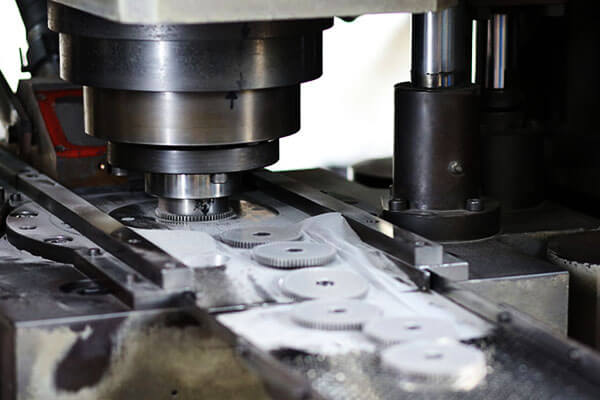
La industria moderna de PM surgió en la década de 1920 con la producción de cojinetes autolubricantes y filamentos de lámparas de tungsteno..
Hoy, es un maduro, tecnología de fabricación de alto volumen, con la industria automotriz consumiendo más 70% de todas las piezas ferrosas de PM a nivel mundial.
Fundamentos de proceso
| Escenario | Paso | Detalle clave |
| 1 | producción de polvo | Atomización de agua o gas., electrólisis, reducción; tamaño/forma de partículas controladas. |
| 2 | Mezcla | Polvos mezclados con lubricantes. (0.5-1,5%) y adiciones de aleaciones (P.EJ., grafito). |
| 3 | Compactación (prensado) | Prensado uniaxial en troquel rígido; presión 200‑800MPa; densidad verde 70‑85%. |
| 4 | Sinterización | Calefacción en atmósfera controlada (gas endotérmico, N₂‑H₂) al 70-90% del punto de fusión (normalmente entre 1120 y 1150 °C para hierro). |
| 5 | Operaciones secundarias opcionales | Apresto, acuñar, tratamiento térmico, infiltración, mecanizado, impregnación de resina. |
Características clave
| Característica | Descripción |
| Geometría | Complejidad moderada (2formas D); socavados limitados; ángulos de tiro restringidos. |
| Acabado superficial | Sinterizado Ra 3‑12 µm; se puede mejorar dimensionando/acuñando. |
| Tolerancia | ±0,05‑0,1 mm por 25 mm (después de dimensionar). |
| Materiales | Principalmente ferroso (hierro, acero, inoxidable), a base de cobre, tungsteno, y aleaciones especializadas. El titanio y el aluminio son posibles pero menos comunes.. |
| Tamaño de la pieza | Típicamente <10 kg, <300 diámetro mm. |
| Volumen | Económico de 5,000 a millones de partes/año. |
| Chatarra | >95% utilización de materiales. |
3. Principios de fabricación: En qué se diferencian los procesos
| Aspecto | Casting de inversión | Metalurgia en polvo |
| Material de partida | Metal fundido (fase liquida). | polvo metálico (fase sólida). |
| cambio de fase | Líquido → Sólido (solidificación). | Sólido → Sólido (enlace de difusión). |
| Fuente de energía | Calor para derretir + torrencial. | Presión + calor (sinterización). |
| Requisito de molde | Carcasa de cerámica de un solo uso (por parte). | Troquel metálico reutilizable (miles de ciclos). |
| Tiempo de ciclo | Horas (edificio de conchas) a dias. | Artículos de segunda clase (prensado) + horas (lote de sinterización). |
| Costo de herramientas | Moderado (troqueles de cera $5‑20k). | Alto (troqueles de prensa $10‑50k). |
| Intensidad laboral | Alto (la construcción del caparazón es manual). | Bajo (prensado automatizado). |
| control dimensional | A través de la contracción de la cáscara + patrón de cera. | A través de la precisión del troquel + contracción de sinterización. |
Diferencia fundamental: El casting de inversión es un fundición de precisión en forma de red proceso; PM es un consolidación de polvo proceso.
El primero ofrece una libertad geométrica casi infinita.; este último ofrece una eficiencia material casi infinita.
4. Compatibilidad de materiales y flexibilidad de aleaciones
| familia de materiales | Casting de inversión | Metalurgia en polvo |
| Acero carbono | Sí (amplia gama) | Sí (Material PM más común) |
| Acero de baja aleación | Sí | Sí (Fe-Cu-C, Fe-Ni-Mo-Cu) |
| Acero inoxidable | Excelente (CF-8, CF‑8M, 17-4ph) | Sí (304L, 316L, 410L, 17-4ph) |
| Superalloys de níquel | Excelente (Incomparar 718, 625, Reno) | Limitado (alto costo; especializado) |
| aleaciones de cobalto | Excelente (Co‑Cr‑Mo) | Limitado |
| Titanio | Excelente (Calificación 5, CP) | Posible (alto costo, reactivo) |
| Aluminio | Sí (A356, 380) | Limitado (problemas de oxido; extraño) |
| Cobre / bronce | Sí (C90500, C93200) | Excelente (Cu, latón, bronce) |
| Tungsteno / aleaciones pesadas | Difícil (punto de fusión alto) | Excelente (W-Ni-Fe, W-Ni-Cu) |
| Compuestos cerámico-metal | No es posible | Sí (cermet, WC‑Co) |
Información clave: Ofertas de casting de inversión flexibilidad de aleación sustancialmente más amplia, particularmente para alto punto de fusión, reactivo, o aleaciones difíciles de prensar (titanio, Superáctil, cromo-cobalto).
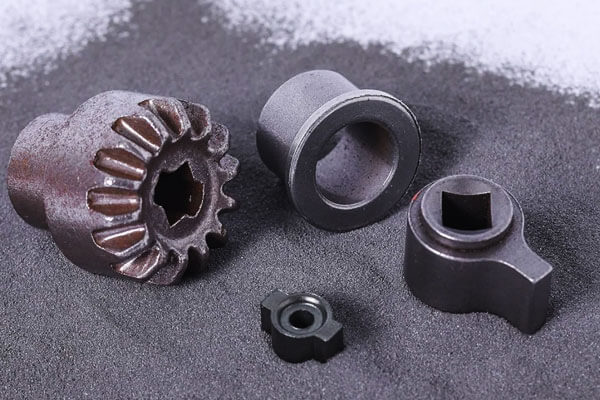
La pulvimetalurgia destaca en el sector ferroso, a base de cobre, y materiales a base de tungsteno, así como composites que no pueden colarse debido a inmiscibilidad o segregación.
5. Precisión dimensional y acabado superficial
| Criterio | Casting de inversión | Metalurgia en polvo |
| Tolerancia típica (mm/25mm) | ±0,1‑0,3 | ±0,05‑0,1 (sinterizado) ±0,025‑0,05 (tamaño/acuñado) |
| Acabado superficial (Real academia de bellas artes, µm) | 1.6-6,3 (asombrado) | 3-12 (sinterizado) 0.8-3 (tamaño/acuñado) |
| Estabilidad de tolerancia | Bien (contracción de la cáscara consistente) | Excelente (precisión del troquel; variables de sinterización) |
| Ángulo de salida requerido | No (Los patrones de cera se eliminan sin borrador.) | Sí (para la extracción de piezas del troquel) |
| Trapos / características internas | Transmitir directamente | Debe ser mecanizado (no puedo presionar hilos) |
Que es mejor? Para geometrías complejas con detalles finos y acabado superficial de alto nivel, el casting de inversión es superior.
Para geometrías simples que requieren tolerancias extremadamente ajustadas (especialmente después de operaciones secundarias), PM tiene una ventaja.
6. Complejidad de la geometría y libertad de diseño
| Característica de diseño | Casting de inversión | Metalurgia en polvo |
| Subvenciones | Sí (patrón de cera se puede montar) | No (la extracción del troquel requiere tracción directa) |
| Pasajes internos | Sí (núcleos cerámicos) | No (no se pueden presionar las características huecas) |
| Paredes delgadas | 0.5-1,5 mm alcanzable | 1.5-2,5 mm mínimo |
| Bellas características (letras, logotipos) | Excelente reproducción | Limitado (debe ser acuñado o mecanizado) |
| Espesor de sección variable | Sí (puede estrecharse suavemente) | Limitado (densidad uniforme requerida) |
| Asimétrico / formas orgánicas | Excelente | Pobre (El prensado prefiere paredes uniformes.) |
| 3complejidad D | Alto | Moderado (esencialmente 2.5D) |
El microcasting gana decisivamente en complejidad geométrica.
La capacidad de crear socavaduras., canales internos curvos, contornos organicos, y los finos detalles de la superficie no tienen comparación con la metalurgia de polvos., que está limitado por el troquel de prensado y el requisito de compactación uniaxial.
7. Propiedades mecánicas y rendimiento estructural.
| Propiedad mecánica | Casting de inversión | Metalurgia en polvo |
| Densidad típica | 99-100% del teórico | 85-98% (dependiendo del prensado y sinterizado) |
| Resistencia a la tracción | Bien (como forjado en fundiciones sonoras) | Moderado-bueno (depende de la densidad) |
| Fuerza de rendimiento | Comparable a la forjada | 10-30% menos que el forjado (efecto de porosidad) |
| Alargamiento | 10-35% (austenítico) | 2-15% (dependiente de la densidad) |
| Dureza | 80-600 HB (dependiente de la aleación) | 60-400 HB (Dependiendo del material) |
| Fatiga | Moderado (sensible a la muesca) | Más bajo (La porosidad actúa como generador de tensión.) |
| Dureza de impacto | Bien (Dependiendo de la aleación) | Más bajo (la porosidad se vuelve frágil) |
| Uniformidad | Estructura fundida (ramificado) | Estructura sinterizada (poroso, isotrópico) |
| Respuesta de endurecimiento del trabajo | Limitado (asombrado) | La estructura sinterizada se puede tratar térmicamente |
Comparación clave: Las piezas de fundición a la cera perdida son completamente denso y, cuando se lanza correctamente, acercarse a las propiedades forjadas (90-95% de los valores falsificados).
Piezas de pulvimetalurgia, incluso en grados de alta densidad (≥95% teórico), Tienen porosidad residual que reduce la ductilidad., tenacidad, y rendimiento ante la fatiga.
Para cuestiones críticas de seguridad, carga alta, o aplicaciones propensas a impactos, Se prefiere el casting de inversión.
8. Densidad, Porosidad, y Calidad Interna
| Aspecto | Casting de inversión | Metalurgia en polvo |
| Densidad típica | 99-100% (completamente denso) | 85-98% (porosidad residual) |
| Tipo de porosidad | Contracción o gas (aleatorio, evitable) | Interconectados y cerrados (inherente) |
| Control de porosidad | Diseño de puerta/ascendente; CADERA reduce la porosidad | Presión de compactación; atmósfera de sinterización |
| Estanqueidad a la presión | Excelente (Posibilidad de piezas fundidas estancas) | Pobre (poroso, requiere sellado) |
| Distribución de densidad | Uniforme en todas partes | Denso cerca de las caras del puñetazo.; inferior cerca del centro (gradiente de compactación) |
| Aplicabilidad de la cadera | Común (cierra la porosidad) | Extraño (poros ya cerrados; HIP agrega costo) |
| Limpieza interna | Bien (inclusiones posibles) | Excelente (los polvos están limpios) |
Información clave: La fundición a la cera perdida produce piezas completamente densas que son herméticas a la presión y pueden tratarse térmicamente sin ampollas..
piezas de PM, a menos que se procese especialmente (P.EJ., compactación en caliente, doble prensado, CADERA), Tienen porosidad residual que limita la estanqueidad a la presión y ciertas respuestas al tratamiento térmico..
9. Volumen de producción y economía de la fabricación
| factor económico | Casting de inversión | Metalurgia en polvo |
| Costo de herramientas | Moderado ($5- Troquel de cera de 20k) | Alto ($10- Troquel de prensa de 50k) |
| Vida útil | 50,000-200.000 ciclos de cera | 500,000-1.000.000 de ciclos de prensa |
| Costo de materia prima | Más alto (cera, cerámico, metal) | Más bajo (polvo, lubricante) |
| Utilización de materiales | 85-95% | >95% (chatarra casi nula) |
| Tiempo de ciclo | Minutos a horas (manual) | <1 segundo (prensado) |
| Intensidad laboral | Alto (edificio de conchas) | Bajo (automatizado) |
| Volumen de equilibrio | ~100‑1000 piezas/año | ~5.000-10.000 piezas/año |
| Tiempo de entrega (fileteado) | 8-16 semanas | 6-10 semanas |
| Costo por pieza (volumen bajo, <500) | Moderado-alto | Muy alto (utillaje amortizado) |
| Costo por pieza (volumen medio, 5k-50k) | Bajo | Muy bajo |
| Costo por pieza (alto volumen, >100k) | Bajo (pero el PM es menor) | El más bajo |
Regla de decisión de costos:
- <1,000 piezas/año → Fundición a la cera perdida (utillaje amortizado).
- 1,000-5.000 piezas/año → Ambos posibles; comparar en complejidad.
- >10,000 piezas/año → Pulvimetalurgia (ahorros de costos dramáticos).
- >100,000 piezas/año → PM es el claro ganador.
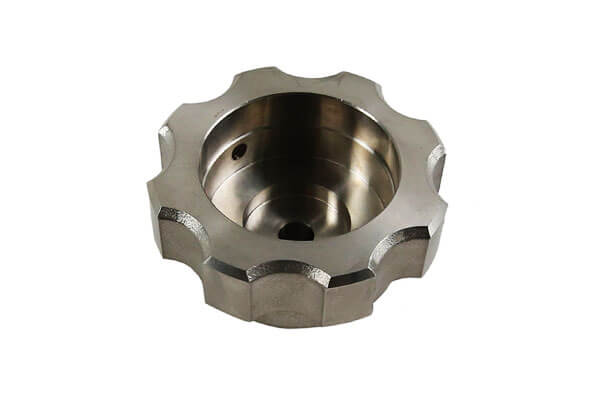
10. Aplicaciones de la industria: Fundición a la cera perdida versus metalurgia de polvos
| Industria | Casting de inversión | Metalurgia en polvo |
| Automotor | ruedas de turbocompresor, múltiples de escape (inoxidable) | Engranaje, pañales, centros de sincronización, bordes de conexión (PM a base de Fe) |
| Aeroespacial | Hojas de turbina, boquillas de combustible, carcasas estructurales (Superáctil, titanio) | Aplicaciones más ligeras: arandelas de empuje, bujes, filtros |
| Médico | Implantes ortopédicos (tallos de cadera, bandejas de rodilla), instrumentos quirúrgicos | tornillos ortopedicos (Mim, un derivado de PM), placas de huesos |
| Aceite & gas | Cuerpos de válvula, impulsores de la bomba, conectores submarinos (inoxidable/dúplex) | Elementos filtrantes, contrapesos de equilibrio de aleación pesada de tungsteno |
Armas de fuego |
Receptores, desencadenantes, componentes supresores (17-4ph) | Mecanismos de activación, seguidores de la revista, resortes de retroceso |
| Maquinaria industrial | Alza de bombas, cuerpos de válvula, cajas de cambios (acero inoxidable/hierro fundido) | Engranaje, cámaras, rodillos, aspectos, usar platos |
| Eléctrico | Componentes de aparamenta, disipadores de calor | contactos electricos, núcleos magnéticos, portaescobillas |
| Bienes de consumo | Ver casos, accesorios de hardware, artículos decorativos | Componentes de bloqueo, partes de cremallera, pequeños soportes |
11. Ventajas y limitaciones de la fundición a la cera perdida
Ventajas
- Excepcional complejidad geométrica – socavados, pasajes internos, paredes delgadas, formas orgánicas.
- Amplia flexibilidad de aleación – casi cualquier metal moldeable, incluyendo superaleaciones y titanio.
- Excelente acabado superficial – Ra 1,6‑6,3 µm en estado fundido; Se puede pulir hasta casi un espejo..
- Forma casi neta – mínimo desperdicio de material; ratio de compra-vuelo <1.5:1.
- No se requiere borrador – paredes verticales posibles.
- Piezas fundidas estancas a la presión – se puede soldar y tratar térmicamente.
- Patrimonio probado – miles de años; amplios datos y estándares.
Limitaciones
- Alta intensidad laboral – la construcción del caparazón es manual, dependiente de la habilidad.
- Tiempo de ciclo lento – días desde el patrón hasta la pieza terminada.
- Limitación de tamaño – máximo práctico ~150 kg.
- Mayor costo en volúmenes bajos – amortización de herramientas.
- Riesgo de porosidad – la contracción y la porosidad del gas requieren un control de proceso sólido.
- Limitado a aleaciones moldeables – alto punto de fusión, No se pueden utilizar materiales no moldeables..
12. Ventajas y limitaciones de la metalurgia de polvos
Ventajas
- Utilización superior del material - >95% libre de chatarra; sostenible.
- Altas tasas de producción – ciclo de prensado <1 segundo; sinterización continua.
- Excelente consistencia dimensional – precisión controlada por matriz.
- Bajo costo por pieza en grandes volúmenes.
- Porosidad controlada – para filtros, rodamientos autolubricantes, electrodos de bateria.
- Bien, estructura de grano uniforme – sin defectos de fundición.
- Capacidad para mezclar aleaciones. – crear composiciones únicas que no son posibles mediante fusión.
- Buena maquinabilidad – muchas aleaciones de PM contienen elementos que mejoran el mecanizado.
Limitaciones
- Complejidad geométrica limitada – esencialmente 2.5D; sin socavaduras, pasajes internos.
- Ángulos de salida requeridos – para expulsión de piezas de troqueles.
- Propiedades mecánicas inferiores – la porosidad residual reduce la ductilidad y la fatiga.
- Restricciones de tamaño y peso - <10 kg, <300 mm típico.
- La porosidad limita la estanqueidad a la presión. – sellado requerido para aplicaciones de manejo de fluidos.
- Flexibilidad de la aleación limitada – titanio, aluminio, Las superaleaciones son difíciles o costosas..
- Costo de herramientas alto – los juegos de troqueles son caros; altos volúmenes de equilibrio.
13. Fundición a la cera perdida versus metalurgia de polvos: Tabla de comparación integral
| Criterio | Casting de inversión | Metalurgia en polvo |
| Principio del proceso | Solidificación de metal líquido en molde cerámico. | Compactación de polvo + sinterización |
| Material de partida | patrón de cera + metal fundido | polvo metálico + lubricante |
| Complejidad geométrica | Muy alto (3D, subvenciones) | Moderado (2.5D, sin socavaduras) |
| Espesor mínimo de la pared | 0.5-1,5 mm | 1.5-2,5 mm |
| Acabado superficial (Real academia de bellas artes, µm) | 1.6-6,3 (asombrado) | 3-12 (sinterizado) |
| Tolerancia dimensional | ±0,1‑0,3 mm/25 mm | ±0,05‑0,1 mm/25 mm (después de dimensionar) |
| Densidad | 99-100% | 85-98% |
| Porosidad | Bajo (contracción/gas) | Inherente (residual) |
| Estanqueidad a la presión | Excelente | Pobre (requiere sellado) |
| Gama de aleaciones | muy amplio (acero, inoxidable, Superáctil, De, Alabama, bronce) | Limitado (Fe, Cu, W, algo de acero inoxidable; Ti/Al raro) |
| Resistencia a la tracción | como forjado (bien) | Moderado (dependiente de la porosidad) |
| Ductilidad | Bien (10-35%) | Más bajo (2-15%) |
| Fatiga | Moderado | Más bajo (elevadores de tensión debido a la porosidad) |
| Costo de herramientas | Moderado | Alto |
| Vida útil | 50k‑200k ciclos | 500k‑1.000.000 ciclos |
| Utilización de materiales | 85-95% | >95% |
| Tiempo de ciclo (por parte) | Minutos a horas | <1 segundo (prensado) |
| Intensidad laboral | Alto | Bajo |
| Volumen de equilibrio | ~100-1000/año | ~5.000‑10.000/año |
| Costo por pieza (alto volumen) | Moderado | Muy bajo |
| Peso máximo típico de la pieza | 150 kg | 10 kg |
| Operaciones secundarias | Corte, molienda, tratamiento térmico, NDT | Apresto, tratamiento térmico, mecanizado (limitado) |
14. Conclusión
La fundición a la cera perdida y la pulvimetalurgia no son tecnologías que compitan en todas las situaciones.; bastante, resuelven diferentes desafíos de fabricación.
La fundición a la cera perdida sobresale cuando los ingenieros requieren geometrías complejas, amplia selección de aleaciones, propiedades mecánicas superiores, densidad alta, y confiabilidad estructural.
Sigue siendo la opción preferida para componentes aeroespaciales., cuerpos de válvula, piezas de bombeo, dispositivos médicos, y equipos industriales de alto rendimiento.
La pulvimetalurgia sobresale en entornos de producción a gran escala donde la consistencia dimensional, eficiencia de material, automatización, y los bajos costos unitarios son objetivos primarios.
Domina aplicaciones como engranajes automotrices., aspectos, bujes, y componentes mecánicos producidos en masa.
La selección óptima depende del equilibrio de cinco factores críticos:
- Geometría del componente
- Rendimiento mecánico requerido
- Requisitos de materiales
- Volumen de producción
- Costo total del ciclo de vida
Comprender estos factores permite a los fabricantes seleccionar el proceso técnicamente más apropiado y económicamente competitivo..
Preguntas frecuentes
¿Es la fundición a la cera perdida más fuerte que la metalurgia de polvos??
En la mayoría de las aplicaciones estructurales, Sí. Los componentes de fundición a la cera perdida generalmente alcanzan una mayor densidad., menor porosidad, y mejor resistencia a la fatiga que las piezas de pulvimetalurgia convencionales.
¿Qué proceso proporciona una mejor precisión dimensional??
por sencillo, piezas de alto volumen, La metalurgia de polvos a menudo ofrece una repetibilidad más estricta.. Para geometrías complejas, La fundición a la cera perdida generalmente proporciona una mejor capacidad dimensional general..
¿Pueden ambos procesos producir componentes de acero inoxidable??
Sí. Ambas tecnologías apoyan la fabricación de acero inoxidable., aunque la fundición a la cera perdida ofrece una mayor flexibilidad en los grados de aleación y la complejidad de los componentes.
¿Qué proceso es más rentable??
La metalurgia de polvos es generalmente más rentable para volúmenes de producción muy altos.. La fundición a la cera perdida suele ser más económica para tiradas de producción bajas a medias y piezas complejas..
¿Qué industrias dependen más del casting de inversión??
Aeroespacial, petróleo y gas, procesamiento químico, equipo médico, generación de energía, procesamiento de alimentos, y la maquinaria industrial se encuentran entre los mayores usuarios de componentes de fundición inyectada.

