Indledning
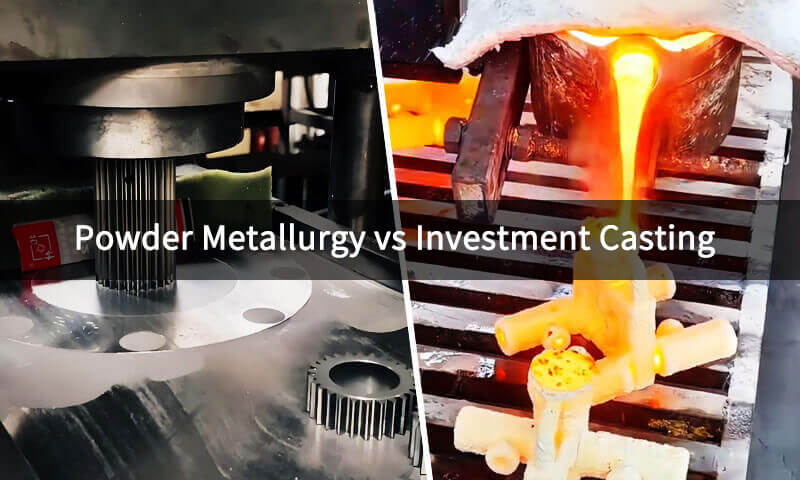
Blandt det utal af fremstillingsmetoder, to tydeligt forskellige – men ofte konkurrerende – teknologier skiller sig ud: investeringsstøbning og pulvermetallurgi (PM).
Investeringsstøbning, en årtusinder gammel proces raffineret gennem moderne materialevidenskab, tilbyder uovertruffen geometrisk frihed og legeringsalsidighed.
Pulver metallurgi, en innovation fra det 20. århundrede, leverer enestående materialeeffektivitet, høje produktionshastigheder, og kontrolleret porøsitet til specialiserede applikationer.
Ved første øjekast, begge processer producerer næsten-net-formede metaldele med minimal bearbejdning.
Men deres underliggende principper - størkning fra smeltet metal versus tryksintring af faste pulvere - fører til radikalt forskellige designregler, materielle evner, Mekaniske egenskaber, og økonomiske skalaer.
At vælge mellem disse to teknologier kræver en omfattende forståelse af ikke kun produktionsomkostninger, men også mekaniske krav, Geometri kompleksitet, Produktionsvolumen, Valg af materiale, og langsigtet serviceydelse.
1. Forstå investeringsstøbning
Investeringsstøbning, også kendt som lost-wax støbning, er en præcisionsmetalformningsproces, hvor et voksmønster er belagt med en ildfast keramisk skal, Voksen er smeltet ud, og det resulterende hulrum er fyldt med smeltet metal.
Efter størkning, den keramiske skal fjernes, afslører en næsten-net-formet metalkomponent med enestående overfladefinish og dimensionsnøjagtighed.
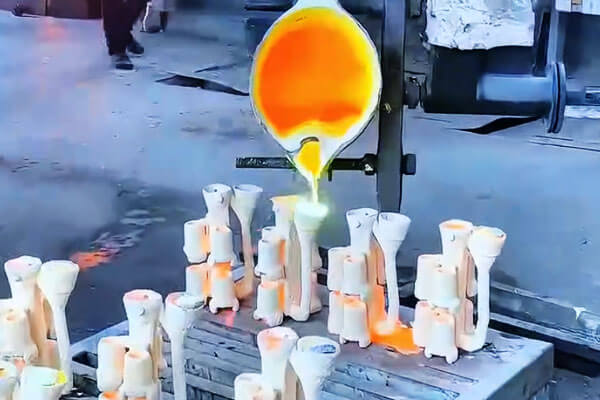
Processen går tilbage 5,000 år til gamle civilisationer i Egypten, Kina, og Mesopotamien, hvor den blev brugt til bronzestatuer og smykker.
I dag, det er en højteknologisk fremstillingsmetode til luft- og rumfartsturbinevinger, medicinske implantater, skydevåben komponenter, og industrielle ventiler.
Process Fundamentals
| Fase | Trin | Nøgle detalje |
| 1 | Mønsterproduktion | Voks (eller termoplast) indsprøjtet i præcisionsmetalmatrice (værktøj). |
| 2 | Træsamling | Flere mønstre knyttet til en central indløb (voks træ). |
| 3 | Shell Building | 6- 10 lag keramisk gylle (Silica Sol) + ildfast stuk (zirkon/aluminiumoxid). |
| 4 | Dewaxing | Dampautoklaven smelter voks; skallen forbliver hul. |
| 5 | Skal affyring | 900‑1100°C brænding for at styrke keramikken og fjerne flygtige stoffer. |
| 6 | Smeltning & hælder | Metal smeltet i induktionsovn; hældes i en forvarmet skal. |
| 7 | Knockout & afskæring | Skal fjernet ved vibration; komponenter skåret fra træ. |
| 8 | Efterbehandling | Slibning, Skud sprængning, Varmebehandling, NDT inspektion. |
Nøgleegenskaber
| Funktion | Beskrivelse |
| Geometri | Meget høj kompleksitet; underskærder, interne passager, Tynde vægge (≥0,5 mm). |
| Overfladefinish | As-cast Ra 1,6-6,3 µm; kan poleres til Ra <0.4 µm. |
| Tolerance | ±0,1-0,3 mm pr 25 MM typisk. |
| Materialer | Næsten enhver støbbar legering: kulstofstål, rustfrit, Superalloys, Titanium, aluminium, bronze. |
| Del størrelse | Gram til ~150 kg (stål). |
| Bind | Økonomisk fra 100 til 10,000+ Dele/år. |
| Skrot | Minimal (nær-net form). |
2. Forståelse af pulvermetallurgi
Pulver metallurgi er en fremstillingsproces, hvor fine metalpulvere komprimeres (trykket) i en stiv form og derefter opvarmet (sintret) under smeltepunktet for at binde partiklerne til en fast komponent.
I modsætning til investeringsstøbning - som involverer en væske-til-fast faseændring - er PM en faststofproces, der bevarer pulverets kemiske og mikrostrukturelle egenskaber.
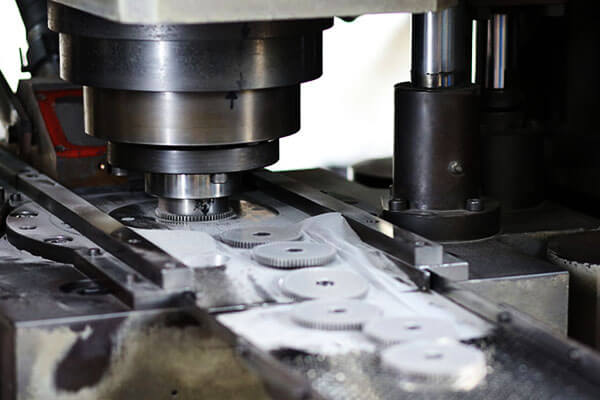
Den moderne PM-industri opstod i 1920'erne med produktionen af selvsmørende lejer og wolframlampetråde.
I dag, det er en moden, højvolumen fremstillingsteknologi, med bilindustrien, der forbruger over 70% af alle jernholdige PM-dele globalt.
Process Fundamentals
| Fase | Trin | Nøgle detalje |
| 1 | Pulverproduktion | Vand- eller gasforstøvning, elektrolyse, reduktion; kontrolleret partikelstørrelse/form. |
| 2 | Blanding | Pulvere blandet med smøremidler (0.5-1,5 %) og legeringstilsætninger (F.eks., grafit). |
| 3 | Komprimering (presserende) | Enakset presning i stiv matrice; tryk 200-800 MPa; grøn tæthed 70-85 %. |
| 4 | Sintring | Opvarmning i kontrolleret atmosfære (endoterm gas, N₂‑H₂) til 70-90 % af smeltepunktet (typisk 1120-1150°C for jern). |
| 5 | Valgfri sekundær ops | Dimensionering, mønter, Varmebehandling, infiltration, bearbejdning, harpiksimprægnering. |
Nøgleegenskaber
| Funktion | Beskrivelse |
| Geometri | Moderat kompleksitet (2D former); begrænsede underbud; begrænsede trækvinkler. |
| Overfladefinish | As-sintret Ra 3-12 µm; kan forbedres ved at dimensionere/mønte. |
| Tolerance | ±0,05-0,1 mm pr 25 mm (efter dimensionering). |
| Materialer | Primært jernholdigt (jern, stål, rustfrit), kobberbaseret, wolfram, og speciallegeringer. Titanium og aluminium er muligt, men mindre almindeligt. |
| Del størrelse | Typisk <10 kg, <300 mm diameter. |
| Bind | Økonomisk fra 5,000 til millioner af dele/år. |
| Skrot | >95% materialeudnyttelse. |
3. Fremstillingsprincipper: Hvordan processerne adskiller sig
| Aspekt | Investeringsstøbning | Pulver metallurgi |
| Udgangsmateriale | Smeltet metal (flydende fase). | Metal pulver (fast fase). |
| Faseændring | Flydende → Fast (størkning). | Solid → Solid (diffusionsbinding). |
| Energikilde | Varm til smeltning + hælder. | Tryk + varme (sintring). |
| Skimmelsvamp krav | Engangs keramisk skal (pr. del). | Genanvendelig metalmatrice (tusindvis af cyklusser). |
| Cyklustid | Timer (Shell Building) til dage. | Sekunder (presserende) + timer (sintringsbatch). |
| Værktøjsomkostninger | Moderat (voks dør $5-20k). | Høj (pressen dør $10-50.000). |
| Arbejdsintensitet | Høj (skalbygning er manuel). | Lav (automatiseret presning). |
| Dimensionel kontrol | Via skalsvind + voks mønster. | Via formpræcision + sintringssvind. |
Grundlæggende forskel: Investeringsstøbning er en præcisionsstøbning i netform behandle; PM er en pulver konsolidering behandle.
Førstnævnte tilbyder næsten uendelig geometrisk frihed; sidstnævnte tilbyder næsten uendelig materialeeffektivitet.
4. Materialekompatibilitet og legeringsfleksibilitet
| Materiale familie | Investeringsstøbning | Pulver metallurgi |
| Kulstofstål | Ja (bredt udvalg) | Ja (mest almindelige PM-materiale) |
| Lavlegeret stål | Ja | Ja (Fe-Cu-C, Fe-Ni-Mo-Cu) |
| Rustfrit stål | Fremragende (CF-8, CF-8M, 17--4ph) | Ja (304L, 316L, 410L, 17--4ph) |
| Nikkel Superalloys | Fremragende (Inkonel 718, 625, Rene) | Begrænset (høje omkostninger; specialiseret) |
| Koboltlegeringer | Fremragende (Co-Cr-Mo) | Begrænset |
| Titanium | Fremragende (Grad 5, Cp) | Mulig (høje omkostninger, reaktive) |
| Aluminium | Ja (A356, 380) | Begrænset (oxid problemer; sjælden) |
| Kobber / bronze | Ja (C90500, C93200) | Fremragende (Cu, messing, bronze) |
| Wolfram / tunge legeringer | Vanskelig (højt smeltepunkt) | Fremragende (W-Ni-Fe, W‑Ni‑Cu) |
| Keramisk-metal kompositter | Ikke muligt | Ja (cermets, WC-Co) |
Nøgleindsigt: Investeringsstøbningstilbud væsentligt bredere legeringsfleksibilitet, især til højsmeltning, reaktive, eller svære at presse legeringer (Titanium, Superalloys, kobolt-krom).
Pulvermetallurgi udmærker sig i jernholdig, kobberbaseret, og wolfram-baserede materialer, samt kompositter, der ikke kan støbes på grund af ublandbarhed eller adskillelse.
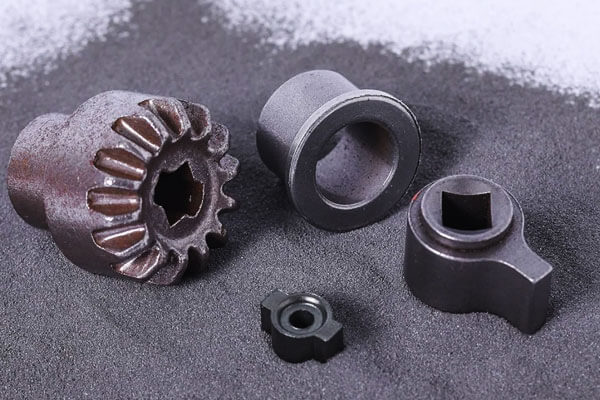
5. Dimensionel nøjagtighed og overfladefinish
| Kriterium | Investeringsstøbning | Pulver metallurgi |
| Typisk tolerance (mm/25 mm) | ±0,1-0,3 | ±0,05-0,1 (som sintret) ±0,025-0,05 (størrelse/møntet) |
| Overfladefinish (Ra, µm) | 1.6-6.3 (som -cast) | 3-12 (som sintret) 0.8-3 (størrelse/møntet) |
| Tolerance stabilitet | God (konsekvent skalkrympning) | Fremragende (dø præcision; sintringsvariable) |
| Trækvinkel påkrævet | Ingen (voksmønstre fjernes uden træk) | Ja (til fjernelse af dele fra matricen) |
| Tråde / interne funktioner | Kast direkte | Skal bearbejdes (kan ikke trykke tråde) |
Hvilket er bedre? Til komplekse geometrier med fine detaljer og høj overfladefinish, investeringsstøbning er overlegen.
Til simple geometrier, der kræver ekstremt snævre tolerancer (især efter sekundære operationer), PM har en fordel.
6. Kompleksiteten af geometri og designfrihed
| Designfunktion | Investeringsstøbning | Pulver metallurgi |
| Underskærder | Ja (voksmønster kan samles) | Ingen (matriceudtrækning kræver straight-pull) |
| Indvendige passager | Ja (keramiske kerner) | Ingen (kan ikke trykke hule træk) |
| Tynde vægge | 0.5-1,5 mm opnåelig | 1.5-2,5 mm minimum |
| Fine funktioner (bogstaver, logoer) | Fremragende gengivelse | Begrænset (skal være præget eller bearbejdet) |
| Variabel snittykkelse | Ja (kan aftage jævnt) | Begrænset (ensartet tæthed påkrævet) |
| Asymmetrisk / organiske former | Fremragende | Dårlig (presning foretrækker ensartede vægge) |
| 3D kompleksitet | Høj | Moderat (i det væsentlige 2,5D) |
Investeringsstøbning vinder afgørende i geometrisk kompleksitet.
Evnen til at skabe underskæringer, buede indre kanaler, organiske konturer, og fine overfladedetaljer er uovertruffen af pulvermetallurgi, som er begrænset af pressematricen og kravet om enakset komprimering.
7. Mekaniske egenskaber og strukturel ydeevne
| Mekanisk egenskab | Investeringsstøbning | Pulver metallurgi |
| Typisk tæthed | 99-100 % af teoretisk | 85-98 % (afhængig af presning og sintring) |
| Trækstyrke | God (bearbejdet i lydstøbninger) | Moderat-god (afhænger af tætheden) |
| Udbyttestyrke | Sammenlignelig med smed | 10-30 % lavere end bearbejdet (porøsitetseffekt) |
| Forlængelse | 10-35 % (austenitisk) | 2-15 % (tæthedsafhængig) |
| Hårdhed | 80-600 HB (legeringsafhængig) | 60-400 HB (afhængigt af materiale) |
| Træthedsstyrke | Moderat (hak-følsomme) | Sænke (porøsitet virker stressforøgende) |
| Påvirkning af sejhed | God (Afhængig af legering) | Sænke (porøsiteten bliver skør) |
| Ensartethed | Støbt struktur (dendritisk) | Sintret struktur (porøs, isotropisk) |
| Arbejdshærdende respons | Begrænset (som -cast) | Sintret struktur kan varmebehandles |
Nøglesammenligning: Investering støbte dele er fuldt tæt og, når korrekt støbt, tilgang til smedeejendomme (90-95 % af forfalskede værdier).
Pulvermetallurgiske dele, selv i højdensitetskvaliteter (≥95% teoretisk), har resterende porøsitet, der reducerer duktiliteten, sejhed, og træthedspræstation.
For sikkerhedskritisk, høj belastning, eller stødudsatte applikationer, investeringsstøbning foretrækkes.
8. Densitet, Porøsitet, og intern kvalitet
| Aspekt | Investeringsstøbning | Pulver metallurgi |
| Typisk tæthed | 99– 100 % (fuldt tæt) | 85-98 % (resterende porøsitet) |
| Porøsitetstype | Krympning eller gas (tilfældig, undgås) | Sammenkoblet og lukket (iboende) |
| Porøsitetskontrol | Gating/risering design; HOFTE reducerer porøsitet | Komprimeringstryk; sintrende atmosfære |
| Tryktæthed | Fremragende (lækagetætte støbegods muligt) | Dårlig (porøs, kræver forsegling) |
| Tæthedsfordeling | Ensartet hele vejen igennem | Tæt tæt på slagflader; lavere nær midten (komprimeringsgradient) |
| HIP anvendelighed | Fælles (lukker porøsiteten) | Sjælden (porer allerede lukkede; HIP øger omkostningerne) |
| Indvendig renlighed | God (inklusioner mulige) | Fremragende (pulvere er rene) |
Nøgleindsigt: Investeringsstøbning producerer fuldt tætte dele, der er tryktætte og kan varmebehandles uden blærer.
PM dele, medmindre det er specielt behandlet (F.eks., varm komprimering, dobbelttryk, HOFTE), har resterende porøsitet, der begrænser tryktæthed og visse varmebehandlingsreaktioner.
9. Produktionsvolumen og fremstillingsøkonomi
| Økonomisk faktor | Investeringsstøbning | Pulver metallurgi |
| Værktøjsomkostninger | Moderat ($5-20k voksmatrice) | Høj ($10‑50k pressematrice) |
| Værktøjsliv | 50,000-200.000 vokscyklusser | 500,000-1.000.000 pressecyklusser |
| Råvareomkostninger | Højere (voks, keramisk, metal) | Sænke (pulver, smøremiddel) |
| Materialeudnyttelse | 85-95 % | >95% (næsten nul skrot) |
| Cyklustid | Minutter til timer (manuel) | <1 anden (presserende) |
| Arbejdsintensitet | Høj (Shell Building) | Lav (automatiseret) |
| Break-even lydstyrke | ~100-1.000 dele/år | ~5.000-10.000 dele/år |
| Ledetid (bearbejdet) | 8-16 uger | 6– 10 uger |
| Pris pr. del (Lavt volumen, <500) | Moderat-høj | Meget høj (værktøj afskrevet) |
| Pris pr. del (medium volumen, 5k-50k) | Lav | Meget lav |
| Pris pr. del (høj volumen, >100k) | Lav (men PM er lavere) | Lavest |
Reglen om omkostningsbeslutning:
- <1,000 Dele/år → Investeringsstøbning (værktøj afskrevet).
- 1,000-5.000 dele/år → Begge dele muligt; sammenligne på kompleksitet.
- >10,000 Dele/år → Pulvermetallurgi (dramatiske omkostningsbesparelser).
- >100,000 Dele/år → PM er den klare vinder.
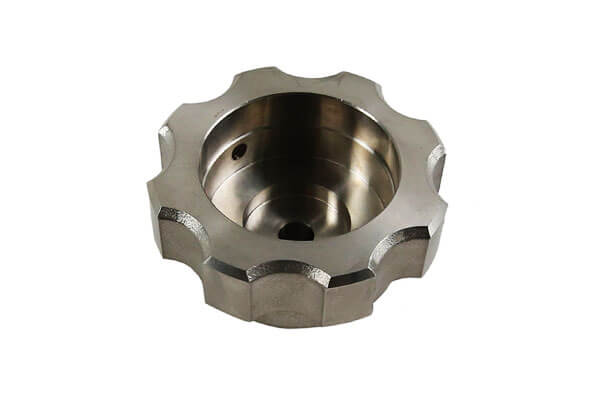
10. Industriapplikationer: Investeringsstøbning vs pulvermetallurgi
| Industri | Investeringsstøbning | Pulver metallurgi |
| Automotive | Turbolader hjul, udstødningsmanifolds (rustfrit) | Gear, SPOCKETS, synkroniseringshubs, Tilslutning af stænger (Fe-baseret PM) |
| Rumfart | Turbineblad, Brændstofdyser, strukturelle huse (Superalloys, Titanium) | Lettere applikationer: trykskiver, bøsninger, filtre |
| Medicinsk | Ortopædiske implantater (hofte stængler, knæbakker), Kirurgiske instrumenter | Ortopædiske skruer (Mim, et PM-derivat), knogleplader |
| Olie & gas | Ventillegemer, Pumpehjul, Subsea -stik (rustfri/duplex) | Filter elementer, balancevægte af tungstenslegering |
Skydevåben |
Modtagere, udløser, undertrykker komponenter (17--4ph) | Udløsermekanismer, magasin følgere, rekylfjedre |
| Industrielle maskiner | Pumpehuse, Ventillegemer, Gearkasser (rustfri/støbejern) | Gear, cams, ruller, Lejer, Bær plader |
| Elektrisk | Koblingskomponenter, køleplade | Elektriske kontakter, magnetiske kerner, børsteholdere |
| Forbrugsvarer | Se sager, hardware fittings, Dekorative genstande | Lås komponenter, lynlås dele, små beslag |
11. Fordele og begrænsninger ved investeringsstøbning
Fordele
- Enestående geometrisk kompleksitet – underskæringer, interne passager, Tynde vægge, organiske former.
- Bred legeringsfleksibilitet – næsten ethvert støbbart metal, inklusive superlegeringer og titanium.
- Fremragende overfladefinish – Ra 1,6-6,3 µm som støbt; kan poleres til nær-spejl.
- Næsten-net form – minimalt materialespild; buy-to-fly-forhold <1.5:1.
- Der kræves ingen udkast – lodrette vægge muligt.
- Tryktætte støbegods – kan svejses og varmebehandles.
- Bevist arv – tusinder af år; omfattende data og standarder.
Begrænsninger
- Høj arbejdsintensitet – skalbygning er manuel, færdighedsafhængig.
- Langsom cyklus tid – dage fra mønster til færdig del.
- Størrelsesbegrænsning – praktisk maksimalt ~150 kg.
- Højere omkostninger ved lave mængder – værktøjsafskrivning.
- Porøsitetsrisiko – svind og gasporøsitet kræver robust processtyring.
- Begrænset til støbbare legeringer – højsmeltende, ikke-støbbare materialer kan ikke anvendes.
12. Fordele og begrænsninger ved pulvermetallurgi
Fordele
- Overlegen materialeudnyttelse – >95% skrotfri; bæredygtige.
- Høje produktionshastigheder – trykcyklus <1 anden; sintring kontinuerligt.
- Fremragende dimensionel konsistens – matricestyret præcision.
- Lave omkostninger pr. del ved høje volumener.
- Kontrolleret porøsitet – til filtre, selvsmørende lejer, batteri elektroder.
- Bøde, ensartet kornstruktur – ingen støbefejl.
- Evne til at blande legeringer – skabe unikke sammensætninger, der ikke er mulige via smeltning.
- God bearbejdelighed – mange PM-legeringer indeholder elementer, der forbedrer bearbejdningen.
Begrænsninger
- Begrænset geometrisk kompleksitet – i det væsentlige 2,5D; ingen underskæringer, interne passager.
- Trækvinkler påkrævet – til deludkast fra matricer.
- Lavere mekaniske egenskaber – resterende porøsitet reducerer duktilitet og træthed.
- Størrelses- og vægtbegrænsninger – <10 kg, <300 MM typisk.
- Porøsitet begrænser tryktæthed – tætning påkrævet til væskehåndteringsapplikationer.
- Legeringsfleksibilitet begrænset - titanium, aluminium, superlegeringer er vanskelige eller dyre.
- Værktøjsomkostninger høje – matricesæt er dyre; break-even volumen høj.
13. Investeringsstøbning vs pulvermetallurgi: Omfattende sammenligningstabel
| Kriterium | Investeringsstøbning | Pulver metallurgi |
| Procesprincip | Størkning af flydende metal i keramisk form | Pulverkomprimering + sintring |
| Udgangsmateriale | Voks mønster + smeltet metal | Metal pulver + smøremiddel |
| Geometrisk kompleksitet | Meget høj (3D, underskærder) | Moderat (2.5D, ingen underskæringer) |
| Minimum vægtykkelse | 0.5-1,5 mm | 1.5-2,5 mm |
| Overfladefinish (Ra, µm) | 1.6-6.3 (som -cast) | 3-12 (som sintret) |
| Dimensionel tolerance | ±0,1-0,3 mm/25 mm | ±0,05-0,1 mm/25 mm (efter dimensionering) |
| Densitet | 99– 100 % | 85-98 % |
| Porøsitet | Lav (svind/gas) | Iboende (resterende) |
| Tryktæthed | Fremragende | Dårlig (kræver forsegling) |
| Legering række | Meget bred (stål, rustfrit, Superalloys, Af, Al, bronze) | Begrænset (Fe, Cu, W, nogle rustfrit; Ti/Al sjælden) |
| Trækstyrke | Smede-agtigt (god) | Moderat (porøsitetsafhængig) |
| Duktilitet | God (10-35 %) | Sænke (2-15 %) |
| Træthedsstyrke | Moderat | Sænke (stressstigninger fra porøsitet) |
| Værktøjsomkostninger | Moderat | Høj |
| Værktøjsliv | 50k-200k cyklusser | 500k-1.000k cyklusser |
| Materialeudnyttelse | 85-95 % | >95% |
| Cyklustid (pr. del) | Minutter til timer | <1 anden (presserende) |
| Arbejdsintensitet | Høj | Lav |
| Break-even lydstyrke | ~100-1.000/år | ~5.000-10.000/år |
| Pris pr. del (høj volumen) | Moderat | Meget lav |
| Typisk max delvægt | 150 kg | 10 kg |
| Sekundære operationer | Skære, slibning, Varmebehandling, Ndt | Dimensionering, Varmebehandling, bearbejdning (begrænset) |
14. Konklusion
Investeringsstøbning vs pulvermetallurgi er ikke konkurrerende teknologier i enhver situation; snarere, de løser forskellige produktionsudfordringer.
Investeringsstøbning udmærker sig, når ingeniører kræver komplekse geometrier, bredt udvalg af legeringer, overlegne mekaniske egenskaber, høj densitet, og strukturel pålidelighed.
Det er fortsat det foretrukne valg til rumfartskomponenter, Ventillegemer, pumpe dele, medicinsk udstyr, og højtydende industrielt udstyr.
Pulvermetallurgi udmærker sig i storskala produktionsmiljøer, hvor dimensionskonsistens, Materialeffektivitet, automatisering, og lave enhedsomkostninger er primære mål.
Det dominerer applikationer som bilgear, Lejer, bøsninger, og masseproducerede mekaniske komponenter.
Det optimale valg afhænger af afvejning af fem kritiske faktorer:
- Komponentgeometri
- Påkrævet mekanisk ydeevne
- Materialekrav
- Produktionsvolumen
- Samlede livscyklusomkostninger
Forståelse af disse faktorer giver producenterne mulighed for at vælge den mest teknisk passende og økonomisk konkurrencedygtige proces.
FAQS
Er investeringsstøbning stærkere end pulvermetallurgi?
I de fleste strukturelle applikationer, ja. Investeringsstøbte komponenter opnår generelt højere densitet, lavere porøsitet, og bedre træthedsbestandighed end konventionelle pulvermetallurgidele.
Hvilken proces giver bedre dimensionsnøjagtighed?
For simpelt, Dele med høj volumen, pulvermetallurgi giver ofte strammere repeterbarhed. Til komplekse geometrier, investeringsstøbning giver typisk bedre overordnet dimensionsevne.
Kan begge processer producere rustfri stålkomponenter?
Ja. Begge teknologier understøtter fremstilling af rustfrit stål, selvom investeringsstøbning giver større fleksibilitet i legeringskvaliteter og komponentkompleksitet.
Hvilken proces er mere omkostningseffektiv?
Pulvermetallurgi er generelt mere omkostningseffektiv til meget store produktionsvolumener. Investeringsstøbning er ofte mere økonomisk for lave til mellemstore produktionsserier og komplekse dele.
Hvilke industrier er mest afhængige af investeringsstøbning?
Rumfart, olie og gas, Kemisk behandling, medicinsk udstyr, kraftproduktion, Madbehandling, og industrimaskiner er blandt de største brugere af investeringsstøbte komponenter.