Learn about polyamide chemistry, key mechanical and thermal properties, 制造方法, reinforced grades, 优势, 限制, 回收, 和工业应用.
Polyamide is one of the most versatile and widely used families of engineering polymers in the world.
From the toothbrush in your bathroom to the high-performance gears in automotive engines, from the fibers in your clothing to the structural components in aerospace applications, polyamides are everywhere.
Their exceptional combination of mechanical strength, 戴阻力, 化学稳定性, and processability has made them indispensable in countless industries.
In commercial engineering practice, the term 尼龙 is frequently used interchangeably with polyamide.
Although this is broadly acceptable for many common materials such as PA6 and PA66, 聚酰胺 is actually the wider scientific and technical classification.
The family includes conventional aliphatic nylons, long-chain polyamides, high-temperature semi-aromatic polyamides, and highly specialized aromatic polyamides such as aramids.
1. What Is Polyamide?
聚酰胺 (PA) is a class of polymers containing repeating amide groups in the main molecular chain. The amide linkage is commonly represented as:
–CO–NH–
The amide bond is formed by the condensation reaction between a carboxylic acid group (–COOH) and an amine group (–NH₂).
The generic chemical structure of a polyamide can be represented as:
- [–CO–R–CO–NH–R’–NH–] -
Where R and R’ are hydrocarbon chains of varying lengths.
These recurring chemical bonds distinguish polyamides from other major polymer families such as polyethylene, polypropylene, 聚碳酸酯, and polyester.
Polyamides can be produced from different monomer systems, resulting in materials with significantly different molecular structures and performance characteristics.
Depending on the chemical composition, a polyamide may be relatively flexible and moisture-resistant, highly rigid and wear-resistant, or capable of operating at elevated temperatures.
At the molecular level, the amide groups are polar and can form hydrogen bonds between neighboring polymer chains.
These intermolecular forces help create a relatively strong and cohesive polymer structure. 因此, many polyamides provide:
- High tensile strength and stiffness
- Good toughness and fatigue resistance
- Excellent abrasion and wear resistance
- Low friction under suitable conditions
- Good resistance to oils, 燃料, 和许多工业化学品
- Useful thermal performance
- Strong potential for reinforcement with glass fiber, 碳纤维, or mineral fillers
Unlike thermosetting polymers, most commercially important engineering polyamides are thermoplastics.
They soften or melt when heated and can be processed using methods such as injection molding and extrusion.
This processability has made polyamide particularly important in modern manufacturing because complex components can often be produced economically in high volumes while maintaining good mechanical performance.

The Relationship Between Polyamide and Nylon
期限 尼龙 was first introduced by DuPont in 1938 for its polyamide 6,6 (PA66), which was used in fibres and textiles.
随着时间的推移, nylon has become the generic name for aliphatic polyamides—the most common type of polyamide—and is often used interchangeably with polyamide in consumer and industrial contexts.
然而, polyamide is the broader scientific term that encompasses:
| 类型 | 例子 | 描述 |
| Aliphatic Polyamides | PA6, PA66, PA11, 聚酰胺12 | The most common polyamides; also known as nylon. |
| Aromatic Polyamides (Aramids) | Kevlar®, Nomex® | High-performance; aromatic rings in the backbone. |
| Semi‑Aromatic Polyamides | 苯丙胺 (Polyphthalamide) | 高温性能; 芳香 + aliphatic units. |
| Polyamide‑Imides | PAI (Torlon®) | High performance; imide groups in addition to amide groups. |
Key point: All nylons are polyamides, but not all polyamides are nylons. The term “polyamide” is the correct technical term for the entire family.
2. How Is Polyamide Made?
Polyamide is produced by creating long polymer chains containing repeating amide linkages (–CONH–).
Depending on the grade, commercial polyamides are mainly manufactured through either condensation polymerization 或者 ring-opening polymerization.
Condensation Polymerization
Many polyamides, 特别 PA66, are produced by reacting a diamine with a dicarboxylic acid. The reaction forms amide bonds while releasing small molecules, 通常是水.
例如, PA66 is produced from hexamethylenediamine 和 adipic acid.
Precise control of monomer ratio, 温度, 压力, and polymerization time is essential because these factors influence molecular weight, 粘度, 结晶度, and final mechanical performance.
Ring-Opening Polymerization
Other important grades, 例如 PA6, are commonly produced through the ring-opening polymerization of 己内酰胺.
在受控温度和压力下, the cyclic caprolactam molecules open and link together to form long-chain PA6 polymers.
This route enables efficient large-scale production and is widely used for engineering plastics, 纤维, 电影, and molded components.
Polymer Compounding and Modification
After polymerization, the base polyamide can be further modified through compounding.
Manufacturers may incorporate glass fibers, carbon fibers, 矿物填料, impact modifiers, flame retardants, 润滑剂, or stabilizers to tailor the material for specific applications.
The finished polymer is typically pelletized and supplied as granules for subsequent processing by 注入成型, 挤压, 吹塑, or other polymer manufacturing methods.
3. Major Types and Grades of Polyamide
Polyamide is not a single material but a broad family of polymers with significantly different molecular structures, 热行为, 吸湿性, 机械性能, and processing characteristics.
Aliphatic Polyamides (Nylons)
Aliphatic polyamides represent the largest and most commercially important group of polyamides.
They are widely used in injection molding, 挤压, fiber production, and other industrial processes because they offer a favorable balance of mechanical strength, 戴阻力, 加工性, 和成本.
| 年级 | Typical Melting Range (°C) | 关键属性 | 典型的应用 |
| PA6 | 215–225 | 良好的韧性, 冲击阻力, 戴阻力, 和加工性; relatively high moisture absorption. | 汽车零件, 齿轮, 住房, 工业组件, 纤维. |
| PA66 | 255–265 | 更高的强度, 刚性, 耐热性, and creep resistance than PA6. | 齿轮, 轴承, 衬套, 紧固件, 电气组件, under-hood automotive parts. |
| PA11 | 185–195 | Excellent flexibility and impact resistance; low moisture absorption and good chemical resistance. | Flexible tubing, pneumatic lines, 电缆护套, automotive fluid systems. |
| 聚酰胺12 | 175–185 | Very low moisture absorption, 优异的耐化学性, 灵活性, 和维稳定性. | 燃油管路, pneumatic tubing, 医用管, 电缆绝缘层, 精度组件. |
PA610 |
215–225 | Better dimensional stability and lower moisture absorption than PA6 and PA66. | 电连接器, 电缆组件, 工业部件, bristles. |
| PA612 | 210–220 | 良好的韧性, 耐化学性, 维稳定性, and reduced water absorption. | Automotive fluid lines, 电气组件, 管道, 精密模制件. |
| PA1010 | 195–205 | Partially or largely bio-based feedstock potential; low moisture absorption and good toughness. | Sustainable consumer products, 汽车组件, 工业应用. |
Semi-Aromatic Polyamides
Semi-aromatic polyamides combine aliphatic chain segments with aromatic structures.
The aromatic rings increase molecular rigidity and thermal stability, allowing these materials to operate at temperatures beyond the practical range of conventional PA6 or PA66.
| 材料族 | Representative Grades | Typical Melting Range (°C) | 关键特征 | 典型的应用 |
| 苯丙胺 | PA6T/66, PA6T/6I, PA9T and related copolyamides | 大约. 280–330* | 高耐热性, 高刚度, 良好的耐化学性, 低蠕变, and improved dimensional stability. | Automotive under-hood components, high-temperature connectors, LED components, 泵零件. |
| PA6T-based Polyamides | PA6T and copolymerized PA6T systems | Often above 300 for high-PA6T compositions* | Very high thermal stability, excellent strength, and good retention of mechanical properties at elevated temperatures. | Electrical and electronic connectors, 汽车组件, 工业设备. |
PA9T |
Polyamide 9T | 大约. 300–310* | 高耐热性, relatively low moisture absorption, excellent dimensional stability and chemical resistance. | Surface-mount electronics, 连接器, precision electrical components. |
Aromatic Polyamides (Aramids)
Aromatic polyamides, 通常称为 aramids, represent a high-performance class in which aromatic rings form a major part of the polymer backbone.
Their rigid molecular structure gives them exceptional tensile strength, 模数, 热稳定性, and—in some grades—flame resistance.
| Aramid Type | Representative Material | Molecular Structure | 关键属性 | 典型的应用 |
| Para-aramid | Kevlar® | Para-oriented aromatic polyamide | Extremely high tensile strength and modulus, 极好的冲击力, 和良好的热稳定性. | Ballistic protection, aerospace composites, reinforcement cables, tires, 绳索, 体育设备. |
| Meta-aramid | Nomex® | Meta-oriented aromatic polyamide | Excellent flame resistance, 热稳定性, 电绝缘, and resistance to heat exposure. | Protective clothing, 电绝缘, aerospace interiors, filtration media. |
Polyamide-Imide (PAI)
Polyamide-imide represents an ultra-high-performance polymer family that combines amide and imide functional groups within the molecular structure.
The result is a material with exceptional thermal stability, 机械强度, 戴阻力, 和承载能力.
One of the best-known commercial examples is Torlon® PAI.
| 材料 | Chemical Family | 关键属性 | 典型的应用 |
| PAI | Polyamide-imide | Extremely high strength and stiffness, 出色的耐磨性, 低蠕变, 出色的热稳定性, and good performance under heavy mechanical loads. | 轴承, 衬套, 密封, 压缩机组件, 航空航天零件, 半导体设备, high-temperature industrial components. |
4. Key Properties of Polyamide
The performance of polyamide is determined by its molecular structure, particularly the concentration of amide groups, 分子量, 结晶度, and the balance between flexible aliphatic segments and rigid aromatic structures.
Mechanical Strength and Stiffness
Most engineering-grade polyamides provide a favorable strength-to-weight ratio.
PA6 and PA66, 例如, are widely used for gears, 括号, 住房, 剪辑, and structural components because they can withstand repeated mechanical loading while remaining lighter than steel, 铝, or zinc alloys.
The mechanical properties of polyamide can vary significantly depending on moisture condition.
Because the amide groups attract water molecules, absorbed moisture can act as a plasticizer.
This generally reduces stiffness and tensile strength while increasing flexibility and impact resistance.
Glass-fiber reinforcement can substantially increase stiffness and strength.
A reinforced PA66 component may achieve a modulus several times higher than that of the unfilled polymer, making it suitable for demanding automotive and industrial applications.
韧性和影响力
Polyamide generally demonstrates good resistance to impact and repeated loading.
PA6 and PA66 offer a useful balance between rigidity and toughness, while long-chain grades such as PA11 and PA12 are particularly valued for flexibility and impact performance, 特别是在低温下.
This characteristic makes polyamide suitable for components exposed to vibration, 震惊, cyclic stress, and mechanical movement.
Automotive clips, cable protection systems, pneumatic tubing, and industrial housings are typical examples.
然而, impact performance depends on several factors, including temperature, 水分含量, 结晶度, 壁厚, and reinforcement level.
Highly filled or highly crystalline grades may offer greater stiffness but reduced impact resistance.
Wear Resistance and Low-Friction Performance
Polyamide is widely used in tribological applications because of its good abrasion resistance and relatively low coefficient of friction.
Components such as gears, 衬套, 轴承, 滚筒, 向导, and wear pads can operate with reduced noise and, 在某些情况下, without external lubrication.
For demanding sliding applications, polyamide can be modified with additives such as:
- PTFE for lower friction;
- Molybdenum disulfide for improved sliding behavior;
- Glass fibers for increased stiffness;
- Carbon fibers for enhanced strength and thermal conductivity;
- Solid lubricants for improved dry-running performance.
The final wear behavior depends strongly on mating materials, surface pressure, sliding speed, 温度, and lubrication conditions.
热性能
Polyamides generally provide better heat resistance than commodity plastics such as polypropylene and polyethylene. 然而, thermal capability varies considerably between grades.
PA6 and PA66 are suitable for many moderately elevated-temperature applications, while semi-aromatic polyamides such as PPA are designed for more demanding environments, including automotive under-the-hood components and high-temperature electrical connectors.
The melting point, heat deflection temperature, and continuous service temperature should all be considered when selecting a polyamide.
Reinforcement can further improve dimensional stability at elevated temperatures, although it may also affect toughness and processability.
Moisture Absorption and Dimensional Stability
Moisture absorption is one of the most important engineering considerations when using polyamide.
The amide groups in the polymer structure can absorb water from the surrounding environment, causing changes in dimensions and mechanical properties.
Short-chain polyamides such as PA6 and PA66 generally absorb more moisture than long-chain grades such as PA11 and PA12.
This characteristic must be considered when designing precision components.
Dimensional tolerances should account for both manufacturing shrinkage and potential environmental conditioning during service.
耐化学性
Polyamide generally performs well when exposed to oils, 油脂, 燃料, 和许多碳氢化合物.
This is one reason why PA materials are widely used in automotive fuel systems, 工业设备, and fluid-handling applications.
然而, chemical resistance is not universal. 强酸, strong oxidizing agents, certain solvents, and prolonged exposure to high-temperature chemicals can degrade the polymer.
Material selection should therefore consider the complete service environment rather than relying solely on the general classification of a material as “chemically resistant.”
电性能
Polyamide is naturally electrically insulating and is widely used for electrical connectors, terminal housings, coil formers, and insulation components.
然而, absorbed moisture can influence dielectric properties and surface resistance.
For high-voltage or high-reliability electrical applications, engineers often select grades specifically formulated for electrical performance, flame resistance, 低吸湿性, or high-temperature stability.
5. Polyamide Manufacturing and Processing Methods
Polyamide is a thermoplastic material, allowing it to be softened by heating and formed using a variety of manufacturing processes.
The optimal processing method depends on the polymer grade, 部件几何形状, 生产量, 尺寸公差, surface requirements, and reinforcement system.

注塑成型
注入成型 is one of the most important manufacturing methods for engineering polyamide components.
Dried polymer pellets are melted in a heated barrel and injected under pressure into a precision mold.
The process is particularly suitable for producing complex, high-volume components with consistent geometry.
典型的应用包括:
- Gears and mechanical components;
- Automotive clips and brackets;
- 电连接器;
- 电器组件;
- Housings and enclosures;
- Precision industrial parts.
Because polyamide can absorb moisture, proper resin drying before molding is critical
Glass-fiber-reinforced polyamides are also commonly injection molded, although mold design and processing conditions must account for fiber orientation, increased viscosity, and anisotropic shrinkage.
挤压
Extrusion is used to continuously produce polyamide products with a constant cross-section. Molten polymer is forced through a shaped die and then cooled and sized.
Common extruded products include tubing, 管道, 电影, 床单, 杆, 电缆绝缘层, and engineering profiles.
PA11 and PA12 are particularly important for flexible tubing because of their combination of chemical resistance, 灵活性, and relatively low moisture absorption.
In profile and tube extrusion, 温度控制, melt stability, 冷却速率, and dimensional calibration are essential for maintaining consistent wall thickness and geometry.
吹塑
Blow molding is used when hollow polyamide components are required. A heated polymer tube or preform is expanded inside a mold using air pressure.
Polyamide blow molding is commonly used for automotive fluid reservoirs, 管道, fuel-system components, and specialized industrial containers.
Multi-layer structures may also be produced when additional barrier properties are required.
Compression and Transfer Molding
Although less common than injection molding for standard thermoplastic polyamides, compression molding can be useful for large, highly reinforced, or specialized components.
The process can accommodate certain long-fiber-reinforced materials and may be selected when part geometry or reinforcement architecture is difficult to achieve through conventional injection molding.
数控加工
Polyamide can also be machined from extruded or cast stock using CNC turning, 铣削, 钻孔, and other subtractive processes.
数控加工 is particularly useful for:
- 原型开发;
- Low-volume production;
- Large components;
- Parts requiring features that are difficult to mold;
- Components requiring tight post-processing tolerances.
然而, moisture-related dimensional changes must be considered when machining precision polyamide components. Material conditioning should ideally be controlled before final inspection.
增材制造
Several polyamide materials, particularly PA12 and PA11, are widely used in additive manufacturing technologies such as 选择性激光烧结 (SLS) 和 Multi Jet Fusion (MJF)
These processes are especially suitable for prototypes, customized products, 复杂的内部几何形状, and low-to-medium-volume production.
Compared with injection molding, additive manufacturing eliminates the need for dedicated tooling but generally involves higher unit costs at large production volumes.

6. Reinforced and Modified Polyamide Materials
Unfilled polyamide provides a balanced combination of strength, 韧性, 戴阻力, 和加工性.
然而, many engineering applications require properties beyond those of standard PA6 or PA66.
为此原因, polyamide is frequently compounded with reinforcing fibers, 矿物填料, impact modifiers, flame retardants, 润滑剂, and other functional additives.
| Modified Polyamide Type | Primary Modification | Main Performance Improvement | 典型的应用 |
| Glass-fiber-reinforced PA | Glass fibers | 力量, 刚性, 耐热性 | Automotive structures, 连接器, 机械 |
| Carbon-fiber-reinforced PA | Carbon fibers | High specific strength and stiffness | 航天, 机器人技术, 高性能零件 |
| Mineral-filled PA | 滑石, 云母, minerals | 尺寸稳定性, 降低收缩 | 住房, large precision components |
| Impact-modified PA | Elastomer modifiers | Improved toughness and impact resistance | Automotive and protective components |
Flame-retardant PA |
Flame-retardant additives | Improved fire performance | 电气和电子元件 |
| Self-lubricating PA | ptfe, 二硫化钼, lubricating additives | Reduced friction and wear | 轴承, 齿轮, 滑动零件 |
| Conductive PA | Carbon-based conductive fillers | ESD control or electrical conductivity | Electronics and static-sensitive equipment |
7. Advantages and Limitations of Polyamide
关键优势
- 高特异性强度: Exceptional strength-to-weight ratio enables cost-effective metal replacement in structural applications.
- Excellent wear performance: Inherent self-lubricating properties eliminate the need for external lubrication in many light-to-medium load applications.
- Good chemical resistance: Outstanding tolerance to oils, fuels and greases for automotive and industrial environments.
- Wide processability: Compatible with all major thermoplastic manufacturing methods with good melt flowability.
- High impact toughness: Maintains good ductility over a broad temperature range, especially in impact-modified grades.
- Versatile formulation: Easily reinforced, toughened, flame-retarded and compounded for targeted performance.
- 电绝缘性好: Sufficient dielectric performance for most general electrical and electronic applications.
Inherent Limitations
- High moisture absorption: Standard grades absorb significant atmospheric water, causing dimensional change and property variation — the single largest design constraint.
- 尺寸变化: Higher mold shrinkage and moisture-induced swelling require careful tolerance design.
- Low-temperature brittleness: Unmodified standard grades become brittle at sub-zero temperatures and require impact modification for cold service.
- Limited strong acid/alkali resistance: Degrades in strong mineral acids and concentrated alkaline solutions.
- Processing drying requirement: Mandatory pre-drying adds process steps and energy cost relative to non-hygroscopic plastics.
- 紫外线降解: Unstabilized grades degrade under prolonged outdoor UV exposure and require stabilization for exterior use.
8. Applications of Polyamide
The combination of mechanical strength, 戴阻力, 重量低, 耐化学性, and manufacturing flexibility allows polyamide to serve in applications ranging from consumer products to highly engineered automotive and industrial components.

汽车行业
汽车 engineering is one of the largest application areas for engineering polyamides.
PA6, PA66, and reinforced grades are widely used to replace metal components where weight reduction, 耐腐蚀性, and integrated molding are advantageous.
典型组件包括:
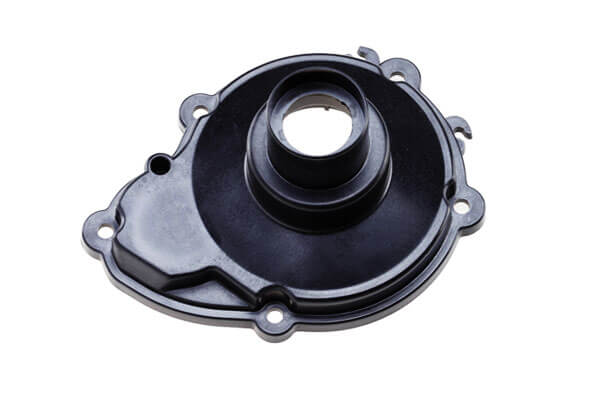
- Engine covers and brackets
- Air-intake components
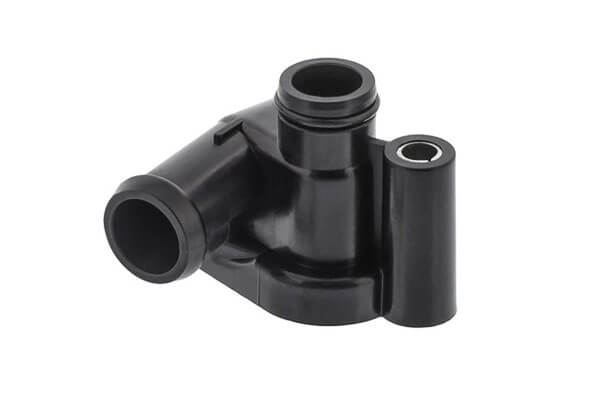
- Cooling-system components
- Cable guides and clips
- 齿轮外壳
- Bearing cages
- Fuel-system components
- 电连接器
- 结构支架
- Fan and pulley components
Glass-fiber-reinforced PA66 is particularly important for under-hood applications because reinforcement improves stiffness, 蠕变阻力, 和维稳定性.
电气和电子设备
Polyamide is widely used for electrical components because of its insulating properties, 机械强度, and injection-molding capability.
申请包括 连接器外壳, 接线端子, 电缆接头, 开关, 传感器外壳, circuit-protection components, and electrical enclosures.
Flame-retardant grades are often selected where regulatory requirements demand controlled ignition and flame propagation.
工业机械
在机械中, polyamide is frequently used where lightweight components must withstand repeated mechanical movement.
Common examples include:
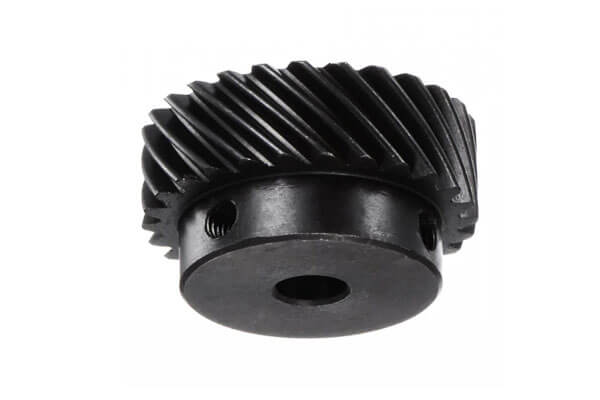
- Gears and gear wheels
- Bushings and bearings
- 滚筒
- 耐磨条
- 导轨
- Cable carriers
- 密封组件
- Machine guards
- 输送机组件
Compared with metallic components, polyamide parts can reduce weight, 噪音, and lubrication requirements in certain applications.
Fluid Handling and Tubing
PA11 and PA12 are particularly valuable for tubing and fluid-handling applications because they combine flexibility, 耐化学性, 低密度, and relatively low moisture absorption.
它们用于 pneumatic tubing, hydraulic lines, 燃油管线, brake-related components, 电缆护套, and industrial hoses, depending on the specific grade and applicable standards.
Consumer and Commercial Products
Polyamide is also extensively used in consumer products where durability and impact resistance are important.
Examples include power-tool components, 运动器材, 紧固件, 住房, 手柄, 车轮, mechanical fittings, and various molded components.
Medical and Healthcare Applications
Specialized polyamide grades can be used for selected medical and healthcare applications, including tubing, 仪器部件, fluid-handling parts, and certain disposable or reusable devices.
对于这些应用, 然而, 生物相容性, sterilization resistance, extractables, 化学兼容性, and applicable regulatory requirements must be evaluated for the specific grade rather than assumed from the general properties of polyamide.
9. Polyamide vs. Other Engineering Plastics
Polyamide is not universally superior to other engineering plastics.
Each polymer has a different performance profile, and the appropriate choice depends on factors such as mechanical loading, 摩擦, 温度, 化学暴露, 水分, 维度要求, 和成本.
| 性能特性 / 因素 | 聚酰胺 (PA) | 聚乙烯 (pom) | 聚丙烯 (聚丙烯) | 聚醚醚酮 (窥视) |
| 材质等级 | 工程热塑性塑料 | 工程热塑性塑料 | Commodity/semi-engineering thermoplastic | High-performance engineering thermoplastic |
| 典型强度 | Good to high | 良好 | 一般 | 很高 |
| 刚性 | 良好; higher with reinforcement | 良好 | 一般 | 出色的 |
| 冲击阻力 | 好到好 | 良好 | 好到好 | 良好 |
| 戴阻力 | 好到好 | 出色的 | 一般 | 出色的 |
| 摩擦 | 低至中等 | 非常低 | 低的 | 低的 |
| 吸收水分 | Moderate to high for PA6/PA66; lower for PA11/PA12 | 非常低 | 非常低 | 非常低 |
| 尺寸稳定性 | 一般; strongly affected by moisture in some grades | 出色的 | 良好 | 出色的 |
| 温度能力 | 中度至高, 取决于成绩 | 一般 | 相对较低 | 出色的 |
| 耐化学性 | 良好 | 良好 | 出色的 | 出色的 |
| 电气绝缘 | 良好 | 良好 | 出色的 | 出色的 |
| 疲劳性抗性 | 良好 | 出色的 | 良好 | 出色的 |
| 加工性 | 出色的 | 出色的 | 出色的 | 要求更高 |
相对材料成本 |
一般 | 一般 | 低的 | 很高 |
| 典型的应用 | 齿轮, 衬套, 汽车零部件, 连接器, 结构成分 | 精密齿轮, 轴承, 阀, mechanisms | 包装, 坦克, 活动铰链, 化学容器 | 航天, 半导体, 医疗的, high-temperature machinery |
| 主要优势 | Balanced mechanical and processing performance | Low friction and dimensional stability | Low cost and chemical resistance | Exceptional high-temperature and mechanical performance |
| 主要限制 | Moisture sensitivity | Limited high-temperature capability | 机械性能较低 | High cost and more demanding processing |
10. Polyamide Recycling and Sustainability
Mechanical Recycling
Post-industrial polyamide scrap is routinely mechanically recycled by regrinding and re-compounding.
Recycled resin retains most of its mechanical properties and is widely used for non-critical structural parts.
Post-consumer recycling is less established but growing, particularly for textile and carpet fiber waste streams.
Chemical Recycling
Advanced depolymerization technologies can break polyamide waste back into pure monomer feedstocks, producing virgin-equivalent resin with identical performance.
Industrial-scale chemical recycling facilities are now operating in Europe and North America, enabling closed-loop circularity for polyamide materials.
Bio-Based Polyamides
Sustainability is not limited to recycling. Certain polyamides, 包括 PA11 and PA1010, can be produced partly or substantially from renewable feedstocks depending on the specific manufacturing route.
Bio-based feedstocks can reduce reliance on fossil resources, but a bio-based polymer is not automatically environmentally superior.
A complete assessment should consider feedstock sourcing, agricultural impacts, 能源消耗, manufacturing emissions, product lifetime, 回收, and end-of-life treatment.
11. Custom Polyamide Parts from LangHe 行业
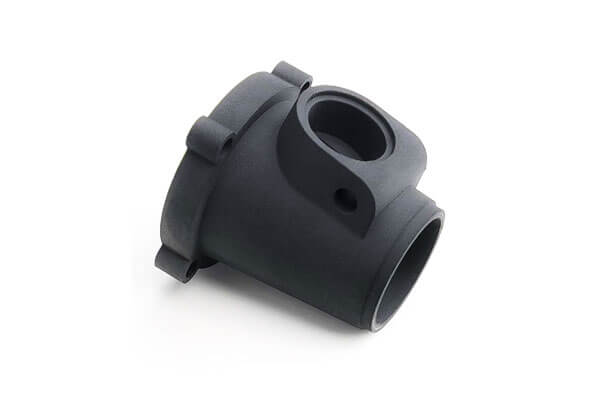
Langhe行业 provides custom manufacturing solutions for engineering-plastic components, including polyamide parts designed for mechanical, 电气, 汽车, 工业的, and other demanding applications.
Rather than treating polyamide as a generic plastic, the material and manufacturing process should be selected according to the component’s actual operating conditions.
Factors such as PA grade, moisture exposure, 温度, 机械负载, 尺寸公差, wear requirements, chemical environment, and reinforcement are evaluated during engineering development.
Custom Polyamide Manufacturing Capabilities
| 能力 | 细节 |
| 材料选择 | PA6, PA66, PA11, PA12 and reinforced or modified polyamide grades |
| Material modification | Glass-fiber, carbon-fiber, mineral-filled and wear-modified grades, subject to application requirements |
| 制造业 | Injection molding and precision machining for suitable polyamide components |
| 数控加工 | 转身, 铣削, 钻孔, 无聊的, and finishing of engineering-plastic components |
| 复杂的几何形状 | 住房, 齿轮, 衬套, 括号, 向导, 封面, and customized mechanical components |
| Precision control | Dimensional inspection based on component geometry, 公差要求, 和应用需求 |
| Prototype production | Low-volume and prototype development before serial production |
| 工程支持 | 材料选择, DFM审查, tolerance evaluation, 和过程优化 |
| 质量 | ISO 9001:2015 经认证. |
| 交货时间 | 2‑4 weeks for machining; 4‑8 weeks for tooling and production. |
12. 结论
Polyamide is a broad family of engineering polymers rather than a single material.
From conventional PA6 and PA66 to lower-moisture-absorption PA11 and PA12, 高温 苯丙胺, and fiber-reinforced grades, different formulations provide significantly different combinations of mechanical, 热的, 化学, and dimensional performance.
Its greatest advantage is its balanced engineering performance. Polyamide combines relatively low density with good strength, 韧性, 戴阻力, 耐化学性, 电绝缘, and excellent processability.
These characteristics make it an effective alternative to metals and other engineering plastics in many applications.
同时, designers must not overlook its limitations. 吸收水分, temperature-dependent properties, 蠕变, and chemical compatibility can strongly influence long-term performance.
Material selection should therefore be based on the complete operating environment rather than on tensile strength or melting point alone.
For custom components, the most reliable approach is to evaluate the polyamide grade, reinforcement, 制造过程, 维度要求, 服务环境, and expected lifetime as an integrated system.
When these factors are properly controlled, polyamide can provide a cost-effective and technically robust solution for a wide range of engineered components.
FAQs About Polyamide
Is polyamide the same as nylon?
不完全是. Nylon is a major group of polyamides, particularly aliphatic polyamides such as PA6 and PA66.
Polyamide is the broader chemical family that also includes PA11, 聚酰胺12, semi-aromatic polyamides, and aromatic polyamides.
Is polyamide a strong material?
是的. Polyamide generally provides good tensile strength, 刚性, 韧性, 和疲劳性能. Glass-fiber- and carbon-fiber-reinforced polyamides can provide substantially higher stiffness and strength than unfilled grades.
Does polyamide absorb water?
是的. Moisture absorption is an important characteristic of many polyamides, particularly PA6 and PA66.
Water uptake can change dimensions and mechanical properties, so humidity and conditioning should be considered for precision applications.
Is polyamide suitable for high-temperature applications?
It depends on the grade. Conventional PA6 and PA66 are suitable for moderately elevated temperatures, 尽管 PPA and other high-temperature polyamides are better suited to demanding thermal environments.
Can polyamide really replace metal in structural parts?
一个: 是的. Glass fiber reinforced polyamides are widely used to replace die-cast aluminum and steel in structural automotive, industrial and consumer components.
They typically reduce part weight by 40–60% while providing sufficient strength for many load-bearing applications. Metal replacement remains the primary growth driver for engineering polyamides.
Is polyamide resistant to chemicals?
Polyamide has good resistance to many oils, 燃料, 碳氢化合物, 和工业化学品, but its resistance to strong acids, oxidizing agents, and certain solvents can be limited.
The specific grade and operating conditions should always be evaluated.
Is polyamide better than POM?
Neither is universally better. Polyamide generally offers a stronger combination of toughness and mechanical performance,
while POM often provides superior dimensional stability, 低摩擦, 和磨损性能.
The choice depends on the specific application.
Copyright and Trademark Notices
- Kevlar® and Nomex® are registered trademarks of E. 我. du Pont de Nemours and Company (杜邦).
- Torlon® is a registered trademark of Syensqo.