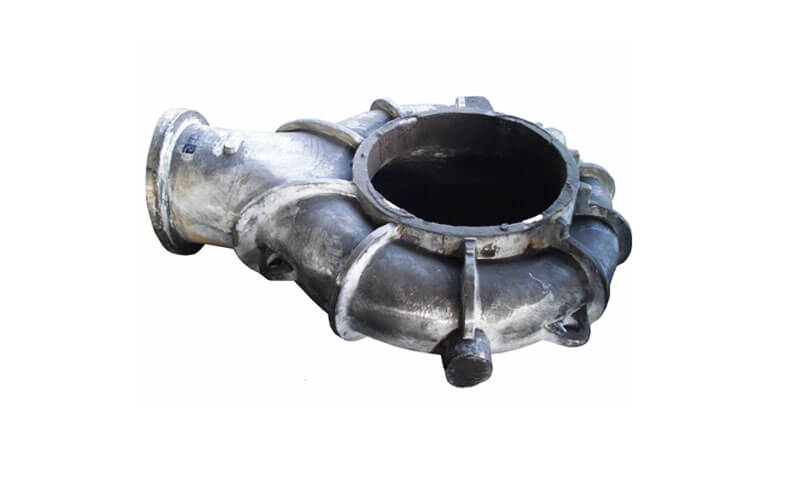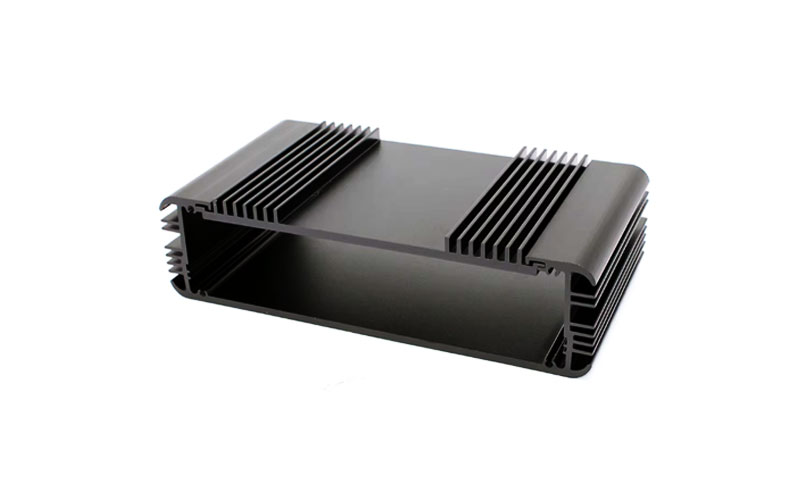
giriiş
Hassas döküm işlemleri ailesi arasında, Genellikle "kayıp balmumu dökümü" olarak adlandırılan hassas döküm, olağanüstü yüzey kalitesine sahip net şekle yakın metal bileşenler üretme yeteneğiyle öne çıkıyor, karmaşık geometri, ve sıkı boyutsal toleranslar.
Bu makale, hassas döküm sürecini ilk prensiplerden ileri uygulamalara kadar incelemektedir..
Metalurjik temellerini araştıracağız, detaylı süreç akışı, teknoloji çeşitleri (su bardağı, Silika Sol, kompozit), kusur mekanizmaları, diğer üretim yöntemleriyle karşılaştırmalı konumlandırma, ve endüstriyel kullanım durumları.
1. Yatırım dökümü nedir?
Yatırım kadrosu, Kayıp-Ağız Süreci olarak da bilinir, tek kullanımlık mum veya eriyebilir desenin refrakter seramik kabuk ile kaplandığı hassas bir metal şekillendirme yöntemidir, daha sonra erimiş metalle dolu bir boşluk oluşturmak için çıkarılır.
Süreç, orijinal modeli yüksek derecede aslına uygun şekilde yeniden üretecek şekilde tasarlanmıştır., karmaşık üretim için en etkili üretim yollarından biri haline getiriyor, net şekle yakın metal parçalar.
Genellikle basitlik veya yalnızca hacim için optimize edilen geleneksel döküm yollarının aksine, yatırım dökümü etrafında inşa edilmiştir detay çoğaltma, Boyutlu Kontrol, ve alaşım esnekliği.
Bir bileşenin karmaşık geometriyi birleştirmesi gerektiğinde kullanılır, işlevsel doğruluk, Tek bir proses zincirinde güvenilir metalürjik kalite.
Bu nedenle havacılık ve uzay gibi endüstrilerde yaygın olarak benimsenmektedir., enerji, otomotiv, tıbbi ekipman, ve hassas endüstriyel donanım.
Hassas Dökümün Temel Rekabet Avantajları
Diğer metal şekillendirme işlemleriyle karşılaştırıldığında, hassas döküm, kendisine farklı ve kalıcı bir pazar konumu sağlayan altı temel avantaj sunar:
Üstün boyutsal doğruluk ve yüzey kalitesi
Hassas döküm standart boyut toleranslarına ulaşabilir CT4–CT7, kum dökümünden önemli ölçüde daha sıkı (CT9–CT14).
Yüzey pürüzlülüğü tipik olarak şu şekilde kontrol edilebilir: Ra 1,6–6,3 mikron, bu da kapsamlı taşlama ihtiyacını büyük ölçüde azaltır, parlatma, veya dekoratif ve hassas fonksiyonel yüzeylerde ikincil kaplama.
Karmaşık geometriler için olağanüstü yetenek
Bu işlem özellikle son derece karmaşık özelliklere sahip parçalar için çok uygundur., içermek iç boşluklar, alt kesimler, İnce Duvar Bölümleri (aşağı doğru 0.5 mm), karmaşık kavisli yüzeyler, ve ince delik desenleri.
Endüstriyel hassas bileşenler için gereken hemen hemen her geometriyi yeniden üretebilir.
Geniş alaşım uyumluluğu
Hassas döküm çok çeşitli alaşımlarla uyumludur, yaygın olarak kullanılan demirli ve demirsiz metallerin yanı sıra zorlu yüksek performanslı malzemeler de dahil.
Paslanmaz çeliklere uygulanabilir, karbon çelikler, alüminyum alaşımları, bakır alaşımları, Nikel bazlı süper alaşımlar, Kobalt bazlı alaşımlar, ve hatta titanyum gibi aktif alaşımlar.
Bu geniş alaşım toleransı, mühendislere malzeme seçiminde diğer birçok şekillendirme prosesinden çok daha fazla özgürlük sağlar..
Yüksek metalurjik kalite
Kimyasal olarak inert seramik kabuk, erimiş metalin kirlenmesini en aza indirir.
Ek olarak, kontrollü katılaşma ve iyi tasarlanmış yolluk sistemleri, büzülme, gözeneklilik, ve ayrışma, Yoğun mikro yapıya ve istikrarlı mekanik performansa sahip parçalar üretmek.
Yüksek malzeme verimliliği
Net şekle yakın bir süreç olarak, hassas döküm yaklaşık olarak malzeme kullanım oranı sunar 92%–�, Çıkarmalı işleme süreçleriyle karşılaştırıldığında metal atıklarını önemli ölçüde azaltır.
Esnek Üretim Ölçeği
Hassas döküm son derece uyarlanabilir, onu uygun hale getirmek tek seferlik özel prototipler, küçük partili özel parçalar, ve standartlaştırılmış bileşenlerin büyük hacimli üretimi.
2. Temel Metalurji ve Proses Prensipleri
Hassas döküm sadece bir şekillendirme yöntemi değildir. Sıkıca entegre edilmiş bir metalurji sistemi hangi desen sadakatinde, kabuk davranışı, termal yönetimi, ve alaşım katılaşması birbiriyle etkileşim halindedir.
Son parçanın kalitesi bu dört faktörün birlikte ne kadar iyi kontrol edildiğine göre belirlenir..
Desen aktarımı yoluyla geometrik çoğaltma
Süreç, son parça geometrisini yüksek doğrulukla yakalayan mum veya eriyebilir bir modelle başlar..
Çünkü seramik kalıp doğrudan bu modelin etrafında inşa edilmiştir., boşluk, amaçlanan şekli neredeyse noktadan noktaya yeniden üretir.
Yatırım dökümüne üretimde avantaj sağlayan şey budur.:
- ince kaburga,
- keskin geçişler,
- oluklar,
- küçük delikler,
- iç pasajlar,
- ve karmaşık yüzey özellikleri.
Başka bir deyişle, hassas döküm geometriye "yaklaşmaz".
Çok yüksek detay tutma özelliğiyle desenden kalıba aktarır. Bu onun net şekle yakın yeteneğinin temelidir.
Hassas bir termal bariyer olarak seramik kabuk
Seramik kabuk sadece erimiş metal için bir kap değildir. Bu bir hassas refrakter yapı birbiriyle çelişen iki gereksinimi aynı anda karşılaması gereken.
Dayanabilecek kadar güçlü olmalı:
- çiğneme,
- kabuk ateşleme,
- dökme,
- metal basıncı,
- ve termal şok.
Aynı zamanda, boşluğun parça geometrisini bozmaması için boyutsal olarak sadık kalması gerekir.
Aradaki bu denge mekanik güç Ve boyutsal stabilite hassas dökümün temel teknik zorluklarından biridir.
Kabuk çok zayıfsa, çatlar veya aşınır. Kötü kontrol ediliyorsa, aslına uygunluğu bozar veya kaybeder.
Bu nedenle kabuk, model ile son döküm arasında kritik bir mühendislik arayüzüdür..
Metalurjik çekirdek olarak katılaşma kontrolü
Erimiş metal kabuk boşluğuna girdiğinde, süreç bir soru haline geliyor alaşımın nasıl dolduğu ve katılaştığı.
Bu aşama parçanın yoğun olup olmayacağını belirler, ses, ve boyutsal olarak kararlı, veya gözeneklilik içerip içermeyeceği, büzülme, Soğuk Kapatır, veya yapısal dengesizlik.
Anahtar kontrol değişkenleri şunları içerir::
- geçit sistemi tasarımı,
- yükseltici yerleşimi,
- kabuk ön ısıtma sıcaklığı,
- dökme sıcaklığı,
- alaşım akışkanlığı,
- ve katılaşma oranı.
Bu faktörler dökümün dış formunu şekillendirdiği kadar iç yapısını da şekillendirir..
Bir parça dışarıdan doğru görünse de katılaşma düzgün bir şekilde yönetilmezse dahili olarak başarısız olabilir.
İşlem neden metalurjiktir?, sadece geometrik değil
Hassas döküm genellikle hassas şekillendirme işlemi olarak tanımlanır., ancak bu açıklama eksik.
Aynı zamanda bir metalurjik süreç, çünkü parçanın son özellikleri eritme sırasında oluşur, dökme, doldurma, ve katılaşma.
Bu, dökümhanenin yalnızca şekli yeniden üretmediği anlamına gelir. Aktif olarak yönetiyor:
- tahıl yapısı,
- yoğunluk,
- ayrılma,
- kusur oluşumu,
- ve son mekanik davranış.
Hassas dökümün metal şekillendirme teknolojileri arasında özel bir konuma sahip olmasının nedeni budur..
Birleştirir şekil çoğaltma ile kontrollü metalurjik konsolidasyon, ve her ikisi de eşit derecede önemlidir.
3. Hassas Dökümün Tam Süreç İş Akışını Tamamlayın
Endüstriyel hassas döküm, her aşamanın nihai döküm kalitesini etkilediği, sıkı bir şekilde kontrol edilen bir süreç zinciridir..
Boyutsal doğruluk, yüzey durumu, iç sağlamlık, ve metalürjik performans, mum modelinden son incelemeye kadar sürecin ne kadar iyi yönetildiğine göre belirlenir.
Pratikte, hassas döküm tek bir işlem değil, birbirine bağlı üretim adımlarının bir dizisidir.
3.1 Balmumu Desen İmalatı ve Malzeme Seçimi
Balmumu deseni son parçanın ilk fiziksel temsilidir, dolayısıyla boyutsal kararlılığı doğrudan dökümün doğruluk tavanını tanımlar.
Balmumu malzemesi seçimi
Endüstriyel hassas döküm genellikle üç balmumu kategorisi kullanır:
- Düşük sıcaklıkta balmumu basit için, düşük hassasiyetli parçalar
- Orta sıcaklıkta balmumu genel amaçlı üretim için
- Yüksek sıcaklıkta balmumu ultra hassas veya özel uygulamalar için
Bunların arasında, orta sıcaklıkta balmumu en yaygın kullanılanıdır. Düşük büzülme sunar, iyi akışkanlık, istikrarlı kullanım performansı, ve ayrıntıların güvenilir şekilde çoğaltılması.
Bu onu çoğu çelik için uygun kılar, bakır alaşımı, ve alüminyum alaşımlı dökümler.
Enjeksiyon kalıplama kontrolü
Balmumu enjeksiyonu aşağıdakiler tarafından kontrol edilmelidir::
- balmumu sıcaklığı,
- enjeksiyon basıncı,
- bekletme süresi,
- ve parça geometrisi.
Balmumu çok soğuksa, doldurulabilirlik bozulur. Eğer hava çok sıcaksa, boyutsal stabilite zarar görebilir.
Tutma basıncı da önemlidir çünkü mumdaki iç büzülme boşlukları daha sonra metal döküme kusur olarak aktarılabilir..

Büzülme telafisi
Balmumu modeli, dökülecek alaşıma göre hesaplanmış bir büzülme payı içermelidir.
Farklı alaşımlar farklı büzülme davranışıyla katılaşır, bu nedenle telafinin baştan itibaren takıma dahil edilmesi gerekir.
Kusur kontrolü
Balmumu desenleri kontrol edilmelidir:
- kabarcıklar,
- depresyonlar,
- deformasyon,
- flaş,
- ve yüzey hasarı.
Herhangi bir kusurlu mum modeli, kabuk üretimine girmeden önce reddedilmelidir., çünkü mum kusurları çoğunlukla prosesin ilerleyen aşamalarında döküm kusurlarına dönüşür.
3.2 Desen Montajı ve Yolluk Sistemi Tasarımı
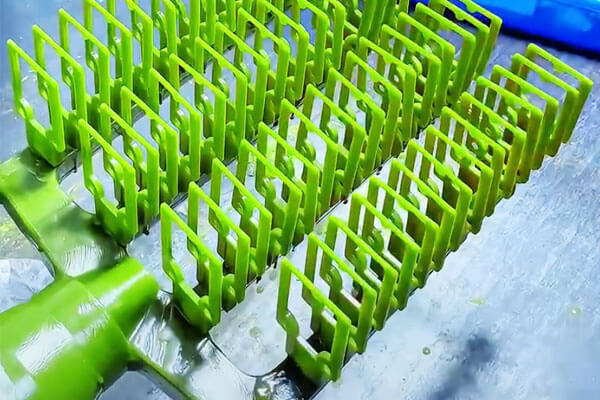
Bireysel balmumu desenleri bir şekilde monte edilir küme veya ağaç, Bu, üretim verimliliğini artırır ve tek kalıp döngüsünde birden fazla dökümün üretilmesine olanak tanır.
Küme düzeni
Desenler arasındaki boşluk, kaplama ve kuruma sırasında kabuğun karışmasını önlemek için yeterli olmalıdır..
Küme başına parça sayısı da fırın kapasitesiyle eşleşmelidir, dökme ritmi, ve alaşım katılaşma davranışı.
Yolluk tasarımı
Geçit sistemi desteklemelidir:
- pürüzsüz doldurma,
- düşük türbülans,
- ve kontrollü metal akışı.
Türbülans riskini arttırdığı için laminer akış tercih edilir.:
- hava sürükleme,
- oksit katlama,
- ve cüruf dahil.
Daha zorlu alaşımlar için, özellikle yüksek alaşımlı çelikler ve süper alaşımlar, alt geçit veya kademeli koşucu düzenlemeleri yaygın olarak kullanılır.
Yüzen yabancı maddeleri boşluğa girmeden önce durdurmak için cüruf tutucular veya yolluk uzantıları eklenebilir.
Yükseltici düzeni
Yükselticiler, katılaşma sırasında metalin beslenmesini sağlamak için sıcak noktalara ve son katılaşma bölgelerine konumlandırılmıştır.. Bu önlemek için gereklidir:
- büzülme boşlukları,
- mikro gözeneklilik,
- ve merkez çizgisi daralması.
Geniş donma aralığına sahip alaşımlar için, Sağlıklı besleme davranışını sürdürmek için birden fazla yardımcı yükseltici gerekebilir.
3.3 Seramik Kabuk İmalatı (Hassas Dökümün Temel Süreci)
Seramik kabuk yapımı en çok zaman alan ve teknik açıdan zorlu bir prosedürdür.
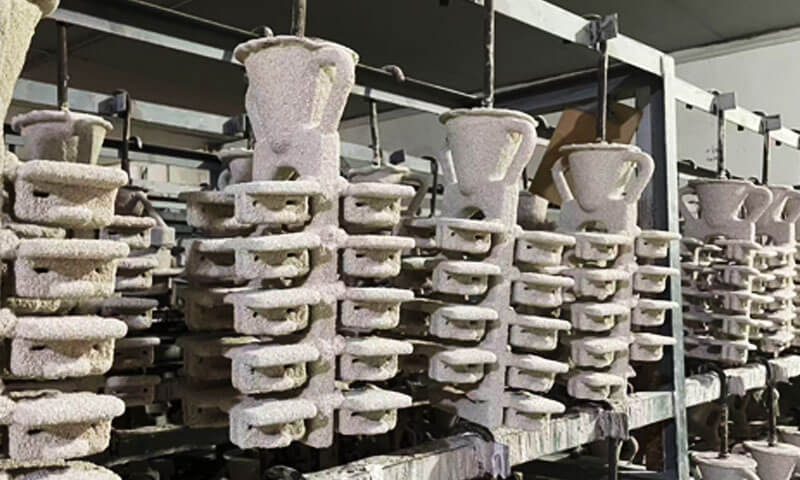
Kabuk, refrakter bulamaç ve kuru kum sıvanın tekrar tekrar kaplanmasıyla oluşturulur., yüz ceketine bölünmüş, Farklılaştırılmış refrakter malzeme ve işlevlere sahip geçiş kaplaması ve yedek kaplama.
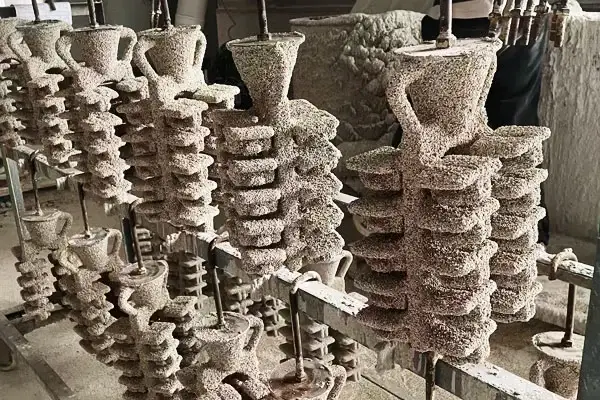
Katmanlı yapı ve malzeme uyumu
- Yüz ceketi (yüzey katmanı): Yüksek sıcaklıktaki erimiş metalle doğrudan temas eder, ultra yüksek refrakterlik ve kimyasal inertlik gerektiren.
Yüksek kaliteli paslanmaz çelik ve süper alaşımlar için, yüksek saflıkta zirkon unu ve zirkon kumu benimsendi; genel karbon çeliği için, erimiş alümina yaygın olarak kullanılır.
Bu katman metalin nüfuz etmesini önler, erimiş metal ile refrakter arasında kum yapışması ve kimyasal reaksiyon. - Geçiş ceketi: Pişirme ve dökme sırasında kabuğun delaminasyonunu önlemek için ön kaplama ile yedek kaplama arasındaki bağlanma gücünü artırır.
- Yedek kat (arka katman): Kabuğun genel yapısal gücünü artırmak ve kapsamlı malzeme maliyetini azaltmak için düşük maliyetli kuvars kumu ve mulit agregası kullanır.
Kurutma kontrolü:
Kaplanan her katman sabit sıcaklıkta tamamen doğal kurumaya tabi tutulmalıdır. (22~26°C) ve sabit nem (55%~e bağıl nem).
Yetersiz kurutma, kabuğun içinde artık serbest su bırakır, Bu bir hidrojen kaynağı haline gelir ve dökümlerde iğne deliği gözenekliliğine neden olur.
Toplam kabuk katmanı sayısı şu aralıklardadır: 8 ile 12; kalın duvarlı büyük dökümler daha fazlasını gerektirir 12 Daha fazla dayanıklılık için katmanlar.
Bağlayıcı farklılaşması:
Bağlayıcı türü kabuğun refrakterliğini belirler, kirlilik içeriği ve genel performans, Bu aynı zamanda önemli hassas döküm teknik rotalarının sınıflandırılmasının da temelini oluşturur.
3.4 Çiğneme
Mum alma, desen malzemesini seramik kabuktan çıkarır ve daha sonra erimiş metalle doldurulacak içi boş boşluk oluşturur.
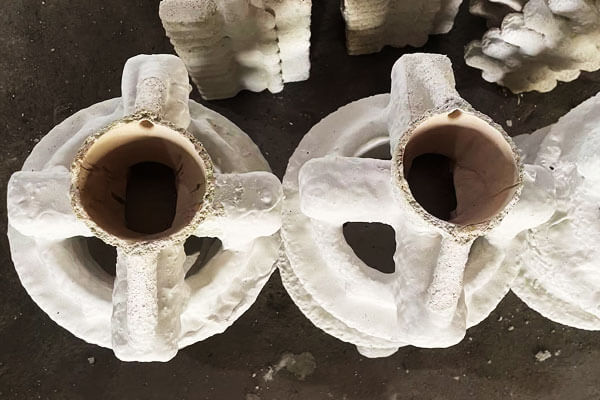
Standart endüstriyel yöntem
Tercih edilen endüstriyel yöntem yüksek basınçlı buharla mum giderme. Bu yaygın olarak kullanılır çünkü mumu hızlı bir şekilde çıkarır ve kabuk hasarı riskini azaltır.
Proses kontrolü
Buharla mum alma işlemi dikkatli bir şekilde kontrol edilmelidir, böylece:
- balmumu tamamen erir,
- kabuk termal şok nedeniyle çatlamaz,
- ve boşluğun içinde hiçbir kalıntı kalmaz.
Kalan mum ciddi bir sorundur çünkü daha sonraki pişirme sırasında ayrışabilir ve karbon kirliliğine neden olabilir., gaz evrimi, veya son dökümde yüzey kusurları.
Malzeme kurtarma
Geri kazanılan balmumu genellikle toplanır, filtrelenmiş, ve geri dönüştürülmüş, süreç ekonomisini iyileştiren ve malzemenin yeniden kullanımını destekleyen.
3.5 Kabuk Pişirme ve Ön Dökme Ön Isıtma
İçi boş seramik kabuğun, organik kalıntıları tamamen gidermek için bölümlü yüksek sıcaklıkta ateşlemeye ihtiyacı var, Refrakter parçacıkları sinterleyin ve kabuk yapısını stabilize edin; Erimiş metal sıcaklığına uyum sağlamak için dökmeden önce ön ısıtma yapılır.
Parçalı ateşleme
Mermi ateşlemesi genellikle aşamalar halinde gerçekleştirilir:
- Düşük sıcaklık aşaması: kalıntı organikleri ve iz mumunu giderir
- Orta sıcaklık aşaması: bağlı nemi giderir ve kalan bağlayıcı kalıntılarını ayrıştırır
- Yüksek sıcaklık aşaması: Refrakter kabuğu sinterler ve nihai mukavemeti oluşturur
Bu aşamalı ısıtma, kabuğun çatlamasını önler ve kabuğun stabil bir termal ve yapısal duruma ulaşmasını sağlar..
Dökmeden önce ön ısıtma
Ateşlenen kabuk daha sonra kalıp ile erimiş metal arasındaki sıcaklık farkını azaltmak için önceden ısıtılır.. Ön ısıtma yardımcı olur:
- doldurmayı iyileştir,
- hatalı çalıştırma ve soğuk kapatma riskini azaltın,
- termal şoku en aza indirin,
- ve doldurma sırasında daha ince bölümleri destekler.
Tam ön ısıtma aralığı alaşıma bağlıdır, bölüm kalınlığı, ve kısmen karmaşıklık.
3.6 Erime, Atmosfer Kontrolü, ve Dökme
Metalurjik saflığın ve kalıp dolumunun kararlaştırıldığı aşamadır..
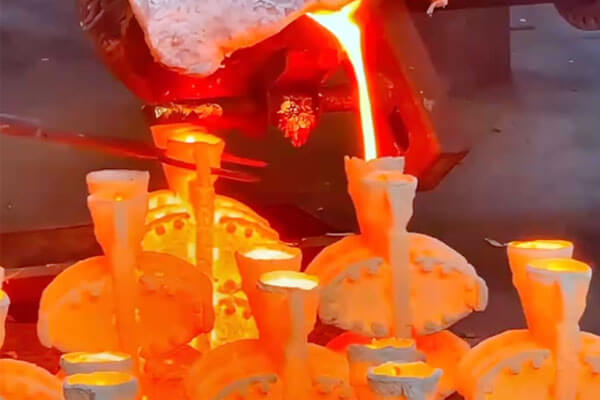
Eritme ekipmanı
Eritme yöntemi alaşım ailesine uygun olmalıdır:
- Orta frekanslı indüksiyon ocağı genel endüstriyel dökümler için
- Vakum indüksiyonlu eritme (Vim) nikel alaşımları için, titanyum alaşımları, ve yüksek saflıkta paslanmaz çelikler
Atmosfer kontrolü
Atmosfer gereksinimleri alaşıma bağlıdır:
- sıradan karbonlu çelikler hava bazlı sistemlerde eritilebilir,
- paslanmaz çelikler ve bakır alaşımları genellikle nitrojen veya argon koruması gerektirir,
- ve reaktif veya yüksek performanslı alaşımlar, vakum veya yüksek düzeyde kontrollü atmosferler gerektirir.
Dökme sıcaklığı kontrolü
Döküm sıcaklığı hassas dökümde en hassas değişkenlerden biridir. Çok yüksekse, ayrışma ve mikro gözeneklilik riski artışı.
Çok düşükse, akışkanlık düşer ve hatalı çalıştırma veya soğuk kapatma olasılığı artar.
Kızgınlık alaşımın kimyasına uygun olmalıdır, akışkanlık, ve katılaşma davranışı.
Dökme modu
Yerçekimiyle dökme en yaygın yöntemdir. Ultra ince veya oldukça karmaşık parçalar için vakum destekli dökme kullanılabilir.
Yöntem ne olursa olsun, Akış mümkün olduğunca sabit ve laminer kalmalıdır.
3.7 Soğutma, Shakeout, ve Birincil Temizlik
Döküldükten sonra, metal kontrollü koşullar altında katılaşmalı ve soğumalıdır.
Soğutma rejimi
Seramik kabuğun içindeki dökümler doğal yavaş soğutmayı benimser.
Termal çatlamaya eğilimli alaşımlar için (yüksek alaşımlı paslanmaz çelik ve süper alaşımlar gibi), katılaşma stresinin kademeli olarak ortadan kaldırılması için zorla hızlı soğutma yasaktır.
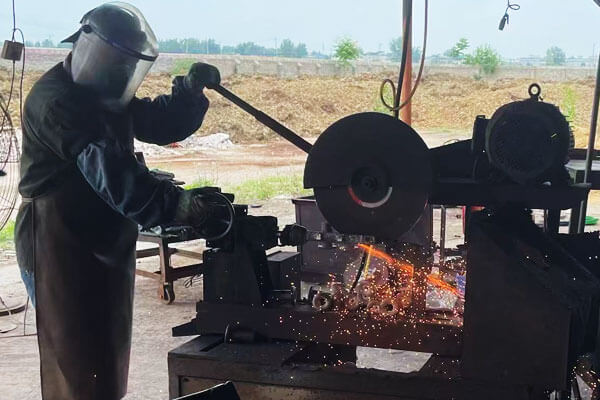
Kabuk kaldırma
Döküm oda sıcaklığına ulaştığında, seramik kabuk kaldırılır:
- mekanik titreşim,
- yüksek basınçlı su,
- veya kumlama gibi aşındırıcı temizleme yöntemleri.
Amaç, döküm yüzeyine zarar vermeden tüm kabuk kalıntılarını çıkarmaktır..
Birincil kırpma
Bu aşamada, döküm yolluk ve yükseltici sistemden ayrılmıştır.
Fazla malzeme kaldırılır, ve ilk taşlama veya temizleme adımları konnektör bölgeleri ve kesme noktalarında gerçekleştirilir.
3.8 İşlem Sonrası ve Son İşlem
Döküm gövdesi üretildikten sonra, son boyutu karşılamak için ek işlemler kullanılır, mekanik, ve yüzey gereksinimleri.
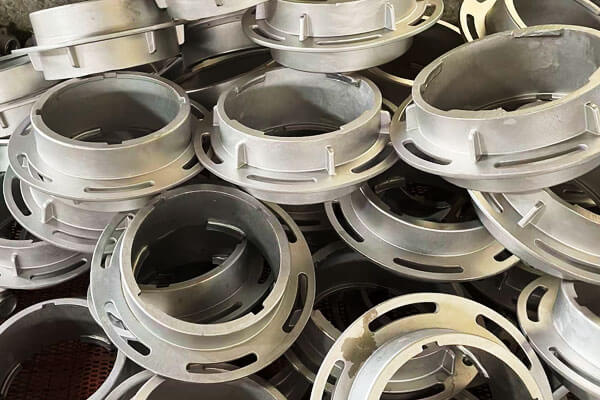
Ortak işlem sonrası adımlar
- Hassas taşlama ve çapak alma
- Isıl işlem
- Yüzey kaplaması
- Hassas işleme
- Tahribatsız muayene
- Nihai boyutsal inceleme
Isıl işlem
Isıl işlem yolu alaşıma bağlıdır:
- karbon çeliği normalleştirme gerektirebilir, söndürme, ve temperleme,
- paslanmaz çeliğin çözelti tavlamasına ihtiyacı olabilir,
- çökelmeyle güçlendirilmiş alaşımlar çözelti artı yaşlandırma gerektirebilir.
Bu adım, mikro yapıyı stabilize etmek ve nihai mekanik özelliklere ulaşmak için gereklidir..
Yüzey işleme
Uygulamaya bağlı olarak, parça alınabilir:
- atış patlaması,
- turşu,
- pasivasyon,
- Eloksal,
- elektrolizasyon,
- veya koruyucu kaplama.
Hassas işleme
gibi kritik yüzeyler:
- montaj yüzleri,
- dişli delikler,
- yüzeylerin yerini belirleme,
- ve sızdırmazlık alanları
küçük paylarla ek işleme gerektirebilir.
Denetleme
Nihai kalite kontrolü genellikle şunları içerir::
- penetran testi,
- radyografik test,
- ultrasonik test,
- ve boyutsal ölçüm.
Yalnızca gerekli tüm kontrolleri geçen parçalar sınıflandırılır, paketlenmiş, ve teslim edildi.
4. Ana Akım Döküm Teknolojilerinin Sınıflandırılması
Ana akım yatırım dökümünü sınıflandırmanın en pratik yolu, seramik kabuğu oluşturmak için kullanılan bağlayıcı sistem.
Mevcut endüstriyel uygulamada, üç baskın rota şunlardır: su bardağı hassas döküm, Silika Sol Yatırım Dökümü, Ve kompozit hassas döküm.
Bu sınıflandırma yaygın olarak kullanılmaktadır çünkü bağlayıcı doğrudan kabuk mukavemetini etkilemektedir., boyutsal doğruluk, yüzey kalitesi, kabuk yapma döngüsü, ve her rotanın destekleyebileceği alaşım aileleri.
Su Camı Yatırım Dökümü
Su camı hassas döküm kullanma sodyum silikat kabuk bağlayıcı olarak.
Sektör tanımları, bunu nispeten kısa kabuk yapım döngüsü ve düşük maliyetli bir süreç olarak nitelendiriyor, bu da onu ekonominin önemli olduğu üretim için cazip kılıyor.
Aynı zamanda, birden fazla kaynak, su camı kabuklarının genellikle daha düşük boyutsal doğruluk ve daha yüksek yüzey pürüzlülüğü silika-sol kabuklardan daha.
Dolayısıyla bu rota en iyi şekilde şu şekilde anlaşılır: maliyet odaklı hassas döküm yöntemi.
Karbon çeliği için yaygın olarak kullanılır, alçak çelik, alüminyum alaşımı, ve bakır alaşımlı dökümler, süreç dengesinin en yüksek yüzey veya tolerans seviyesinin üzerinde üretkenliği ve fiyatı desteklediği yer.
Silika Sol Yatırım Dökümü
Silika-sol hassas döküm kullanma kolloidal silika bağlayıcı olarak.
Teknik kaynaklar bunu sürekli olarak daha yüksek hassasiyetli rota olarak tanımlıyor: daha iyi boyutsal ve geometrik toleranslar sunar, daha pürüzsüz yüzey kalitesi, ve su camı dökümüne göre daha güçlü genel kabuk performansı.
Aynı zamanda daha uzun kabuk oluşturma süresi ve daha yüksek maliyetle de ilişkilidir., çünkü hassasiyet daha kontrollü kabuk üretimiyle elde edilir.
Bu rota genellikle tercih edilen seçenektir. paslanmaz çelik, ısıya dayanıklı çelik, ve yüksek performanslı alaşımlı dökümler, özellikle parçanın ince detaylara ihtiyaç duyduğu yerde, güvenilir yüzey kalitesi, ve daha sıkı tolerans kontrolü.
Pratikte, silika sol, proses kalitesinin alaşım performansıyla eşleşmesi gereken zorlu endüstriyel parçalarla en sık bağlantılı yoldur.
Kompozit Hassas Döküm
Kompozit hassas döküm bir hibrit yaklaşım Hassasiyeti dengelemek için her iki bağlayıcı sistemin unsurlarını birleştiren, üretkenlik, ve maliyet.
Dökümhane kaynakları bu tür rotayı pratik bir orta yol olarak tanımlıyor, kabuk tasarımının veya bağlayıcı seçiminin, prosesin silika sol gibi tamamen yüksek maliyetli olmayacak şekilde ayarlandığı yer, ama aynı zamanda saf su camı bombardımanı kadar maliyet açısından kısıtlı değil.
Mühendislik açısından, parça ihtiyaç duyduğunda kompozit rota kullanılır tam silika-sol dökümden daha iyi ekonomi ama aynı zamanda ihtiyacı var saf su camı dökümünden daha kaliteli.
Kesin uygulama dökümhaneye göre değişir, çünkü kompozit sistemler büyük oranda yüzey kaplamasının nasıl yapıldığına bağlıdır, yedek kat, ve bağlayıcı kimyası birleştirilir.
5. Tipik Döküm Kusurları: Kök Nedenler ve Hedeflenen İyileştirici Önlemler
Yatırım kadrosu, kesinliğine rağmen, çeşitli kusur türlerine karşı hassastır. Aşağıdaki tablo yaygın kusurları özetlemektedir, onların kökenleri, ve düzeltici eylemler.
| Kusur | Görsel / NDT imzası | Ana neden | İyileştirici önlemler |
| Gaz gözenekliliği | Yuvarlak, pürüzsüz duvarlı iç boşluklar | Çözünmüş gazlar (H₂, N₂) erimiş metalde; düşük deoksidasyon | Vakumlu eritme; inert gazla gaz giderme; uygun deoksidasyon uygulaması |
| Büzülme gözenekliliği | Pürüzlü, düzensiz boşluklar | Yetersiz besleme; zayıf yükseltici tasarımı | Yükseltici boyutunu artırın; titreme ekle; yönlü katılaşmayı teşvik etmek için geçidi değiştirin |
| Sıcak gözyaşı | Düzensiz çatlak, oksitlenmiş kenarlar | Geç katılaşma sırasında çekme gerilimi; kalıp kısıtlaması | Kabuk sertliğini azaltın; daha düşük dökme sıcaklığı; alaşım kompozisyonunu değiştir |
| Dahil etme (cüruf, cüruf) | Düzensiz metalik olmayan parçacıklar | Türbülanslı dökme; kirli eriyik; aşınmış refrakter | Temiz şarj kullan; seramik filtreler; alttan dökme; nazik doldurma |
Yüzey pürüzlülüğü / damarlanma |
Dökümde yükseltilmiş çizgiler veya “kanatçıklar” | Doldurma sırasında kabuğun çatlaması; düşük kabuk mukavemeti | Kabuk kalınlığını artırın; daha yüksek bağlayıcı içeriği; daha güçlü refrakter kullanın |
| Mısır / soğuk kapatma | Eksik doldurma; katlanmış yüzey | Düşük dökme sıcaklığı; zayıf akışkanlık; ince kesit | Dökme sıcaklığını artırın; geçitlemeyi iyileştir; kalıbı tahliye etmek (vakum dökümü) |
| Çekirdek değişimi | Duvar kalınlığı değişimi | Kabuk oluşturma veya dökme sırasında çekirdek hareketi | Daha iyi çekirdek desteği (tesbihler); daha yavaş kabuk kuruması; daha düşük dökme basıncı |
6. Kum Döküm ile Karşılaştırma, Döküm, ve Dövme
Mühendisler genellikle hassas dökümü üç alternatif üretim yöntemiyle karşılaştırır.. Aşağıdaki tablo niceliksel bir denge sağlar.
| Değerlendirme kriteri | Hassas Döküm | Kum dökümü | Döküm (HPDC) | Dövme |
| Yüzey kaplaması (Ra, uM) | 1.6–6.3 | 6.3–25 | 0.8–3.2 | 0.4–3.2 |
| Boyutsal tolerans (mm / 25 mm) | ±0,1–0,3 | ±0,5–1,0 | ±0,1–0,3 | ±0,05–0,2 |
| Asgari pratik bölüm (mm) | 0.5–1.5 | 3–5 | 0.5–1.0 | 1–3 |
| Geometrik karmaşıklık | Çok yüksek; alt kesimler, İnce Detaylar, dahili özellikler | Çekirdeklerle yüksek, ancak sınırlı hassasiyet | Ilıman; sınırlı alttan kesme yeteneği | Düşük ila orta; daha basit şekiller için en iyisi |
| Maddi kullanım | 90–95 | 60–80 | 90–95 | 60–80 |
| Takım maliyeti | Orta ila yüksek | Düşük ila orta | Yüksek | Çok yüksek |
| Yüksek hacimde parça başına maliyet | Ilıman | Düşük | Çok düşük | Ilıman |
| Düşük hacimde parça başına maliyet | Takımlar amortismana tabi tutulmadığı sürece yüksek | Düşük ila orta | Alet yükü nedeniyle pratik değil | Çok yüksek |
| Tipik maksimum ağırlık | Yaklaşık olarak 150 kg çelik dökümler için | Çok büyük; üzerinde 10,000 kg mümkün | Tipik olarak yaklaşık 15 kilogram | Üzerinde 500 kg mümkün |
| Alaşım aralığı | Hemen hemen tüm dökülebilir alaşımlar | Hemen hemen tüm dökülebilir alaşımlar | Çoğunlukla demir dışı alaşımlar | Tüm Metaller, ancak geometri sınırlı |
7. Hassas Dökümün Endüstriyel Uygulamaları
Yatırım dökümü endüstrilerde kullanılır. geometrik karmaşıklık, yüzey kalitesi, alaşım performansı, ve tekrarlanabilirlik mümkün olan en düşük üretim maliyetinden daha önemlidir.
Havacılık ve gaz türbinleri
Havacılık, hassas döküm için teknik açıdan en zorlu uygulama alanlarından biridir.
Gibi bileşenler türbinli bıçaklar, kanat, yakıt nozulları, difüzör kılıfları, ve diğer sıcak bölüm parçaları genellikle karmaşık kanat profili geometrisi gerektirir, ince duvarlar, hassas iç geçişler, ve mükemmel yüksek sıcaklık dayanımı.
Nikel bazlı süper alaşımlar ve kobalt bazlı alaşımlar, şiddetli termal ve stres koşulları altında mekanik bütünlüğü koruyabildikleri için yaygın olarak kullanılmaktadır..
Tıbbi cihazlar ve implantlar
Tıbbi uygulamalar süreç üzerinde farklı talepler doğurur.
Gibi parçalar ortopedik implantlar, kalça sapları, diz tepsileri, cerrahi aletler, ve hassas anatomik donanım biyouyumluluk gerektirir, yüzey kalitesi, boyutsal doğruluk, ve güvenilir mekanik performans.
Ortak malzemeler içerir 316L Paslanmaz Çelik, Co-Cr-Mo alaşımları, ve Ti-6al-4V gibi titanyum alaşımları.
Otomotiv ve ulaşım
Otomotiv sektöründe, hassas döküm aşağıdaki gibi bileşenler için kullanılır: turboşarj tekerlekleri, egzoz manifoldları, EGR ile ilgili bileşenler, vites çatalları, parantez, ve diğer yüksek performanslı donanımlar.
Bu parçalar genellikle ısı direnci dengesi gerektirir, kilo kontrolü, ve geometrik karmaşıklık.
Termal ve mekanik yük durumuna bağlı olarak paslanmaz çelikler ve yüksek karbonlu veya alaşımlı çelikler yaygın olarak kullanılır..
Petrol ve gaz, kimyasal işleme, ve sıvı yönetimi
Petrol, gaz ve kimya endüstrileri büyük ölçüde yatırım dökümüne güvenmektedir. valf gövdeleri, pompa pervaneleri, akış ölçer muhafazaları, bağlantı parçaları, ve korozyona dayanıklı akış bileşenleri.
Tipik malzemeler şunları içerir: CF-8M tipi paslanmaz çelik, dubleks paslanmaz çelikler, ve nikel bazlı korozyona dayanıklı alaşımlar.
Enerji üretimi ve termal ekipmanlar
Enerji üretimi, yatırım dökümünü en zorlu hizmet koşullarından bazılarına dahil ediyor.
Gibi bileşenler yanma gömlekleri, geçiş parçaları, meme halkaları, ve diğer sıcak gaz donanımı Oksidasyona maruz kalırlar, termal bisiklet, ve yüksek sıcaklıkta gaz akışı.
Paslanmaz çelikler gibi 310 ve nikel bazlı alaşımlar gibi Mızmız 625 yüksek sıcaklık yeteneklerinden dolayı yaygın olarak kullanılır.
10. Çözüm
Yatırım dökümü olgun bir şeydir, çok dallı ve sürekli gelişen hassas metal şekillendirme teknolojisi.
Temel değeri, geleneksel kalıpların yapısal sınırlamalarını kırmak ve karmaşık yüksek performanslı bileşenlerin entegre, net şekle yakın şekillendirilmesini gerçekleştirmektir..
Üç ana akım bağlayıcı bazlı teknik yol, net bir hiyerarşik pazar oluşturur: Düşük maliyetli su camı hassas döküm, genel endüstriyel orta hassasiyetli parçalara hakimdir,
yüksek saflıkta silika sol hassas döküm, havacılık ve uzay alanında üst düzey hassas bileşenler için altın standart haline gelirken, tıbbi ve ileri teknoloji enerji alanları.
Hassas dökümlerin kalitesi, mum model imalatının tam zincirli hassas kontrolüne bağlıdır, kabuk yapımı, çiğneme, ateşleme, eritme ve dökme.
Her proses parametresi ve operasyonel norm birbirine bağlıdır, ve herhangi bir ihmal, ardı ardına gelen kusurları tetikleyecektir.
Her ne kadar bazı senaryolarda üretim döngüsü ve maliyet nedeniyle kısıtlanmış olsa da, karmaşık yapı oluşturmada benzersiz avantajları, metalürjik kalite ve malzeme uyarlanabilirliği, üst düzey üretimde yeri doldurulamaz statüsünü garanti eder.
Akıllı üretime dayalı, Yeşil üretim ve yeni malzeme yinelemesi, modern hassas döküm teknik darboğazları daha da aşacak, Üretim verimliliğini artırın ve kapsamlı maliyetleri azaltın.
Temel bir hassas döküm teknolojisi olarak, küresel üst düzey ekipman üretiminin geliştirilmesini desteklemeye ve gelişen endüstrilerdeki uygulama sınırlarını genişletmeye devam edecek.
SSS
Hassas dökümün arkasındaki ana fikir nedir??
Tek kullanımlık bir balmumu veya plastik desen, seramik bir kabukla çevrelenmiştir, desen kaldırıldı, ve net şekle yakın bir parça oluşturmak için erimiş metal boşluğa dökülür.
Kum dökümü yerine hassas döküm neden seçilir??
Çünkü genellikle daha ince ayrıntılar verir, Daha iyi yüzey kaplaması, ve daha sıkı toleranslar, bitirme işini azaltan.
Hangi bağlayıcı sistem en yüksek hassasiyeti sağlar??
Silika sol genellikle en yüksek hassasiyet için kullanılır, pürüzsüz yüzeyli hassas dökümler, su camı sistemleri daha maliyet odaklıdır.
En yaygın kusurlar nelerdir?
Kapsama, gözeneklilik, büzülme kusurları, yanlış çalıştırma/soğuk kapatma, ve kabuk çatlaması en yaygın döküm sorunları arasındadır..