1. Увођење
Aluminum foil is a ubiquitous material, налази се у скоро сваком домаћинству и индустријском окружењу.
From preserving food to providing thermal insulation, it plays a vital role in numerous applications across various sectors.
Its ability to block moisture, светло, and air makes it indispensable in food preservation,
while its thermal and electrical properties have cemented its place in industries ranging from construction to electronics.
In addition to its versatility, aluminum foil stands out for its lightweight nature, Рециклирање, и економичност, ensuring that it remains a key material in an ever-evolving world.
As demand grows in packaging, ваздухопловство, електроника, and even construction, this material continues to evolve, offering numerous benefits and innovations.
This article will offer a multi-dimensional analysis of aluminum foil, diving into its properties, Производни процеси, користи, предности, disadvantages, и будући трендови.
2. What Is Aluminum Foil?
Алуминијум foil is a thin, flexible sheet of aluminum metal that is typically less than 0.2 mm in thickness.
It is commonly used for wrapping, covering, and insulating due to its excellent barrier properties.

Produced by rolling aluminum ingots through multiple passes to achieve the desired thinness, aluminum foil can be produced with either a glossy or matte finish.
Its lightweight, нетоксичан, and malleable nature make it suitable for a wide range of applications, from food packaging to industrial uses.
3. Key Properties of Aluminum Foil
Aluminum foil, widely recognized for its versatile applications, exhibits a range of unique properties that make it indispensable across industries.
These properties can be broadly categorized into chemical, физички, and mechanical aspects, each contributing to the material’s widespread utility.
Хемијска својства
Aluminum foil is renowned for its remarkable corrosion resistance, primarily due to the formation of a thin, protective oxide layer on its surface when exposed to air.
This oxide layer acts as a natural barrier, shielding the aluminum from further oxidation and enhancing its durability in various environments.
Надаље, aluminum foil is relatively inert to most chemicals, making it an ideal material for packaging and food preservation.
It resists the effects of acids, alkaline substances, and other corrosive agents, which is a major reason it is commonly used in food and pharmaceutical industries.
Међутим, it can react with strong bases like sodium hydroxide, forming soluble aluminum compounds.
Aluminum foil is also resistant to the degradation effects of ultraviolet (Ув) зрачења, which helps protect sensitive products when used in packaging.
The material’s ability to reflect light and UV rays also plays a crucial role in preserving the integrity of food, фармацеутски производи, and other materials sensitive to light and temperature.
Физичка својства
Aluminum foil has a distinctive set of physical properties that make it highly desirable in various applications. Some of the key physical properties include:
- Лагана: Aluminum foil is significantly lighter than other metals, which contributes to its widespread use in packaging and transportation industries.
- Топлотна проводљивост: Aluminum is an excellent conductor of heat, which makes foil ideal for cooking, печење, и изолација.
It efficiently transfers heat to food or protects sensitive materials from high temperatures. - Transparency and Reflectivity: Aluminum foil is highly reflective, particularly to infrared radiation.
This property is often exploited in applications requiring thermal insulation or heat management, such as in construction and automotive industries.
Додатно, its light reflectivity makes it valuable in creating barriers to light and heat. - Non-toxic and Odorless: Aluminum foil is non-toxic, odorless, and tasteless, ensuring that it does not alter the flavor or quality of food when used in packaging or cooking.
- Flexibility and Thinness: Despite its thinness, aluminum foil is flexible and can be easily molded to fit various shapes, making it ideal for wrapping products of different sizes and forms.
Механичка својства
The mechanical properties of aluminum foil are critical in determining its suitability for various industrial uses.
These properties govern its strength, месавост, and durability in different applications:
- Омјер снаге до тежине: Aluminum foil possesses a high strength-to-weight ratio, meaning it is strong relative to its lightweight nature.
While it is not as strong as other metals like steel, its lightweight characteristic combined with adequate strength makes it ideal for packaging and insulation materials. - Дуктилност: One of the most notable mechanical properties of aluminum foil is its ductility.
This means that aluminum foil can be easily stretched or bent without breaking, allowing it to be formed into various shapes and sizes without compromising its integrity.
This property is particularly important in applications where precise molding and packaging are necessary. - Затезна чврстоћа: Aluminum foil generally exhibits moderate tensile strength, meaning it can withstand moderate pulling forces.
Међутим, it is important to note that the foil’s tensile strength can vary depending on the thickness and specific alloy used in its production. - Tear Resistance: While aluminum foil is flexible and thin, it also has a certain degree of tear resistance.
Међутим, it is susceptible to tearing under high stress, especially if the foil is too thin.
Thicker aluminum foils tend to be more resistant to tearing, making them suitable for industrial and heavy-duty applications. - Отпорност на умор: Aluminum foil shows good fatigue resistance, meaning it can endure repeated stress or strain without failing.
This characteristic makes it a durable material for applications requiring repeated handling or use, such as in food packaging or insulation.
4. Different Types of Aluminum Foil
Aluminum foil is highly versatile and used in various applications, ranging from packaging to insulation.
The diverse types of aluminum foil are tailored to meet specific requirements based on thickness, издржљивост, и флексибилност.
Each type is designed with unique characteristics to suit different industrial, комерцијалан, and consumer needs.
У овом одељку, we will explore the different types of aluminum foil, њихове апликације, and their specific advantages.
Household Aluminum Foil
Household aluminum foil is the most common type found in kitchens worldwide. It is typically available in rolls and is used primarily for cooking, печење, and food storage.

This foil type is usually thin, флексибилан, and easy to tear. It serves as an excellent barrier against light, влагу, and air, keeping food fresh for longer periods.
Додатно, its ability to withstand high temperatures makes it a popular choice for grilling and roasting.
- Апликације: Food storage, cooking, grilling, wrapping leftovers.
- Кључне карактеристике: Лагана, флексибилан, and cost-effective.
Heavy-Duty Aluminum Foil
Heavy-duty aluminum foil is thicker than regular household foil, making it more robust and resistant to tearing.
This type is designed for tougher applications, including commercial and industrial uses where more durability is required.
Heavy-duty foil can withstand more pressure, and it is often used in environments where food or materials are exposed to extreme temperatures or heavy handling.
- Апликације: Industrial applications, печење, печење, wrapping large items, and heavy-duty packaging.
- Кључне карактеристике: Increased thickness, higher durability, and resistance to tearing.
Colored Aluminum Foil
Colored aluminum foil is coated with dyes to give it various colors, often used for decorative or branding purposes.
It maintains all the essential properties of regular aluminum foil, such as flexibility and durability, but adds a visual appeal.
This type of foil is often used in premium food packaging, gift wrapping, and promotional materials.
- Апликације: Gift packaging, decorative wrapping, branded food packaging.
- Кључне карактеристике: Attractive appearance, same functional properties as regular aluminum foil.
Laminated Aluminum Foil
Laminated aluminum foil consists of a combination of aluminum foil and other materials like plastic films, папир, or fabric.
This multilayered construction provides enhanced properties, such as added strength, изолација, and resistance to puncturing.

Laminated foils are commonly used for medical packaging, електроника, and sensitive goods that require protection from moisture, ваздушни, and light.
- Апликације: Pharmaceutical packaging, електроника, flexible food packaging.
- Кључне карактеристике: Multiple layers, superior moisture and oxygen barrier, added durability.
Embossed Aluminum Foil
Embossed aluminum foil is a type of foil that has been pressed with a textured pattern, typically to increase the strength of the foil or to give it a distinct appearance.
This texture also enhances its ability to grip and adhere to surfaces, making it useful for specific applications like insulation and packaging.
- Апликације: Изолација, decorative packaging, and specialty applications.
- Кључне карактеристике: Textured surface, added strength, и естетика.
Aluminum Foil with Non-stick Coating
Non-stick aluminum foil has a special coating that prevents food from sticking to it, making it ideal for baking and grilling.
The non-stick surface makes cleanup easier, and it helps prevent the foil from tearing when used with delicate foods such as fish, cheese, or baked goods.
- Апликације: Cooking, печење, grilling, and wrapping delicate food.
- Кључне карактеристике: Нејасна површина, easy cleanup, retains durability.
Industrial Aluminum Foil
Industrial aluminum foil is designed for use in specialized applications that require high-performance materials.
This type of foil can be engineered to meet strict specifications regarding thickness, затезна чврстоћа, и отпорност на топлоту.
It is commonly used in construction, ХВАЦ системи, and other sectors that require insulation or protection from heat and moisture.
- Апликације: Изолација, ХВАЦ системи, industrial packaging, и топлотни штитници.
- Кључне карактеристике: Customized thickness, висока затезна чврстоћа, excellent heat resistance.
Micronized Aluminum Foil
Micronized aluminum foil is characterized by its extremely fine thickness, making it highly efficient in applications requiring a very thin, precise layer.
This type of foil is often used in packaging for sensitive products or in applications where weight and space savings are critical.
- Апликације: High-tech packaging, ваздухопловство, automotive industries.
- Кључне карактеристике: Ultra-thin, лаган, and precise thickness.
5. Commonly Used Aluminum Grades for Aluminum Foil
Aluminum foil is manufactured using different grades of aluminum, each tailored to meet specific application requirements.
The choice of grade depends on factors like strength, флексибилност, отпорност на корозију, and the intended use.
Below is an overview of some commonly used aluminum grades for foil production, along with their unique properties and applications:
1050 Алуминијумска фолија
One of the most common aluminum grades used for foil, 1050 алуминијум boasts excellent formability and high thermal and electrical conductivity.
This grade is known for its low strength but is highly flexible, making it an ideal choice for applications such as food packaging, insulation materials, and decorative foils.
The high purity of 1050 алуминијум, which contains 99.5% чисти алуминијум, ensures excellent corrosion resistance, a key feature in environments where moisture or other corrosive elements are present.
1100 Алуминијумска фолија
Слично 1050 алуминијум, 1100 алуминијум is a high-purity grade that contains 99% чисти алуминијум, but it is slightly stronger.
The addition of small amounts of copper enhances its strength and durability, making it ideal for industrial applications where both flexibility and strength are needed.

This grade is often used in applications that require resistance to oxidation and corrosion but still need easy formability.
3003 Алуминијумска фолија
3003 алуминијум is an alloy that combines aluminum with manganese to improve strength while maintaining excellent formability.
This grade of aluminum is highly resistant to corrosion and offers better durability than 1050 или 1100 оцене.
It is commonly used in food packaging, Индустријске апликације, and even in aerospace components due to its strength-to-weight ratio and versatility.
5052 Алуминијумска фолија
Тхе 5052 алуминијумска легура is one of the strongest non-heat-treatable aluminum alloys available, thanks to the addition of magnesium.
It offers excellent resistance to corrosion, particularly in marine environments, and is often used in applications where durability and strength are crucial.
Due to its high tensile strength and excellent fatigue resistance, this grade is often selected for aluminum foil in automotive and aerospace industries.
8011 Алуминијумска фолија
8011 алуминијум is a commonly used aluminum alloy for foil production, particularly in applications where strength, издржљивост, and resistance to corrosion are necessary.
It is a versatile alloy that is widely used in packaging and medical industries.
This grade offers a good balance between strength and flexibility, making it a preferred choice for foil production that requires high-quality performance, such as pharmaceutical and food packaging.
6061 Алуминијумска фолија
Док 6061 алуминијум is typically known for its use in structural applications, it can also be used in thin foil applications where higher strength is needed.
The addition of silicon and magnesium improves the alloy’s strength, and its corrosion resistance makes it ideal for harsh environments.
Међутим, this grade is not as flexible as 1050 или 1100, so it is used in applications requiring both strength and resistance to environmental damage.
6. Manufacturing Processes of Aluminum Foil
The manufacturing of aluminum foil is a sophisticated process that involves several key stages to ensure the foil achieves its desired properties,
such as thinness, снага, флексибилност, and resistance to environmental factors.
This process is carefully controlled to meet the strict specifications of different industries, including food packaging, фармацеутски производи, и индустријске апликације.
Below is an in-depth exploration of the primary steps involved in the production of aluminum foil.
Aluminum Alloy Preparation
The first stage in the manufacturing process begins with the preparation of the aluminum alloy.
This step typically involves the use of high-quality raw aluminum metal, which is often combined with small quantities of other elements,
као што је бакар, магнезијум, or manganese, to achieve specific properties required for the final foil.
The exact combination of elements used in the alloy depends on the intended application of the aluminum foil.
The aluminum ingots or billets are heated in a furnace to a temperature of approximately 450-500°C.
This heating process makes the aluminum malleable and ready for the subsequent stages of rolling and forming.
The specific composition of the alloy plays a critical role in determining the foil’s strength, флексибилност, отпорност на корозију, and other essential characteristics.
Топло котрљање
After the aluminum alloy is prepared, it is subjected to hot rolling.
This process involves passing the heated aluminum ingot through a series of rollers that progressively reduce the thickness of the metal.
The temperature during hot rolling remains elevated, обично између 400 ° Ц и 500 ° Ц, to maintain the material’s malleability and to facilitate the thinning process.
The hot rolling stage produces a relatively thick sheet of aluminum, often referred to as the “mother coil”.
This is a key intermediate product in aluminum foil production. The thickness of the sheet is gradually reduced through repeated passes through the rollers.
Током ове фазе, the aluminum undergoes a combination of both compression and elongation, which gives the metal its initial thinness.
Хладно котрљање
Once the aluminum sheet reaches the desired thickness through hot rolling, it is subjected to cold rolling.
In this stage, the sheet is passed through a series of rollers at room temperature to further reduce its thickness.
Cold rolling provides precise control over the final thickness of the foil, and it also imparts a smooth surface finish, which is particularly important for applications where appearance is critical.
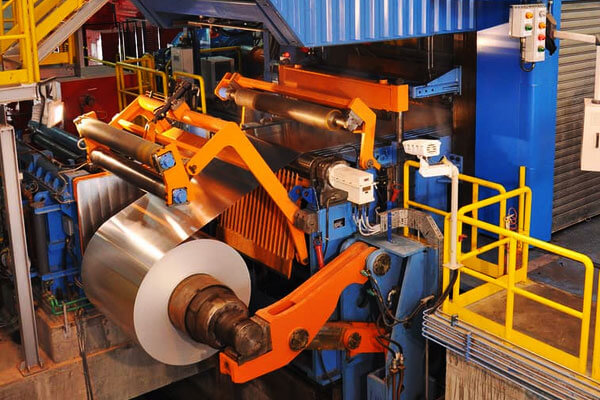
The cold rolling process significantly improves the strength and hardness of the aluminum foil.
The foil becomes less pliable compared to the hot-rolled material but gains enhanced durability and resistance to damage.
Додатно, cold rolling improves the material’s surface quality, ensuring that the foil remains free from defects, such as wrinkles or surface blemishes.
Враголовање
Annealing is a heat treatment process that follows cold rolling and is essential for restoring the aluminum foil’s workability.
After the cold rolling process, the foil becomes harder and less flexible.
Annealing involves heating the foil to a specific temperature, typically between 300°C and 400°C, and then cooling it gradually.
This heat treatment allows the metal to soften and return to a more workable state, improving its formability and flexibility.
The annealing process also enhances the foil’s microstructure, improving its overall strength and performance.
Depending on the exact temperature and duration of annealing, different grades of foil can be produced, ranging from soft, highly flexible foil to stronger, more rigid variants.
The annealing step ensures that the aluminum foil is suitable for various uses, including food packaging, изолација, и индустријске апликације.
Rolling to Final Thickness
Once the aluminum foil has undergone annealing, it is then subjected to the final rolling stage.
This step involves passing the material through a set of rollers that reduce its thickness to a fraction of a millimeter.
Modern rolling mills can achieve an incredibly thin foil, sometimes as thin as 0.005 мм (5 микрони).
У овој фази, precise control over thickness is paramount, as the foil needs to meet strict specifications in terms of gauge (дебљина) and uniformity.
The foil can be rolled to various thicknesses depending on its intended use.
На пример, food packaging foils are typically thinner, while industrial-grade foils may be thicker for added durability.
The rolling process at this stage is crucial for ensuring that the aluminum foil has the desired characteristics, such as flexibility, снага, и трајност.
Slitting
After the aluminum foil reaches its desired thickness, it is then slit into rolls of specific widths.
This is achieved using high-precision slitting machines that carefully cut the large sheets into smaller, manageable rolls.
The width of the rolls can vary depending on the end application, with some foils being slit into wide rolls for industrial applications and others into narrow strips for consumer goods packaging.
During slitting, the foil is also checked for any defects or imperfections that might have occurred during the rolling process.
This ensures that only high-quality foil reaches the final customer. Додатно, slitting allows the foil to be prepared for packaging and distribution.
Surface Treatment and Coating (Опционо)
У неким случајевима, aluminum foil undergoes Површински третмани or coatings to enhance its properties further.
Common treatments include the application of lacquers or other protective coatings that increase the foil’s resistance to corrosion, improve its heat resistance, or enhance its appearance.
На пример, aluminum foil used in food packaging may be coated to improve its barrier properties, preventing the ingress of moisture, кисеоник, и други контаминант.
Surface treatment can also be used to add additional functionality, such as printing or embossing, for branding or decorative purposes.
The coating process is carried out in specialized machines that evenly apply the coating to the foil’s surface, ensuring uniformity and quality.
7. Applications of Aluminum Foil
Aluminum foil is a versatile material that plays an essential role across various industries, from food packaging to electronics and beyond.
Its wide array of applications can be attributed to its unique combination of properties such as malleability, отпорност на корозију, и одлична топлотна проводљивост.
У овом одељку, we will explore the primary uses of aluminum foil, demonstrating how it has become indispensable in both everyday life and industrial processes.
Food Packaging and Preservation
One of the most common and familiar uses of aluminum foil is in food packaging.
Its ability to preserve freshness, extend shelf life, and protect food from contaminants has made it a staple in households and commercial food industries alike.

Aluminum foil is widely used for wrapping perishable goods, such as meat, cheese, and baked products, because it acts as an effective barrier against moisture, ваздушни, and light.
Надаље, it preserves the aroma and prevents the absorption of external odors, ensuring that the food remains fresh for longer periods.
Key advantages of aluminum foil in food packaging:
- Лагана: Aluminum foil is extremely light, which reduces transportation costs and makes it more convenient for consumers.
- Barrier Properties: The foil’s impermeability to light, кисеоник, and moisture protects food items from degradation.
- Топлотна проводљивост: Its ability to retain and reflect heat makes it ideal for cooking, печење, and grilling, ensuring that food cooks evenly and retains its nutrients.
Medical and Pharmaceutical Applications
У медицински поље, aluminum foil serves a variety of critical functions, particularly in packaging medicines, ointments, и таблете.
Pharmaceutical companies rely on aluminum foil’s barrier properties to protect sensitive drugs from external environmental factors such as humidity and light.

In blister packs, aluminum foil serves as a protective layer that ensures the stability and potency of medications over time.
Додатно, aluminum foil is used in medical treatments such as wound care and burns, where its ability to act as a sterile and effective barrier is highly valued.
Key uses in healthcare:
- Blister Packaging: It keeps medications fresh by preventing air and moisture exposure, thus extending shelf life.
- Wound Care: Aluminum foil is often used to cover and protect wounds, burns, and other medical conditions due to its ability to shield against contaminants and maintain hygiene.
Electronics and Electrical Insulation
Aluminum foil’s electrical conductivity, combined with its lightweight and heat-resistant properties, makes it indispensable in the електроника индустрија.
It is commonly used for shielding cables and wires from electromagnetic interference (ЕМИ) and radio-frequency interference (RFI).
Додатно, aluminum foil is used in the production of capacitors, батерије, and other electronic components, where it plays a crucial role in improving performance and efficiency.
Key applications in electronics:
- Cable Insulation: It provides effective protection from external interferences that could compromise the performance of electrical systems.
- Топлотно управљање: Its ability to reflect heat is crucial for managing temperatures in sensitive electronic devices, such as computers, паметне телефоне, and power supplies.
Construction and Insulation
In the construction industry, aluminum foil is commonly used in insulation materials for buildings, particularly in attic and roof insulation systems.
When used as a reflective barrier, aluminum foil can reduce energy consumption by improving the efficiency of heating and cooling systems.
It reflects radiant heat away from buildings in summer and traps heat indoors during winter, reducing the need for excessive heating or cooling.
Key benefits in construction:
- Енергетска ефикасност: Aluminum foil-based insulation is an environmentally friendly option that contributes to reduced energy costs.
- Reflective Properties: It helps maintain a comfortable indoor environment by controlling temperature fluctuations.
Аутомобилска индустрија
Тхе аутомобилске sector has also adopted aluminum foil for various applications due to its lightweight nature and ability to withstand high temperatures.
Aluminum foil is often used in the production of heat shields, soundproofing materials, and in the manufacturing of car parts that require resistance to high thermal stress.
Додатно, aluminum foil is utilized in packaging and labeling automotive components, ensuring durability and ease of transportation.
Key automotive uses:
- Heat Shielding: Aluminum foil helps to protect car components from excessive heat exposure.
- Soundproofing: It contributes to reducing noise levels within vehicles, enhancing comfort.
Остале индустријске апликације
Aluminum foil is also widely used in a variety of industrial processes. На пример, it is used in the production of heat exchangers,
where its excellent thermal conductivity enables efficient heat transfer.
Штавише, aluminum foil is employed in the packaging of consumer electronics,
such as smartphones and computers, ensuring that the products remain free from dust and moisture during shipping and handling.
У ваздухопловној индустрији, aluminum foil is used in insulation for spacecraft and aircraft, protecting from extreme temperatures.
Other industrial applications include:
- Измењивачи топлоте: Its thermal properties make it ideal for use in heat transfer systems.
- Потрошачка електроника: Aluminum foil ensures protection and durability during shipping and storage.
8. Disadvantages of Aluminum Foil
Sensitivity to High Temperatures
While aluminum foil is excellent at reflecting heat and providing thermal insulation, има limitations in extreme heat applications.
Foil can lose its structural integrity and become ineffective when exposed to very high temperatures (Нпр., above 660°C, its melting point).
Стога, its use in environments with consistently high temperatures may require additional coatings or treatments to maintain its performance.
Potential for Damage and Fragility
Aluminum foil, particularly thinner grades, јесте prone to tearing or puncturing under mechanical stress.
Although its flexibility allows it to be shaped and molded easily, this same property can make it vulnerable to damage under excessive force.
This can be problematic in applications where the material must remain intact for an extended period, such as in packaging or industrial processes where durability is critical.
Limited Surface Finish Options
While aluminum foil is often produced with a shiny surface, the matte finish on the opposite side can create aesthetic inconsistencies,
particularly in high-end applications where appearance is a significant consideration.
The variability in surface finish (shiny vs. мат) can sometimes require additional processing to achieve the desired visual appeal.
This limitation is particularly relevant in decorative or premium packaging applications.
Environmental Concerns with Single-Use Applications
Despite being 100% који се може рециклирати, aluminum foil is often used in single-use applications, particularly in food packaging.
While recycling can mitigate some of its environmental impact, the material’s single-use nature leads to waste generation.
Improper disposal of aluminum foil can contribute to landfill accumulation, posing challenges to sustainability efforts.
Potential for Health Concerns with Extended Exposure
Although there is no direct evidence linking aluminum foil to significant health risks,
there are concerns regarding the migration of aluminum particles when it is used to cook acidic foods at high temperatures.
While these concerns are generally considered minimal, there is ongoing debate about the long-term effects of aluminum exposure, particularly in situations where foil is used extensively in cooking.
9. Закључак
Укратко, aluminum foil exemplifies a material that combines traditional reliability with modern innovation.
Its unique properties, such as lightweight durability, excellent barrier capabilities, и одрживост животне средине, have cemented its status as a vital resource across numerous industries.
Штавише, advanced manufacturing techniques and ongoing research promise to further enhance its performance and expand its applications.
By understanding the comprehensive spectrum of aluminum foil—from its production and properties to its myriad applications and future trends—
industries and consumers alike can appreciate the enduring value and potential of this remarkable material.
If you’re looking for high-quality aluminum foil products, одабир Лангхе је савршена одлука за ваше производне потребе.