1. Увођење
3Д штампање, Такође познато као адитивна производња, has revolutionized modern production by enabling rapid prototyping, customization, и економична производња.
Unlike traditional subtractive manufacturing, which removes material from a solid block, 3D printing constructs objects layer by layer based on digital models.
Initially developed for prototyping, it has now expanded into large-scale industrial applications, ranging from aerospace to healthcare.
This article explores the fundamentals of 3D printing, key technologies, material options, Индустријске апликације, предности, изазови, and future innovations shaping this transformative technology.
2. Fundamentals of 3D Printing
3Д штампање, Такође познато као адитивна производња, has transformed the way products are designed, prototyped, and manufactured.
Unlike traditional subtractive manufacturing, where material is removed from a solid block, 3D printing builds objects layer by layer based on digital models.
This approach enables complex geometries, смањује материјални отпад, and allows for on-demand production.
Шта је 3Д штампање?
3D printing is an additive manufacturing process that creates physical objects from digital designs by successively adding material in layers.
The process is guided by computer-controlled machines that follow instructions from a 3D model.
Basic Workflow of 3D Printing
The process of 3D printing follows a standardized workflow:
- 3Д моделирање – The object is designed using Покрити цад (Компјутерски подржан дизајн) софтвера.
- Slicing – The model is converted into layers and instructions using slicing software.
- Printing – The 3D printer follows the instructions to build the object.
- Пост-обрада – The printed object undergoes cleaning, очвршћавање, or finishing treatments.
3. Core Technologies in 3D Printing
3D printing technologies have evolved significantly, offering diverse solutions for various industries.
Each method has distinct advantages in terms of precision, материјална компатибилност, Брзина производње, and application scope.
The most widely used technologies include Моделирање фузионисаног таложења (ФДМ), Стереолитхограпхи (СЛА), Селективно ласерско синтеровање (СЛС),
Директни метални ласерски синтеровање (ДМЛС) / Топило се топљење електрона (EBM), Binder Jetting, и Material Jetting.
Моделирање фузионисаног таложења (ФДМ) – Affordable and Versatile
Процес:
ФДМ, такође познат и као Fused Filament Fabrication (FFF), extrudes thermoplastic filament through a heated nozzle, depositing material layer by layer to create an object.
The printer moves according to the sliced digital model, gradually building the structure.

Кључне карактеристике:
- Заједнички материјали: Плашт, АБС, PETG, Најлон, ТПУ
- Резолуција: 50–400 microns
- Предности: Ниска цена, user-friendly, fast prototyping
- Ограничења: Visible layer lines, limited surface quality, lower strength compared to industrial methods
Индустријски увид:
According to market analysis, FDM accounts for over 50% of desktop 3D printing applications, making it the most widely used technique globally.
Стереолитхограпхи (СЛА) – High-Resolution Resin Printing
Процес:
SLA employs an ultraviolet (Ув) ласер to solidify liquid resin, forming precise layers. The laser selectively cures the photopolymer, gradually shaping the final object.

Кључне карактеристике:
- Заједнички материјали: Standard resins, tough resins, dental resins
- Резолуција: 25–100 microns
- Предности: Висока прецизност, Смоотх површинска завршна обрада, фини детаљи
- Ограничења: Захтева накнаду за прераду (прање, очвршћавање), ломљиве материјале
Селективно ласерско синтеровање (СЛС) – Strong and Durable Parts
Процес:
SLS uses a high-powered laser to fuse powdered material, обично nylon or thermoplastics, into solid layers.
Since SLS does not require support structures, it enables the creation of complex geometries.

Кључне карактеристике:
- Заједнички материјали: Најлон, ТПУ, composite powders
- Резолуција: 50–120 microns
- Предности: Јак, durable parts with complex designs, no support structures needed
- Ограничења: Expensive industrial-grade printers, груба обрада површине
Индустријски увид:
SLS is widely used for industrial applications, са Најлон 12 being the most commonly printed material due to its high tensile strength and flexibility.
Директни метални ласерски синтеровање (ДМЛС) & Топило се топљење електрона (EBM) – Metal 3D Printing for Industrial Applications
Процес:
DMLS and EBM are metal additive manufacturing technologies that use high-energy sources (lasers or electron beams) to fuse metal powders into solid parts.
The main difference is that DMLS uses a laser in an inert gas environment, док EBM employs an electron beam in a vacuum chamber.

Кључне карактеристике:
- Заједнички материјали: Титанијум, алуминијум, нерђајући челик, кобалт-цхроме
- Резолуција: 20–100 microns
- Предности: High-strength metal parts, Одлична механичка својства, Лагане структуре
- Ограничења: Скупо, slow printing speeds, extensive post-processing required
Индустријски увид:
Од 2030, тхе metal 3D printing industry is projected to surpass $20 милијарду, driven by aerospace and medical advancements.
Binder Jetting – Fast and Scalable Manufacturing
Процес:
Binder jetting sprays a liquid binding agent onto layers of powdered material, bonding them together.
Unlike SLS or DMLS, binder jetting does not use lasers, прављење faster and more cost-effective За производњу високог обима.

Кључне карактеристике:
- Заједнички материјали: Метал, песка, керамика, full-color polymers
- Резолуција: 50–200 microns
- Предности: Fast production speeds, multi-material capabilities, full-color printing
- Ограничења: Захтева накнаду за прераду (синтеровање, инфилтрација), мања механичка чврстоћа
Индустријски увид:
Binder jetting is gaining traction for mass-producing metal parts, нудећи 50–100 times faster printing speeds than DMLS.
Material Jetting – Full-Color and Multi-Material Printing
Процес:
Material jetting deposits liquid droplets of photopolymer, which are then cured layer by layer using UV light.
This allows high-resolution printing with multiple colors and material combinations.

Кључне карактеристике:
- Заједнички материјали: Photopolymers, восак, керамика
- Резолуција: 16–50 microns
- Предности: Висока тачност, full-color capability, глатке површине
- Ограничења: Скупо, ломљиве материјале, limited strength
Индустријски увид:
Material jetting enables multi-material printing with over 500,000 color variations, making it a leading choice for high-end product prototyping.
4. Materials Used in 3D Printing
The choice of materials is a crucial factor in 3D printing, influencing the mechanical properties, издржљивост, трошак, and application scope of printed parts.
Уопштено, 3D printing materials can be categorized into polymers, метали, керамика, и композити.
Each category has unique characteristics that make it suitable for specific applications.
4.1 Polymers – Versatile and Cost-Effective
Polymers are the most commonly used materials in 3D printing due to their affordability, Једноставност обраде, and wide application range. These materials are available in filament, смола, or powder form, depending on the 3D printing process.
Термопластика (ФДМ, СЛС)
Thermoplastics soften when heated and solidify upon cooling, чинећи их погодним за Моделирање фузионисаног таложења (ФДМ) и Селективно ласерско синтеровање (СЛС).
| Материјал | Кључна својства | Уобичајене апликације |
|---|---|---|
| Плашт (Polylactic Acid) | Biodegradable, easy to print, low warping | Прототипирање, hobbyist models |
| АБС (Акрилонитрил Бутадиен Стирен) | Тоугх, отпоран на ударце, отпоран на топлоту | Аутомобилски делови, роба широке потрошње |
| PETG (Polyethylene Terephthalate Glycol) | Јак, Отпоран на хемикалије, безбедно за храну | Медицински уређаји, water bottles |
| Најлон (Полиамид) | Флексибилан, отпоран на хабање, издржљив | Зупчаници, механички делови |
Photopolymers (СЛА, ДЛП)
Photopolymers are light-sensitive resins коришћен у Стереолитхограпхи (СЛА) и Digital Light Processing (ДЛП) printing.
Они нуде high resolution and smooth surface finishes, but tend to be brittle.
| Материјал | Кључна својства | Уобичајене апликације |
|---|---|---|
| Standard Resin | High detail, гладак | Прототипови, figurines |
| Tough Resin | Impact-resistant, stronger than standard resin | Functional parts |
| Flexible Resin | Rubber-like, elastic properties | Wearable devices, grips |
| Dental Resin | Биокомпатибилан, прецизан | Dental aligners, круне |
Полимери високих перформанси (Завирити, УЛТИМАТЕ)
Коришћен у industrial and aerospace applications, high-performance polymers exhibit superior mechanical and thermal properties.
| Материјал | Кључна својства | Уобичајене апликације |
|---|---|---|
| Завирити (Полиетхер Етер Кетон) | High heat & хемијска отпорност, јак | Ваздухопловство, Медицински имплантати |
| УЛТИМАТЕ (Polyetherimide – PEI) | Велика снага, flame-resistant | Aircraft interiors, аутомобилске |
4.2 Metals – High Strength and Industrial Applications
Metal 3D printing enables the creation of сложене, делови са високих снага for demanding industries such as aerospace, медицински, и аутомобила.
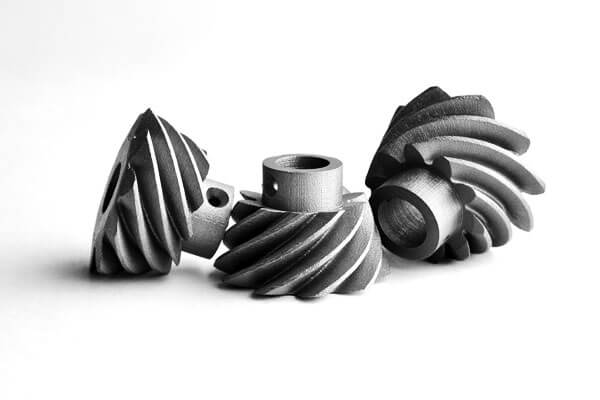
These materials are typically used in Директни метални ласерски синтеровање (ДМЛС), Топило се топљење електрона (EBM), and Binder Jetting.
| Материјал | Кључна својства | Уобичајене апликације |
|---|---|---|
| Титанијум (ТИ-6АЛ-4В) | Лагана, јак, отпоран на корозију | Ваздухопловство, Медицински имплантати |
| нерђајући челик (316Л, 17-4 ПХ) | Издржљив, отпоран на хабање | Industrial tools, Хируршки инструменти |
Алуминијум (Алси10мг) |
Лагана, Добра топлотна проводљивост | Аутомотиве, електроника |
| Cobalt-Chrome (CoCr) | Биокомпатибилан, high-temperature resistant | Зубни имплантати, Младе за турбине |
| Легуре никла (Уносилац 625, 718) | Heat and corrosion-resistant | Јетни мотори, електране |
4.3 Ceramics – Heat and Wear Resistance
Ceramic materials are used in applications that require high-temperature resistance, хемијска стабилност, и тврдоћа.
These materials are printed using binder jetting, СЛА, or extrusion-based methods.
| Материјал | Кључна својства | Уобичајене апликације |
|---|---|---|
| Силицијум карбид (Сић) | Велика снага, отпоран на топлоту | Ваздухопловство, електроника |
| Алумина (АЛ2О3) | Тежак, хемијски инертни | Биомедицински имплантати, Индустријске компоненте |
| Цирконија (Зро2) | Тоугх, отпоран на хабање | Dental crowns, алат за резање |
4.4 Композитни & Advanced Materials – Enhanced Performance
Composites combine полимери, метали, or ceramics with reinforcing fibers to enhance механичка чврстоћа, проводљивост, or flexibility.
Fiber-Reinforced Composites
Carbon fiber and glass fiber are embedded into thermoplastics to improve strength and reduce weight.
| Материјал | Кључна својства | Уобичајене апликације |
|---|---|---|
| Царбон Фибер Reinforced Nylon | Велики однос велике снаге | Drones, роботика, аутомобилске |
| Glass Fiber Reinforced PLA | Крути, отпоран на ударце | Структурне компоненте |
Smart and Biodegradable Materials
Иновације у bio-based and self-healing materials are expanding 3D printing possibilities.
| Материјал | Кључна својства | Уобичајене апликације |
|---|---|---|
| Conductive Polymers | Електрична проводљивост | Printed electronics, сензори |
| Самоизлеђивачки полимери | Repairs minor damage | Wearables, Аероспаце компоненте |
| Biodegradable PLA Blends | Еколошки прихватљив, compostable | Sustainable packaging, Медицински имплантати |
5. Post-Processing 3D Prints
Post-processing is a critical step in 3D printing that enhances the mechanical properties, квалитет површине, and functionality of printed parts.
Since raw 3D-printed objects often exhibit layer lines, храпавост површине, and residual material, various post-processing techniques are applied based on material type, printing process, and intended application.

The choice of post-processing method depends on factors such as aesthetic requirements, тачност димензија, структурни интегритет, и еколошки услови the part will be exposed to.
Below is a comprehensive analysis of the most common post-processing techniques for different 3D printing technologies.
Why is Post-Processing Important?
- Improves Surface Finish – Reduces roughness and enhances aesthetics.
- Enhances Mechanical Strength – Removes micro-defects and reinforces part durability.
- Optimizes Functionality – Adjusts properties such as flexibility, проводљивост, и отпорност на хабање.
- Removes Supports & Residual Material – Ensures the part is free from excess material or unsightly artifacts.
- Enables Additional Treatments – Allows for сликање, овлашћење, или заптивање, depending on application needs.
Common Post-Processing Techniques by Printing Technology
Моделирање фузионисаног таложења (ФДМ) Пост-обрада
FDM prints often have visible layer lines and require support removal. The most common post-processing techniques include:
| Техника | Процес | Бенефиције | Изазови |
|---|---|---|---|
| Support Removal | Cutting or dissolving support structures (PVA dissolves in water, HIPS dissolves in limonene). | Prevents surface damage. | Requires careful handling to avoid breakage. |
| Брушење & Полирање | Using sandpaper (120–2000 grit) to smooth the surface. | Enhances aesthetics and reduces layer visibility. | Дуготрајан, can alter dimensions. |
Chemical Smoothing |
Exposing part to solvent vapors (acetone for ABS, ethyl acetate for PLA). | Achieves glossy finish, eliminates layer lines. | Can weaken part structure if overexposed. |
| Сликање & Премаз | Priming and applying paint, clear coatings, or hydrophobic treatments. | Improves color, издржљивост, and protection. | Requires proper surface preparation. |
Стереолитхограпхи (СЛА) & Digital Light Processing (ДЛП) Пост-обрада
Since SLA and DLP use liquid resin, post-processing focuses on curing and improving the fragile surface finish.
| Техника | Процес | Бенефиције | Изазови |
|---|---|---|---|
| UV Curing | Exposing prints to UV light to strengthen the resin. | Enhances durability. | Requires proper curing time to avoid brittleness. |
| Isopropyl Alcohol (IPA) Исперите | Cleaning excess uncured resin with IPA (90%+ концентрација). | Ensures smooth, clean prints. | Over-soaking can cause warping. |
| Брушење & Полирање | Wet sanding to achieve a smoother surface. | Improves aesthetics and paint adhesion. | Can remove fine details. |
| Clear Coating & Сликање | Applying UV-resistant coatings or dyes. | Adds color and protection. | Can alter the print’s translucency. |
Пример индустрије:
У dental and medical applications, SLA-printed surgical guides and orthodontic models undergo IPA cleaning and UV curing to ensure biocompatibility and mechanical strength.
Селективно ласерско синтеровање (СЛС) Пост-обрада
SLS prints are powder-based and often exhibit a grainy texture. Post-processing primarily focuses on smoothing and strengthening the parts.
| Техника | Процес | Бенефиције | Изазови |
|---|---|---|---|
| Powder Removal | Blasting with compressed air or tumbling to remove excess powder. | Ensures clean and functional parts. | Fine powders require proper disposal. |
| Бојење & Бојање | Submerging parts in dye baths for uniform coloration. | Aesthetically enhances parts. | Limited to dark colors. |
| Vapor Smoothing | Using chemical vapors to melt and smooth outer layers. | Creates a semi-gloss finish, improves mechanical properties. | Requires controlled chemical exposure. |
| Беад Бластинг & Превртање | Using fine media (керамички, стаклене перлице) на глатке површине. | Reduces porosity and enhances finish. | May slightly alter dimensions. |
Пример индустрије:
Nike and Adidas користити SLS for manufacturing shoe soles, где vapor smoothing and dyeing provide a soft-touch finish and better отпорност на хабање.
Директни метални ласерски синтеровање (ДМЛС) & Топило се топљење електрона (EBM) Пост-обрада
Metal 3D prints require extensive post-processing to achieve the desired mechanical properties and surface finish.
| Техника | Процес | Бенефиције | Изазови |
|---|---|---|---|
| Support Removal (Вире ЕДМ, CNC Cutting) | Cutting off metal support structures using electrical discharge machining (ЕДМ). | Ensures precision in complex geometries. | Labor-intensive for intricate parts. |
| Топлотни третман (Враголовање, Кук) | Heating to reduce residual stress and improve toughness. | Enhances part strength, prevents cracking. | Requires controlled thermal cycles. |
| Обрада (ЦНЦ, Млевење, Лажење) | Refining dimensions with CNC milling or grinding. | Achieves high precision and smooth finishes. | Adds processing time and cost. |
| Електрополирање | Using an electrolytic process to smooth surfaces. | Побољшава отпорност на корозију, естетика. | Only works on conductive metals. |
Пример индустрије:
У Аероспаце апликације, DMLS-produced titanium parts for jet engines undergo Вруће изостатско прешање (Кук) to eliminate микропорозност и побољшати отпорност на умор.
Advanced Finishing Techniques
За Апликације високих перформанси, additional finishing techniques are employed:
- Галванизација – Coating parts with никл, бакар, или злато to improve conductivity and corrosion resistance.
- Ceramic Coating – Enhancing wear resistance and thermal protection for metal components.
- Hybrid Manufacturing – Combining 3D printing with CNC machining for high-precision parts.
6. Advantages and Challenges of 3D Printing
This section provides an in-depth analysis of the key advantages and challenges of 3D printing in modern industries.
Key Advantages of 3D Printing
Design Freedom and Customization
Unlike traditional manufacturing, which relies on molds, сечење, и монтажа,
3D printing enables the creation of complex geometries that would be impossible or prohibitively expensive using conventional methods.
- Масовна прилагодба – Products can be tailored for individual customers without extra cost.
- Сложене геометрије – Intricate lattice structures, Унутрашњи канали, and organic shapes are feasible.
- Lightweight Designs – Aerospace and automotive industries use topology optimization to reduce weight without sacrificing strength.
Rapid Prototyping and Faster Production
Traditional prototyping can take weeks or months, али 3D printing accelerates the development cycle significantly.
- 90% faster prototyping – A concept can go from design to a functional prototype in a matter of hours or days.
- Accelerated innovation – Companies can test multiple design iterations quickly, побољшање product development efficiency.
- On-demand production – Eliminates long supply chains, смањивање warehousing and inventory costs.
Reduced Material Waste and Sustainability
Unlike subtractive manufacturing (Нпр., ЦНЦ обрада), which removes material to shape an object, 3D printing builds parts layer by layer, significantly reducing waste.
- До 90% less material waste compared to conventional machining.
- Recyclable materials such as bio-based PLA and recycled polymers enhance sustainability.
- Localized production reduces the carbon footprint associated with global supply chains.
Cost Reduction in Low-Volume Production
За low-volume or specialty manufacturing, 3D printing is significantly more cost-effective than traditional manufacturing.
- No mold or tooling costs – Ideal for short-run production and low-demand markets.
- Reduces expensive machining steps – Eliminates multiple manufacturing processes (ливење, глодање, бушење).
- Affordable for startups & small businesses – Lowers entry barriers to manufacturing innovation.
Functional Integration & Assembly Reduction
3D printing enables part consolidation, allowing multiple components to be combined into a single integrated design.
- Reduces assembly complexity – Fewer parts mean less labor and fewer potential failure points.
- Improves structural integrity – Eliminates the need for screws, заваривање, or adhesives.
Challenges and Limitations of 3D Printing
Ограничени избор материјала
While 3D printing has expanded beyond plastics to include metals, керамика, и композити, тхе range of printable materials remains limited compared to traditional manufacturing.
- Механичка својства – Many printed materials do not match the снага, дуктилност, или отпорност на топлоту of conventionally manufactured parts.
- Material costs – High-performance materials (Нпр., титанијум, Завирити, УЛТИМАТЕ) are expensive.
- Lack of standardization – Material properties vary between different printer models and manufacturers.
Захтеви за накнадну обраду
Most 3D-printed parts require additional finishing steps before they are usable.
- Surface smoothing – Many parts have visible layer lines и захтевају брушење, полирање, or vapor smoothing.
- Топлотни третман – Metal prints often need annealing or hot isostatic pressing (Кук) to remove internal stresses.
- Support structure removal – Many processes, као што је СЛА, СЛС, and DMLS, require careful removal of excess material.
High Initial Investment Costs
Although costs are decreasing, industrial-grade 3D printers and materials remain expensive.
- Metal 3D printers трошак $250,000 до $1 милион.
- High-end polymer printers (СЛА, СЛС) у опсегу од $50,000 до $200,000.
- Material costs are often 5–10x higher than conventional manufacturing materials.
Speed and Scalability Issues
Док prototyping is fast, mass production with 3D printing remains slower than injection molding or machining.
- Low print speeds – Large parts can take several days to print.
- Limited scalability – Printing thousands of parts is still slower and more expensive than traditional methods.
- Batch processing required – To increase efficiency, multiple parts are often printed at once, which complicates quality control.
7. Applications of 3D Printing Across Industries
From rapid prototyping to mass production of complex geometries, 3D printing offers unprecedented design flexibility, смањење трошкова, и Ефикасност материјала.
Its impact spans a wide range of sectors, укључујући производњу, ваздухопловство, Здравствена заштита, аутомобилске, конструкција, и више.
Производња & Прототипирање
Рапид Прототипинг
One of the most significant applications of 3D printing in manufacturing is Брзо прототипирање.
Traditional prototyping methods, such as injection molding, can take weeks or months to set up and produce.
У супротности, 3D printing enables faster iteration, with prototypes typically being created in hours or days, allowing for quick testing and design validation.
- Економичност: 3D printing eliminates the need for expensive molds, алат за алате, and the associated long setup times.
- Прилагођавање: Сложен, customized parts can be produced without additional costs or setup.
This is especially useful in small-batch production or when creating components that need to be tailored to specific customer needs.
Tooling and End-Use Production
Beyond prototyping, 3D printing also plays a key role in алат за алате и чак end-use parts.
Components like jigs, учвршћења, and molds can be produced quickly and efficiently using 3D printing, reducing production time and cost.
- On-demand tooling allows for rapid adjustments in design without long lead times.
- Companies are increasingly producing end-use parts За одређене апликације, such as customized medical implants or lightweight automotive components.
Ваздухопловство & Аутомотиве
Аероспаце апликације
The aerospace industry has been at the forefront of adopting 3D printing due to its ability to produce лаган, сложени делови са exceptional strength-to-weight ratios.
Components produced using direct metal laser sintering (ДМЛС) или electron beam melting (EBM) are essential for reducing the weight of aircraft,
which directly contributes to ефикасност горива и уштеде трошкова.
- Прилагођавање: 3D printing allows for tailored parts for specific aerospace applications, such as turbine blades or brackets that are optimized for performance.
- Уштеда трошкова: Производња сложене геометрије that would otherwise require multiple manufacturing steps can reduce costs significantly.
Automotive Applications
У аутомобилском сектору, 3D printing is used for creating Функционални прототипови, Прилагођени делови, и чак production tools.
As the industry shifts toward more sustainable и energy-efficient возила, 3D printing offers ways to produce lightweight, сложене компоненте.
- Прилагођавање: 3D printing allows car manufacturers to produce customized parts on demand,
such as specialized interior components, prototypes for new models, and even lightweight, durable engine parts. - Брже време на тржиште: 3D printing reduces development time by allowing for quicker testing and iteration of prototypes.

Медицински & Здравствена заштита
Customized Prosthetics and Implants
One of the most impactful uses of 3D printing is in Медицински уређаји, нарочито за customized prosthetics и имплантати.
Traditional manufacturing methods often struggle with producing highly tailored devices, but 3D printing excels in creating patient-specific solutions.
- Прилагођавање: With 3D printing, prosthetics can be designed and produced to exact specifications, ensuring a perfect fit for the patient.
- Ефикасност трошкова: Traditional prosthetics and implants often involve expensive and time-consuming processes. 3D printing allows for faster production и нижи трошкови.
Bioprinting
Bioprinting is an emerging field within 3D printing that uses living cells to create tissue structures и чак organ models.
While still in the early stages, bioprinting holds great promise for the future of personalized medicine, potentially leading to the creation of bioengineered tissues and organs.
- Tissue Engineering: Bioprinted tissues could eventually be used for drug testing, reducing the need for animal testing.
- Regenerative Medicine: Research in bioprinting is exploring the possibility of printing fully functional organs for transplantation.
Изградња & Архитектура
3D-Printed Buildings
In the construction industry, 3D printing is revolutionizing the way зградама и структуре are designed and constructed.
The technology has made it possible to print entire buildings, reducing construction costs and time significantly.
- Cost Reduction: 3D printing can cut construction costs by up to 50%, as it requires fewer workers and materials.
- Одрживост: With the ability to use recycled materials in the printing process, 3D printing is contributing to more sustainable construction methods.
Сложене геометрије
One of the primary benefits of 3D printing in construction is the ability to design and print complex architectural shapes that are difficult or impossible to create using traditional methods.
This opens up new possibilities for innovative architectural designs and structures.
Роба широке потрошње & Електроника
Customized Consumer Products
In the consumer goods industry, 3D printing enables manufacturers to produce customized, made-to-order products.
Whether it’s personalized jewelry, bespoke footwear, or custom-fit fashion accessories, 3D printing offers unparalleled customization at a fraction of the cost of traditional methods.
- Product Personalization: Consumers can design their products and have them printed on-demand, eliminating mass production and reducing waste.
- Fashion Industry: Designers are leveraging 3D printing to create innovative fashion pieces, као што је customized jewelry и чак wearable tech.
Производња електронике
3D printing is also playing an important role in the electronics industry, where it is used to print плочице, miniaturized components, и прилози for electronic devices.
Способност да се produce complex geometries in small-scale, intricate parts has opened up possibilities for customized electronics.
- Functional Electronics: Companies are now using conductive 3D printing materials to print functional electronic components, such as antennas, capacitors, and circuit traces.
- Prototyping and Testing: 3D printing enables rapid iteration and testing of new electronic products and devices.
8. Additive vs Traditional Manufacturing
The comparison between Додатна производња (3Д штампање) and traditional manufacturing methods,
као што је поткратив и formative manufacturing, highlights the unique strengths and challenges of each approach.
Understanding these methods is crucial for industries looking to select the most efficient and cost-effective manufacturing process based on their specific needs.
Додатна производња (3Д Штампање)
Преглед процеса
Додатна производња (У ам), обично се назива 3Д штампање, involves creating three-dimensional objects by depositing material layer by layer based on a digital design.
Unlike traditional manufacturing, where material is removed or shaped by force, AM is a process of building up материјал, which gives it unique advantages in design freedom and material efficiency.
Кључне карактеристике
- Ефикасност материјала: AM uses only the material necessary for the part, смањује отпад.
Unlike subtractive methods, which cut away material from a solid block, 3D printing builds the object, using less raw material. - Флексибилност дизајна: AM enables the creation of сложене геометрије са лакоћом,
including intricate internal structures, Органски облици, and customized designs that would be impossible or costly with traditional methods. - Брзина: While AM can be slower than traditional processes for large batches, то нуди rapid prototyping capabilities.
You can create and test a prototype in a matter of hours or days, a process that could take недеље with traditional methods.
Subtractive Manufacturing
Преглед процеса
Subtractive manufacturing involves removing material from a solid block (referred to as a празан) using mechanical tools like глодање, окретање, и млевење.
The material is gradually cut away to shape the object, leaving behind the final part. This method is one of the oldest and most commonly used in manufacturing.
Кључне карактеристике
- Precision and Surface Finish: Subtractive manufacturing is known for its Висока прецизност и
ability to create parts with excellent surface finishes, making it ideal for producing components with tight tolerances. - Материјални отпад: One major disadvantage of subtractive manufacturing is the материјални отпад generated during the cutting process.
The majority of the material is discarded as scrap, making it less material-efficient compared to additive processes. - Tooling and Setup Costs: Subtractive methods often require expensive tooling, као што је калупи и умире, which can increase costs, especially for small production runs.
Formative Manufacturing
Преглед процеса
Formative manufacturing involves creating objects by shaping material through топлота, притисак, или обоје.
Examples of formative methods include бризгање, ливење, екструзија, и жигосање.
These methods are often used for high-volume production runs of parts with simple to moderately complex shapes.
Кључне карактеристике
- Производња велике брзине: Formative methods like бризгање дозволити rapid mass production of parts,
making them ideal for industries requiring large quantities of identical components. - Употреба материјала: Like additive manufacturing, formative methods are ефикасан, as they often involve creating parts from a mold with little waste.
- Трошкови алата: While the production speed is high, mold and die costs може бити значајно, посебно за сложене облике.
These costs are typically spread out over large production volumes, making the method economically viable for high-volume runs.
Comparing Additive Manufacturing with Traditional Manufacturing
| Значајка | Додатна производња (3Д Штампање) | Subtractive Manufacturing | Formative Manufacturing |
|---|---|---|---|
| Ефикасност материјала | High – Uses only material needed for the part. | Low – Material waste from cutting away stock. | High – Minimal waste in molding processes. |
| Complexity of Design | Can create complex shapes and internal structures. | Limited by tool geometry and cutting paths. | Moderate – Complex shapes require expensive molds. |
Брзина производње |
Slower for large batches but fast for prototyping. | Fast for mass production of simple parts. | Extremely fast for large batches, slow setup for molds. |
| Cost of Equipment | Moderate – Lower entry costs for desktop printers. | High–CNC machines and tooling can be expensive. | High – Tooling and molds are costly. |
| Опције материјала | Ограничен, but growing (пластика, метали, керамика). | Broad – Metals, пластика, и композити. | Broad – Primarily plastics and metals. |
| Прилагођавање | High – Ideal for bespoke, ниска количина, Прилагођени делови. | Low–standardized parts. | Moderate – Limited to mold capabilities. |
| Scale of Production | Best for low-volume, сложене, and customized parts. | Ideal for high-volume, Високо прецизни делови. | Best for mass production of simple parts. |
9. Закључак
3D printing continues to reshape industries by offering unprecedented flexibility, ефикасност, и иновација.
While it has limitations in material properties and scalability, ongoing advancements in hybrid manufacturing, АИ интеграција, and sustainable materials will further enhance its capabilities.
Лангхе is the perfect choice for your manufacturing needs if you need high-quality 3D printing services.
Референца чланака: https://www.hubs.com/guides/3d-printing/