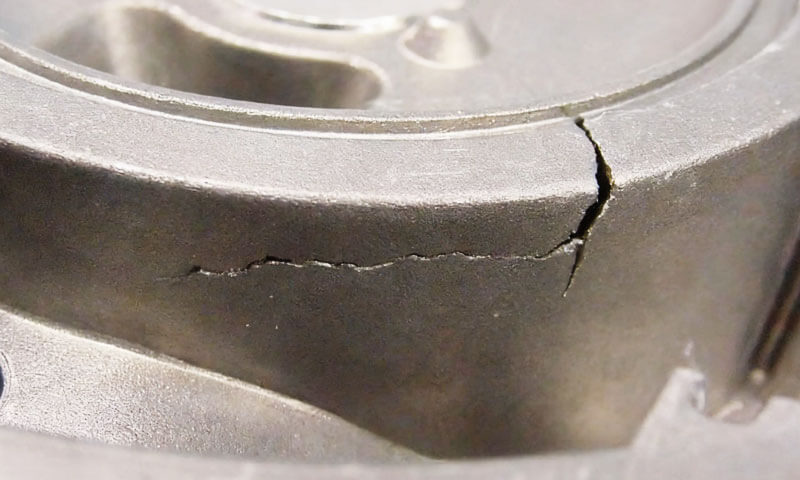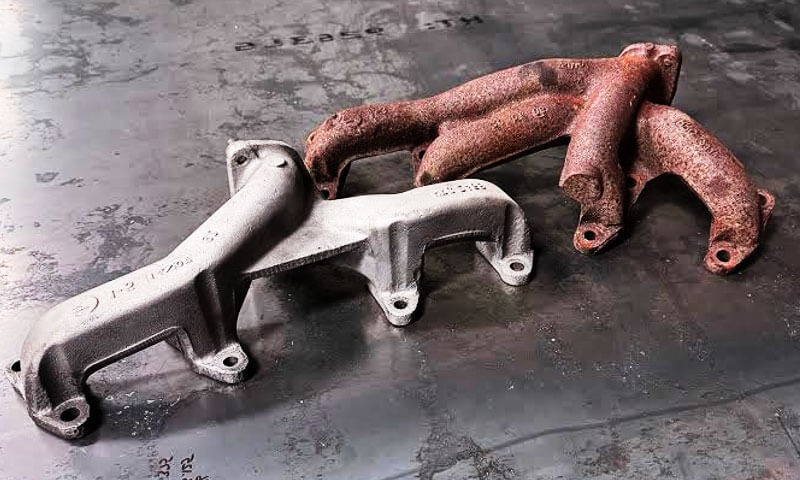
O ferro fundido ganhou a reputação de ser um dos materiais de engenharia mais duráveis e versáteis já desenvolvidos.
De frigideiras de ferro fundido e fornos holandeses para bases de máquinas, corpos da válvula, Blocos do motor, e carcaças de bombas industriais, o ferro fundido é valorizado por sua excelente fundibilidade, alta resistência à compressão, Resistência de desgaste superior, e excelente capacidade de amortecimento de vibrações.
No entanto, apesar de sua impressionante durabilidade, o ferro fundido tem uma fraqueza significativa - é altamente suscetível a ferrugem (óxido de ferro) formação quando exposto à umidade e oxigênio.
A ferrugem é mais do que um problema cosmético. Se não for tratado, penetra gradualmente na superfície do metal, reduzindo a precisão dimensional, degradação do desempenho mecânico, contaminando panelas em contato com alimentos, e eventualmente encurtando a vida útil do componente.
Felizmente, a maior parte dos danos causados pela ferrugem é reparável. Seja lidando com uma frigideira levemente enferrujada, uma ferramenta de marcenaria com décadas de existência, ou uma peça fundida industrial fortemente oxidada, selecionar a técnica de restauração correta é fundamental.
1. Por que o ferro fundido enferruja?
Entendendo o porquê ferro fundido ferrugem é a base para selecionar os métodos de remoção e prevenção mais eficazes.
A formação de ferrugem não é um processo aleatório, mas o resultado de reações eletroquímicas entre o ferro, oxigênio, e água.
Fatores como composição da liga, condição da superfície, exposição ambiental, e revestimentos protetores influenciam a taxa de corrosão.
O que é ferrugem?
Ferrugem é o nome comum para um grupo de óxidos de ferro hidratados que se formam quando o ferro reage com o oxigênio na presença de umidade.
Ao contrário do alumínio, que forma uma densa camada de óxido que protege o metal subjacente, o óxido de ferro é poroso e fracamente ligado.
Assim que a ferrugem se formar, permite que oxigênio e água adicionais penetrem mais profundamente no material, fazendo com que a corrosão continue.
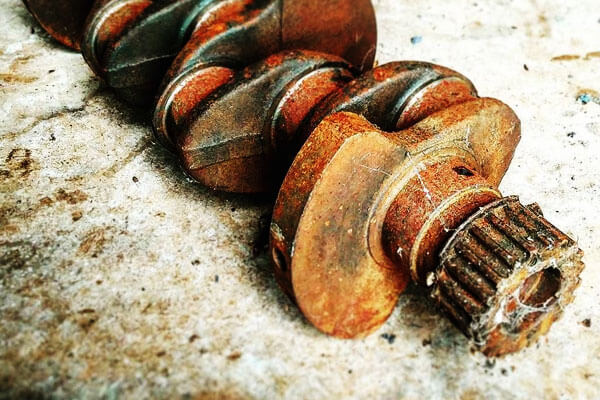
A reação de corrosão simplificada é:
Ferro + Oxigênio + Água → Óxidos de Ferro Hidratados (Ferrugem)
Formas comuns de ferrugem incluem:
| Tipo de ferrugem | Fórmula Química | Aparência | Características |
| Ferrugem Vermelha | Fe₂o₃ · nho | Marrom-avermelhado | Produto de corrosão atmosférica mais comum |
| Óxido preto | Fe₃o₄ | Preto | Mais estável; frequentemente formado em temperaturas elevadas |
| Ferrugem Amarela | Feo(OH) | Amarelo-laranja | Comum em ambientes úmidos |
| Ferrugem Marrom | Óxidos mistos | Castanho escuro | Típico de exposição externa de longo prazo |
É importante distinguir entre oxidação superficial e corrosão profunda.
A ferrugem superficial geralmente afeta apenas a camada externa e pode ser removida sem alterar significativamente o componente.
Corrosão profunda, no entanto, pode produzir corrosão, perda dimensional, e integridade estrutural reduzida.
Por que o ferro fundido é suscetível à ferrugem
Embora o ferro fundido contenha carbono e silício, ainda é composto principalmente de ferro, tornando-o inerentemente vulnerável à oxidação.
Várias características do material contribuem para o seu comportamento à corrosão:
Alto teor de ferro
A maioria dos ferros fundidos contém 90–95% ferro, fornecendo material abundante para reações de oxidação sempre que oxigênio e umidade estiverem presentes.
Microestrutura de Grafite
Ao contrário de aço, ferro fundido contém grafite na forma de flocos (Ferro cinza), nódulos (Ferro dúctil), ou temperar carbono (ferro maleável).
Estas partículas de grafite criam inúmeras interfaces microscópicas que podem acelerar a corrosão eletroquímica localizada sob certas condições..
Características de superfície porosa
As superfícies fundidas geralmente contêm poros microscópicos e irregularidades que retêm umidade e contaminantes, aumentando a probabilidade de início da ferrugem.
Ausência de Proteção Passiva
Ao contrário de aço inoxidável, que desenvolve um filme de óxido passivo rico em cromo, o ferro fundido comum não possui camada protetora autocurativa.
Uma vez exposto à umidade, a corrosão pode continuar a menos que a superfície seja protegida por tempero, óleo, pintar, ou outro revestimento.
Camada protetora danificada
Para panelas de ferro fundido, o tempero de óleo polimerizado atua como a barreira primária contra corrosão.
Se esta camada for desgastada por uma limpeza agressiva, alimentos ácidos, ou imersão prolongada, o metal exposto começa rapidamente a oxidar.
Fatores que aceleram a formação de ferrugem
| Fator | Mecanismo | Velocidade de formação de ferrugem |
| Umidade | A água fornece o eletrólito necessário para a corrosão eletroquímica. | Rápido |
| Sal | Os íons cloreto rompem a camada protetora de óxido e aceleram a reação eletroquímica. | Muito rápido |
| Ácidos | Ácidos (vinagre, tomate, Citrus) dissolver a camada protetora de óxido e atacar o ferro diretamente. | Rápido |
| Umidade prolongada | Água parada fornece acesso contínuo a eletrólitos e oxigênio. | Rápido |
Alta umidade |
Alta umidade relativa (>60%) aumenta o filme de umidade na superfície. | Lento a moderado |
| Tempero ruim | Uma camada fina ou danificada de tempero não oferece barreira à umidade. | Rápido |
| Danos Mecânicos | Arranhões, impactos, ou desgaste abrasivo remova os revestimentos protetores, expondo o ferro fresco à oxidação. | Moderado a rápido |
| Alta temperatura + umidade | O calor acelera a reação de oxidação. | Moderado |
2. Avaliando a gravidade da ferrugem
Antes de selecionar um método de remoção de ferrugem, é essencial avaliar com precisão a gravidade da corrosão.
Diferentes níveis de ferrugem requerem diferentes técnicas de restauração, tempos de limpeza, e tratamentos protetores.
Usar um método excessivamente agressivo em ferrugem superficial leve pode danificar desnecessariamente o acabamento original, enquanto um método de limpeza insuficiente pode não conseguir remover a corrosão profundamente incrustada.
Uma inspeção minuciosa deve avaliar não apenas a aparência visível da ferrugem, mas também do Textura da superfície, profundidade de corrosão, extensão da corrosão, e o aplicação pretendida do componente de ferro fundido.
Classificação de gravidade de ferrugem
| Gravidade da ferrugem | Aparência típica | Condição de superfície | Método de remoção recomendado |
| Ferrugem leve na superfície | Coloração laranja clara ou marrom; manchas isoladas de ferrugem | A superfície permanece lisa com oxidação mínima | Lã de aço fina, esfregão de náilon, esfoliante de sal, ou um breve banho de vinagre |
| Ferrugem moderada | Camada contínua de ferrugem laranja ou marrom-avermelhada; pequena descamação | Superfície visivelmente áspera; a ferrugem é transferida para os dedos quando esfregada | Lã de aço de qualidade média, lixa (180–320 grão), ácido cítrico, molho de vinagre, ou removedor de ferrugem comercial |
Ferrugem Pesada |
Escama de ferrugem espessa com descamação visível e acúmulo de oxidação | Duro, superfície irregular com corrosão localizada | Escova de aço, ferramenta rotativa, eletrólise, explosão abrasiva, ácido fosfórico, ou removedor de ferrugem quelante |
| Ferrugem sem caroço | Poços de corrosão profundos, cáries, ou defeitos semelhantes a crateras | Irregularidades superficiais significativas com perda permanente de metal | Eletrólise seguida de moagem localizada, explodindo, usinagem (se necessário), e revestimento protetor ou tempero |
3. Métodos mecânicos de remoção de ferrugem
A remoção mecânica da ferrugem elimina a corrosão através abrasão, raspagem, escova, ou moagem.
Muitas vezes é a primeira escolha para ferrugem leve a moderada porque fornece resultados visuais imediatos, requer preparação mínima, e evita o uso de produtos químicos.
Para corrosão severa, a limpeza mecânica é frequentemente combinada com tratamentos químicos para remover a ferrugem dos poços, fendas, e outras áreas inacessíveis.
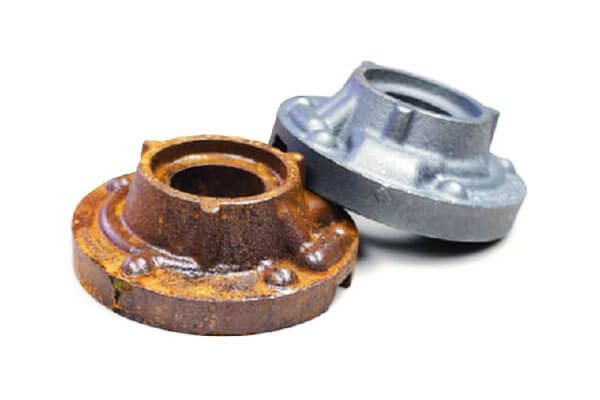
Lã de aço
A lã de aço é um dos métodos mais simples e amplamente utilizados para remover ferrugem leve da superfície do ferro fundido., especialmente utensílios de cozinha e pequenas ferramentas.
Suas fibras flexíveis adaptam-se facilmente a superfícies curvas, proporcionando abrasão suficiente para remover a oxidação sem perda excessiva de metal..
Para descoloração leve ou ferrugem instantânea, notas extrafinas (#0000 ou #000) são recomendados porque minimizam arranhões enquanto restauram o acabamento superficial original.
Classes médias ou grossas podem ser usadas para corrosão mais persistente, mas devem ser aplicadas com cuidado para evitar danos desnecessários à superfície..
A lã de aço funciona melhor quando usada com, pressão uniforme. Partículas soltas de ferrugem devem ser removidas periodicamente durante a limpeza, seguido de enxágue completo e secagem imediata.
Para panelas, a superfície deve ser temperada novamente imediatamente após a remoção da ferrugem.
Vantagens
- Baixo custo e amplamente disponível
- Excelente controle durante a limpeza
- Remoção mínima de metal
- Adequado para superfícies delicadas de ferro fundido
Limitações
- Trabalho intensivo para componentes grandes
- Menos eficaz contra incrustações pesadas ou corrosão profunda
- Classes grosseiras podem deixar arranhões visíveis
Lixa
A lixa é adequada para corrosão moderada em superfícies relativamente planas ou acessíveis.
Comparado com lã de aço, remove a ferrugem de forma mais agressiva, permitindo o refinamento gradual da superfície através de vários graus abrasivos.
A restauração normalmente começa com 80–120 grão papel para oxidação pesada, seguido pela 220–400 grão abrasivos para suavizar a superfície e reduzir marcas de lixamento.
A progressão de abrasivos grossos para finos produz um acabamento mais limpo e minimiza a remoção desnecessária de material.
Porque a lixa remove a ferrugem e o metal base, deve ser usado com cuidado em superfícies usinadas com precisão ou componentes com tolerâncias dimensionais restritas.
Vantagens
- Eficaz em ampla, superfícies planas
- Produz um acabamento liso após lixamento progressivo
- Fácil de controlar manualmente
Limitações
- Demorado para geometrias complexas
- Pode alterar as dimensões se usado em excesso
- Menos eficaz em cantos e áreas rebaixadas
Escovas de arame
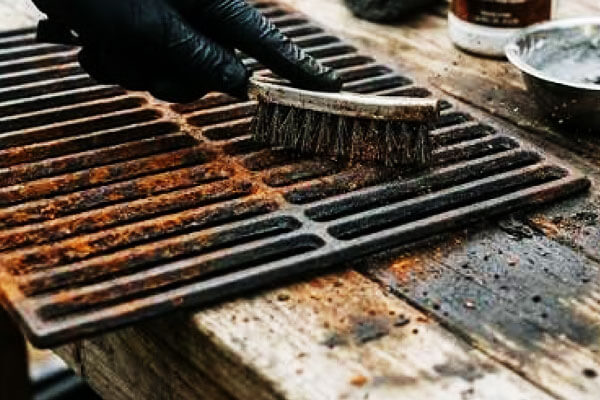
As escovas de arame proporcionam maior ação de corte do que a lã de aço e são particularmente eficazes para remover camadas espessas de ferrugem, escama solta, e corrosão de superfícies texturizadas ou irregulares.
Escovas de arame manuais oferecem excelente controle para limpeza localizada, enquanto rodas de arame rotativas montadas em furadeiras elétricas ou retificadoras melhoram significativamente a produtividade em componentes industriais maiores.
Ao usar escovas de arame elétricas, velocidades de rotação moderadas e leve pressão são recomendadas.
Força excessiva pode polir em vez de limpar a superfície, gerar calor desnecessário, ou danificar tipos de ferro fundido mais macios.
Vantagens
- Remoção rápida de ferrugem moderada a intensa
- Adequado para superfícies fundidas irregulares
- Eficaz em ranhuras e recursos rebaixados
Limitações
- Pode riscar superfícies acabadas
- Escovas elétricas exigem experiência do operador
- Não é ideal para preservar acabamentos decorativos
Ferramentas rotativas e rebarbadoras
Para peças fundidas fortemente corroídas, ferramentas rotativas e rebarbadoras fornecem um dos métodos de limpeza mecânica mais rápidos.
Dependendo do aplicativo, eles podem ser equipados com rodas de arame, discos flap, discos abrasivos, ou rodas de condicionamento de superfície não tecidas.
As ferramentas rotativas são particularmente úteis para restauração localizada de características complexas, enquanto as rebarbadoras são comumente usadas em grandes peças fundidas industriais, bases de máquinas, Componentes estruturais, e equipamento ao ar livre.
Para minimizar danos, a retificação deve ser realizada usando velocidades baixas a moderadas com movimento contínuo da ferramenta.
Permanecer em um local por muito tempo pode gerar calor excessivo, remova o excesso de material, ou criar ranhuras na superfície.
Vantagens
- Eficiência de limpeza muito alta
- Adequado para corrosão pesada e incrustações de ferrugem espessas
- Reduz significativamente o tempo de restauração
Limitações
- Alto risco de remoção de metal sólido
- Gera faíscas e calor
- Inadequado para seções finas ou superfícies de precisão
Jateamento Abrasivo
O jateamento abrasivo é amplamente considerado como um dos métodos mais eficazes para restaurar componentes industriais de ferro fundido altamente enferrujados..
Meios abrasivos de alta velocidade removem ferrugem, revestimentos antigos, escala da fábrica, e contaminantes enquanto prepara simultaneamente a superfície para pintura ou outros tratamentos de proteção.
Diferentes meios de jateamento são selecionados de acordo com o objetivo da restauração.
Granalha de aço proporciona limpeza agressiva para peças fundidas estruturais, contas de vidro produzem acabamentos mais suaves em peças usinadas, enquanto o jateamento com soda oferece uma alternativa mais suave para componentes delicados ou históricos.
Porque os parâmetros de detonação influenciam fortemente a rugosidade da superfície e a precisão dimensional, a detonação industrial deve ser cuidadosamente controlada por operadores experientes.
Vantagens
- Limpeza extremamente rápida de grandes superfícies
- Remoção uniforme de ferrugem
- Excelente preparação da superfície antes do revestimento
- Adequado para geometrias complexas
Limitações
- Requer equipamentos especializados
- Maior custo operacional
- A pressão excessiva de detonação pode corroer seções finas
- Coleta de poeira adequada e equipamento de proteção individual são essenciais
4. Métodos químicos de remoção de ferrugem
A remoção química da ferrugem depende de dissolução ácida, quelação, ou redução eletroquímica para eliminar produtos de corrosão sem abrasão mecânica extensa.
Ao contrário da limpeza mecânica, tratamentos químicos podem penetrar em fendas estreitas, buracos cegos, regiões encadeadas, e poços de corrosão profundos que são difíceis ou impossíveis de acessar manualmente.
Vinagre Branco (Ácido acético)
O vinagre branco é uma das soluções de remoção de ferrugem mais acessíveis para restauração doméstica.
O ácido acético dissolve gradualmente os óxidos de ferro, permitindo que a ferrugem amolecida seja removida com escovação leve ou lã de aço.
É particularmente adequado para utensílios de cozinha, ferramentas manuais, e componentes levemente enferrujados.
Porque o ácido acético também reage com o ferro puro, o tempo de imersão deve ser limitado e o componente deve ser inspecionado periodicamente durante todo o processo.
Após o tratamento, a fundição deve ser bem enxaguada, completamente seco, e imediatamente protegido para evitar ferrugem instantânea.
Vantagens
- Barato e amplamente disponível
- Simples de usar
- Eficaz para corrosão leve a moderada
- Adequado para restauração de panelas em contato com alimentos
Limitações
- Lento em corrosão pesada
- A imersão excessiva pode atacar o metal base
- É necessária proteção imediata pós-tratamento
Ácido cítrico
O ácido cítrico fornece uma alternativa mais suave ao vinagre, ao mesmo tempo que oferece excelente capacidade de remoção de ferrugem.
Dissolve produtos de corrosão de forma eficiente, mas geralmente é menos agressivo para o ferro subjacente., tornando-o adequado para componentes que requerem melhor preservação da superfície.
Porque as soluções de ácido cítrico permanecem eficazes durante longos períodos de imersão, eles são frequentemente preferidos para peças que contêm pequenas cavidades, geometrias complexas, ou recursos rosqueados onde a escovação é difícil.
Após o tratamento, todos os resíduos de ácido devem ser removidos enxaguando com água limpa antes de secar e aplicar camadas protetoras ou temperos.
Vantagens
- Suave no metal base
- Boa penetração em geometrias complexas
- Menor risco de ataque excessivo de metal
- Ecologicamente correto e fácil de manusear
Limitações
- Tempo de tratamento mais longo do que ácidos mais fortes
- Menos eficaz em incrustações espessas de ferrugem
- Pode exigir limpeza mecânica suplementar
Removedores de ferrugem comerciais
Os produtos comerciais de remoção de ferrugem são formulados especificamente para melhorar a eficiência da limpeza e, ao mesmo tempo, minimizar os danos ao metal subjacente.. Eles geralmente se enquadram em três categorias.
Removedores de ferrugem quelantes ligam seletivamente óxidos de ferro sem atacar o metal sólido, tornando-os particularmente adequados para máquinas valiosas, componentes de precisão, e restaurações antigas.
Esses produtos geralmente requerem várias horas de imersão, mas preservam excepcionalmente bem a precisão dimensional.
Produtos à base de ácido fosfórico reage quimicamente com a ferrugem para formar uma camada estável de conversão de fosfato de ferro que melhora a resistência temporária à corrosão enquanto prepara a superfície para pintura ou revestimento.
Eles são comumente usados em manutenção industrial e restauração automotiva.
Formulações de ácidos orgânicos fornecem desempenho de limpeza intermediário e são frequentemente usados para corrosão leve a moderada, onde um tratamento rápido é desejado.
Vantagens
- Alta eficiência de limpeza
- Projetado especificamente para remoção de ferrugem
- Muitas formulações preservam o metal base
- Adequado para aplicações industriais
Limitações
- Custo mais elevado do que ácidos domésticos
- Alguns produtos requerem manuseio cuidadoso
- Equipamento de proteção pode ser necessário dependendo da formulação
Eletrólise
A eletrólise é amplamente considerada uma das técnicas de remoção de ferrugem mais eficazes e menos destrutivas para componentes valiosos de ferro fundido..
Em vez de desgastar mecanicamente a superfície ou dissolver quimicamente o metal base, a eletrólise usa uma corrente contínua de baixa tensão para converter óxidos de ferro em depósitos removíveis, deixando o material original praticamente inalterado.
O processo normalmente emprega um eletrólito de soda de lavagem, um ânodo de aço sacrificial, e uma fonte de energia DC.
Durante o tratamento, produtos de corrosão se separam gradualmente da superfície de fundição, incluindo ferrugem localizada em poços profundos e cavidades complexas.
Porque a eletrólise preserva as marcas originais de usinagem, lançando texturas, e precisão dimensional, é particularmente valioso para restaurações antigas, máquinas de precisão, e objetos de ferro fundido historicamente significativos.
Vantagens
- Remoção mínima de metal sólido
- Excelente limpeza de fossas profundas e formas complexas
- Preserva detalhes originais da superfície
- Requer pouca esfrega mecânica
Limitações
- Maior tempo de processamento
- Requer equipamento dedicado e configuração elétrica
- Menos prático para peças fundidas muito grandes
- O gás hidrogênio gerado durante a operação requer ventilação adequada e precauções de segurança rigorosas
5. Como remover ferrugem do ferro fundido: Processo passo a passo de remoção de ferrugem
O seguinte é um resumo geral, abordagem sistemática para remover ferrugem de um frigideira de ferro fundido ou panelas. Ajuste com base na gravidade e no método escolhido.
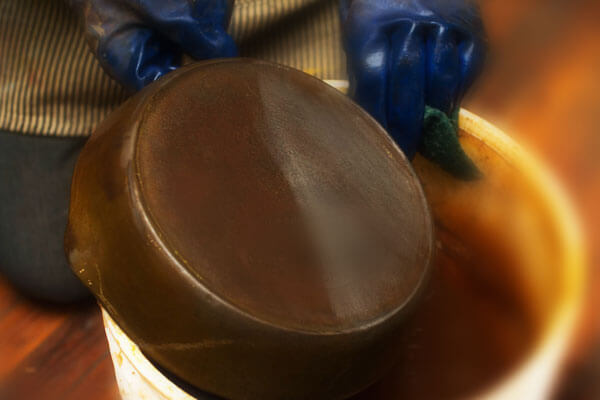
Etapa 1: Limpeza Inicial
Remova qualquer graxa, óleo, ou resíduos de alimentos da superfície. Use água quente e sabão neutro com uma esponja ou escova. Enxágue e seque bem.
Etapa 2: Avalie e escolha um método
Com base na avaliação de gravidade (veja a seção 2), escolha seu método de remoção de ferrugem:
- Ferrugem leve → Lã de aço (#0000) ou uma esfoliação com sal.
- Ferrugem moderada → Molho de vinagre (20-60 minutos) ou removedor de ferrugem comercial.
- Ferrugem pesada → Eletrólise ou jateamento abrasivo.
Etapa 3: Aplique o método escolhido
Para imersões químicas:
- Coloque o item em um recipiente (plástico ou vidro; evite metal).
- Cubra com a solução (vinagre, ácido cítrico, ou produto comercial).
- Deixe de molho pelo tempo recomendado (verifique periodicamente).
- Remova e esfregue com lã de aço para remover a ferrugem solta.
- Se a ferrugem permanecer, repita a imersão ou mude para um método mais agressivo.
Para métodos mecânicos:
- Esfregue ou lixe bem a área enferrujada.
- Enxágue e seque com frequência para verificar o progresso.
- Continue até ficar nu, metal não enferrujado é visível.
- Se a corrosão persistir, você pode precisar usar grãos mais finos ou eletrólise.
Eletrólise:
- Configure o banho de eletrólise (banheira de plástico, água, refrigerante, ânodo sacrificial).
- Suspenda o item no banho (não deixe tocar no ânodo).
- Conecte o carregador (positivo para ânodo, negativo para item).
- Ligue o carregador e aguarde 6 a 24 horas.
- Remova o item, esfregue com lã de aço para remover ferrugem residual, e enxaguar.
Etapa 4: Enxágue e seque bem
Após a remoção da ferrugem, enxágue o item com água limpa para remover qualquer resíduo químico.
Seco imediatamente e completamente - use uma toalha e coloque em fogo baixo por 2 a 3 minutos para evaporar qualquer umidade restante.
Etapa 5: Neutralizar (Se necessário)
Se você usou um ácido (vinagre ou ácido cítrico), neutralize a superfície enxaguando com água e um pouco de solução de bicarbonato de sódio (1 colher de sopa de bicarbonato de sódio 1 litro de água) para parar a ação ácida. Enxágue novamente com água pura.
Etapa 6: Re-temporada imediatamente
Assim que o item estiver seco, aplique uma fina camada de óleo (linhaça, semente de uva, canola, ou óleo vegetal) e re-temporada (veja a seção 6).
Isso é crítico – o ferro descoberto irá enferrujar em minutos se for deixado desprotegido.
6. Restauração de ferro fundido após remoção de ferrugem
A remoção da ferrugem é apenas a primeira etapa da restauração de um componente de ferro fundido.
Uma vez eliminada a corrosão, a superfície exposta do ferro é altamente reativa e suscetível a ferrugem instantânea, que pode se desenvolver em minutos sob condições úmidas.
O pós-tratamento adequado é, portanto, essencial para restaurar a resistência à corrosão, preservar a integridade da superfície, e prolongar a vida útil da peça fundida.
Limpeza Completa e Neutralização
Após remoção de ferrugem mecânica ou química, quaisquer partículas abrasivas restantes, óxido solto, ou resíduos químicos devem ser completamente removidos.
Para componentes limpos com soluções ácidas, como vinagre ou ácido cítrico, o enxágue completo com água limpa é essencial para neutralizar o ácido residual e evitar a corrosão contínua.
Em ambientes industriais, soluções neutralizantes alcalinas podem ser usadas para componentes expostos a ácidos mais fortes.
Depois de limpo, a superfície deve ser inspecionada cuidadosamente para:
- Manchas de ferrugem restantes
- Poços de corrosão profundos
- Rachaduras ou defeitos de fundição
- Danos superficiais causados durante a restauração
- Alterações dimensionais em áreas usinadas com precisão
Uma limpeza, superfície livre de resíduos fornece a melhor base para tratamentos de proteção subsequentes.
Secagem Completa
A umidade deixada no ferro fundido recém-limpo é uma das principais causas da ferrugem instantânea.
Os métodos de secagem incluem:
- Limpando com panos sem fiapos
- Ar comprimido para furos e cavidades
- Secagem em forno a baixa temperatura
- Aquecimento suave no fogão (para panelas)
- Estufas de secagem industrial para peças fundidas de grande porte
Fundições complexas contendo furos cegos, passagens internas, ou recursos rosqueados requerem atenção especial porque a umidade retida pode acelerar a corrosão localizada.
O componente deve estar completamente seco antes de qualquer óleo, tempero, ou revestimento protetor é aplicado.
Re-temperar panelas de ferro fundido
Para panelas, o tempero é a etapa mais importante no processo de restauração.
Ao contrário de pintura ou chapeamento, tempero forma um camada polimerizada rica em carbono criado pelo aquecimento de uma fina película de óleo de cozinha acima do ponto de fumaça.
Esta camada quimicamente ligada atua como uma barreira contra a corrosão e uma superfície de cozimento naturalmente antiaderente.
Procedimento de tempero recomendado
- Pré-aqueça a panela para remover qualquer umidade restante.
- Aplique uma camada bem fina, camada uniforme de óleo com alto ponto de fumaça, como óleo de linhaça, óleo de semente de uva, óleo de canola, ou óleo de soja refinado.
- Limpe o excesso de óleo até que a superfície pareça quase seca.
- Asse a panela de cabeça para baixo em 200–230ºC (390–450°F) por aproximadamente uma hora.
- Deixe esfriar naturalmente dentro do forno.
- Repita o processo 2–4 vezes para construir uma camada protetora durável.
Múltiplas camadas finas de tempero geralmente produzem melhor durabilidade do que uma única camada espessa, que pode ficar pegajoso ou irregular.
Aplicação de revestimentos protetores em ferro fundido industrial
Componentes industriais de ferro fundido normalmente operam em ambientes onde o tempero não é prático nem apropriado.
Em vez de, a proteção contra corrosão depende de sistemas de revestimento projetados, selecionados de acordo com as condições de serviço.
Tratamentos protetores comuns incluem:
- Óleos antiferrugem
- Ceras de armazenamento temporário
- Revestimentos de conversão de fosfato
- Primers ricos em zinco
- Revestimentos epóxi
- Sistemas de pintura de poliuretano
- Revestimento em pó
Para equipamentos externos, componentes marinhos, ou máquinas de processamento químico, sistemas de revestimento multicamadas que combinam primers e acabamentos de alto desempenho proporcionam resistência superior à corrosão a longo prazo.
Acabamento e Usinagem de Superfícies
A corrosão intensa pode deixar corrosão localizada, rugosidade, ou irregularidades dimensionais após a remoção da ferrugem.
Onde as superfícies funcionais são afetadas, operações de acabamento adicionais podem ser necessárias.
Os processos de restauração típicos incluem:
- Moagem de superfície
- Laping
- Usinagem de precisão
- Afiar
- Polimento
Estas operações restauram a precisão dimensional e melhoram o desempenho da vedação em faces usinadas, como carcaças de bombas, corpos da válvula, assentos de rolamento, e componentes do motor.
Para utensílios de cozinha e peças decorativas, usinagem extensa é geralmente desnecessária, a menos que a corrosão severa tenha alterado significativamente a superfície.
Inspeção final antes da reutilização
Antes de devolver um componente restaurado ao serviço, uma inspeção final de qualidade deve verificar se os objetivos de restauração foram alcançados.
Itens de inspeção típicos incluem:
- Remoção completa de ferrugem
- Acabamento superficial uniforme
- Ausência de corrosão ativa
- Integridade do revestimento ou tempero
- Precisão dimensional
- Limpeza de superfície
- Desempenho funcional de superfícies usinadas ou de vedação
Para peças fundidas industriais usadas em aplicações estruturais ou de retenção de pressão, testes não destrutivos adicionais (Ndt), teste de pressão, ou inspeção dimensional pode ser necessária dependendo dos padrões de engenharia aplicáveis.
7. Prevenindo a ferrugem futura
Prevenir a ferrugem é consideravelmente mais económico e eficaz do que removê-la repetidamente.
Quando a proteção contra corrosão estiver comprometida, o ferro fundido começa a oxidar sempre que a umidade, oxigênio, e condições ambientais adequadas estão presentes.
A implementação de medidas preventivas adequadas pode prolongar significativamente a vida útil dos utensílios de cozinha, máquinas, Componentes automotivos, e fundições industriais.
Uma estratégia eficaz de prevenção da corrosão combina proteção de superfície, controle ambiental, manutenção de rotina, e inspeção regular.
Mantenha o ferro fundido limpo e seco
A umidade é o fator mais importante que contribui para a formação de ferrugem.
Após cada uso ou limpeza:
- Remova a sujeira, graxa, e contaminantes.
- Seque a superfície imediatamente.
- Elimine a água presa em buracos, tópicos, e cáries.
- Evite exposição prolongada à chuva, condensação, ou água parada.
Para panelas, breve aquecimento após a lavagem evapora efetivamente a umidade residual antes de temperar ou lubrificar.
Manter camadas de superfície protetoras
Uma barreira protetora contínua evita que o oxigênio e a água entrem em contato com a superfície do ferro.
Dependendo do aplicativo, proteção pode incluir:
- Tempero polimerizado (utensílios de cozinha)
- Óleo mineral ou de máquina
- Cera antiferrugem
- Revestimentos epóxi
- Revestimentos em pó
- Primers ricos em zinco
- Sistemas de pintura industrial
Os revestimentos protetores devem ser inspecionados periodicamente e reparados imediatamente se forem danificados por abrasão, impacto, ou exposição química.
Armazene ferro fundido em um ambiente controlado
As condições de armazenamento têm uma influência significativa nas taxas de corrosão.
As práticas recomendadas incluem:
- Baixa umidade relativa (de preferência abaixo 50%)
- Temperaturas estáveis
- Boa circulação de ar
- Limpar, áreas de armazenamento seco
- Proteção contra névoa salina e poluentes industriais
As peças fundidas industriais de precisão destinadas ao armazenamento a longo prazo são frequentemente embaladas com dessecantes ou inibidores de corrosão por vapor (VCIs) para reduzir a corrosão relacionada à umidade durante o transporte e armazenamento.
Realize inspeção e manutenção de rotina
A manutenção regular permite a detecção precoce de corrosão antes que ocorram danos extensos.
A inspeção deve focar:
- Descoloração da superfície
- Danos na pintura ou revestimento
- Manchas de ferrugem
- Acúmulo de água
- Corrosão ao redor dos fixadores
- Desgaste em superfícies usinadas
- Espessura do revestimento (onde aplicável)
Componentes operando em marinha, químico, ou ambientes externos geralmente exigem inspeções mais frequentes do que aqueles usados em ambientes internos.
Evite causas comuns de corrosão
Muitos casos de ferrugem resultam de manuseio inadequado e não de condições severas de serviço.
As causas comuns incluem:
- Armazenar ferro fundido enquanto úmido
- Deixar os utensílios de cozinha secar naturalmente
- Revestimentos protetores danificados
- Exposição prolongada a produtos químicos ácidos ou alcalinos
- Contato com água salgada
- Limpeza inadequada após o uso
- Má ventilação durante o armazenamento
Abordar esses fatores reduz significativamente a probabilidade de corrosão recorrente.
Estabeleça um programa de manutenção preventiva
Para equipamentos industriais, a prevenção da corrosão deve fazer parte de um plano de manutenção estruturado, em vez de depender apenas de reparos corretivos.
Um programa preventivo abrangente normalmente inclui:
- Limpeza programada
- Lubrificação periódica
- Inspeção e reparo de revestimento
- Monitoramento ambiental
- Avaliação de corrosão
- Documentação do histórico de manutenção
- Substituição de sistemas de proteção danificados quando necessário
Tais programas melhoram a confiabilidade do equipamento, reduzir o tempo de inatividade inesperado, e reduzir custos de manutenção a longo prazo.
8. Remoção de ferrugem em ferro fundido para diferentes aplicações
Diferentes produtos de ferro fundido requerem diferentes estratégias de restauração devido aos seus requisitos de desempenho., acabamentos de superfície, e ambientes de serviço variam consideravelmente.
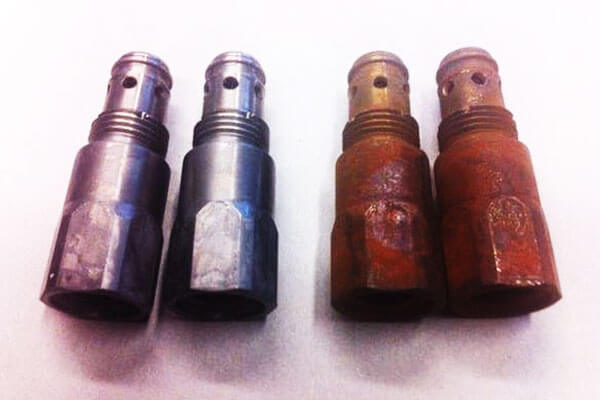
Panelas de ferro fundido
Exemplos incluem:
- Frigideiras
- Fornos holandeses
- Panelas para grelhar
- Grelhas
- Woks
Abordagem recomendada:
- Lã de aço
- Vinagre ou ácido cítrico (se necessário)
- Secagem completa
- Vários ciclos de tempero
Manter a camada de tempero é essencial para a resistência à corrosão e o desempenho de cozimento.
Ferramentas de ferro fundido
Exemplos incluem:
- Tornos de bancada
- Aviões para trabalhar madeira
- Mesas de furadeira
- Bigornas
- Acessórios para máquinas
Tratamento recomendado:
- Escovação de arame
- Lixamento fino
- Removedor de ferrugem
- Óleo protetor ou cera
As superfícies usinadas devem ser polidas cuidadosamente para preservar a precisão dimensional.
Componentes automotivos
As peças automotivas típicas de ferro fundido incluem:
- Rotores de freio
- Blocos do motor
- Coletores de escape
- Volantes
- Carcaças diferenciais
A restauração recomendada depende do componente.
Os rotores do freio normalmente desenvolvem ferrugem superficial que desaparece durante a frenagem, enquanto os blocos do motor requerem uma limpeza cuidadosa para proteger as superfícies das juntas e os furos usinados.
Fundições Industriais
Componentes industriais de ferro fundido incluem:
- Altas da bomba
- Corpos da válvula
- Bases de máquinas
- Carcaças de compressor
- Acessórios para tubos
- Caixas da caixa de velocidades
Grandes peças fundidas são comumente restauradas usando:
- Jateamento abrasivo
- Limpeza química
- Revestimentos industriais
- Usinagem de precisão (se necessário)
Os sistemas de revestimento protetor são selecionados de acordo com as condições de serviço, como umidade, exposição química, e instalação externa.
9. Comparação de métodos de remoção de ferrugem
A escolha da técnica de remoção de ferrugem mais adequada depende da gravidade da corrosão, objetivos de restauração, geometria do componente, restrições de custo, e qualidade de superfície desejada. Nenhum método é ideal para todas as aplicações.
A comparação a seguir destaca os pontos fortes e as limitações dos métodos de remoção de ferrugem mais utilizados.
| Método de remoção de ferrugem | Gravidade da ferrugem | Velocidade de limpeza | Custo | Risco de dano na superfície | Preservação de Metais | Aplicações típicas |
| Lã de aço | Luz | Médio | Muito baixo | Muito baixo | Excelente | Utensílios de cozinha, peças fundidas decorativas |
| Lixa | Leve-Moderado | Médio | Baixo | Baixo | Muito bom | Restauração geral |
| Escova de aço | Moderado | Rápido | Baixo | Médio | Bom | Ferramentas, máquinas |
| Roda de arame rotativo | Moderado-Pesado | Rápido | Baixo | Médio | Bom | Manutenção industrial |
| Rebarbadora | Pesado | Muito rápido | Médio | Alto | Justo | Grandes peças fundidas estruturais |
| Vinagre Branco | Leve-Moderado | Lento | Muito baixo | Muito baixo | Excelente | Utensílios de cozinha domésticos |
Ácido cítrico |
Moderado-Pesado | Médio | Baixo | Muito baixo | Excelente | Componentes de precisão |
| Removedor de ferrugem quelante | Moderado-Pesado | Médio | Médio | Muito baixo | Fora do comum | Máquinas valiosas, peças antigas |
| Ácido Fosfórico | Pesado | Rápido | Médio | Baixo | Muito bom | Equipamento industrial |
| Eletrólise | Pesado | Lento | Médio | Muito baixo | Fora do comum | Fundições antigas, partes complexas |
| Jateamento Abrasivo | Pesado | Muito rápido | Alto | Médio (depende da mídia) | Muito bom | Grandes peças fundidas industriais |
10. Conclusão
A ferrugem é um dos problemas mais comuns que afetam o ferro fundido, mas também é um dos mais administráveis quando tratado com as técnicas corretas de restauração e medidas preventivas.
Seja restaurando uma frigideira de ferro fundido levemente oxidada, reforma de ferramentas manuais antigas, ou manutenção de grandes peças fundidas industriais, a remoção bem-sucedida da ferrugem requer uma compreensão completa dos mecanismos de corrosão, características materiais, e requisitos específicos do aplicativo.
Igualmente importante é o tratamento aplicado depois Remoção da ferrugem. O ferro fundido recém-limpo é altamente reativo e pode desenvolver ferrugem instantânea em um curto período se não for protegido.
Para panelas, vários ciclos de tempero criam uma película de óleo polimerizado durável que resiste à umidade enquanto melhora o desempenho do cozimento.
Para fundições industriais, revestimentos protetores, como tinta epóxi, revestimento em pó, revestimentos de conversão de fosfato, óleos inibidores de corrosão, ou ceras fornecem resistência à corrosão a longo prazo sob condições operacionais exigentes.
A manutenção preventiva continua sendo a estratégia mais econômica para prolongar a vida útil dos produtos de ferro fundido.
Limpeza adequada, secagem imediata, inspeção de rotina, reparo oportuno de revestimentos danificados, e o armazenamento em ambientes controlados pode reduzir significativamente as falhas relacionadas à corrosão e, ao mesmo tempo, diminuir os custos de manutenção.
Perguntas frequentes
O ferro fundido fortemente enferrujado pode ser restaurado?
Sim. Na maioria dos casos, mesmo o ferro fundido muito enferrujado pode ser restaurado com sucesso, desde que a corrosão não tenha causado danos estruturais graves ou perda excessiva de material.
A ferrugem superficial e as camadas espessas de óxido podem ser removidas usando escova de aço, explosão abrasiva, removedores químicos de ferrugem, ou eletrólise.
No entanto, se a corrosão profunda comprometer componentes que contêm pressão ou estruturas de suporte de carga, avaliação de engenharia é recomendada antes de devolver a peça ao serviço.
O vinagre é seguro para remover ferrugem do ferro fundido?
Sim. Vinagre branco (normalmente contendo 5–8% de ácido acético) é eficaz para remover ferrugem leve a moderada.
No entanto, a imersão prolongada deve ser evitada porque a exposição excessiva ao ácido pode começar a atacar o ferro subjacente após a dissolução da ferrugem.
Recomenda-se monitoramento contínuo durante a imersão.
A eletrólise danifica o ferro fundido?
Não. Quando executado corretamente, a eletrólise é um dos métodos de remoção de ferrugem menos destrutivos disponíveis.
Ao contrário de moagem ou jateamento, a eletrólise remove a corrosão através da redução eletroquímica sem remover significativamente o metal original.
Isto o torna particularmente adequado para peças fundidas antigas, componentes de precisão, e valiosos projetos de restauração.
O ferro fundido deve sempre ser temperado após a remoção da ferrugem?
Para panelas de ferro fundido, sim. O tempero cria uma camada de óleo polimerizado que protege o ferro da umidade, ao mesmo tempo que proporciona uma superfície de cozimento naturalmente antiaderente..
Componentes industriais de ferro fundido geralmente não requerem tempero.
Em vez de, eles são protegidos com tintas, revestimentos em pó, óleos inibidores de corrosão, revestimentos de fosfato, ou outros tratamentos de superfície industriais apropriados ao ambiente de serviço.
Pode enferrujar o ferro fundido mesmo depois de temperado ou pintado?
Sim. Camadas protetoras reduzem significativamente a corrosão, mas não podem eliminá-la totalmente.
O tempero pode desgastar-se durante o cozimento, limpeza, ou abrasão, enquanto tintas ou revestimentos em pó podem rachar, chip, ou ficar danificado durante o serviço.
Uma vez que a barreira protetora esteja comprometida, umidade e oxigênio podem atingir o ferro subjacente e iniciar a corrosão.
A inspeção regular e a manutenção oportuna são essenciais para manter a proteção a longo prazo.