1. Introduzzjoni
Refractory metals occupy a unique position in materials engineering. They are not chosen because they are easy to process or inexpensive to buy.
They are chosen because they continue to perform where ordinary engineering metals begin to fail.
In severe environments involving extreme heat, heavy mechanical load, aggressive chemistry, vacuum service, radjazzjoni, or intense wear, refractory metals often provide the most reliable solution.
The family is usually associated with Tungstenu, molibdenu, tantalum, Niobium, and rhenium. These metals share one defining trait: very high melting points.
But that is only the beginning. Their true value lies in the way they retain strength, resist softening, preserve dimensional stability, and tolerate harsh environments that would quickly degrade conventional steels and many superalloys.
Refractory metals are therefore not merely “high-temperature metals.” They are severe-service metals.
That distinction matters because it reflects both their thermal capability and their broader engineering role.
2. What Counts as a Refractory Metal?
In materials engineering, a refractory metal is generally understood as a metal with an exceptionally high melting point and strong resistance to deformation at elevated temperature.
F'termini prattiċi, the term is usually reserved for metals that remain structurally useful in environments where conventional steels, Azzar li ma jissaddadx, and many superalloys have already lost sufficient strength, begun to creep, or become chemically unstable.

The classic refractory metal family includes Tungstenu, molibdenu, tantalum, Niobium, and rhenium.
These five metals are commonly grouped together because they share a common engineering purpose:
they are selected for severe service, especially where high temperature, thermal shock, vakwu, radjazzjoni, or aggressive chemistry would quickly degrade ordinary structural materials.
Core data snapshot
| Metall | Punt tat-tidwib | Densità | Characteristic engineering trait | Rwol tipiku |
| Tungstenu (W) | 3422° C. | 19.25 g / cm³ | Highest melting point among the five; very high density and heat tolerance | Filaments, Shielding, high-heat-flux parts |
| Rhenium (Re) | 3186° C. | 21.02 g / cm³ | Extremely high melting point, very high modulus and creep strength | SuperAlloys, Partijiet tat-turbina, extreme hot sections |
| Tantalu (Tiffaċċja) | 3017° C. | 16.65 g / cm³ | Dens, iebsa, Dukes, and highly corrosion-resistant | Tagħmir kimiku, capacitors, apparat mediku |
Molibdenu (Mo) |
2623° C. | 10.28 g / cm³ | Very low thermal expansion and good thermal conductivity | Structural alloying, imut, X-ray and furnace parts |
| Niobium (NB) | 2477° C. | 8.57 g / cm³ | Relatively low density for a refractory metal; useful in aerospace and superconducting systems | Aerospazjali, MRI magnets, nuclear structures |
3. Why these metals matter in engineering
The real value of refractory metals lies in the combination of Stabbiltà termali, Integrità mekkanika, and environment-specific performance.
ORNL notes that refractory metals are widely used in casting molds, wire filaments, corrosive reactant vessels, hard tooling, and applications where high density is desirable, while also being perennial contenders for high-temperature nuclear applications.
The other major reason they matter is design margin. In high-heat systems, the difference between “works today” and “works for years” often comes down to creep resistance, Stabbiltà dimensjonali, and resistance to softening under load.
Refractory metals are selected precisely because they preserve those properties at temperatures where ordinary alloys are already outside their comfort zone.
4. Main Types of Refractory Metals
The refractory-metal family is centered on five core elements: Tungstenu, molibdenu, tantalum, Niobium, and rhenium.
ASM identifies these as the principal refractory metals because they combine very high melting points with the kind of high-temperature mechanical stability that makes them useful in severe-service engineering.
The important point is that they share a common class identity, but they do not solve the same engineering problem. Each one occupies a different performance niche.

Tungstenu
Tungsten is the best-known refractory metal and the one most strongly associated with extreme heat.
USGS notes that tungsten has the highest melting point of all metals and one of the highest densities, and that these properties make it useful in a wide variety of commercial, industrijali, u applikazzjonijiet militari.
That combination is difficult to match with any other structural metal.
In engineering practice, tungsten is used where thermal loading is severe and failure margin is small.
Typical applications include heating elements, lamp filaments, X-ray targets, radiation shielding, Partijiet tal-forn, and wear-resistant tooling.
It is also important in cemented carbides, where tungsten carbide delivers exceptional hardness and wear resistance.
The reason tungsten is so widely respected is simple: when a component must survive extreme heat and maintain integrity, tungsten is among the few metals that still has room to spare.
Its drawback is equally straightforward: it is heavy, hard to process, and expensive to fabricate into complex parts.
Molibdenu
Molybdenum is one of the most practical refractory metals because it combines high-temperature capability with strong industrial utility.
USGS describes molybdenum as a refractory metallic element used principally as an alloying agent in cast iron, azzar, u superalloys, and also in numerous chemical applications.
That dual role—standalone refractory metal and strengthening alloy addition—makes molybdenum especially important across metallurgy.
What makes molybdenum especially valuable is its balance.
It is not as dense as tungsten or rhenium, and it is not as chemically specialized as tantalum, but it is widely used because it supports high-temperature strength, Stabbiltà termali, and meaningful resistance to deformation.
F'termini prattiċi, molybdenum is often selected for furnace components, hot-working tools, structural high-temperature parts, electrodes, and precision hardware
where the design needs serious thermal performance without the fabrication penalties of the heaviest refractory metals.
Tantalu
Tantalum is the refractory metal most closely associated with Reżistenza kimika.
USGS describes tantalum metal and alloys as being recovered from scrap and used in highly specialized industrial supply chains,
while its broader technical literature highlights the metal’s importance because of its distinct physical and chemical characteristics.
Tantalum is dense, Dukes, easily fabricated compared with some other refractory metals, and highly resistant to acidic corrosion.
This combination gives tantalum a very specific role in engineering.
It is widely used in chemical processing equipment, Skambjaturi tas-sħana, reactor hardware, laboratory components, and electronics such as capacitors.
In severe corrosive service, tantalum is often chosen not because it is the cheapest option,
but because it offers a level of corrosion resistance that other refractory metals cannot match as consistently. That makes it one of the most strategically valuable materials in the family.
Niobium
Niobium is the refractory metal that often provides the best weight-to-performance balance.
USGS describes niobium as a lustrous, griż, ductile metal with a high melting point, relatively low density, and superconducting properties.
Those characteristics explain why niobium is so important in aerospace, superconductivity, and advanced structural applications.
Niobium is especially useful when engineers need a refractory metal that is not excessively heavy.
That is why it appears in aerospace structures, superconducting magnets, MRI systems, nuclear-related hardware, and high-performance alloy systems.
Its lower density compared with tungsten and rhenium is a major practical advantage, because
it allows the designer to keep the high-temperature capability of a refractory metal without paying the full mass penalty of the densest members of the family.
Rhenium
Rhenium is one of the rarest and most specialized refractory metals.
USGS describes it as a metal with an extremely high melting point u a heat-stable crystalline structure, and notes that more than 80% of world rhenium consumption is used in high-temperature superalloys, especially turbine blades for jet aircraft engines.
That alone tells you how strategically important it is in hot-section technology.
Rhenium is most often used as an alloying element rather than as a bulk structural metal.
Small additions can significantly improve creep strength, hot hardness, and high-temperature durability in nickel-base superalloys.
It is also used in catalysts and in specialized refractory applications such as crucibles, electrical contacts, elementi li jsaħħnu, and instrumentation parts.
The reason rhenium is so valuable is not only that it survives heat; it helps other alloys survive heat better.
How the family should be viewed
Refractory metals are often grouped together, but the group is best understood as a set of specialized solutions rather than a single interchangeable category.
Tungsten is the extreme-temperature and shielding metal. Molybdenum is the broad industrial workhorse.
Tantalum is the corrosion specialist. Niobium is the lighter structural and superconducting option. Rhenium is the premium creep-strength element for the hottest superalloy environments.
That is the key engineering logic behind the family: the shared feature is a very high melting point, but the real selection criterion is the balance of density, duttilità, imġieba ta 'ossidazzjoni, Reżistenza għall-korrużjoni, and high-temperature mechanical performance.
Refractory metals are not chosen because they are “strong” in a generic sense.
They are chosen because each one is strong in a very specific way, under very specific severe-service conditions.
5. Key Properties of Refractory Metals
High melting point metals are defined not by a single property, but by a cluster of performance characteristics that make them suitable for severe environments.
Their most obvious feature is their extremely high melting point, but in engineering practice that is only the starting point.
Just as important are their resistance to creep, their stability at elevated temperature, their dimensional reliability, u, in selected cases, their corrosion resistance, Konduttività termali, or functional behavior.

Extremely high melting points
The most defining property of these metals is, of course, their unusually high melting points.
This characteristic allows them to remain solid and structurally stable at temperatures that would melt or severely weaken common steels and many standard alloys.
Madankollu, melting point should not be misunderstood as the only measure of high-temperature capability.
A metal may have a very high melting point and still perform poorly if it loses strength too quickly, ossidizza faċilment, or creeps under load.
Fil-prattika, melting point is the foundation, but the full property set determines real service value.
Qawwa ta 'temperatura għolja
A high melting point does not automatically mean high strength, but in refractory systems the two often work together.
Many of these metals retain useful mechanical strength far above the service limits of ordinary engineering alloys.
This matters because components in hot environments are rarely subjected to temperature alone. They are usually carrying load at the same time.
A metal that remains solid but softens excessively can still fail. High melting point metals are valuable because they retain structural integrity under these combined conditions.
Reżistenza tal-creep
Creep is one of the most important failure modes in high-temperature engineering.
It is the slow, time-dependent deformation that occurs when a material is exposed to stress at elevated temperature over a long period.
High melting point metals are often selected specifically because they resist creep better than common steels and many superalloys.
This makes them essential in applications where dimensional stability and long-term load-bearing ability are critical, such as hot structural parts, furnace hardware, turbine-related components, and specialized process equipment.
Thermal stability and dimensional integrity
Another important feature is thermal stability.
These metals often maintain their microstructure and dimensions more reliably than lower-melting-point materials when exposed to rapid heating, repeated thermal cycling, or prolonged high-temperature service.
This property is especially important in precision applications.
Even small shape changes can compromise performance in aerospace, elettronika, measurement systems, and high-temperature tooling.
High melting point metals are often chosen because they preserve geometry better under thermal stress.
Resistance to softening
Many metals become easier to deform as temperature rises. B'kuntrast, high melting point metals are valued because they resist softening much more effectively.
This makes them appropriate for tools, attrezzaturi, shields, and structural parts that must stay rigid while hot.
Softening resistance is closely tied to creep resistance, but it is not identical. A material may resist immediate deformation well yet still creep over time.
The best high melting point metals do both: they resist short-term softening and long-term deformation.
Oxidation and chemical resistance
High temperature alone is not the only challenge. In many environments, the metal must also withstand oxidation, korrużjoni, jew reazzjoni kimika.
Some high melting point metals are particularly strong in this area, while others require protective atmospheres or coatings to perform well.
Pereżempju, certain metals are excellent in aggressive chemical environments, while others are more sensitive to oxidation at high temperature.
This means chemical resistance is not uniform across the family. Selection must be based on the specific service medium, not only on melting point.
The family of high melting point metals is not uniform in density. Some are extremely dense, which is useful for shielding and compact high-mass applications.
Others are comparatively lighter, which is useful where high-temperature performance is needed without excessive weight.
This difference matters because it changes how the metal is used.
A very dense metal may be ideal for radiation shielding or counterweights, while a lower-density refractory metal may be preferable in aerospace structures where every gram matters.
Thermal conductivity and heat transport
Several high melting point metals also have useful thermal conductivity.
This allows them to spread or dissipate heat efficiently, which is valuable in furnace parts, Tarki tas-sħana, electrode systems, and electronics-related hardware.
In high-heat applications, a metal that can carry heat away rapidly may reduce local overheating and improve service life.
In that sense, thermal conductivity is not just a comfort property; it is a design advantage.
Functional properties in selected systems
Not every high melting point metal is chosen only for structural performance.
Some are selected for unusual functional properties, such as superconductivity, special magnetic behavior, or shape-memory-related behavior in alloy systems derived from the refractory family.
This expands the significance of the group beyond conventional mechanical engineering.
These metals and their alloys can also serve in advanced scientific instruments, apparat mediku, precision mechanisms, and electronic systems.
Fabrication sensitivity
One of the most important practical characteristics of high melting point metals is that they are often difficult to process.
Their same properties that make them so valuable in service also make them challenging during melting, li jiffurmaw, iwweldjar, magni, and joining.
This means that the final performance of the material depends heavily on processing quality.
A well-designed alloy can underperform if it is fabricated poorly, while a carefully processed component can achieve remarkable service life. Fil-prattika, manufacturing discipline is part of the property set.
6. How Refractory Metals Are Manufactured and Processed
Refractory metals are among the most difficult engineering metals to manufacture.
Their high melting points, strong atomic bonding, and sensitivity to contamination make them fundamentally different from ordinary structural metals.
Raw material selection and purification
The process begins with the selection of very pure raw materials. Refractory metals are highly sensitive to impurities such as oxygen, Nitroġenu, karbonju, Kubrit, u l-fosfru.
Even trace contamination can reduce ductility, weaken creep resistance, or make the metal more brittle during forming.
For that reason, producers often rely on carefully refined ores or high-grade scrap, followed by multiple purification steps.
The objective is not merely to obtain the target element, but to reach a level of cleanliness that preserves the metal’s intended severe-service behavior.
Metallurġija tat-trab
Powder metallurgy is one of the most important processing routes for refractory metals. It allows close control of purity, Daqs tal-qamħ, and final density.
The process often involves powder production, blending, compacting, sinterizzazzjoni, and then secondary working such as forging or hot isostatic pressing.
Powder metallurgy is especially useful because some refractory metals are difficult to cast into defect-free shapes.
By starting with powder, engineers can reduce segregation, improve microstructural uniformity, and create near-net shapes that minimize waste.
Hot working and deformation processing
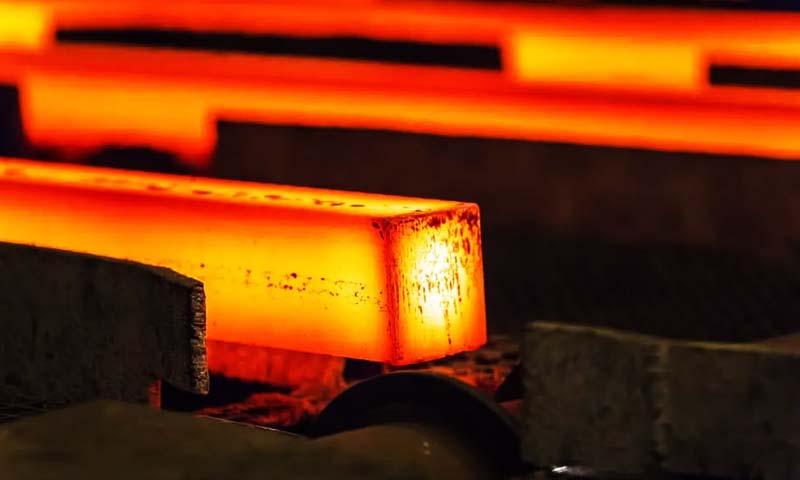
Once consolidated, many refractory metals are further shaped by forging, rolling, tibdil, estrużjoni, jew tpinġija.
These processes refine the grain structure and improve mechanical consistency.
Madankollu, they must be carefully controlled because refractory metals can be prone to cracking if deformed under unsuitable temperature conditions.
Hot working is often preferred because it reduces the risk of brittle failure during processing. Still, the working window is narrow, and exact conditions depend on the metal in question.
Tungstenu, per eżempju, is far less forgiving than some niobium-based materials.
Trattament tas-sħana
Trattament tas-sħana is used to relieve stress, improve microstructural stability, and prepare the material for service or further processing.
In refractory metals, heat treatment is not just a cleanup step; it is a property-development step.
Depending on the metal and application, heat treatment may be used to:
- reduce internal residual stress,
- stabilize grain structure,
- restore ductility after deformation,
- improve creep performance,
- or prepare the alloy for subsequent fabrication.
Because refractory metals are often used in critical applications, the heat-treatment schedule must be chosen with great care.
Machining and finishing
Magni refractory metals is notoriously difficult. Their high strength, Reżistenza għall-brix, and thermal behavior can cause rapid tool wear and demanding cutting conditions.
F'ħafna każijiet, machining must be slower, more precise, and more expensive than machining ordinary metals.
Surface finishing is also important. In high-temperature or corrosive environments, surface quality can influence oxidation behavior, contamination resistance, u l-ħajja tas-servizz.
Illustrar, tħin, chemical cleaning, and controlled coating systems may all be used depending on the final application.
Welding and joining
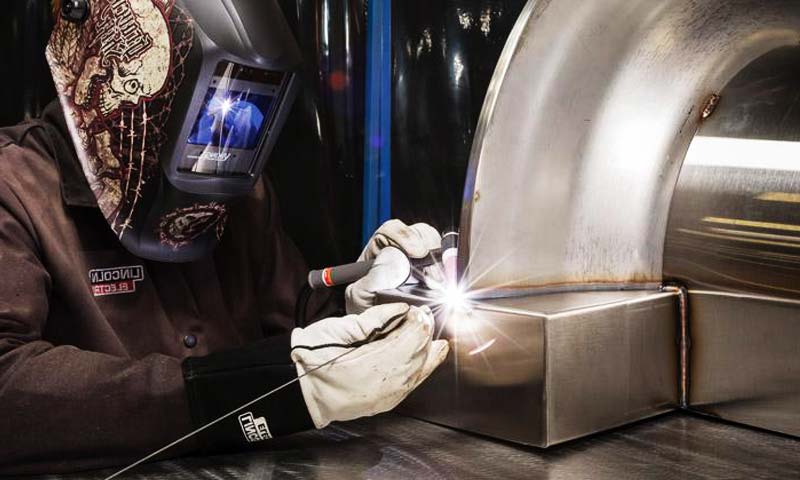
Welding refractory metals is possible, but it is often highly specialized.
Many of these metals require protective atmospheres or vacuum conditions because they oxidize or become embrittled if exposed to air at high temperature.
Joining methods must be selected to avoid contamination, qsim, and undesirable phase changes.
F'xi applikazzjonijiet, Irfid mekkaniku, diffusion bonding, ibbrejkjar, or electron-beam welding may be preferred over conventional fusion welding.
The joining method is often just as important as the base metal itself.
Advanced manufacturing
Additive manufacturing is increasingly relevant for refractory metals, especially when geometries are too complex for conventional machining or when material waste must be minimized.
Madankollu, the process is still challenging because of high thermal gradients, stress residwu, powder quality requirements, and the difficulty of achieving defect-free builds.
Even so, advanced manufacturing is one of the most promising directions for the future of refractory-metal production.
It offers a pathway to lower waste, greater design freedom, and more efficient use of high-value materials.
7. Advantages and Limitations of Refractory Metals
Refractory metals are valuable because they perform where other materials fail. Fl-istess ħin, they are not universally ideal.
Their strengths are real, but so are their trade-offs.
Vantaġġi
Extremely high temperature capability
The most obvious advantage is thermal endurance.
Refractory metals can operate in temperature regimes that are far beyond the practical limits of standard steels and many nickel-based alloys.
High creep resistance
F'temperatura elevata, many materials deform slowly under load.
Refractory metals are prized for resisting this time-dependent deformation, making them reliable in long-duration hot service.
Strong dimensional stability
Several refractory metals maintain geometry and structural integrity exceptionally well in thermal cycling or prolonged heat exposure.
This is especially important in precision systems and critical hardware.
Good performance in severe-service applications
Depending on the metal, refractory systems can provide strong resistance to oxidation, korrużjoni, ilbies, radjazzjoni, or thermal shock.
This broad functionality is why they are used in such a wide range of advanced industries.
Specialized property profiles
The family contains very different strengths: tungsten for extreme heat, tantalum for corrosion, niobium for low density, molybdenum for thermal balance, and rhenium for creep strength.
That makes them highly versatile at the family level.
Limitazzjonijiet
Spiża għolja
Refractory metals are expensive to extract, irfina, proċess, and machine. Their raw material cost alone can be significant, and fabrication often adds further expense.
Difficult manufacturability
These metals are not easy to cast, forma, or weld. Their processing often requires specialized equipment, atmosferi kkontrollati, or powder-based routes.
Sensitivity to oxidation
Some refractory metals perform well in vacuum or inert conditions but oxidize rapidly at high temperature in air. This means the environment is just as important as the temperature.
Brittleness or limited room-temperature ductility in some cases
Certain refractory metals can be difficult to form or may become brittle depending on purity, Struttura tal-qamħ, u l-istorja tal-ipproċessar. That complicates manufacturing and design.
Supply-chain constraints
Some refractory metals are rare or strategically sensitive. This can lead to price volatility, availability risk, and dependency on a narrow supply base.
8. Typical Industrial Applications of Refractory Metals
Refractory metals are used in industries where temperature, stress, and reliability requirements exceed the capability of conventional alloys.
Their application range is broad, but the reasons for selection are always specific.
Aerospace and defense
Aerospace is one of the most important application areas for refractory metals. These materials are used in:
- Żennuni tar-rokits,
- Kmamar tal-ġibda,
- thermal shields,
- turbine-related hardware,
- high-temperature fasteners,
- structural hot-zone parts.
The reason is simple: aerospace hardware experiences intense thermal gradients, vibrazzjoni, stress mekkaniku, and extreme reliability requirements.
Refractory metals are among the few materials that can survive such conditions with acceptable performance.
Ipproċessar kimiku
Tantalum is especially important in chemical processing because of its outstanding corrosion resistance. It is used in:
- Bastimenti ta 'reazzjoni,
- Skambjaturi tas-sħana,
- spargers,
- piping components,
- laboratory and pilot-scale chemical systems.
Molybdenum and niobium also appear in selected chemical-service equipment, especially where high temperature and aggressive media overlap.
Energy and nuclear systems
Refractory metals are critical in power-generation technologies that involve high heat flux, radjazzjoni, or prolonged thermal exposure. They are used in:
- reactor-related components,
- high-temperature structural parts,
- fusion-research hardware,
- thermal shields,
- high-heat-flux shields and supports.
Their value in this sector comes from the combination of thermal endurance and structural stability.
Electronics and semiconductor processing
Tungsten and molybdenum are widely used in electronics and semiconductor equipment. L-applikazzjonijiet jinkludu:
- electrodes,
- targets,
- elementi li jsaħħnu,
- vacuum-system parts,
- process fixtures,
- X-ray components.
These uses depend on both thermal stability and controlled behavior under vacuum or low-contamination conditions.
Medical and scientific equipment
Tantalum and niobium appear in specialized medical and scientific systems. Eżempji jinkludu:
- impjanti,
- MRI-related systems,
- superconducting components,
- laboratory fixtures,
- precision instruments.
F'dawn l-oqsma, the key requirements are often purity, stabbiltà, and compatibility with demanding service conditions.
High-temperature furnaces and tooling
Molybdenum and tungsten are commonly used in:
- furnace fixtures,
- hot-zone hardware,
- imut,
- għodda,
- thermal processing components.
These metals are chosen because they can remain functional at temperatures that would severely weaken or deform ordinary steels.
Wear-intensive and shielding applications
Tungsten is especially important in:
- radiation shielding,
- Kontro-piżijiet,
- wear-resistant tooling,
- impact-prone components,
- dense structural parts where mass is useful.
Its density and thermal resistance make it unusually valuable in applications where both shielding and durability are required.
9. Comparison with other materials
| Materjal | Main strengths | Main weaknesses compared with refractory metals | Where refractory metals are preferable |
| Azzar tal-karbonju | Spiża baxxa, fabbrikazzjoni faċli, broad availability | Loses strength and stability at far lower temperatures | When the service temperature or hot-load condition is severe |
| Azzar li ma jissaddadx | Reżistenza ġenerali għall-korrużjoni, disponibbli b'mod wiesa ' | Not designed for the most extreme temperatures or heat flux | When high-temperature stability or refractory-level performance is needed |
Superalloys tan-Nikil |
Excellent high-temperature strength and oxidation resistance | Typically more limited than refractory metals in extreme-temperature headroom | When the environment pushes beyond conventional superalloy capability |
| Metalli refrattarji | Highest temperature capability, strong hot performance, special functional options | Higher cost and more difficult fabrication | When failure cost is high and the environment is extreme |
10. Sostenibbiltà, Riċiklamat, and Cost Considerations
Refractory metals are expensive, and that expense is not accidental. Their extraction, purification, powder processing, and fabrication are complex.
Their scarcity and processing difficulty make them valuable, but also costly and supply-sensitive.
Fl-istess ħin, their long service life can be a sustainability advantage.
If a component lasts longer, needs fewer replacements, and reduces downtime, the lifecycle impact may be lower than a cheaper material that fails sooner.
For critical systems, durability is itself a sustainability metric.
Recycling is also important. Refractory metals often retain significant value in scrap form, and recovery from high-value industrial waste is an important part of the supply chain.
Fil-prattika, the more specialized the metal, the more important it becomes to recover and reuse it efficiently.
Cost should therefore be judged in lifecycle terms:
- purchase price,
- fabrication cost,
- maintenance burden,
- replacement interval,
- failure risk,
- and operational downtime.
For many refractory-metal applications, the right answer is not the cheapest material. It is the material that makes the system economically and technically reliable over time.
11. Konklużjoni
Refractory metals are the elite class of engineering metals for severe service.
Tungstenu, molibdenu, tantalum, Niobium, and rhenium each bring a different advantage, but they share a common purpose: to remain useful in environments where ordinary metals lose their margin.
Their value lies not just in high melting point, but in the combination of thermal stability, Reżistenza tal-creep, special corrosion behavior, Affidabilità dimensjonali, and advanced functional performance.
That is why they are indispensable in aerospace, enerġija, Ipproċessar kimiku, elettronika, and scientific equipment.
Refractory metals are not chosen casually. They are chosen when the operating conditions are severe, the performance requirement is unforgiving, and the cost of failure is high.
In that sense, they are not simply materials. They are engineering solutions.
FAQs
Which refractory metal has the highest melting point?
Among the five metals covered here, tungsten is the highest, fi 3422° C., followed by rhenium at 3186° C..
Why are refractory metals difficult to manufacture?
Because they are typically extracted, refined, and reduced through powder-based or highly controlled routes, and their fabrication is complicated by high costs and machining difficulty.
Which refractory metal is best for chemical corrosion?
Tantalum is the standout in aggressive acid service because of its extreme inertness and corrosion resistance to many acids below 150°C.
Which refractory metal is most useful in aerospace?
There is no single winner. Niobium is attractive for lower density aerospace parts, tungsten for extreme heat, and rhenium for superalloy turbine applications.
Are refractory metals recyclable?
IVA. They can be recovered from scrap streams, and rhenium in particular depends heavily on secondary sources.