1. Introduzzjoni
ASTM A36 is the standard specification for a low-carbon structural steel widely used for plates, shapes, bars and welded components in building and general structural applications.
It is valued for predictable, ductile mechanical properties, excellent weldability and broad availability in many product forms.
A36 azzar tal-karbonju is not a high-strength alloy — its appeal lies in economy, robust toughness at ambient temperatures, u faċilità ta 'fabbrikazzjoni.
Designers must account for its relatively modest yield strength, basic corrosion behavior (unprotected mild steel will rust) and limited hardenability when deciding whether A36 is the right material for a component or structure.
2. What is ASTM A36 Carbon Steel?
ASTM A36 is the most common specification for a low-carbon, structural steel grade used in general construction and fabrication.
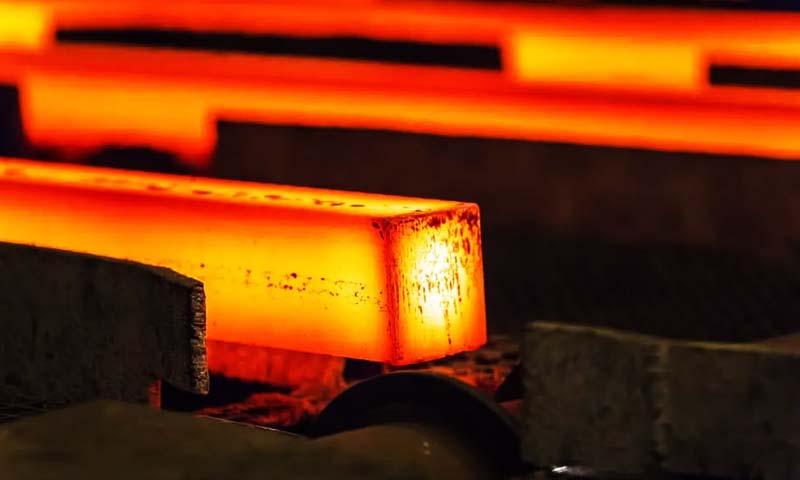
It is a hot-rolled, mild steel designed to provide predictable, ductile mechanical behaviour, easy weldability and wide availability in plates, shapes, bars and other mill products used for building frames, pontijiet, machinery bases and general structural fabrication.

Why the name matters
The designation “A36” comes from the ASTM specification under which the material is standardized (ASTM A36/A36M).
The number “36” refers to the nominal minimum yield strength in ksi (36 ksi ≈ 250 MPA) that the material must meet in its as-rolled condition.
That single metric is one reason A36 is often treated as the default structural steel in many regions and industries.
Common product forms:
- Hot-rolled plates (thicknesses from a few millimetres to 150+ mm)
- Structural shapes (I, H, Ċ, U sections), angles and channels
- Bars: tond, square and flat (for machining and forging blanks)
- Rolled coils and sheet (limited thickness range)
3. Chemical composition of ASTM A36 Carbon Steel
| Element | Firxa tipika (wt.%) — indicative |
| Karbonju (Ċ) | ≤ ~0.25–0.29 (Kontenut baxx ta 'karbonju) |
| Manganiż (Mn) | ~0.60–1.20 |
| Fosfru (P) | ≤ 0.04 (massimu) |
| Kubrit (S) | ≤ 0.05 (massimu) |
| Silikon (U) | ≤ 0.40 - 0.50 (traċċa) |
| Ram, Fi, Cr, Mo | residual or low ppm levels |
4. Mechanical Properties of ASTM A36 Carbon Steel
Values shown are representative for hot-rolled, as-rolled ASTM A36. Actual properties depend on section thickness, rolling practice and heat chemistry.
| Proprjetà | Tipiku / Minimum value | Noti |
| Minimum yield strength (RP0.2) | 36 KSI (≈ 250 MPA) | Basis of the A36 designation; use as minimum yield for preliminary structural design unless MTR shows higher value. |
| Qawwa tat-tensjoni (Rm) | 58 - 80 KSI (≈ 400 - 550 MPA) | Range varies with product form and thickness; confirm exact value on MTR. |
| Titwil | ≥ 20% (fi 2 fi / 50 Tul tal-gauge MM) | Indicates good ductility; elongation decreases with increasing thickness. |
| Modulu ta 'elastiċità (E) | ≈ 200 GPA (29,000 KSI) | Standard structural steel value used for stiffness and deflection calculations. |
Shear modulus (G) |
≈ 79 GPA (11,500 KSI) | Used for torsion and shear deformation calculations. |
| Poisson’s ratio (n) | ≈ 0.28 | Typical value for low-carbon structural steels. |
| Ebusija Brinell (HBW) | ~120 – 160 HBW | Indicative range for as-rolled condition; correlates with tensile strength. |
| Charpy impact toughness | Not specified by ASTM A36 | Impact toughness is not mandatory; specify CVN testing if low-temperature or fracture-critical service is expected. |
5. Fiżiku & Thermal Properties of ASTM A36 Carbon Steel
Numbers given are representative tipiku values at or near room temperature unless noted otherwise — actual values depend on chemistry, rolling/homogenization history and temperature.
| Proprjetà | Valur tipiku (rappreżentant) | Practical note |
| Densità | ≈ 7.85 g · cm⁻³ (7850 kg·m⁻³) | Use for mass, inertia and structural weight calculations. |
| Konduttività termali, k | ≈ 50–60 W·m⁻¹·K⁻¹ (≈54 W·m⁻¹·K⁻¹ commonly quoted at 20–25 °C) | Conductivity falls with rising temperature; important for heat-flow, cooling and quench design. |
| Kapaċità speċifika tas-sħana, cp | ≈ 460–500 J·kg⁻¹·K⁻¹ (użu ≈ 470 J·kg⁻¹·K⁻¹ as a practical value at 20–25 °C) | cp increases with temperature; governs energy required to heat/cool sections. |
| Diffusività termali, α = k/(ρ·cp) | ≈ 1.4–1.6 × 10⁻⁵ m²·s⁻¹ (using k = 54, ρ = 7850, cp = 470 → α ≈ 1.46×10⁻⁵) | Controls how fast temperature changes penetrate the material (transient thermal response). |
| Coefficient of linear thermal expansion, αL | ≈ 11.7–12.5 × 10⁻⁶ K⁻¹ (tipiku: 12×10⁻⁶ K⁻¹) | Use for thermal growth calculations and joint clearances. |
Firxa tat-tidwib (appross.) |
Solidus ≈ 1425 ° C.; Liquidus ≈ 1540 ° C. | Melt/solidus ranges vary slightly with composition. Not used for normal structural design. |
| Emissivity (surface-dependent) | 0.1 - 0.95 (typical oxidized steel ≈ 0.7–0.9; bright polish ≈ 0.05–0.2) | Use for radiative heat-transfer models; always pick emissivity consistent with surface finish and oxidation state. |
| Reżistività elettrika (solidu) | ≈ 0.10 - 0.20 μω · m (≈ 1.0–2.0 ×10⁻⁷ Ω·m) | Varies with chemistry and temperature; affects electrical heating and eddy-current losses. |
| Magnetic behaviour | Ferromanjetiku below Curie point (~770 °C for iron) | Magnetic properties influence NDT (MPI) and induction heating behavior. |
6. Fabrication behavior: li jiffurmaw, machining and cold work

Tifforma (cold & sħun):
- A36 hot-rolled products form well by bending, rolling and simple drawing.
- Formazzjoni kiesħa (liwi, timbru) is practical within design limits — ensure bend radii and reduction limits match material thickness and temper to avoid cracking.
Typical minimum bend radii are recommended in forming tables and depend on thickness and mill condition.
Magni:
- A36 machines easily with conventional carbon and carbide tooling. Machinability is comparable to other mild steels; standard speeds and feeds apply.
Heavy chip loads, deep interrupted cuts and poor coolant can work-harden surfaces and reduce tool life.
Cold work effects:
- Cold bending or drawing increases yield locally by strain hardening; subsequent stress-relief anneal is possible if ductility must be restored.
7. Iwweldjar u jingħaqad
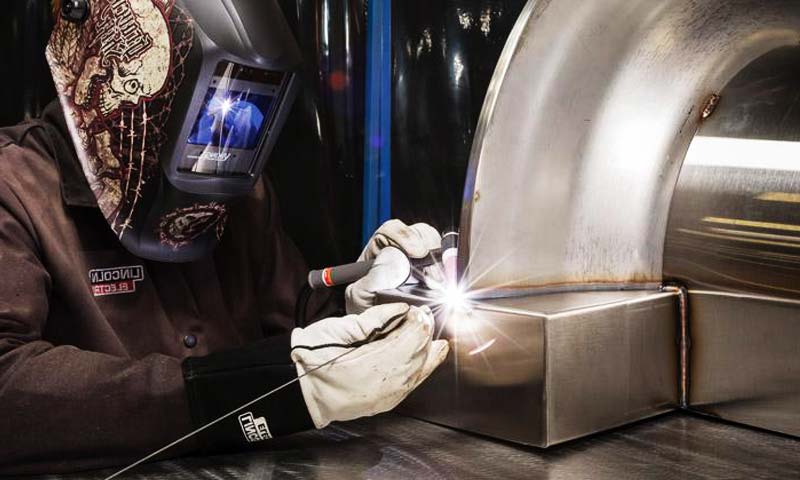
Weldabilità: Eċċellenti. Low carbon content and limited alloying make A36 readily weldable with all common fusion and solid-state techniques (Smaw, Gtaw, GMaw / Mig, FCAW).
Filler metal selection:
- Common consumables: mild steel filler rods/wires (E.g., ER70S series for GMAW, E7018 or E7016 for SMAW) matched for strength and ductility.
Choose consumables that deliver ductile, crack-resistant weld metal.
Preheat and interpass:
- For typical plate thicknesses (<25 mm) and benign environments, no preheat is usually required. For thicker sections, restrained joints, or cold ambient conditions, modest preheat (E.g., 50–150 °F / 10–65 °C) reduces hydrogen cracking risk and residual stresses.
Interpass temperature controls are essential for multi-pass welds.
Trattament tas-sħana wara l-weldjatura (PWHT):
- Not required for most A36 welded assemblies. PWHT may be used to reduce residual stress or when weld procedure qualification demands it (pressure or fatigue critical components), but A36 lacks hardenability;
PWHT generally involves stress-relief annealing (E.g., ~600–650 °C) rather than hardening.
8. Trattament tas-sħana: capabilities and limits for A36
ASTM A36 is not a heat-treatable alloy in the sense of quench & temper hardening (low carbon and lack of alloying impede martensitic transformation).
Typical thermal treatments:
- Ttremprar / Normalizzazzjoni: possible to refine grain and restore ductility after heavy cold work or welding. Annealing temperatures typically ~ 700–900 °C depending on thickness and desired effect.
- Ittemprar għat-tnaqqis tal-istress: temperatura baxxa (~ 550–650 ° C.) to reduce residual weld stresses.
- Quench & temperament: not effective for significant strength increase because of low carbon/hardenability; quenching yields limited hardening and substantial distortion.
Implikazzjoni tad-disinn: do not rely on heat treatment to raise yield strength; choose a higher-strength steel if greater allowable stresses are needed.
9. Corrosion behaviour and surface protection strategies
Intrinsic corrosion: A36 is unalloyed carbon steel and will corrode (form iron oxide) when exposed to moisture and oxygen. Rate depends on environment (umdità, salts, pollutants).
Strateġiji ta 'protezzjoni:
- Paint systems: primer + Topcoats (epossidiku, Polyurethane) are economical for atmospheric protection.
Surface prep (abrasive blast to Sa 2½, SSPC SP10) improves adhesion and longevity. - Galvanizzazzjoni: galvanizzar bis-sħana (HDG) gives sacrificial protection; commonly used for exterior structural members, fasteners and components exposed to weather.
- Protezzjoni katodika: used for submerged or buried structures (Kisi + anodi tas-sagrifiċċju).
- Corrosion allowances: specify thickness allowances and inspection schedules in aggressive environments.
Manutenzjoni: periodic inspection and touch-up are critical for long service life—coating failure allows localized corrosion and pitting.
10. Typical Applications of ASTM A36 Steel
A36 is the default choice where economy, availability and fabrication simplicity are priorities. Applikazzjonijiet tipiċi jinkludu:
- Building structures: travi, kolonni, plates and bracing
- Pontijiet (non-high-strength components), walkways, platforms
- General fabrication: Gwarniċi, jappoġġja, trailers
- Machinery bases, housings, non-pressure components
- Fittings and welded assemblies where ductility and weldability are essential
11. Vantaġġi & Limitations of ASTM A36 Carbon Steel
Core Advantages
- Kosteffikaċja: Lowest cost among structural steels (30-40% cheaper than HSLA steels like A572 Gr.50, 70-80% cheaper than stainless steel 304).
- Superior weldability: Eliminates preheating for thin sections, reducing manufacturing time and cost.
- Excellent processability: Easy to form, magna, and forge, suitable for both simple and complex components.
- Broad availability: Global supply chain, with diverse product forms (pjanċi, bars, shapes, Forgings) and sizes.
- Saħħa bilanċjata: Meets most structural requirements (tagħbijiet statiċi, low dynamic loads) without over-engineering.
Limitazzjonijiet ewlenin
- Poor corrosion resistance: Requires surface protection for outdoor or corrosive environments; not suitable for marine/chemical applications without coating.
- Limited low-temperature toughness: Unmodified A36 is brittle below 0°C, not recommended for cryogenic applications (E.g., Arctic structures).
- Mhux trattat bis-sħana: Cannot be significantly strengthened via heat treatment (max tensile strength ~550 MPa); insufficient for high-stress components.
- Lower fatigue resistance: Not ideal for high-cycle dynamic loads (E.g., Partijiet tal-magna tal-karozzi) – use HSLA or alloy steels instead.
12. Standard Compliance & International Equivalents
ASTM A36 is globally recognized, with equivalent standards in major industrial regions, ensuring cross-border compatibility:
| Reġjun | Equivalent Standard | Denominazzjoni ta 'grad | Differenzi ewlenin |
| Ewropa | Fi 10025-2:2004 | S235JR | Lower yield strength (235 MPA vs.. 250 MPa for A36 ≤19 mm); similar ductility and weldability. |
| Iċ-Ċina | GB / T. 700-2006 | Q235B | Saħħa tar-rendiment 235 MPA; phosphorus/sulfur limits stricter (≤0.045% vs. A36’s 0.040% P, 0.050% S). |
| Ġappun | JIS G3101:2015 | SS400 | No specified yield strength (tensjoni 400-510 MPA); equivalent for structural applications. |
| L-Indja | IS 2062:2011 | E250A | Saħħa tar-rendiment 250 MPA; compatible with A36 in construction and machinery. |
13. Comparative analysis — A36 vs. higher-strength structural steels
| Aspett | A36 (linja bażi) | A572 Gr 50 (HSla) | A992 (forom strutturali) | A514 (Q.&T high-strength plate) |
| Metallurgical class | Low-carbon mild steel (hot-rolled) | Saħħa għolja, liga baxxa (HSla) | Structural HSLA with controlled chemistry for shapes | Imkessaħ & ittemprat, high-strength alloyed plate |
| Typical minimum yield | 36 KSI (≈250 MPa) | 50 KSI (≈345 MPa) | 50 KSI (≈345 MPa) | 100 KSI (≈690 MPa) |
| Typical tensile range | 58–80 KSI (≈400–550 MPa) | 60–80 KSI (≈415–550 MPa) | 60–80 KSI (≈415–550 MPa) | ~110–140 ksi (≈760–965 MPa) (tvarja skont il-grad) |
| Titwil | ≥ ~20% (depends on thickness) | ~18–22% (sezzjoni dipendenti) | ~18–22% | Lower — often ~10–18% (section and heat dependent) |
| Weldabilità (shop) | Eċċellenti; common consumables | Tajjeb ħafna; similar practice to A36 | Tajjeb ħafna; specified for building columns/beams | More demanding — welding must be controlled; preheat/interpass and qualified WPS often required |
Heat treatment capability |
Not heat-treatable for strength | Not intended for quench/temper; strengthened by chemistry/thermomechanical processing | Not heat-treatable for strengthening | Heat-treated (Q.&T) — strength obtained via quench & temperament |
| Ebusija / low-temperature behavior | Good for general service; specify CVN if required | Improved toughness over A36 (depending on spec) | Good — specified chemistry for structural sections and controlled toughness | Can have good toughness if specified, but requires control; risk of brittle behaviour if not properly supplied/treated |
| Formabilità & xogħol kiesaħ | Good forming characteristics | Tajjeb, but greater springback; less ductile than A36 | Good for gross forming of shapes | Limited — formability poor compared with A36/A572; cold forming not recommended for full-strength use |
Useable plate/shape thickness ranges |
Wiesa ', standard mill stock | Wiesa '; commonly available in plate and shapes | Primarily wide-flange shapes and beams | Typically heavy plate (sezzjonijiet eħxen) for high-stress components |
| Applikazzjonijiet tipiċi | General structural frames, parentesi, non-critical members | Pontijiet, building members, structural sections where higher allowable stress reduces weight | Wide-flange beams/columns in buildings — industry standard for structural shapes | High-strength machine frames, excavation equipment, highly stressed structural members |
| Spiża relattiva tal-materjal | Baxx (most economical) | Moderat | Moderat (similar to A572) | Għoli (premium for high strength and Q&T processing) |
| Design tradeoffs | Spiża baxxa, simple fabrication but heavier sections | Weight saving, higher allowable stress, modest extra fabrication control | Optimized for building steelwork (section tolerances, flange geometry) | Major weight reduction possible but requires careful welding/fabrication and NDE |
14. Ċiklu tal-ħajja, maintenance and recyclability
Service life: With standard paint systems and maintenance, A36 structural components commonly last decades in moderate atmospheres. Corrosive or marine environments require higher maintenance or galvanizing.
Tiswija & manutenzjoni: Weld repair is straightforward. Structural inspections, corrosion monitoring and timely recoating extend life.
Riċiklamat: Steel is highly recyclable (one of the most recycled engineering materials). A36 scrap is readily consumed in electric arc furnaces (Eaf) or integrated mills; specifying recycled content is feasible.
15. Konklużjoni
ASTM A36 mild/low carbon steel remains a cornerstone material for general structural steelwork because it combines economy, predictable ductile properties and straightforward fabrication.
It is the right choice when loads and environmental conditions match its design envelope and when fabrication simplicity and cost are dominant drivers.
Madankollu, when higher allowable stresses, larger spans, Tnaqqis tal-piż, improved low-temperature toughness or superior corrosion resistance are required, engineers should evaluate higher-strength structural steels, HSLA alloys, weathering steels or corrosion-resistant alloys as appropriate.