Komerciāli tīra titāna klase 1 (CP-Ti pakāpe 1) ir mīkstākā un elastīgākā no standarta komerciāli tīrā titāna kategorijām.
Its low interstitial impurity levels give it outstanding corrosion resistance, Lieliska formabilitāte un metināmība, and high biological inertness.
Pakāpe 1 is chosen where corrosion resistance, spējamība, and biocompatibility are primary design drivers and where high structural strength is not required.
1. Kas ir Titanium CP-Ti pakāpe 1?
CP-Ti pakāpe 1 (Commercially Pure Titanium — Grade 1) is the softest, most ductile and lowest-interstitial variant of wrought commercially pure titanium.
It is essentially unalloyed titāns with tight limits on interstitial elements (skābeklis, slāpeklis, ogleklis, hydrogen and minor impurities).
The material is optimized for Maksimālā izturība pret koroziju, formability and biological inertness rather than for high strength.
Pakāpe 1 is supplied as sheet, plāksne, stieple, caurule, wire and formed components and is widely used in corrosive environments, marine service, medical devices and where deep drawing or complex forming is required.
Global standard equivalents — CP-Ti Grade 1
| Standard system | Norīkojums / code | Typical name(s) used in industry |
| Mūs (ASV) | R50250 | UNS R50250 |
| ASTM / Asme (ASV) | ASTM B265 (Pakāpe 1) / ASME SB-265; ASTM F67 (surgical implant spec covers Grades 1–4) | CP-Ti pakāpe 1, ASTM pakāpe 1 |
| No / Iekšā (Eiropa / Vācija) | Material No. 3.7025 / Ti Gr 1 | 3.7025, Ti-Grade 1 |
| GB / GB-T (Ķīna) | TA1 (per GB/T 3620.x series) | TA1 |
| Viņš ir (Japāna) | TP270 / TR270 (JIS H4600 family) | JIS Class 1 / TP270 |
| DIN W-Nr. / Werkstoff-Nr. | 3.7025 | Ti1 / Ti-Grade 1 |
| Common trade / vendor names | - | CP-Ti pakāpe 1, Ti-1, Ti Gr 1, Ti1, TA1, TP270 |
2. Chemical composition and the role of interstitials
- Base chemistry: Pakāpe 1 is composed of >99% titanium by mass. The remaining fraction consists of carefully limited amounts of oxygen, slāpeklis, ogleklis, hydrogen and iron.
- Interstitials control properties: Oxygen and nitrogen occupy interstitial sites in the hexagonal close-packed (hcp) α-titanium lattice.
Small increases in these interstitials produce a measurable rise in yield and tensile strength (interstitial hardening) while simultaneously reducing ductility, fracture toughness and formability.
That trade-off is central: Pakāpe 1 is specified with the lowest allowable interstitial content to maximize ductility and toughness. - Minor impurities: Carbon and hydrogen similarly affect embrittlement and must be limited; iron at low levels is tolerated but higher Fe can influence corrosion behavior and grain growth during processing.
- Praktiskā nozīme: When ordering Grade 1, designers should confirm the exact composition limits required for the application, because even small variations in oxygen or nitrogen will change forming and mechanical performance.
3. Fizisks & Mechanical Properties of CP-Ti Grade 1
| Īpašums | Tipiska vērtība (rūdīts, pārstāvis) | Vienības | Piezīmes / dependence |
| Blīvums | 4.50 | g · cm⁻³ | Nominal bulk density for CP-Ti Grade 1 — useful for mass/weight calculations. |
| Younga modulis (Elastības modulis, E) | 105 | GPA | Relatively low compared with steels; affects deflection and natural frequency. Little affected by cold work. |
| Poisson’s ratio | 0.34 | - | Typical isotropic approximation for design. |
Stiepes izturība (UTS) |
240 - 350 | MPA | Strongly dependent on product form (lapa, stieple, caurule) and prior cold work; higher if cold-worked. |
| Peļņas izturība (0.2% kompensēt) | 170 - 275 | MPA | Typical annealed values near lower end; increases with cold work. Specify form/condition when ordering. |
| Elongation at fracture (%) | 20 - 35 | % | High ductility in annealed sheet/plate; values fall off with increasing oxygen content or cold work. |
| Vickers hardness (Īgns) | ~80 – 160 | Īgns | Relatively low hardness among titanium products; varies with cold work and surface condition. |
Brinela cietība (apm.) |
~70 - 150 | HB | Tuvs; convert from HV when needed — use hardness only as a comparative indicator. |
| Shear modulus (Gan) | ~ 40 | GPA | Useful for torsion and shear calculations (G ≈ E / (2(1+n))). |
| Siltumvadītspēja | ~ 22 | W·m⁻¹·K⁻¹ | Low compared with common structural metals — cutting and welding heat management important. |
| Termiskās izplešanās koeficients (20–100 ° C) | ~8.6 | µm·m⁻¹·K⁻¹ | Influences dimensional changes with temperature and bimetallic stresses. |
Īpatnējā siltuma jauda |
~ 520 | J·kg⁻¹·K⁻¹ | Relevant for thermal mass and heating calculations. |
| Kušanas temperatūra | 1668 | ° C | Solidus/melt temperature (apm.). |
| Elektriskā pretestība (pie 20 ° C) | ~420 | nΩ·m (0.42 µΩ · m) | Relatively high resistivity; important for electrical/EM design considerations. |
| Noguruma spēks (indikatīvs) | ~80 – 140 | MPA | Highly dependent on surface finish, Atlikušie spriegumi, and alpha-case; use application-specific testing for critical designs. |
Lūzuma izturība (K_ic, indikatīvs) |
Mēreni vai augstu (laba izturība) | MPA · √m | CP-Ti pakāpe 1 generally shows good toughness in annealed condition; values vary with thickness and oxygen content. |
| Korozijas uzvedība | Lielisks (passive TiO₂ film) | kvalitatīvs | Outstanding resistance in oxidizing and many chloride environments; test for aggressive reducing chemistries. |
| Magnētiskā caurlaidība | ≈1.003 – 1.01 | - | Essentially non-magnetic — useful where low magnetic signature is needed. |
4. Microstructure and metallurgy — why CP-Ti behaves the way it does
- Single-phase α structure at room temperature: Unalloyed titanium at ambient conditions exists in the α (hcp) kristāla struktūra. Without β-stabilizing alloying elements, Pakāpe 1 remains α across service temperatures relevant to most applications.
- Strength mechanisms: Because there are no strengthening alloy additions, Grade 1’s strength derives from lattice resistance (intrinsic), dislocation density (from cold work), grain size and interstitial content.
Cold-work increases dislocation density and therefore yield/tensile strength; anneal cycles reduce dislocation density and restore ductility. - Surface oxide: Titanium develops a thin, pielipušais oksīda slānis (Tio₂) spontaneously in air. That passive film is a major factor in corrosion resistance.
The oxide thickness and stoichiometry are influenced by surface finish and thermal exposure during processing. - Processing sensitivity: The metal is sensitive to contamination during high-temperature processing—oxygen and nitrogen pick-up at elevated temperatures creates embrittled surface layers (“alpha case”), which degrade toughness and fatigue performance unless removed.
5. Izturība pret koroziju un bioloģiski savietojamība
- Pasīvā aizsardzība: Grade 1’s corrosion resistance stems from the rapid formation of a stable, self-healing TiO₂ passive film.
This film is chemically stable in oxidizing media and many chloride-containing environments, giving excellent resistance in seawater, many process chemistries and atmospheric exposures. - Ierobežojumi: Under certain aggressive reducing conditions (Piem., some concentrated acids or high temperature reducing environments), localized corrosion or accelerated attack can occur.
Mechanical abrasion that removes the passive film can lead to transient corrosion until repassivation occurs. - Bioloģiskā savietojamība: The chemically inert surface oxide, low ion release and the absence of intentional toxic alloying elements make Grade 1 highly biocompatible.
It is suitable for many long-term tissue-contact applications, including some implants and surgical instruments, provided mechanical requirements are met. - Design guidance: For critical corrosion scenarios, perform application-specific corrosion testing (exposure, plaisa, galvanic pairings) rather than relying solely on general statements of “excellent corrosion resistance.”
6. Izgatavošana: veidošanās, apstrāde, and welding considerations
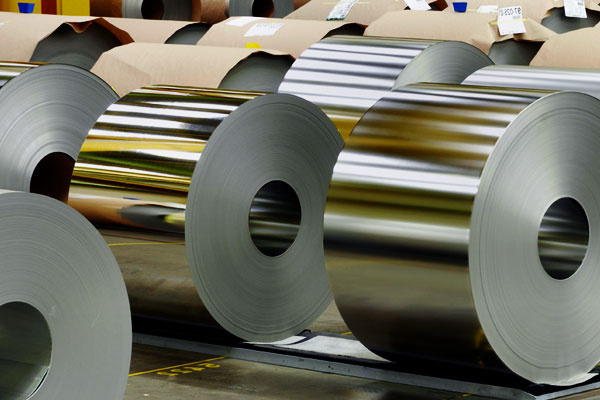
Veidošanās
- Auksta formēšana: Pakāpe 1 is highly formable—deep drawing, saliekšana, spinning and other cold forming operations are straightforward compared with higher-strength titaniums.
Springback and anisotropy should be accounted for during tooling design. - Karsta formēšana: Performed above ambient but below temperatures where oxygen/nitrogen uptake becomes significant, or in controlled atmospheres (inerta gāze, vakuums).
Hot work can lower forming loads but requires strict atmosphere control to avoid surface embrittlement. - Instrumentus: Use polished dies and corrosion-resistant tooling to avoid contamination; lubrication and die design are important to minimize galling.
Apstrāde
- Cutting behavior: Despite its relative softness, titanium is more difficult to machine than many steels because of poor thermal conductivity (heat concentrates at the tool-chip interface) and the tendency to work-harden.
Chips can be long and gummy unless proper parameters are used. - Recommended approach: Use rigid setups, sharp tooling, controlled feeds, and moderate spindle speeds. Emphasize chip evacuation and tool life management.
Coolants and cutting fluid strategies should be chosen to avoid hydrogen pickup or contamination.
Welding and joining
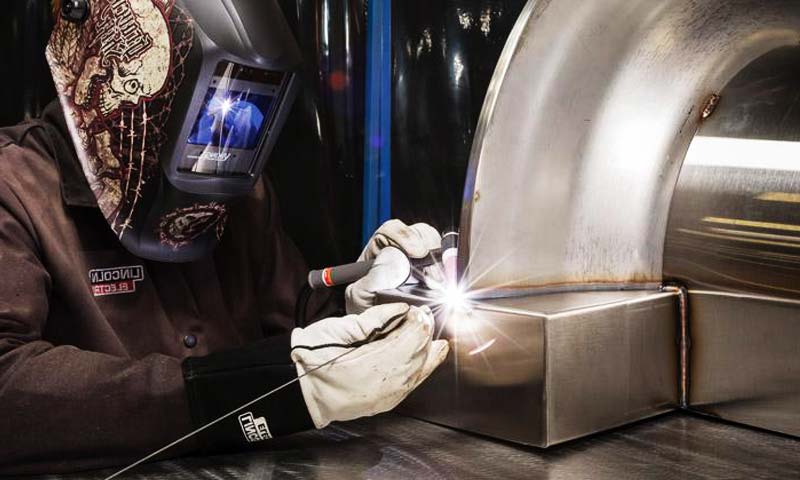
- Metināmība: Pakāpe 1 welds readily by common fusion processes (TIG/GTAW, plazma) because it is unalloyed and does not form brittle intermetallics.
Solid-state joining (friction stir, electron beam) is also feasible where geometry and cost allow. - Vairogs: Protect weld areas with inert gas (argons) pre- and post-flow to prevent atmospheric contamination. Avoid exposure of hot titanium to air and moisture.
- Siltuma zona (HAZ): Oxygen/nitrogen pick-up in the HAZ will embrittle the region if shielding is inadequate.
Post-weld cleaning to remove surface oxides and contamination is recommended for critical parts. - Mehāniskā apdare: Weld undersides and beads may require grinding or machining; use suitable abrasives and avoid contamination during finishing.
7. Termiskā apstrāde, virsmas procedūras, and finishing options
- Termiskā apstrāde: Pakāpe 1 is not heat-treatable in the alloy-strengthening sense because it lacks alloying elements for phase transformation strengthening.
Thermal cycles are used only for stress relief or to restore ductility after cold working. - Surface cleaning and passivation: Typical cleaning (acid pickling, alkaline cleaning) and controlled oxidizing treatments are used to remove contaminants and restore a clean passive film.
Anodization can be used to tailor oxide thickness and appearance. - Coatings and wear treatments: For applications requiring enhanced wear resistance, pārklājumi (keramika, hard PVD/DLC, termiskais aerosols) or surface modifications are applied,
recognizing that the underlying oxide and substrate must be prepared correctly for adhesion. - Virsmas integritāte: Avoid processing routes that produce an embrittled ‘alpha case’.
Where alpha case forms (from high-temperature exposure in oxygen), removal by mechanical or chemical means may be necessary.
8. Typical Applications of CP-Ti Grade 1
- Ķīmiskā apstrādes iekārta: Siltummaiņi, cauruļvadi, and fittings exposed to corrosive, oxidizing media where long life and low maintenance matter.
- Jūras and seawater systems: Sūkņu vārpstas, desalination plant components, and seawater piping benefit from Grade 1’s resistance to biofouling and corrosion in chloride environments.
- Medical devices and equipment: Ķirurģiski instrumenti, non-loadbearing implants and components that require inertness and biocompatibility.
- Architectural and consumer uses: Exterior architectural components, fasteners and decorative elements where corrosion resistance and appearance are important.
- Electronics and specialty parts: Components where low magnetic permeability and corrosion stability are advantageous.
- Dizaina piezīmes: In structural applications where loads are significant, Pakāpe 1 is generally replaced by higher CP grades or alloyed titanium to reduce section sizes.
Pakāpe 1 is favored when forming complexity and corrosion resistance outweigh mechanical strength requirements.
9. Priekšrocības & Ierobežojumi
Advantages of CP-Ti Grade 1
- Highest formability and ductility among commercial titanium grades.
- Superior weldability and fabrication stability.
- Excellent inherent corrosion resistance.
- Outstanding biocompatibility (non‑toxic, nemagnētisks).
- Zems blīvums, viegls svars, un augstas dimensijas stabilitāte.
- Stable performance at cryogenic and moderate temperatures.
Limitations of CP-Ti Grade 1
- Low mechanical strength; unsuitable for high‑load structural parts.
- Not hardenable by heat treatment (only work hardening).
- Limited use in strong reducing acids without alloy modification (Piem., Pakāpe 7 with Pd).
- Higher material cost than carbon steel and stainless steel.
10. Comparison with CP-Ti Grades 2–4
Zemāk ir fokuss, engineering-grade comparison that highlights how Grade 1 differs from Grades 2–4 in chemistry, mehāniskā veiktspēja, fabrication behavior and typical applications.
The data shown are pārstāvis (annealed/wrought conditions) and intended for material-selection guidance — always check supplier / spec certificates for guaranteed values.
| Piedēvēt | Pakāpe 1 (UNS R50250) | Pakāpe 2 (UNS R50400) | Pakāpe 3 (UNS R50550) | Pakāpe 4 (UNS R50700) |
| Max Fe (WT%) | 0.20 | 0.30 | 0.30 | 0.50 |
| Max C (WT%) | 0.08 | 0.08 | 0.08 | 0.08 |
| Max N (WT%) | 0.03 | 0.03 | 0.05 | 0.05 |
| Max O (WT%) | 0.18 | 0.25 | 0.35 | 0.40 |
| Max H (WT%) | 0.015 | 0.015 | 0.015 | 0.015 |
| Typical yield (Ys, rūdīts) | ≈ ≥200 MPa | ≈ ≥270 MPa | ≈ ≥350 MPa | ≈ ≥410 MPa |
| Tipisks UTS (diapazons, rūdīts) | ≈ 290–410 MPa | ≈ 390–540 MPa | ≈ 460–590 MPa | ≈ 540–740 MPa |
| Tipisks pagarinājums (Izšķirt, rūdīts) | ≈ 30% | ≈ 22% | ≈ 18% | ≈ 16% |
Primary engineering tradeoff |
Maximum ductility / Formīgums, best passive corrosion behavior | Balanced ductility + lielāka izturība; most widely used CP grade | Higher strength for more structural use while retaining corrosion resistance | Highest strength among CP grades (strain-hardenable); reduced formability |
| Common uses | Dziļa zīmēšana, chemical/sea-water components, some medical parts | General process equipment, caurules, structural components with moderate loads | Components requiring higher allowable stresses, heavier duty process parts | Where higher strength in CP titanium is needed (strain-hardened fasteners, vārpstas, heavier duty parts) |
11. Secinājums
Titāna CP-Ti pakāpe 1 represents the purest and most formable form of commercially pure titanium.
Its defining characteristics—very low interstitial content, single-phase α microstructure, and a stable, self-healing oxide film—give it exceptional corrosion resistance, outstanding ductility, and excellent biocompatibility.
These attributes make Grade 1 a preferred material for chemically aggressive environments, seawater exposure, medical and biomedical uses, and applications requiring deep drawing or complex cold forming.
From an engineering perspective, Pakāpe 1 ir not a high-strength material, and it should not be selected where structural efficiency or load-bearing capacity is the dominant requirement.
Tā vietā, its value lies in reliability, ražošana, and long service life in corrosive or sensitive environments.
When properly specified—especially with respect to interstitial limits, virsmas stāvoklis, and fabrication controls—CP-Ti Grade 1 delivers predictable performance and low life-cycle risk.
FAQ
What does “CP-Ti” mean?
CP-Ti stands for Komerciāli tīrs titāns. It refers to titanium that is not intentionally alloyed, with properties controlled mainly by trace interstitial elements (skābeklis, slāpeklis, ogleklis, ūdeņradis) rather than alloying additions.
Is CP-Ti Grade 1 termiski apstrādājams?
Ne. Pakāpe 1 ir not heat-treatable for strengthening because it is unalloyed. Heat treatments are used only for stress relief or annealing to restore ductility after cold working.
Is Grade 1 stronger or weaker than titanium alloys like Ti-6Al-4V?
Pakāpe 1 ir much weaker in terms of yield and tensile strength than Ti-6Al-4V and other alloyed titanium grades.
Its advantages lie in corrosion resistance, elastība, and ease of forming—not strength.
Why is CP-Ti Grade 1 so corrosion-resistant?
Its corrosion resistance comes from a stabils, adherent titanium dioxide (Tio₂) pasīva filma that forms instantly in air or aqueous environments.
This film is self-healing and protects the metal in many oxidizing and chloride-containing environments.
Is CP-Ti Grade 1 magnētisks?
Ne. CP-Ti pakāpe 1 ir essentially non-magnetic, making it suitable for applications sensitive to magnetic fields (Piem., certain medical and electronic uses).