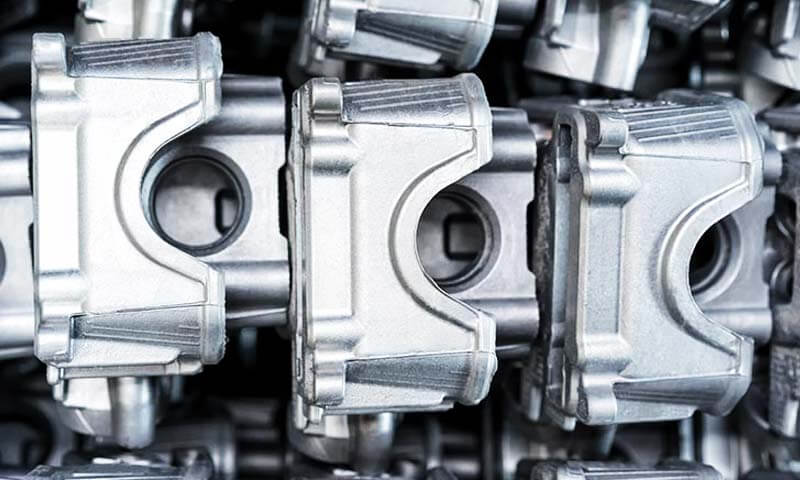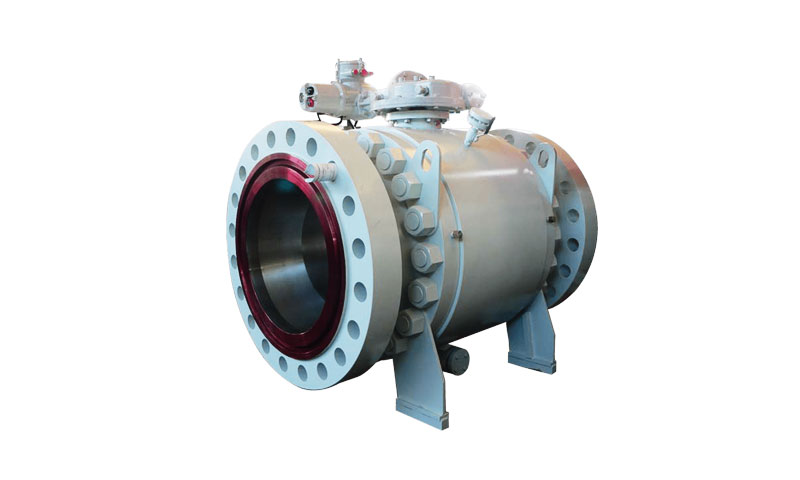
ASTM A744 CN7M ir cast, augsts niķeļa saturs, molibdēns- and copper-bearing austenitic stainless alloy engineered for aggressive chemical service—notably sulfuric and other reducing acids, chloride-bearing process streams and mixed acid duties.
Its combination of high Ni, Krekls, Mo and Cu yields superior resistance to localized corrosion, good ductility and reliable castability for complex geometries (sūkņu ķermeņi, vārsti, armatūra).
This expanded guide provides in-depth metallurgy, design and fabrication guidance, inspection and procurement checklists, failure-mode analysis, and selection decision rules so engineers and procurement professionals can specify, buy and deploy CN7M castings with confidence.
1. Kas ir ASTM A744 CN7M nerūsējošais tērauds
Cn7m is a high-nickel, chromium–molybdenum, copper-bearing austenitic cast nerūsējošais tērauds belonging to the Alloy-20 family.
It is specifically engineered for severe chemical environments, particularly those involving sulfuric acid, mixed acids, and other reducing media where conventional 300-series stainless steels show rapid corrosion.
As a cast alloy specified under ASTM A744, CN7M is widely used for pressure-containing and corrosion-critical components such as pump casings, vārstu ķermeņi, lāpstiņriteņi, armatūra, and reactor hardware.
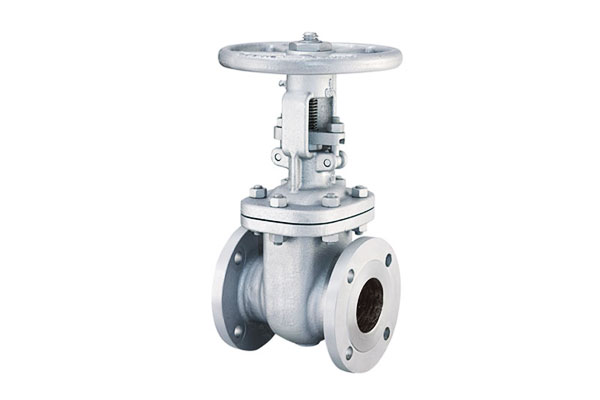
Its high nickel content ensures a fully austenitic, non-magnetic structure with excellent toughness, while chromium promotes passive film stability.
Molybdenum improves resistance to pitting and crevice corrosion in chloride-containing environments, and copper significantly enhances performance in sulfuric acid and other reducing acids.
CN7M effectively bridges the performance gap between standard austenitic stainless steels (Piem., Cf8m / 316 liešana) and more expensive nickel-base alloys.
This balance of corrosion resistance, liešana, Mehāniskā integritāte, and cost efficiency makes it a preferred material in chemical processing, naftas ķīmijas, fertilizer, farmaceitisks, and pulp-and-paper industries.
Standard designations & global equivalents
| Standarta sistēma / reģions | Atlaist / Wrought form | Norīkojums |
| ASTM / Asme (ASV) | Atlaist | ASTM A744 Grade CN7M (also referenced in ASTM A743 / A351 for cast corrosion-resistant steels) |
| Mūs | Atlaist | UNS N08007 |
| ASTM / Asme (ASV) | Wrought equivalent | Sakausējums 20 / ASTM A182 F20 |
| Mūs | Izkaltis | UNS N08020 |
| Iekšā / No (Eiropa) | Approximate equivalent | Iekšā 1.4536 (Alloy-20 class reference) |
| Viņš ir (Japāna) | Cast alloy reference | Often cross-referenced as SCS-23 vai GX5NiCrCuMo 29-21 (atkarībā no lietojumprogrammas) |
2. Typical chemical composition and metallurgical role
Values below are representative engineering ranges for CN7M castings supplied in the solution-annealed condition.
| Elements | Representative wt.% | Primary metallurgical / corrosion role |
| C (Ogleklis) | ≤ 0.07 | Strength contribution; controlled to limit carbide precipitation and preserve corrosion resistance. |
| Krekls (Hroms) | 19.0 - 22.0 | Promotes durable passive Cr₂O₃ film; base of corrosion resistance. |
| Iekšā (Niķelis) | 27.5 - 30.5 | Austenīta stabilizators; improves ductility and general corrosion performance. |
| Noplūde (Molibdēns) | 2.0 - 3.0 | Raises pitting and crevice corrosion resistance; important with chlorides. |
Cu (Varš) |
3.0 - 4.0 | Enhances resistance to sulfuric and other reducing acids; important design feature. |
| Un (Silīcijs) | ≤ 1.5 | Deoxidation and oxidation resistance. |
| Nojaukšanās (Mangāns) | ≤ 1.5 | Processing aid and minor austenite stabilizer. |
| Pūtīt (Fosfors) | ≤ 0.04 | Impurity control for toughness. |
| S (Sērs) | ≤ 0.04 | Kept low to avoid casting defects and reduce embrittlement risk. |
| Fe (Dzelzs) | Līdzsvars | Matricas elements; remaining content after alloying additions. |
3. Microstructure and metallurgical behaviour — in depth
- Austenitic matrix: High Ni content ensures a fully austenitic γ-matrix at room temperature with excellent toughness and ductility. That microstructure is the base for CN7M’s mechanical and corrosion properties.
- Carbides and precipitation: Carbon is deliberately limited; lai arī, improper casting, slow cooling or post-casting thermal exposures can precipitate chromium carbides at grain boundaries, locally depleting chromium and reducing corrosion resistance.
A solution anneal dissolves such carbides. - Intermetāliskās fāzes (sigma, chi): Long dwell times in the 600–900 °C range can precipitate sigma (izšķirt) and associated phases in high-alloy austenitics.
These phases embrittle and lower corrosion resistance. Avoid prolonged service in that temperature band or perform qualification testing if exposure is inevitable. - Role of copper and molybdenum: Cu enhances resistance to sulfuric and other reducing acids by stabilizing surface chemistry under reducing conditions; Mo boosts local-attack resistance in chloride-bearing media.
The synergistic effect produces an alloy that resists a broader set of chemistries than plain 316L. - Cast microstructural heterogeneity: Cast components may show dendritic segregation and microsegregation at the microscopic scale.
Good foundry practice—adequate melt treatment, filtrēšana, homogenization and proper heat treatment—is required to minimize heterogeneities that compromise corrosion or mechanical integrity.
4. Mechanical properties — ASTM A744 CN7M (atlaist, ar šķīdumu analizēts)
The values below are representative engineering ranges for CN7M castings supplied solution-annealed and quenched.
Cast mechanical properties vary with section thickness, lietuves prakse, heat treatment and post-cast processing.
| Īpašums | Representative value (typ./range) |
| 0.2% pierādījums (apm.. ienest) | ≈ 170 - 300 MPA (≈ 25 - 44 ksi) — use the heat-specific value from the MTR for design |
| Stiepes izturība (Rm, UTS) | ≈ 425 - 650 MPA (≈ 62 - 94 ksi) — depend on section and casting quality |
| Pagarinājums lūzuma vietā (Izšķirt, %) | ≈ 20 - 40% (typical castings ~30–40% for well-made, solution-annealed parts; lower for thick/segregated sections) |
Brinela cietība (HB) |
≈ 150 - 260 HB (varies with section, heat treatment and degree of cold work) |
| Rockwell hardness (HRB) | ≈ 70 - 100 HRB (corresponding to HB range above) |
| Elastības modulis (E) | ≈ 190 - 200 GPA (≈ 28,000 - 29,000 ksi) — use ≈193 GPa if a single value is needed |
| Bīdes modulis (Gan) | ≈ 75 - 80 GPA |
| Puasona koeficients (n) | ≈ 0.27 - 0.30 |
| Blīvums | ≈ 7.95 - 8.05 g · cm⁻³ (≈ 7950–8050 kg·m⁻³) |
5. Corrosion Performance of CN7M Stainless Steel

Stiprās puses
- Sulfuric and reducing acids: Superior performance relative to 300-series stainless due to Cu and Ni—CN7M is commonly selected where sulfuric acid contact is routine.
- Mixed acid and process chemistries: Good overall resistance to nitric, phosphoric and various organics with appropriate concentration/temperature limits.
- Uzlabota izturība pret bedri: Mo provides raised pitting resistance compared with low-Mo austenitics; useful where chlorides are present at moderate levels.
Ierobežojumi & application boundaries
- Severe chloride immersion / šļakatu zonas: CN7M is better than 304 but in aggressive seawater immersion or splash zones duplex stainless steels or copper-nickel alloys may outperform CN7M in long-term service.
- SCC risks: In high tensile stress + hlorīds + elevated temperature combinations, stress-corrosion cracking remains a possibility; duplex or super-austenitics may be preferred for SCC-critical duties.
- High-temperature embrittlement: Avoid continuous service in the 600–900 °C band due to risk of sigma phase formation.
6. Casting Characteristics of CN7M Stainless Steel
Liešanas procesi
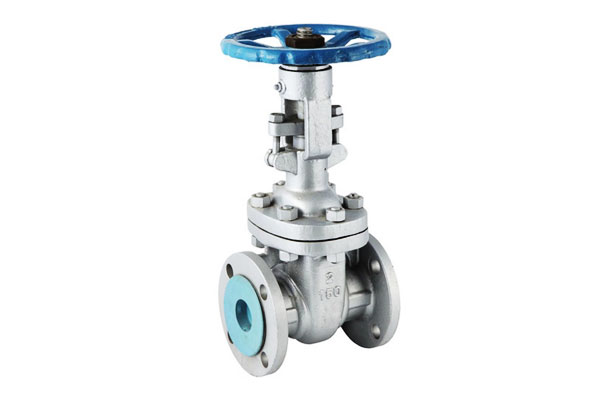
CN7M is primarily produced via sand casting and investment casting, with process parameters tailored to avoid segregation and defects:
- Smilšu liešana: Used for large components (vārstu ķermeņi, sūkņu apvalki) with wall thickness ≥5 mm.
Resin-coated sand (fenola sveķi) is preferred for dimensional accuracy (tolerance ±0.2–0.5 mm) un virsmas apdare (RA 3.2-6,3 μm). - Investīciju liešana: For precision components (mazi vārsti, armatūra) with thin walls (≥2 mm), achieving surface finish Ra 1.6–3.2 μm and tolerance ±0.1–0.3 mm.
Foundry Controls
- Kūstošs & charge control: Use vacuum induction melting or controlled air/argon practice where possible to minimize dissolved gases and inclusion content. Strict control of alloy additions and deoxidation is essential.
- Filtration and gating: Ceramic filtration and well-designed gating minimize inclusions and porosity; small entrapped gases in pump impellers or valve seats are a common root cause of failure.
- Pouring temperature and solidification: Control pouring temperature to minimize shrinkage cavities and to promote directional solidification toward risers. Provide adequate risering for heavy sections.
- Termiskā apstrāde: Specify a solution anneal at the foundry-recommended temperature (typical cast austenitics heat to ≈1100–1120 °C, hold and quench) to dissolve segregated carbides and reset microstructure.
Provide quench method (water/air/oil) per foundry recommendations to control distortion.
Karsta izostatiska presēšana (Gurns) and other densification options
- Gurns lietojumiem: for the most critical pressure parts susceptible to shrinkage porosity or sub-surface inclusions, HIP can close internal porosity and improve fatigue life and corrosion integrity.
HIP adds cost but is a valuable option for highly stressed or safety-critical components. - Ierobežojumi: HIP requires that the part geometry and tolerances accommodate the process; subsequent heat treatment and machining may be necessary.
Machining allowance and dimensional control
- Apstrāde allowance: specify realistic machining stock depending on casting finish and critical features: typical roughing allowance = 2–6 mm (0.08–0.25 in) for general surfaces;
critical sealing faces / machined flanges = 0.5–2 mm after finish grinding as negotiated with the foundry. Thinner allowances may be specified for precision investment castings. - Izmēru pielaides: castings have larger tolerances than forged/wrought parts; specify critical dimensions to be machined and provide true-position controls for features that must align. Use first-piece inspection and establish FAI criteria.
Virsmas apdare, cleaning and passivation
- Tīrīšana ar virsmu: remove sand, izdedināt, scale and contaminants by shot-blast, pickling or mechanical cleaning before inspection and machining.
- Descale & marinēšana: for corrosion-sensitive applications, pickling removes discoloration and heat tint; follow with neutralization and passivation.
- Pasniegšana: apply citric or nitric passivation processes per specification to restore the chromium-oxide passive film, especially on welded or pickled surfaces.
Electropolishing can be used for sanitary applications to improve surface finish and reduce crevice sites.
7. Metināšana, joining and repair guidance
- Metināmība: CN7M is weldable using matching or recommended filler metals engineered for high-Ni, Cu and Mo alloys. Follow qualified WPS/WPQ for each joint geometry and base-metal thickness.
- Filler metal selection: Use filler alloys with comparable corrosion performance—match Ni/Cr/Mo/Cu balance to avoid galvanic or metallurgical mismatch.
Do not use generic 316 filler if process chemistry demands alloy-20-class corrosion resistance. - Heat input control: Minimize excessive interpass temperatures and heat input to reduce grain growth and avoid local precipitation of deleterious phases in heat-affected zones (HAZ).
- Pēc termiņa (Phwht): If the weld is in a critical pressure-containing area or in severe corrosive service, consider solution anneal of the welded assembly if feasible—coordinate with design for distortion management.
Alternatīvi, use CN7M/Alloy-20 compatible filler metal and limit heat so the HAZ retains acceptable corrosion resistance without PWHT. - Weld inspection: Use dye-penetrant, MT/PT for surface defects and radiography/UT for volumetric assurance where required.
8. Industrial Applications of ASTM A744 CN7M Stainless Steel
CN7M’s unique combination of corrosion resistance, liešana, and cost-effectiveness makes it indispensable in industries requiring reliable performance in harsh corrosive environments:
Ķīmisks & Petrochemical Industry
Core applications: Sulfuric acid storage tanks, ķīmiskie reaktori, siltummaiņi, and piping for handling acids (H₂so₄, H₃PO4), organic solvents, and sour gas (H₂s).
Galvenā priekšrocība: Complies with NACE MR0175 for sour service, with a service life 3–5 times longer than 316L in acid environments.
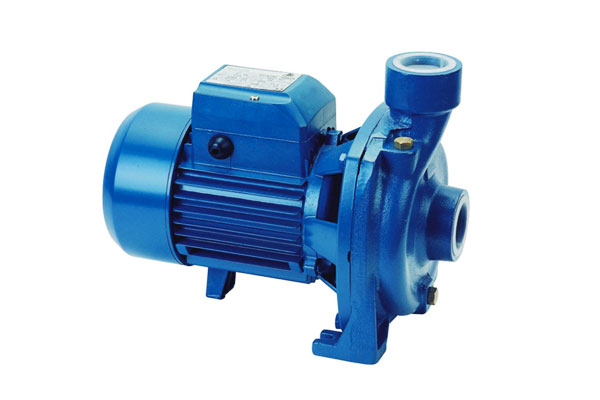
Sūknēt & Valve Manufacturing
Core applications: Vārstu ķermeņi, apgriezt, sūkņa lāpstiņriteņi, and casings for chemical process pumps and control valves.
Galvenā priekšrocība: Castability enables complex flow geometries; corrosion resistance minimizes wear and leakage in aggressive media.
Pārtika & Pharmaceutical Industry
Core applications: Processing equipment for acidic foods (citrusaugļu, etiķis), pharmaceutical reactors, and cleanroom components.
Galvenā priekšrocība: Netoksisks, viegli tīrāms, and resistant to food acids and sanitizing agents—complies with FDA 21 CFR daļa 177 un ISO 10993.
Ūdens apstrāde & Atsāšana
Core applications: Reverse osmosis membranes, brine handling equipment, and wastewater treatment tanks.
Galvenā priekšrocība: Resistance to chloride-induced pitting and crevice corrosion in high-salinity environments.
Other Applications
- Enerģijas ražošana: Dūmgāzes desulfurizācija (Fgd) sistēmas, where resistance to sulfur dioxide and acidic condensates is critical.
- Jūras rūpniecība: Jūras platformas komponenti (vārsti, armatūra) exposed to seawater and sour crude.
- Plastmasas & Rubber Manufacturing: Reactors for polymer synthesis, resistant to monomers and catalysts.
9. Priekšrocības & Ierobežojumi
Core Advantages of ASTM A744 CN7M Stainless Steel
- Superior sulfuric acid resistance: Outperforms conventional stainless steels, reducing maintenance and replacement costs in acid service.
- Balanced corrosion protection: Resists oxidizing/reducing acids, hlorīdi, and SCC—versatile for mixed-corrosive environments.
- Lieliska liešanas spējas: Suitable for complex-shaped components (vārsti, sūkņi) that are difficult to fabricate via wrought processes.
- Rentabilitāte: 30–40% cheaper than nickel-based alloys (Piem., Hastelloy C276) while offering comparable corrosion resistance in moderate environments.
- Nb stabilization: Eliminates IGC risk during welding/heat treatment, reducing post-processing costs.
Key Limitations of ASTM A744 CN7M Stainless Steel
- Higher cost than 316L: 2–3 times more expensive due to high Ni/Mo/Cu content, limiting use in non-critical applications.
- Mērena izturība: Stiepes izturība (425–480 MPa) is lower than duplex stainless steels (Piem., 2205: 600–800 MPa), requiring thicker sections for structural loads.
- Darba sacietēšana: Prone to work hardening during machining, requiring specialized tools and slower cutting speeds.
- Limited high-temperature resistance: Not suitable for continuous service above 800°C (oxidation and NbC coarsening); use Hastelloy C276 for ultra-high temperatures.
- Residual element sensitivity: Trace Sn, Pbe, or As can cause cracking, requiring strict raw material control.
10. Salīdzinošā analīze: CN7M vs. Similar Alloys
| Aspekts / Sakausējums | Cn7m (ASTM A744, cast Alloy-20 family) | 316Lukturis (ASV S31603) | Divstāvu 2205 (S32205) | Nickel-base alloys (Piem., C-276 class) |
| Metallurgical type | Fully austenitic cast stainless steel | Austenīta nerūsējošais tērauds | Ferritic–austenitic duplex stainless steel | Fully austenitic nickel-base alloys |
| Key alloying features | High Ni, Krekls, Noplūde (~ 2–3%), Cu (~3–4%) | Cr ~17%, ~ 10-14%, Mo ~2–3% | Cr ~22%, Ni ~4–6%, Mo ~3%, N added | Very high Ni, Krekls, Noplūde; tailored chemistry |
| Primary corrosion strengths | Lieliska pretestība pret sulfuric and reducing acids; Laba vispārēja izturība pret koroziju | Good general corrosion; Mērena pretestība ar bedri | Lieliska izturība pret bedres, plaisas korozija, and chloride SCC | Outstanding resistance to mixed, oksidējošs, and reducing media |
| Sulfuric acid resistance | Very strong (core design objective) | Ierobežots; not recommended for concentrated sulfuric acid | Mērens; not optimized for sulfuric acid service | Lielisks, including hot and concentrated acids |
Lobīšana / plaisas korozija |
Labi, improved by Mo | Mērens; lower than CN7M in aggressive acids | Ļoti augsts, Īpaši hlorīdu vidē | Lielisks, superior in severe conditions |
| Chloride SCC resistance | Better than standard austenitics but not immune | Susceptible at elevated temperature and stress | Very high resistance | Lielisks |
| Mehāniskā izturība (tipisks) | Mērena izturība; good ductility for a cast alloy | Mērena izturība; Laba formablitāte | Lielas izturības (yield roughly 2× austenitic steels) | Mainīgs; strength depends on alloy design |
| Fabrication form | Cast only (sarežģīta ģeometrija) | Izkaltis (plāksne, pīpe, stieple, BIGNIEKUMI) | Izkaltis (plāksne, pīpe, BIGNIEKUMI) | Wrought or cast, Atkarībā no sakausējuma |
Metināmība |
Good with matching filler; solution anneal recommended for severe corrosion service | Lieliska metināmība (low carbon grade) | Good but requires strict heat input and phase balance control | Good with qualified procedures; fillers critical |
| Dimensional complexity | Lielisks – ideal for intricate pump/valve shapes | Mērens | Mērens | Mērens |
| Tipiskas lietojumprogrammas | Sūkņu apvalki, vārstu ķermeņi, lāpstiņriteņi, acid-handling castings | General process piping, tvertnes, food/pharma equipment | Jūrā, atsāšana, chloride-rich systems | Extreme chemical reactors, high-severity process equipment |
| Best use case | Kad lomās komponenti must withstand sulfuric or reducing acids | Cost-effective solution for general corrosion service | Lielas izturības, chloride-dominated environments | When corrosion severity exceeds stainless steel limits |
11. Secinājums
ASTM A744 CN7M stainless steel stands as a premier super austenitic cast alloy, uniquely optimized for harsh corrosive environments—particularly sulfuric acid service.
Its balanced composition of high nickel, hroms, molibdēns, un vara, combined with niobium stabilization, delivers exceptional corrosion resistance, liešana, un mehāniskā integritāte, filling the performance-cost gap between conventional stainless steels and high-cost nickel-based alloys.
While CN7M faces limitations in strength, maksāt, un augstas temperatūras serviss, ongoing innovations in microalloying, piedevu ražošana, and green casting are expanding its application boundaries.
Inženieriem un materiālu atlasītājiem, CN7M remains the optimal choice for cast components in chemical processing, pump/valve manufacturing, and acid-centric industries, where reliability and corrosion resistance are non-negotiable.
FAQ
Can CN7M stainless steel be welded without post-heat treatment?
Welding is possible, bet solution annealing is recommended for critical corrosion service to restore the passive layer.
Is CN7M stainless steel suitable for chloride-rich environments?
Moderate performance; for high chloride SCC resistance, Divstāvu 2205 or nickel-base alloys var dot priekšroku.
Can CN7M replace 316L stainless steel in sulfuric acid service?
Jā, CN7M outperforms 316L in sulfuric and reducing acid conditions, especially in cast components.
What are typical casting sizes and shapes for CN7M stainless steel?
Sūkņi, vārsti, lāpstiņriteņi, and fittings with sarežģīta ģeometrija, plānas sienas, and internal passages are common.