

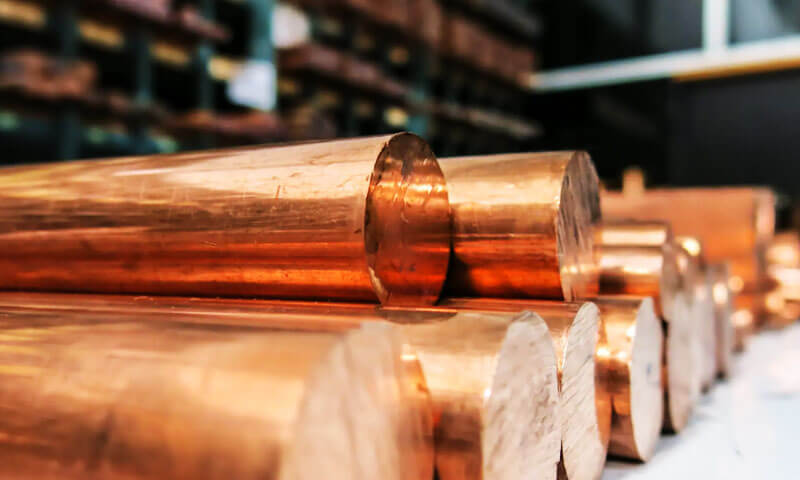
Search any industrial material catalog, and you will find an entire family of materials all categorized under the copper family: the reddish copper inside electrical wiring, the golden brass valves in plumbing systems, the bronze worm gears inside power transmission gearboxes, and the silvery cupronickel tubing in marine cooling systems.
All are built on a copper base matrix, yet they differ dramatically in color, kietumas, Elektrinis laidumas, corrosion resistance and cost per pound.
A common misconception among buyers and entry-level engineers is that these alloys represent a quality hierarchy — that pure copper is the “best” and alloyed variants are diluted, cheaper alternatives. This misses the core engineering logic of copper alloy design.
Each alloy system represents a deliberate, optimized set of tradeoffs: engineers intentionally sacrifice a portion of copper’s native conductivity and ductility to unlock higher strength, atsparumas nusidėvėjimui, corrosion tolerance or machinability.
There is no universally superior copper material; there are only materials optimized for specific service conditions.
1. Color is only a visual clue, not a classification system
The most intuitive difference between copper alloys is color, but color alone is an unreliable identifier. It is a visible side effect of chemical composition, not a formal grading standard.
Pure wrought copper
The characteristic reddish-pink hue comes from nearly unalloyed Vario.
At purities above 99.7%, the material retains copper’s natural optical reflectivity, giving it the familiar warm metallic tone.
Higher-purity grades appear slightly deeper in color; trace impurities can shift the appearance toward a duller brown.
Žalvaris
Žalvaris is fundamentally a copper-zinc alloy. As zinc content increases, the color shifts progressively from reddish-yellow at 90% copper to bright golden yellow at 70% Vario, and finally to a pale silvery-yellow at 50% Vario.
The familiar “brass gold” appearance of most hardware and plumbing parts corresponds to roughly 60–65% copper content.
Bronza
Bronza has no single characteristic color, because the term describes an entire family of copper alloys alloyed with elements other than zinc.
- Tin bronze typically has a warm reddish-brown tone.
- Aluminum bronze can be bright golden-yellow and is often visually indistinguishable from brass.
- Silicon bronze may appear nearly identical to standard commercial brass.
The iconic green patina seen on ancient bronze artifacts is a corrosion product formed over decades or centuries of outdoor exposure, not the as-manufactured color.
CUPRONICKEL
Nickel additions progressively bleach copper’s red color into a clean, silvery-white metallic appearance.
Grades with 10% nickel have a faint warm tint; grades with 30% nickel are a uniform silver-white that closely resembles stainless steel at first glance.
Paviršiaus oksidacija, poliravimas, plating and coating can all alter appearance enough to mislead identification.
Reliable classification always returns to the principal alloying element, not visual appearance.
2. Each alloying element trades one property set for another
Pure copper has exceptional electrical and thermal conductivity, excellent ductility and good atmospheric corrosion resistance.
But it is soft, has low load-bearing capacity and wears quickly under sliding contact.
Alloying elements are added not to “dilute” copper, but to trade a portion of its conductivity for other critical performance attributes.
The table below summarizes what each major alloying element delivers, and what performance attribute is traded away in return.
| Alloying Element | Primary Performance Gains | Typical Tradeoffs | Representative UNS Grades |
| Vario (base) | Excellent electrical/thermal conductivity, Geras lankstumas, baseline corrosion resistance | Low strength, Žemas kietumas, poor wear resistance | C11000 (ETP), C10200 (OFHC) |
| Cinkas | Patobulinta jėga, better castability, enhanced cold/hot formability, lower raw material cost | Reduced conductivity; risk of dezincification and stress corrosion cracking in aggressive environments | C27000 (Kasetės žalvaris), C28000 (Muntz metalas) |
| Alavas | Pagerintas atsparumas dilimui, elastingumas, fatigue endurance and corrosion resistance | Reduced conductivity; higher material and processing cost | C51000, C51900 (Fosforo bronza) |
| Aliuminis | Greatly increased strength, seawater corrosion resistance and erosion/cavitation resistance | More complex forming, welding and heat treatment control | C61400, C63000 (Aliuminio bronza) |
Nikelis |
Dramatically improved seawater corrosion resistance, Aukštos temperatūros stabilumas, silver-white appearance | Severe reduction in conductivity; high nickel cost raises material price significantly | C70600 (90/10 Su mumis), C71500 (70/30 Su mumis) |
| Švinas | Dramatically improved machinability and chip-breaking behavior for turning and threading | Health and environmental restrictions for drinking water contact; stricter waste handling | C37700 (Forging Leaded Brass) |
| Fosforas | Powerful deoxidizer; residual phosphorus improves wear resistance and elasticity in tin bronzes | Excess residual phosphorus reduces electrical and thermal conductivity of pure copper | C12200 (DHP varis), phosphor bronze grades |
| Chromas / Cirkonis | High strength and elevated softening temperature while preserving most of copper’s conductivity | More complex processing; requires age hardening for full performance | C18150 (CuCrZr) |
This tradeoff logic is the central principle of copper alloy design. No grade wins on every metric; every grade is optimized for a specific priority.
3. Pure wrought copper: more complexity than “just pure copper”
Everyday “pure copper” covers a range of wrought grades distinguished by impurity levels, oxygen content and deoxidation practice.
They are not just different purity ranks — they are engineered for different processing and service conditions.
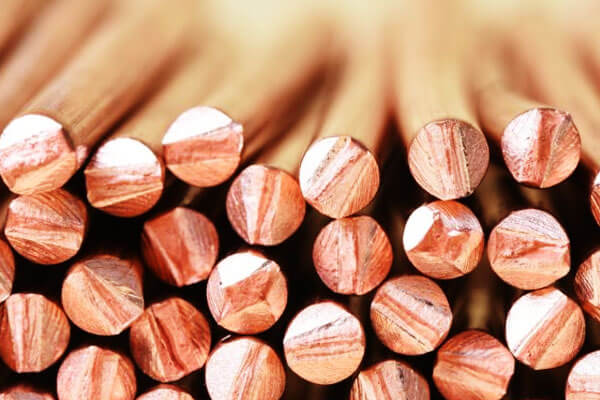
Standard electrolytic tough pitch copper: C11000
C11000 (equivalent to T2 in the Chinese standard system) is the workhorse industrial grade, with a minimum 99.90% Vario + silver content.
It balances conductivity, ausmingumas, availability and cost, and dominates power cable, busbar, transformer strip and heat sink applications worldwide.
Oxygen-free copper: C10200 (OFHC)
Oxygen-free grades are produced under strictly controlled reducing atmospheres to minimize dissolved oxygen.
- They offer superior stability under vacuum, high-temperature reducing environments and hydrogen-rich conditions, avoiding hydrogen embrittlement.
- They also provide more consistent welding, brazing and vacuum performance.
- For ordinary building wiring, upgrading from C11000 to C10200 delivers no perceptible performance benefit.
The premium is only justified for vacuum electronics, high-end audio conductors and specialized high-purity applications.
Phosphorus-deoxidized copper: C12200
Phosphorus is added during melting to scavenge oxygen, producing copper that resists hydrogen embrittlement and has excellent forming, bending and brazing characteristics.
C12200 (equivalent to TP2) has higher residual phosphorus, delivering the best forming and joining reliability, at the cost of slightly lower thermal and electrical conductivity.
It is the standard grade for air conditioning tubing, refrigeration coils and heat exchangers, where formability and leak-tight brazing are more important than maximum electrical conductivity.
C11000 and oxygen-free copper remain preferred for high-conductivity busbars and electrical conductors.
High-copper specialty alloys
Grades such as C18150 chromium-zirconium copper add small amounts of alloying elements to raise softening temperature and strength while preserving most of copper’s conductivity.
They are specified for resistance welding electrodes, railway contact wires and lead frames.
| UNS Grade | Bendras vardas | Composition Control | Key Performance Difference | Tipiškos programos |
| C11000 | ETP vario | ≥ 99.90% Cu+Ag, standard industrial purity | Most widely available, subalansuotas veikimas | Power cables, Busbarai, Transformatoriai, Šilumos kriauklės |
| C10200 | OFHC Copper | Ultra-high purity, extremely low oxygen | Stable in vacuum and reducing atmospheres | Vacuum electronics, high-end audio, precision conductors |
| C12000 | DLP Copper | Low residual phosphorus deoxidized | Geras suvirinamumas, higher conductivity than DHP | Šilumokaičiai, refrigeration lines, welded piping |
C12200 |
DHP varis | Higher residual phosphorus deoxidized | Best forming and brazing reliability | AC tubing, Kondensatoriaus ritės, plumbing lines |
| C18150 | CuCrZr | Chromas + zirconium addition | High strength at elevated temperature, retains good conductivity | Welding electrodes, motor components, contact parts |
4. Žalvaris: grade numbers indicate composition, not quality rank
Brass is fundamentally a copper-zinc alloy system.
Grade numbers indicate approximate copper content — C24000 is ~80% copper, C27000 (kasetės žalvaris) is ~70% copper, C28000 (Muntz metalas) is ~60% copper.
It is tempting to read higher copper content as “better” quality, but that is a misunderstanding. Each grade occupies a specific processing and performance window.
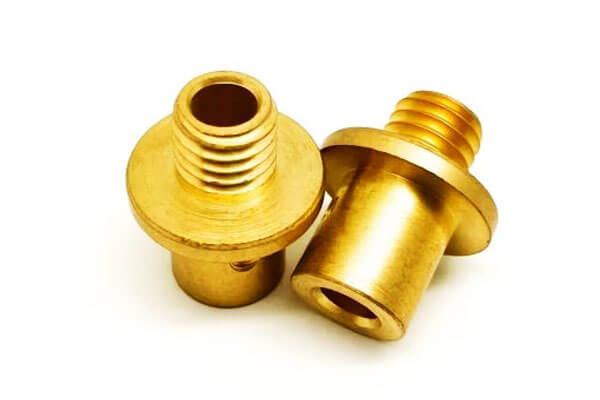
Standard plain brass grades
| UNS Grade | Nominal Copper Content | Pagrindinės charakteristikos | Bendros programos |
| C22000 (Commercial Bronze) | ~90% | Red-gold color, excellent cold and hot formability | Radiatoriai, Dekoratyvinė aparatūra, badges, thin-wall tubing |
| C26000 (Kasetės žalvaris) | ~ 70% | Classic deep-drawing grade, exceptional formability | Cartridge cases, radiator tubes, deep-drawn components |
C27000 (Geltonas žalvaris) |
~65% | Well-balanced elasticity, strength and stamping performance | Terminals, jungtys, spring contacts, radiatoriai, dekoratyvinės dalys |
| C28000 (Muntz metalas) | ~ 60% | Aukštesnis stiprumas, excellent hot workability, lowest material cost | Hot-forged valve bodies, bendroji aparatūra, jungiamosios detalės |
Why leaded brass dominates faucets and valves
Faucets and valves require a demanding combination of properties: they must be cast or forged into complex shapes, machined with precise threads and sealing surfaces, and provide adequate strength and corrosion resistance.
Pure copper is too soft and produces long, stringy chips during machining, making it inefficient for high-volume production.
Standard brasses provide a good baseline balance.
Leaded grades such as C37700 add roughly 1–2% lead, which forms discrete soft particles inside the brass matrix that act as chip-breakers during machining.
This dramatically increases turning, drilling and tapping productivity, making it the historical workhorse for plumbing valves and fittings.
For drinking water applications, Tačiau, lead content and leaching must meet strict product standards such as NSF/ANSI 61.
Modern plumbing applications increasingly use lead-free complex brasses, where silicon, bismuth or other elements replace lead to maintain good machinability while meeting health and environmental regulations.
Specialized brasses
Beyond plain copper-zinc and leaded brasses, many alloyed variants exist for specific environments:
- Tin brass (C44300 Admiralty Brass): Tin addition improves seawater resistance and inhibits dezincification, used for condenser tubing in marine service, often with a small arsenic addition for corrosion inhibition.
- Aliuminio žalvaris (C68700): Aluminum plus trace arsenic greatly improves corrosion resistance in flowing seawater, specified for power plant and shipboard condensers.
- Mangano žalvaris: Manganese increases strength, wear resistance and corrosion tolerance for heavy-duty marine and mechanical components.
5. Bronza: a whole family of alloys, not one material
Many people associate bronze only with copper-tin alloys, historically the oldest form.
In modern engineering terminology, bronze is an umbrella term for nearly all copper alloys where the principal alloying element is not zinc.
This makes bronze the most structurally diverse copper family.
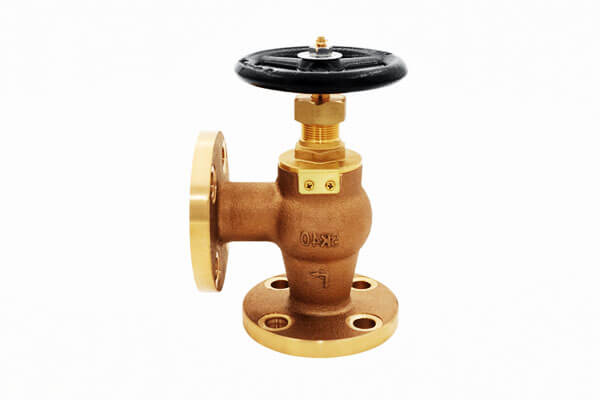
Tin and phosphor bronzes: guoliai, gears and springs
Phosphor bronze such as C51900 contains ~6.5% tin and ~0.1% phosphorus.
Tin increases strength, wear resistance and corrosion resistance; phosphorus acts as a deoxidizer and residual phosphorus further improves wear and elastic properties.
Although much less conductive than pure copper, phosphor bronze withstands repeated bending and sliding contact.
It is the standard material for electrical connector contacts, instrument gears, bushings and precision springs.
Higher tin grades such as C52100 deliver greater strength and wear resistance at higher cost and lower conductivity.
Aluminum bronze: gold in appearance, heavy-duty in performance
Aluminum bronzes such as C61400 and C63000 often look visually identical to brass, but their performance is in a different class.
Aluminum forms a hard, stable aluminum oxide surface layer that gives outstanding resistance to seawater, erosion and cavitation.
They are specified for marine propellers, ship valves, siurblio kūnai, heavy-duty gears and high-load bushings.
The tradeoff is more demanding casting, heat treatment and welding requirements, with greater sensitivity to process quality.
Specialty bronzes for targeted applications
- Silicon bronze (C65500): Combines good strength, elastingumas, weldability and corrosion resistance for springs, welded structures and marine hardware.
- Beryllium copper (C17200): Achieves extremely high strength and elasticity after age hardening, used for precision springs, connectors and non-sparking tools.
Beryllium fumes and grinding dust require strict occupational safety controls. - Chromium-zirconium copper: High-copper alloys that significantly raise strength and softening temperature while retaining most of copper’s conductivity.
They are the standard for resistance welding electrodes, railway contact wires and lead frames.
| Bronze Type | Representative UNS Grade | Core Strengths | Tipiškos programos |
| Tin bronze | C51000 | Balanced wear, corrosion and formability | Įvorės, Spyruoklės, gauge components |
| Fosforo bronza | C51900 | Puikus elastingumas, fatigue resistance and wear | Jungtys, kontaktai, pavaros, guoliai, Tiksliosios spyruoklės |
| High-tin phosphor bronze | C52100 | Higher strength and wear than low-tin grades | Heavy-duty springs, friction plates, įvorės |
| Aluminum bronze | C61400, C63000 | Didelė jėga, superior seawater / Kavitacijos pasipriešinimas | Jūrų sraigtai, vožtuvai, Siurbliai, Sunkiųjų pavarų dėžė |
Silicon bronze |
C65500 | Gera jėga, weldability and corrosion resistance | Spyruoklės, welded assemblies, marine/chemical hardware |
| Beryllium copper | C17200 | Ultra-high strength and elasticity after aging | Precision springs, mold inserts, non-sparking tools |
| Cu-Cr-Zr | C18150 | High strength at elevated temperature, retains good conductivity | Welding electrodes, motor components, contact parts |
6. CUPRONICKEL: why 90/10 ir 70/30 grades survive seawater
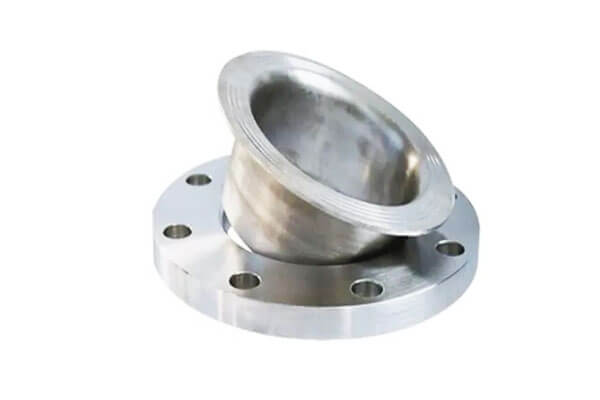
CUPRONICKEL (copper-nickel alloy) is based on the copper-nickel binary system.
Nickel dissolves completely in copper, progressively turning the color silver-white, increasing strength and corrosion resistance, and reducing electrical conductivity.
Standard binary cupronickel grades
- C70600 (90/10 cupronickel): ~10% nickel, good formability and general seawater resistance, the cost-effective entry-level marine grade.
- C71500 (70/30 cupronickel): ~30% nickel, significantly higher strength and resistance to flowing seawater erosion, the premium marine grade.
Iron-modified cupronickel: the real seawater workhorse
For actual seawater piping and condenser service, iron-bearing grades dominate.
The small additions of iron and manganese are not incidental fillers — they refine and stabilize the protective passive oxide film, dramatically improving resistance to erosion and impingement in flowing seawater.
Cupronickel’s seawater resistance is not unconditional. The protective film develops gradually in clean, aerated seawater.
Excessively high flow velocity, polluted water, stagnant conditions and galvanic coupling with dissimilar metals can all cause premature corrosion failure.
Other cupronickel families
Not all cupronickel is for marine service:
- Konstantanas / Manganin: Engineered for high, temperature-stable electrical resistivity, used for precision resistors and shunts.
- Nickel silver (zinc cupronickel): Silvery-white color, Geras formatavimas, used for instrument housings, electromagnetic shields, decorative hardware and jewelry.
Although all share the “cupronickel” classification, marine-grade C71500 and precision resistor-grade constantan serve entirely unrelated functions.
Common Cupronickel and Copper-Nickel Alloy Grades
| Medžiaga / Pažymys | Bendras vardas | Approximate Alloy System | Pagrindinės charakteristikos | Tipiškos programos |
| UNS C70600 | 90/10 CUPRONICKEL | Su mumis, with controlled Fe/Mn depending on specification | Good seawater corrosion resistance, Formavimas, ir suvirinamumas | Ship piping, kondensatoriai, Šilumokaičiai |
| UNS C70620 | 90/10 Cu-Ni Marine Alloy | Cu-Ni-Fe-Mn family | Improved marine and erosion-corrosion performance | Jūros vandens sistemos, gėlinimas, elektrinės |
| UNS C71500 | 70/30 CUPRONICKEL | Cu-Ni with controlled alloy additions | Higher strength and excellent marine corrosion resistance | Naval and offshore systems |
| CuNi10Fe1Mn-type alloys | 90/10 Marine Cu-Ni | Approximately Cu-10Ni with Fe and Mn | Balanced seawater resistance and cost | Šilumokaičiai, kondensatoriai, vamzdynai |
CuNi30Fe-type alloys |
70/30 Marine Cu-Ni | Approximately Cu-30Ni with Fe additions | Greater performance margin in demanding environments | Offshore and severe marine service |
| Constantan-type Alloy | Copper-Nickel Resistance Alloy | Cu-Ni system, often with high Ni content | Stable electrical resistivity | Resistors, strain gauges, shunts |
| Manganin-type Alloy | Precision Resistance Alloy | Cu-Mn-Ni | Stable electrical resistance characteristics | Precision measuring equipment |
| UNS C79200 | Nikelio sidabras | Cu-ni-zn | Silver-white appearance and good formability | Dekoratyvinės dalys, instrumentai, jungtys, ekranas |
PASTABA: Exact compositions and equivalent designations should always be verified against the applicable ASTM, ASME, Į, ISO, JIS, Gb/t, or customer-specific specification.
Similar alloy names do not automatically guarantee full material equivalence.
7. Why conductivity can differ by an order of magnitude
Electrical conduction in metals relies on electron movement through the crystal lattice.
In pure copper, the regular periodic lattice scatters electrons very little, giving C11000 and oxygen-free copper their famously high conductivity.
Alloying atoms — zinc, alavas, Nikelis, silicon and others — inserted into the copper lattice disrupt that periodicity.
According to Matthiessen’s rule, each solute atom adds an additional scattering contribution, raising electrical resistivity.
Apskritai, the more complex the alloy and the higher the solute concentration, the lower the conductivity.
This is not a degradation of material quality — it is an intentional performance exchange.
- Phosphor bronze trades conductivity for elasticity and fatigue life.
- 70/30 cupronickel trades conductivity for seawater corrosion resistance.
- Manganese cupronickel is deliberately engineered to have high, stable resistivity, because its job is to be a resistor.
| Copper Family | Elektrinė / Šilumos laidumas | Stiprybė & Dėvėti | Corrosion Focus | Kaina & Processing Profile |
| Grynas varis | Aukščiausias; ETP / OFHC grades are the industry benchmark | Žemas; can be increased by cold work or microalloying | Good in atmosphere and fresh water; varies by medium | Didelis vario kiekis; standard grades are cost-competitive; high-purity / OF grades carry premium |
| Žalvaris | Lower than pure copper; decreases with higher Zn and alloy content | Generally higher than pure copper; wide choice of machining / kalimas / stamping options | Moderate general corrosion; watch for dezincification, ammonia SCC and lead leaching | Plain yellow brasses are cost-competitive; specialized lead-free grades can be more expensive |
Bronza |
Paprastai žemas; high-copper grades such as Cu-Cr-Zr are exceptions | Widest range of wear, elasticity and strength options | Tin bronze and aluminum bronze each have strengths; aluminum bronze excels in seawater and erosion | Alavas, beryllium and other elements plus heat treatment add significant cost |
| CUPRONICKEL | Significantly lower than pure copper; some grades use high resistivity as a feature | Increases with Ni content and cold work; 70/30 stronger than 90/10 | Cu-Ni system excels in seawater, but sensitive to flow velocity and fouling | Nickel content and marine certification make 70/30 and iron-modified grades comparatively expensive |
8. Why prices diverge: it is about more than just metal content
Raw alloy composition is only one layer of the price difference between copper materials. The full cost stack has at least four levels.
Base metal economics
Under normal market conditions, zinc costs less per pound than copper, so replacing part of the copper with zinc reduces raw material cost.
This is why plain yellow brasses are often cheaper per kilogram than high-purity pure copper.
Alavas, nickel and beryllium are significantly more expensive and subject to larger global market swings.
High-tin bronzes, 70/30 cupronickel and beryllium copper therefore sit in a higher price bracket.
Melting and purity control
Oxygen-free copper requires more sophisticated melting practice, atmosphere control and quality inspection than standard ETP copper.
The performance difference may be invisible to the naked eye, but the process cost premium is real.
Product form and processing
A pound of ordinary brass bar cannot be directly compared with a pound of precision ultra-thin copper foil held to micrometer thickness tolerances.
Thin strip, capillary tube, išspausdinti profiliai, age-hardened spring strip and marine-certified tubing all have very different yield rates, equipment requirements and inspection overhead.
Certification and qualification
Drinking water certification (NSF/ANSI), marine classification society approval (Abs, DNV), pressure vessel qualification and aerospace-grade traceability all add testing, documentation and quality management cost beyond the base material itself.
| Price Factor | How It Affects Cost | Common Outcome | What to Check When Comparing Quotes |
| Cu/Zn ratio | Zn normally costs less than Cu; substituting Zn reduces raw material cost | Plain yellow brasses often have lower material cost than high-purity copper | Also compare base metal price date and scrap recovery terms |
| Sn, Į, Be additions | These elements are expensive and price-volatile, net ir nedideliais kiekiais | High-tin bronze, 70/30 cupronickel, BeCu are significantly more expensive | Do not assume permanent price rankings from one market snapshot |
| Grynumas & gas control | OF/HP grades require stricter melting, atmosphere and testing | OFHC carries process and quality premium over ETP | Verify whether oxygen-free performance is actually required |
| Nuotaika / sąlyga | Minkšta, Sunku, spring-temper and age-hardened tempers require different rolling/heat treatment steps | Same grade, different temper = different price and properties | Always specify temper, not just grade number |
Product form |
Thin foil, capillary tube, profiles and forgings have very different yield and tooling cost | High-precision thin strip can cost many times more per kg than bar | Check dimensions, Tolerancijos, paviršiaus apdaila, minimum order quantity |
| Sertifikavimas | Drinking water, jūrų, pressure vessel and aerospace grades need extra testing and traceability | Certified material costs more than bare commodity material | Compare delivered qualified price, not just raw material price |
| Total machining cost | Free-machining brasses reduce tooling, time and scrap; hard-to-machine materials increase cost | More expensive material can sometimes lower total finished part cost | Evaluate total component cost, not just price per pound |
9. Material selection starts from failure modes
There is no universally “best” copper alloy. The right choice depends on which failure mechanism will end the component’s service life.
| Application Scenario | Priority Materials | Reasoning | Additional Checks |
| Electrical busbars, Kabeliai, Transformatoriai | C11000, C10200, high-conductivity high-copper alloys | Minimizing resistance and temperature rise is the primary goal | Purity level, oxygen content, nuotaika, skerspjūvis, joining method |
| Air conditioning and heat exchanger tubing | C12200, corrosion-resistant brass / cupronickel | Deoxidized copper has excellent forming and brazing; upgrade alloys for aggressive media | Refrigerant / water chemistry, spaudimas, suvirinamumas, sienos storis, srauto greitis |
| Maišytuvai, vožtuvai, jungiamosios detalės | C28000, leaded brass or certified lead-free brass | Balanced forgeability, machinability and sealing performance | Drinking water compliance, lead leaching limits, dezincification resistance, coating quality |
Guoliai, Klijo pavaros, įvorės |
Tin bronze, aluminum bronze or specialized cast copper alloys | Atsparumas nusidėvėjimui, anti-seizure behavior and load-carrying capacity are critical | Load, greitis, Tepimas, mating shaft material, liejantis tvirtumą |
| Seawater piping and marine heat exchangers | C70600, C71500, Aliuminio bronza | Chloride tolerance, erosion resistance and protective film stability dominate | Flow velocity limits, water quality, galvanic compatibility, welding procedure |
10. Common misconceptions clarified
- More copper content does not mean higher strength. ETP copper is nearly 100% copper but is softer and less wear-resistant than most brasses and bronzes.
- Grade numbers are not quality scores. Different brass, bronze and cupronickel grade numbers describe composition positions, not ranks.
Numbers from different series cannot be compared on a single “higher = better” scale. - Material name does not equal compliance. “Brass” on a drawing does not guarantee drinking-water safety; “cupronickel” does not guarantee proper seawater performance.
Compliance depends on exact grade, sertifikavimas, fabrication quality and operating conditions. - Grade alone is incomplete information. Soft-annealed copper bends easily; hard-drawn copper is much stronger.
Age-hardened beryllium copper behaves nothing like solution-annealed beryllium copper. Specifying grade without temper leaves half the design undefined.
11. Išvada
Grynas varis, Žalvaris, bronze and cupronickel all fall under the copper materials umbrella because copper remains the base element.
But as soon as engineers add zinc, alavas, aluminum or nickel, the material’s mission changes.
Pure copper defends maximum electrical and thermal conductivity. Brass balances manufacturability and cost for general hardware and plumbing.
Bronze delivers elasticity, wear resistance and high strength. Cupronickel extends copper’s territory into seawater and precision electrical resistance.
Price differences are not arbitrary — they are the visible result of these compositional and process choices.
The next time you evaluate a copper component, the most useful question is not “is this real copper”?
Tai yra: Which family of copper alloy is this, what elements does it contain, and what problem was it designed to solve?
DUK
Is brass considered copper?
Taip. Brass is a copper-zinc alloy, so copper is its principal base metal. Tačiau, brass has significantly different mechanical, elektrinė, and manufacturing properties from pure copper.
Why is bronze usually stronger than pure copper?
Bronze contains alloying elements such as tin, aliuminis, Silicis, or other additions that strengthen the copper matrix. The trade-off is usually lower electrical conductivity than pure copper.
Why is cupronickel expensive?
Cupronickel prices are influenced by nickel content, alloy processing, Produkto forma, and demanding application requirements.
Higher-nickel grades such as 70-30 Cu-Ni are generally exposed to greater nickel-related raw-material cost.
Which copper alloy is best for seawater?
The answer depends on the component and service conditions.
CUPRONICKEL is widely used for seawater piping and heat-exchanger systems, kol Aliuminio bronza is often preferred for high-strength marine components such as valves, Siurbliai, sraigtai, and wear parts.
Is bronze always copper and tin?
Nr. Tin bronze is only one bronze family.
Modern engineering applications also use aluminum bronze, Silicio bronza, and other copper-based alloys classified within the broader bronze category.
Is pure copper always more expensive than brass?
Not always in finished-product terms.
Standard brass may have lower raw-material costs because zinc replaces part of the copper, but product price also depends on processing, Tolerancijos, Produkto forma, pažymėjimai, and order quantity.
Can brass replace bronze?
Kartais, but not automatically.
Brass may be suitable for fittings, apdirbtos dalys, and general mechanical components, while bronze is often selected when higher wear resistance, Nuovargio stiprumas, or specialized corrosion performance is required.

