1. Įvadas
Ferritic stainless steel is one of the major families of stainless steels, distinguished primarily by its ferritic body-centered cubic (BCC) kristalų struktūra at room temperature and its relatively high chromium content.
Unlike conventional austenitic stainless steels, ferritic grades normally contain little or no intentionally added nickel.
This compositional characteristic can provide an attractive combination of corrosion resistance, Šiluminis stabilumas, Magnetinės savybės, and material cost.
Ferritic stainless steels are used extensively in automotive exhaust systems, household appliances, Šilumokaičiai, Architektūriniai komponentai, Maisto apdorojimo įranga, ir pramoninės mašinos.
Their performance, Tačiau, depends strongly on alloy chemistry, carbon and nitrogen control, stabilization, Apdorojimo istorija, ir aptarnavimo aplinka.
2. What Is Ferritic Stainless Steel?
Feritas Nerūdijantis plienas is a group of iron-chromium alloys whose matrix is predominantly ferritic at room temperature.
Ferrite has a body-centered cubic crystal structure and remains stable over a broad temperature range in appropriately alloyed compositions.
Chromium is the principal alloying element responsible for stainless behavior.
Once sufficient chromium is present, the steel can form a thin, prilimpa, chromium-rich passive film that substantially slows further corrosion.
Commercial ferritic stainless steels cover a relatively broad composition range. Common grades may contain approximately 11–30% chromium, while carbon and nitrogen are generally controlled at relatively low levels.
Some higher-performance grades additionally contain molybdenum for improved localized corrosion resistance or titanium and niobium for stabilization.
Unlike martensitic stainless steels, conventional ferritic stainless steels are not normally hardened through conventional quench-and-temper heat treatment.
Their final properties are primarily determined by chemical composition, thermomechanical processing, atkaitinimas, grūdų struktūra, and cold deformation.
Ferritic stainless steel is therefore best understood as a distinct metallurgical family rather than simply a lower-cost alternative to austenitic stainless steel.
3. Chemical Composition of Ferritic Stainless Steel
Chemical composition is one of the most important factors controlling the performance of ferritic stainless steel.
Chromium provides the fundamental stainless characteristic, while carbon, azotas, molibdenas, titanas, niobium, and other elements are adjusted to achieve specific combinations of corrosion resistance, Mechaninės savybės, suvirinamumas, ir šiluminis stabilumas.
Tipinė cheminė sudėtis
The composition varies considerably between individual grades. The following values represent typical ranges for common commercial ferritic stainless steels, not universal specification limits.
| Elementas | Tipiškas diapazonas / Level | Primary Metallurgical Function |
| Chromas (Kr) | ~10.5–30% | Pasyvavimas, atsparumas korozijai, ferrite stabilization |
| Anglies (C) | Generally low, often ≤0.08% | Stiprinimas; excessive levels can promote sensitization |
| Azotas (N) | Generally low | Stiprinimas; excessive levels can impair ferritic properties |
| Molibdenas (MO) | 0–4%+ depending on grade | Improves pitting and crevice-corrosion resistance |
| Titanas (Iš) | Grade-dependent | Stabilizes carbon and nitrogen |
Niobium (NB) |
Grade-dependent | Stabilizes carbon and nitrogen; improves weld performance |
| Nikelis (Į) | Usually low | Controlled to maintain ferritic phase stability |
| Manganas (Mn) | Usually limited | Deoxidation and alloy/process control |
| Silicis (Ir) | Usually limited | Deoxidation and oxidation-resistance contribution |
The exact limits should always be taken from the relevant material specification, such as the applicable ASTM, Į, JIS, or other national/international standard, because nominal grade names alone do not define every permissible compositional limit.
4. Major Types and Grades of Ferritic Stainless Steel
Ferritic stainless steels cover a wide range of chromium-based alloys, from economical grades designed for automotive exhaust systems to high-chromium and molybdenum-alloyed grades intended for demanding corrosion and high-temperature environments.
The following tables organize representative grades into three practical categories: standard ferritic grades, high-chromium ferritic grades, and cast ferritic stainless steels.
Standard Ferritic Grades (400 Serija)
These grades are widely used because they provide a practical balance of corrosion resistance, Gamyba, Šiluminis našumas, ir kaina.
Tokie pažymiai kaip 409 ir 430 are especially important in automotive, Prietaisas, Architektūrinis, ir bendrosios pramonės programos.
| Pažymys | JAV paskyrimas | Approximate Composition | Pagrindinės charakteristikos | Tipiškos programos |
| 409 | S40900 | Cr 10.5–11.7%; C ≤0.08%; Stabilizuotas | Economical ferritic stainless steel with good oxidation resistance and adequate corrosion resistance; suitable for elevated-temperature service | Automobilių išmetimo sistemos, exhaust pipes, catalytic-converter components |
| 410L | S41003 | Cr 11.5–13.5%; C ≤0.03% | Very low carbon improves weldability and reduces the risk of weld-related sensitization; Vidutinis atsparumas korozijai | Automobilių komponentai, konstrukcinės dalys, water tanks, pramoninė įranga |
| 430 | S43000 | Cr 16–18%; C ≤0.08% | Geras bendras atsparumas korozijai, Magnetinis elgesys, Geras formatavimas, and attractive surface appearance; widely available and economical | Prietaisai, Virtuvės įranga, Automobilių apdaila, Architektūrinės plokštės |
430L |
S43003 | Cr 16–18%; C ≤0.03% | Low-carbon version of 430 with improved weldability and reduced susceptibility to intergranular corrosion | Welded equipment, Maisto apdorojimo įranga, Architektūriniai komponentai |
| 434 | S43400 | Cr 16–18%; Mo approximately 0.5–1.0%; C ≤0.08% | Molybdenum improves resistance to localized corrosion compared with conventional 430; maintains good oxidation resistance | Automobilių apdaila, Išmetimo komponentai, heat-related equipment |
| 436 | S43600 | Cr 16–18%; Mo approximately 0.5–1.0%; Ti/NB stabilizuotas | Stabilized ferritic grade with improved weldability, atsparumas korozijai, and resistance to intergranular corrosion | Automobilių išmetimo sistemos, Architektūriniai komponentai, pramoninė įranga |
High Chromium Ferritic Grades
High-chromium ferritic stainless steels contain substantially more chromium than conventional 400-series grades.
Some also contain molybdenum and stabilizing elements such as titanium and niobium.
These alloying strategies improve oxidation resistance, localized-corrosion resistance, ir aukštos temperatūros atlikimas.
| Pažymys | JAV paskyrimas | Approximate Composition | Pagrindinės charakteristikos | Tipiškos programos |
| 439 | S43035 | Cr 17–19%; Stabilizuotas | Good corrosion and oxidation resistance with improved weldability; suitable for elevated-temperature service | Automobilių išmetimo sistemos, Šilumokaičiai, water heaters |
| 441 | S44100 | Cr 17–19%; Iš + Nb stabilized | Stabilized ferritic structure provides good weldability, Atsparumas oksidacijai, ir atsparumas sensibilizacijai | Automobilių išmetimo sistemos, catalytic-converter components, Šilumokaičiai |
| 444 | S44400 | Cr 17–19%; Mo 1.5–2.5%; Iš + Nb stabilized | Low carbon and nitrogen combined with Mo provide high resistance to pitting and crevice corrosion; Geras suvirinamumas | Šilumokaičiai, hot-water systems, cooling-water equipment, Cheminio apdorojimo įranga |
446 |
S44600 | Cr 23–27%; Žemas c | Very high chromium content provides excellent oxidation resistance and good performance at elevated temperatures | Krosnies komponentai, heat-treatment equipment, high-temperature chemical-processing equipment |
| 447 | S44700 | Cr 28–30%; Mo 2.0–3.0%; very low C | Super-ferritic stainless steel with excellent resistance to chloride-induced localized corrosion and oxidation | Cheminis apdorojimas, seawater-handling equipment, Šilumokaičiai, Įranga jūroje |
| 448 | S44800 | Cr 28–30%; Mo 3.5–4.2%; very low C/N | Highly alloyed ferritic stainless steel offering exceptional corrosion and oxidation resistance in severe environments | Jūrų įranga, Cheminis apdorojimas, offshore systems, severe chloride service |
PASTABA: Exact chemical limits vary with the applicable ASTM, ASME, Į, or UNS specification. The compositions above are provided as representative ranges for engineering comparison.
Cast Ferritic Stainless Steel Grades
Some commonly referenced cast stainless grades are listed below.
Svarbu, not every chromium-containing cast stainless grade listed in the ASTM A743/A744 family is strictly ferritic at room temperature; grades such as CA-15 are conventionally classified as martensitic.
Todėl, the specific metallurgical classification should always be confirmed from the applicable material specification.
| Cast Grade | JAV paskyrimas | Pagrindinės charakteristikos | Tipiškos programos |
| CA-15 | J91150 | Chromium stainless casting grade with good general corrosion resistance and good strength after appropriate heat treatment; conventionally classified as martensitic rather than ferritic | Siurblio komponentai, vožtuvo kūnai, Turbinos komponentai, industrial castings |
| CA-40 | J91151 | Higher hardness and strength than low-carbon chromium casting grades; good wear resistance but reduced weldability | Atsparus dėvėjimams komponentams, valve parts, steam-service components |
CB-30 |
J91330 | Higher chromium content provides improved corrosion and oxidation resistance for cast components | Chemical-processing equipment, siurblio dalys, vožtuvo komponentai |
| CC-50 | J91450 | Very high chromium content provides strong oxidation and corrosion resistance, particularly in elevated-temperature environments | High-temperature chemical-processing equipment, krosnies komponentai, Atsargūs korozijai liejiniai |
5. Key Properties of Ferritic Stainless Steel
Ferritic stainless steels are characterized by a Kūną orientuota kubinė (BCC) ferritic matrix, chromium as the principal alloying element, and generally low carbon and nickel contents.
Their combination of corrosion resistance, Magnetinis elgesys, relatively low thermal expansion,
and moderate-to-good thermal conductivity makes them particularly suitable for automotive exhaust systems, prietaisai, Šilumokaičiai, Architektūriniai komponentai, ir pramoninė įranga.
The following values provide useful engineering reference points for commonly used ferritic grades:
| Nuosavybė | Typical Ferritic Stainless Steel Range | Representative Grade / Vertė | Inžinerinė reikšmė |
| Tamprumo modulis | ~200–215 GPa | Tipas 430: ~ 200 GPA | Determines elastic stiffness |
| Tankis | ~7.6–7.8 g/cm³ | Tipas 430: ~7.7 g/cm³ | Relevant to component weight |
| Šiluminio plėtimosi koeficientas | ~9–11 × 10⁻⁶/K | Tipas 430: ~10.4 × 10⁻⁶/K | Important for thermal distortion |
| Šilumos laidumas | ~24–27 W/(m · k) | Tipas 430: ~26 W/(m · k) | Affects heat transfer |
Specifinė šiluma |
~440–500 J/(kg·K) | Grade-dependent | Used in thermal calculations |
| Elektrinė varža | ~0.55–0.65 μΩ·m | Grade-dependent | Relevant to electrical/thermal applications |
| Magnetinis elgesys | Ferromagnetic at room temperature | Most ferritic grades | Useful for magnetic applications |
| Lydymosi diapazonas | ~1,425–1,510°C | Grade-dependent | Important for casting and welding |
These figures should be treated as reference values, not substitute specifications.
For component design, the applicable ASTM, Į, JIS, or other material standard and the certified material test report should take precedence.
Atsparumas korozijai
Corrosion resistance is one of the primary reasons for using ferritic stainless steel.
Chromium forms a thin, prilimpa, and self-healing chromium-rich passive film on the steel surface.
When the chromium content is sufficiently high and the surface remains chemically clean, this passive layer significantly reduces the corrosion rate in many atmospheric and aqueous environments.
The corrosion resistance of ferritic stainless steel increases generally with chromium content, while additions of molybdenum can further improve resistance to localized corrosion, particularly pitting and crevice corrosion.
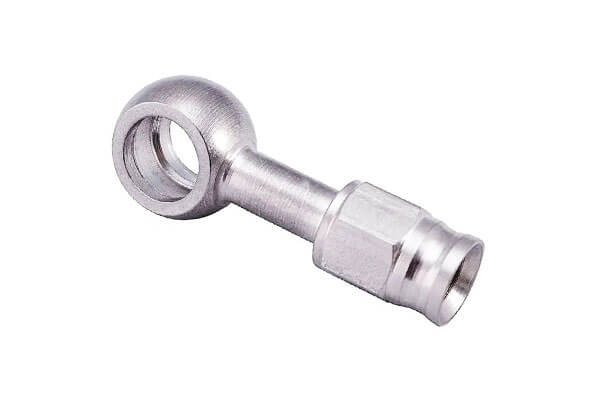
Pavyzdžiui, AISI 430 provides useful corrosion resistance for indoor and mildly corrosive environments, whereas stabilized grades such as 439 ir 441 are widely used in automotive exhaust systems.
Higher-alloy grades such as 444 provide substantially better resistance to chloride-containing environments and are suitable for applications involving hot water and certain chemical media.
Several factors should be considered when evaluating corrosion performance:
- Chromium content: Higher Cr generally improves passivation and oxidation resistance.
- Molybdenum content: Mo improves resistance to pitting and crevice corrosion.
- Carbon and nitrogen: Excessive interstitial elements can promote chromium depletion during thermal exposure.
- Stabilizavimas: Titanium or niobium additions help bind carbon and nitrogen, improving resistance to sensitization after welding.
- Surface condition: Šlifavimas, poliravimas, marinavimas, and passivation can strongly influence practical corrosion behavior.
- Service environment: Chloride concentration, temperatūra, ph, drėgmė, and exposure time all affect corrosion performance.
Ferritic stainless steel is therefore particularly attractive where corrosion resistance is required but the extreme corrosion performance of nickel-containing austenitic stainless steel is unnecessary.
6. Mechanical Properties of Ferritic Stainless Steel
The mechanical behavior of ferritic stainless steel is strongly influenced by chromium content, carbon and nitrogen levels, grūdų dydis, alloy stabilization, Šaltas darbas, and service temperature.
Apskritai, ferritic grades offer a useful combination of moderate-to-high strength, adequate ductility, Geras nuovargio atsparumas, ir geras matmenų stabilumas.
Typical Mechanical Characteristics
| Mechanical characteristic | Typical behavior of ferritic stainless steel | Engineering significance |
| Tamprumo modulis | Maždaug 200 GPA | Provides good elastic stiffness and dimensional stability |
| Derliaus stiprumas | Commonly about 200–400 MPa for many standard grades | Determines resistance to permanent deformation |
| Tempimo stiprumas | Commonly about 400–600 MPa, priklausomai nuo pažymio ir būklės | Determines ultimate tensile load capacity |
Pailgėjimas |
Often approximately 15–30%, but highly grade-dependent | Indicates available ductility during forming and overload |
| Kietumas | Generally moderate in annealed condition | Influences wear resistance and machinability |
| Poveikis kietumas | Highly dependent on grade, grūdų dydis, temperatūra, ir apdorojimas | Important for low-temperature and impact-loaded applications |
Ferritic stainless steels also generally exhibit limited strengthening through conventional heat treatment.
Unlike martensitic stainless steels, they cannot normally be transformed into a high-hardness martensitic structure through quenching.
Their mechanical properties are instead controlled primarily through Lydimas, grūdų tobulinimas, Šaltas darbas, and thermomechanical processing.
Cold working can increase strength and hardness, but excessive cold deformation may reduce ductility and increase forming difficulty.
For demanding applications, the material condition—such as annealed, Šaltas ritinys, or stabilized—should therefore be specified together with the stainless steel grade.
At low temperatures, toughness deserves particular attention. Some ferritic stainless steels can exhibit a ductile-to-brittle transition, which is fundamentally different from the behavior of many austenitic stainless steels.
Grain refinement and low carbon/nitrogen contents can improve toughness, but ferritic grades should be selected carefully for impact-critical or cryogenic applications.
7. Weldability of Ferritic Stainless Steel
Weldability varies considerably among ferritic stainless steel grades.
Modern low-carbon, stabilized grades generally have much better weldability than older high-carbon ferritic formulations, but ferritic stainless steels still require more careful welding control than many common austenitic grades.
The principal metallurgical concern is grain coarsening in the heat-affected zone (Haz).
Because ferritic stainless steels remain predominantly ferritic during welding, high heat input can produce coarse grains. Coarse-grained HAZ regions may exhibit reduced ductility and toughness.
Another concern is chromium carbide or nitride formation.
If sufficient carbon or nitrogen is present, thermal exposure during welding can cause chromium depletion adjacent to grain boundaries, potentially reducing localized corrosion resistance.
This is why grades stabilized with titanium or niobium, tokių kaip 409, 439, 441, ir 444, are commonly selected for welded applications.
Important Welding Considerations
| Suvirinimo koeficientas | Potential Problem | Recommended Control |
| Excessive heat input | Grain coarsening and reduced toughness | Use controlled heat input |
| High interpass temperature | Excessive thermal exposure | Control interpass temperature |
| High carbon/nitrogen | Sensitization and corrosion susceptibility | Prefer low-C/N or stabilized grades |
| Rapid or uncontrolled cooling | Residual stress and distortion | Establish an appropriate welding procedure |
| Filler-metal mismatch | Reduced corrosion or mechanical performance | Select filler based on service requirements |
| Surface contamination | Weld defects and reduced corrosion resistance | Thorough cleaning before and after welding |
Tig, Aš/mag, Lazerio suvirinimas, and resistance welding can all be used depending on component geometry, storis, Gamybos apimtis, ir atlikimo reikalavimai.
Po suvirinimo, marinavimas ir pasyvavimas may be required to restore corrosion resistance by removing heat tint, free iron contamination, and other surface contaminants.
For critical components, welding procedure qualification should address not only visual weld quality but also tensile properties, Korozijos elgesys, iškraipymas, and HAZ performance where applicable.
8. Formavimas ir apdirbamumas
Formavimas
Ferritic stainless steels generally exhibit good cold-forming characteristics, especially when supplied in an annealed condition.
Their elongation commonly falls in the 20–30% range for many commercial grades, providing sufficient ductility for bending, ritinio formavimas, antspaudas, and other sheet-metal operations.
Tačiau, forming performance depends on more than elongation alone.
Derliaus stiprumas, anisotropy, Dirbkite sukietėjimą, lakšto storis, grūdų struktūra, tooling geometry, and lubrication can all affect the final result.
For precision forming, the following parameters should be controlled:
- Minimum bend radius
- Rolling direction
- Tool clearance
- Tepimas
- Forming sequence
- Springback compensation
- Paviršiaus apsauga
Ferritic grades can be particularly attractive for large sheet components because they combine reasonable ductility with relatively stable dimensional behavior.
Aparatas
Ferritic stainless steels are generally suitable for conventional CNC apdirbimas.
Tačiau, machining parameters should be optimized for the specific grade because chromium, molibdenas, material hardness, and thermal conductivity influence cutting forces and tool life.
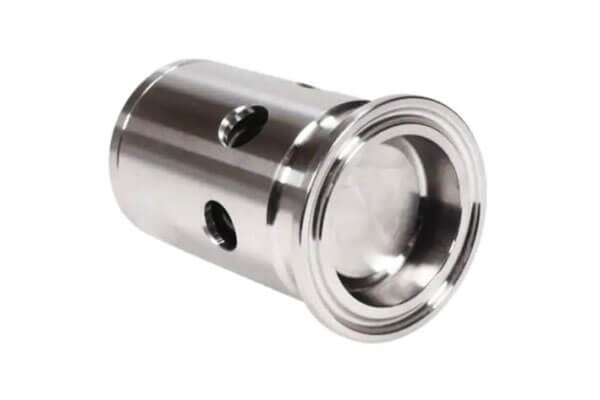
Įprastos apdirbimo operacijos apima:
CNC turning → milling → drilling → reaming → grinding → polishing
For precision components, dimensional tolerances of ±0.01 mm or tighter may be achievable under controlled CNC machining conditions,
but the achievable tolerance depends on component geometry, machine capability, workholding, material condition, and thermal stability rather than on the stainless-steel grade alone.
Apdirbimo metu, excessive cutting heat can cause dimensional drift. This is particularly important for thin-wall components and precision parts with tight positional tolerances.
9. Surface Finishes for Ferritic Stainless Steel
Surface finishing plays an important role in the corrosion resistance, išvaizda, Švarumas, dėvėjimo elgesys, and dimensional performance of ferritic stainless steel components.
| Paviršiaus apdaila | Typical Characteristics | Tipiškos programos |
| 2B | Cold rolled, termiškai apdorotas, marinuotas, and lightly skin passed; smooth and relatively reflective | Prietaisai, general industrial components, Architektūrinės plokštės |
| Ba | Bright annealed surface with high reflectivity and smooth appearance | Automobilių apdaila, prietaisai, dekoratyviniai komponentai |
| Nr. 3 | Coarse mechanically polished finish | Architectural and industrial components |
| Nr. 4 | Fine directional brushed finish, commonly produced with abrasive belts | Prietaisai, Architektūrinės plokštės, Virtuvės įranga |
Hairline |
Bauda, continuous directional grain | Decorative architectural and interior components |
| Mirror-polished | Highly reflective surface achieved through progressive polishing | Decorative components and premium architectural applications |
| Elektros energija | Electrochemical removal of surface material; smooth and clean surface | Higiena, Tikslumas, and corrosion-sensitive applications |
| Pickled and passivated | Pašalina skalę, Šilumos atspalvis, and surface contamination and restores a clean passive surface | Welded and corrosion-sensitive components |
10. Applications of Ferritic Stainless Steel
Ferritic stainless steel is widely used when a combination of corrosion resistance, Atsparumas oksidacijai, Magnetinis elgesys, Šiluminis stabilumas, Vidutinis mechaninis stiprumas, and cost efficiency is required.
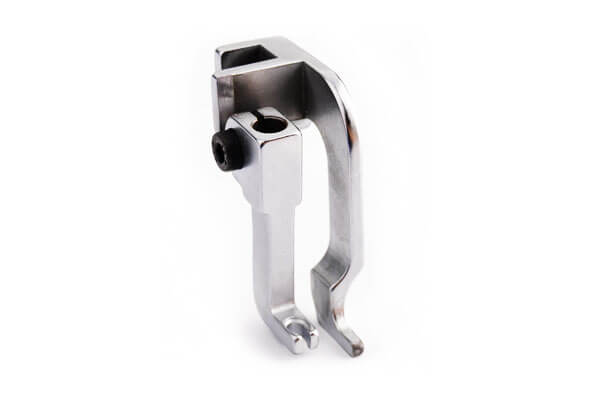
Automotive Exhaust Systems
Automobiliai exhaust systems are among the most important applications for ferritic stainless steel.
Tokie pažymiai kaip 409, 439, ir 441 are commonly selected for exhaust manifolds, vamzdžiai, catalytic-converter components, mufflers, and related heat-resistant parts.
The material must withstand:
- Repeated thermal cycling
- High exhaust-gas temperatures
- Oksidacija
- Condensate corrosion
- Vibration and mechanical fatigue
The relatively low coefficient of thermal expansion and good resistance to high-temperature oxidation make ferritic grades particularly suitable for this environment.
Buitiniai prietaisai
430 Nerūdijantis plienas is widely used in appliances because it combines corrosion resistance, patraukli išvaizda, Magnetinis elgesys, Formavimas, and relatively low cost.
Typical products include:
- Refrigerator panels
- Dishwasher components
- Oven and range components
- Virtuvės įranga
- Appliance trim
- Washing-machine components
Its magnetic nature can also be advantageous where magnetic attachment is required.
Heat Exchangers and Water-Heating Equipment
Stabilized ferritic grades such as 439 ir 444 can provide an attractive combination of corrosion resistance and thermal performance.
They are used in:
- Heat-exchanger components
- Water heaters
- Hot-water systems
- Cooling-water equipment
- Condensers
- Thermal processing equipment
The relatively high thermal conductivity and low thermal expansion of ferritic stainless steel can help improve thermal stability.
Architectural and Decorative Components
Ferritic stainless steel is also used for architectural applications where moderate corrosion resistance and surface appearance are required.
Įprastos programos apima:
- Interior wall panels
- Elevator panels
- Dekoratyvinė apdaila
- Architektūrinė danga
- Furniture components
- Kitchen and commercial interior equipment
Tokie pažymiai kaip 430 can provide a good balance between surface appearance, Formavimas, atsparumas korozijai, ir kaina.
Industrial and Chemical Equipment
Higher-chromium and molybdenum-bearing ferritic grades can be used in selected industrial environments where improved corrosion and oxidation resistance is required.
Pavyzdžiui, 444 can be considered for certain hot-water and chloride-containing environments, while high-chromium grades such as 446 are suitable for elevated-temperature oxidation-resistant components.
Tačiau, ferritic stainless steel should not automatically be selected for highly aggressive chemical or marine environments.
The exact medium, temperatūra, chloride concentration, and corrosion mechanism must be evaluated before material selection.
11. Lyginamoji analizė: Ferritic vs. Austenitic vs. Martensitinis nerūdijantis plienas
Feritas, Austenitinis, and martensitic stainless steels represent three major stainless-steel metallurgical families.
Their differences originate primarily from kristalų struktūra, lydinio chemija, fazės stabilumas, and heat-treatment response, which in turn determine mechanical properties, atsparumas korozijai, suvirinamumas, Magnetinis elgesys, ir tipiškos programos.
| Nuosavybė | Feritinis nerūdijantis plienas | Austenitinis nerūdijantis plienas | Martensitinis nerūdijantis plienas |
| Typical grades | 409, 430, 439, 441, 444 | 304, 304L, 316, 316L, 321, 310 | 410, 420, 440A, 440B, 440C |
| Typical crystal structure at service temperature | BCC feritas | FCC Austenite | BCT/BCC martensitic structure po sukietėjimo |
| Typical Cr content | Maždaug 10.5–30% | Maždaug 16–26% | Maždaug 11.5–18% |
| Typical Ni content | Paprastai very low or absent | Dažniausiai 8–20%+ | Paprastai žemas, although some grades contain Ni |
| Carbon content | Generally low, particularly in modern grades | Very low to moderate; many low-carbon grades available | Generally higher than ferritic and austenitic grades |
| Magnetinis elgesys | Magnetinis | Paprastai non-magnetic in the annealed condition; cold work can induce some magnetism | Magnetinis |
| Heat treatment for hardening | Paprastai not hardenable by conventional quenching | Paprastai not hardenable by conventional quenching | Can be hardened by quenching and tempered |
Strength level |
Vidutinis; can be increased by cold working | Moderate in annealed condition; excellent work-hardening capability | High to very high after heat treatment |
| Kietumas | Generally moderate | Generally moderate | Moderate to very high, priklausomai nuo laipsnio ir terminio apdorojimo |
| Ausmingumas | Vidutinis | Puiku | Paprastai žemesnis, particularly in hardened condition |
| Tvirtumas | Vidutinis; low-temperature toughness can be limited | Puiku, including at low temperatures | Vidutinis; strongly dependent on carbon content and heat treatment |
| Atsparumas korozijai | Nuo gero iki labai gero, depending on Cr/Mo content | Generally excellent, especially for 316/316L and higher-alloy grades | Vidutinio sunkumo ar geras; typically lower than austenitic grades |
| Pitting/crevice corrosion resistance | Good in high-Cr/Mo grades such as 444 | Very good to excellent in Mo-containing grades such as 316L | Generally moderate |
Šilumos laidumas |
Relatively high for stainless steel; paprastai aplink 20–30 W/m·K | Žemiau; paprastai aplink 14–16 W/m·K for common 304/316 pažymiai | Generally around 20–30 W/m·K, priklausomai nuo pažymio |
| Šiluminio plėtimosi koeficientas | Santykinai žemas; paprastai aplink 10–11 × 10⁻⁶/K | Santykinai aukštas; paprastai aplink 16–17 × 10⁻⁶/k už 304/316 | Generally around 10–11 × 10⁻⁶/K |
| Suvirinamumas | Moderate to good for low-C/stabilized grades; grain growth must be controlled | Generally excellent, particularly for 304L/316L | Generally limited compared with austenitic grades; preheating and post-weld treatment may be required |
| Formavimas | Vidutinis; suitable for bending and many forming operations | Puiku, particularly for deep drawing and complex forming | Moderate to poor in hardened condition |
| Aparatas | Vidutinis; depends strongly on grade and work-hardening behavior | Vidutinis; work hardening can increase machining difficulty | Generally good in free-machining or annealed grades, but hardened grades are difficult to machine |
Dirbkite sukietėjimą |
Relatively limited | Strong work hardening, especially in metastable grades | Limited compared with austenitic grades |
| Low-temperature performance | Limited by possible ductile-to-brittle transition | Excellent low-temperature toughness | Generally limited compared with austenitic grades |
| High-temperature oxidation resistance | Gerai, particularly in high-Cr grades | Good to excellent depending on Cr/Ni content | Vidutinio sunkumo ar geras |
| Tipiški gamybos būdai | Riedėjimas, antspaudas, lenkimas, suvirinimas, Gaminimas | Riedėjimas, Gilus piešinys, antspaudas, tube production, suvirinimas | Rolling/forging followed by heat treatment, apdirbimas, šlifavimas |
| Tipiškos programos | Automobilių išmetimas, prietaisai, Architektūrinės plokštės, Šilumokaičiai, water heaters | Cheminis apdorojimas, Maisto įranga, Farmacijos įranga, vamzdynai, slėgio indai, Architektūrinės struktūros | Peiliai, Chirurginiai instrumentai, vožtuvai, Siurbliai, velenai, Turbinos komponentai, Dėvėti atsparūs dalys |
Main advantage |
Good corrosion resistance with low alloy cost, magnetic response, low thermal expansion | Puikus atsparumas korozijai, ausmingumas, Tvirtumas, ir suvirinamumas | Aukštas kietumas, stiprybė, and wear resistance after heat treatment |
| Main limitation | Lower low-temperature toughness and formability than austenitic grades | Higher alloy cost, higher thermal expansion, and generally non-magnetic behavior | Mažesnis atsparumas korozijai, suvirinamumas, and toughness than most austenitic grades |
| Geriausiai tinka | Cost-sensitive corrosion-resistant components and thermally stable applications | Korozija, suvirintas, highly formed, or low-temperature applications | High-strength and wear-resistant components requiring heat treatment |
12. Išvada
Ferritic stainless steel is an important stainless-steel family that combines atsparumas korozijai, Magnetinės savybės, relatively low thermal expansion, Geras šilumos laidumas, ir ekonominis efektyvumas.
Its predominantly ferritic BCC structure gives it a distinctive property profile compared with austenitic and martensitic stainless steels.
Pagrindiniai takeliai
- Ferritic stainless steel pasižymi a Kūną orientuota kubinė (BCC) struktūra, magnetic behaviour, ir low nickel content.
- Atsparumas korozijai is provided by chromium (10.5–30%); molybdenum and stabilizers (Iš, NB) enhance performance.
- Pažymiai range from standard grades (409, 430) to high-chromium grades (446) and stabilized grades (439, 441, 444).
- Pagrindinės savybės: Geras atsparumas korozijai, magnetinis, didelis šilumos laidumas, low thermal expansion, ir geras formatavimas.
- Apribojimai: Lower ductility, DBTT, Ribotas suvirinamumas, and sensitisation risk.
- Paraiškos: Automobilių išmetimas, prietaisai, Architektūrinis, Šilumokaičiai, Maisto apdorojimas, ir cheminis apdorojimas.
- Privalumai: Ekonomiškai efektyvus, SCC-resistant, magnetinis, ir perdirbamas.
- Trūkumai: Limited low-temperature toughness, weldability issues, and lower corrosion resistance than austenitic grades.
For engineering applications, the correct approach is to evaluate the complete service environment—including temperatūra, corrosion exposure, mechanical loading, forming requirements, welding conditions, matmenų reikalavimai, ir numatomą tarnavimo laiką.
When these factors are properly considered, ferritic stainless steel can provide a highly effective combination of performance, ilgaamžiškumas, and manufacturing economy.
LangHe – Your Trusted Partner for Stainless Steel Precision Parts
Langhe pramonė is a highly specialized manufacturer of precision stainless steel components, delivering high-quality custom parts to industries ranging from industrial equipment and automotive to aerospace, Medicinos prietaisai, and fluid handling systems.
With decades of hands-on experience in investment casting, tikslus CNC apdirbimas, and comprehensive surface finishing,
LangHe provides an integrated manufacturing solution designed to reduce supply chain complexity and ensure consistent product quality.
LangHe is not merely a casting supplier; we are a full-service engineering partner.
From DFM analysis and rapid prototyping to production, terminis apdorojimas, ir kokybės užtikrinimas, we manage the entire manufacturing lifecycle.
Mūsų ISO 9001:2015 certified facility, in-house tooling capabilities, and rigorous inspection protocols—including CMM, Ndt, and pressure testing—ensure that every component meets or exceeds international standards.
Susisiekite su mumis šiandien to discuss your next project and discover how LangHe can bring your designs to life with precision, kokybė, ir efektyvumas.
DUK
Is ferritic stainless steel magnetic?
Taip. Ferritic stainless steels are generally Feromagnetinis kambario temperatūroje because of their ferritic BCC structure.
This characteristic makes them suitable for applications where magnetic response is required.
Is ferritic stainless steel corrosion resistant?
Taip, but the level of corrosion resistance varies considerably between grades.
Pažymys 430 provides good resistance in many atmospheric and mildly corrosive environments,
while higher-alloy grades containing molybdenum, tokių kaip 444, provide significantly better resistance to pitting and chloride-containing environments.
Is ferritic stainless steel better than austenitic?
Nebūtinai; it depends on the application.
Ferritic grades are better for applications requiring magnetic properties, Geras šilumos laidumas, ir atsparumas streso korozijos krekingui (SCC). They are also more cost-effective.
Austenitic grades offer superior corrosion resistance, better formability, and higher toughness at low temperatures.
What is the difference between ferritic and martensitic stainless steel?
Ferritic stainless steel is not hardenable by heat treatment and has a BCC structure.
Martensitic stainless steel can be hardened by heat treatment (gesinimas ir grūdinimas) and has a body-centred tetragonal (BCT) struktūra. Martensitic grades have higher carbon content and higher hardness.
What is the DBTT of ferritic stainless steel?
Ferritic stainless steels exhibit a ductile-to-brittle transition temperature (DBTT) in the range of -50°C to +20°C.
Below this temperature, they become brittle and susceptible to fracture under impact loading. This limits their use in low-temperature applications.
How does ferritic stainless steel compare to carbon steel?
Ferritic stainless steel offers significantly better corrosion resistance than carbon steel due to its chromium content. It is also more expensive.
Tačiau, it shares some characteristics with carbon steel, such as being magnetic and having a BCC structure.
Can ferritic stainless steel be hardened?
Nr, ferritic stainless steel cannot be hardened by heat treatment. It can only be strengthened by cold working (Dirbkite sukietėjimą).
This distinguishes it from martensitic grades, which can be hardened by quenching and tempering.