Poliuretanas, commonly abbreviated as PU or PUR, is a versatile class of polymers formed through the reaction of compounds containing isocyanate groups with polyols or other molecules containing active hydrogen groups.
Unlike many conventional plastics that are associated with a relatively narrow range of properties, polyurethane can be engineered across an exceptionally broad spectrum—from soft, flexible foams and elastomers to rigid structural foams, dangos, Klijai, sandarikliai, and hard engineering components.
This versatility comes primarily from polyurethane’s segmented molecular structure and the ability to modify its chemistry, crosslink density, cell structure, and processing conditions.
By selecting different polyols, isocyanates, chain extenders, catalysts, blowing agents, ir priedai, manufacturers can tailor polyurethane for requirements such as cushioning, atsparumas dilimui, šiluminė izoliacija, Cheminis atsparumas, lankstumas, Poveikio absorbcija, ir matmenų stabilumas.
This article examines what polyurethane is from both a materials-science and manufacturing perspective, including its chemical structure, major types, savybės, Gamybos metodai, Privalumai, apribojimai, and engineering applications.
1. What Is Polyurethane?
Polyurethane is a polymer containing a significant number of urethane linkages, typically represented by the chemical structure:
–NH–CO–O–
These urethane groups are commonly generated through a reaction between an isocyanate group (–NCO) and a hydroxyl group (–OH):
R–NCO + R′–OH → R–NH–CO–O–R′
This reaction is the fundamental chemistry behind polyurethane production.
Tačiau, commercial polyurethane materials rarely consist only of simple repeating urethane units.
Their molecular structures may also contain ether, ester, karbamidas, carbonate, aromatic, aliphatic, or other functional groups, depending on the raw materials selected.
This is why two products both described as “polyurethane” can have dramatically different properties.
Pavyzdžiui, a flexible polyurethane foam used in furniture may be soft and highly resilient, whereas a polyurethane elastomer used for industrial rollers may have high hardness, tempimo stiprumas, ir atsparumas dilimui.
A rigid polyurethane foam used in refrigeration equipment, meanwhile, is primarily engineered for low thermal conductivity and dimensional stability.
Thermosetting and Thermoplastic Polyurethanes
Polyurethane materials can broadly be divided according to their molecular architecture and processing behavior.
Thermosetting polyurethane develops a permanently crosslinked network during curing.
Once sufficiently cured, it cannot simply be melted and reshaped without causing chemical degradation.
Many cast elastomers, dangos, Klijai, and rigid polyurethane systems fall into this category.
Thermoplastic polyurethane (TPU) contains predominantly linear or physically associated polymer structures and can be softened by heating and processed repeatedly within its thermal-processing window.
TPU combines many characteristics of elastomers with thermoplastic processing methods such as injection molding and extrusion.
The distinction is important because it directly affects manufacturing, Perdirbimas, repairability, and end-use performance.
Major Characteristics of Polyurethane
Although polyurethane formulations vary considerably, many polyurethane materials exhibit a useful combination of mechanical and chemical properties.
Typical characteristics include:
- High abrasion and wear resistance
- Good elasticity and resilience
- Adjustable hardness
- Good impact resistance
- Good resistance to oils and many chemicals
- Excellent adhesion to many substrates
- Geras nuovargio atsparumas
- Wide processing flexibility
- Good thermal insulation in cellular forms
- Ability to produce both flexible and rigid structures
The exact performance depends strongly on the formulation.
Pavyzdžiui, polyurethane is often highly resistant to abrasion, but resistance to hydrolysis, UV radiation, šildyti, or specific chemicals varies significantly between different polyurethane chemistries.
Todėl, material selection should always be based on the specific polyurethane formulation and operating environment, rather than on the generic term “PU.”
2. Chemical Composition and Molecular Structure of Polyurethane
Poliuretanas (PU) is not a single chemical compound but a broad family of polymers whose properties can be tailored through the selection and proportion of different chemical building blocks.
The fundamental polyurethane reaction occurs between isocyanate groups (–NCO) ir hydroxyl groups (–OH), producing urethane linkages.
By changing the molecular structure, funkcionalumas, molecular weight, and ratio of the reactants, manufacturers can produce materials ranging from flexible foams and elastomers to rigid foams, dangos, Klijai, and high-strength engineering components.
Core Chemical Building Blocks
The two principal reactant families are isocyanates and polyols.
Other components, including chain extenders, crosslinkers, catalysts, blowing agents, aktyviosios paviršiaus medžiagos, and performance additives, are introduced when specific mechanical, šiluminis, apdorojimas, or environmental characteristics are required.
| Component Category | Pirminė funkcija | Common Examples |
| Isocyanates | Provide reactive –NCO groups and contribute to hard segments, stiprybė, tvirtumas, ir cheminis atsparumas | MDI, TDI, HDI, IPDI |
| Polyols | Form soft segments and strongly influence flexibility, elastingumas, hydrolysis resistance, and low-temperature behavior | Polyether polyols, polyester polyols, polycarbonate polyols |
| Chain Extenders | Increase hard-segment content and regulate molecular weight, kietumas, tempimo stiprumas, and phase structure | 1,4-Butanediol (BDO), ethylene glycol, diamines |
| Crosslinkers | Introduce three-dimensional network structures and increase rigidity, matmenų stabilumas, ir šilumos atsparumas | Trimethylolpropane (TMP), multifunctional polyols |
Catalysts |
Control reaction rate and influence the balance between competing polyurethane reactions | Tertiary amines, organometallic catalysts |
| Blowing Agents | Generate gas and create the cellular structure of polyurethane foams | Vanduo, pentane, CO₂, selected physical blowing agents |
| Paviršiaus aktyviosios medžiagos | Stabilize the developing foam and control cell size, vienodumas, ir morfologija | Silicone-based surfactants |
| Priedai | Modify specific performance characteristics such as flame resistance, UV stability, spalva, Atsparumas oksidacijai, or processing behavior | Antipirenai, UV stabilizers, antioxidants, Pigmentai |
3. Major Types of Polyurethane
Polyurethane is a versatile polymer family rather than a single material with fixed properties.
By changing the isocyanate, polyol, chain extender, crosslink density, blowing system, and processing conditions, manufacturers can produce polyurethane materials ranging from soft and highly flexible foams to rigid structural polymers and high-performance elastomers.
Flexible Polyurethane Foam
Flexible polyurethane foam is characterized by an open-cell structure, relatively low density, and high resilience.
It is produced by combining polyols and isocyanates with blowing agents and other additives under controlled foaming conditions.
Its interconnected cellular structure allows the material to compress and recover repeatedly.
Foam density, cell size, kietumas, atsparumas, and compression set can be adjusted through formulation and processing.
Įprastos programos apima:
- Furniture and mattress cushioning
- Automotive seats and interior components
- Acoustic and vibration-control products
- Packaging and protective materials
- Flexible seals and cushioning elements
For cushioning applications, tankis, indentation hardness, atsparumas, and compression set are often more important than tensile strength alone.
Rigid Polyurethane Foam
Rigid polyurethane foam has a predominantly closed-cell structure and is designed for high stiffness, matmenų stabilumas, and thermal insulation.
Its low thermal conductivity results primarily from the cellular structure and the gas contained within the cells.
Depending on formulation and manufacturing process, rigid PU and PIR-based systems can provide excellent insulation performance at relatively low density.
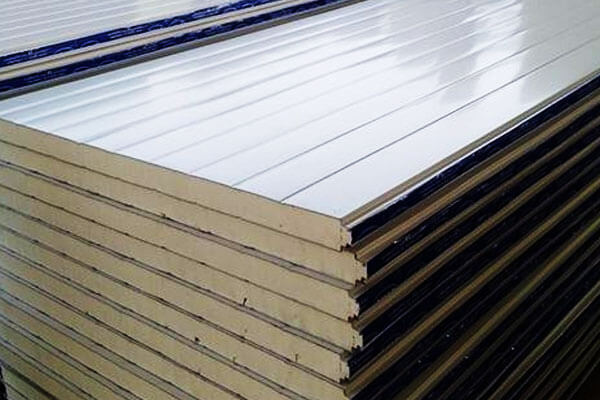
Common applications include building insulation, refrigerated equipment, cold-storage panels, insulated pipes, and appliance insulation.
A typical rigid foam formulation must balance several properties simultaneously:
| Nuosavybė | Svarba |
| Tankis | Influences strength, matmenų stabilumas, ir šiluminis našumas |
| Closed-cell content | Important for insulation and moisture resistance |
| Gniuždymo stiprumas | Determines load-bearing capability |
| Šilumos laidumas | Critical for energy-efficiency applications |
| Matmenų stabilumas | Controls long-term performance under temperature changes |
| Flammability performance | Important for building and transportation applications |
Polyurethane Elastomers
Polyurethane elastomers occupy an important position between conventional rubber and rigid engineering plastics.
They can combine relatively high tensile strength and abrasion resistance with substantial elastic deformation.
They are available as thermoplastic polyurethane (TPU), cast polyurethane elastomers, and thermoset systems.
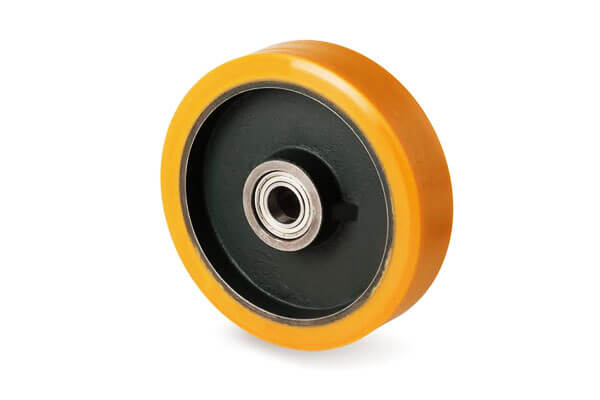
Polyurethane elastomers are particularly valued for applications involving repeated mechanical loading, poveikis, trintis, or abrasion.
Ratai, ritinėliai, ruoniai, Tarpinės, įvorės, konvejerio komponentai, and industrial wear parts are common examples.
Their performance depends strongly on the hard-segment content and molecular architecture.
Increasing hard-segment concentration generally increases hardness and modulus, while appropriate soft-segment chemistry maintains elasticity and elongation.
Thermoplastic Polyurethane (TPU)
TPU is a thermoplastic form of polyurethane that can be repeatedly softened by heating and processed using conventional thermoplastic manufacturing technologies.
Unlike highly crosslinked thermoset polyurethane, TPU primarily relies on physical interactions and segmented polymer morphology to achieve its mechanical properties.
This makes it suitable for injection molding, išspaudimas, Pūtimo liejimas, and other continuous manufacturing processes.
TPU can be formulated across a broad hardness range, typically from very soft elastomeric grades to relatively rigid engineering grades.
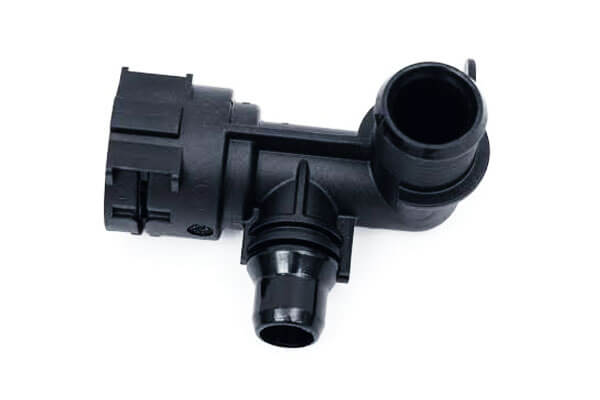
Įprastos programos apima:
- Cable jackets and protective coverings
- Automobilių komponentai
- Industrial hoses and tubing
- Seals and flexible connectors
- Footwear components
- Consumer-product housings and protective parts
Cast Polyurethane
Cast polyurethane is produced by mixing reactive components and pouring the formulation into a mold, where polymerization and curing take place.
This process is particularly useful for manufacturing large or customized elastomeric components that would be difficult or uneconomical to produce through conventional thermoplastic processing.
Cast polyurethane can be formulated for different combinations of hardness, elastingumas, tear resistance, atsparumas dilimui, ir cheminis atsparumas.
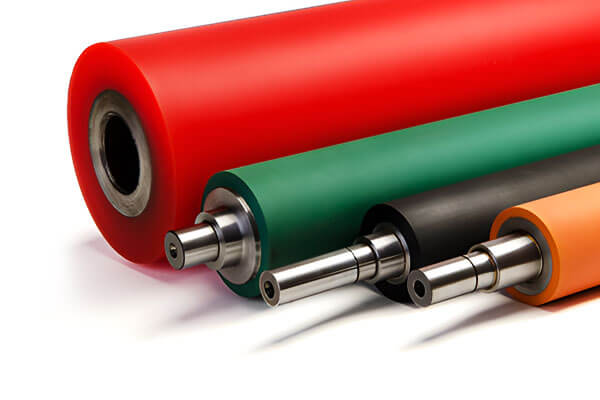
Industrial rollers, scraper blades, dėvėti įdėklus, ruoniai, įvorės, and impact-resistant components are typical applications.
Polyurethane Coatings, Adhesives, and Sealants
Polyurethane is also widely used as a functional surface or bonding material rather than as a bulk structural component.
Polyurethane coatings can provide abrasion resistance, Cheminis atsparumas, weatherability, lankstumas, and attractive surface finishes. They are used on metals, Plastikai, mediena, concrete, and other substrates.
Polyurethane adhesives can form strong bonds between dissimilar materials and are used in automotive, statyba, footwear, baldai, and industrial assembly.
Polyurethane sealants combine adhesion with elastic deformation, allowing joints to accommodate movement caused by thermal expansion, vibracija, or mechanical displacement.
4. Key Properties of Polyurethane
Poliuretanas (PU) is distinguished by its unusually broad range of mechanical, šiluminis, Cheminė, and physical properties.
Unlike metals or many conventional thermoplastics, polyurethane is a material family whose performance can be extensively modified through the selection of isocyanate type, polyol chemistry, hard-segment content, crosslink density, Priedai, tankis, and cellular structure.
Todėl, there is no single set of mechanical properties that represents all polyurethane products.
A flexible polyether elastomer, a rigid insulation foam, and a high-hardness cast polyurethane may all be chemically classified as polyurethane while exhibiting completely different performance characteristics.
The following values should therefore be treated as representative engineering ranges or examples rather than universal specifications.
Final material selection should always be based on the manufacturer’s tested datasheet under the relevant ASTM, ISO, or EN standard.
Mechaninės savybės
| Nuosavybė | Typical Engineering Range / Pavyzdys | Main Controlling Factors |
| Density – solid elastomer | ~1.1–1.3 g/cm³ | Polymer chemistry, užpildai |
| Density – rigid PU foam | ~30–45 kg/m³ for many insulation products | Blowing system, formulation, cell structure |
| Tempimo stiprumas | ~15–50+ MPa for many elastomers | Kietumas, molecular structure, crosslinking |
| Pailgėjimas | ~300–700% for many flexible elastomers | Soft-segment chemistry and crosslink density |
Kietumas |
~45 Shore A to 70 Shore D+ | Hard-segment content, crosslinking |
| Thermal conductivity – elastomer | ~0.15–0.25 W/(m · k), priklausomybė nuo klasės | Density and formulation |
| Thermal conductivity – rigid foam | ~0.020–0.030 W/(m · k) | Cell structure, dujos, tankis, senėjimas |
| Tūrio varža | Can reach ~10¹³ Ω·cm in suitable grades | Formulė, drėgmė, temperatūra |
| Long-term service temperature | Common grades roughly −30 to +80°C; specialized grades higher | Polymer chemistry and formulation |
Atsparumas dilimui ir dėvėjimui
Polyurethane is particularly well known for its resistance to abrasive wear.
Properly formulated polyurethane can outperform many conventional elastomers in applications involving sliding, riedėjimas, poveikis, or repeated contact.
This characteristic makes polyurethane attractive for industrial rollers, konvejerio komponentai, dėvėti įdėklus, ruoniai, Ratai, įvorės, and mining equipment components.
Tačiau, abrasion resistance is not a universal property of all polyurethane grades. Polyol chemistry, kietumas, crosslink density, temperatūra, counterface material, Tepimas, and wear mechanism can all influence actual service life.
Elasticity and Resilience
The flexible soft segments of polyurethane allow significant reversible deformation. This gives many polyurethane elastomers excellent resilience and energy-return characteristics.
Resilience is particularly important in components subjected to repeated compression or impact.
Pavyzdžiui, polyurethane wheels and rollers need to deform under load while recovering their shape rapidly enough to limit permanent deformation and heat generation.
The balance between elasticity and hysteresis is therefore an important consideration in dynamic applications.
Cheminis atsparumas
Polyurethane generally provides good resistance to oils, tepalai, kuras, and many industrial chemicals, although performance varies substantially between formulations.
Polyether-based polyurethane often provides better hydrolysis resistance, while polyester-based systems may offer advantages in certain mechanical and chemical environments.
Chemical compatibility should therefore be evaluated against the specific chemical, Koncentracija, temperatūra, kontakto trukmė, and mechanical loading condition rather than relying on a generic statement that polyurethane is chemically resistant.
Šiluminės savybės
Polyurethane’s usable temperature range depends strongly on its chemistry and physical structure.
Many conventional polyurethane elastomers operate effectively over a broad moderate-temperature range, while specialized formulations are designed for elevated or low-temperature service.
At sufficiently high temperatures, polymer chain mobility increases and mechanical properties decline. At low temperatures, some formulations become significantly stiffer and less flexible.
Rigid polyurethane foam is also valued for its low thermal conductivity and is therefore widely used for thermal insulation.
Water and Hydrolysis Resistance
Hydrolysis resistance is particularly important in outdoor, jūrų, hidraulinis, and humid environments.
Polyether-based polyurethane generally offers better resistance to hydrolytic degradation than conventional polyester-based polyurethane.
Tačiau, polyester polyurethane can provide excellent mechanical and wear properties in suitable environments.
For long-term water exposure, material selection should consider not only water itself but also temperature, ph, Mikroorganizmai, Mechaninis stresas, and exposure duration.
Elektros savybės
Many polyurethane formulations provide useful electrical insulation characteristics, including relatively high electrical resistivity and dielectric strength.
These properties support applications such as cable jackets, electrical encapsulation, Apsauginės dangos, and electronic components.
Vis dėlto, electrical performance can change with temperature, drėgmė, frequency, formulation, and filler content.
5. Polyurethane Hardness
Hardness is one of the most commonly specified properties of polyurethane, particularly for elastomers, ritinėliai, Ratai, ruoniai, Tarpinės, Apsauginės dangos, ir dilimui atsparūs komponentai.
Tačiau, polyurethane hardness should not be interpreted simply as a measure of overall material strength.
In polyurethane engineering, hardness primarily describes the material’s resistance to localized deformation under a specified indentation test condition.
What Does Polyurethane Hardness Mean?
When a force is applied to a polyurethane surface, the material deforms around the indenter.
A harder polyurethane exhibits less indentation under the specified test conditions, whereas a softer grade undergoes greater localized deformation.
Because polyurethane can range from very soft elastomers to rigid engineering materials, different hardness scales are used for different hardness ranges.
For flexible and elastomeric polyurethane, hardness is commonly measured using the Shore hardness scale.
Shore A is generally used for softer to moderately hard polyurethane, kol krantas D is used for harder formulations.
The selected scale should always be reported together with the hardness value because, pavyzdžiui, 80 Shore A and 80 Shore D represent very different material conditions.
Common Polyurethane Hardness Ranges
| Hardness Range | Typical Characteristics | Typical Performance | Atstovaujančios paraiškos |
| 20–40 Shore A | Very soft and highly flexible | High compliance, low modulus, excellent cushioning and vibration absorption | Soft seals, Tarpinės, cushions, acoustic damping components |
| 40–60 Shore A | Soft to medium hardness | Good elasticity, atsparumas, and flexibility with moderate load capacity | Flexible wheels, įvorės, vibration isolators, footwear components |
| 60–80 Shore A | Medium-hard elastomer | Good balance of flexibility, Apkrovos talpa, ir atsparumas dilimui | Ritinėliai, Ratai, įvorės, konvejerio komponentai |
80–95 Shore A |
Hard elastomer | Higher stiffness, load capacity, and wear resistance with reduced flexibility | Industrial rollers, heavy-duty wheels, Dėvėkite pagalvėles, high-load components |
| 50–80 Shore D | Very hard polyurethane | High rigidity and dimensional stability with strong resistance to impact and wear | Pavaros, CAMS, guide components, konstrukcinės dalys, wear-resistant components |
These ranges are representative rather than universal specifications.
Commercial polyurethane formulations can extend beyond these ranges, and the relationship between hardness and mechanical performance depends on the polymer chemistry, crosslink density, filler content, temperatūra, and testing method.
6. Polyurethane Manufacturing Processes
Polyurethane can be manufactured through several processing technologies, and the appropriate method depends on the polyurethane chemistry, product geometry, required hardness, tankis, Gamybos apimtis, matmenų tolerancija, and end-use performance.
Reaction Injection Molding (RIM)
Reaction Injection Molding is a high-productivity process in which two or more liquid polyurethane components—typically an isocyanate and a polyol formulation—are accurately metered, mixed, and injected into a closed mold.
The chemical reaction takes place rapidly inside the mold, where the material fills the cavity and subsequently cures into the required shape.
RIM is particularly suitable for large components because the relatively low viscosity of the reacting system allows complex molds to be filled with comparatively low injection pressures.
Reinforcing materials or fillers can also be incorporated into specialized formulations to improve stiffness, matmenų stabilumas, ar atsparumas smūgiams.
Produktai:
Typical RIM products include automotive body panels, Bamperiai, spoilers, įrangos korpusai, structural covers, industrial enclosures, and large lightweight molded components.
Cast Polyurethane
Cast polyurethane is produced by mixing reactive polyurethane components and pouring the liquid mixture into a prepared mold.
The material then cures at room temperature or under controlled heating, depending on the formulation.
This process provides considerable flexibility in material formulation.
Manufacturers can adjust hardness, elastingumas, tear resistance, atsparumas dilimui, damping characteristics, and chemical resistance by selecting appropriate polyols, isocyanates, chain extenders, catalysts, ir priedai.
Cast polyurethane is especially valuable for products that require Didelis atsparumas dilimui, Poveikio absorbcija, elastingumas, or customized hardness.
Degassing may be performed before casting to minimize entrapped air and internal voids, particularly for precision components.
Produktai:
Common products include industrial rollers, Ratai, įvorės, ruoniai, Tarpinės, Dėvėkite pagalvėles, scraper blades, vibration isolators, shock absorbers, mining components, and custom polyurethane liners.
Suspaudimo liejimas
Compression molding uses a measured amount of polyurethane material placed into a heated mold cavity.
The mold is then closed and pressure is applied, allowing the material to flow, conform to the cavity, and cure under controlled temperature and pressure.
The process is commonly used for thermosetting polyurethane systems and elastomeric compounds.
Proper control of mold temperature, spaudimas, curing time, and material charge is essential because insufficient curing can reduce mechanical performance, while excessive temperature or curing time can affect the material’s final properties.
Compression molding is particularly effective for relatively simple or moderately complex geometries and can provide good dimensional consistency in medium- iki didelės apimties gamybos.
Produktai:
Typical products include Sandarinimo žiedai, Tarpinės, pads, Bamperiai, vibration-damping components, Dėvėkite plokšteles, protective covers, and molded polyurethane elastomer parts.
Injection Molding of Thermoplastic Polyurethane (TPU)
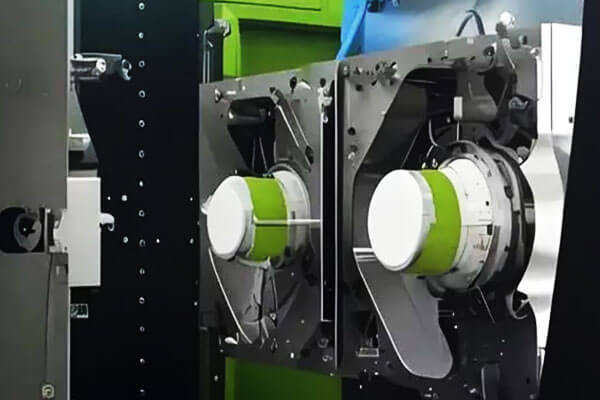
Thermoplastic polyurethane can be processed using conventional thermoplastic liejimas įpurškimas įranga.
Unlike thermosetting polyurethane, TPU can be repeatedly softened by heating and solidified by cooling, allowing it to be melted and injected into a mold without a permanent chemical crosslinking reaction.
During processing, precise control of lydymosi temperatūra, injection pressure, mold temperature, drying conditions, ir aušinimo greitis yra svarbu.
TPU is hygroscopic to varying degrees, and excessive moisture in the pellets can cause hydrolytic degradation, paviršiaus defektai, bubbles, or reduced mechanical properties. Proper pre-drying is therefore an important part of TPU injection molding.
Produktai:
TPU injection molding is widely used for protective cases, flexible connectors, ruoniai, cable components, Ratai, rankenos, consumer-product components, Automobilių dalys, medical components, and wear-resistant industrial parts.
Išspaudimas
Polyurethane extrusion is primarily used for producing continuous profiles, vamzdžiai, Filmai, lakštai, and other products with a constant cross-sectional geometry.
Thermoplastic polyurethane pellets are heated and plasticized in an extruder before being forced continuously through a specially designed die.
The extrusion process requires careful control of barrel temperature, screw speed, mirties temperatūra, extrusion rate, cooling conditions, and material moisture.
Die design is particularly important because polyurethane’s viscoelastic behavior can influence dimensional stability and die swell.
Produktai:
Typical extruded products include TPU tubing, hoses, ruoniai, Tarpinės, juostelės, Filmai, profiliai, kabelių apvalkalai, protective sleeves, and flexible membranes.
Reaction Casting and Centrifugal Casting
For certain large or rotationally symmetric polyurethane components, reaction casting and centrifugal casting can be used.
In reaction casting, reactive polyurethane components are introduced into a mold and allowed to polymerize and cure in situ.
Išcentrinis liejimas uses rotational force to distribute the reactive material against the mold wall, producing a relatively uniform tubular or ring-shaped component.
These processes are particularly useful when conventional molding would require expensive tooling or when the component has a large diameter and relatively simple rotational geometry.
Produktai:
Programos apima large polyurethane rollers, rankovės, vamzdžiai, Žiedai, Lineriai, pipe coatings, and specialized wear-resistant cylindrical components.
Foaming and Foam Molding
Polyurethane foams are manufactured by combining reactive polyurethane components with a blowing system that generates a cellular structure during polymerization.
Depending on the formulation, the blowing mechanism may involve chemical blowing agents, such as water reacting with isocyanate to generate carbon dioxide, or physical blowing agents.
The formulation determines whether the resulting foam is lankstus, semi-rigid, or rigid.
Cell size, tankis, atidaryti- or closed-cell structure, and dimensional stability are controlled through the balance of polyols, isocyanates, catalysts, aktyviosios paviršiaus medžiagos, blowing agents, and processing conditions.
Produktai:
Flexible polyurethane foam is commonly used for seating cushions, mattresses, acoustic materials, and automotive interiors,
while rigid PU and PIR foams are widely used for building insulation panels, refrigeration insulation, thermal insulation systems, and energy-efficient equipment.
CNC Machining of Polyurethane
CNC apdirbimas is not a primary polymerization process, but it is an important secondary manufacturing method for polyurethane components.
A polyurethane block, lapas, strypas, or pre-cast blank can be machined using CNC turning, frezavimas, gręžimas, and other operations to achieve precise dimensions and complex geometries.
Because polyurethane is flexible and can deform under cutting forces, machining parameters must be selected according to the material’s hardness and elasticity.
Excessive cutting force, Šilumos generavimas, or tool deflection can result in dimensional inaccuracies or poor surface quality. Sharp cutting tools and appropriate workholding are particularly important for soft grades.
Produktai:
CNC machining is commonly used for precision polyurethane seals, custom bushings, wear components, ritinėliai, prototipai, inžinerinės dalys, replacement components, and low-volume customized products.
7. Applications of Polyurethane
The exceptional versatility of polyurethane allows it to serve as a structural material, elastomeras, danga, adhesive, sealant, putos, and insulation material.
Its applications therefore extend from consumer products to demanding industrial equipment.
Automobilių pramonė
Typical applications include seat cushions, headrests, suspension bushings, Variklio laikikliai, ruoniai, steering components, vidaus apdaila, instrument-panel components, Apsauginės dangos, and acoustic insulation.
Industrial Rollers and Wheels
Polyurethane rollers are widely used in:
- Conveyor systems
- Material-handling equipment
- Printing machinery
- Packaging machinery
- Textile machinery
- Forklift wheels
- Guide rollers
- Drive wheels
Ruoniai, Tarpinės, and Bushings
Polyurethane’s combination of elasticity, tear resistance, and abrasion resistance makes it suitable for dynamic sealing applications.
PU seals and hydraulic components are commonly used where the material experiences repeated sliding, spaudimas, and mechanical deformation.
Bushings and damping elements also benefit from polyurethane’s ability to absorb vibration while maintaining structural integrity.
Mining and Heavy Equipment
Mining and construction equipment expose polymer components to severe abrasion, poveikis, dulkės, drėgmė, ir mechaninė apkrova.
Polyurethane is therefore used for dėvėti įdėklus, screen panels, chute liners, scraper blades, ritinėliai, hydraulic seals, and protective components.
In abrasive environments, a properly formulated polyurethane component can significantly reduce maintenance frequency compared with less wear-resistant elastomers.
Statybos ir statybinės medžiagos
Polyurethane plays an important role in modern building systems.
Rigid polyurethane and polyisocyanurate foams provide low thermal conductivity and are widely used in insulated panels, refrigeration systems, building envelopes, roofs, sienos, and pipe insulation.
Polyurethane sealants and coatings are also used for joint sealing, waterproofing, grindys, Apsauginės dangos, and concrete protection.
Electrical and Electronic Products
PU materials can provide electrical insulation together with flexibility and environmental protection.
They are used for kabelių apvalkalai, potting compounds, encapsulation materials, jungtys, Apsauginės dangos, and vibration-damping components.
Formulations can be designed to provide specific combinations of dielectric properties, Atsparumas drėgmei, lankstumas, and flame resistance.
Footwear and Consumer Products
Flexible polyurethane and TPU are widely used in consumer products because they offer a favorable combination of comfort, atsparumas, ilgaamžiškumas, ir dizaino lankstumas.
Programos apima shoe soles, sports footwear components, protective cases, rankenos, Ratai, Sporto prekės, luggage components, and flexible consumer-product parts.
8. Advantages of Polyurethane
- Unmatched performance tunability — hardness, density and mechanical properties can be precisely engineered across an extraordinarily wide range from a single chemical base.
- Exceptional abrasion and wear resistance — polyurethane elastomers routinely deliver 3–10× the service life of rubber alternatives in heavy-wear applications.
- Superior thermal insulation — rigid PU foam is the most thermally efficient commercially available organic insulation material, reducing building energy consumption by 30–50%.
- Broad processing adaptability — can be manufactured via foaming, liejimas, purškimas, liejimas įpurškimas, extrusion and in-situ application methods.
- Universal substrate adhesion — coatings and adhesives bond strongly to metal, mediena, concrete, glass and most plastics.
- Puikus vibracijos slopinimas — flexible foams and elastomers absorb shock and noise effectively, making them indispensable for automotive and industrial NVH control.
- Dizaino laisvė — liquid processing enables production of large, kompleksas, integrated parts that would be impossible with rubber or rigid plastic.
9. Limitations of Polyurethane
- Moderate temperature resistance — standard grades have continuous service limits of 80–120°C. Long-term exposure above this range causes thermal degradation and permanent property loss.
- Hydrolysis sensitivity — polyester-based polyurethanes degrade gradually in prolonged hot, humid environments. Polyether grades perform better but still have limits.
- UV degradation of aromatic grades — standard aromatic polyurethanes yellow and chalk under prolonged UV exposure. Aliphatic grades solve this but at significantly higher cost.
- Raw material handling hazards — unreacted isocyanate monomers are respiratory irritants and require proper ventilation and PPE during processing. Fully cured products are safe for normal end use.
- Degumas — unmodified polyurethane is combustible and can release toxic fumes during combustion. Flame-retardant formulations are required for building and transportation applications.
- Recycling challenges — crosslinked thermoset polyurethane cannot be remelted, making mechanical recycling difficult. Chemical recycling technologies are emerging but not yet universally available.
10. Aplinkos ir tvarumo aspektai
| Aspektas | Įvertinimas |
| Renewable resources | Bio-based polyols are increasingly available, derived from vegetable oils or plant sources. |
| Perdirbimas | Thermoplastic polyurethanes (TPU) are recyclable; thermosets (rigid foams, many elastomers) are not. |
| Energijos suvartojimas | Production of polyurethane from petrochemicals is energy-intensive. |
| Lifecycle assessment | Depends on the formulation and application; izoliacija (rigid foam) can provide significant energy savings. |
| Gyvenimo pabaiga | Foam waste is difficult to recycle; incineration is a common disposal route. |
| Health and safety | Isocyanates are toxic; proper ventilation and PPE are essential during handling. |
| Biodegradability | Conventional polyurethane is not biodegradable. |
11. Polyurethane vs. Rubber and Conventional Plastics
Polyurethane occupies a distinctive position between elastomers and engineering plastics.
The following comparison highlights the major differences between polyurethane and several commonly used materials.
| Nuosavybė | Poliuretanas | Natural Rubber | Polietilenas (PE) | Nailonas |
| Medžiagos tipas | Versatile polymer; available as elastomer, termoplastinis, thermoset, ir putos | Natural elastomer | Thermoplastic | Inžinerinis termoplastikas |
| Tipiškas kietumas | Maždaug 20 Shore A to 70+ krantas D, depending on formulation | Approximately 20–90 Shore A | Typically Shore D range for rigid grades | Typically Rockwell or Shore D; generally rigid |
| Tempimo stiprumas | Common elastomer grades approximately 20–60 MPa; formulation-dependent | Approximately 15–30 MPa for many commercial grades | Approximately 10–40 MPa, nuo klasės priklausomas | Approximately 50–100 MPa for many engineering grades |
| Pailgėjimas per pertrauką | Commonly 200–700% for elastomeric grades | Commonly 400–800% | Typically 100–1,000% depending on grade | Generally much lower than elastomeric polyurethane |
| Atsparumas dilimui | Puiku; one of the major advantages of polyurethane | Geras iki puikus | Vidutinio sunkumo ar geras | Gerai |
| Ašarų atsparumas | Very good to excellent | Puiku | Vidutinis | Gerai |
| Elastic Recovery | Excellent in properly formulated elastomers | Puiku | Generally lower than elastomers | Relatively limited |
Poveikio atsparumas |
Labai gerai; remains highly effective in many demanding applications | Puiku | Gerai, particularly in PE grades designed for impact resistance | Geras iki puikus |
| Oil and Grease Resistance | Generally very good, particularly with suitable polyester- or polyether-based formulations | Relatively poor; oils can cause swelling and deterioration | Generally good against many chemicals, but solvent resistance varies | Gerai, although certain chemicals and moisture can affect performance |
| Cheminis atsparumas | Good to excellent depending on chemistry; polyester and polyether PU behave differently | Limited against oils, kuras, ozone, and some chemicals | Excellent resistance to many acids, ALKALIS, and aqueous chemicals | Good resistance to many hydrocarbons and oils, but sensitive to certain acids and moisture |
| Moisture Resistance | Formulation-dependent; polyether PU generally performs better in humid environments | Good in many applications but sensitive to environmental aging | Labai gerai | Moisture absorption can be significant and can affect dimensions and mechanical properties |
Weathering / UV Resistance |
Good to excellent with appropriate stabilization; aliphatic PU offers particularly strong UV resistance | Ribotas; ozone and UV can accelerate degradation | Paprastai gerai, especially with UV stabilizers | Vidutinis; UV stabilizers may be required for outdoor service |
| Temperatūros atsparumas | Broad range, but highly formulation-dependent; many grades operate from sub-zero temperatures to approximately 80–120°C continuously | Commonly effective over approximately −50 to 80°C, depending on compound | Broad range; nuo klasės priklausomas | Generally higher continuous-use temperature capability than elastomeric PU |
| Flexibility at Low Temperature | Good to excellent for properly formulated grades | Puiku | Good for suitable low-temperature grades | Generally lower than flexible polyurethane and rubber |
| Water Absorption | Generally low, but varies significantly with chemistry and cellular structure | Žemas ar vidutinio sunkumo | Labai žemas | Relatively high compared with PU and PE |
| Load-Bearing Capability | Excellent for elastomers; high-performance grades can withstand substantial compressive and dynamic loads | Gerai, but long-term deformation can be significant | Good for structural thermoplastic applications | Puiku for rigid engineering components |
Nuovargio atsparumas |
Excellent in many dynamic applications | Excellent under suitable cyclic loading | Gerai | Gerai |
| Apdorojimo metodai | Liejimas, reaction injection molding, liejimas įpurškimas, išspaudimas, Suspaudimo liejimas, foaming, apdirbimas | Latex processing, liejimas, išspaudimas, vulcanization | Injekcijos liejimas, išspaudimas, Pūtimo liejimas, rotational molding | Injekcijos liejimas, išspaudimas, apdirbimas |
| Tipiškos programos | Ratai, ritinėliai, ruoniai, įvorės, Tarpinės, vibration isolators, dangos, belts, foams, pavaros | Tires, ruoniai, pirštinės, vibration mounts, hoses, elastic components | Pakuotė, vamzdžiai, konteineriai, Lineriai, Filmai, structural plastic parts | Pavaros, guoliai, įvorės, struktūriniai komponentai, electrical parts |
| Main Advantage | Exceptional combination of atsparumas dilimui, elastingumas, Tvirtumas, load capacity, ir dizaino lankstumas | Excellent elasticity, Nuovargio atsparumas, and resilience | Mažos išlaidos, Cheminis atsparumas, low moisture absorption | Didelė jėga, standumas, matmenų stabilumas, and temperature capability |
| Main Limitation | Properties vary considerably with formulation; some grades are sensitive to hydrolysis, šildyti, arba UV ekspozicija | Poor resistance to oils, ozone, and some chemicals | Lower temperature and mechanical performance than many engineering polymers | Moisture absorption and sensitivity to certain chemicals can affect performance |
12. Išvada
Polyurethane occupies a unique position in the materials world as the most design-flexible polymer platform available today.
Its microphase-separated molecular structure enables performance tuning across the full spectrum from soft foam to rigid engineering plastic, supporting critical functions across nearly every industrial sector.
No other single material family can simultaneously serve as cushioning, izoliacija, structural component and protective coating with equal effectiveness.
As global demand for energy efficiency, lightweighting and advanced materials grows, polyurethane will remain a foundational industrial material — evolving from its petroleum-based origins toward a more sustainable, circular economy future while retaining the extraordinary versatility that has made it indispensable to modern manufacturing and construction.
DUK
Is polyurethane plastic or rubber?
Polyurethane falls into a category between rubber and plastic. Soft polyurethane elastomers behave much like rubber, while hard polyurethane grades approach engineering plastic performance.
Unlike true rubber, it is not crosslinked via vulcanization; unlike true plastic, it is highly elastic across most of its hardness range. It is most accurately classified as an elastomeric polymer.
Is polyurethane flammable?
Some formulations are flammable. Flame retardants are typically added for applications requiring fire resistance.
Rigid polyurethane foam, used in building insulation, must meet strict fire safety standards.
What is the difference between polyether and polyester polyurethane?
Polyether polyurethane has better hydrolysis resistance, microbial resistance, and low-temperature flexibility.
Polyester polyurethane has higher tensile, ašaras, and abrasion resistance but is susceptible to hydrolysis and microbial attack.
What is TPU?
TPU stands for Thermoplastic Polyurethane. It is a type of polyurethane that can be processed like conventional plastics (liejimas įpurškimas, išspaudimas) and is recyclable.
It is used in hoses, vamzdeliai, Filmai, footwear, and many industrial applications.
How is polyurethane foam made?
Polyurethane foam is produced by reacting an isocyanate with a polyol in the presence of a blowing agent (typically water), catalysts, and surfactants.
The reaction produces CO₂ gas, which expands the polymer into a foam.