Hōʻikeʻike
Kāhaka kūʻai kūʻai is an industrial precision-casting process that uses a melt-out pattern to create an undivided ceramic mold, and it is used for metals and alloys based on 'Eron, aluminum, nickel, 'lelo'Slelo, Titanium, a me ke keleawe.
Castings made by this route are characterized by high dimensional accuracy and high surface quality, which is why alloy selection is such a decisive part of the engineering process.
That broad material reach is what makes investment casting strategically powerful: the process is not tied to one metal family, but to a design problem.
The right alloy can turn the same process into a lightweight aerospace part, a corrosion-resistant valve body, a high-temperature turbine component, or a wear-resistant industrial bracket.
I ka hoʻomaʻamaʻa, the alloy is not just a material choice; it is the mechanism that converts the casting process into the final performance envelope.
1. What Makes an Alloy Suitable for Investment Casting
Whola: the starting point
An alloy is suitable for investment casting when it can fill the ceramic cavity cleanly, reproduce fine detail, and solidify into a sound part without excessive defects.
In foundry terms, this is usually described as whola—the ease with which a material can be cast while still meeting quality requirements.
A key part of castability is kaulikeia, meaning the ability of the molten metal to keep flowing long enough to fill thin sections, sharp features, and intricate passages before freezing.
Investment casting is specifically valued because it can produce complex or finely detailed parts and reduce machining effort, but that only works well when the alloy’s melting and freezing behavior matches the shell process.
Alloys with poor fluidity, excessive shrinkage sensitivity, or unstable solidification behavior are much harder to run successfully in a precision shell mold.
Solidification behavior and defect control
A suitable investment-casting alloy must solidify in a controlled way.
If the alloy shrinks too aggressively, freezes too early, or develops strong hot spots, the casting is more likely to show porosity, ʻAikupita, Nāʻuala, or distortion.
That is why alloy selection is always tied to section thickness, hoʻolālā hoʻolālā, and the intended part geometry rather than to chemistry alone.
This is especially important in thin-wall or detail-rich castings, where the melt must stay fluid just long enough to complete filling.
Experimental work on small metallic structures by investment casting shows that casting temperature and mold temperature strongly affect infiltration and fill quality, reinforcing the point that alloy and process must be matched as a system.
Compatibility with the casting atmosphere
Not every alloy behaves the same way during melting and pouring.
Some alloy families are stable in conventional air-melt investment casting, while others are highly reactive and require vacuum or tightly controlled inert processing.
Titanium alloys are the clearest example: they are prized for low density and high specific strength,
but they must be cast under vacuum or highly purified inert gas because they readily absorb or react with oxygen, nitrogen, and hydrogen at high temperature.
Nickel-base superalloys often follow similar controlled-atmosphere requirements.
Ma ka hoʻohālikelike, nā mea kanu lāʻau, Nā Kahu Pūnaewele, Apana Apana Aluminum, Nā pāpale keleawe, and many bronze families are widely used in investment casting
because they can be poured successfully with conventional foundry controls, provided the alloy and process are properly matched.
This material flexibility is one of the process’s defining strengths.
Property response after casting
A good investment-casting alloy is not only easy to pour; it must also develop the right properties after casting.
Many alloy families used in investment casting are selected because they respond well to ʻO ka hana wela, ʻEhā, or post-cast stabilization.
Stainless steels such as 17-4PH gain much of their performance through aging, while aluminum casting alloys such as 356, A356, and A357 are widely used because their final properties depend strongly on heat treatment and microstructural control.
That means the alloy should be evaluated across the full process chain: melt behavior, shell filling, Kūpuia, ʻO ka hana wela, machining, and final service environment.
An alloy that looks attractive on paper but cannot be stabilized into the required property window after casting is not a good investment-casting candidate.
Dimensional accuracy and machining allowance
Alloy suitability also depends on whether the foundry can achieve the required tolerance and surface quality for that material family.
Casting systems for iron, nickel, 'lelo'Slelo, keleawe, aluminum, Magnesum, and titanium do not all deliver the same accuracy envelope, and alloy choice affects contraction behavior, shell interaction, and the amount of machining allowance that must be reserved.
I nā hua'ōlelo kūpono, the alloy must cooperate with the tolerance strategy, not fight it.
This is one reason investment casting is so valuable for complex parts: the process can reduce machining and near-net shape waste, but only if the alloy’s flow and solidification characteristics are compatible with the target geometry.
Economic and application fit
Hope loa, an alloy is suitable for investment casting when the process makes economic sense for the application.
Investment casting is used because it can produce complex shapes, save machining time, and reduce part count, but the selected alloy must justify the process cost through performance or geometry benefits.
ʻo kahi laʻana, stainless steels are chosen for corrosion resistance and strength, aluminum alloys for low weight, nickel-base alloys for high-temperature capability,
titanium for high specific strength and corrosion resistance, and copper-base alloys for conductivity or wear-related performance.
2. Main Alloy Families and Representative Grades
Investment casting supports a broad alloy spectrum, but the alloys are not interchangeable.
Each family brings a different balance of castability, ikaika, Ke kū'ē neiʻo Corrosionion, hiki ke wela, markinpalibility, and atmosphere requirement.
Carbon and low-alloy steels
Carbon and low-alloy steels are the structural baseline of investment casting.
They are widely used because they combine maikaʻi maikaʻi, strong mechanical performance, and comparatively low material cost.
Nā Kahu Pūnaewele are generally easier to cast than Nā kiki, while low-alloy grades such as 4130 and 4140 are selected when higher strength, Kālā paʻakikī, or toughness is needed.
Nā helu maʻamau e komo ai 1020, 1045, 4130, 4140, 4340, and 8620, along with standard steel casting grades used across the industry.

Typical use cases include structural brackets, industrial hardware, nā'āpana loea, and pressure-related parts where strength and cost control matter more than corrosion resistance.
These alloys usually depend on heat treatment to reach final property targets.
ʻO nā mea kanu lāʻau austetitic
Austetetitic nā mea kanu lāʻau are the most common corrosion-resistant investment-casting family.
They are valued for Ke kū'ē neiʻo Corrosion Corrossion, mea maikaʻi, and broad industrial availability.
Representative grades include 304 / CF-8, 316 / CF-8m, 316L / CF-3m, 304L, a me 316l.
These grades are widely used when the casting must resist moisture, kinopa, food-service environments, Aloha Makaiike, or general atmospheric corrosion.

The low-carbon variants, loa 304L and 316L, are particularly useful where welding or post-cast thermal exposure might otherwise reduce corrosion resistance.
That is why austenitic stainless steels are a default choice for valves, Nā kino kino, KahawaiOli, urowing, and many industrial components.
Precipitation-hardening stainless steels
Precipitation-hardening stainless steels are selected when stainless corrosion resistance must be combined with substantially higher strength.
The most common investment-casting grades in this family include 17-4Ph and 15-5Ph.
These alloys gain much of their final performance from aging heat treatment, which makes them especially attractive for parts that must be strong, paʻa paʻa, and still corrosion resistant.
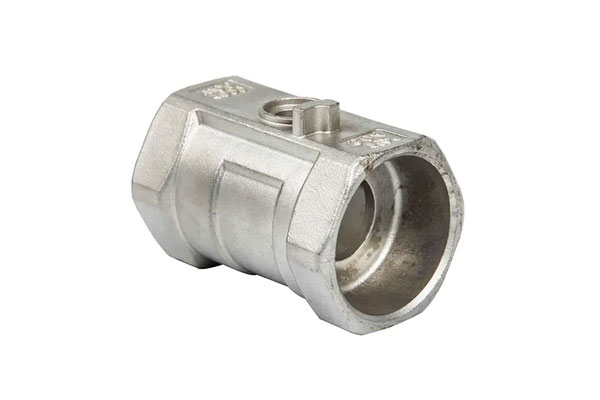
PH stainless steels are widely used in aerospace, hydraulic, reflan, and precision industrial components because they offer a very useful strength-to-corrosion-resistance balance.
In many programs, they are the strongest practical option within the stainless family.
Duplex stainless steels
Duplex stainless steels combine ferrite and austenite in a mixed microstructure,
and that gives them higher strength and improved resistance to chloride stress corrosion cracking compared with ordinary austenitic stainless steels.
Common cast grades include 2205-based duplex grades and related duplex casting grades used in aggressive service environments.
This family is especially useful for offshore, Kekau, and chloride-bearing service where 316L may be acceptable but not ideal.
The duplex structure makes the alloy attractive when a part must handle both pressure and corrosion exposure with better strength than standard austenitic steel.
Apana Apana Aluminum
Pūʻulu Kūʻaiʻo Aleminum alloys are used when haʻahaʻa haʻahaʻa, maikaʻi maikaʻi, and heat-treatable strength development are the priorities.
The most recognized investment-casting aluminum grades include 356, A356, A357, C355, A354, A201, and A206.
These alloys are widely used in lightweight engineering components, especially when the geometry is too complex or costly to machine from solid stock.

Mawaena o lakou, 356, A356, and A357 are especially important benchmark families.
They are favored because they combine castability with practical heat-treatment response and a strong balance of weight and performance.
This makes them common in aerospace, aitompetitive, a me nā'āpana hana kūpono.
Nickel-base superalloys
Nickel-base superalloys are the premium choice when ka ikaika kiʻekiʻe, ʻO ka pale oxidation, a me ke kū'ēʻana dominate the requirement set.
Nā helu maʻamau e komo ai Actoel 600, 625, 713, 718, 617, 690, Haynes 230, E Hoʻi hou 41, Mar-M-247, and Nickel X.
These alloys are often associated with demanding investment-casting applications such as turbine hardware and hot-section components.

Many nickel-base castings are produced in vacuum systems because the alloy family is used in environments where contamination control and high-temperature integrity are critical.
No kēia kumu, nickel alloys occupy one of the most specialized positions in the investment-casting landscape.
Cobalt-base alloys
Cobalt-base alloys are selected when the part must withstand ʻaʻa, hoʻopihaʻia, hot hardness, a me ka oxidation under severe service conditions.
Representative grades include CB3, CB6, CB12, CB21, CB93, as well as Stellite-type alloys and biomedical CoCrMo variants such as ASTM F75 / L605-related families.
This family is important in valve wear surfaces, nā'āpana'āpana kiʻekiʻe, and other parts where tribological performance matters as much as corrosion resistance.
Hoʻohālikelike ʻia me ke kila kila, cobalt alloys are much more specialized and usually much more expensive, but they solve problems that standard stainless grades cannot.
Nā Alloys Annays Alloys
Titanium investment casting is used when the design demands haʻahaʻa haʻahaʻa, ikaika kiʻekiʻe, and outstanding corrosion resistance, but it also requires very strict atmosphere control.
Nā helu maʻamau e komo ai Kumu 2 and Ti-6Al-4V Grade 5, the latter being the best-known titanium alloy in engineering and medical applications.

Titanium castings must be produced under vacuum or highly purified inert gas because titanium readily reacts with oxygen, nitrogen, and hydrogen at elevated temperature.
That requirement makes titanium one of the most technically demanding but also one of the most strategically valuable alloy families in investment casting.
Copper-base alloys
Copper-base alloys are used when the application needs ke ola, Ke kū'ē neiʻo Corrosionion, komo i ka hana, or decorative appearance.
Hana maʻamau copper investment-casting grades include Keihei C87500, silicon bronze C87200, C87300, C87600, and aluminum bronze C95200, C95300.
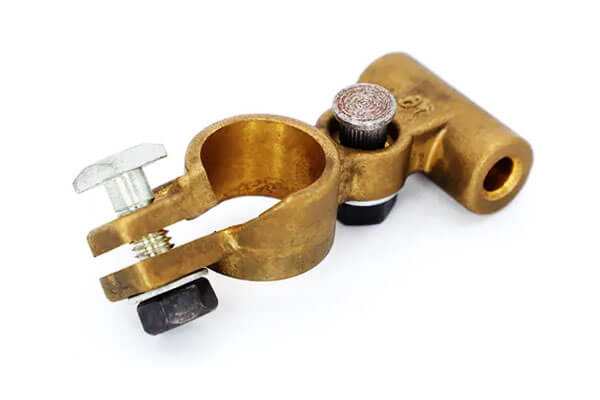
This family is often chosen for fittings, Nā Palaki'ā, and specialty components where thermal or electrical conductivity may be part of the functional requirement.
Bronze families are also attractive when corrosion resistance or wear resistance is more important than low mass.
3. Inherent Matching Mechanism Between Alloy Metallurgy and the Two Core Investment Casting Shell Technologies
The real boundary between nā wai wai and Silica S Slica Sol investment casting is set by metallurgy, not by marketing language.
The alloy’s melting behavior, oxidation sensitivity, solidification range, and surface-reaction tendency must match the shell’s thermal strength, permeibility, a me keʻano kūlohelohe.
I nā hua'ōlelo'ē aʻe, the shell is not just a mold; it is the alloy’s thermal and chemical operating environment.
Nā wai wai (Silika sodium) Shell Alloy Adaptation Logic
Water glass shells are the practical, cost-oriented solution.
They cure quickly, support fast batch turnover, and are widely described as lower-cost than silica sol systems, but they also deliver a rougher surface and less dimensional precision.
That makes them a better fit for alloys and parts that do not require premium shell reproduction, especially medium-precision structural castings with thicker sections.
From an alloy-selection standpoint, water glass shells are most naturally aligned with Nā Kahu Pūnaewele, nā puʻu haʻahaʻa haʻahaʻa, many brass and bronze systems, and other conventional industrial alloys.
These materials are generally stable enough to work within the process window of a sodium-silicate shell, and they do not usually demand the level of atmosphere protection required by titanium or the most reactive high-temperature superalloys.
The mechanism is straightforward: the process favors alloys whose pouring and solidification behavior can tolerate a shell system with good structural strength but moderate surface fidelity.
That is why water glass casting remains attractive for brackets, heavy-wall industrial parts, and cost-sensitive production runs where the casting blank can be finish-machined later if needed.
Silica Sol Colloidal Shell Alloy Adaptation Logic
Silica sol shells are the precision route. They are repeatedly described as delivering ʻoi aku ka maikaʻi o ka dimensional, lower surface roughness, and a longer shell-making cycle with higher cost than water glass systems.
That extra investment pays off when the alloy or the geometry demands finer detail, nā pā'ōpio, or tighter surface and tolerance control.

This is why silica sol is the better match for ʻO nā mea kanu lāʻau austetitic, PH stainless steels, ʻO nā mea kanu pīpī fuplex, Apana Apana Aluminum, copper-base alloys, Nickel-base superaralloys, and titanium alloys when those materials are being used in precision or high-performance castings.
The shell’s finer structure and better surface reproduction preserve the value of those alloy systems instead of degrading them with a rougher mold interface.
For reactive alloys, silica sol is especially important.
Titanium and many nickel-base systems require highly controlled processing atmospheres,
and titanium investment casting in particular is tied to vacuum or highly purified inert-gas protection because of the metal’s reactivity with oxygen, nitrogen, kolo hydrogen.
In those cases, the shell choice is part of the metallurgy, not merely part of the tooling.
Alloy Solidification Characteristics Governing Gating and Riser Design
The alloy’s solidification behavior should determine the feeding system, not the other way around.
Alloys with broader freezing ranges or more difficult feeding behavior need more deliberate directional-solidification control,
while alloys with narrower solidification behavior can often be fed more simply if the hot spot is properly placed.
That is why alloy metallurgy directly governs gating, riser layout, and hot-spot management in investment casting.
Alloys with wider solidification ranges
Nickel-base superalloys, ʻO nā mea kanu pīpī fuplex, and some other complex alloys are more demanding in feeding
because their solidification behavior can promote dispersed shrinkage or microporosity if the thermal path is not well controlled.
These alloys often benefit from denser riser logic and more careful sequential-solidification design.
Alloys with narrower freezing ranges
Carbon steels and some copper-base alloys usually concentrate shrinkage toward the final solidification hot spots,
which means a more centralized feeding strategy may be sufficient if the part geometry is well designed.
I kēlā mau hihia, the gating system should still be smooth and clean, but the riser network can often be less elaborate than for highly sensitive alloys.
High-oxidation-sensitivity alloys
Aluminum and titanium alloys are especially sensitive to oxide formation and gas entrapment,
so the gating system must minimize turbulence and preserve melt cleanliness.
For those alloys, the shell system and pouring practice must work together to avoid oxide folding, entrained gas, and surface-quality loss.
4. How to Select the Right Investment Casting Alloy
Start from the service environment
The first selection filter is the part’s operating environment.
If the component will live in ambient indoor service, a broad range of steel and aluminum alloys may work. If it will face seawater, chrlodes, kinopa, or heat, the acceptable alloy window narrows quickly.
In practical alloy-selection guides, corrosion environment, operating temperature, hoʻohui mīkini hoʻohui, Ke kaumaha, markinpalibility, and cost are the main decision variables, not alloy name alone.
Match the alloy family to the dominant requirement
A good rule is to let the dominant requirement drive the family choice.
Hoʻohana carbon and low-alloy steels when strength and cost balance are most important; ʻO nā mea kanu lāʻau austetitic when corrosion resistance and weldability are the main goals;
Apana Apana Aluminum when weight reduction matters; Nickel-base superaralloys when temperature and oxidation resistance dominate;
cobalt-base alloys when wear and hot hardness matter; and Nā Alloys Annays Alloys when low density and high specific strength must be combined with corrosion resistance.
These are the recurring family-level patterns across investment-casting references.
Check the casting atmosphere before you check the price
Some alloys can be investment cast in conventional foundry conditions, while others need vacuum or highly controlled inert processing.
Titanium is the clearest example: titanium casting must be done under vacuum or inert gas protection because the metal readily reacts with oxygen, nitrogen, and hydrogen at high temperature.
Nickel-base superalloys also often move into vacuum investment casting when the application is extreme-temperature or contamination-sensitive.
Treat heat treatment as part of the alloy choice
For many alloys, the as-cast condition is only the starting point.
Aluminum casting alloys such as 356, A356, and A357 are selected in part because they develop useful strength after heat treatment,
while precipitation-hardening stainless steels such as 17-4PH and 15-5PH derive much of their performance from aging.
If the post-cast thermal cycle is not practical for the alloy family, the alloy is not a good process fit even if the chemistry looks attractive on paper.
Balance property targets against lifecycle cost
The best alloy is not the strongest or the cheapest in isolation. It is the alloy that meets the service requirement with the least total cost over the part’s life.
A 316L stainless casting may be the right answer for a welded, corrosion-resistant industrial part; a duplex grade may be justified when chloride stress-corrosion resistance must be improved;
a nickel or cobalt alloy may be justified when heat or wear failure would be more expensive than the alloy itself.
That is the real investment-casting decision: service performance first, process cost second, purchase price third.
5. Process Implications by Alloy Family
Investment casting is one process, but the process settings are not the same for every alloy family.
The foundry must adjust atmosphere, shell behavior, hana ninini, ʻO ka hana wela, and inspection strategy to suit the alloy.
The table below summarizes the main process consequences by family.
| Rytyleʻohana | Main process implication | What the foundry must control | Typical practical consequence |
| KālekaʻAʻI / nā puʻu haʻahaʻa haʻahaʻa | Conventional investment-casting route with strong dependence on heat treatment. | Hana kūpono, shrinkage feeding, and post-cast normalization / quench-and-temper response. | Good structural value, broad use in machinery and industrial hardware. |
| ʻO nā mea kanu lāʻau austetitic | Good all-around castability, Ke kū'ē neiʻo Corrosionion, and welding behavior. | Carbon control in low-carbon grades, surface cleanliness, and weld-sensitive corrosion performance. | Widely used for valves, Nā kino kino, KahawaiOli, and general corrosion service. |
PH stainless steels |
Stronger stainless route, but aging heat treatment is part of the property package. | ʻO ka hopena hana, aging response, and dimensional stability during thermal processing. | Preferred where stainless parts need much higher strength than 316L. |
| Duplex stainless steels | Microstructure balance is critical; strength and SCC resistance depend on phase control. | Chemistry balance, cooling practice, and avoidance of phase imbalance. | Better choice than standard austenitic steels in chloride-heavy service. |
| Apana Apana Aluminum | Lightweight near-net-shape casting with strong dependence on heat treatment. | Ke kāohi neiʻo Poosity, Palapala hōʻoia, and aging response of families such as 356 / A356 / A357. | Best for weight-sensitive parts where geometry and machining reduction matter. |
Nickel-base superalloys |
Often need vacuum investment casting because of high-temperature contamination sensitivity. | Oxycongen / nitrogen control, Melt maʻemaʻe, and process stability under vacuum or inert atmosphere. | Used for turbine and hot-section parts where strength at temperature matters. |
| Cobalt-base alloys | Chosen for hot hardness and wear service, so defect tolerance is low. | Wear-sensitive geometry, hot-section integrity, and finish around abrasion-critical surfaces. | Used where wear and oxidation resistance justify the higher process burden. |
| Nā Alloys Annays Alloys | Must be melted and poured in vacuum or highly purified inert gas. | Absolute contamination control, atmosphere purity, and careful shell/material selection. | High-specific-strength parts for aerospace, Marine, Kekau, a me nā noi olakino. |
| Copper-base alloys | Generally easier to cast than titanium or nickel alloys, but still chemistry-sensitive. | Conductivity-driven quality, oxide control, and surface integrity where contact or decorative finish matters. | Common for fittings, conductive parts, and wear or decorative components. |
6. Full Lifecycle Economic Cost Analysis of Different Investment Casting Alloys
Total component cost consists of three core segments: raw material purchase cost,
hoʻomālamalama & casting processing cost and long-term in-service maintenance cost, determining cost-oriented alloy selection boundary.
Raw Material Cost Hierarchy:
ʻAihue kīwī < common aluminum alloy < conventional 304 kila kohu ʻole < 316L fesalless kila < Kāwili Kūlana < ʻO ka kila kila fuplex < precipitation hardening stainless steel < nickel superalloy < TC4 titanium alloy;
titanium raw material unit price reaches 7~11 times of 304 stainless steel due to complex Kroll smelting process and high energy consumption.
Foundry Processing Cost:
Water glass cast alloys (ʻaihue kīwī, common brass/aluminum) own lowest processing cost with mature low-investment equipment and high production yield;
silica sol high-end alloys (superalloy, Titanium) generate extra expenditure from vacuum melting,
high-grade refractory and strict atmosphere control, processing cost rises sharply.
Long-Term Lifecycle Comprehensive Cost:
Low-cost carbon/stainless steel require regular anti-corrosion maintenance and periodic replacement under marine/chemical corrosive environment accumulating high post-service expense;
titanium and nickel superalloy castings realize decades maintenance-free service under harsh working condition,
offsetting high initial investment via prolonged service life for large-scale long-cycle engineering projects.
7. HE KAHUI
| Rytyleʻohana | Typical application logic |
| Carbon and low-alloy steels | Nā'āpana hoʻonohonoho, pressure-related components, general industrial hardware. |
| ʻO nā mea kanu lāʻau austetitic | Nā Vilves, Nā kino kino, meaʻai, Kekau, Marine, and general corrosion-resistant parts. |
| PH stainless steels | Hydraulic parts, Nā Māhele kā Aerospace, Nā Pūnaewele Pūnaewele, and high-strength hardware. |
| Duplex stainless steels | Chloride-exposed industrial systems, chemical and marine service. |
Apana Apana Aluminum |
Lightweight aerospace, reflan, aitompetitive, a me nā mea hana uila. |
| Nickel mau | Nā huakaʻi kuʻuna, Pūnaehana Hoʻohui, marine diesel, hot-section and corrosion-critical parts. |
| Cobalt alloys | ʻAʻa, hoʻopihaʻia, high-temperature oxidation, and implant-related applications. |
| Nā Alloys Annays Alloys | Aerospace, Marine, Kekau, and implant applications. |
| Copper-base alloys | Conductive hardware, bronze fittings, nā'āpana paʻa, and decorative components. |
8. Hopena
Investment casting alloys constitute a multi-grade, multi-performance complementary material system covering low-cost iron-based structural materials to ultra-high-performance special titanium and superalloy,
whose core application logic hinges on the trade-off among metallurgical inherent property, process adaptability and comprehensive lifecycle economic benefit.
In modern precision foundry design, rational graded alloy matching and composite material structural layout gradually replace blind single-material full-component design,
maximizing respective material advantages of different investment casting alloys and striking optimal balance among component forming quality, processing yield and long-term service economic benefit.
FaqS
Why does titanium investment casting avoid ordinary silica-based ceramic shells?
Molten titanium violently reacts with SiO₂ inside silica refractory at high pouring temperature generating brittle titanium oxide contamination layer (α-case), deteriorating surface mechanical property;
calcium oxide neutral refractory serves exclusive shell material for titanium investment casting.
What alloy leads to most severe dispersed microporosity during investment casting?
Nickel-based superalloy with extra-wide solidification temperature range is most prone to interdendritic microporosity,
which can be effectively controlled via boron microalloying and optimized riser sequential feeding design.
Can investment casting replace forging for superalloy components?
Near-net-shape investment casting realizes complex inner cavity structure impossible via forging, suitable for intricate superalloy static components;
high-cycle dynamic load turbine rotating parts still adopt forging plus subsequent precision investment casting compound forming process.