


1. Hōʻikeʻike
Alloy 617 he superalloy kumu nickel i hoʻomohala ʻia no ka lawelawe wela wela koʻikoʻi.
It is widely recognized for its ability to maintain strength, resist oxidation, and retain structural integrity in environments where many conventional metals quickly lose performance.
I loko o kēiaʻenehana hou, it occupies an important niche between metallurgical robustness and practical manufacturability.
What makes Alloy 617 especially notable is not a single extraordinary property, but a balanced cluster of them: ka ikaika kiʻekiʻe, ʻO ka pale oxidation, carburization resistance, huhu, and code-recognized performance in demanding applications.
These characteristics make it relevant in gas turbines, chemical processing systems, mea lapaʻau wela, and advanced energy technologies.
2. What Is Alloy 617 Nickel alloy
Alloy 617, also designated INCONEL alloy 617, HAYNES 617, US N06617, and W. Nr. 2.4663a, he solid-solution strengthened nickel-chromium-cobalt-molybdenum alloy developed for severe high-temperature service.
It was originally developed for applications above 850° C (1562° F) and is recognized for combining high-temperature strength, ʻO ka pale oxidation, broad corrosion resistance, and practical fabricability.
It has been used in aircraft and land-based gas turbines, chemical manufacturing equipment, metallurgical processing facilities, and fossil and nuclear power-generation systems.
In materials terms, Alloy 617 is best understood as a heat-resistant structural alloy rather than a general-purpose corrosion alloy.
Its value lies in the way it preserves mechanical integrity and environmental resistance when temperature is high enough to challenge ordinary stainless steels and many lower-performance nickel alloys.
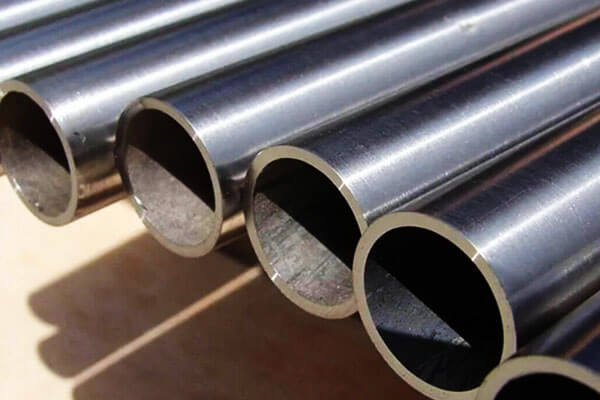
Nā hiʻohiʻona nui
- ʻO ka ikaika kiʻekiʻe a me keʻano o ka ikaika kiʻekiʻe
- Strong resistance to multiple corrosive environments
- Solid-solution strengthening for thermal stability
- Good fabricability for a high-temperature alloy
- Suitable for severe industrial service
- Designed for long-life elevated-temperature use
3. Chemical Composition of Alloy 617
The table below presents the limiting chemical composition published by Special Metals for INCONEL® alloy 617 (US N06617 / W. Nr. 2.4663a).
| Mua | Kaohi ana i ka haku mele (%) | Metallurgical role / significance |
| Nickel (I) | 44.5 min | Base metal of the alloy; provides the structural matrix and supports resistance to both reducing and oxidizing environments. |
| Chromium (Cr) | 20.0–24.0 | Essential for oxidation resistance and hot-gas durability; works with aluminum to form protective surface films. |
| 'Lelo'Slelo (CO) | 10.0-15.0 | Contributes to solid-solution strengthening and helps maintain high-temperature strength. |
Mybrideum (Mo) |
8.0–10.0 | Supports solid-solution strengthening and improves resistance in severe service environments. |
| Aluminum (AL) | 0.8-1.5 | Enhances oxidation resistance at elevated temperature, especially in combination with chromium. |
| KālekaʻAʻI (C) | 0.05-0.15 | Kept in a controlled range to support stable high-temperature performance without excessive carbide-related brittleness. |
'Eron (Lia) |
3.0 max | Controlled residual element; kept low to preserve nickel-base character. |
| Mang kāne (Mn) | 1.0 max | Minor residual/control element; limited to maintain chemistry stability. |
| Silikino (A) | 1.0 max | Minor residual/control element; limited to avoid unintended microstructural effects. |
| Sulfur (S) | 0.015 max | Harmful impurity; tightly restricted because it can impair hot-workability and toughness. |
Titanium (No) |
0.6 max | Minor addition controlled to prevent unwanted phase effects. |
| keleawe (Cu) | 0.5 max | Residual element kept low to preserve the alloy’s intended high-temperature behavior. |
| Būo (Na B) | 0.006 max | Trace-controlled element; kept extremely low because small changes can strongly affect grain-boundary behavior. |
4. Physical and Thermal Characteristics
Alloy 617 is a nickel-based superalloy whose physical and thermal behavior is defined by one central requirement: it must remain structurally reliable in severe high-temperature service.
The values below are taken from the official Special Metals datasheet for INCONEL® alloy 617.
Room-Temperature Physical Constants
| Waiwai | Waiwai | Koʻikoʻi ʻenekinia |
| Huakai | 0.302 lb / in³ | Indicates a dense nickel alloy with strong mass and thermal inertia. |
| Huakai | 8.36 Mg/m³ | Equivalent SI density; useful for weight calculations and design conversion. |
| Hoʻohemo melū | 2430–2510 °F | Shows strong high-temperature capability and a wide processing window. |
| Hoʻohemo melū | 1332–1380 °C | SI equivalent of the melting range, confirming elevated-temperature suitability. |
Specific heat at 78 ° F (26 ° C) |
0.100 Btu/lb·°F | Moderate heat capacity; relevant to transient heating and thermal response. |
| Specific heat at 78 ° F (26 ° C) | 419 J/kg·°C | SI equivalent; useful for thermal analysis and heat-balance calculations. |
| Electrical resistivity at 78 ° F (26 ° C) | 736 ohm-circ mil/ft | Reflects the alloy’s nickel-base character and lower conductivity than copper alloys. |
| Electrical resistivity at 78 ° F (26 ° C) | 1.22 μ · · m | SI equivalent; important in coupled thermal-electrical applications. |
Selected Temperature-Dependent Thermal Properties
| Keka ao (° C) | ʻO keʻano o ka uila (μ · · m) | Ka HōʻaʻO Kokua (W/m·°C) | Mean coefficient of linear expansion (μM / m · m · ° C) | wela kūikawā (J/kg·°C) |
| 20 | 1.222 | 13.4 | - | 419 |
| 100 | 1.245 | 14.7 | 11.6 | 440 |
| 200 | 1.258 | 16.3 | 12.6 | 465 |
| 300 | 1.268 | 17.7 | 13.1 | 490 |
| 400 | 1.278 | 19.3 | 13.6 | 515 |
| 500 | 1.290 | 20.9 | 13.9 | 536 |
| 600 | 1.308 | 22.5 | 14.0 | 561 |
| 700 | 1.332 | 23.9 | 14.8 | 586 |
| 800 | 1.342 | 25.5 | 15.4 | 611 |
| 900 | 1.338 | 27.1 | 15.8 | 636 |
| 1000 | 1.378 | 28.7 | 16.3 | 662 |
5. Mechanical Properties of Alloy 617 Nickel alloy
The tables below present the alloy’s published mechanical-property data in a structured way.
Unless otherwise noted, the values are for solution-annealed material from the Special Metals technical bulletin for INCONEL alloy 617.
Room-Temperature Mechanical Properties of Solution-Annealed Material
| Product form | Ikaika ikaika (ksi) | Ikaika ikaika (Mpa) | 0.2% ka ikaika (ksi) | 0.2% ka ikaika (Mpa) | Ewangantion (%) | Hālulu (Bnn) |
| Papaʻi, hot rolled | 106.5 | 734 | 46.7 | 322 | 62 | 172 |
| Bar, hot rolled | 111.5 | 769 | 46.1 | 318 | 56 | 181 |
| 'Ahuʻu, cold drawn | 110.0 | 758 | 55.6 | 383 | 56 | 193 |
| Sheet or strip, Ua'ōwiliʻia ke anuanu | 109.5 | 755 | 50.9 | 351 | 58 | 173 |
Ka ikaika kiʻekiʻe
Characterized by its exceptional creep-rupture strength at temperatures exceeding 1800°F (980° C) and its remarkable resistance to oxidation and carburization,
Alloy 617 is often the primary choice when structural integrity and environmental stability are non-negotiable.
Pale pale
One of the most critical features of the alloy is its ability to resist creep. Creep is the slow, time-dependent deformation that occurs under stress at elevated temperature.
In hot service, a material may fail not because it breaks immediately, but because it gradually deforms until it no longer holds shape or alignment. Alloy 617 is designed to resist exactly that kind of degradation.
Rupture resistance
Rupture performance is another key measure. A component may survive short-term loading but still fail under long-duration heat and stress.
Alloy 617 is used in applications where long-time structural reliability is essential, especially in code-regulated high-temperature service.
Fatigue and thermal cycling
Although Alloy 617 is not primarily a fatigue-specialist alloy, it performs well enough to be trusted in systems that undergo thermal cycling.
Repeated heating and cooling can induce stress from expansion and contraction, so a material’s ability to remain stable over cycles is important.
6. Kōkua Hōʻa (Corrosion a me ka paleʻana)
Alloy 617 is distinguished by more than mechanical stability. Its chemical resistance is one of the major reasons it is selected for demanding service environments.
ʻO ka pale oxidation
I ke kiʻekiʻe kiʻekiʻe, many metals rapidly form non-protective oxides that flake away and expose fresh material.
Alloy 617 resists this behavior well because its chromium- and aluminum-containing matrix supports protective surface film formation. This is especially important in hot-gas environments.
ʻO ka paleʻana o ka laweʻana
Carburization is a major issue in high-temperature furnaces and process equipment.
Carbon can diffuse into a metal and alter its surface properties, causing embrittlement or degradation.
Alloy 617 has strong resistance to carburizing atmospheres, which is one reason it is used in heat-treatment and furnace-related systems.
Resistance in mixed atmospheres
The alloy performs well in environments that may alternate between oxidizing and reducing conditions.
That makes it more versatile than materials optimized for only one type of atmosphere.
Corrosion behavior overview
| Environment type | Alloy 617 hana |
| Oxidizing hot gas | Strong resistance |
| Reducing atmosphere | Ke kū'ē maikaʻi |
| Carburizing environment | ʻO ke kū'ē maikaʻi loa |
| Mixed thermal-chemical service | Very strong overall behavior |
| Aqueous corrosion | Maikaʻi loa, but not its main design focus |
7. Manufacturing and Processing of Alloy 617
Alloy 617 is a high-performance nickel alloy, but it remains unusually practical for such a demanding material because it can be processed by conventional industrial methods.

Ka hana wela (Kākau, Kauwili, Hānehi)
Alloy 617 is commonly hot worked into sheet, papaʻi, Bar, kiole, and other semi-finished forms.
I ka hoʻomaʻamaʻa, hot working is used to achieve final geometry while preserving sound microstructure and adequate ductility.
The alloy’s supply in forged and rolled product forms reflects its compatibility with these standard hot-working routes.
For wrought material, the normal supply condition is Hoʻolilo, which supports subsequent forming and service performance.
Hot working is especially important for this alloy because it helps maintain the balance between fabricability and high-temperature capability.
I nā hua'ōlelo'ē aʻe, Alloy 617 is not merely “heat resistant”; it is also engineered to remain manufacturable by industrially familiar deformation processes.
Matchning a me ke kūkuluʻana
Alloy 617 can be formed by conventional shop methods, but like most nickel-base superalloys it should be treated as a difficult-to-machine material relative to carbon steels.
The alloy is supplied in a solution-annealed condition, which helps preserve formability and reduces processing complications.
Proper surface cleanliness is also important before any joining or secondary operation; the alloy should be free of grease, pono, sulfur compounds, crayon marks, and copper-bearing contamination in the joint area.
In manufacturing terms, the main point is that Alloy 617 is workable, but it rewards careful control.
Hoao, cutting conditions, and forming schedules should be selected with the alloy’s high-strength nickel-base character in mind.
Welding
Welding is one of Alloy 617’s strongest practical advantages. Haynes states that the alloy is readily welded by Gtaw, Kāmaʻa kikomua, Smaw, electron beam welding, a me ka paleʻana i ka welding.
It also notes that submerged arc welding is not recommended because of its high heat input and slow cooling, which can increase weld restraint and promote cracking.
Matching-composition filler metal is recommended for joining Alloy 617.
The welding guidance is straightforward and production-friendly:
- Preheat is not required.
- Interpass temperature should be kept below 200°F (93° C).
- Post-weld heat treatment is generally not required.
- The base metal should be thoroughly cleaned before welding.
That weldability is important because Alloy 617 is often used in fabricated assemblies rather than only in monolithic parts.
When a material can be joined reliably without demanding special preheat or mandatory PWHT, it becomes much easier to deploy in large high-temperature systems.
ʻO ka hana wela
For wrought Alloy 617, the normal supply condition is Hoʻolilo.
The recommended solution-annealing range is 2100–2150°F (1149–1177°C), with time adjusted to section thickness and followed by rapid cooling or water quenching for optimum properties.
This treatment supports the alloy’s intended combination of strength, kumaikalua, and long-term thermal stability.
The most important implication is that Alloy 617 is not a precipitation-hardened alloy that depends on post-aging to develop its core strength.
', its useful property profile is obtained and preserved through solution annealing and controlled fabrication practice.
That is one reason the alloy is attractive for high-temperature structural service: its strengthening strategy is stable rather than highly treatment-sensitive.
8. Advantages and Limitations of Alloy 617
Loaʻa
- Excellent high-temperature strength
- Strong oxidation resistance
- Good carburization resistance
- Stable performance in severe thermal environments
- Good fabricability relative to many superalloys
- Suitable for code-regulated critical service
- Strong long-life performance in hot gas environments
PAHUI
- High cost compared with steels and many stainless alloys
- Not intended for lightweight design
- More difficult to machine than common engineering alloys
- Not the best choice when room-temperature strength alone is the main criterion
- Over-specified for moderate service conditions
- Requires careful engineering judgment in welding and processing
9. Industrial Applications of Alloy 617 Nickel alloy
Alloy 617 is used in sectors where extreme heat and chemical attack create unusually demanding conditions.
Nā wahi hau
It is used in ducting, nā kini puhi ahi, nā laina hoʻololi, and other hot-section structures where oxidation resistance and high-temperature strength are essential.
Ke kālepaʻana
The alloy is valuable in equipment exposed to mixed gases, reactive atmospheres, and sustained heat. Components may include catalyst supports, furnace fixtures, and hot process hardware.
Heat-treatment equipment
Because it resists carburization and oxidation well, Alloy 617 is suitable for baskets, retorts, Nā Mea Mola, and furnace-related hardware.
Advanced energy systems
It has become important in advanced nuclear and high-temperature reactor concepts, especially where code qualification and long-duration structural reliability are necessary.
10. Hoʻohālikelike hoʻohālikelike: Alloy 617 vsa. Nā mea hoʻonani nickel-e pili ana
Alloy 617 ua maopopo loa ia e like me high-temperature specialist.
Compared with Inconel 625 a me ka inconel 718, it is more strongly oriented toward sustained hot service, ʻO ka pale oxidation, and structural stability at elevated temperature, oiai 625 is broader in corrosion service and 718 is primarily a high-strength, age-hardenable alloy.
| Waiwai / Focus | Alloy 617 | Actoel 625 | Actoel 718 |
| Rytyleʻohana | Solid-solution strengthened nickel-chromium-cobalt-molybdenum alloy. | Nickel-chromium-molybdenum alloy. | Ikaika-ikaika, corrosion-resistant nickel-chromium alloy. |
| Primary strengthening mechanism | Solid-solution strengthening from cobalt and molybdenum. | Solid-solution strengthening from molybdenum and niobium; precipitation hardening is not required. | Age hardening; the alloy is age-hardenable. |
| Main performance emphasis | Exceptional high-temperature strength, kūlākuai, a me ka paleʻana o ka oxidation; also resistant to carburizing gases. | ʻO ka paleʻana o ka corrossion, especially pitting and crevice corrosion resistance, plus high-temperature oxidation resistance. | Very high tensile, Kaluhi, hoka, and rupture strength, with strong weld-cracking resistance. |
Typical service temperature focus |
Designed for very high-temperature service; Special Metals states the alloy is attractive for components operating above 1800° F (980° C). | Service temperatures range from cryogenic to 1800° F (982° C). | Used from -423°F to 1300°F. |
| Kuupuiawi / ʻano oxidation | Strong oxidation resistance and resistance to a wide range of reducing and oxidizing media; also resistant to carburizing atmospheres. | Excellent resistance to severely corrosive environments, especially pitting and crevice corrosion, plus high-temperature oxidation. | Corrosions-resistant, but the published bulletin emphasizes strength and fabricability more than extreme hot-gas corrosion resistance. |
| Fabrication and weldability | Readily formed and welded by conventional techniques. | ʻOi loa ka fabricability, me ka hui pu ana. | Readily fabricated, even into complex parts; welding characteristics, especially resistance to postweld cracking, are outstanding. |
Nā noi maʻamau |
Petrochemical and thermal processing, nitric acid production, gas turbine engineering, ku loao, nā kini puhi ahi, and transition components. | Aerospace, nā wahi hau, Ke kālepaʻana, oil and gas extraction, ke kāohiʻana, manyʻenehana, and nuclear engineering. | Liquid-fueled rockets, aircraft and land-based gas-turbine components, cryogenic tankage, Nā mea paʻa, and instrumentation parts. |
| Best selection logic | Choose when very high temperature, ʻO ka pale oxidation, and long-term structural stability are dominant. | Choose when corrosion resistance is the priority, especially in aggressive chemical or marine service. | Choose when high strength and fatigue/rupture performance are the main targets, especially in aerospace and rotating machinery. |
11. Sustaintability, Recyclabiality, and Cost Considerations
Alloy 617 is a high-value material, so sustainability and lifecycle cost matter.
Recyclabiality
Like most nickel alloys, Alloy 617 he recyclable. Scrap recovery is important because nickel, 'lelo'Slelo, and molybdenum are valuable alloying elements.
Reuse of clean scrap supports both economic and environmental efficiency.
Kālā
The alloy is expensive relative to steels and many stainless steels. That cost reflects its composition, processing complexity, and performance level.
It is not typically chosen for simple service environments because cheaper options are usually sufficient.
Lifecycle value
Although initial cost is high, the alloy may offer strong lifecycle value in critical applications because it can reduce downtime, extend service life, and preserve performance under extreme conditions.
Sustainability perspective
Sustainability in this context is not only about recycling, but also about using the right material for the right environment.
Over-specifying a superalloy for a mild service condition wastes resources.
Under-specifying one for a severe environment creates failure risk. Alloy 617 is most sustainable when it is selected precisely where its full capability is needed.
12. Common Misconceptions About Alloy 617
Despite its widespread use in critical applications, several common misconceptions about Alloy 617 can lead to incorrect material selection, ka hoʻoiliʻana, or maintenance:
Misconceception 1: Alloy 617 is a precipitation-hardened alloy.
ʻOiaʻiʻo: Alloy 617 is a solid-solution strengthened alloy, not precipitation-hardened.
Its strength comes from the dissolution of cobalt, Mybridelu, and other elements into the nickel matrix—not from precipitates.
This means it does not require aging heat treatment, simplifying manufacturing .
Misconceception 2: Alloy 617 has poor corrosion resistance in aqueous environments.
ʻOiaʻiʻo: Alloy 617 has excellent corrosion resistance in both oxidizing and reducing aqueous environments, me ke kai kai, palaualelo, and acids.
Molybdenum enhances its resistance to reducing conditions, while chromium and aluminum protect against oxidation .
Misconceception 3: Alloy 617 can be replaced with lower-cost materials.
ʻOiaʻiʻo: For extreme high-temperature (≥1000°C) and high-corrosion applications, Alloy 617 has no cost-effective substitutes.
Lower-cost materials (E.g., kila kohu ʻole, Actoel 600) lack its high-temperature strength and creep resistance, leading to premature failure and higher lifecycle costs .
Misconceception 4: Alloy 617 is brittle at high temperatures.
ʻOiaʻiʻo: Alloy 617 maintains good ductility at high temperatures (35% elongation at 800°C), thanks to its stable austenitic microstructure.
It does not become brittle at elevated temperatures, making it suitable for load-bearing applications in extreme heat .
13. Hopena
Alloy 617 is a high-performance nickel alloy built for extreme thermal and chemical environments.
Its defining strengths are high-temperature strength, ʻO ka pale oxidation, carburization resistance, and long-term structural stability.
These qualities are supported by a carefully balanced chemistry built around nickel, Chromium, 'lelo'Slelo, Mybridelu, a me ka aluminum.
From a manufacturing standpoint, it remains practical enough to hot work, Wākē, huila, and fabricate into demanding components.
From a design standpoint, it occupies a premium position in the materials hierarchy: not the cheapest, not the lightest, but exceptionally capable where high-temperature reliability is essential.

