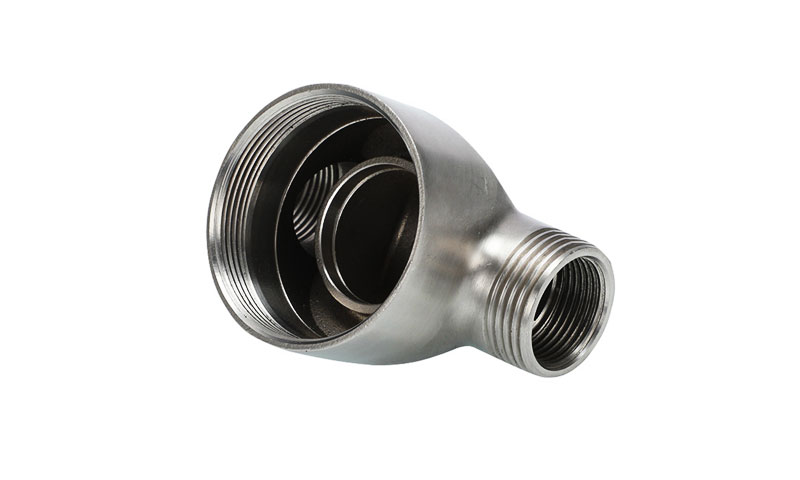
Découpe laser en acier inoxydable représente une avancée transformatrice dans la fabrication moderne, alliant la durabilité inhérente et la résistance à la corrosion de l'acier inoxydable à la précision et à l'efficacité de la technologie laser avancée.
Depuis son adoption industrielle dans les années 1970, La découpe au laser est passée d'un simple traitement de feuilles à une méthode hautement raffinée capable de produire des pièces complexes., composants haute tolérance dans une large gamme de nuances et d'épaisseurs d'acier inoxydable.
Animé par les exigences de précision, vitesse, et déchets de matériaux minimaux, cette technique est devenue indispensable dans des industries comme l'aérospatiale, automobile, dispositifs médicaux, transformation des aliments, et conception architecturale.
Au-delà de ses avantages mécaniques, La découpe laser de l'acier inoxydable soutient les tendances de la fabrication numérique, offrant une intégration transparente avec les systèmes CAO/FAO, lignes de production automatisées, et systèmes de contrôle qualité en temps réel.
1. Qu'est-ce que la technologie de découpe laser ?
Coupure laser est un sans contact, processus de découpe thermique de haute précision qui utilise un, faisceau laser haute puissance pour fondre, brûler, ou vaporiser le matériau le long d'un chemin défini.
Il est largement utilisé dans des industries allant de l'aérospatiale et de l'automobile à l'électronique et aux dispositifs médicaux en raison de sa rapidité., précision, et la flexibilité.
Principe de fonctionnement
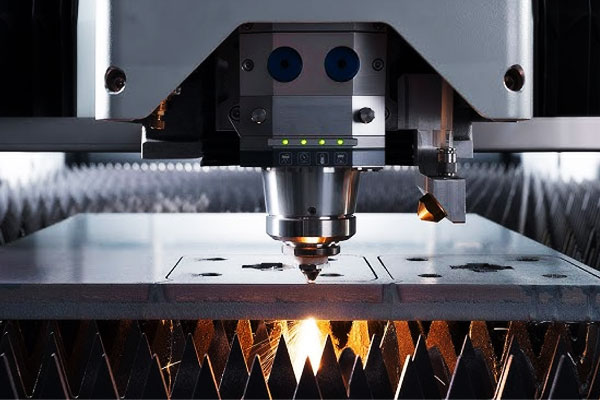
À la base, la découpe laser consiste à diriger une image cohérente, faisceau laser de haute intensité sur la surface de la pièce.
Le faisceau laser est généré dans un résonateur laser, où l'amplification de la lumière se produit par émission stimulée.
Le faisceau est ensuite guidé à travers une série de miroirs ou de fibres optiques jusqu'à une tête de coupe., où il est concentré dans un petit, endroit à haute énergie, souvent moins que 0.3 mm de diamètre.
Lorsque ce faisceau focalisé entre en contact avec la surface du matériau, il chauffe rapidement la zone ciblée jusqu'à son point de fusion ou de vaporisation.
L'énergie localisée intense fait fondre le matériau, brûler, ou sublimer, permettant au laser de couper la pièce avec une distorsion thermique minimale.
Composants clés
- Source laser: Les sources laser courantes incluent les lasers à fibre, Lasers CO₂, et Sd:Laser YAG, chacun avec des longueurs d'onde et des puissances de sortie différentes adaptées à des matériaux et des épaisseurs spécifiques.
- Optique de mise au point: Des lentilles ou des miroirs de précision concentrent le faisceau laser pour atteindre une densité de puissance extrêmement élevée (jusqu'à 10⁶ W/cm²), indispensable pour une coupe efficace.
- Gaz d'assistance: Un jet de gaz coaxial (comme l'oxygène, azote, ou air comprimé) est dirigé le long du faisceau laser pour éliminer le matériau fondu ou vaporisé de la saignée, assurer une coupe nette.
Le type de gaz d'assistance influence également le mécanisme de coupe et la qualité des bords.. - Système de contrôle de mouvement: Les moteurs contrôlés par CNC déplacent la tête laser ou la pièce le long de trajectoires programmées, permettant des formes et des conceptions complexes avec répétabilité et rapidité.
Mécanismes de découpe laser
La découpe laser fonctionne via trois mécanismes principaux, en fonction du matériau et du gaz utilisés:
- Découpe par fusion (Fondre et souffler):
Le laser fait fondre le matériau, et un gaz d'assistance inerte (généralement de l'azote) souffle le matériau fondu loin de la saignée.
Cette méthode produit du propre, bords sans oxyde, idéal pour l'acier inoxydable et l'aluminium. - Coupe réactive (Découpage à la flamme):
Utiliser l'oxygène comme gaz d'assistance, le faisceau laser initie une réaction exothermique avec le matériau, ajouter de l'énergie au processus de coupe et augmenter la vitesse de coupe, surtout dans les aciers au carbone.
Cependant, cela peut entraîner des bords oxydés. - Découpe par sublimation:
Le matériau se vaporise directement du solide au gaz sans fondre. Cette méthode est typique pour les matériaux non métalliques comme les plastiques, bois, et composites, offrant un minimum de zones affectées par la chaleur.
2. Sources laser couramment utilisées
Le choix de la source laser est un facteur critique dans l'efficacité, qualité, et la rentabilité de la découpe laser de l'acier inoxydable.
Différents types de laser varient en longueur d'onde, puissance de sortie, qualité du faisceau, et caractéristiques opérationnelles, ce qui les rend adaptés à des applications et des épaisseurs de matériaux spécifiques.
Les trois sources laser les plus couramment utilisées dans la découpe de l'acier inoxydable sont Lasers CO₂, lasers à fibre, et sd: Laser YAG.

Lasers CO₂
- Longueur d'onde: Environ 10.6 micromètres (μm)
- Principe de fonctionnement: Les lasers CO₂ sont des lasers à gaz où un mélange de dioxyde de carbone, azote, et l'hélium gazeux est excité électriquement pour produire une lumière laser.
- Forces:
-
- Une technologie bien établie avec des décennies d’utilisation industrielle.
- Puissances de sortie élevées allant de quelques centaines de watts à des dizaines de kilowatts, adapté à la coupe d'acier inoxydable épais.
- L'excellente qualité du faisceau permet des coupes précises avec une bonne finition des bords.
- Limites:
-
- Installations relativement grandes et complexes en raison de la manipulation des gaz et de la conception de la cavité laser.
- Nécessite des miroirs pour guider le faisceau laser, entraînant des besoins de maintenance et des problèmes d'alignement potentiels.
- Une longueur d'onde plus longue entraîne moins d'absorption par les métaux, ce qui peut réduire l'efficacité de coupe sur les matériaux réfléchissants comme l'acier inoxydable.
- Applications: Largement utilisé pour couper des tôles d'acier inoxydable moyennes à épaisses, surtout là où une puissance élevée est requise.
Lasers à fibre
- Longueur d'onde: Autour 1.07 micromètres (μm)
- Principe de fonctionnement: Les lasers à fibre génèrent de la lumière laser via des fibres optiques dopées pompées par des lasers à diode, produire un faisceau cohérent transmis à travers la fibre elle-même.
- Forces:
-
- Absorption plus élevée dans les métaux en raison d'une longueur d'onde plus courte, rendre les lasers à fibre plus efficaces pour couper l'acier inoxydable.
- Compact, robuste, et peu d'entretien puisqu'il n'y a pas de miroirs - la transmission du faisceau se fait via des fibres optiques.
- Excellente qualité de faisceau avec une focalisation élevée, permettant des coupes très fines et des vitesses plus élevées.
- Généralement plus économe en énergie avec des coûts opérationnels inférieurs.
- Durées de vie opérationnelles plus longues avec moins de temps d'arrêt.
- Limites:
-
- La puissance est généralement limitée à quelques kilowatts, bien que les lasers à fibre haute puissance soient de plus en plus disponibles.
- Peut nécessiter différentes configurations ou configurations de gaz d'assistance pour les matériaux très épais par rapport aux lasers CO₂.
- Applications: Idéal pour la coupe d'acier inoxydable d'épaisseur fine à moyenne, micro-usinage, et applications nécessitant une haute précision.
sd: YAG (Grenat d'aluminium et d'yttrium dopé au néodyme) Lasers
- Longueur d'onde: Environ 1.06 micromètres (μm)
- Principe de fonctionnement: Lasers à semi-conducteurs où un Nd:Le cristal YAG est pompé optiquement par des lampes flash ou des diodes pour émettre des faisceaux laser pulsés ou continus.
- Forces:
-
- Capable de puissances crêtes très élevées en mode pulsé, adapté à la découpe de précision et au micro-usinage.
- Bonne qualité de faisceau et capacité à couper des matériaux réfléchissants comme l'acier inoxydable.
- Limites:
-
- Généralement moins efficace et plus exigeant en maintenance par rapport aux lasers à fibre.
- Des tailles de points plus petites et une puissance moyenne inférieure limitent leur utilisation dans les découpes à grand volume..
- Exigences de refroidissement et de maintenance plus complexes.
- Applications: Souvent utilisé dans des applications spécialisées, comme la micro-découpe, soudage, ou marquage de pièces en acier inoxydable où la précision est essentielle.
3. Pourquoi l'acier inoxydable nécessite une coupe spécialisée
Acier inoxydable, connu pour son excellente résistance à la corrosion, résistance mécanique, et attrait esthétique, est largement utilisé dans des secteurs tels que l'aérospatiale, médical, automobile, transformation des aliments, et architecture.
Cependant, ces mêmes propriétés qui rendent l'acier inoxydable désirable présentent également des défis uniques en matière d'usinage et de découpe..
Propriétés matérielles de l'acier inoxydable
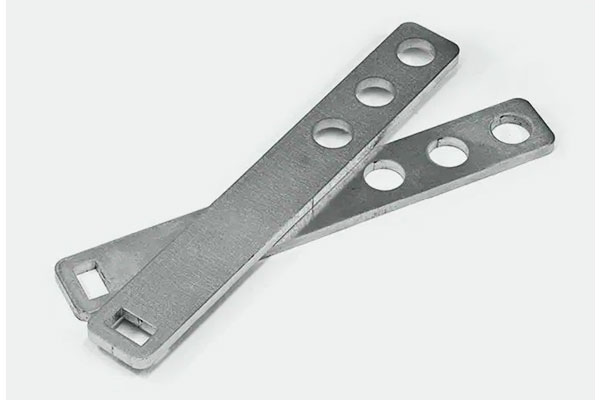
L'acier inoxydable n'est pas un alliage unique mais une famille d'alliages à base de fer avec un minimum de 10.5% teneur en chrome. Ses propriétés uniques incluent:
- Haute réflectivité: Surtout aux longueurs d'onde infrarouges utilisées par de nombreux systèmes laser, l'acier inoxydable reflète une partie importante de l'énergie laser,
rendant le couplage de faisceau initial plus difficile et nécessitant une puissance plus élevée ou des lasers spécialisés (Par exemple, lasers à fibre avec des longueurs d'onde plus courtes). - Faible conductivité thermique: Par rapport à l'acier au carbone ou à l'aluminium, l'acier inoxydable ne dissipe pas la chaleur aussi rapidement.
Cela peut entraîner une surchauffe localisée si le processus n'est pas optimisé, augmentant le risque de distorsion thermique ou de mauvaise qualité des bords. - Point de fusion élevé: Avec une plage de fusion d'environ 1 400 à 1 530 °C, l'acier inoxydable nécessite une densité d'énergie plus élevée pour initier et maintenir la coupe.
- Formation d'oxyde: Les aciers inoxydables ont tendance à former des couches d'oxyde riches en chrome à haute température.
Sans protection contre les gaz appropriée, cela peut affecter la soudabilité et la finition de surface après la découpe.
Limites des méthodes de coupe traditionnelles
Techniques de coupe conventionnelles telles que le cisaillement, sciage, ou le poinçonnage mécanique se heurte à plusieurs limitations lorsqu'il est appliqué à l'acier inoxydable:
- Usure: La dureté et la ténacité de l'acier inoxydable peuvent entraîner une dégradation rapide des outils.
- Formation de bavures: Les méthodes mécaniques laissent souvent des bavures et des aspérités, nécessitant des opérations d'ébavurage supplémentaires.
- Zones touchées par la chaleur (ZAT): Des techniques telles que le coupage au plasma ou à l'oxycoupage génèrent de larges ZAT, altérant potentiellement les propriétés métallurgiques près du bord coupé.
- Flexibilité de conception limitée: Les processus mécaniques sont moins adaptés à la découpe de géométries complexes ou de rayons serrés sans outillage coûteux.
Exigences de précision et de propreté
De nombreuses industries qui utilisent l'acier inoxydable ont des tolérances et des normes esthétiques strictes.:
- Dispositifs médicaux: Exiger sans bavure, coupes sans contamination avec une altération thermique minimale pour préserver la biocompatibilité.
- Équipement de transformation des aliments: Exige hygiénique, surfaces lisses qui empêchent l’accumulation de bactéries.
- Panneaux architecturaux: Il s'agit souvent de finitions décoratives ou de surfaces polies miroir qui ne doivent pas être endommagées ou oxydées lors de la découpe..
Coupure laser, lorsqu'il est correctement configuré, excelle à répondre à ces exigences en fournissant:
- Précision dimensionnelle élevée
- Déformation mécanique minimale
- Faire le ménage, bords sans oxyde (surtout lors de l'utilisation de gaz d'assistance à l'azote)
Sensibilité de la surface et qualité de finition
De nombreuses nuances d'acier inoxydable sont utilisées dans le poli, brossé, ou finitions à motifs qui doivent être préservées pendant le traitement.
Les méthodes mécaniques risquent de rayer ou de déformer ces surfaces. Coupure laser, notamment avec les lasers à fibre et les têtes de découpe sans contact, évite le contact mécanique et préserve l’intégrité de la surface.
4. Considérations spécifiques à la nuance d'acier inoxydable
Notes austénitiques (304, 316)
- Défis de coupe: Une ductilité élevée entraîne la formation de bavures; pression d'azote optimisée (2 MPA) et 1.5 La puissance du laser à fibre kW minimise la hauteur des bavures à <0.05mm.
- Applications pour l'industrie alimentaire: 316L coupé à l'azote répond aux normes FDA, avec rugosité de surface Ra < 0.8μm pour équipement pharmaceutique.
Nuances martensitiques (410, 420)
- Impact de dureté: 420 acier inoxydable (40 HRC) nécessite 20% puissance laser supérieure à celle 304 en raison d'une conductivité thermique accrue.
- Applications d'outillage: 410 coupé avec de l'oxygène à 1.2 m/min produit des bords adaptés aux lames de couteaux, avec des angles de bord de 8 à 12° réalisables.
Grades durcissant aux précipitations (17-4 PH)
- Sensibilité au traitement thermique: Découpe à l'état recuit en solution (Condition A) empêche le durcissement dans la ZAT. Vieillissement post-coupe (H900) restaure la résistance à la traction 1,310 MPA.
- Utilisation aérospatiale: 17-4 Les composants du réservoir de carburant PH découpés avec des lasers à fibre de 5 kW sont présentés <0.1mm écart dimensionnel, répondant aux normes AS9100D.
5. Paramètres clés du processus de découpe laser de l'acier inoxydable
La réalisation de coupes de haute qualité dans l'acier inoxydable à l'aide de la technologie laser dépend du contrôle minutieux de plusieurs paramètres critiques du processus..
Ces paramètres influencent la qualité de coupe, vitesse, finition des bords, zone touchée par la chaleur (ZAT), et l'efficacité globale.

Puissance laser
- Définition: La puissance de sortie du faisceau laser, généralement mesuré en watts (W) ou kilowatts (kW).
- Impact: Une puissance laser plus élevée permet de couper des matériaux plus épais et des vitesses de coupe plus rapides.
Cependant, une puissance excessive peut provoquer une fonte excessive, gauchissement, ou une zone affectée par la chaleur plus large. - Gamme typique: Pour l'acier inoxydable, la puissance du laser varie de quelques centaines de watts (pour feuilles fines) jusqu'à 10 kW ou plus (pour plaques épaisses).
Vitesse de coupe
- Définition: La vitesse à laquelle la tête laser ou la pièce se déplace l'une par rapport à l'autre, généralement en millimètres par seconde (mm / s) ou mètres par minute (m / mon).
- Impact: L'augmentation de la vitesse améliore la productivité mais peut réduire la qualité de coupe si l'énergie laser est insuffisante pour pénétrer complètement dans le matériau..
Une vitesse trop lente entraîne un apport de chaleur excessif et une mauvaise qualité des bords. - Optimisation: Doit être équilibré avec la puissance du laser et l'épaisseur du matériau pour des coupes nettes sans scories ni scories.
Type et pression du gaz d’assistance
- Types:
-
- Oxygène (O₂): Couramment utilisé pour la coupe réactive de l'acier inoxydable, favorisant l'oxydation et améliorant l'efficacité de la coupe.
- Azote (N₂): Utilisé pour la coupe inerte afin d'éviter l'oxydation, produisant des bords plus propres sans décoloration.
- Air comprimé: Parfois utilisé comme alternative rentable mais peut provoquer une oxydation.
- Pression: varie généralement de 0.5 à 20 bar en fonction du type de gaz et de l'épaisseur du matériau.
- Impact: La pression du gaz aide à expulser le métal en fusion hors de la saignée, influencer la qualité de coupe, finition des bords, et apport de chaleur.
Position de mise au point
- Définition: La position relative du point focal du faisceau laser par rapport à la surface du matériau.
- Impact: Un positionnement correct de la mise au point est vital pour une densité d'énergie optimale au niveau de la zone de coupe. La mise au point peut être définie:
-
- À la surface du matériau,
- Légèrement au-dessus (défocalisé),
- Légèrement sous la surface.
- Effet: Une mauvaise mise au point entraîne une mauvaise pénétration, large encoche, ou une fonte excessive.
Fréquence et durée des impulsions (pour Lasers Pulsés)
- Fréquence d'impulsion: Nombre d'impulsions laser par seconde (HZ).
- Durée d'impulsion: Longueur de chaque impulsion laser (microsecondes ou nanosecondes).
- Impact: Contrôle l'énergie délivrée par impulsion. Une fréquence élevée avec des impulsions courtes peut réduire l'apport de chaleur, bénéfique pour l'acier inoxydable fin ou les coupes de précision.
Distance de sécurité
- Définition: La distance entre la buse de la tête de découpe laser et la surface du matériau.
- Impact: Trop près peut endommager la buse ou provoquer une accumulation de éclaboussures; trop réduit l'efficacité du jet de gaz et la qualité de coupe.
- Gamme typique: 0.5 à 2 mm pour la coupe de l'acier inoxydable.
Largeur de saignée
- Définition: La largeur du matériau enlevé par le faisceau laser.
- Impact: Affecte la précision dimensionnelle et l’utilisation des matériaux.
- Facteurs d'influence: Taille du point laser, pouvoir, et vitesse de coupe.
6. Avantages de la découpe laser de l'acier inoxydable
La découpe laser est devenue l'une des méthodes privilégiées pour le traitement de l'acier inoxydable en raison de ses nombreux avantages par rapport aux techniques de découpe traditionnelles..

Coupes de précision et de haute qualité
- Largeur d'encoche minimale: La découpe au laser produit un trait de scie extrêmement étroit (largeur de coupe), souvent moins que 0.2 mm, ce qui entraîne un gaspillage de matériaux minimal et des tolérances plus strictes.
- Bords nets: La zone affectée par la chaleur (ZAT) est très petit, réduisant la déformation et la distorsion.
Les bords sont généralement lisses et exempts de bavures, éliminant souvent le besoin de finition secondaire. - Géométries complexes: Les faisceaux laser peuvent être contrôlés avec précision avec des systèmes CNC, permettant la découpe de formes complexes, détails fins, et des angles vifs difficiles à obtenir avec des méthodes mécaniques.
Rapidité et efficacité
- Traitement rapide: La découpe laser peut fonctionner à des vitesses élevées, notamment sur les tôles inox de fines à moyennes épaisseurs (jusqu'à ~15 mm), réduisant considérablement les délais de production.
- Compatibilité d'automatisation: L'intégration avec les systèmes CNC et robotiques permet une, opération sans surveillance, améliorer le débit et réduire les coûts de main-d'œuvre.
- Temps de configuration réduit: La nature sans contact signifie qu'il n'y a pas d'usure de l'outil ni de changement de configuration mécanique, permettant une commutation rapide entre différents travaux de coupe.
Polyvalence et flexibilité
- Large gamme d'épaisseurs: Les systèmes de découpe laser peuvent traiter des tôles d'acier inoxydable allant de feuilles très fines à plusieurs centimètres d'épaisseur avec des réglages de puissance et des gaz d'assistance appropriés..
- Plusieurs options de gaz: Utilisation de différents gaz d'assistance (azote, oxygène, air) permet d'adapter les processus de découpe pour optimiser la vitesse, qualité des bords, et contrôle de l'oxydation.
- Compatibilité des matériaux: Hormis l'inox, les lasers peuvent couper une variété de métaux et de non-métaux avec des ajustements mineurs, offrant une polyvalence aux lignes de production mixtes.
Rentabilité
- Réduction des déchets de matériaux: Un trait de scie étroit et une grande précision réduisent les taux de rebut.
- Coûts de main-d'œuvre réduits: L'automatisation réduit le besoin de manipulation et d'intervention manuelles.
- Usure minimale des outils: Puisque la découpe se fait avec un faisceau laser, il n'y a pas de contact physique ni d'usure avec l'outil, réduire les dépenses de maintenance.
- Efficacité énergétique: Les lasers à fibre modernes consomment moins d'énergie que la découpe mécanique traditionnelle, contribuant aux économies globales sur les coûts opérationnels.
Avantages pour l'environnement et la sécurité
- Processus sans contact: Minimise les contraintes mécaniques sur le matériau et réduit les risques sur le lieu de travail liés aux outils tranchants ou aux débris de coupe.
- Processus plus propre: Génère moins de poussière et de bruit par rapport au coupage plasma ou mécanique.
- Utilisation réduite des consommables: Contrairement aux méthodes de coupe abrasives, la découpe laser ne nécessite pas de lames ou de disques consommables, Réduire les déchets.
Des opportunités améliorées de conception et d’innovation
- Prototypage rapide: La capacité de découper rapidement et précisément des formes complexes accélère les itérations de conception et le développement de produits..
- Personnalisation: Les commandes en petits lots ou personnalisées sont réalisables et rentables grâce à des changements d'outillage minimes.
- Fabrication de fonctionnalités micro et fines: La découpe laser peut produire des coupes extrêmement fines adaptées aux applications de haute précision en électronique, dispositifs médicaux, et pièces décoratives en acier inoxydable.
7. Limites et défis de la découpe laser de l'acier inoxydable
Alors que la découpe laser offre de nombreux avantages pour le traitement de l'acier inoxydable, cela présente également certaines limites et défis qui doivent être soigneusement gérés pour garantir des résultats optimaux.
Limitations d'épaisseur
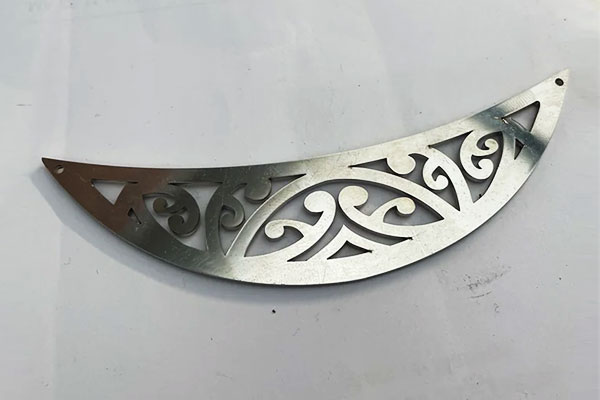
- Efficacité réduite sur les matériaux épais: La découpe laser est la plus efficace pour les tôles d'acier inoxydable d'épaisseur fine à moyenne., généralement jusqu'à 15-20 mm.
La découpe de sections plus épaisses nécessite une puissance laser plus élevée et des vitesses plus lentes, ce qui peut augmenter les coûts et les délais de traitement. - Zone touchée par la chaleur (ZAT) Croissance: À mesure que l'épaisseur augmente, l'apport de chaleur nécessaire pour fondre à travers le matériau augmente, provoquant une plus grande ZAT.
Cela peut entraîner une distorsion thermique, changements métallurgiques, et qualité des bords dégradée.
Réflectivité de surface et qualité des matériaux
- Haute réflectivité: La surface réfléchissante de l'acier inoxydable peut provoquer la réflexion du faisceau laser, conduisant à des inefficacités, coupe instable, ou même des dommages à l'optique laser.
Les lasers à fibre atténuent ce phénomène plus efficacement que les lasers CO₂, mais nécessitent tout de même un réglage minutieux des paramètres.. - Variabilité matérielle: Variations dans la composition de l'acier inoxydable, finition de surface, ou les revêtements peuvent affecter l'absorption du laser et la qualité de découpe, nécessitant des ajustements de processus.
Qualité des bords et formation de scories
- Scories sur les bords coupés: Une mauvaise sélection de gaz ou une pression de gaz d'assistance insuffisante peut faire adhérer le matériau fondu au bord coupé. (scories), nécessitant un nettoyage ou un meulage secondaire.
- Stries et rugosités: À des vitesses de coupe plus élevées ou avec des matériaux plus épais, des stries ou des textures de bords rugueux peuvent se développer, ayant un impact sur l'esthétique ou l'ajustement mécanique.
Aider à la sélection et aux coûts du gaz
- Dépendance au gaz: Le choix du gaz d’assistance (azote, oxygène, ou air) influence considérablement la qualité de coupe, vitesse, et oxydation:
-
- Oxygène: Favorise une coupe plus rapide avec l'oxydation mais peut provoquer des, bords oxydés.
- Azote: Produit propre, bords sans oxyde mais est plus cher et peut réduire la vitesse de coupe.
- Air: Une option rentable mais de qualité moins constante.
- Coûts opérationnels: Gaz de haute pureté, surtout l'azote, contribuer à l’augmentation des dépenses de fonctionnement.
Équipement et entretien
- Investissement initial élevé: Machines de découpe laser avancées, lasers à fibre particulièrement puissants, nécessitent un investissement en capital important.
- Sensibilité optique: L'optique laser est sensible à la contamination et aux dommages causés par les faisceaux réfléchis ou la poussière., nécessitant un entretien et un alignement réguliers.
- Opération qualifiée: Une découpe laser optimale nécessite des opérateurs et des ingénieurs formés pour gérer les paramètres, résoudre les problèmes, et effectuer une maintenance préventive.
Effets thermiques et distorsion
- Contraintes thermiques: La chaleur concentrée du laser peut induire des contraintes thermiques provoquant une déformation, en particulier dans les pièces en acier inoxydable fines ou finement découpées.
- Changements microstructuraux: Une exposition prolongée à la chaleur peut altérer la microstructure de l'acier inoxydable près du bord coupé., affectant la résistance à la corrosion et les propriétés mécaniques.
Limites de la découpe de formes 3D complexes
- Découpe principalement 2D: La plupart des systèmes de découpe laser sont optimisés pour les feuilles plates ou les simples contours 3D.
Les formes 3D complexes ou les sections épaisses nécessitent souvent des méthodes alternatives telles que le soudage laser ou l'usinage laser 5 axes.. - Profondeur de pénétration limitée: La distance focale et la puissance du laser limitent la profondeur et l’angle de coupe, polyvalence limitante pour certaines applications.
8. Applications de la découpe laser de l'acier inoxydable
La découpe laser de l'acier inoxydable est devenue une technologie essentielle dans diverses industries en raison de sa précision., vitesse, et polyvalence.
Sa capacité à produire des conceptions complexes avec des bords de haute qualité le rend idéal pour de nombreuses applications de fabrication et de fabrication..

Industrie automobile
- Fabrication de composants: La découpe laser est largement utilisée pour produire des pièces précises pour les moteurs automobiles, systèmes d'échappement, et composants de châssis en tôles et plaques d'acier inoxydable.
- Prototypage et personnalisation: La technologie permet un prototypage rapide et des pièces personnalisées avec des géométries complexes, aider les ingénieurs automobiles à tester les conceptions rapidement et efficacement.
- Éléments décoratifs: La découpe au laser permet la création de garnitures complexes, insignes, et des grilles aux bords nets et aux motifs détaillés.
Aérospatial et aviation
- Composants structurels: Pièces en acier inoxydable pour châssis d'avions, moteurs, et les trains d'atterrissage nécessitent souvent une résistance élevée et une résistance à la corrosion, obtenu grâce à une découpe laser de précision.
- Réduction du poids: La capacité de la découpe laser à produire des matériaux légers, les formes complexes aident les fabricants de l'aérospatiale à optimiser l'intégrité structurelle tout en minimisant le poids.
- Tolérances étroites: Les composants aérospatiaux nécessitent des tolérances strictes et des finitions lisses, ce que la découpe laser peut offrir de manière constante.
Fabrication de dispositifs médicaux
- Instruments chirurgicaux: La découpe laser de l'acier inoxydable est essentielle à la fabrication de pièces tranchantes., stérile, et des outils chirurgicaux précis tels que des scalpels, forceps, et des ciseaux.
- Implants et prothèses: La découpe au laser permet la production de pièces complexes, implants biocompatibles et composants prothétiques avec des spécifications rigoureuses.
- Équipement médical: La découpe laser est utilisée pour fabriquer des boîtiers et des pièces pour appareils de diagnostic et de traitement., où la précision et la propreté sont primordiales.
Architecture et construction
- Panneaux décoratifs: La découpe laser permet aux architectes de créer des, panneaux artistiques en acier inoxydable, écrans, et des façades qui allient esthétique et durabilité.
- Éléments structurels: Découpe de précision de composants en acier inoxydable pour structures de support, supports, et les accessoires améliorent la qualité et la sécurité de la construction.
- Luminaires et raccords personnalisés: Eléments en inox sur mesure comme les rampes d'escalier, balustrades, et la signalétique bénéficient de la flexibilité de la découpe laser.
Industrie des aliments et des boissons
- Équipement Sanitaire: La résistance à la corrosion de l’acier inoxydable le rend idéal pour les environnements hygiéniques. La découpe laser est utilisée pour fabriquer des réservoirs, tuyaux, et des équipements de transformation répondant à des normes de propreté strictes.
- Machines d'emballage: Les pièces en acier inoxydable découpées avec précision améliorent la fiabilité et l'efficacité des machines d'emballage et d'embouteillage alimentaires..
- Composants décoratifs et fonctionnels: Des éléments personnalisés en acier inoxydable découpés au laser sont utilisés dans les appareils de cuisine et les équipements de restauration commerciale..
Électronique et industrie électrique
- Boîtiers et boîtiers: La découpe laser produit des boîtiers précis en acier inoxydable pour les appareils électroniques, offrant protection et résistance à la chaleur.
- Microfabrication: Petit, composants détaillés tels que les connecteurs, contacts, et les pièces de blindage bénéficient de la précision et de la répétabilité de la découpe laser.
- Dissipateurs thermiques et systèmes de refroidissement: Les pièces personnalisées en acier inoxydable découpées au laser aident à gérer la dissipation thermique dans les assemblages électroniques.
Art et fabrication sur mesure
- Sculptures et installations artistiques: Les artistes exploitent la découpe laser pour créer des conceptions et des motifs complexes en acier inoxydable qui seraient difficiles, voire impossibles à réaliser avec les méthodes traditionnelles..
- Bijoux et accessoires personnalisés: La découpe au laser permet d'obtenir des pièces en acier inoxydable détaillées et délicates avec des bords lisses et des formes complexes.
- Signalisation et image de marque: Les entreprises utilisent des panneaux et des logos en acier inoxydable découpés au laser pour plus de durabilité et une finition professionnelle..
9. Contrôle qualité et normes
Garantir la plus haute qualité dans la découpe laser de l'acier inoxydable implique un contrôle rigoureux de la précision dimensionnelle., qualité des bords, et l'intégrité des matériaux.
Le respect des normes internationales et l'utilisation de méthodes de test avancées sont essentiels pour obtenir des résultats fiables et cohérents..
Précision dimensionnelle
- Plages de tolérance:
La découpe laser de l'acier inoxydable permet d'obtenir des tolérances serrées en fonction de l'épaisseur du matériau. Pour feuilles fines (1–3 mm), les tolérances dimensionnelles typiques sont de ±0,1 mm.
Pour des plaques plus épaisses allant de 10 à 20 mm, les tolérances s'élargissent à ±0,3 mm, conformément à ISO 2768-M (degré de tolérance moyen).
Ces normes garantissent que les pièces répondent aux spécifications de conception pour un assemblage et un fonctionnement précis. - Classes de qualité de pointe:
Selon En iso 9013, la qualité des bords est classée selon la rugosité de la surface (Rampe):
-
- Classe 1: Rampe < 2.5 μm, adapté aux applications de haute précision telles que les dispositifs médicaux et les composants aérospatiaux.
- Classe 2: Rampe < 5 μm, généralement utilisé dans les applications industrielles générales où une finition de surface modérée est acceptable.
Tests non destructeurs (NDT)
- Inspection visuelle:
Utilisation d'un grossissement allant de 10x à 50x, les opérateurs examinent les bords coupés à la recherche de bavures, dépôts de scories, oxydation, et autres défauts de surface.
Cette étape garantit que l'intégrité de la surface répond aux exigences esthétiques et fonctionnelles avant un traitement ou un assemblage ultérieur.. - Tests ultrasoniques:
Pour les nuances d'acier inoxydable plus épaisses telles que le 316L à 10 mm d'épaisseur, inspection par ultrasons avec 5 Des sondes MHz sont utilisées pour détecter les défauts souterrains dans la zone affectée par la chaleur. (ZAT).
Cette méthode peut identifier des défauts aussi petits que 0.2 mm, fournir une étape critique d’assurance qualité dans les applications critiques pour la sécurité. - Tests de corrosion:
La résistance à la corrosion est essentielle pour les composants en acier inoxydable, Surtout dans des environnements sévères.
-
- Essais au brouillard salin ASTM B117 montrer que les pièces découpées au laser avec du gaz d'assistance à l'azote présentent une résistance supérieure à la corrosion, résister à 500 heures sans dégradation significative de 304 acier inoxydable.
- En revanche, les coupures assistées par oxygène durent généralement environ 300 heures avant l’apparition des signes de corrosion. Cela souligne l’importance de la sélection des gaz de coupe pour la durabilité et la durée de vie..
10. Comparaison avec d'autres méthodes de coupe
Lors du choix d'une technique de coupe pour l'acier inoxydable, il est crucial d’évaluer diverses méthodes en fonction de leur précision, vitesse, coût, qualité, et adéquation à des applications spécifiques.
Vous trouverez ci-dessous une comparaison complète de la découpe laser avec d'autres technologies de découpe courantes.: coupage au plasma, découpe au jet d'eau, et découpe mécanique.
| Critères | Découpe Laser | Coupure de plasma | Coupe à jet d'eau | Découpe Mécanique |
| Précision & Qualité des bords | Très haute précision; faire le ménage, bords lisses | Précision modérée; bords plus rugueux | Haute précision; bords lisses | Faible à modéré; le bord peut nécessiter une finition |
| Vitesse | Élevé pour les épaisseurs fines à moyennes | Très haut, surtout pour les métaux épais | Modéré à lent | Lent à modéré |
| Capacité d'épaisseur du matériau | Jusqu'à ~20mm (dépend de la puissance du laser) | Jusqu'à 50 mm ou plus | Matériaux très épais possibles (100+ mm) | Limité par la force de l'outil |
| Zone affectée par la chaleur (ZAT) | Minime à modéré, en fonction de la puissance | ZAT plus grande | Aucun (processus de découpe à froid) | Aucun |
| Coût de fonctionnement | Modéré (énergie + entretien) | Faible à modéré | Modéré à élevé | Faible |
| Applications appropriées | Tôle, Designs complexes, épaisseur fine à moyenne | Plaques épaisses, fabrication lourde, coupes grossières | Matériaux épais; matériaux sensibles à la chaleur | Coupes simples, façonnage grossier, matériaux épais |
| Pros | Excellente précision; distorsion matérielle minimale; rapide pour les feuilles fines | Efficace pour les métaux épais; découpe plus rapide sur des plaques épaisses | Aucune distorsion thermique; peut couper presque tous les matériaux | Faible coût; équipement simple |
| Inconvénients | Capacité limitée en matériaux épais; l'acier inoxydable réfléchissant peut être un défi | Qualité des bords inférieure; ZAT significative; pas idéal pour les coupes fines | Plus lent que le laser; coûts de consommables plus élevés; procédé humide | Précision limitée; lent; usure; limité aux formes simples |
11. Conclusion
La découpe laser de l'acier inoxydable se situe à l'intersection de ingénierie de précision et innovation manufacturière moderne.
Avec la capacité de livrer rapidement, faire le ménage, et des résultats très précis, il est devenu indispensable dans de nombreux secteurs.
À mesure que la technologie évolue, l'adoption de systèmes laser intelligents et pratiques durables continuera de repousser les limites de ce qui est possible dans la fabrication métallique.
FAQ
Quelle épaisseur d'acier inoxydable peut être découpée à l'aide d'un laser?
Cela dépend de la puissance du laser:
- Jusqu'à 6 mm: 1–Les lasers à fibre de 2 kW traitent des feuilles minces avec une haute précision.
- 6–12 mm: 3Des lasers de –6 kW sont généralement utilisés.
- 12–25mm: Nécessite des lasers à fibre de 6 à 10 kW+ avec un gaz d'assistance et une optique appropriés.
Note: La qualité et la vitesse des bords peuvent diminuer à mesure que l'épaisseur augmente.
La découpe au laser provoque-t-elle une oxydation des bords sur l'acier inoxydable ??
Seulement si oxygène est utilisé comme gaz d'assistance. Pour éviter l'oxydation et la décoloration:
- Utiliser azote comme gaz inerte.
- Cela produit de la lumière, bords nets, idéal pour les applications esthétiques ou sensibles à la corrosion (Par exemple, médical, équipement de qualité alimentaire).
Quelles sont les tolérances typiques pour les pièces en acier inoxydable découpées au laser?
Les tolérances varient selon l'épaisseur:
- ± 0,1 mm pour tôles de 1 à 3 mm d'épaisseur.
- ±0,2–0,3 mm pour plaques de 10 à 20 mm.
Des normes comme ISO 2768-M et En iso 9013 définir des classes de tolérances générales et fines.