

Introduction
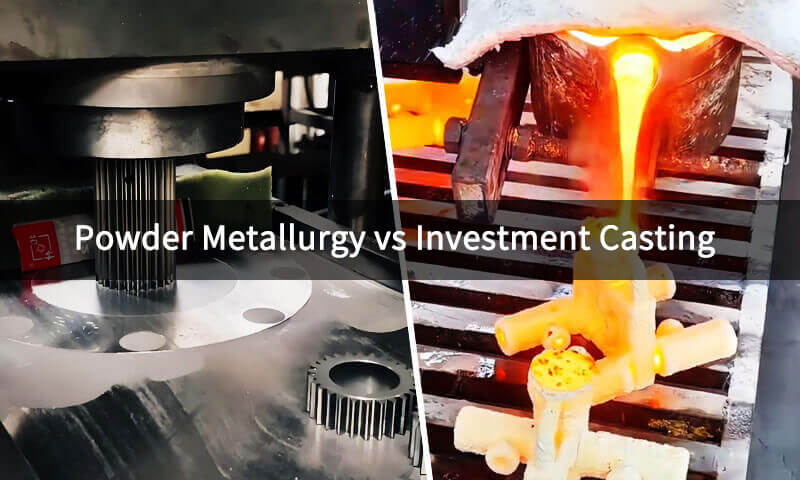
Parmi la myriade de méthodes de fabrication, deux technologies distinctes, mais souvent concurrentes, se démarquent: fonderie de précision et métallurgie des poudres (PM).
Moulage de précision, un processus vieux de plusieurs millénaires affiné grâce à la science moderne des matériaux, offre une liberté géométrique et une polyvalence d'alliage inégalées.
Métallurgie de la poudre, une innovation du XXe siècle, offre une efficacité matérielle exceptionnelle, taux de production élevés, et porosité contrôlée pour des applications spécialisées.
À première vue, les deux processus produisent des pièces métalliques de forme presque nette avec un usinage minimal.
Mais leurs principes sous-jacents (solidification à partir de métal en fusion versus frittage sous pression de poudres solides) conduisent à des règles de conception radicalement différentes., capacités matérielles, propriétés mécaniques, et échelles économiques.
Choisir entre ces deux technologies nécessite une compréhension globale non seulement des coûts de production mais également des exigences mécaniques., complexité de géométrie, volume de production, sélection des matériaux, et performances de service à long terme.
1. Comprendre le moulage de précision
Moulage de précision, également connu sous le nom de fonte à la cire perdue, est un procédé de formage de métal de précision dans lequel un motif en cire est recouvert d'une coque en céramique réfractaire, La cire est fondu, et la cavité résultante est remplie de métal en fusion.
Après la solidification, la coque en céramique est retirée, révélant un composant métallique de forme proche de la forme nette avec une finition de surface et une précision dimensionnelle exceptionnelles.
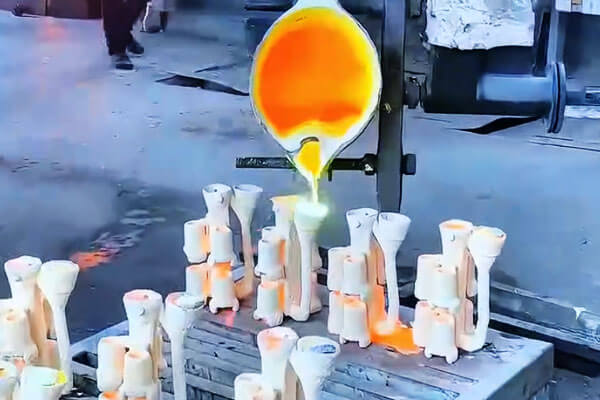
Le processus remonte à plus de 5,000 années aux civilisations anciennes en Egypte, Chine, et la Mésopotamie, où il était utilisé pour les statues en bronze et les bijoux.
Aujourd'hui, il s'agit d'une méthode de fabrication de haute technologie pour les pales de turbines aérospatiales, implants médicaux, composants d'armes à feu, et vannes industrielles.
Traiter les principes fondamentaux
| Scène | Étape | Détail clé |
| 1 | Réalisation de patrons | Cire (ou thermoplastique) injecté dans une matrice métallique de précision (outil). |
| 2 | Assemblage d'arbre | Plusieurs motifs attachés à une grappe centrale (arbre de cire). |
| 3 | Bâtiment de coquille | 6‑10 couches de pâte céramique (Silice Sol) + stuc réfractaire (zircon/alumine). |
| 4 | Déwax | Un autoclave à vapeur fait fondre la cire; la coquille reste creuse. |
| 5 | Tirs d'obus | 900Cuisson à -1 100 °C pour renforcer la céramique et éliminer les substances volatiles. |
| 6 | Fusion & coulant | Métal fondu dans un four à induction; versé dans une coquille préchauffée. |
| 7 | Assommer & couper | Coque retirée par vibration; composants coupés dans un arbre. |
| 8 | Finition | Affûtage, dynamitage, traitement thermique, Inspection CND. |
Caractéristiques clés
| Fonctionnalité | Description |
| Géométrie | Très grande complexité; sous-dépouille, passages internes, murs fins (≥ 0,5 mm). |
| Finition de surface | Tel que moulé Ra 1,6‑6,3 µm; peut être poli à Ra <0.4 µm. |
| Tolérance | ±0,1 à 0,3 mm par 25 mm typique. |
| Matériels | Presque tous les alliages coulables: carbone, inoxydable, Superalliages, titane, aluminium, bronze. |
| Taille de la pièce | Grammes à ~150 kg (acier). |
| Volume | Économique de 100 à 10,000+ pièces / an. |
| Ferraille | Minimal (forme proche du net). |
2. Comprendre la métallurgie des poudres
Métallurgie de la poudre est un processus de fabrication dans lequel de fines poudres métalliques sont compactées (pressé) dans une filière rigide puis chauffée (enthousiaste) en dessous du point de fusion pour lier les particules en un composant solide.
Contrairement au moulage de précision, qui implique un changement de phase liquide à solide, la PM est un processus à l'état solide qui conserve les caractéristiques chimiques et microstructurales de la poudre..
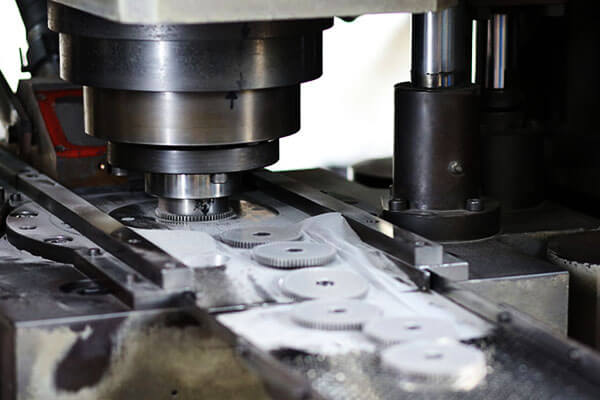
L'industrie moderne des PM a émergé dans les années 1920 avec la production de roulements autolubrifiants et de filaments de lampes au tungstène..
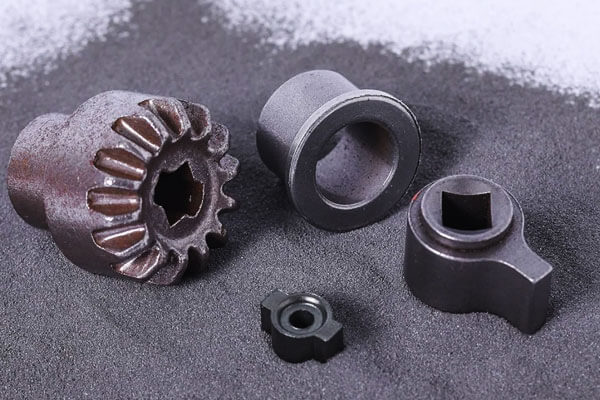
Aujourd'hui, c'est une mature, technologie de fabrication à grand volume, l'industrie automobile consommant plus 70% de toutes les pièces en PM ferreux dans le monde.
Traiter les principes fondamentaux
| Scène | Étape | Détail clé |
| 1 | Production de poudre | Atomisation d'eau ou de gaz, électrolyse, réduction; taille/forme des particules contrôlées. |
| 2 | Mélange | Poudres mélangées à des lubrifiants (0.5‑1,5%) et ajouts d'alliages (Par exemple, graphite). |
| 3 | Compactage (pressage) | Pressage uniaxial dans matrice rigide; pression 200-800 MPa; densité verte 70-85%. |
| 4 | Frittage | Chauffage en atmosphère contrôlée (gaz endothermique, N₂‑H₂) à 70-90% du point de fusion (généralement 1 120 à 1 150 °C pour le fer). |
| 5 | Opérations secondaires facultatives | Dimensionnement, insignifiant, traitement thermique, infiltration, usinage, imprégnation de résine. |
Caractéristiques clés
| Fonctionnalité | Description |
| Géométrie | Complexité modérée (2Formes en D); contre-dépouilles limitées; angles de dépouille restreints. |
| Finition de surface | Ra 3‑12 µm brut de frittage; peut être amélioré par dimensionnement/monnayage. |
| Tolérance | ±0,05 à 0,1 mm par 25 mm (après la taille). |
| Matériels | Principalement ferreux (fer, acier, inoxydable), à base de cuivre, tungstène, et alliages spécialisés. Le titane et l'aluminium sont possibles mais moins courants. |
| Taille de la pièce | Typiquement <10 kg, <300 diamètre mm. |
| Volume | Économique de 5,000 à des millions de pièces/an. |
| Ferraille | >95% utilisation du matériel. |
3. Principes de fabrication: Comment les processus diffèrent
| Aspect | Moulage d'investissement | Métallurgie de la poudre |
| Matériel de départ | Métal fondu (phase liquide). | Poudre métallique (phase solide). |
| Changement de phase | Liquide → Solide (solidification). | Solide → Solide (liaison par diffusion). |
| Source d'énergie | Chaleur pour fondre + coulant. | Pression + chaleur (frittage). |
| Exigence de moisissure | Coque en céramique à usage unique (par pièce). | Matrice métallique réutilisable (des milliers de cycles). |
| Temps de cycle | Heures (bâtiment de coquille) à jours. | Secondes (pressage) + heures (lot de frittage). |
| Coût d'outillage | Modéré (matrices en cire 5 à 20 000 $). | Haut (matrices de presse 10 à 50 000 $). |
| Intensité du travail | Haut (la construction du shell est manuelle). | Faible (pressage automatisé). |
| Contrôle dimensionnel | Via le retrait de la coque + modèle de cire. | Via la précision de la matrice + retrait de frittage. |
Différence fondamentale: Le moulage à modèle perdu est un moulage de précision en forme de filet processus; PM est un consolidation de poudre processus.
Le premier offre une liberté géométrique quasi infinie; ce dernier offre une efficacité matérielle quasi-infinie.
4. Compatibilité des matériaux et flexibilité de l'alliage
| Famille de matériaux | Moulage d'investissement | Métallurgie de la poudre |
| Carbone | Oui (large gamme) | Oui (matériau PM le plus courant) |
| Acier faiblement allié | Oui | Oui (Fe-Cu-C, Fe-Ni-Mo-Cu) |
| Acier inoxydable | Excellent (CF‑8, CF‑8M, 17--4ph) | Oui (304L, 316L, 410L, 17--4ph) |
| Superalliages en nickel | Excellent (Décevoir 718, 625, Rabot) | Limité (coût élevé; spécialisé) |
| Alliages de cobalt | Excellent (Co‑Cr‑Mo) | Limité |
| Titane | Excellent (Grade 5, CP) | Possible (coût élevé, réactif) |
| Aluminium | Oui (A356, 380) | Limité (problèmes d'oxyde; rare) |
| Cuivre / bronze | Oui (C90500, C93200) | Excellent (Cu, laiton, bronze) |
| Tungstène / alliages lourds | Difficile (point de fusion élevé) | Excellent (W-Ni-Fe, W‑Ni‑Cu) |
| Composites céramique-métal | Pas possible | Oui (cermets, WC‑Co) |
Aperçu clé: Offres de casting de précision flexibilité de l'alliage nettement plus large, en particulier pour les fusions élevées, réactif, ou alliages difficiles à presser (titane, Superalliages, cobalt‑chrome).
La métallurgie des poudres excelle dans les métaux ferreux, à base de cuivre, et matériaux à base de tungstène, ainsi que les composites qui ne peuvent pas être coulés en raison de leur immiscibilité ou de leur ségrégation.
5. Précision dimensionnelle et finition de surface
| Critère | Moulage d'investissement | Métallurgie de la poudre |
| Tolérance typique (mm/25mm) | ±0,1‑0,3 | ±0,05‑0,1 (tel que fritté) ±0,025‑0,05 (dimensionné/inventé) |
| Finition de surface (Rampe, µm) | 1.6-6,3 (tel que moulé) | 3-12 (tel que fritté) 0.8-3 (dimensionné/inventé) |
| Stabilité de la tolérance | Bien (retrait de la coque constant) | Excellent (mourir de précision; variables de frittage) |
| Angle de dépouille requis | Non (les motifs en cire s'enlèvent sans brouillon) | Oui (pour le retrait des pièces de la matrice) |
| Threads / caractéristiques internes | Caster directement | Doit être usiné (je ne peux pas appuyer sur les fils) |
Ce qui est mieux? Pour des géométries complexes avec des détails fins et une finition de surface élevée, le moulage de précision est supérieur.
Pour les géométries simples nécessitant des tolérances extrêmement serrées (surtout après des opérations secondaires), PM a un avantage.
6. Complexité de la géométrie et liberté de conception
| Caractéristique de conception | Moulage d'investissement | Métallurgie de la poudre |
| Sous-dépouille | Oui (le motif en cire peut être assemblé) | Non (l'extraction de la matrice nécessite une traction droite) |
| Passages internes | Oui (noyaux en céramique) | Non (impossible d'appuyer sur des éléments creux) |
| Murs fins | 0.5‑1,5 mm réalisable | 1.5‑2,5 mm minimum |
| Caractéristiques fines (caractères, logos) | Excellente reproduction | Limité (doit être frappé ou usiné) |
| Épaisseur de section variable | Oui (peut se rétrécir en douceur) | Limité (densité uniforme requise) |
| Asymétrique / formes organiques | Excellent | Pauvre (le pressage préfère les murs uniformes) |
| 3D complexité | Haut | Modéré (essentiellement 2.5D) |
Le casting d’investissement gagne de manière décisive en complexité géométrique.
La possibilité de créer des contre-dépouilles, canaux internes incurvés, contours organiques, et la finesse des détails de surface est inégalée par la métallurgie des poudres, qui est contraint par la matrice de pressage et l'exigence d'un compactage uniaxial.
7. Propriétés mécaniques et performances structurelles
| Propriété mécanique | Moulage d'investissement | Métallurgie de la poudre |
| Densité typique | 99‑100% du théorique | 85‑98 % (en fonction du pressage et du frittage) |
| Résistance à la traction | Bien (façonné dans des moulages sonores) | Modérément bon (ça dépend de la densité) |
| Limite d'élasticité | Comparable à la fortune | 10‑30 % de moins que le forgé (effet de porosité) |
| Élongation | 10‑35% (austénitique) | 2-15% (dépendant de la densité) |
| Dureté | 80-600 HB (dépendant de l'alliage) | 60-400 HB (Selon le matériel) |
| Force de fatigue | Modéré (sensible aux encoches) | Inférieur (la porosité agit comme un générateur de stress) |
| Résistance à l'impact | Bien (Selon l'alliage) | Inférieur (la porosité fragilise) |
| Uniformité | Structure moulée (dendritique) | Structure frittée (poreux, isotrope) |
| Réponse d’intensification du travail | Limité (tel que moulé) | La structure frittée peut être traitée thermiquement |
Comparaison clé: Les pièces moulées à modèle perdu sont entièrement dense et, lorsqu'il est correctement lancé, approcher les propriétés forgées (90‑95 % des valeurs falsifiées).
Pièces de métallurgie des poudres, même dans les grades à haute densité (≥95% théorique), avoir une porosité résiduelle qui réduit la ductilité, dureté, et performances en fatigue.
Pour les applications critiques pour la sécurité, charge élevée, ou applications sujettes aux chocs, le moulage à modèle perdu est préférable.
8. Densité, Porosité, et Qualité Interne
| Aspect | Moulage d'investissement | Métallurgie de la poudre |
| Densité typique | 99-100 % (entièrement dense) | 85‑98 % (porosité résiduelle) |
| Type de porosité | Retrait ou gaz (aléatoire, évitable) | Interconnecté et fermé (inhérent) |
| Contrôle de la porosité | Conception de portail/montée; HANCHE réduit la porosité | Pression de compactage; atmosphère de frittage |
| Étanchéité à la pression | Excellent (moulages étanches possibles) | Pauvre (poreux, nécessite un scellement) |
| Répartition de la densité | Uniforme partout | Faces denses près des coups de poing; inférieur près du centre (gradient de compactage) |
| Applicabilité de la hanche | Commun (ferme la porosité) | Rare (pores déjà fermés; HIP ajoute des coûts) |
| Propreté intérieure | Bien (inclusions possibles) | Excellent (les poudres sont propres) |
Aperçu clé: Le moulage de précision produit des pièces entièrement denses, étanches à la pression et pouvant être traitées thermiquement sans formation de cloques..
Pièces PM, sauf traitement spécial (Par exemple, compactage à chaud, double pression, HANCHE), avoir une porosité résiduelle qui limite l'étanchéité à la pression et certaines réponses au traitement thermique.
9. Volume de production et économie de fabrication
| Facteur économique | Moulage d'investissement | Métallurgie de la poudre |
| Coût d'outillage | Modéré ($5-Matrice de cire ‑20 000) | Haut ($10-50 000 matrices de presse) |
| Durée de vie de l'outillage | 50,000‑200 000 cycles de cire | 500,000‑1 000 000 de cycles de presse |
| Coût des matières premières | Plus haut (cire, céramique, métal) | Inférieur (poudre, lubrifiant) |
| Utilisation du matériel | 85-95 % | >95% (rebut quasi nul) |
| Temps de cycle | Minutes en heures (manuel) | <1 deuxième (pressage) |
| Intensité du travail | Haut (bâtiment de coquille) | Faible (automatisé) |
| Volume d’équilibre | ~100 à 1 000 pièces/an | ~5 000 à 10 000 pièces/an |
| Délai de mise en œuvre (outillé) | 8-16 semaines | 6-10 semaines |
| Coût par pièce (faible volume, <500) | Modérément élevé | Très haut (outillage amorti) |
| Coût par pièce (volume moyen, 5k‑50k) | Faible | Très bas |
| Coût par pièce (volume élevé, >100k) | Faible (mais PM est inférieur) | Le plus bas |
Règle de décision relative aux coûts:
- <1,000 pièces / an → Moulage d'investissement (outillage amorti).
- 1,000‑5 000 pièces/an → Les deux possibles; comparer sur la complexité.
- >10,000 pièces / an → Métallurgie des poudres (des économies considérables).
- >100,000 pièces / an → PM est clairement le gagnant.
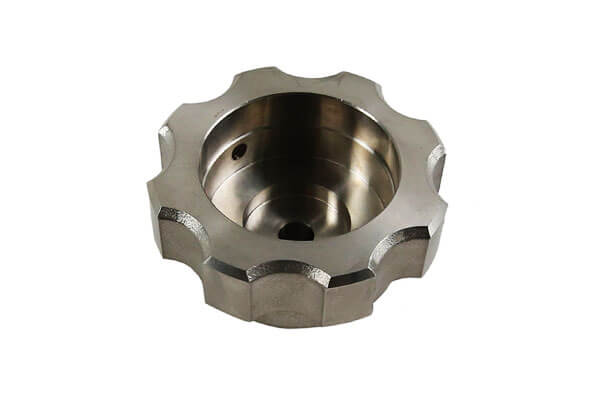
10. Applications de l'industrie: Moulage de précision vs métallurgie des poudres
| Industrie | Moulage d'investissement | Métallurgie de la poudre |
| Automobile | Roues de turbocompresseur, collecteurs d'échappement (inoxydable) | Engrenages, pignon, synchroniser hubs, cannes de connexion (PM à base de Fe) |
| Aérospatial | Lames de turbine, buses de carburant, logements structurels (Superalliages, titane) | Applications plus légères: rondelles de poussée, bagues, filtres |
| Médical | Implants orthopédiques (tiges de hanche, plateaux de genou), instruments chirurgicaux | Vis orthopédiques (Mim, un dérivé PM), plaques d'os |
| Huile & gaz | Corps de valve, pompes, connecteurs sous-marins (inox/duplex) | Éléments filtrants, masses d'équilibrage en alliage lourd en tungstène |
Armes à feu |
Récepteurs, déclencheurs, composants du suppresseur (17--4ph) | Mécanismes de déclenchement, adeptes du magazine, ressorts de rappel |
| Machines industrielles | Boîtiers de pompage, corps de valve, boîtes de vitesses (inox/fonte) | Engrenages, cams, rouleaux, roulements, Plaques de portage |
| Électrique | Composants d'appareillage, chauffer | Contacts électriques, noyaux magnétiques, porte-balais |
| Biens de consommation | Cas de surveillance, raccords de quincaillerie, articles décoratifs | Composants de verrouillage, pièces de fermeture éclair, petites parenthèses |
11. Avantages et limites du moulage à modèle perdu
Avantages
- Complexité géométrique exceptionnelle – contre-dépouilles, passages internes, murs fins, formes organiques.
- Large flexibilité de l'alliage – presque tous les métaux coulables, y compris les superalliages et le titane.
- Excellente finition de surface – Ra 1,6‑6,3 µm tel que coulé; peut être poli jusqu'à devenir quasi-miroir.
- Forme proche du net – un minimum de déchets de matériaux; ratio « buy-to-fly » <1.5:1.
- Aucun brouillon requis – murs verticaux possibles.
- Pièces moulées étanches à la pression – peut être soudé et traité thermiquement.
- Un patrimoine avéré – des milliers d'années; données et normes détaillées.
Limites
- Forte intensité de travail – la construction du shell est manuelle, dépendant des compétences.
- Temps de cycle lent – jours du modèle à la pièce finie.
- Limitation de taille – maximum pratique ~150 kg.
- Coût plus élevé à faibles volumes – amortissement des outillages.
- Risque de porosité – le retrait et la porosité des gaz nécessitent un contrôle de processus robuste.
- Limité aux alliages coulables – point de fusion élevé, les matériaux non coulables ne peuvent pas être utilisés.
12. Avantages et limites de la métallurgie des poudres
Avantages
- Utilisation supérieure des matériaux - >95% sans débris; durable.
- Des taux de production élevés – cycle de pressage <1 deuxième; frittage continu.
- Excellente cohérence dimensionnelle – précision contrôlée par matrice.
- Faible coût par pièce à des volumes élevés.
- Porosité contrôlée – pour les filtres, roulements autolubrifiants, électrodes de batterie.
- Bien, Structure des grains uniformes – aucun défaut de fonte.
- Possibilité de mélanger des alliages – créer des compositions uniques impossibles par fusion.
- Bonne machinabilité – de nombreux alliages PM contiennent des éléments qui améliorent l'usinage.
Limites
- Complexité géométrique limitée – essentiellement 2.5D; pas de contre-dépouilles, passages internes.
- Angles de dépouille requis – pour l'éjection des pièces des matrices.
- Propriétés mécaniques inférieures – la porosité résiduelle réduit la ductilité et la fatigue.
- Restrictions de taille et de poids - <10 kg, <300 mm typique.
- La porosité limite l’étanchéité à la pression – étanchéité requise pour les applications de manipulation de fluides.
- Flexibilité de l'alliage limitée – titane, aluminium, les superalliages sont difficiles ou coûteux.
- Coût d’outillage élevé – les jeux de matrices sont chers; volumes d’équilibre élevés.
13. Moulage de précision vs métallurgie des poudres: Table de comparaison complète
| Critère | Moulage d'investissement | Métallurgie de la poudre |
| Principe du processus | Solidification de métal liquide dans un moule en céramique | Compactage de poudre + frittage |
| Matériel de départ | Motif de cire + métal fondu | Poudre métallique + lubrifiant |
| Complexité géométrique | Très haut (3D, sous-dépouille) | Modéré (2.5D, pas de contre-dépouilles) |
| Épaisseur de paroi minimale | 0.5-1,5 mm | 1.5-2,5 mm |
| Finition de surface (Rampe, µm) | 1.6-6,3 (tel que moulé) | 3-12 (tel que fritté) |
| Tolérance dimensionnelle | ±0,1‑0,3 mm/25 mm | ±0,05‑0,1 mm/25 mm (après la taille) |
| Densité | 99-100 % | 85‑98 % |
| Porosité | Faible (retrait/gaz) | Inhérent (résiduel) |
| Étanchéité à la pression | Excellent | Pauvre (nécessite un scellement) |
| Gamme alliage | Très large (acier, inoxydable, Superalliages, De, Al, bronze) | Limité (Fe, Cu, W, un peu d'inox; Ti/Al rares) |
| Résistance à la traction | Forgé (bien) | Modéré (dépendant de la porosité) |
| Ductilité | Bien (10‑35%) | Inférieur (2-15%) |
| Force de fatigue | Modéré | Inférieur (facteurs de contrainte dus à la porosité) |
| Coût d'outillage | Modéré | Haut |
| Durée de vie de l'outillage | 50k‑200 000 cycles | 500k‑1 000 000 cycles |
| Utilisation du matériel | 85-95 % | >95% |
| Temps de cycle (par pièce) | Minutes en heures | <1 deuxième (pressage) |
| Intensité du travail | Haut | Faible |
| Volume d’équilibre | ~100 à 1 000/an | ~5 000 à 10 000/an |
| Coût par pièce (volume élevé) | Modéré | Très bas |
| Poids maximal typique des pièces | 150 kg | 10 kg |
| Opérations secondaires | Coupe, affûtage, traitement thermique, NDT | Dimensionnement, traitement thermique, usinage (limité) |
14. Conclusion
Le moulage à modèle perdu et la métallurgie des poudres ne sont pas des technologies concurrentes dans toutes les situations.; plutôt, ils résolvent différents défis de fabrication.
Le moulage de précision excelle lorsque les ingénieurs ont besoin de géométries complexes, large choix d'alliages, Propriétés mécaniques supérieures, densité élevée, et fiabilité structurelle.
Il reste le choix privilégié pour les composants aérospatiaux, corps de valve, Pump Pièces, dispositifs médicaux, et équipements industriels performants.
La métallurgie des poudres excelle dans les environnements de production à grande échelle où la cohérence dimensionnelle, efficacité des matériaux, automation, et de faibles coûts unitaires sont des objectifs prioritaires.
Il domine les applications telles que les engrenages automobiles, roulements, bagues, et composants mécaniques produits en série.
La sélection optimale dépend de l’équilibre entre cinq facteurs critiques:
- Géométrie des composants
- Performances mécaniques requises
- Exigences matérielles
- Volume de production
- Coût total du cycle de vie
Comprendre ces facteurs permet aux fabricants de sélectionner le procédé le plus techniquement approprié et le plus économiquement compétitif..
FAQ
Le moulage de précision est-il plus résistant que la métallurgie des poudres?
Dans la plupart des applications structurelles, Oui. Les composants moulés à modèle perdu atteignent généralement une densité plus élevée, Porosité inférieure, et une meilleure résistance à la fatigue que les pièces conventionnelles de métallurgie des poudres.
Quel processus offre une meilleure précision dimensionnelle?
Pour simple, pièces à volume élevé, la métallurgie des poudres offre souvent une répétabilité plus stricte. Pour les géométries complexes, le moulage à modèle perdu offre généralement une meilleure capacité dimensionnelle globale.
Les deux processus peuvent-ils produire des composants en acier inoxydable?
Oui. Les deux technologies soutiennent la fabrication d’acier inoxydable, bien que le moulage de précision offre une plus grande flexibilité dans les nuances d'alliage et la complexité des composants.
Quel processus est le plus rentable?
La métallurgie des poudres est généralement plus rentable pour les volumes de production très élevés. Le moulage à modèle perdu est souvent plus économique pour les séries de production faibles à moyennes et les pièces complexes..
Quelles industries dépendent le plus du moulage de précision?
Aérospatial, pétrole et gaz, traitement chimique, équipement médical, production d'électricité, transformation des aliments, et les machines industrielles sont parmi les plus grands utilisateurs de composants moulés à la cire perdue.

