1. Esittely
Titaanivalu has become a cornerstone technology in industries that demand high-performance materials and precision-engineered components.
Known for its poikkeuksellinen lujuus-paino-suhde, ylivoimainen korroosionkestävyys, ja biologinen yhteensopivuus, titanium stands out as one of the most premium engineering materials available today.
With a density of just 4.51 g/cm³, titanium offers the strength of steel at nearly half the weight, making it indispensable for ilmailu-, lääketieteellinen, meren-, ja puolustushakemukset.
Kuitenkin, these unique properties also present significant challenges. Titaani korkea sulamispiste (1,668° C) and strong reactivity with oxygen and nitrogen make conventional casting methods impractical.
Erikoistunut titanium casting services are therefore essential to produce complex, high-precision components while preserving the alloy’s mechanical integrity and corrosion resistance.
2. What Are Titanium Casting Services?
Titaani casting services are specialized manufacturing solutions designed to create near-net-shape components from titanium and titanium alloys through controlled melting and mold casting techniques.
These services require advanced facilities capable of handling titanium’s high reactivity, korkea sulamispiste (1,668° C), and unique metallurgical behavior.
Unlike conventional metal casting, titanium casting demands vacuum or inert-gas environments (Tyypillisesti argon) to prevent contamination by oxygen, typpi, or hydrogen, which can cause brittleness and surface defects.
Lisäksi, high-purity ceramic molds (coated with yttria or zirconia) are used because titanium can react with traditional mold materials such as silica or alumina.

Key features of titanium casting services include:
- Precision Production: Ability to create complex geometries and thin-walled components with minimal machining.
- Advanced Melting Techniques: Utilization of Tyhjiön induktion sulaminen (Vim) tai Induction Skull Melting (ISM) to maintain alloy integrity.
- Jälkikäsittelyt: Prosessit kuten Kuuma isostaattinen puristus (Lonkka), surface machining, ja chemical milling to enhance mechanical properties and surface finish.
3. Titanium as a Material – Why Specialized Casting is Necessary
Titanium’s headline advantages—steel‑like strength at ~40% lower density, superb corrosion resistance, ja biologinen yhteensopivuus—come with a set of metallurgical and processing characteristics that make conventional foundry practice unusable.
Successful titanium casting therefore hinges on stringent atmosphere control, inert mold chemistries, high‑energy melting technologies, and post‑casting densification/conditioning.

Thermophysical Reality: Why Ordinary Foundry Tooling Fails
Korkea sulamispiste (1,668 ° C / 3,034 ° f)
- Titanium melts ~2–3× hotter than aluminum (660 ° C) and significantly above many steels (often quoted ~1,370 °C for casting grades).
- Näissä lämpötiloissa, standard silica- or alumina-based ceramics react with molten titanium, forming brittle intermetallics and oxygen-enriched surface layers.
- Ratkaisu:Yttria (Y₂O₃), zirkoniumoksidi (Zro₂), or yttria‑stabilized zirconia (Ys) facecoats are mandatory despite being 5–10× more expensive than conventional refractories.
Alhainen lämmönjohtavuus
- Titanium’s thermal conductivity is roughly one quarter that of steel (≈15–22 W/m·K vs. ~45–50 W/m·K for steels).
- Tulos: non-uniform cooling, steep thermal gradients, ja elevated porosity/shrinkage risk if gating/risering and cooling control are not meticulously engineered.
- Expect 6–8% volumetric shrinkage, necessitating robust directional solidification strategies.
Chemical Reactivity: The Alpha-Case & Ductility Killer
Reactivity Above ~600 °C
- Titanium aggressively reacts with happea, typpi, vety, ja hiili, muodostumista Tiio₂, Tina, TiHₓ, and TiC kohonneissa lämpötiloissa.
- Jopa 0.1 wt% oxygen tölkki halve elongation, crippling fatigue life—fatal for aerospace and medical parts.
- Casting Atmosphere Requirement:Vacuum or high-purity argon kanssa oxygen levels < 50 ppm during melt, kaataa, and early solidification.
Alpha-Case Formation
- Eräs kovaa, hauras, oxygen/nitrogen‑enriched surface layer develops whenever titanium contacts reactive environments at high temperature.
- Mandatory removal via chemical milling (HF‑HNO₃) or precision machining to restore fatigue and fracture performance.
Economic Imperatives: Waste Is Not an Option
Raw Material Cost
- Titanium sponge or alloy feedstock typically costs US $15–30/kg-~5× aluminum and several times typical cast steels.
- Seurauksena, wasteful “hog‑out” machining from billet (buy‑to‑fly ratios of 8–10:1) is often uneconomical.
- Casting’s Value Proposition:Near‑net‑shape parts can slash buy‑to‑fly ratios to ~1.5–2.0:1, materially reducing total cost of ownership.
Alloy Landscape That Raises the Bar
- Ti -6Al -4v (Luokka 5) ja Ti -6Al -4v Eli (Luokka 23) dominate cast applications for aerospace and medical due to their 900–1,200 MPa UTS, hyvä väsymyslujuus,
and acceptable castability—but only when melted, poured, and solidified under tightly controlled conditions (often followed by Lonkka). - CP (Kaupallisesti puhdas) titaani grades are used where maximum corrosion resistance and ductility matter more than ultimate strength.
- High‑temperature or specialty alloys (ESIM., Ti‑6Al‑2Sn‑4Zr‑2Mo) edelleen tighten process windows due to more complex chemistry and microstructure demands.
4. Titanium Casting Processes
Titanium casting is fundamentally different from casting aluminum, teräs, or other common metals due to titanium’s reaktiivisuus, korkea sulamispiste, and stringent quality requirements.
Over the decades, the industry has developed specialized casting processes that can produce net- or near-net-shape titanium components with mechanical properties comparable to wrought products.
Investointi (Kadonnut vaha-casting)
Sijoitusvalu, tunnetaan myös nimellä kadonnut vahaprosessi, is the most widely used method for titanium components, etenkin ilmailu- (kompressoriterät, rakenteelliset kiinnikkeet), lääketieteelliset implantit (hip and knee components), and industrial parts.

Avainaskeleet:
- Vahakuvion luominen: A wax replica of the final part is made, often with gating and risers integrated.
- Keraaminen kuorirakennus: The wax assembly is repeatedly dipped in yttria- or zirconia-based ceramic slurry and coated with refractory grains, forming a strong shell.
- Köyhä: The wax is melted and drained, poistuminen ontosta muotista.
- Vacuum Melting & Kaataminen: Titanium is melted in a vacuum induction skull melter tai cold-hearth electron beam furnace, then poured into the mold under high vacuum or inert argon (<50 ppm o₂).
- Kuoren poisto & Viimeistely: The ceramic shell is broken, and the part undergoes chemical milling or machining to remove the alpha-case.
Edut:
- Complex shapes with high dimensional accuracy (±0.25 mm for small parts).
- Lähes verkko minimizes costly machining.
- Hyvä pinta (RA 3-6 µm).
- Scalability for medium to high production volumes.
Rajoitukset:
- Size limitations: Most titanium investment castings are under 35–50 kg, though larger parts up to 100 kg have been made.
- Huokoisuuden hallinta: Isostaattinen kuumapuristus (Lonkka) is often required to improve density and fatigue properties.
- Higher cost compared to aluminum or steel investment casting.
Keskipakovalu
Centrifugal casting uses rotational force to distribute molten titanium into the mold cavity.
This process is commonly applied to renkaat, lääketieteelliset implantit, and components requiring fine grain structure and superior mechanical performance.
Keskeiset ominaisuudet:
- The rotating mold (up to thousands of RPM) luo a high-pressure field, forcing molten titanium into thin or complex features and reducing porosity.
- Typically conducted in vacuum or argon-filled chambers with precision-controlled induction melting.
Edut:
- Tuottaa tiheä, defect-free microstructures, often eliminating the need for HIP.
- Ihanteellinen symmetriset osat kuten renkaat, turbiinilevyt, and thin-walled cylindrical components.
- Fine surface finish and dimensional accuracy.
Rajoitukset:
- Shape constraints: Works best for round or tubular geometries.
- Korkeat laitekustannukset due to specialized vacuum and rotational systems.
Emerging and Alternative Casting Methods
Cold Hearth & Plasma Arc Melting (PAM):
- Uses a water-cooled copper hearth ja plasma arc to melt titanium without contamination from ceramic crucibles.
- Often used as a feedstock production step for investment casting (remelting and refining ingots).
Lisäavusteinen valu:
- 3D-tulostettu wax or polymer patterns (via SLA or FDM) are increasingly replacing traditional wax tooling, accelerating prototype development.
- Hybridi additive + valu approaches reduce lead times by up to 50% for complex aerospace brackets.
Ceramic Mold Innovations:
- Seuraavan sukupolven yttria-alumina composites are being developed to improve thermal shock resistance and reduce costs.
- Research on sol-gel coatings aims to minimize oxygen pick-up and alpha-case thickness.
Metal Injection Casting (Mikrofoni):
- A niche technique combining powder metallurgy and casting for smaller titanium parts.
- Not as widespread but promising for medical and dental devices.
5. Jälkikäsittelyt
Titanium castings, especially those intended for aerospace, lääketieteellinen, or high-performance industrial applications, require a series of jälkikäsittelyt to refine mechanical properties, eliminate defects, and achieve desired surface quality.

Kuuma isostaattinen puristus (Lonkka)
Tarkoitus: HIP is the most critical post-casting treatment for titanium, used to eliminate internal porosity and micro-shrinkage that naturally occur during solidification.
- Käsitellä: Components are placed in a high-pressure vessel (100–200 MPa) kohonneissa lämpötiloissa (typically 900–950°C for Ti-6Al-4V) under an inert argon atmosphere for 2–4 hours.
- Vaikutus:
-
- Densifies the microstructure to >99.9% theoretical density.
- Parantaa fatigue strength by 20–30% compared to non-HIPed parts.
- Reduces scatter in mechanical properties and enhances reliability.
Lämmönkäsittely
Tarkoitus: Heat treatments adjust the microstructure (α/β phase distribution) for improved strength, taipuisuus, ja sitkeys.
- Common Heat Treatments:
-
- Stressin lievitys: 650–760°C for 1–2 hours to reduce residual stresses after casting and machining.
- Solution Treatment and Aging (Sta):
-
-
- Ratkaisu: ~925°C (below β-transus) 1-2 tunnin ajan, air-cooled.
- Ikääntyminen: 480–595°C for 2–8 hours to enhance strength.
-
-
- Beta Anneal: >995° C (above β-transus), controlled cooling to increase fracture toughness, used for heavy-section castings.
- Tietopiste: STA-treated Ti-6Al-4V castings can achieve UTS of 850–950 MPa and elongation of 8–12%, approaching wrought properties.
Alpha-Case Removal
Alpha-case is a brittle, oxygen-rich surface layer (50–300 μm thick) formed during casting due to reaction with mold materials or residual oxygen.
- Removal Techniques:
-
- Chemical Milling (Pintalingling): Happoliuos (HF-HNO₃) to uniformly dissolve alpha-case.
- Mechanical Methods: Grit blasting, koneistus, tai hionta (often combined with chemical milling).
- Merkitys: Unremoved alpha-case can reduce fatigue life by asti 50%.
Pinnan viimeistely
Pinnan laatu is critical for fatigue performance, korroosionkestävyys, ja estetiikka (especially for medical implants).
- Prosessit:
-
- Abrasive Blasting or Kiillotus: To achieve Ra ≤ 1–3 μm for aerospace; <0.2 μm for medical implants.
- Elektroloiva: Smooths micro-roughness, often used in orthopedic components.
- Passivointi: Nitric acid or citric acid treatments to enhance corrosion resistance.
Tuhoamaton testaus (Ndt) ja laadunvarmistus
- Radiografinen testaus (Rt): Detects internal porosity or inclusions.
- Ultraäänitestaus (Ut): Identifies subsurface flaws, especially in thick sections.
- Fluoresoiva läpäisytarkastus (FPI): Finds surface cracks or porosity after finishing.
- Standardit: Aerospace parts adhere to AMS 2630/2631, while medical implants follow ASTM F1472 or F1108 protocols.
Final Machining
Titanium castings are typically delivered lähes verkko, but critical surfaces (pariutumisrajapinnat, tarkkuusreku) require final machining.
- Haasteet:
-
- Low thermal conductivity causes tool wear and heat buildup.
- Vaatii carbide or coated tools, alhaiset leikkausnopeudet, and abundant coolant.
Optional Coatings & Pintakäsittelyt
Some high-performance applications use additional treatments to enhance surface performance:
- Anodisoiva: Improves corrosion resistance and aesthetics (common in medical implants).
- PVD or Thermal Spray Coatings: Applied for wear or thermal barriers in aerospace engines.
- Laserhakko: Induces surface compressive stresses, improving fatigue life by up to 2×.
6. Key Technical Challenges in Titanium Casting
Casting titanium (and its most common alloy, Ti -6Al -4v) is fundamentally harder than casting steels, Ni‑base superalloys, tai alumiini.
Yhdistelmä very high reactivity, high melting temperature, alhainen lämmönjohtavuus, tight property requirements,
and stringent certification regimes forces service providers to engineer every step—melting, muotisuunnittelu, kaataminen, jähmettyminen, and post‑processing—under unusually tight controls.
Below are the principal challenges, why they occur, their consequences, and how best‑in‑class foundries mitigate them.

Reaktiivisuus, Alpha‑Case, and Mold/Metal Interactions
The challenge
Kohonneissa lämpötiloissa, titanium reacts aggressively with happea, typpi, vety, ja hiili, and with conventional refractories (ESIM., silica, alumiiniokso).
This forms a brittle oxygen/nitrogen‑enriched “alpha‑case” layer (usein 50–300 µm paksu, but can exceed 500 µm if poorly controlled), degrading fatigue strength and ductility.
Why it happens
- Thermodynamic drive: Titanium’s strong affinity for O, N, H above ~600 °C.
- Inadequate atmospheres: Residual O₂ > 50 ppm or N₂/H₂ ingress during melt/pour leads to interstitial pickup.
- Reactive molds: Non‑inert shell facecoats (piidioksidi-/alumiinioksidi) react with molten Ti, forming brittle intermetallics and raising oxygen content.
Mitigations
- Tyhjiö / inert gas (argoni) ympäristö with O₂ levels < 50 ppm (often 10⁻³–10⁻⁴ torr vacuum).
- Inert facecoats: yttria (Y₂O₃), zirkoniumoksidi (Zro₂), or YSZ shells (6–12 kerrosta) to minimize reaction.
- Post‑cast alpha‑case removal via chemical milling (HF‑HNO₃; typical removal 100–300 µm) or precision machining / räikeä räjähdys.
- Tight chemistry control: keep O, N, H within alloy specifications (ESIM., O ≤ 0.20 wt% for Ti‑6Al‑4V Grade 5; much lower for ELI).
Kaasuhuokoisuus, Kutistuminen, and Density Defects
The challenge
Even with vacuum or inert atmospheres, kaasuhuokoisuus (H₂ pickup) ja kutistuminen huokoisuus can form due to turbulent fill, huono ruokinta, or low superheat.
Micro‑porosity directly compromises väsymyselämä ja murtolujuus.
Typical signatures
- Kaasuhuokoisuus: rounded pores, often near surface or in isolated pockets.
- Kutistuminen huokoisuus: interdendriittinen, clustered in hot spots or at the last‑to‑solidify zones.
Mitigations
- Kuuma isostaattinen puristus (Lonkka): Commonly mandatory for aerospace/medical; ESIM., 900–950 ° C, 100–200 MPa, 2–4 tuntia to collapse voids and achieve >99.9% tiheys.
- Optimized gating/risering käyttämällä CFD & solidification simulation (Magmasoft, Proosto, FLOW‑3D CAST) to ensure directional solidification and adequate feeding.
- Controlled pouring superheat: tyypillisesti 50–80 °C above liquidus to balance fluidity vs. reaktiivisuus; excessive superheat increases mold attack and alpha‑case.
- Low‑turbulence fill strategies (tilt‑pour, bottom‑fill, vacuum‑assist, or centrifugal) to reduce entrained gas and oxide films.
Mitat tarkkuus, Vääristymä, and Residual Stresses
The challenge
Titaani alhainen lämmönjohtavuus ja high solidification shrinkage (6–8% volumetric) create strong thermal gradients, aiheuttava vääristymä, loimi, and residual stresses.
High shell preheat (usein 900–1,000 °C) adds to mold creep risks.
Mitigations
- Finite element–based thermal/mechanical simulation to predict distortion and compensate in tooling (negative offsets).
- Rigid, well‑supported shells with engineered thickness where needed.
- Tight process window control for shell preheat, mold cool‑down rates, and part handling.
- Post‑cast stress relief / Lonkka to reduce residual stresses before finish machining.
Inclusion Control and Cleanliness
The challenge
Sulkeumat (refractory fragments, oksidit, nitrides, karbidit) act as crack initiators, drastically reducing fatigue and fracture performance—fatal in aerospace and medical service.
Mitigations
- Induction Skull Melting (ISM) tai cold‑hearth electron beam melting to avoid crucible contamination and float out high‑density inclusions.
- High‑purity ceramic systems and strict housekeeping (työkalu, liette, käsittely).
- Melt filtration / refined practice Jos mahdollista (though far more limited than in lower‑temperature alloys).
- NDT regimes (Röntgenkuva, Ut, FPI) tuned to detect inclusion sizes below critical defect dimensions.
Shell Integrity and Spalling
The challenge
Shells for titanium casting (yttria/zirconia) are kallis, hauras, and susceptible to thermal shock.
Spalling or cracking during preheat/pour risks metal leaks, sulkeumat, and dimensional errors.
Mitigations
- Optimized shell build (slurry viscosity, stucco distribution, layer count 6–12).
- Controlled drying and firing cycles to avoid differential shrinkage.
- Lämmönhallinta: ramp rates, uniform preheat, and matching shell thermal expansion to minimize stress.
- Robust handling and inspection protocols to catch micro‑cracks pre‑pour.
Chemistry Control, Erottelu, and Certification
The challenge
Titanium alloys—especially Ti‑6Al‑4V and Ti‑6Al‑4V ELI (Luokka 23)—have tight composition windows for oxygen, typpi, vety, and residual elements.
Deviations reduce ductility and fracture resistance. Segregation during solidification can create localized property drops.
Mitigations
- Spectrometric melt chemistry verification (pre‑ and post‑pour) kanssa full heat/lot traceability.
- Käyttö premium revert management (puhdas, controlled recycled material) to keep interstitials low.
- Lonkka + lämmönkäsittely to homogenize microstructure and eliminate micro‑segregation.
- Quality systems & certifications (AS9100, ISO 13485, Nadcap for NDT, lämpöhoito, ja kemiallinen prosessointi) to enforce discipline and auditability.
Inspection and Qualification Burden
The challenge
Because titanium castings often serve in mission‑critical roles, se NDT and qualification burden is heavy:
- Radiografia (Rt) for internal porosity/shrinkage.
- Ultraäänitestaus (Ut) for volumetric defects.
- Fluoresoiva läpäisytarkastus (FPI) for surface‑breaking cracks.
- Mekaaninen testaus (vetolujuus, murtolujuus, väsymys) ja microstructural evaluation (alpha‑case depth, inclusion counts).
Mitigations
- Standardized qualification plans (ESIM., AMS, ASTM F1108 for cast Ti‑6Al‑4V) kanssa defined acceptance criteria.
- Process capability metrics (CP, CPK) on critical properties (Uts, pidennys, O/N/H, defect size distributions).
- Digital traceability (MES/PLM systems) ja digitaaliset kaksoset to correlate process signatures with inspection outcomes.
Maksaa, Antaa, and Throughput Pressure
The challenge
- Yttria/zirconia shells, tyhjiö, Lonkka, and chem‑milling are expensive.
- Scrap or rework rates of even 5–10% can crush profitability given raw material costs of US$15–30/kg and high processing overhead.
Mitigations
- Valmistettavuuden suunnittelu (Dfm): early collaboration to reduce mass, eliminate hard‑to‑feed hot spots, and increase yield.
- Simulation‑first culture: use flow/solidification/stress simulations to hit “right‑first‑time.”
- Lean post‑processing cells integrating HIP → chemical mill → CNC finish to shorten lead time and reduce handling damage.
- Tilastollinen prosessien hallinta (SPC) on chemistry, lämpötila, vacuum level, shell thickness, and defect metrics.
7. Mechanical Properties of Cast Titanium
Cast titanium (most commonly Ti -6Al -4v, kattaa. ELI/Grade 23) can deliver wrought‑like performance when the process is tightly controlled and Lonkka (Kuuma isostaattinen puristus) plus appropriate lämmönkäsittely sovelletaan.
As-cast parts typically show higher porosity, lower ductility and fatigue life, ja coarser α/β microstructure than wrought equivalents; HIP and chem‑milling (to remove alpha‑case) are therefore routine for aerospace and medical hardware.
Baseline Mechanical Properties (Representative Ranges)
Values depend on alloy (ESIM., Ti‑6Al‑4V vs. CP TI), sulata, casting -prosessi, leikkauskoko, Lonkka, and subsequent heat treatment.
Typical specification frameworks include ASTM F1108 (implantit), AMS / ISO / ASTM B standards for structural parts.
| Omaisuus (Huoneenlämpötila) | Cast Ti‑6Al‑4V (as‑cast) | Cast Ti‑6Al‑4V (HIP’d / HT’d) | Wrought Ti‑6Al‑4V (for reference) |
| Lopullinen vetolujuus, Uts (MPA) | 780–900 | 850–950 | 895–1 000 |
| Tuottolujuus, Ys (0.2% offset, MPA) | 700–820 | 750–880 | 825–930 |
| Pidennys (%) | 4-8 | 8–14 | 10–14 |
| Alueen vähentäminen (%) | 10–20 | 20–35 | 25–40 |
| Väsymyslujuus, R = –1 (MPA, 10⁷ Syklit) | 300–420 | 450–550 | 500–650 |
| Kovuus (HV / HRC) | 300–340 HV (≈ HRC 30–34) | 320–360 HV (≈ HRC 32–37) | 330–370 HV (≈ HRC 33–38) |
| Fracture Toughness KIC (MPA√M) | 45–60 | 55–75 | 70–90 |
| Tiheys (g/cm³) | ~4.43–4.50 | ~4.43–4.50 | ~4.43–4.50 |
| Joustava moduuli (GPA) | 110–120 | 110–120 | 110–120 |
| Poissonin suhde | 0.32–0.34 | 0.32–0.34 | 0.32–0.34 |
| Lämmönjohtavuus (W/m · k) | 6-7 | 6-7 | 6-7 |
8. Major Application Areas of Titanium Casting
Titanium casting services are widely applied in industries where voimakkuus, kevyt, ja korroosionkestävyys ovat kriittisiä.

Below are the main application sectors where titanium casting is indispensable:
Ilmailu- ja ilmailu
- Sovellukset: Aircraft engine casings, turbiiniterät, rakenteelliset varusteet, Laskukoneen komponentit, satellite housings.
Medical and Dental Implants
- Sovellukset: Hip and knee joint replacements, luusilmut, selkärangan häkit, dental root implants, kirurgiset työkalut.
Teollisuus- ja kemiallinen prosessointi
- Sovellukset: Pumput, venttiilit, juoksupyöräilijä, putkivarusteet, heat exchanger components in chemical plants and desalination facilities.
Auto- ja moottoriurheilu
- Sovellukset: Exhaust valves, turbocharger wheels, kytkentävarret, suspension components for high-performance vehicles.
Energian ja sähköntuotanto
- Sovellukset: Turbiiniterät, hydroelectric components, nuclear reactor fittings, offshore platform parts.
Nousevat sovellukset
- Robotics and Drones: Lightweight titanium frames and joints.
- Kulutuselektroniikka: Titanium casings for premium laptops and wearables.
- Additive Manufacturing Hybrid Casting: Custom and complex geometries combining 3D printing with casting.
9. Advantages and Limitations of Titanium Casting Services
Titanium casting services provide critical benefits for industries requiring korkean suorituskyvyn, kompleksi, ja kevyet komponentit, but they also come with inherent technical and economic challenges.
Advantages of Titanium Casting Services
Complex Geometries and Design Flexibility
- Investment casting enables the creation of monimutkainen, near-net-shape components, vähentämällä laajan koneistuksen tarvetta.
- Complex hollow shapes or thin-walled parts (alhaalla 1–2 mm) voidaan saavuttaa, which would be impossible or costly with forging or machining.
Erinomaiset materiaaliominaisuudet
- Vahvuuspainosuhde: Titanium castings can achieve tensile strengths of 900–1100 MPa while being 40–45% lighter than steel.
- Korroosionkestävyys: Outstanding resistance to seawater, kloridit, and oxidizing environments.
- Väsymiskestävyys: Titanium castings exhibit high cycle fatigue life, crucial for aerospace and medical applications.
Biologinen yhteensopivuus
- Titanium’s inertness makes cast components suitable for lääketieteelliset implantit ja kirurgiset laitteet.
Cost Savings on Complex Parts
- Compared to machining from solid titanium billets, casting can reduce material waste by 40–60%, given titanium’s high raw material cost ($15–30/kg).
- Near-net-shape casting minimizes post-processing time and tooling costs.
Limitations of Titanium Casting Services
Korkeat tuotantokustannukset
- Titanium casting requires vacuum or inert gas environments to prevent contamination, as well as specialized furnaces and refractory molds (yttria, zirkoniumoksidi).
- Tooling costs for precision investment casting can be high, making it less economical for low-volume custom parts compared to additive manufacturing.
Technical Complexity and Quality Control
- Titaani high reactivity (happea, nitrogen pickup) can cause embrittlement or porosity if not carefully controlled.
- Defect risks: Kuumat kyyneleet, kutistumisontelot, and porosity require non-destructive testing (Röntgenkuva, ultrasonic inspections), adding cost and complexity.
Limitations in Component Size
- Large titanium castings (>50 kg) are difficult to produce due to challenges in uniform cooling and mold stability.
- The majority of cast titanium components are ali 30 kg in aerospace applications.
Mechanical Property Variability
- Cast titanium components often have lower fracture toughness and fatigue strength compared to wrought or forged titanium alloys, unless post-casting treatments (Lonkka, lämmönkäsittely) sovelletaan.
Pidemmät läpimenoajat
- Precision investment casting involves multiple steps—wax pattern creation, keraaminen kuorirakennus, palamisto, valu, ja viimeistely—resulting in lead times of 8–12 viikkoa for complex parts.
10. Vertailu muihin valmistusmenetelmiin
Titanium components can be produced through various manufacturing techniques, mukaan lukien valu, taonta, koneistus, ja lisäaineiden valmistus (Olen).
| Valmistusmenetelmä | Materiaalien käyttö | Suunnittelun monimutkaisuus | Mekaaniset ominaisuudet | Typical Cost per kg (USD) | Ihanteelliset sovellukset |
| Titaanivalu | 50% - 80% | Korkea (lähes verkon muotoja) | Kohtalainen (with HIP/HT) | $70 - $150 | Ilmailu-, lääketieteelliset implantit, teollisuusosat |
| Taonta | 10% - 20% | Matala- ja kohtalainen (Yksinkertaiset muodot) | Erinomainen (viljavirta, sitkeys) | $150 - $300 | Engine disks, laskuteline, rakenteelliset osat |
| Koneistus (from billets) | 5% - 15% | Kohtuullinen | Erinomainen (wrought titanium) | $200 - $400 | Prototyypit, low-volume complex parts |
| Lisäaineiden valmistus (Olen) | ~ 100% | Erittäin korkea (kompleksi & ristikko) | Kohtuullinen (anisotrooppinen, needs HIP) | $300 - $600 | Topology-optimized parts, prototyypit, custom implants |
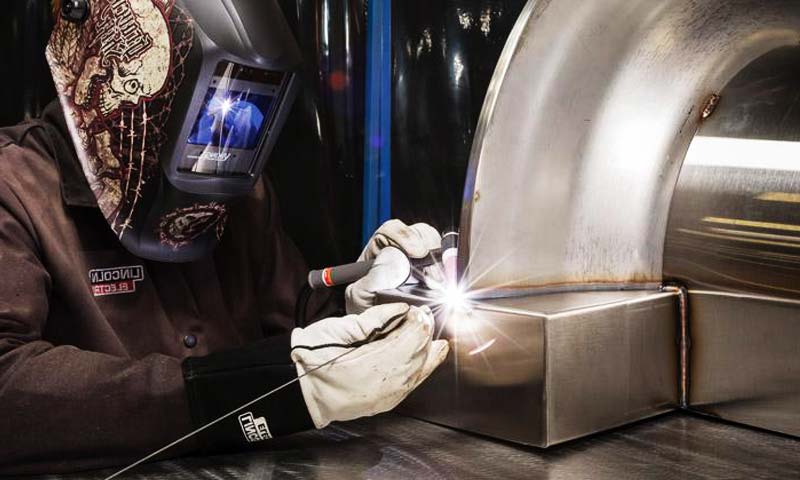
| Valmistus/hitsaus | Vaihtelee | Kohtuullinen | Muuttuva (joint weaknesses) | Muuttuva | Assemblies, sheet metal parts |
11. Johtopäätös
Titanium casting is both an art and a science—requiring cutting-edge technology, tarkka ohjaus, and deep metallurgical expertise.
Despite its challenges, it remains indispensable for industries where performance, weight savings, and durability are critical.
By partnering with experienced titanium casting service providers, manufacturers can achieve korkealaatuinen, cost-effective solutions tailored to demanding specifications.
As aerospace, lääketieteellinen, and defense industries continue to push the boundaries of material performance, titanium casting will remain at the forefront of advanced manufacturing, complemented by innovations in digital design, hybrid production, ja kestävyys.
Faqit
Why is titanium casting more expensive than steel casting?
Titanium’s high raw material cost ($15–30/kg vs. $0.5–1/kg for steel), energy-intensive processing (vacuum furnaces), and specialized shells (yttria) make it 10–20× costlier.
Are titanium castings biocompatible?
Kyllä. Alloys like Ti-6Al-4V ELI meet ISO 10993 standardit, with no cytotoxicity or allergic reactions, making them ideal for implants.
What’s the maximum size of a titanium casting?
Most services limit parts to <50 kg; larger castings (>100 kg) have defect rates >20% due to shell fragility.
How does cast titanium compare to wrought titanium in strength?
Cast titanium has 5–10% lower tensile strength but retains comparable corrosion resistance and offers 30–50% cost savings for complex shapes.
Can titanium castings withstand high temperatures?
Ti-5Al-2.5Sn and Ti-6Al-4V retain 80% huoneenlämpötila 500 ° C: ssa, suitable for jet engine components but not as high-temperature as nickel alloys.