1. Introducción
La manufactura siempre ha sido la fuerza impulsora del progreso industrial., pero en la era actual de ingeniería avanzada, La simple producción de piezas ya no es suficiente..
Las industrias modernas exigen componentes que no sólo sean funcionales sino también excepcionalmente precisos., altamente consistente, y capaz de funcionar de manera confiable en condiciones de operación cada vez más exigentes.
Ya sea para fabricar un álabe de turbina para un motor a reacción, un implante quirúrgico, una oblea semiconductora, o un cuerpo de válvula de alta presión, Incluso las desviaciones dimensionales microscópicas pueden comprometer el rendimiento del producto., reducir la vida útil, o conducir a una falla catastrófica del sistema.
Esta demanda de tolerancias cada vez más estrictas ha dado lugar a fabricación de precisión—una disciplina de fabricación altamente especializada
que integra máquinas herramienta avanzadas, automatización inteligente, tecnologías de medición sofisticadas, ciencias de los materiales, y una gestión de calidad rigurosa para producir componentes con una precisión dimensional y repetibilidad excepcionales..
A diferencia de la fabricación convencional, que se centra principalmente en producir piezas que cumplan con los requisitos funcionales básicos, La fabricación de precisión enfatiza controlando cada variable a lo largo del proceso de producción.
Desde la selección de materiales y la planificación de procesos hasta el mecanizado, inspección, y montaje final, Cada paso está optimizado para minimizar la variación y garantizar que cada componente se ajuste exactamente a las especificaciones de ingeniería..
2. ¿Qué es la fabricación de precisión??
La fabricación de precisión es la disciplina de diseñar y producir componentes con niveles excepcionalmente altos de precisión dimensional., consistencia geométrica, e integridad de la superficie a través de procesos de fabricación estrictamente controlados.
Combina maquinaria avanzada, tecnologías digitales, ingeniería especializada, y un riguroso control de calidad para garantizar que cada pieza fabricada se ajuste exactamente a las especificaciones de diseño previstas..
Desde el punto de vista de la ingeniería, La fabricación de precisión no está definida por un único proceso de producción..
En cambio, se caracteriza por la capacidad de fabricar componentes repetidamente dentro de tolerancias extremadamente estrechas manteniendo al mismo tiempo una calidad constante tanto en prototipos de bajo volumen como en producción de alto volumen..
A diferencia de la fabricación convencional, donde pueden ser aceptables desviaciones dentro de límites de tolerancia relativamente amplios, La fabricación de precisión busca minimizar la variación en cada etapa de la producción..
Todos los factores, incluida la rigidez de la máquina, estabilidad térmica, condición de herramientas, precisión del dispositivo, propiedades del material, parámetros de corte, y condiciones ambientales: se controla cuidadosamente para lograr resultados predecibles y repetibles..
Características principales de la fabricación de precisión
La fabricación de precisión se distingue por varias características definitorias que en conjunto garantizan una calidad superior del producto y la confiabilidad del proceso..
Precisión dimensional excepcional
El objetivo principal de la fabricación de precisión es producir componentes que coincidan estrechamente con sus dimensiones nominales..
Máquinas herramienta de alta precisión, sistemas de herramientas avanzados, y se utilizan sofisticados equipos de medición para minimizar las desviaciones dimensionales.
Tolerancias geométricas estrictas
además del tamaño, La fabricación de precisión controla características geométricas como:
- Llanura
- Redondez
- Cilindricidad
- Concentricidad
- Perpendicularidad
- Paralelismo
- Precisión de posición
- Perfil de superficie
Mantener estas características es fundamental para ensamblajes que requieren una alineación perfecta y un movimiento mecánico suave..
Acabado superficial superior
Muchos componentes de precisión requieren superficies excepcionalmente lisas para reducir la fricción., mejorar el rendimiento del sellado, mejorar la resistencia a la fatiga, o satisfacer requisitos ópticos.
Los valores típicos de rugosidad de la superficie oscilan entre:
- Real academia de bellas artes 1.6 μm para mecanizado de precisión general
- Real academia de bellas artes 0.8 μm para superficies de sellado
- Real academia de bellas artes 0.2 μm o menos para aplicaciones ópticas y médicas
Procesos de acabado avanzados como el rectificado., perfeccionamiento, cojinete, pulido, y superacabados se emplean con frecuencia para lograr estos requisitos..
Excelente repetibilidad
La fabricación de precisión enfatiza la consistencia del proceso en lugar de la precisión aislada.
Cada pieza producida debe exhibir dimensiones y propiedades casi idénticas independientemente del lote de producción o la fecha de fabricación..
La repetibilidad es esencial para los sistemas de ensamblaje automatizados y los componentes intercambiables..
Capacidad de proceso estable
La alta capacidad de proceso se logra mediante:
- Calibración de la máquina
- Compensación térmica
- Monitoreo del estado de la herramienta
- Optimización de procesos
- Control de calidad estadístico
Los fabricantes a menudo monitorean los índices de capacidad del proceso, como Cp y Cpk, para garantizar que la producción se mantenga dentro de los límites de tolerancia especificados..
Trazabilidad completa
La fabricación de precisión moderna integra una trazabilidad integral de la producción.
Cada componente puede estar vinculado a:
- Certificados de materiales
- Registros de tratamientos térmicos.
- Parámetros de mecanizado
- Informes de inspección
- Historial de herramientas
- Información del operador
- Documentación de calidad
Esta trazabilidad es particularmente importante en el sector aeroespacial., médico, e industrias automotrizas.
3. Principios fundamentales de la fabricación de precisión
La fabricación de precisión se basa en un conjunto de principios de ingeniería que rigen la precisión dimensional., estabilidad del proceso, y se logra la calidad del producto.
Estos principios garantizan que los sistemas de fabricación produzcan consistentemente componentes que cumplan con estrictos requisitos de rendimiento y al mismo tiempo minimicen las variaciones y los defectos..
Precisión vs.. Precisión
Aunque a menudo se usa indistintamente en el lenguaje cotidiano, exactitud y precisión tienen significados distintos en la ingeniería de fabricación.
Exactitud Se refiere a qué tan cerca una dimensión fabricada coincide con su valor de diseño previsto..
Un proceso de alta precisión produce piezas que están muy cerca de la especificación objetivo..
Precisión, en contraste, Describe la consistencia o repetibilidad del proceso de fabricación..
Un proceso de alta precisión produce piezas casi idénticas repetidamente, incluso si hay una ligera desviación sistemática de la dimensión nominal.
Un proceso de fabricación ideal es a la vez exacto y preciso., Producir constantemente componentes que cumplan con las especificaciones de diseño con una variación mínima..
Lograr este equilibrio requiere una calibración rigurosa, control de procesos, y seguimiento continuo.
Tolerancias de ingeniería
Ningún proceso de fabricación puede producir dimensiones absolutamente perfectas.. En cambio, Los ingenieros especifican límites aceptables de variación conocidos como tolerancias.
La fabricación de precisión se caracteriza por su capacidad de operar dentro de ventanas de tolerancia extremadamente ajustadas..
El control de tolerancia va mucho más allá de las simples dimensiones lineales e incluye:
- Tolerancias dimensionales
- Dimensionamiento y tolerancias geométricas (Gd&T)
- Tolerancias del perfil de superficie
- Tolerancias de posición
- Tolerancias de forma
- Tolerancias de orientación
- Tolerancias de descentramiento
La asignación adecuada de tolerancias garantiza que los componentes se ensamblen correctamente y al mismo tiempo evita procesos de fabricación innecesariamente costosos..
Integridad de la superficie
La fabricación de precisión se centra no sólo en las dimensiones sino también en preservar la calidad funcional de la superficie fabricada..
La integridad de la superficie abarca múltiples características, incluido:
- Aspereza de la superficie
- Ondulación de la superficie
- Tensiones residuales
- Microdureza
- Alteraciones microestructurales
- Defectos de la superficie
La integridad de la superficie de alta calidad contribuye a:
- Resistencia a la fatiga mejorada
- Mejor rendimiento de sellado
- Fricción reducida
- Resistencia al desgaste mejorada
- Mayor resistencia a la corrosión
A menudo se emplean procesos de acabado avanzados para optimizar las características de la superficie para aplicaciones exigentes..
Estabilidad del proceso
La precisión de fabricación a largo plazo depende del mantenimiento de condiciones de producción estables.
Los factores críticos que influyen en la estabilidad del proceso incluyen:
- Rigidez de la máquina herramienta
- Control de expansión térmica
- Supresión de vibraciones
- Desgaste de la herramienta de corte
- Precisión de sujeción
- Temperatura ambiental
- Rendimiento del refrigerante
- Calibración de la máquina
En lugar de corregir los defectos después de que ocurren, La fabricación moderna de precisión enfatiza la prevención de variaciones a través del control proactivo del proceso y la mejora continua..
Los procesos estables en última instancia ofrecen una mayor calidad, costos más bajos, y una mayor eficiencia de fabricación al tiempo que se satisfacen las demandas cada vez más estrictas de las industrias de ingeniería avanzada..
4. Procesos clave de fabricación de precisión
Mecanizado de precisión CNC
Control numérico por computadora (CNC) El mecanizado de precisión es uno de los procesos de fabricación más utilizados y versátiles en la industria moderna..
Elimina material de una pieza de trabajo sólida utilizando herramientas de corte controladas por computadora para producir componentes geométricamente complejos y de alta precisión..
Mecanizado CNC admite una amplia variedad de operaciones, incluido el fresado, torneado, perforación, aburrido, ritmo, y contorneado multieje, y es capaz de fabricar de todo, desde piezas mecánicas simples hasta componentes médicos y aeroespaciales altamente complejos..
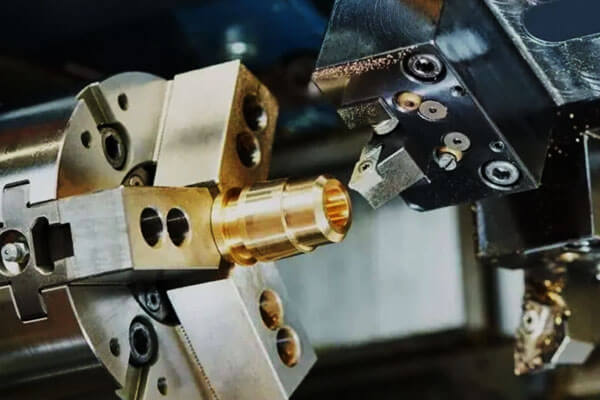
A diferencia del mecanizado manual convencional, Los sistemas CNC ejecutan trayectorias de herramientas programadas con precisión y consistencia excepcionales., Minimizar el error humano y permitir una producción repetible en lotes de producción grandes y pequeños..
| Tipo de mecanizado CNC | Capacidad | Tolerancia | Acabado superficial (Real academia de bellas artes) |
| Fresado de CNC (3-eje, 5-eje) | Superficies 3D complejas, bolsillos, contornos | ±0,005‑0,02 mm | 0.8-1,6 µm |
| CNC Turning | Partes cilíndricas, trapos, cirios | ±0,005‑0,02 mm | 0.8-1,6 µm |
| Molienda de CNC | Materiales duros; finos finos | ±0,001‑0,005 mm | 0.1-0,4 µm |
| tipo suizo (torneado + molienda) | Pequeño, partes complejas (± 0.01 mm) | ±0,005‑0,01 mm | 0.8-1,6 µm |
| Electroerosión multieje | Cavidades complejas, materiales endurecidos | ±0,005‑0,02 mm | 0.4-1,6 µm |
Rectificación de precisión
El rectificado de precisión es un proceso de acabado que utiliza muelas abrasivas para eliminar cantidades extremadamente pequeñas de material de una pieza de trabajo., produciendo una precisión dimensional excepcional y una integridad superficial superior.
Generalmente se realiza después del mecanizado y tratamiento térmico para lograr las dimensiones finales., mejorar la precisión geométrica, y refinar los acabados superficiales.

Porque las partículas abrasivas son considerablemente más duras que las herramientas de corte convencionales., El rectificado es capaz de mecanizar aceros endurecidos., cerámica, carburos, y otros materiales difíciles de mecanizar con una precisión notable.
| Tipo de molienda | Solicitud | Tolerancia | Real academia de bellas artes |
| Rectificado de superficies | Superficies planas, caras paralelas | ±0,001‑0,003 mm | 0.1-0,4 µm |
| Rectificado cilíndrico | Ejes, rollos, revistas de rodamientos | ±0,001‑0,003 mm | 0.1-0,4 µm |
| Rectificado sin centros | Piezas cilíndricas de gran volumen | ±0,002‑0,005 mm | 0.2-0,8 µm |
| Rectificado interno | Diámetros interiores | ±0,002‑0,005 mm | 0.2-0,8 µm |
| Rectificado de plantilla | Agujeros de precisión, contornos | ±0,001‑0,002 mm | 0.1-0,2 µm |
Mecanizado de descarga eléctrica (EDM)
Mecanizado de descarga eléctrica (EDM) Es un proceso de fabricación sin contacto que elimina material eléctricamente conductor mediante descargas eléctricas controladas entre un electrodo y la pieza de trabajo..
En lugar de depender de fuerzas de corte mecánicas, La electroerosión utiliza energía térmica generada por chispas de alta frecuencia para erosionar el material con una precisión excepcional..

Este proceso es particularmente valioso para producir cavidades intrincadas., esquinas internas afiladas, ranuras estrechas, microcaracterísticas, y geometrías complejas en materiales extremadamente duros que son difíciles o imposibles de mecanizar convencionalmente.
| tipo de electroerosión | Solicitud | Tolerancia | Real academia de bellas artes |
| EDM de hundimiento | Moldes, matrices, cavidades | ±0,005‑0,02 mm | 0.4-1,6 µm |
| EDM de alambre | Contornos, cirios, pequeños agujeros | ±0,002‑0,01 mm | 0.4-1,6 µm |
| Electroerosión de orificios pequeños | Orificios de refrigeración, agujeros iniciales | ±0,005‑0,02 mm | 1.6-3,2 µm |
Fabricación láser
Fabricación láser Emplea rayos láser altamente concentrados para procesar materiales mediante calentamiento localizado., fusión, vaporización, o ablación.
Dependiendo de la aplicación, Los láseres se pueden utilizar para cortar., perforación, soldadura, grabado, texturizado de superficies, micromecanizado, y marcado de precisión.

Láseres de fibra modernos, Láseres ultrarrápidos de femtosegundo, y los láseres de picosegundos han ampliado drásticamente las capacidades del procesamiento láser, permitiendo características extremadamente finas con un daño térmico mínimo.
| Proceso láser | Solicitud | Tamaño de la característica | Tolerancia |
| Corte con láser | Chapa de metal, tubos | Muesca 0,1‑0,3 mm | ±0,02‑0,05 mm |
| Perforación láser | Pequeños agujeros en materiales duros. | 0.02-1 milímetro | ±0,005‑0,02 mm |
| Marcado láser / grabado | Identificación, decoración | 0.01-0,05 mm | ±0,01‑0,02 mm |
| Micromecanizado láser | Características finas en piezas pequeñas. | 0.001-0,05 mm | ±0,001‑0,005 mm |
| Soldadura láser | Unión de precisión | 0.1-1 mm de soldadura | ±0,02‑0,05 mm |
Casting de precisión
Casting de precisión abarca tecnologías de fundición avanzadas capaces de producir componentes metálicos casi en forma neta con alta precisión dimensional, Excelente acabado superficial, y geometrías complejas.
A diferencia de la fundición en arena convencional, La fundición de precisión minimiza los márgenes de mecanizado y reduce significativamente la eliminación posterior de material..
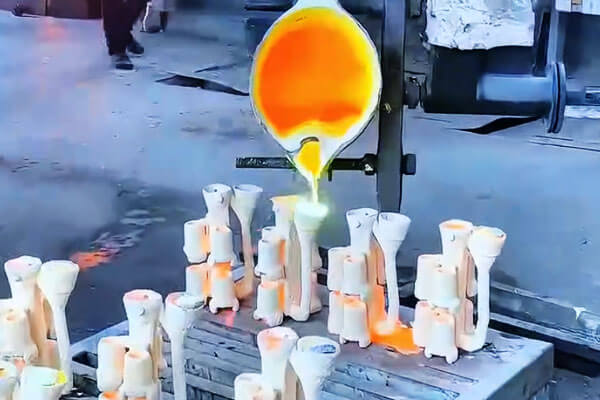
Fundición a la cera perdida, Casting de concha de concha, Casting de espuma perdida, y la fundición en arena de precisión se encuentran entre los procesos de fundición de precisión más utilizados..
| Proceso de fundición de precisión | Aplicaciones típicas | Tolerancia dimensional típica* | Acabado superficial típico (Real academia de bellas artes) |
| Casting de inversión (Casting de cera perdido) | Componentes aeroespaciales, cuerpos de válvulas de mariposa, piezas de bombeo, implantes médicos, hojas de turbina | ±0,10–0,30 mm por 25 mm | 1.6–6.3 μm |
| Fundición de moho de cerámica | Componentes automotrices, piezas de maquinaria, carcasa de precisión, impulsores | ±0,20–0,50 mm por 25 mm | 3.2–12.5 μm |
| Casting de concha de concha | Cuerpos de válvula, carcasa de equipo, tripa de la bomba, componentes hidráulicos, piezas automotrices | ±0,20–0,50 mm por 25 mm | 3.2–6.3 μm |
| Fundición en arena de precisión | Grandes válvulas industriales, tripa de la bomba, equipo minero, maquinaria pesada | ±0,30–0,80 mm por 25 mm | 6.3–25 μm |
| Casting de espuma perdida (Fundición en molde completo) | Bloques de motor, cabezales de cilindro, carcasas de bombas complejas, piezas estructurales automotrices | ±0,30–0,80 mm por 25 mm | 6.3–12.5 μm |
| Fundición de moho permanente (Casting de died de gravedad) | Componentes de válvula de aluminio, piezas automotrices, carcasa eléctrica | ±0,15–0,50 mm por 25 mm | 1.6–6.3 μm |
| Casting de baja presión | Ruedas automotrices, carcasas de aluminio, piezas estructurales aeroespaciales | ±0,15–0,40 mm por 25 mm | 1.6–3.2 μm |
| Fundición a la cera perdida al vacío | Componentes de turbina aeroespacial, implantes médicos, Piezas de acero inoxidable y titanio de alto rendimiento. | ±0,10–0,20 mm por 25 mm | 0.8–3.2 μm |
Falsificación de precisión
Forja de precisión es un proceso de formación de metales en el que fuerzas de compresión cuidadosamente controladas dan forma al metal calentado o frío en componentes con forma casi neta con propiedades mecánicas y consistencia dimensional excepcionales..
A diferencia del casting, La forja refina la estructura granular del material mediante la deformación plástica., mejorando significativamente su fuerza y resistencia a la fatiga.
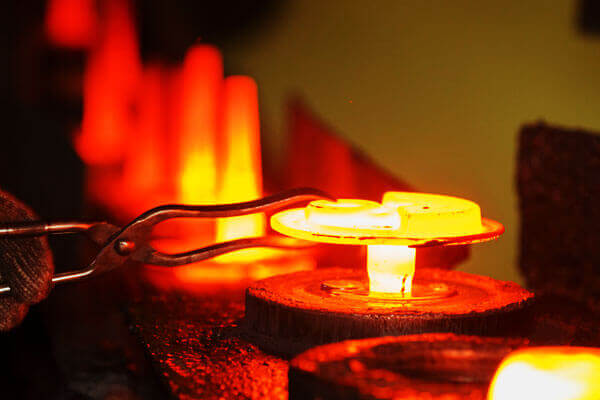
La forja de precisión moderna combina un diseño de matriz avanzado, simulación por computadora, y sistemas de producción automatizados para minimizar el desperdicio de material y maximizar el rendimiento de los componentes..
| Tipo de forja | Tolerancia | Acabado superficial | Productos típicos |
| Forjado de precisión en caliente/caliente | ±0,1‑0,3 mm | 1.6-6,3 µm | Engranaje, ejes, bordes de conexión |
| Forja de precisión en frío | ±0,05‑0,1 mm | 0.8-3,2 µm | Sujetadores, splines, carreras de rodamiento |
Fabricación aditiva
Fabricación aditiva, comúnmente conocido como 3D impresión, Es una tecnología de fabricación avanzada que construye componentes capa por capa directamente a partir de modelos digitales tridimensionales..
A diferencia de la fabricación sustractiva, que elimina material de una pieza de trabajo sólida, La fabricación aditiva crea piezas depositando o fundiendo selectivamente material solo donde es necesario..

Tecnologías de fabricación aditiva de metales, incluida la fusión selectiva por láser (SLM), Derretimiento del haz de electrones (EBM), Deposición de energía dirigida (Deducir), y Binder Jetting, se han vuelto cada vez más importantes en la fabricación de precisión..
| Proceso aditivo | Materiales | Tamaño de la característica | Tolerancia |
| Sinterización láser selectiva (SLS) | Polímeros, rieles | 0.1-0,2 mm | ±0,1‑0,2 mm |
| Sinterización de láser de metal directo (DMLS) | Inoxidable, titanio, Superáctil | 0.05-0,1mm | ±0,05‑0,1 mm |
| Derretimiento del haz de electrones (EBM) | Aleaciones de titanio | 0.1-0,2 mm | ±0,1‑0,2 mm |
| Estereolitmicromografía (SLA) | Fotopolímeros | 0.02-0,05 mm | ±0,02‑0,05 mm |
5. Materiales utilizados en la fabricación de precisión
Rieles
| Material | Aplicaciones | Propiedades clave |
| Acero carbono | Ejes, engranaje, perno, accesorios | Buena fuerza y maquinabilidad; económico. |
| Acero aleado | Engranaje, ejes, bordes de conexión, sujetadores aeroespaciales | Alta fuerza, tenacidad, Endurecimiento. |
| Acero inoxidable (304, 316, 17-4ph) | Instrumentos médicos, equipo de alimentos, aeroespacial, marina | Resistencia a la corrosión, fortaleza. |
| Aleaciones de aluminio (6061, 7075) | Aeroespacial, automotor, carcasa electrónica | Ligero, buena maquinabilidad, fuerza moderada. |
| Aleaciones de titanio (Calificación 5 TI -6Al -4V) | Aeroespacial, implantes médicos, automotriz de alto rendimiento | Excepcional relación resistencia-peso, biocompatibilidad, resistencia a la corrosión. |
| Aleaciones de cobre (latón, bronce) | contactos electricos, aspectos, accesorios de fontanería | Conductividad eléctrica, resistencia a la corrosión, maquinabilidad. |
| Aleaciones de magnesio | Aeroespacial, componentes ligeros de automoción | El metal estructural más ligero (1.74 g/cm³). |
| Superaleaciones a base de níquel (Incomparar, Hastelloy) | Motores a reacción, hojas de turbina, procesamiento químico | Resistencia a altas temperaturas, resistencia a la oxidación. |
Plásticos de ingeniería
| Plástico | Aplicaciones | Propiedades clave |
| OJEADA | Implantes médicos, aeroespacial, semiconductor | Temperatura alta, resistencia química, resistencia al desgaste. |
| Ptfe (Teflón) | Focas, aspectos, aislamiento eléctrico | Baja fricción, antiadherente, resistencia química. |
| Nylon | Engranaje, bujes, componentes mecanicos | Buena fuerza, resistencia al desgaste, autolubricante. |
| Eructo (Pom) | Engranajes de precisión, válvulas, sujetadores | Rigidez, baja fricción, estabilidad dimensional. |
| SOLO UHMW | Componentes del transportador, usar tiras, procesamiento de alimentos | Muy alta resistencia al desgaste, baja fricción. |
Cerámica
| Cerámico | Aplicaciones | Propiedades clave |
| Alúmina (Al₂O₃) | Aisladores electricos, herramientas de corte, usar piezas | Alta dureza, aislamiento eléctrico, conductividad térmica. |
| Zirconia (Zro₂) | Implantes dentales, aspectos, sensores de oxígeno | Dustuitud de alta fractura, resistencia al desgaste. |
| nitruro de silicio (Si₃n₄) | Aspectos, herramientas de corte, componentes de la turbina | Alta fuerza, dureza de la fractura, resistencia al choque térmico. |
Materiales compuestos
| Compuesto | Aplicaciones | Propiedades clave |
| Plástico reforzado con fibra de carbono (CFRP) | Aeroespacial, automotor, artículos deportivos | Alta resistencia al peso, rigidez. |
| Plástico reforzado con fibra de vidrio (PRFV) | Marina, automotor, construcción | Menor costo que el CFRP, Buenas propiedades mecánicas. |
| Compuestos carbono-carbono | Aeroespacial (frenos, conos de nariz), reactores de fusión | Excelentes propiedades a altas temperaturas, baja densidad. |
6. Medición de precisión y control de calidad
La medición es la base de la fabricación de precisión. Sin medición precisa, la precisión no se puede verificar.
Inspección dimensional
| Instrumento | Capacidad | Precisión típica | Solicitud |
| Coordinar la máquina de medir (Cmm) | 3D medición de piezas complejas | ±0,001‑0,005 mm | Piezas prismáticas, verificación de moldes y matrices. |
| MMC óptica / Sistema de visión | Rápido, medición sin contacto de piezas planas | ±0,001‑0,005 mm | Electrónica, dispositivos médicos, componentes delicados. |
| Interferómetro láser | Medición de longitud de alta precisión | ±0,0005 milímetros | Calibración de máquinas herramienta., medición a gran escala. |
| Escáner láser | 3D mapeo de superficies de piezas de forma libre | ±0,01‑0,05 mm | Ingeniería inversa, comparación con el modelo CAD. |
| Proyector de perfiles (comparador óptico) | 2D medición de geometrías simples. | ±0,001‑0,005 mm | Piezas pequeñas, trapos, engranaje. |
| Micrómetro / calibrar | Medición manual de longitud | ±0,001‑0,01 mm | Inspección del piso de producción. |
Pruebas de rugosidad superficial
| Parámetro | Descripción | Rango típico |
| Real academia de bellas artes (aspereza promedio) | Media aritmética de valores absolutos | 0.01-3,2 µm |
| RZ (profundidad de rugosidad media) | Promedio del pico más alto + valle más bajo | 0.05-10 micras |
| RT (rugosidad total) | Altura máxima de pico a valle | 0.1-15 micras |
Prueba de dureza
| Método | Escala | Solicitud | Rango típico |
| Rocoso | HRC, HRB | Rieles | 20-70 HRC |
| Brinell | media pensión | Piñones, parlotes | 100-600 HB |
| Vickers | Hv | Piezas pequeñas, revestimiento | 50-1.000 voltios |
| Microdureza | Hv (cargas pequeñas) | Secciones delgadas, revestimiento | 10-3.000 voltios |
Análisis de composición de materiales
| Método | Solicitud | Capacidad |
| Espectrometría de emisión óptica (OES) | composición metálica | Análisis cuantitativo de elementos.. |
| Fluorescencia de rayos X (XRF) | composición metálica, revestimiento | Análisis no destructivo. |
| Espectroscopia de rayos X de dispersión de energía (Eds) | Análisis localizado, inclusiones | Análisis elemental en microscopio.. |
Pruebas no destructivas (NDT)
| método END | Detecta | Solicitud |
| Prueba ultrasónica | Defectos internos (vacío, grietas, inclusiones) | Parlotes, piñones, soldadura. |
| Radiografía / Escaneo por tomografía computarizada | vacíos internos, grietas, porosidad | Piñones, soldadura, asambleas complejas. |
| Penetrante de tinte | Grietas superficiales, porosidad | Todos los metales; piñones, soldadura. |
| Partícula magnética | Grietas superficiales en materiales ferromagnéticos. | Piezas de acero, soldadura. |
| Corriente de Eddy | Grietas superficiales, cambios de conductividad | Tubería, inspección de materiales conductores. |
7. Ventajas de la fabricación de precisión
La fabricación de precisión se ha convertido en una capacidad indispensable para la industria moderna porque permite la producción de componentes que combinan una precisión dimensional excepcional con un rendimiento mecánico excepcional., fiabilidad, y consistencia.
Precisión dimensional superior
La fabricación de precisión logra consistentemente tolerancias estrictas que garantizan un ajuste perfecto., alineación, y funcionalidad.
Este nivel de precisión es fundamental para los motores aeroespaciales., implantes médicos, equipo semiconductor, y conjuntos de válvulas de precisión, donde incluso las desviaciones microscópicas pueden comprometer el rendimiento.
Excelente repetibilidad
Una vez que se establece un proceso optimizado, Se pueden producir miles (o incluso millones) de componentes idénticos con una variación mínima..
La alta repetibilidad admite piezas intercambiables., montaje automatizado, y calidad constante del producto.
Excelente integridad de la superficie
Las técnicas avanzadas de mecanizado y acabado producen, Superficies libres de defectos que reducen la fricción., mejorar el sellado, mejorar la resistencia a la fatiga, y aumentar la resistencia al desgaste y la corrosión.
Rendimiento mejorado del producto
La geometría precisa y la calidad superior de la superficie se traducen directamente en un mejor rendimiento operativo., incluyendo un movimiento más suave, menor vibración, mejor flujo de fluido, consumo de energía reducido, y mayor eficiencia.
Vida útil más larga
Los componentes fabricados con precisión experimentan una distribución de tensión más uniforme, minimizando el desgaste localizado, fatiga, y falla prematura.
Esto conduce a una mayor vida útil del equipo y a menores requisitos de mantenimiento..
Reducción de residuos de materiales
Procesos casi netos, trayectorias de herramientas optimizadas, y la eliminación precisa del material minimizan los desechos y mejoran la utilización del material..
Esto es especialmente valioso cuando se trabaja con materiales caros como titanio o superaleaciones a base de níquel..
Eficiencia de fabricación mejorada
Los componentes precisos requieren menos ajustes, ajuste, y retrabajo durante el montaje.
La inspección automatizada y el control de procesos digitales agilizan aún más la producción, aumentar el rendimiento manteniendo la calidad.
Menor costo total de propiedad
Aunque la fabricación de precisión puede implicar una mayor inversión inicial en equipos y experiencia, Reduce los costos del ciclo de vida al reducir las tasas de defectos., reclamaciones de garantía, falta del tiempo, y gastos de mantenimiento.
El resultado es un producto más económico y fiable durante toda su vida útil..
Mayor flexibilidad e innovación
La fabricación moderna de precisión permite la producción de geometrías cada vez más complejas que serían imposibles o prohibitivamente caras con métodos convencionales..
Esta capacidad apoya la innovación en industrias como la aeroespacial., tecnología médica, robótica, y electrónica.
8. Desafíos y limitaciones de la fabricación de precisión
A pesar de sus numerosas ventajas, La fabricación de precisión también presenta importantes dificultades técnicas., económico, y desafíos operativos.
Lograr y mantener una precisión a nivel de micras requiere una inversión sustancial, control riguroso del proceso, y experiencia especializada.
Alta inversión de capital
La fabricación de precisión se basa en máquinas CNC avanzadas, centros de mecanizado multieje, amoladoras de precisión, CMMS, sistemas de medición óptica, y equipos de automatización.
Estas tecnologías requieren una importante inversión inicial, así como los costos continuos de mantenimiento, calibración, y actualizaciones de software.
Requisitos de mano de obra calificada
Operar equipos de precisión exige ingenieros altamente capacitados, programadores, maquinistas, y especialistas en calidad.
Experiencia en CAD/CAM, Gd&T, metrología, ciencias de los materiales, y la optimización de procesos es esencial, hacer de la adquisición y el desarrollo del talento un desafío crítico.
Complejidad del proceso
La producción de componentes de alta precisión a menudo implica múltiples operaciones secuenciales, incluido el mecanizado., tratamiento térmico, molienda, refinamiento, e inspección, cada una de las cuales introduce fuentes potenciales de variación.
Coordinar estos procesos manteniendo la estabilidad dimensional requiere una planificación meticulosa.
Desgaste de herramientas y mantenimiento
Las herramientas de precisión se desgastan gradualmente durante el funcionamiento., afectando la precisión dimensional y el acabado superficial.
Monitoreo efectivo de herramientas, mantenimiento predictivo, y el reemplazo oportuno son necesarios para evitar problemas de calidad y tiempos de inactividad no planificados..
Sensibilidad ambiental
Fluctuaciones de temperatura, vibración, humedad, polvo, y las fuentes de alimentación inestables pueden influir en la precisión del mecanizado.
Mantener entornos de producción controlados aumenta tanto la complejidad operativa como el costo..
Costos de inspección y garantía de calidad
La verificación de tolerancias a nivel de micras requiere equipos de metrología sofisticados y personal calificado.
Inspección integral, aunque esencial, añade tiempo y gastos al proceso de fabricación.
Desafíos materiales
Materiales avanzados como aleaciones de titanio., Superalloys basados en níquel, ceramica tecnica, Y los materiales compuestos suelen ser difíciles de mecanizar debido a su alta dureza., mala conductividad térmica, o características abrasivas.
Estos materiales requieren herramientas especializadas y estrategias de mecanizado optimizadas..
Cadena de suministro y sostenibilidad
La fabricación de precisión depende cada vez más de las cadenas de suministro globales de materias primas de alta calidad., herramientas de corte, y componentes electrónicos.
Al mismo tiempo, Los fabricantes se enfrentan a una presión cada vez mayor para mejorar la eficiencia energética., Reducir el desperdicio, y adoptar prácticas de producción más sostenibles.
9. Aplicaciones industriales de la fabricación de precisión
La capacidad de producir componentes con una precisión y consistencia excepcionales ha hecho de la fabricación de precisión una tecnología fundamental en prácticamente todas las industrias de alto rendimiento..
Aeroespacial y aviación
Pocas industrias exigen mayores niveles de precisión que la aeroespacial. Los componentes deben soportar temperaturas extremas., presiones, y cargas mecánicas manteniendo una fiabilidad absoluta.
Las aplicaciones típicas incluyen:
- Hojas de turbina
- Tripas del motor
- Componentes del tren de aterrizaje
- Sistemas de control de vuelo
- Piezas estructurales de fuselaje
- Componentes del sistema de combustible
La fabricación de precisión garantiza la precisión aerodinámica, resistencia a la fatiga, y cumplimiento de estrictos estándares aeroespaciales.
Vehículos automotrices y eléctricos
Los vehículos modernos incorporan miles de componentes diseñados con precisión., desde motores de combustión interna hasta transmisiones eléctricas avanzadas.
Las aplicaciones incluyen:
- Bloques de motor
- Cabezales de cilindro
- Engranajes de transmisión
- Componentes del sistema de frenos
- Carcasas de motores eléctricos
- Placas de refrigeración de batería
- Sistemas de dirección y suspensión.
La alta precisión mejora la eficiencia, seguridad, durabilidad, y consistencia de fabricación.
Dispositivos médicos
La tecnología médica se basa en la fabricación de precisión para producir componentes que cumplan estrictos requisitos dimensionales y de biocompatibilidad..
Los ejemplos incluyen:
- Instrumentos quirúrgicos
- Implantes ortopédicos
- Implantes dentales
- Dispositivos de fijación espinal
- equipo endoscópico
- Instrumentos de diagnóstico
La precisión a nivel de micras es esencial para garantizar un ajuste adecuado, seguridad del paciente, y cumplimiento regulatorio.
Semiconductores y Electrónica
La industria electrónica exige una fabricación de ultraprecisión para dispositivos cada vez más miniaturizados y de alto rendimiento.
Los componentes típicos incluyen:
- Equipos de procesamiento de semiconductores.
- Moldes de precisión
- Conectores
- Disipadores de calor
- Sistemas microelectromecánicos (Mems)
- Herramientas para placas de circuito impreso
Los procesos de fabricación avanzados permiten la producción de características complejas en micro- y escalas nanométricas.
Generación de energía y energía
La fabricación de precisión respalda los sistemas de energía convencionales y renovables mediante la producción de componentes confiables capaces de operar en condiciones difíciles..
Las aplicaciones incluyen:
- Componentes de turbinas de gas y vapor.
- Equipos de reactores nucleares.
- Cajas de cambios de turbinas eólicas
- Piezas del sistema de combustible de hidrógeno
- Válvulas de petróleo y gas.
- Componentes del intercambiador de calor
La fabricación precisa mejora la eficiencia, seguridad, y longevidad operativa.
Equipos industriales y control de fluidos
La maquinaria industrial depende de componentes de precisión para garantizar un funcionamiento suave y un rendimiento confiable.
Los productos comunes incluyen:
- Zapatillas
- Compresores
- Aspectos
- Cilindros hidráulicos
- Cuerpos de válvulas de mariposa
- Válvulas de bola
- Engranajes de precisión
Las tolerancias estrictas mejoran el sellado, reducir las fugas, y extender la vida útil del equipo.
Robótica y automatización
Los sistemas robóticos requieren peso ligero, Componentes de alta precisión para lograr un posicionamiento preciso y un movimiento repetible..
La fabricación de precisión permite:
- Brazos robóticos
- Cajas de cambios de precisión
- Componentes de accionamiento armónicos
- Sistemas de control de movimiento
- Efectores finales
- Conjuntos de guía lineal
10. Tecnologías emergentes que dan forma a la fabricación de precisión
| Tecnología | Descripción | Impacto en la fabricación de precisión |
| IA y aprendizaje automático | Mantenimiento predictivo, optimización de procesos, detección de defectos. | Reduce el tiempo de inactividad; mejora el rendimiento; permite el control de calidad en tiempo real. |
| Gemelos digitales | Réplicas virtuales de procesos/máquinas físicas. | Permite simulación y optimización sin prototipos físicos.; Reduce el desperdicio. |
| Internet industrial de las cosas (Niota) | Sensores y conectividad para recopilación y análisis de datos.. | Permite el monitoreo en tiempo real, mantenimiento predictivo, trazabilidad. |
| Fabricación aditiva (3D impresión) | Producción de piezas capa por capa a partir de diseño digital. | Permite geometrías complejas, Desechos de material reducido, prototipos rápidos. |
| Fabricación híbrida | Combinando procesos aditivos y sustractivos (P.EJ., 3Impresión D + Acabado de CNC). | Ofrece libertad de diseño con acabado superficial.; reduce los tiempos de entrega. |
Materiales avanzados |
Materiales nanoestructurados, aleaciones de alta entropía, materiales inteligentes. | Permite nuevas capacidades de rendimiento; propiedades mejoradas. |
| Nanofabricación | Fabricación a escala atómica/molecular. | Permite dispositivos ultraprecisos; nuevas aplicaciones en electrónica, medicamento, materiales. |
| Fabricación autónoma | Procesos de autooptimización, manipulación automatizada de materiales, ensamblaje robótico. | Reduce el error humano; aumenta el rendimiento; permite 24/7 producción. |
| Control inteligente de procesos | Monitoreo en tiempo real y control adaptativo de variables de fabricación.. | Mejora la calidad; reduce la variabilidad; permite la fabricación de circuito cerrado. |
11. Conclusión
La fabricación de precisión ha evolucionado desde la artesanía tradicional hasta convertirse en uno de los pilares más sofisticados y estratégicamente importantes de la industria moderna..
Es mucho más que la capacidad de producir piezas con tolerancias estrictas.; Representa una filosofía de ingeniería integral centrada en la precisión., consistencia, estabilidad del proceso, y mejora continua.
Integrando maquinaria avanzada, automatización inteligente, materiales de alto rendimiento, tecnologías digitales, y una rigurosa gestión de la calidad,
La fabricación de precisión permite la producción de componentes que cumplen con los requisitos cada vez más exigentes de las industrias de alta tecnología actuales..
Al final, Las organizaciones que invierten en fabricación de precisión están invirtiendo en la excelencia del producto., eficiencia operativa, y liderazgo tecnológico.
Combinando experiencia en ingeniería con capacidades de fabricación de vanguardia y sistemas de calidad sólidos., La fabricación de precisión no solo ofrece componentes de precisión excepcional sino que también impulsa la innovación., reduce los costos del ciclo de vida, mejora la satisfacción del cliente, y apoya el avance continuo de la industria moderna.
Preguntas frecuentes
¿Cuál es la diferencia entre fabricación de precisión y fabricación general??
La fabricación de precisión se centra en tolerancias estrictas (±0,001‑0,1 mm), acabados superficiales superiores (Real academia de bellas artes <1.6 µm), y repetibilidad constante.
La fabricación general puede tolerar tolerancias más flexibles. (±0,1‑1,0 mm) y acabados más rugosos para aplicaciones menos críticas.
¿Cómo sé si una pieza requiere fabricación de precisión??
Considere la función, tolerancias, acabado superficial, material, y volumen.
Si la pieza interactúa con otros componentes., tiene requisitos de ajuste ajustados, o debe soportar un alto estrés, Por lo general, se requiere una fabricación de precisión..
¿Cuáles son los defectos más comunes en la fabricación de precisión??
Errores dimensionales (mecanizado a tamaño incorrecto), defectos de la superficie (arañazos, rebabas, marcas de herramientas), errores geométricos (llanura, redondez, concentricidad), y defectos materiales (porosidad, inclusiones, grietas).
Estos se detectan y previenen mediante inspección., control de procesos, y NDT.
¿Por qué es importante el acabado superficial??
El acabado superficial influye directamente en la fricción, resistencia al desgaste, rendimiento de sellado, vida de fatiga, resistencia a la corrosión, y calidad estética.
Procesos de acabado de precisión como el rectificado., perfeccionamiento, cojinete, y el pulido se utilizan a menudo para lograr la integridad superficial requerida.