Resumé
UNS C95800 is a nickel aluminum bronze casting alloy designed for demanding environments where styrke, seawater corrosion resistance, slidstyrke, and galling resistance all matter at the same time.
It belongs to the broader aluminum bronze family, but its nickel- and iron-rich chemistry gives it a more specialized role than ordinary bronzes: engineers often specify it for marine hardware, propeller, ventiler, pumper, and other parts that must survive aggressive saline service.
Fra et designmæssigt synspunkt, C95800 is best understood as a marine-grade structural bronze.
It is not simply “strong copper.” Its value comes from the interaction of chemistry, phase structure, and thermal history.
I havvand, that combination can produce excellent service performance, but only when composition stays inside the specified window and the casting process is controlled carefully.
1. What Is UNS C95800 Nickel Aluminum Bronze?
UNS C95800 is a nickel aluminum bronze casting alloy designed for demanding service environments where styrke, seawater corrosion resistance, slidstyrke, and galling resistance all matter at the same time.
It is a standard cast copper alloy covered by ASTM B148, which lists UNS C95800 among the aluminum-bronze casting grades used for severe-duty applications.
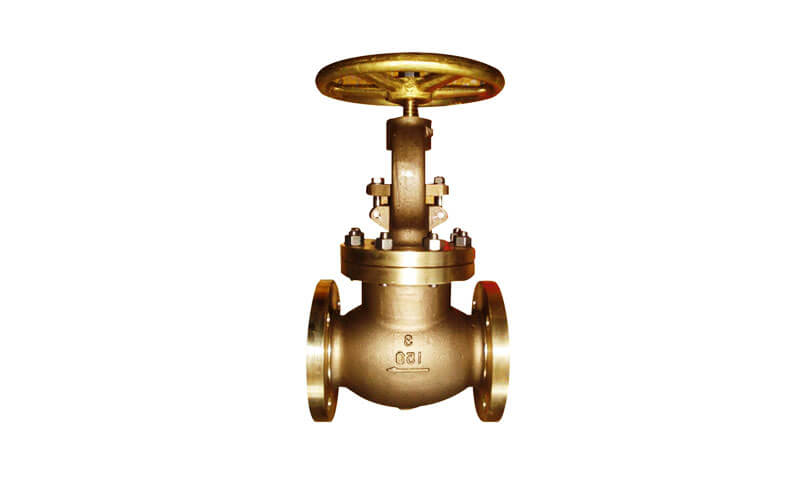
In practical engineering use, C95800 is often selected for Marine hardware, propeller, pumpekomponenter, ventiler, and seawater-exposed castings because it combines high mechanical strength with strong resistance to saltwater service.
Technical literature on nickel aluminum bronzes also identifies the alloy family as suitable for marine hardware, havvandspumper og ventiler, and heavy-duty sleeve-bearing applications.

Nøglefunktioner
Marine-grade corrosion resistance
C95800 is especially valued for seawater service. Nickel aluminum bronzes are widely used in marine environments because their chemistry and microstructure support strong corrosion performance in saltwater exposure.
Høj styrke for en kobberlegering
Compared with many general-purpose bronzes, C95800 offers high strength.
Typical published data give it minimum room-temperature tensile strength around 85 KSI and minimum yield strength around 35 KSI, placing it in the high-strength range for copper-base cast alloys.
Fremragende slid- og slidstyrke
The alloy performs well where sliding contact, heavy load, and abrasive seawater conditions can cause rapid wear in softer materials.
Nickel aluminum bronzes are specifically recognized for their strong wear behavior in marine and industrial service.
Strong cavitation and erosion performance
C95800 is a common choice for propellers and flow-exposed components because nickel aluminum bronzes have strong resistance to cavitation and erosion-corrosion in seawater service.
Good castability for complex parts
As a casting alloy, C95800 is available in forms such as sand cast, Centrifugal rollebesætning, and continuous cast stock, which makes it practical for large marine components and industrial castings.
2. Legeringsidentitet og typisk kemi
Chemistry is the foundation of the alloy’s behavior. The main engineering point is that C95800 is not a random mix of copper and alloying additions.
It is a carefully balanced bronze in which each element contributes to a specific performance target
ASTM-based summaries give the same essential range and note that the iron content must not exceed the nickel content.
| Element | Typisk rækkevidde (Wt.%) | Functional role |
| Kobber (Cu) | 79.0 min | Base metal; provides the copper-alloy matrix and intrinsic corrosion behavior. |
| Aluminium (Al) | 8.5–9.5 | Main strengthening element; supports protective oxide formation and high strength. |
Nikkel (I) |
4.0–5,0 | Improves corrosion resistance and helps stabilize useful microstructures. |
| Jern (Fe) | 3.5–4,5 | Contributes strongly to strength and wear resistance. |
| Mangan (Mn) | 0.8–1.5 | Assists with deoxidation and property balance. |
| Silicium (Og) | op til 0.10 | Controlled impurity limit. |
| Føre (Pb) | op til 0.03 | Tight impurity limit for quality and service control. |
3. Metallurgy and microstructure
C95800 is metallurgically complex. In the as-cast state, research on UNS C95800 describes a microstructure of Alpha (-en) and beta (b) phases plus a small fraction of intermetallic kappa (κ) faser.
The fraction and distribution of these phases depend on cooling rate and subsequent heat treatment.
That is not a minor detail; it is one of the reasons the alloy can perform so well in service, and also one of the reasons poor process control can hurt performance.
This phase structure explains two important behaviors. Først, the alloy gains much of its strength from its multiphase nature, not from a simple single-phase solid solution. Anden, microstructure strongly affects corrosion response in seawater.
Langhe-industry’s seawater studies show that small composition differences, especially aluminum content, can lead to markedly different corrosion outcomes.
In one study, the higher-aluminum composition within the C95800 range showed superior seawater corrosion resistance, while the lower-aluminum comparison material suffered much more severe selective phase attack.
4. Physical and Mechanical Properties of UNS C95800 Nickel Aluminum Bronze
C95800 is a high-strength copper alloy, and its properties depend on casting condition and thermal history.
The tables below show representative reference values for the alloy in typical as-fabricated or cast conditions.
Fysiske egenskaber
| Ejendom | Metric Value | Imperial Value |
| Densitet | 7.64 g/cm³ | 0.276 lb/in³ |
| Elastikmodul (Youngs modul) | 120 GPA | 17.4 × 10^6 psi |
| Forskydningsmodul | 44 GPA | 6.38 × 10^6 psi |
| Poissons forhold | 0.34 | 0.34 |
| Termisk ledningsevne | 36 W/m · k | 20.8 BTU/(hr·ft·°F) |
| Specifik varmekapacitet | 440 J/kg · k | 0.189 Btu/lb · ° F. |
| Termisk ekspansion | 17 µm/m · k | 9.44 µin/in·°F |
| Elektrisk ledningsevne | 7.0% IACS | 7.0% IACS |
| Solidus temperature | 1040 ° C. | 1904 ° f |
| Liquidus temperature | 1060 ° C. | 1940 ° f |
Mekaniske egenskaber
| Ejendom | Tilstand | Metric Value | Imperial Value |
| Trækstyrke | Cast and annealed | 585 MPA | 84.8 KSI |
| Trækstyrke | Sandstøbt | 655 MPA | 95 KSI |
| Trækstyrke | Permanent mold cast | 660 MPA | 95.7 KSI |
| Udbyttestyrke | Cast and annealed | 240 MPA | 34.8 KSI |
| Udbyttestyrke | Sandstøbt | 262 MPA | 38 KSI |
| Udbyttestyrke | Permanent mold cast | 360 MPA | 52.2 KSI |
| Forlængelse | Cast and annealed | 15% | 15% |
| Forlængelse | Sandstøbt | 15% | 15% |
| Forlængelse | Permanent mold cast | 17% | 17% |
| Hårdhed | Sandstøbt | 159 Hb | 159 Hb |
| Hårdhed | Cast and annealed | 84–89 HRB | 84–89 HRB |
| Hårdhed | Permanent mold cast | 88 HRB | 88 HRB |
| Shear strength | Sandstøbt | 400 MPA | 58 KSI |
| Træthedsstyrke | Sandstøbt | 214 MPA | 31 KSI |
5. Korrosion & Slidstyrke: Core Performance Advantages
UNS C95800 earns its reputation in service because it combines high seawater corrosion resistance med strong wear and galling resistance.

Research on C95800 in 3.5 wt% NaCl shows that both corrosion behavior and surface reactivity depend on sammensætning, heat-treatment condition, and whether the alloy faces stagnant or flowing saline conditions.
That makes the alloy especially relevant for marine hardware, Propellsystemer, and other parts that operate continuously in salt water.
A useful way to view the alloy is as a material that resists several failure modes at once:
- General seawater corrosion: suitable for continuous exposure in marine service.
- Selective phase attack / de-alloying sensitivity: microstructure matters, and the alloy performs best when chemistry stays in range and the structure is well controlled.
- Wear and abrasion: the alloy is widely selected for parts that must endure friction, glidende kontakt, and mechanical loading.
- Cavitation and erosion service: it is used in propellers and other flow-exposed parts because it handles aggressive marine conditions well.
The key engineering message is straightforward: C95800 is not just corrosion-resistant; it is corrosion-resistant while still remaining mechanically robust and wear-capable.
That combination is why it is frequently chosen for marine components where steel would corrode too quickly and softer bronzes would wear too fast.
6. Casting Performance of C95800 Alloy
C95800 is fundamentally a casting alloy, and its typical supply forms reflect that role.
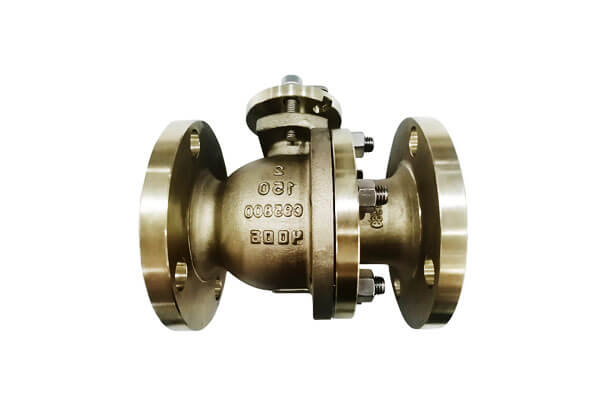
Standards and product references place it in sand-cast, centrifugal-cast, continuous-cast, and permanent-mold-cast product families, with use in large cast parts where strength and marine durability are both important.
Fælles kasteruter
- Sandstøbning: velegnet til større, more complex parts such as marine hardware and heavy housings.
- Centrifugalstøbning: useful for cylindrical or ring-shaped components such as sleeves and bush-type forms.
- Kontinuerlig casting: used for semi-finished stock and large-scale industrial supply.
- Permanent-støbning: a good fit when the part needs improved repeatability and better dimensional control.
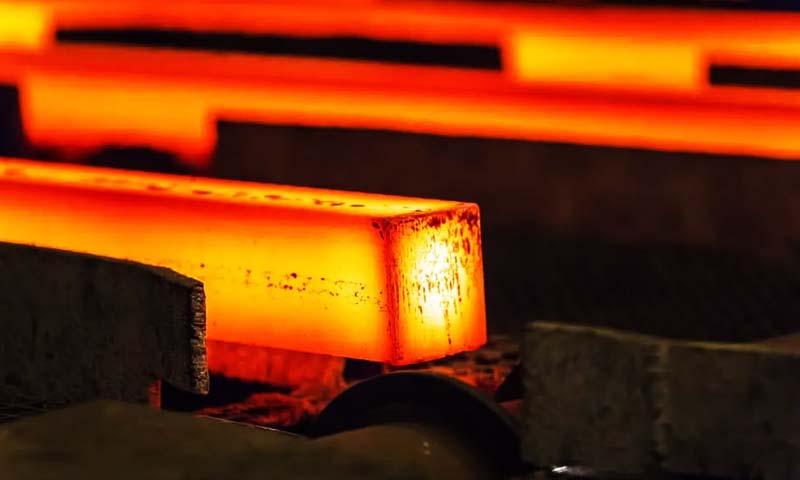
The casting behavior of C95800 is tied closely to delstørrelse, solidification history, and subsequent thermal treatment.
In marine propeller and valve applications, the alloy is often used in large castings, and studies show that post-casting heat treatment and microstructure have a direct effect on both mechanical performance and corrosion resistance.
A practical foundry takeaway is that C95800 rewards disciplined process control.
If the casting cools unevenly, if chemistry drifts, or if heat treatment is poorly chosen, the resulting microstructure can shift in ways that weaken toughness or corrosion performance.
Researchers have shown that even a heat treatment intended to adjust structure can lead to brittle behavior if the thermal cycle is not appropriate.
7. Bearbejdning, Deltag i, and Finishing
C95800 is machinable, but it is not a free-cutting alloy. A technical datasheet rates its machinability at 50 relative to free-cutting brass at 100, which places it in the moderate-machinability category.
That means it machines well enough for industrial work, but it still demands sensible tooling and cutting practice.
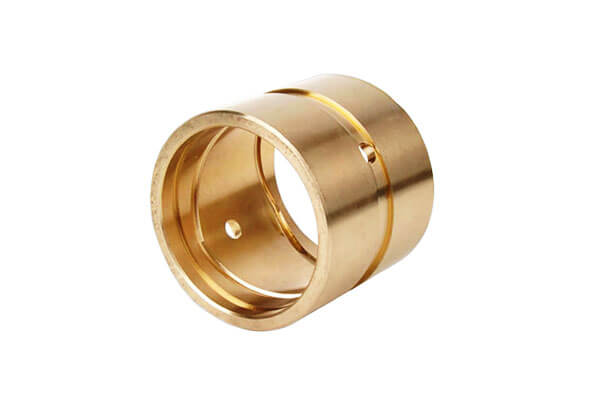
Bearbejdning
For machining, the practical rule is to treat C95800 as a high-strength bronze, not as a soft copper alloy.
It is commonly machined into final interfaces, Boringer, and bearing surfaces after casting, but tool wear and cutting force are higher than with simpler brasses.
In real production, that means rigid setups, appropriate feeds and speeds, and careful finishing stock planning.
Deltag i
The alloy supports several joining methods, but not all methods are equally suitable.
One technical reference lists lodding, lodning, coated metal arc welding, and gas shielded arc welding as suitable, mens oxyacetylene welding and carbon arc welding are not recommended.
That makes joining possible, but it also means fabrication teams should choose the process deliberately rather than treating the alloy like ordinary steel.
Efterbehandling
Finishing is usually part of the production route rather than an afterthought.
Foundry and machining suppliers commonly pair C95800 with varmebehandling, udglødning, bearbejdning, pulverbelægning, maleri, Anodisering, og samling depending on the final part requirement.
In service, the most important finishing decision is often whether the component needs a protective coating, a cosmetic finish, or only precise machined surfaces.
8. Typical Industrial Applications of C95800 Alloy
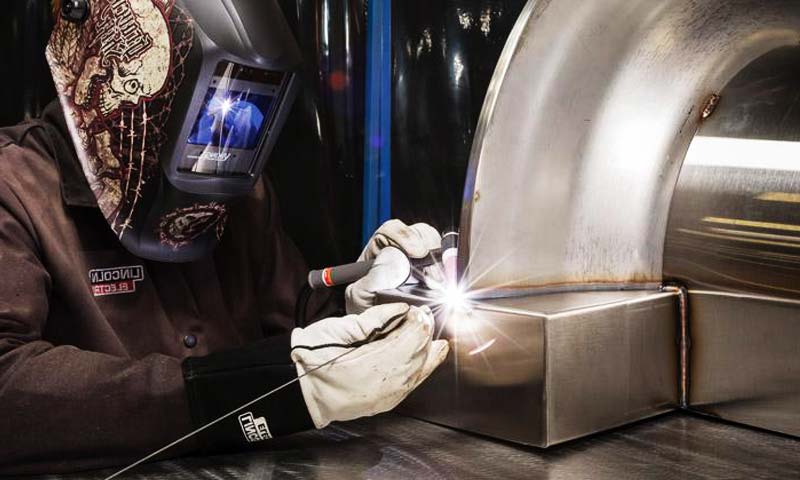
UNS C95800’s balanced performance makes it indispensable across high-demand industrial sectors, with core applications including:
- Marine & Offshore Engineering: Ship propeller hubs, rudder bearings, seawater pump impellers and casings, Ventillegemer, Ventilsæder, marine fastgørelsesmidler, offshore platform hardware, og undervandsstik.
- Olie & Gasindustri: Ventiler, pumpekomponenter, wellhead fittings, and connectors for onshore and offshore production, resisting brine and hydrocarbon corrosion.
- Tungt maskiner & Kraftoverførsel: Kraftige lejer, bøsninger, Gear, snekkehjul, trykskiver, and gearbox components for construction, minedrift, og industrielle maskiner.
- Fluid Handling Systems: High-pressure pump and valve components, seawater intake screens, and hydraulic system parts for marine and industrial fluid systems.
- Rumfart & Militær: Landing gear bushings, thrust bearings, and military-grade marine hardware requiring high strength, Korrosionsmodstand, and non-magnetic properties.
- Kraftproduktion: Water turbine components, pumpe dele, and heat exchanger fittings for coastal power plants, resisting seawater corrosion and cavitation.
| Ejendom | C95800 | C95500 | C95400 | C86300 | C93200 |
| Fælles navn | Nikkelaluminiumsbronze | Nikkelaluminiumsbronze | Aluminiumsbronze | Manganbronze | Bærer bronze / Tin bronze |
| Densitet | 7.64 g/cm³ / 0.276 lb/in³ | 7.53 g/cm³ / 0.272 lb/in³ | 7.45 g/cm³ / 0.269 lb/in³ | 7.83 g/cm³ / 0.283 lb/in³ | 8.91 g/cm³ / 0.322 lb/in³ |
| Trækstyrke | 585–586 MPa / 85 ksi min | 655 MPA / 95 ksi min | 586 MPA / 85 ksi min | 758 MPA / 110 ksi min | 241 MPA / 35 ksi min |
| Udbyttestyrke | 241 MPA / 35 ksi min | 290 MPA / 42 ksi min | 221 MPA / 32 ksi min | 427 MPA / 62 ksi min | 138 MPA / 20 ksi min |
| Forlængelse | 18% min | 10% min | 12% min | 14% min | 10% min |
| Bearbejdningsevne | 20 | 50 | 60 | 8 | 70 |
Korrosionsmodstand |
Excellent in seawater and marine service | Very good to excellent in marine service | Excellent general and marine corrosion resistance | God, but less marine-specialized | God, mainly for bearing service |
| Slid / galling resistance | Høj | Høj | Fremragende | Fremragende | God |
| Typiske applikationer | Propeller, Hubs, aksler, Ventillegemer, Bær plader, snekkehjul | Marine ventiler, propeller, skader, bøsninger | Bøsninger, Gear, Bær plader, pumper, ventiler | Heavy-load bushings, Gear, Ventil stængler, Hydrauliske dele | Lejer, bøsninger, skiver, pumpe dele |
10. Konklusion
UNS C95800 nickel aluminum bronze is a premium, versatile cast copper alloy that delivers an unrivaled balance of Mekanisk styrke, sejhed, seawater corrosion resistance, and wear performance.
Its precisely engineered chemical composition and refined duplex microstructure eliminate the common failure modes of standard copper alloys in extreme environments, making it a cornerstone material for marine, Offshore, olie og gas, og tunge industrielle applikationer.
While it requires specialized casting and machining practices, its long service life, minimal maintenance requirements, and ability to replace steel in corrosive, high-load systems deliver a lower total cost of ownership over time.
Til ingeniører og materialevælgere, C95800 is the optimal choice for components that demand durability, pålidelighed, and performance in the harshest operating conditions, standing as a benchmark in high-performance cast copper alloys.
FAQS
Is C95800 good in seawater?
Ja. That is one of its main reasons for use, but performance depends on keeping the chemistry within specification and controlling microstructure.
Can C95800 be heat-treated?
It can be stress relieved, but it does not behave like a classic precipitation-hardening alloy. Even so, thermal history still influences corrosion performance and microstructure.
How does it compare with C95500?
C95500 is often the top-end propeller bronze, while C95800 is also a high-performance marine alloy with excellent seawater resistance and broad casting utility.