1. Uvod
The control valve is the primary final control element in most automated process systems: it receives a command from a controller and modulates a flow passage to regulate process variables such as flow, pritisak, Temperatura i nivo.
Correct selection, dimenzionisanje, actuation and integration of control valves determine loop stability, Kvaliteta proizvoda, energy consumption and safety;
obrnuto, an underspecified or poorly maintained valve is a frequent root cause of oscillation, throughput loss and unplanned shutdowns.
2. Što je upravljački ventil
A control valve is a mechanical device that regulates the rate of fluid flow, pritisak, razina, or temperature within a process system by varying the flow passage in response to a control signal.
It serves as the final control element in an automated control loop—executing the decisions made by controllers to maintain process variables at desired setpoints.
Unlike on/off isolation valves, control valves operate in a continuously modulating mode, allowing precise adjustment of flow to achieve stable process control.
They are typically powered by pneumatski, električni, or hydraulic actuators, which translate a signal (npr., 4–20 mA or 3–15 psi) into valve movement.

Ključne karakteristike
- Dynamic Flow Modulation — Provides precise, proportional control rather than simple open/close operation.
- Automated Actuation — Uses pneumatic, električni, or hydraulic actuators for rapid and repeatable positioning.
- Smart Control Integration — Equipped with digital positioners (HART, Foundation Fieldbus, Profibus) for diagnostics, povratne informacije, i prediktivno održavanje.
- Kompatibilnost procesa — Designed to handle gases, tečnosti, pare, or slurries under wide pressure (vacuum to 700 bar) i temperatura (−200 °C do 600 ° C) raspon.
- Safety and Reliability — Often configured with fail-safe positions (fail-open, fail-closed, fail-in-place) to ensure system integrity during power or signal loss.
3. Core Components and How They Work
A control valve is more than a simple flow restrictor; to je mechanical system composed of several interdependent components, each designed to ensure precise modulation, pouzdanost, and durability under a wide range of industrial conditions.
Tijelo ventila
The valve body is the pressure-containing shell that houses the flow path and internal trim. It is designed to withstand system pressure, temperatura, and fluid properties.
Common body materials include Carbon čelik, nehrđajući čelik, dupleks, Nikel legure, and special corrosion-resistant alloys.
Funkcije:
- Provides the main passage for fluid flow.
- Supports internal trim (priključak, sjedalo, kavez) and actuator mounting.
- Interfaces with piping through flanged, navoj, or welded connections.
Valve Trim
Trim refers to the internal components that directly control the flow, uključujući priključak, sjedalo, kavez, stabljika, and sometimes orifices.
Trim design determines the valve’s inherent flow characteristic, pressure drop capabilities, and resistance to cavitation and erosion.
Key points:
- Priključak & sjedalo: The primary throttling elements. Their geometry defines linear, jednak postotak, or quick-opening characteristics.
- Cage or multistage trims: Used in high-pressure-drop applications to reduce noise, prevent cavitation, and improve stability.
- Izbor materijala: Tvrdoglav (npr., Stelliti, volfram karbid) poboljšava otpor nošenja; Mekana sjedala (PTFE, elastomer) provide tight shutoff but have temperature/pressure limits.
Aktuator
The actuator converts the control signal into mechanical motion, either linear (for globe or diaphragm valves) or rotary (for ball or butterfly valves).
Tipovi:
- Pneumatski aktuatori: Brzi odgovor, spring-return for fail-safe action, widely used in industrial plants.
- Električni aktuatori: Precise positioning, suitable for remote or automated systems.
- Hidraulički aktuatori: High-force capability, ideal for very large valves or rapid response under high pressure.
Key role: Ensures accurate and repeatable movement of the valve stem or shaft in response to the controller signal.
Positioner
The positioner is the interface between the controller and the actuator. It compares the valve position with the control signal and adjusts the actuator to achieve the desired position.
Advantages of modern digital/smart positioners:
- Remote calibration and configuration (HART, Foundation Fieldbus).
- Continuous diagnostic feedback: travel, obrtni moment, histereza, stiction.
- Predictive maintenance alerts based on performance trends.
Bonnet and Packing
- Poklopac: Provides a sealed interface between the valve body and stem, allowing stem movement while maintaining pressure integrity.
- Pakiranje: Prevents leakage along the stem or shaft. Common options include graphite, PTFE, or bellows (for fugitive emission control).
Accessories and Auxiliary Devices
- Limit switches: Detect full open or closed positions for safety interlocks.
- Solenoid valves & Filteri: Regulate pilot air supply or actuator pressure.
- Bypass lines: Allow maintenance or start-up without disrupting the process.
- Noise/cavitation suppressors: Multi-stage trim designs or diffusers reduce vibration and erosion.
4. Common Valve Types Used for Control and Their Characteristics
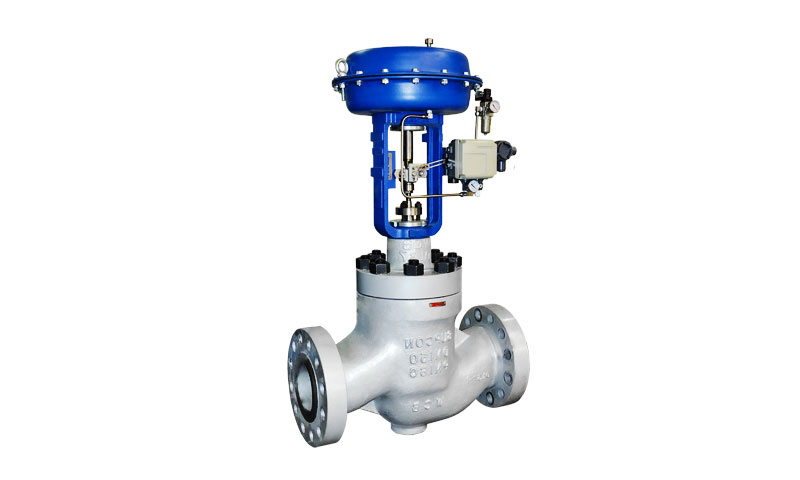
Control valves come in various designs, each optimized for specific flow control performance, pad pritiska, fluid type, and process conditions.
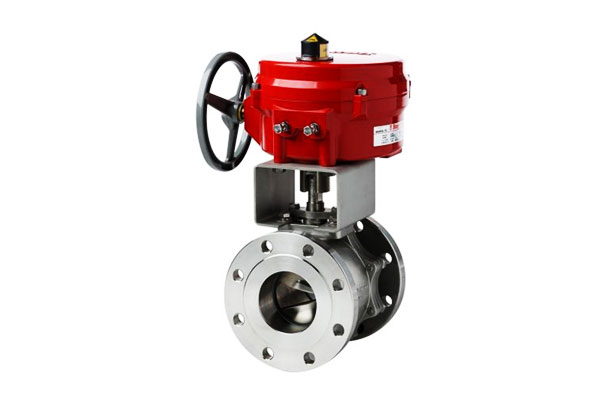
Selecting the right valve type is critical to ensure precise modulation, Dug radni vijek, and minimal maintenance.
| Tip ventila | Motion | Ključne karakteristike | Prednosti | Ograničenja | Typical Industrial Applications |
| Globus Control Valves | Linearno (axial plug movement) | High throttling accuracy, predictable flow, multi-stage trims for cavitation & noise control | Excellent control precision, easily customizable trims, handles high ΔP | Large footprint, pad većeg pritiska, heavier than rotary valves | Pare & feedwater control, Hemijski reaktori, HVAC throttling, Procesne linije visokog pritiska |
| Rotary Control Valves (Characterized Ball / Segmented Ball) | Rotacijski | Balonsko isključivanje, Brzi odgovor, nizak obrtni moment, Kompaktan dizajn | High flow capacity with minimal ΔP, kompaktan, suitable for hazardous fluids | Less linear near fully closed positions without special trims | High-capacity process control, ulja & gasovoda, Hemijska izolacija, emergency shutdowns |
| Butterfly Control Valves | Rotacijski (disc rotation) | Lagana, jeftin, Pogodno za velike promjere, rapid opening/closing | Cost-effective for large lines, easy installation & održavanje | Lower precision near closed position, susceptible to disc wear with abrasive fluids | Hvac, Distribucija vode, Pročišćavanje otpadnih voda, large-diameter pipeline modulation |
| Dijafragma / Pinch Control Valves | Linearno (diaphragm flexes) | Hygienic flow path, minimal dead zones, excellent corrosion/slurry resistance | Ideal for corrosive or abrasive fluids, sanitary applications, low leakage | Limited pressure and temperature range, smaller flow capacity | Hrana & pića, Farmaceuticals, Hemijsko doziranje, rukovanje gnojem |
Eccentric Plug / Needle Valves |
Linear or Rotary | High-resolution control, precise low-flow modulation | Excellent for metering & instrumentacija, very fine control | Limited to small diameters, low-to-moderate flow rates | Laboratory processes, pilot plants, instrument linije, Hemijsko doziranje |
| Kontrola Kuglasti ventili (Segmented / V-Notch) | Rotacijski | V-shaped or segmented plug for linearization, high turndown | Wide rangeability, usko popuštenje, kompaktan | Can be costly for large diameters, limited high-pressure multi-stage options | High turndown ratio applications, hemijska injekcija, precise flow splitting |
| Control Butterfly Valves with Eccentric Discs | Rotacijski | Offset disc reduces seat wear, improves tightness | Handles moderate pressure, cost-effective for large sizes | Not suitable for high-precision throttling | Cooling water, Hvac, Veliki cjevovodi, komunalne usluge |
5. Actuation and Control Interfaces
Actuator types
- Pneumatski: Brzi odgovor, jednostavan, common in hazardous areas. Typical supply: 20-100 PSI (1.4–6.9 bar). Spring-return designs provide fail-safe.
- Električni: precizno pozicioniranje, easy remote integration, available with hold/torque control. Slower for large valves versus pneumatic.
- Hidraulički: high force capability, used for very large valves or fast actuation under high load.
Positioners and control signals
- Analog positioners: accept 4–20 mA input (or 3–15 psi pneumatic) with I/P converters for pneumatic actuators.
- Smart/digital positioners: HART, Foundation Fieldbus, Profibus — provide auto-tuning, diagnostics (histereza, stiction, travel, obrtni moment), and remote configuration.
- Local feedback: includes limit switches, transmitter outputs (position feedback 4–20 mA) and valve health metrics.
Performance data (tipičan)
- Vrijeme odziva: small control valves with pneumatic actuators: 0.1–2 s for small strokes; larger valves: several seconds to tens of seconds.
- Positioner accuracy: ±0.5% of span or better for high-end digital positioners.
- Rangeability: good control valves exhibit 30:1-100:1 rangeability depending on trim and characteristic.
6. Manufacturing Process of Control Valves
The manufacturing of control valves is a kompleks, Višestruki proces that combines precision engineering, metallurgical expertise, i stroga kontrola kvaliteta.
Proper manufacturing ensures reliability, tight control, and long service life under demanding industrial conditions.

Dizajn & Inženjering
- CAD Modeling & FEA Analysis: The valve body, ukinuti, and actuator mountings are designed using computer-aided design (CAD), with finite element analysis (Fea) applied to predict stress distribution and deformation under pressure and thermal loads.
- CFD Simulation: Computational fluid dynamics (CFD) is used to optimize internal flow paths, Smanjite turbulenciju, minimize cavitation, and predict pressure drop.
- Material Specification: Materials are selected for corrosion resistance, erosion tolerance, temperature compatibility, i regulatorna poštivanje (npr., API, ANSI, Asme).
Body Production
- Livenje: Sand casting or Investicijska livenja is common for complex geometries. High-integrity applications may use lost-wax investment casting for precision.
- Kovanje: For high-pressure or critical service valves, forging provides superior strength and fatigue resistance.
- Obrada: CNC machining ensures precise dimensions, flange alignment, i brtvene površine. Critical areas such as seat bores and actuator mounting faces receive tight tolerances (±0.05 mm typical).
Oprema za proizvodnju
- Precizna obrada: Valve plugs, sjedala, cages, and stems are CNC machined to exact tolerances.
- Tvrdoglav / Površinski tretman: Stelliti, volfram karbid, or other wear-resistant coatings are applied to high-wear surfaces to resist erosion, kavitacija, i korozija.
- Balansiranje & Assembly Fit Checks: Multi-stage trims and guided plugs are pre-assembled to verify free movement and proper alignment.
Actuator and Positioner Assembly
- Pneumatski / Električni / Hydraulic Actuators: Actuators are calibrated to deliver specified force or torque for valve operation.
- Positioner Installation: Analog or digital positioners are mounted, kalibriran, and tested for accurate stroke response and feedback signals.
Poklopac, Pakiranje & Stem Assembly
- Stem Installation: Stems are inserted with precision alignment to avoid friction and galling.
- Pakiranje / Brtve: Grafit, PTFE, or bellows packing is installed for leak-tight operation.
- Bonnet Attachment: Bolted or welded bonnets complete the pressure boundary.
Toplotni tretman & Završetak površine
- Olakšanje stresa: Heat treatment reduces residual stress from machining or welding.
- Završetak površine: Body and trim surfaces are polished or passivated to improve corrosion resistance and flow characteristics.
- Premazi (Neobavezno): Anti-corrosion or low-friction coatings (npr., epoksi, PTFE, or nickel plating) are applied depending on process requirements.
Montaža & Integracija
- Final Assembly: All components are assembled in clean conditions. Accessories such as limit switches, solenoid valves, and bypass lines are installed.
- Functional Checks: Stem travel, actuator response, and positioner feedback are verified.
Testiranje & Kontrola kvaliteta
- Hidrostatski & Pneumatic Tests: Body and bonnets are pressure-tested to 1.5× or 1.25× maximum allowable working pressure (MAWP).
- Ispitivanje propuštanja sjedala: Ensures valve meets ANSI/FCI or API leakage class requirements.
- Nerazorno ispitivanje (NDT): Radiografija, Ultrazvučno testiranje, Dye Penetrant, or magnetic particle inspection on critical castings.
- Ispitivanje performansi: Stroke response, histereza, deadband, and repeatability are measured.
7. Prednosti i ograničenja
Advantages of Control Valves
- Precise process control: maintain tight process setpoints (±0.5–2% typical achievable loop accuracy with good tuning).
- Wide application envelope: available for gases, tečnosti, purries, pare, and high-temperature fluids.
- Safety integration: fail-safe positions and diagnostics reduce process risk.
- Energy optimization: correct valve selection reduces throttling losses and pump/compressor energy waste.
Limitations of Control Valves
- Pressure drop and energy loss: control valves inherently consume some available pressure—poor sizing increases operating cost.
- Maintenance needs: moving seals, packing and trim wear require periodic service.
Mean time between maintenance varies widely: typical MTBF for well-specified valves in benign services can be 3–10 years; abrasive or erosive services shorten that considerably. - Sizing & cavitation complexity: high ΔP applications require special trims and careful design to mitigate cavitation and noise.
- Trošak: high-performance trims, hardfacing and advanced actuators increase acquisition cost but reduce lifetime cost for critical services.
8. Industrial Applications of Control Valves
Control valves are ubiquitous across industries, each with unique requirements.
Ulja & Plin
- Uzvodno (Wellheads): Plug valves (API 6A) regulate crude oil flow (ΔP up to 1000 bar, T up to 350°C).
Anti-sulfide trim (NACE MR0175) prevents corrosion from H₂S, extending valve life to 5–7 years. - Midstream (Cjevovodi): V-ported ball valves (6d vatra) maintain natural gas pressure (protoka do 10,000 m³/h).
Smart positioners enable remote monitoring, reducing on-site inspections by 70%. - Nizvodno (Rafinerije): Globe valves control reflux flow in distillation columns (±0.5°C temperature accuracy), ensuring gasoline purity of 99.5% (critical for meeting EPA fuel standards).
Generacija energije
- Thermal Power Plants: Anti-cavitation globe valves regulate superheated steam (T up to 540°C, P up to 200 bar) to turbines.
Low-noise trim reduces noise to <85 db, complying with OSHA standards. - Nuclear Power Plants: Hastelloy C276 control valves handle coolant flow (borated water, T up to 315°C).
Metal bellows packing ensures zero leakage (Klasa VI), preventing radiation release. - Renewables (Wind/Solar): Electric control valves regulate hydraulic fluid in wind turbine blade pitch systems (Vrijeme odziva <0.3s), optimizing power output by 5–8%.
Voda i tretman otpadnih voda
- Drinking Water: Leptir ventili (24″–72″) control raw water intake (protoka do 10,000 m³/h).
Soft-seat designs (Class VI curenje) prevent contamination, ensuring compliance with EPA Safe Drinking Water Act. - Otpadne vode: Pinch valves handle sludge (solids content up to 20%)—rubber sleeves resist clogging, reducing maintenance by 40% vs. Globe ventili.
Pharmaceuticals and Food Processing
- Farmaceuticals: Sanitary globe valves (ASME BPE) with polished trim (Ra <0.8 μm) regulate API dosing (±0.1% accuracy).
CIP (Clean-in-Place) capability eliminates cross-contamination, critical for FDA compliance. - Prerada hrane: PTFE-lined pinch valves control fruit pulp and chocolate (no crevices for bacterial growth).
Stainless steel bodies (316L) meet 3-A Sanitary Standards, ensuring food safety.
Hemijska i petrokemijska
- Batch Reactors: Equal percentage globe valves control reagent flow (npr., acid-base reactions) to maintain pH ±0.1 units, osiguravanje dosljednog kvaliteta proizvoda (npr., 99.9% pure sodium hydroxide).
- Polymer Production: High-temperature plug valves (Inconel 718 ukinuti, T up to 600°C) regulate monomer flow in polyethylene production.
Anti-coking design prevents polymer buildup, extending valve life to 3–4 years.
9. Zaključak
Control valves are central to process control. The right valve is not only a mechanical part but part of the control loop: its dynamics, preciznost, materials and diagnostics determine process performance, sigurnost, and lifetime costs.
Engineers must combine hydraulic sizing, nauka o materijalima, actuator selection and digital diagnostics to specify valves that meet control objectives while minimizing energy and maintenance costs.
LangHe Valve Component Manufacturer & Dobavljač
Langhe specializes in the manufacture and supply of high-quality valve components, serving global industrial clients in oil & plin, Generacija energije, Hemijska obrada, pročišćavanje vode, and HVAC sectors.
With decades of experience, Langhe pruža precision-cast valve bodies, obloge, aktuatori, and assembled control valves engineered for durability, pouzdanost, and optimal process performance.
Contact Us Today for Custom Valve Components
Whether it’s control valves, Kuglasti ventili, Leptir ventili, or specialized industrial valve components, Langhe pruža precizno livenje, CNC obrada, and complete assembly solutions tailored to your process requirements.
Reach out to us to customize valve components that enhance system performance, pouzdanost, i sigurnost.
FAQs
What is the difference between inherent and installed flow characteristic?
Inherent characteristic is the valve’s flow vs. travel by design (linearan, jednak postotak, quick-opening).
Installed characteristic is what the system actually sees after interacting with piping and process—piping losses can change the effective behavior.
What is rangeability and why does it matter?
Rangeability is the useful turndown ratio of a valve (max controllable flow / min controllable flow). High rangeability allows one valve to control a wider flow range without losing precision.
How do smart positioners help?
They provide better loop tuning (via Auto-tune), real-time diagnostics (obrtni moment, histereza, valve signature), remote access and predictive maintenance capabilities — reducing unscheduled downtime.
What is the difference between a control valve and an on/off valve?
Control valves modulate flow continuously (0-100%) with high precision (±0.5–5% accuracy) for process control, while on/off valves only open/close (binary states) for isolation.
Control valves also have faster response times (0.1–5s) and lower leakage (Klasa IV - mi) than on/off valves.
What is the best control valve type for large-scale water treatment (brzina protoka >5000 m³/h)?
Leptir ventili (24″–72″) are best—they are compact, lagan (1/3 the weight of globe valves), and have a high Cv (do 5000).
Soft-seat designs (Class VI curenje) prevent contamination, meeting water treatment standards.