1. Uvod
Among the most widely used alloys are 5052 vs 6061 Aluminijske legure, each serving distinct needs in various industries.
While both share aluminum’s lightweight and corrosion-resistant nature, their chemistries and processing methods yield markedly different mechanical properties and fabrication behaviors.
U ovom članku, Uporedimo 5052 i 6061 aluminum alloys from multiple perspectives—metallurgical, mehanički, termalni, korozija, izmišljotina, trošak, and application use cases.
Understanding the advantages, ograničenja, and ideal application scenarios of each alloy enables informed material selection for projects in marine, automobilski, vazduhoplovstvo, elektronika, i druge industrije.
2. Legurna hemija & Metalurška osnova
5052 (UNS A95052) i 6061 (US A96061) are both wrought Aluminijske legure, but they belong to different series and are engineered for distinct performance characteristics.
Understanding their Hemijski sastav provides insight into their mechanical properties, Otpornost na koroziju, i formibilnost.
Tablica: Chemical Composition and Role of Alloying Elements
| Element | 5052 (% po težini) | 6061 (% po težini) | Uloga & Metallurgical Significance |
|---|---|---|---|
| Aluminijum (Al) | Ravnoteža | Ravnoteža | Primary metal; provides light weight and corrosion resistance. |
| Magnezijum (Mg) | 2.2 - 2.8% | 0.8 - 1.2% | Increases strength via solid solution hardening; poboljšava otpor korozije. |
| Silicijum (I) | ≤ 0.25% | 0.4 - 0.8% | U 6061, combines with Mg to form Mg₂Si, enabling precipitation hardening. Poboljšava tavabilnost. |
| Hrom (CR) | 0.15 - 0.35% | 0.04 - 0.35% | Improves corrosion resistance and controls grain structure during processing. |
Bakar (Cu) |
≤ 0.1% | 0.15 - 0.40% | Significantly improves strength and machinability, but decreases corrosion resistance. |
| Gvožđe (FE) | ≤ 0.4% | ≤ 0.7% | Present as an impurity; high levels can reduce ductility and corrosion resistance. |
| Mangan (MN) | ≤ 0.1% | ≤ 0.15% | Enhances strength and wear resistance; helps refine grain structure. |
| Cink (ZN) | ≤ 0.1% | ≤ 0.25% | Typically a minor impurity; excessive Zn can reduce corrosion resistance. |
| Titanijum (Od) | - | ≤ 0.15% | Refines grain structure during solidification; improves toughness and strength. |
Key Metallurgical Differences:
- 5052 Aluminijum (from the 5xxx series) je ne-topliti and relies primarily on magnesium for solid-solution strengthening.
It offers excellent corrosion resistance, posebno u morskim okruženjima, due to its high Mg content and absence of copper. - 6061 Aluminijum (from the 6xxx series) je toplotni, utilizing a combination of magnesium and silicon to form Mg₂Si se taloži,
which significantly improve strength after aging treatments (npr., T6 temperament).
Međutim, it contains more copper than 5052, which can slightly compromise its corrosion resistance.
3. Mehanička svojstva od 5052 vs 6061 Aluminijske legure
Choosing the right alloy depends heavily on mechanical performance, especially when strength, duktilnost, and fatigue resistance are critical.
Below is a side-by-side comparison of 5052-H32 and 6061-T6:
Stol za usporedbu mehaničkih svojstava
| Nekretnina | 5052-H32 | 6061-T6 | Primjedbe |
|---|---|---|---|
| Zatezna čvrstoća (MPa) | 210 - 260 | 290 - 340 | 6061-T6 offers higher overall strength. |
| Snaga prinosa (MPa) | 130 - 195 | 240 - 280 | Better load-bearing capacity in 6061. |
| Izduženje na pauzi (%) | 12 - 20 | 8 - 10 | 5052 is more formable and ductile. |
| Brinell tvrdoća (HB) | ~ 60 | ~ 95 | 6061 is significantly harder. |
| Modul elastičnosti (GPA) | ~ 70 | ~69 | Very similar stiffness. |
| Snaga umora (MPa) | ~117 | ~ 96 | 5052 performs better under cyclic loading. |
| Snaga smicanja (MPa) | ~138 | ~207 | 6061 has greater shear capacity. |
Ključni uvidi:
- 5052 ponuda excellent ductility and fatigue resistance, making it ideal for applications involving savijanje, formiranje, ili vibracija, such as fuel tanks and marine structures.
- 6061, posebno u T6 temperament, pruža higher strength and hardness,
making it better suited for Strukturne aplikacije where load-bearing and machinability are priorities, such as aerospace frames or automotive components.
4. Fizički & Termička svojstva od 5052 vs 6061 Aluminijske legure
Beyond mechanical performance, aluminum alloys must be evaluated for how they respond to temperature, electrical load, i termalno biciklizam, posebno u vazduhoplovstvu, elektronika, and transportation sectors.

Fizički & Thermal Properties Comparison
| Nekretnina | 5052 Aluminijum | 6061 Aluminijum | Primjedbe |
|---|---|---|---|
| Talište (° C) | 605 - 650 | 582 - 652 | Slightly higher melting point in 5052. |
| Toplotna provodljivost (W / m · K) | ~138 | ~167 | 6061 conducts heat more efficiently. |
| Električna provodljivost (% IACS) | ~ 35 | ~43 | 6061 offers better electrical conductivity. |
| Koeficijent toplotne ekspanzije (μm / m · K) | 24.9 | 23.6 | 5052 expands slightly more under heat. |
| Termička stabilnost | Umjeren | Visoko | 6061 retains strength better at elevated temps. |
5. Otpornost na koroziju & Površinsko ponašanje
Opći otpor korozije
- 5052 is often considered one of the most corrosion-resistant aluminum alloys in marine and industrial environments due to its high Mg content and Cr additions.
It withstands seawater, slani sprej, and many chemical exposures with minimal attack. - 6061 has good general corrosion resistance but is inferior to 5052 in chloride-rich or highly acidic/basic conditions.
Anodizing improves 6061’s durability, but in raw form, 6061 is more prone to pitting in salt spray tests.
Pištanje & Crevece Corrosion
- 5052-H32 shows minimal pitting in 5 % NaCl salt-spray tests beyond 500 sati if surfaces are properly finished.
The stable passive film (Al₂o₃ + Mg-rich oxides) repels chloride ions effectively. - 6061-T6 begins showing small pits under similar conditions after ≈ 200 hours unless a hard-coat anodize or conversion coating is applied.
Crevice corrosion can initiate under tight joints or gasketed areas.
Pucanje stresa-korozije (SCC)
- 5052 has virtually no SCC susceptibility even under sustained tensile loads in a chloride environment.
- 6061-T6 is moderately susceptible to SCC if subjected to tensile stresses above 75 % of yield in chloride media.
Prekoračenje na T4 ili T5 temper reduces SCC risk but also lowers peak strength.
Surface Treatment Recommendations
| Legura | Recommended Finishes | Corrosion Benefits |
|---|---|---|
| 5052 | Anodizovati (Tip II), Powder Coat, Pvdf, Chromate Conversion | Seal porosity and increase chloride resistance |
| 6061 | Hard Anodize (Tip III), Chromate Conversion, e-Coat, Paint | Dramatically improves pitting resistance and longevity |
6. Zavarljivost & Izrada 5052 vs 6061 Aluminijum
Welding Characteristics
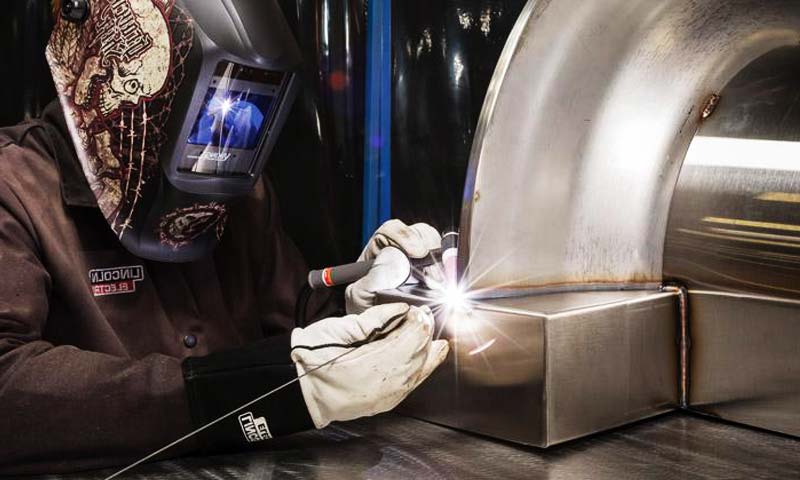
- 5052 zavarivanje exceptionally well with all common fusion methods (GMAW / MIG, GTAW / Okrenite).
It exhibits minimal hot-cracking, i 5183 ili 5654 filler rods yield weld metal retaining ≈ 90 % of base-metal strength. - 6061 can be welded by GMAW/TIG as well, ali heat-affected zones (HAZ) in T6 will soften to ≈ 50 % of base strength (≈ 145 MPA prinosi).
Za vraćanje čvrstoće, a T4 → T6 re-aging cycle is often required: weld in T4, then solution treat and artificially age.
Common fillers are 4043 (Al-si) for crack resistance or 5356 (Al-mg) for higher weld strength; each affects HAZ differently.
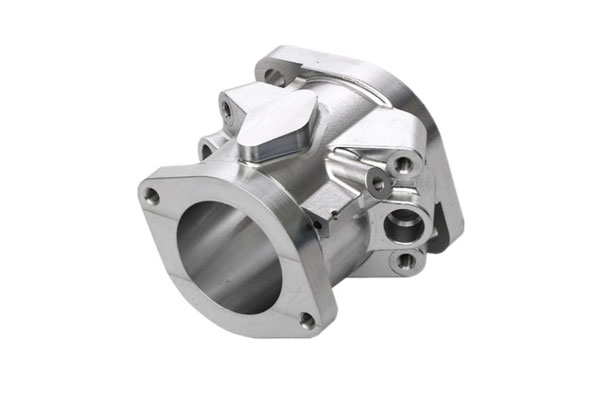
Obratnost
- 5052 has a machinability rating of approximately 40 % (relative to the 2011 aluminum baseline).
It machines with moderate speeds (150-200 m / i) using carbide tooling.
The higher Mg content contributes to slight work hardening during cutting; feed rates should be conservative to avoid built-up edge.
Završne obrade površine RA 1,6-3,2 μm are achievable in 2–4 mm depth-of-cut operations. - 6061 rezultati 60-70 % obratnost. It accepts higher cutting speeds (200-300 m / i) and maintains excellent surface finish (RA 0,8-1,6 μm).
Carbide tools with positive rake angles and flood coolant maximize tool life. Swarf tends to break into small chips, facilitating safe evacuation.
Formiranje & Savijanje
| Legura & Teme | Minimum Bend Radius | Bilješke |
|---|---|---|
| 5052-H32 | 1 × Debljina | Visoko formalni; spring back moderate; ideal for deep draw and roll forming |
| 6061-T6 | 3–4 × thickness | Ograničena oblikovanja; cracks if bent too sharply; requires annealing (T4) for tight bends |
| 6061-T4/T651 | 1.5 × Debljina | Improved formability but must be re-aged to T6 for strength restoration |
- 5052-H32 can be bent to a radius as small as 1× its thickness without cracking, making it ideal for complex stamped or drawn parts (npr., Cisterne za gorivo, marine panels).
- 6061-T6 is more prone to cracking under tight bend radii; typical safe bend radius is 3–4× debljina.
To achieve tighter radii, parts are formed in T4 a onda T6-reaged post fabrication.
7. Toplotni tretman & Hardening of 5052 vs 6061 Aluminijum

5052 Aluminijum (Non-Heat-Treatable)
- Strengthening Mechanism:
-
- Relies entirely on Radno otvrdnjavanje (strain-hardening) i Čvrsto rešenje of Mg.
- Max attainable UTS is ~ 241 MPa in H34, after extensive cold working.
- Tempering Options:
-
- H32: Work-hardened to approx. 228 MPA UTS.
- H34: Further cold work yields ~ 241 MPa UTS but reduces ductility to ~ 5 %.
- Toplotni tretman:
-
- Žarljivost (O temperament) at 300–400 °C softens the material (Ra ~ 105 MPa) to restore formability.
- No precipitation hardening possible; any heat treatment beyond anneal only reduces strength.
6061 Aluminijum (Toplotni)
- T4 (Rješenje serije + Naturally Aged):
-
- Proces: Solution treat at ~ 530 °C for 1–2 h, quench in water, then age at room temperature (~7 days).
- Nekretnine: Uts ~ 240 MPa, yield ~ 145 MPa, izduženje ~ 18 - 22 %.
- Koristiti: Ideal for complex bending before final aging.
- T6 (Rješenje serije + Artificially Aged):
-
- Proces: Solution treat at ~ 530 °C for 1–2 h, utapati, then artificially age at 160 °C for 6–8 h.
- Nekretnine: Uts ~ 310 MPa, yield ~ 275 MPa, izduženje ~ 12 - 17 %.
- Koristiti: Standard for maximum strength requirements in structural components.
- T6511 (T6 with Stress Relief):
-
- Proces: After T6, a low-temperature stress relief (120 ° C za 2 h) reduces warping during subsequent machining.
- Nekretnine: Essentially identical to T6 but with minimal residual stress.
8. Trošak, Raspoloživost & Lanac snabdijevanja
Raw Material Pricing
- 5052 typically commands a 5 - 10 % premium over generic 6xxx alloys due to higher Mg content and specialized rolling processes.
As of early 2025, 5052 sheet is priced around $3.50–$4.00/kg, depending on thickness and temper. - 6061 is one of the most widely stocked alloys; its raw material cost hovers around $3.00–$3.50/kg for sheet and plate.
Extrusions may carry a slight surcharge but remain abundant and competitively priced.
Obrasci zaliha & Olovna vremena
| Form Factor | 5052 Raspoloživost | 6061 Raspoloživost | Olovna vremena |
|---|---|---|---|
| List / Coil | 0.5 - 50 mm (1 ft × 10 ft sheets) | 0.5 - 200 mm (1 ft × 8 ft sheets) | 2-4 nedelje |
| Tanjir | 3 - 150 mm debeo (limited H34 stock) | 3 - 200 mm debeo (T6511 widely stocked) | 1-3 nedelje |
| Extrusions / Barovi | Ograničen; chiefly flat bars and angles | Extensive—profiles, cijevi, rods in many sizes | 2-6 nedelje |
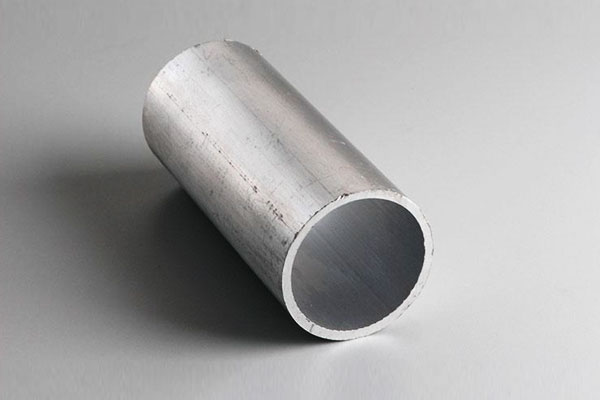
| Cijev / Pipe | Common—preferred for marine tubing | Common—structural and hydraulic tubing | 1-3 nedelje |
9. Aplikacije od 5052 vs. 6061 Aluminijske legure
5052 Aluminum Applications:
- Marinac Industrija: Boat hulls, deck structures, Cisterne za gorivo (excellent saltwater corrosion resistance)
- Automobilski sektor: Cisterne za gorivo, interior panels, toplotni štitnici
- Arhitektura & Izgradnja: Roofing panels, sporedan, oluti, Ukrasne funkcije
- Hrana & Beverage Equipment: Spremnici za skladištenje, kitchen worktops, sanitary containers
- Elektronika & Kućišta: Housings and cabinets for corrosive or outdoor environments
- Signalizacije & Display: Highway signs, billboards (due to excellent formability and weather resistance)
- Hemijska industrija: Containers, ducting, and tubing for mildly aggressive chemicals
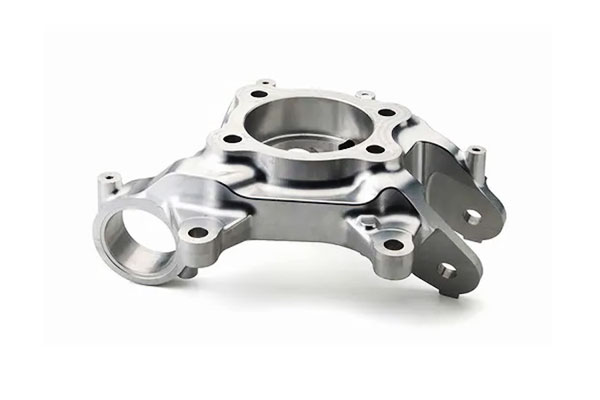
6061 Aluminum Applications:
- Aerospace industrija: Aircraft structures, wing panels, Komponente za slijetanje
- Automobilski & Prijevoz: Šasija, Dijelovi ovjesa, driveshafts, truck frames
- Industrijska oprema: Structural frameworks, Cevovodi, ventili, i tenkovi
- Recreational Products: Okviri za bicikle, climbing gear, camping tools
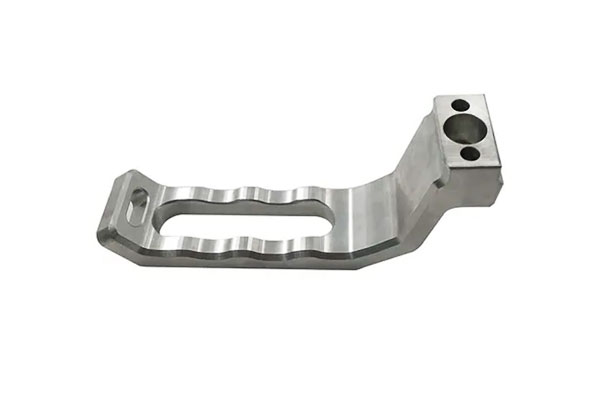
- Machined Parts: Precision components requiring strength and corrosion resistance
- Morske aplikacije: Structural parts in boat building where higher strength is needed
- Izgradnja: Mostovi, scaffolding, Noseće konstrukcije
10. What Is the Difference Between 5052 vs 6061 Aluminijske legure?
| Aspekt | 5052 Aluminijum | 6061 Aluminijum |
|---|---|---|
| Legura serija | 5xxx (Al-mg) | 6xxx (Al-mg-si) |
| Primarni legirani elementi | Magnezijum (2.2%-2,8%) | Magnezijum (0.8%-1,2%), Silicijum (0.4%-0,8%) |
| Snaga | Umjerena čvrstoća (Zategnut: ~ 215 MPa) | Visoka čvrstoća (Zategnut: ~290 MPa in T6 temper) |
| Zavarljivost | Odličan | Dobro (may require post-weld heat treatment) |
| Otpornost na koroziju | Odličan (especially in saltwater/marine environments) | Dobro, but less than 5052 |
| Formalnost | Superiorni (ideal for bending, kotrljanje, crtanje) | Umjeren (less formable than 5052) |
| Obratnost | Sajam | Odličan (especially in T6 condition) |
| Toplotni tretman | Ne | Da (can be heat treated to T6, T651, itd.) |
| Tipične aplikacije | Marinac, Cisterne za hemikalije, krov, signalizacije | Vazdušni prostor, automobilski, Strukturni dijelovi, Obrađene komponente |
| Trošak | Generally lower | Generally higher |
11. U nastajanju trendova & Budući uputstva
New Alloy Variants
- 5052 Modifications: Research into slight zinc or rare-earth additions aims to further boost corrosion resistance in acidic or alkaline environments without sacrificing formability.
- 6061 Hybrids: Development of 6061 kompoziti—embedding nanoscale SiC or Al₂O₃ particles—seeks to raise stiffness and wear resistance while maintaining conventional 6061’s ease of processing.
Aditivna proizvodnja
- 6061 in PBF (Fusion sa puderom): Recent advances achieve near-100 % density and Uts ~ 280 MPa in laser-melted 6061, though cracking remains a challenge.
In-situ heating strategies (200-300 ° C) during build help mitigate thermal stresses. - 5052 in DED (Režirani depozit za energiju): 5052’s non-heat-treatable nature simplifies DED processing;
early trials show Dobra zavarivost of powder-blown deposits, with mechanical properties ~ 90 % of wrought 5052 kada se optimizuje.
Inovacije površinske inženjerstva
- Advanced Anodizing:
-
- Pore-free hard anodize na 6061 prinosi > 600 h salt-spray resistance, omogućavanje 6061 use in marine settings.
- Nano-sealing techniques za 5052 add self-healing properties, extending life in harsh chemical exposure.
- Hybrid Coatings: Polymer/ceramic nanocomposite overlays deposit on 5052 vs 6061 aluminum to provide both low friction and corrosion barriers for sliding components in automotive and industrial equipment.
12. Zaključak
Oboje 5052 vs 6061 aluminum alloys offer distinct advantages and limitations:
- 5052 Excels in Otpornost na koroziju, Formalnost, i Morske aplikacije, with a maximum UTS of approximately 241 MPa in H34.
Its non-heat-treatable nature limits peak strength but simplifies fabrication. - 6061 outperforms with a veća snaga envelope (≈ 310 MPa UTS in T6), age-hardening capability, i superior machinability,
što ga čini idealnim za strukturni, automobilski, i vazduhoplovstvo uses—albeit at the cost of requiring heat treatment and additional corrosion protection in aggressive environments.
Material selection should balance mechanical demands, Servisno okruženje, Metode proizvodnje, i životni troškovi.
When corrosion or extreme formability rules, 5052 ističe se; when strength and stiffness are paramount, 6061 is the alloy of choice.
Ongoing advances in alloy composition, Aditivna proizvodnja, and surface engineering promise to further refine these alloys, ensuring they remain cornerstones of modern engineering design.
Langhe pruža pouzdano, Kvalitetne komponente aluminijske legure koje ispunjavaju stroge međunarodne standarde.
Kontaktirajte nas Danas da biste razgovarali o vašem sljedećem projektu.