编辑翻译
经过 Transposh - translation plugin for wordpress
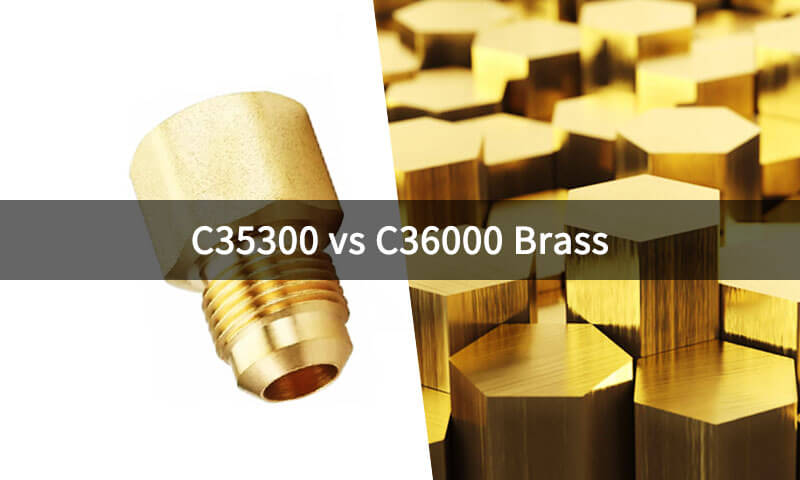
C35300 vs C36000 Brass

C35300 vs C36000 Brass

1. 介绍

UNS C36000 (自由切割黄铜) 和 UNS C35300 (高铅黄铜) both belong to the wrought leaded brass family, and both are designed for good machinability, 耐腐蚀性, and efficient production.

乍一看, they look very similar: both are copper-zinc-lead alloys with comparable base chemistry and nearly identical density, 电导率, and modulus values. But in practice, they serve different engineering priorities.

C36000 is the classic free-cutting brass, widely regarded as the benchmark alloy for automatic screw machine work, while C35300 is a high-leaded brass that offers excellent machinability with somewhat better ductility than C36000 in certain product categories.

2. 化学组成: The Foundation of Difference

元素 C35300 C36000 为什么重要
铜 (铜) 60.0–63.0% 60.0–63.0% Same copper window means the base brass family is similar.
带领 (pb) 1.5–2.5% 2.5–3.7% Higher lead in C36000 drives stronger free-machining behavior.
锌 (Zn)
平衡 平衡 Zinc is the principal matrix partner with copper.
铁 (铁) 最大限度 0.15% 最大限度 0.35% Higher iron allowance in C36000 reflects its standard free-cutting alloy specification.
铜 + named elements 99.5% 最小. 99.5% 最小. Both are tightly controlled industrial wrought brasses.

3. Mechanical and Physical Property Comparison

Although C35300 and C36000 belong to the same leaded-brass family, their property profiles are not identical.

Representative Mechanical Properties

The following table contrasts the mechanical performance of these alloys in the standard H02 (Half-Hard) 脾气:

性能特性 C35300 C36000 Engineering Meaning
抗拉强度 58 ksi = 400 MPA (杆, 1/2 难的, 典型的) 57 ksi = 393 MPA (杆, 1/2 难的, 典型的) Very close in nominal strength; C35300 is slightly higher in this representative condition.
屈服强度 (0.5% 抵消) 45 ksi = 310 MPA (杆, 1/2 难的, 典型的) 25 ksi = 172 MPA (杆, 1/2 难的, 典型的) C35300 shows a markedly higher yield level in the published rod condition, which supports better resistance to early plastic deformation.
伸长 25% (杆, 1/2 难的, 典型的) 7% (杆, 1/2 难的, 典型的) C35300 is substantially more ductile in the comparable rod temper, while C36000 is much less elongative.
罗克韦尔B硬度
75 HRB (杆, 1/2 难的, 典型的) 65 HRB (杆, 1/2 难的, 典型的) C35300 is harder in the published representative rod condition, which is consistent with its higher yield strength.
剪切力 34 ksi = 234 MPA (杆, 1/2 难的, 典型的) 32 ksi = 221 MPA (杆, 1/2 难的, 典型的) Both are similar, but C35300 has a slight edge in shear resistance.
弹性模量 15,000 ksi = 103,400 MPA 14,000 ksi = 96,500 MPA C35300 is slightly stiffer in tension by the published values.
Modulus of Rigidity 5,600 ksi = 38,600 MPA 5,300 ksi = 36,500 MPA Again, C35300 is marginally higher in rigidity.

Representative Physical Properties

性能特性 C35300 C36000
密度 0.306 lb/in³ = 8.47 g/cm³ 0.307 lb/in³ = 8.50 g/cm³
液体温度 1670°f = 910°C 1650°f = 899°C
固定温度 1630°f = 888°C 1630°f = 888°C
电导率 26% IACS 26% IACS
导热率 67 Btu/ft²·hr·°F = ≈ 116 w/m·k 67 Btu/ft²·hr·°F = ≈ 116 w/m·k
热膨胀系数 11.3 × 10⁻⁶/°F = 20.3 ×10⁻⁶/°C 11.4 × 10⁻⁶/°F = 20.5 ×10⁻⁶/°C

4. 可加工性: C36000 Is the Benchmark, C35300 Is Still Excellent

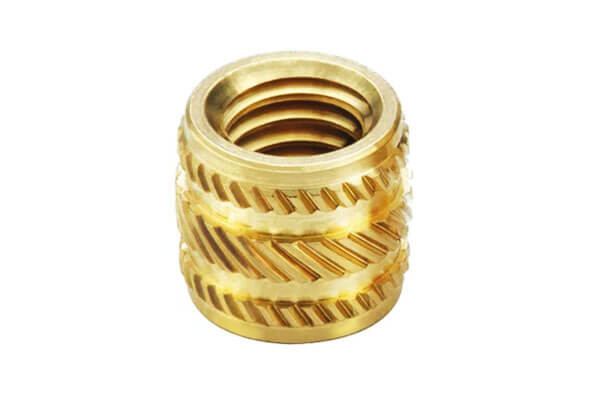
C35300 Brass Threaded Knurling Insert

Why machinability is the defining difference

Among all the practical differences between C35300 and C36000, machinability is the most decisive.

Both are leaded brasses, and both are engineered for efficient metal removal, but they are not optimized to the same degree.

C36000 is the classic free-cutting 黄铜 and is assigned the top machinability rating of 100, which is why it is widely treated as the reference material for high-speed screw-machine production.

C35300 is also highly machinable, but its machinability rating is 90, placing it one step below C36000 in cutting performance.

The metallurgical reason behind the difference

The performance gap comes mainly from lead content.

C36000 contains a higher lead range than C35300, and that extra lead improves chip breaking, lowers cutting forces, reduces built-up edge formation, and extends tool life.

In free-machining brasses, lead does not strengthen the alloy in the conventional structural sense;

反而, it acts as a localized soft phase that improves the mechanics of chip formation and makes automated machining more stable and economical.

This is why C36000 is so often selected for turning, 钻孔, 窃听, 线程, and other operations where the machine spends more time cutting than the operator spends handling the part.

It is a production alloy in the most literal sense: its value lies in reducing cycle time, improving surface finish, and maintaining predictable behavior on automatic equipment.

Why C35300 is still very strong in machining

C35300 should not be described as a “weaker machining alloy” in any practical sense.

A machinability rating of 90 is still excellent, and the alloy appears in many machining-intensive applications, including screws, 坚果, 适配器, 耦合, 配件, 小齿轮, 铆钉, bearings cages, and automatic screw-machine parts.

That means C35300 remains a serious production alloy, especially where machining must coexist with other requirements such as modest forming tolerance or a more balanced mechanical response.

Process implications in a production environment

From a shop-floor perspective, the difference between 90 和 100 is not trivial.

在群众生产中, a small improvement in chip control can translate into shorter cycle time, less downtime for tool changes, and lower scrap risk.

C36000 therefore tends to be the first choice when the part geometry is highly repetitive and the manufacturing route is dominated by turning and threading.

C35300 remains attractive when machinability is important, but the part also needs a little more fabrication flexibility after machining.

5. Formability and Fabrication: C35300 vs C36000 Brass

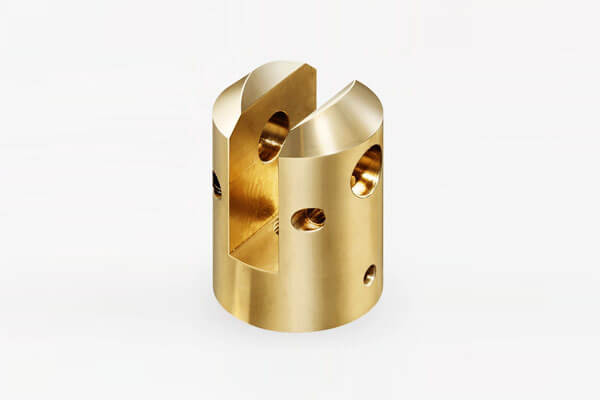
C36000 Brass Machining Parts

Formability is not the same as machinability

A frequent mistake in alloy selection is to assume that excellent machinability automatically implies good fabrication behavior. In brass, those are related but not identical properties.

C35300 and C36000 are both designed primarily for machining, but their response to forming, 弯曲, 线程, and joining is not the same.

That difference matters when a part is not simply cut to shape, but must also be flattened, flared, knurled, punched, 盖章, or lightly cold worked.

Cold working behavior

Both alloys are rated 公平的 in cold workability, which means they can tolerate limited cold deformation, but neither is ideal for aggressive forming.

实践, this places them far below true forming brasses and makes them better suited to machining-led production routes.

仍然, C35300 has a meaningful advantage in certain product categories because it is described as having better ductility than C36000 in plumbers’ brass goods.

That is an important clue that C35300 has a slightly broader fabrication envelope when the design is not purely machined.

Hot forming and thermal processing

Hot formability is another area where the two alloys diverge. C36000 is rated 公平的 in hot formability, while C35300 is rated 贫穷的.

That does not make C36000 a true hot-forming alloy, but it does suggest a somewhat wider processing window if limited elevated-temperature shaping is unavoidable.

C35300, 相比之下, is more tightly centered on machining and moderate secondary fabrication rather than thermal deformation.

Joining behavior: what works and what does not

Both alloys are much more suitable for soldering and brazing than for fusion welding.

Their published fabrication profiles rate soldering as Excellentbrazing as Good,

but list several welding methods such as oxyacetylene welding, gas shielded arc welding, 涂层金属电弧焊, spot welding, and seam welding as 不建议.

That is a critical practical limitation. If the product concept depends on welded construction, neither C35300 nor C36000 should be chosen casually.

Secondary fabrication routes

The most telling difference appears in their common fabrication processes.

为了 C35300, the listed processes include:

  • 空白
  • 加工
  • piercing and punching
  • roll threading and knurling
  • 冲压

为了 C36000, the listed processes are narrower:

  • 加工
  • roll threading and knurling

This difference is highly informative. It shows that C35300 supports a broader mix of production steps, especially where the part is not merely machined but also lightly shaped or punched.

C36000, 相比之下, is more tightly focused on machining-centered manufacturing and is therefore the cleaner choice when production is dominated by turning and thread generation.

6. 耐腐蚀性: Environmental Performance Differences

The environmental resilience of both C35300 and C36000 is a function of their ability to develop a stable, adherent copper-carbonate patina upon exposure to the atmosphere.

This natural barrier provides excellent resistance to urban and marine environments.

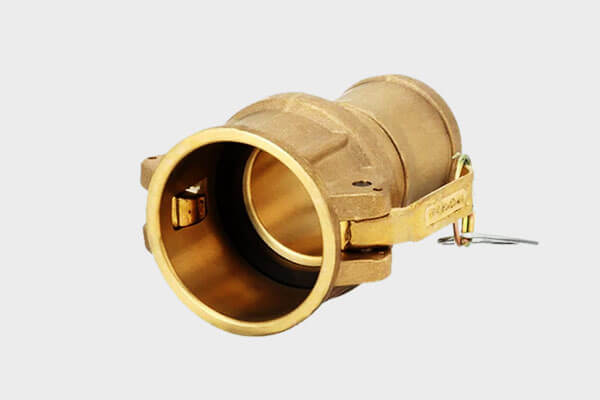
C35300 Brass Couplings

Metallurgical Vulnerabilities

  • Dezincification Potential: As “two-phase” ($\alpha$+$\beta$) brasses with high zinc content, both alloys are susceptible to dezincification in stagnant, soft water or acidic environments.
    This electrochemical process leaches zinc from the lattice, leaving a structurally compromised, porous copper sponge.
  • 应力腐蚀破裂 (SCC): Both grades are vulnerable to “season cracking” or SCC when internal residual stresses are exposed to ammoniacal environments.
  • Purity Advantage: C35300’s slightly higher copper concentration and lower iron impurities provide a marginal advantage in long-term chemical stability.
    然而, for most industrial plumbing and hardware applications, their corrosion profiles are functionally interchangeable,
    and neither should be used in highly aggressive de-alloying environments without proper inhibition.

7. 应用: C35300 vs C36000 Brass

Typical applications of C35300

C35300 is commonly used for drawer pulls, 铰链, bicycle spoke nipples, clock parts, key blanks, 坚果, 铆钉, 螺钉, 适配器, automatic screw-machine parts, 轴承保持架, 耦合, flare fittings, 齿轮, instrument backs, and valve stems.

These are parts where excellent machinability is important, but some ductility, bendability, or cold-work response is also useful.

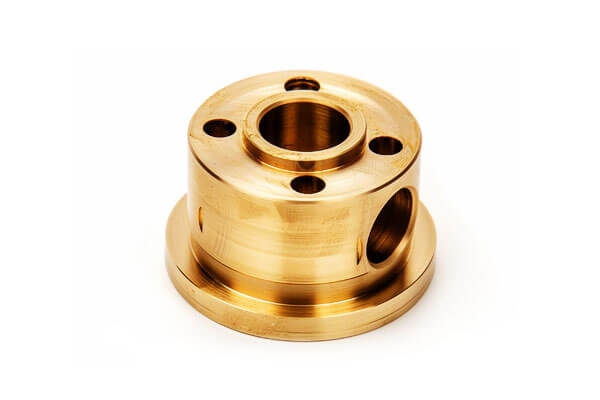
C36000 Brass CNC Machining Parts

Typical applications of C36000

C36000 is widely used for fluid connectors, sensor bodies, thermostat parts, threaded inserts for plastic, 配件, 锁体, 螺栓, 坚果, 螺钉, 适配器, automatic screw-machine parts, faucet components, 阀, 工会, 阀座, 阀杆, and valve trim.

It is the canonical choice when the product architecture is dominated by machining throughput and dimensional consistency.

8. 成本, Process Risk, and Supply-Chain Thinking

From a procurement and supply-chain perspective, C36000 is the most “liquid” asset in the brass market.

It is maintained in vast inventories by global service centers across all primary geometries (圆形的, hexagonal, square, and rectangular bars).

This ubiquitous availability ensures competitive pricing and rapid turnaround times for standard industrial components.

C35300, while a standard alloy, occupies a more specialized niche.

While readily available in rod and plate forms, it may not be stocked in the same breadth of sizes as C36000, potentially leading to small price premiums or extended lead times for non-standard profiles.

然而, a rigorous Total Cost of Ownership (TCO) analysis often favors C35300 for complex parts.

The “hidden costs” of using C36000 in applications requiring secondary forming—such as elevated scrap rates due to cracking and the necessity for intermediate stress-relieving heat treatments—frequently eclipse the marginal material cost difference of C35300.

9. 全面比较表: C35300 vs C36000 Brass

Representative room-temperature data for wrought rod/bar and flat products; the most commonly cited mechanical values below are for the 1/2 难的 (H02) condition unless otherwise noted.

Mechanical properties vary by form, 脾气, and section size, so these should be read as published reference values rather than absolute constants.

类别 C35300 C36000
合金族 High leaded brass, 62% 自由切割黄铜
Copper content 60.0–63.0% 60.0–63.0%
Lead content 1.5–2.5% 2.5–3.7%
Iron content 到 0.15% 到 0.35%
抗拉强度 58 KSI / 400 MPA 57 KSI / 393 MPA
产生强度 (0.5% ext.) 45 KSI / 310 MPA 25 KSI / 172 MPA
伸长 25% 7%
Rockwell B hardness 75 HRB 65 HRB
密度 0.306 lb/in³ / 8.47 g/cm³ 0.307 lb/in³ / 8.50 g/cm³
Machinability rating 90 100
Capacity for being cold worked 公平的 公平的
Capacity for being hot formed 贫穷的 公平的
焊接 出色的 出色的
悬挂 良好 良好
融合焊接
不建议 不建议
Common fabrication processes 空白, 加工, piercing/punching, roll threading/knurling, 冲压 加工, roll threading/knurling
Typical product emphasis 铰链, 螺钉, 坚果, 耦合, flare fittings, 适配器, 铆钉, 轴承保持架 Screw-machine products, 连接器, 紧固件, 阀, 配件, 阀杆, fluid components

10. 结论

The distinction between C35300 and C36000 brass represents a classic metallurgical trade-off between maximized material removal rates and plastic deformation capacity.

C36000 remains the global benchmark for machining productivity, providing a level of efficiency that is essential for the high-volume production of standard hardware.

反过来, C35300 functions as a high-integrity alternative, offering elite machining performance while fundamentally expanding the material’s ability to withstand complex secondary forming operations.

By meticulously matching these metallurgical characteristics to the specific manufacturing sequence, engineers can optimize production yields, minimize environmental risk, and ensure the long-term structural reliability of precision-engineered components.

常见问题解答

Can C36000 be successfully utilized for cold heading?

一般来说, 不. C36000 is metallurgically “short” and lacks the necessary ductility for cold heading.

Attempting to head this alloy typically results in severe longitudinal cracking. C35300 is the preferred choice for components requiring both machining and heading.

What is the primary driver of the cost difference between C35300 and C36000?

The price variance is primarily driven by supply-chain volume rather than elemental costs.

C36000 is produced in massive quantities as the industry standard, whereas C35300 is a more specialized grade, often resulting in a small premium for smaller procurement lots.

Are these alloys compliant with modern lead-free regulations?

不. Both alloys contain significant lead concentrations (到 3.7% for C36000).

For applications governed by RoHS or potable water standards (例如。, NSF/ANSI 61), engineers should specify lead-free alternatives such as C27450 or C46400.

Why is C35300 superior for thread rolling?

Thread rolling involves significant plastic displacement of the metal.

C35300’s higher copper content and refined lead distribution allow it to flow into the die threads without the surface flaking or “seaming” that often occurs with the more brittle C36000.

How did C35300 earn the moniker “Clock Brass”?

The name originates from the horological industry, where the alloy’s unique profile was essential.

It allowed for the high-speed machining of intricate gears and pinions while remaining ductile enough for the riveting and bending required in clock frame assembly.

发表评论

您的邮箱地址不会被公开。 必填项已用 * 标注

滚动至顶部

获取即时报价

请填写您的信息,我们会及时与您联系.