Learn about polyamide chemistry, key mechanical and thermal properties, gamybos metodai, reinforced grades, Privalumai, apribojimai, perdirbimas, ir pramonės programos.
Polyamide is one of the most versatile and widely used families of engineering polymers in the world.
From the toothbrush in your bathroom to the high-performance gears in automotive engines, from the fibers in your clothing to the structural components in aerospace applications, polyamides are everywhere.
Their exceptional combination of mechanical strength, atsparumas nusidėvėjimui, Cheminis stabilumas, and processability has made them indispensable in countless industries.
In commercial engineering practice, the term nailonas is frequently used interchangeably with polyamide.
Although this is broadly acceptable for many common materials such as PA6 and PA66, poliamidas is actually the wider scientific and technical classification.
The family includes conventional aliphatic nylons, long-chain polyamides, high-temperature semi-aromatic polyamides, and highly specialized aromatic polyamides such as aramids.
1. What Is Polyamide?
Poliamidas (Pa) is a class of polymers containing repeating amide groups in the main molecular chain. The amide linkage is commonly represented as:
–CO–NH–
The amide bond is formed by the condensation reaction between a carboxylic acid group (–COOH) and an amine group (–NH₂).
The generic chemical structure of a polyamide can be represented as:
-[–CO–R–CO–NH–R’–NH–]-
Where R and R’ are hydrocarbon chains of varying lengths.
These recurring chemical bonds distinguish polyamides from other major polymer families such as polyethylene, polypropylene, polikarbonatas, and polyester.
Polyamides can be produced from different monomer systems, resulting in materials with significantly different molecular structures and performance characteristics.
Depending on the chemical composition, a polyamide may be relatively flexible and moisture-resistant, highly rigid and wear-resistant, or capable of operating at elevated temperatures.
At the molecular level, the amide groups are polar and can form hydrogen bonds between neighboring polymer chains.
These intermolecular forces help create a relatively strong and cohesive polymer structure. Dėl to, many polyamides provide:
- High tensile strength and stiffness
- Good toughness and fatigue resistance
- Excellent abrasion and wear resistance
- Low friction under suitable conditions
- Good resistance to oils, kuras, ir daug pramoninių cheminių medžiagų
- Useful thermal performance
- Strong potential for reinforcement with glass fiber, Anglies pluoštas, or mineral fillers
Unlike thermosetting polymers, most commercially important engineering polyamides are thermoplastics.
They soften or melt when heated and can be processed using methods such as injection molding and extrusion.
This processability has made polyamide particularly important in modern manufacturing because complex components can often be produced economically in high volumes while maintaining good mechanical performance.
The Relationship Between Polyamide and Nylon
Terminas nailonas was first introduced by DuPont in 1938 for its polyamide 6,6 (Pa66), which was used in fibres and textiles.
Laikui bėgant, nylon has become the generic name for aliphatic polyamides—the most common type of polyamide—and is often used interchangeably with polyamide in consumer and industrial contexts.
Tačiau, polyamide is the broader scientific term that encompasses:
| Tipas | Pavyzdžiai | Aprašymas |
| Aliphatic Polyamides | PA6, Pa66, PA11, PA12 | The most common polyamides; also known as nylon. |
| Aromatic Polyamides (Aramids) | Kevlar®, Nomex® | High-performance; aromatic rings in the backbone. |
| Semi‑Aromatic Polyamides | PPA (Polyphthalamide) | Aukštos temperatūros našumas; aromatingas + aliphatic units. |
| Polyamide‑Imides | PAI (Torlon®) | High performance; imide groups in addition to amide groups. |
Key point: All nylons are polyamides, but not all polyamides are nylons. The term “polyamide” is the correct technical term for the entire family.
2. How Is Polyamide Made?
Polyamide is produced by creating long polymer chains containing repeating amide linkages (–CONH–).
Priklausomai nuo pažymio, commercial polyamides are mainly manufactured through either condensation polymerization arba ring-opening polymerization.
Condensation Polymerization
Many polyamides, ypač Pa66, are produced by reacting a diamine with a dicarboxylic acid. The reaction forms amide bonds while releasing small molecules, paprastai vanduo.
Pavyzdžiui, PA66 is produced from hexamethylenediamine ir adipic acid.
Precise control of monomer ratio, temperatūra, spaudimas, and polymerization time is essential because these factors influence molecular weight, klampumas, kristališkumas, and final mechanical performance.
Ring-Opening Polymerization
Other important grades, tokių kaip PA6, are commonly produced through the ring-opening polymerization of kaprolaktamas.
Esant kontroliuojamai temperatūrai ir slėgiui, the cyclic caprolactam molecules open and link together to form long-chain PA6 polymers.
This route enables efficient large-scale production and is widely used for engineering plastics, skaidulų, Filmai, and molded components.
Polymer Compounding and Modification
After polymerization, the base polyamide can be further modified through compounding.
Manufacturers may incorporate glass fibers, carbon fibers, mineraliniai užpildai, impact modifiers, flame retardants, Tepalai, or stabilizers to tailor the material for specific applications.
The finished polymer is typically pelletized and supplied as granules for subsequent processing by liejimas įpurškimas, išspaudimas, Pūtimo liejimas, or other polymer manufacturing methods.
3. Major Types and Grades of Polyamide
Polyamide is not a single material but a broad family of polymers with significantly different molecular structures, Šiluminis elgesys, drėgmės sugėrimas, Mechaninės savybės, and processing characteristics.
Aliphatic Polyamides (Nylons)
Aliphatic polyamides represent the largest and most commercially important group of polyamides.
They are widely used in injection molding, išspaudimas, fiber production, and other industrial processes because they offer a favorable balance of mechanical strength, atsparumas nusidėvėjimui, Apdorojimas, ir kaina.
| Pažymys | Typical Melting Range (° C.) | Pagrindinės savybės | Tipiškos programos |
| PA6 | 215–225 | Geras tvirtumas, Poveikio atsparumas, atsparumas nusidėvėjimui, ir apdorojimas; relatively high moisture absorption. | Automobilių dalys, pavaros, korpusai, pramoniniai komponentai, skaidulų. |
| Pa66 | 255–265 | Aukštesnis stiprumas, standumas, Šilumos atsparumas, and creep resistance than PA6. | Pavaros, guoliai, įvorės, tvirtinimo detalės, Elektros komponentai, under-hood automotive parts. |
| PA11 | 185–195 | Excellent flexibility and impact resistance; low moisture absorption and good chemical resistance. | Flexible tubing, pneumatic lines, kabelių apvalkalai, automotive fluid systems. |
| PA12 | 175–185 | Very low moisture absorption, Puikus cheminis atsparumas, lankstumas, ir matmenų stabilumas. | Kuro linijos, pneumatic tubing, Medicininiai vamzdeliai, kabelio izoliacija, Tikslūs komponentai. |
PA610 |
215–225 | Better dimensional stability and lower moisture absorption than PA6 and PA66. | Elektros jungtys, kabelio komponentai, pramoninės dalys, bristles. |
| PA612 | 210–220 | Geras tvirtumas, Cheminis atsparumas, matmenų stabilumas, and reduced water absorption. | Automotive fluid lines, Elektros komponentai, vamzdeliai, preciziškai suformuotos detalės. |
| PA1010 | 195–205 | Partially or largely bio-based feedstock potential; low moisture absorption and good toughness. | Sustainable consumer products, Automobilių komponentai, Pramoninės programos. |
Semi-Aromatic Polyamides
Semi-aromatic polyamides combine aliphatic chain segments with aromatic structures.
The aromatic rings increase molecular rigidity and thermal stability, allowing these materials to operate at temperatures beyond the practical range of conventional PA6 or PA66.
| Medžiaga šeima | Representative Grades | Typical Melting Range (° C.) | Pagrindinės charakteristikos | Tipiškos programos |
| PPA | PA6T/66, PA6T/6I, PA9T and related copolyamides | Apytiksliai. 280–330* | Didelis atsparumas šilumai, didelis standumas, geras cheminis atsparumas, žemas šliaužimas, and improved dimensional stability. | Automotive under-hood components, high-temperature connectors, LED components, siurblio dalys. |
| PA6T-based Polyamides | PA6T and copolymerized PA6T systems | Often above 300 for high-PA6T compositions* | Very high thermal stability, excellent strength, and good retention of mechanical properties at elevated temperatures. | Electrical and electronic connectors, Automobilių komponentai, pramoninė įranga. |
PA9T |
Polyamide 9T | Apytiksliai. 300–310* | Didelis atsparumas šilumai, relatively low moisture absorption, excellent dimensional stability and chemical resistance. | Surface-mount electronics, jungtys, precision electrical components. |
Aromatic Polyamides (Aramids)
Aromatic polyamides, paprastai žinomas kaip aramids, represent a high-performance class in which aromatic rings form a major part of the polymer backbone.
Their rigid molecular structure gives them exceptional tensile strength, modulis, Šiluminis stabilumas, and—in some grades—flame resistance.
| Aramid Type | Representative Material | Molecular Structure | Pagrindinės savybės | Tipiškos programos |
| Para-aramid | Kevlar® | Para-oriented aromatic polyamide | Extremely high tensile strength and modulus, Puikus atsparumas smūgiams, and good thermal stability. | Ballistic protection, aerospace composites, reinforcement cables, tires, lynai, sportinė įranga. |
| Meta-aramid | Nomex® | Meta-oriented aromatic polyamide | Excellent flame resistance, Šiluminis stabilumas, Elektros izoliacija, and resistance to heat exposure. | Protective clothing, Elektros izoliacija, aerospace interiors, filtration media. |
Polyamide-Imide (PAI)
Polyamide-imide represents an ultra-high-performance polymer family that combines amide and imide functional groups within the molecular structure.
The result is a material with exceptional thermal stability, Mechaninis stiprumas, atsparumas nusidėvėjimui, ir apkrovos galimybė.
One of the best-known commercial examples is Torlon® PAI.
| Medžiaga | Chemical Family | Pagrindinės savybės | Tipiškos programos |
| PAI | Polyamide-imide | Extremely high strength and stiffness, Puikus atsparumas dėvėjimams, žemas šliaužimas, Nuostabus šiluminis stabilumas, and good performance under heavy mechanical loads. | Guoliai, įvorės, ruoniai, Kompresoriaus komponentai, aviacijos ir kosmoso dalys, semiconductor equipment, high-temperature industrial components. |
4. Key Properties of Polyamide
The performance of polyamide is determined by its molecular structure, particularly the concentration of amide groups, molekulinė masė, kristališkumas, and the balance between flexible aliphatic segments and rigid aromatic structures.
Mechanical Strength and Stiffness
Most engineering-grade polyamides provide a favorable strength-to-weight ratio.
PA6 and PA66, pavyzdžiui, are widely used for gears, skliaustai, korpusai, klipai, and structural components because they can withstand repeated mechanical loading while remaining lighter than steel, aliuminis, or zinc alloys.
The mechanical properties of polyamide can vary significantly depending on moisture condition.
Because the amide groups attract water molecules, absorbed moisture can act as a plasticizer.
This generally reduces stiffness and tensile strength while increasing flexibility and impact resistance.
Glass-fiber reinforcement can substantially increase stiffness and strength.
A reinforced PA66 component may achieve a modulus several times higher than that of the unfilled polymer, making it suitable for demanding automotive and industrial applications.
Tvirtumas ir atsparumas smūgiams
Polyamide generally demonstrates good resistance to impact and repeated loading.
PA6 and PA66 offer a useful balance between rigidity and toughness, while long-chain grades such as PA11 and PA12 are particularly valued for flexibility and impact performance, ypač esant žemai temperatūrai.
This characteristic makes polyamide suitable for components exposed to vibration, šokas, cyclic stress, and mechanical movement.
Automotive clips, cable protection systems, pneumatic tubing, and industrial housings are typical examples.
Tačiau, impact performance depends on several factors, including temperature, Drėgmės kiekis, kristališkumas, sienos storis, and reinforcement level.
Highly filled or highly crystalline grades may offer greater stiffness but reduced impact resistance.
Wear Resistance and Low-Friction Performance
Polyamide is widely used in tribological applications because of its good abrasion resistance and relatively low coefficient of friction.
Components such as gears, įvorės, guoliai, ritinėliai, vadovai, and wear pads can operate with reduced noise and, Kai kuriais atvejais, without external lubrication.
For demanding sliding applications, polyamide can be modified with additives such as:
- PTFE for lower friction;
- Molybdenum disulfide for improved sliding behavior;
- Glass fibers for increased stiffness;
- Carbon fibers for enhanced strength and thermal conductivity;
- Solid lubricants for improved dry-running performance.
The final wear behavior depends strongly on mating materials, surface pressure, sliding speed, temperatūra, and lubrication conditions.
Šiluminis našumas
Polyamides generally provide better heat resistance than commodity plastics such as polypropylene and polyethylene. Tačiau, thermal capability varies considerably between grades.
PA6 and PA66 are suitable for many moderately elevated-temperature applications, while semi-aromatic polyamides such as PPA are designed for more demanding environments, including automotive under-the-hood components and high-temperature electrical connectors.
The melting point, heat deflection temperature, and continuous service temperature should all be considered when selecting a polyamide.
Reinforcement can further improve dimensional stability at elevated temperatures, although it may also affect toughness and processability.
Moisture Absorption and Dimensional Stability
Moisture absorption is one of the most important engineering considerations when using polyamide.
The amide groups in the polymer structure can absorb water from the surrounding environment, causing changes in dimensions and mechanical properties.
Short-chain polyamides such as PA6 and PA66 generally absorb more moisture than long-chain grades such as PA11 and PA12.
This characteristic must be considered when designing precision components.
Dimensional tolerances should account for both manufacturing shrinkage and potential environmental conditioning during service.
Cheminis atsparumas
Polyamide generally performs well when exposed to oils, tepalai, kuras, ir daug angliavandenilių.
This is one reason why PA materials are widely used in automotive fuel systems, pramoninė įranga, and fluid-handling applications.
Tačiau, chemical resistance is not universal. Stiprios rūgštys, strong oxidizing agents, certain solvents, and prolonged exposure to high-temperature chemicals can degrade the polymer.
Material selection should therefore consider the complete service environment rather than relying solely on the general classification of a material as “chemically resistant.”
Elektros savybės
Polyamide is naturally electrically insulating and is widely used for electrical connectors, terminal housings, coil formers, and insulation components.
Tačiau, absorbed moisture can influence dielectric properties and surface resistance.
For high-voltage or high-reliability electrical applications, engineers often select grades specifically formulated for electrical performance, flame resistance, mažas drėgmės sugėrimas, or high-temperature stability.
5. Polyamide Manufacturing and Processing Methods
Polyamide is a thermoplastic material, allowing it to be softened by heating and formed using a variety of manufacturing processes.
The optimal processing method depends on the polymer grade, komponentų geometrija, Gamybos apimtis, matmenų tolerancija, surface requirements, and reinforcement system.
Injekcijos liejimas
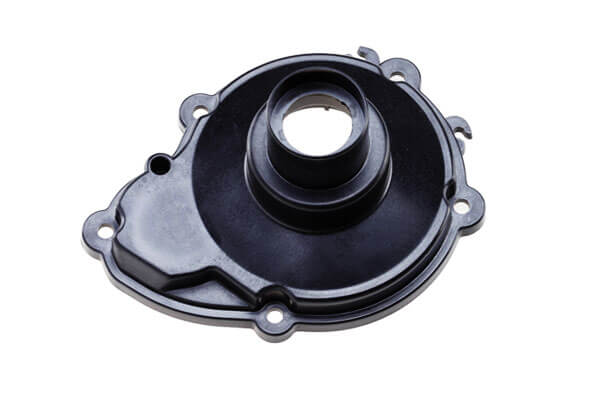
Injekcijos liejimas is one of the most important manufacturing methods for engineering polyamide components.
Dried polymer pellets are melted in a heated barrel and injected under pressure into a precision mold.
The process is particularly suitable for producing complex, high-volume components with consistent geometry.
Įprastos programos apima:
- Gears and mechanical components;
- Automotive clips and brackets;
- Elektros jungtys;
- Prietaiso komponentai;
- Housings and enclosures;
- Precision industrial parts.
Because polyamide can absorb moisture, proper resin drying before molding is critical
Glass-fiber-reinforced polyamides are also commonly injection molded, although mold design and processing conditions must account for fiber orientation, increased viscosity, and anisotropic shrinkage.
Išspaudimas
Extrusion is used to continuously produce polyamide products with a constant cross-section. Molten polymer is forced through a shaped die and then cooled and sized.
Common extruded products include tubing, vamzdžiai, Filmai, lakštai, strypai, kabelio izoliacija, and engineering profiles.
PA11 and PA12 are particularly important for flexible tubing because of their combination of chemical resistance, lankstumas, and relatively low moisture absorption.
In profile and tube extrusion, temperatūros valdymas, melt stability, aušinimo greitis, and dimensional calibration are essential for maintaining consistent wall thickness and geometry.
Pūtimo liejimas
Blow molding is used when hollow polyamide components are required. A heated polymer tube or preform is expanded inside a mold using air pressure.
Polyamide blow molding is commonly used for automotive fluid reservoirs, ortakiai, fuel-system components, and specialized industrial containers.
Multi-layer structures may also be produced when additional barrier properties are required.
Compression and Transfer Molding
Although less common than injection molding for standard thermoplastic polyamides, compression molding can be useful for large, highly reinforced, or specialized components.
The process can accommodate certain long-fiber-reinforced materials and may be selected when part geometry or reinforcement architecture is difficult to achieve through conventional injection molding.
CNC apdirbimas
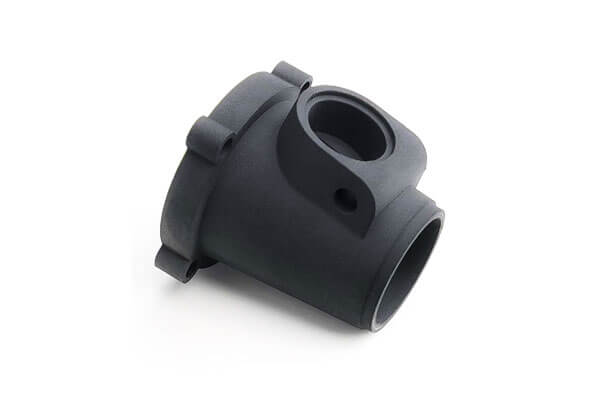
Polyamide can also be machined from extruded or cast stock using CNC turning, frezavimas, gręžimas, and other subtractive processes.
CNC apdirbimas is particularly useful for:
- Prototype development;
- Low-volume production;
- Large components;
- Parts requiring features that are difficult to mold;
- Components requiring tight post-processing tolerances.
Tačiau, moisture-related dimensional changes must be considered when machining precision polyamide components. Material conditioning should ideally be controlled before final inspection.
Priedinė gamyba
Several polyamide materials, particularly PA12 and PA11, are widely used in additive manufacturing technologies such as Atrankinis lazerinis sukepinimas (SLS) ir Multi Jet Fusion (MJF)
These processes are especially suitable for prototypes, customized products, Sudėtinga vidinė geometrija, and low-to-medium-volume production.
Compared with injection molding, additive manufacturing eliminates the need for dedicated tooling but generally involves higher unit costs at large production volumes.
6. Reinforced and Modified Polyamide Materials
Unfilled polyamide provides a balanced combination of strength, Tvirtumas, atsparumas nusidėvėjimui, ir apdorojimas.
Tačiau, many engineering applications require properties beyond those of standard PA6 or PA66.
Dėl šios priežasties, polyamide is frequently compounded with reinforcing fibers, mineraliniai užpildai, impact modifiers, flame retardants, Tepalai, and other functional additives.
| Modified Polyamide Type | Primary Modification | Main Performance Improvement | Tipiškos programos |
| Glass-fiber-reinforced PA | Glass fibers | Stiprybė, standumas, Šilumos atsparumas | Automotive structures, jungtys, Mašinos |
| Carbon-fiber-reinforced PA | Carbon fibers | High specific strength and stiffness | Aviacijos ir kosmoso, robotika, Aukštos kokybės dalys |
| Mineral-filled PA | Talkas, MICA, minerals | Matmenų stabilumas, Apatinis susitraukimas | Korpusai, large precision components |
| Impact-modified PA | Elastomer modifiers | Improved toughness and impact resistance | Automotive and protective components |
Flame-retardant PA |
Flame-retardant additives | Improved fire performance | Electrical and electronic components |
| Self-lubricating PA | Ptfe, MoS₂, lubricating additives | Reduced friction and wear | Guoliai, pavaros, stumdomos dalys |
| Conductive PA | Carbon-based conductive fillers | ESD control or electrical conductivity | Electronics and static-sensitive equipment |
7. Advantages and Limitations of Polyamide
Pagrindiniai pranašumai
- Aukštas specifinis stiprumas: Exceptional strength-to-weight ratio enables cost-effective metal replacement in structural applications.
- Excellent wear performance: Inherent self-lubricating properties eliminate the need for external lubrication in many light-to-medium load applications.
- Good chemical resistance: Outstanding tolerance to oils, fuels and greases for automotive and industrial environments.
- Wide processability: Compatible with all major thermoplastic manufacturing methods with good melt flowability.
- High impact toughness: Maintains good ductility over a broad temperature range, especially in impact-modified grades.
- Versatile formulation: Easily reinforced, toughened, flame-retarded and compounded for targeted performance.
- Gera elektros izoliacija: Sufficient dielectric performance for most general electrical and electronic applications.
Įgimti apribojimai
- High moisture absorption: Standard grades absorb significant atmospheric water, causing dimensional change and property variation — the single largest design constraint.
- Dimensional variability: Higher mold shrinkage and moisture-induced swelling require careful tolerance design.
- Low-temperature brittleness: Unmodified standard grades become brittle at sub-zero temperatures and require impact modification for cold service.
- Limited strong acid/alkali resistance: Degrades in strong mineral acids and concentrated alkaline solutions.
- Processing drying requirement: Mandatory pre-drying adds process steps and energy cost relative to non-hygroscopic plastics.
- UV degradacija: Unstabilized grades degrade under prolonged outdoor UV exposure and require stabilization for exterior use.
8. Applications of Polyamide
The combination of mechanical strength, atsparumas nusidėvėjimui, Mažas svoris, Cheminis atsparumas, and manufacturing flexibility allows polyamide to serve in applications ranging from consumer products to highly engineered automotive and industrial components.
Automobilių pramonė
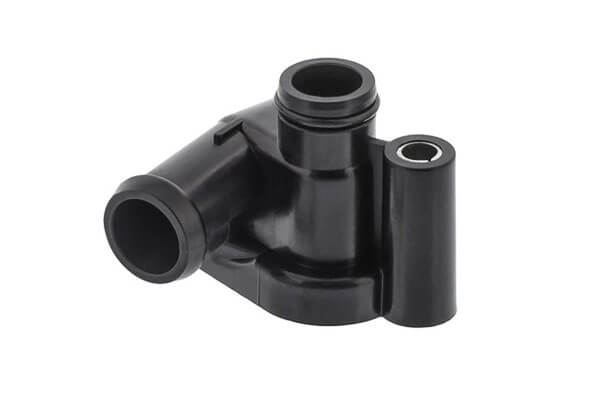
Automobiliai engineering is one of the largest application areas for engineering polyamides.
PA6, Pa66, and reinforced grades are widely used to replace metal components where weight reduction, atsparumas korozijai, and integrated molding are advantageous.
Tipiški komponentai apima:
- Engine covers and brackets
- Air-intake components
- Cooling-system components
- Cable guides and clips
- Pavarų korpusai
- Bearing cages
- Fuel-system components
- Elektros jungtys
- Konstrukciniai laikikliai
- Fan and pulley components
Glass-fiber-reinforced PA66 is particularly important for under-hood applications because reinforcement improves stiffness, šliaužimo pasipriešinimas, ir matmenų stabilumas.
Elektros ir elektronika
Polyamide is widely used for electrical components because of its insulating properties, Mechaninis stiprumas, and injection-molding capability.
Programos apima jungčių korpusai, gnybtų blokai, kabelių riebokšliai, jungikliai, jutiklių korpusai, circuit-protection components, and electrical enclosures.
Flame-retardant grades are often selected where regulatory requirements demand controlled ignition and flame propagation.
Pramoninės mašinos
Mašinose, polyamide is frequently used where lightweight components must withstand repeated mechanical movement.
Common examples include:
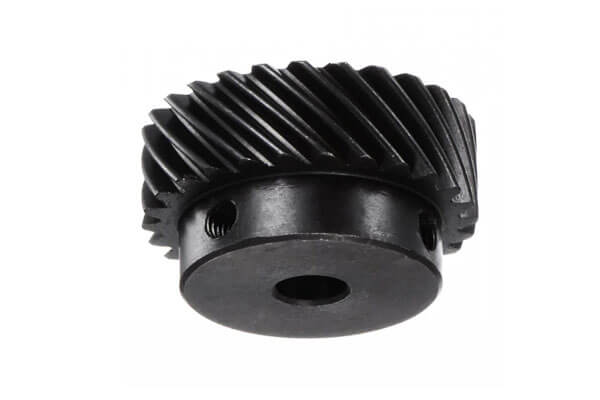
- Gears and gear wheels
- Bushings and bearings
- Ritinėliai
- Dėvėkite juosteles
- Kreipiamieji bėgiai
- Cable carriers
- Sandarinimo komponentai
- Machine guards
- Conveyor components
Compared with metallic components, polyamide parts can reduce weight, triukšmas, and lubrication requirements in certain applications.
Fluid Handling and Tubing
PA11 and PA12 are particularly valuable for tubing and fluid-handling applications because they combine flexibility, Cheminis atsparumas, mažas tankis, and relatively low moisture absorption.
Jie naudojami pneumatic tubing, hydraulic lines, kuro linijos, brake-related components, kabelio apvalkalas, and industrial hoses, depending on the specific grade and applicable standards.
Consumer and Commercial Products
Polyamide is also extensively used in consumer products where durability and impact resistance are important.
Examples include power-tool components, Sporto įranga, tvirtinimo detalės, korpusai, rankenos, Ratai, mechaninės jungiamosios detalės, and various molded components.
Medical and Healthcare Applications
Specialized polyamide grades can be used for selected medical and healthcare applications, including tubing, instrument components, fluid-handling parts, and certain disposable or reusable devices.
Šioms programoms, Tačiau, biologinis suderinamumas, sterilization resistance, extractables, Cheminis suderinamumas, and applicable regulatory requirements must be evaluated for the specific grade rather than assumed from the general properties of polyamide.
9. Polyamide vs. Other Engineering Plastics
Polyamide is not universally superior to other engineering plastics.
Each polymer has a different performance profile, and the appropriate choice depends on factors such as mechanical loading, trintis, temperatūra, Cheminis poveikis, drėgmė, matmenų reikalavimai, ir kaina.
| Nuosavybė / Faktorius | Poliamidas (Pa) | Polioksimetilenas (Pom) | Polipropilenas (Pp) | Polieterio eterio ketonas (Žvilgtelėti) |
| Medžiagų klasė | Inžinerinis termoplastikas | Inžinerinis termoplastikas | Commodity/semi-engineering thermoplastic | High-performance engineering thermoplastic |
| Tipiškas stiprumas | Good to high | Gerai | Vidutinis | Labai aukštas |
| Standumas | Gerai; higher with reinforcement | Gerai | Vidutinis | Puiku |
| Poveikio atsparumas | Geras iki puikus | Gerai | Geras iki puikus | Gerai |
| Atsparumas nusidėvėjimui | Geras iki puikus | Puiku | Vidutinis | Puiku |
| Trintis | Žemas ar vidutinio sunkumo | Labai žemas | Žemas | Žemas |
| Drėgmės absorbcija | Moderate to high for PA6/PA66; lower for PA11/PA12 | Labai žemas | Labai žemas | Labai žemas |
| Matmenų stabilumas | Vidutinis; strongly affected by moisture in some grades | Puiku | Gerai | Puiku |
| Temperatūros gebėjimas | Vidutinio sunkumo iki aukšto, priklausomai nuo pažymio | Vidutinis | Santykinai žemas | Puiku |
| Cheminis atsparumas | Gerai | Gerai | Puiku | Puiku |
| Elektros izoliacija | Gerai | Gerai | Puiku | Puiku |
| Nuovargio atsparumas | Gerai | Puiku | Gerai | Puiku |
| Apdorojamumas | Puiku | Puiku | Puiku | Reiklesnis |
Santykinė medžiagų kaina |
Vidutinis | Vidutinis | Žemas | Labai aukštas |
| Tipiškos programos | Pavaros, įvorės, Automobilių dalys, jungtys, struktūriniai komponentai | Tikslios pavaros, guoliai, vožtuvai, mechanisms | Pakuotė, cisternos, gyvi vyriai, Cheminiai konteineriai | Aviacijos ir kosmoso, puslaidininkis, medicinos, high-temperature machinery |
| Pagrindinis privalumas | Balanced mechanical and processing performance | Low friction and dimensional stability | Low cost and chemical resistance | Exceptional high-temperature and mechanical performance |
| Pagrindinis apribojimas | Moisture sensitivity | Limited high-temperature capability | Mažesnis mechaninis našumas | High cost and more demanding processing |
10. Polyamide Recycling and Sustainability
Mechanical Recycling
Post-industrial polyamide scrap is routinely mechanically recycled by regrinding and re-compounding.
Recycled resin retains most of its mechanical properties and is widely used for non-critical structural parts.
Post-consumer recycling is less established but growing, particularly for textile and carpet fiber waste streams.
Chemical Recycling
Advanced depolymerization technologies can break polyamide waste back into pure monomer feedstocks, producing virgin-equivalent resin with identical performance.
Industrial-scale chemical recycling facilities are now operating in Europe and North America, enabling closed-loop circularity for polyamide materials.
Bio-Based Polyamides
Sustainability is not limited to recycling. Certain polyamides, įskaitant PA11 and PA1010, can be produced partly or substantially from renewable feedstocks depending on the specific manufacturing route.
Bio-based feedstocks can reduce reliance on fossil resources, but a bio-based polymer is not automatically environmentally superior.
A complete assessment should consider feedstock sourcing, agricultural impacts, energijos suvartojimas, manufacturing emissions, product lifetime, Perdirbimas, and end-of-life treatment.
11. Custom Polyamide Parts from LangHe Pramonė
Langhe pramonė provides custom manufacturing solutions for engineering-plastic components, including polyamide parts designed for mechanical, elektrinė, automobilių, pramoninis, and other demanding applications.
Rather than treating polyamide as a generic plastic, the material and manufacturing process should be selected according to the component’s actual operating conditions.
Factors such as PA grade, moisture exposure, temperatūra, mechaninė apkrova, dimensional tolerances, wear requirements, chemical environment, and reinforcement are evaluated during engineering development.
Custom Polyamide Manufacturing Capabilities
| Galimybė | Detalės |
| Medžiagos pasirinkimas | PA6, Pa66, PA11, PA12 and reinforced or modified polyamide grades |
| Material modification | Glass-fiber, carbon-fiber, mineral-filled and wear-modified grades, subject to application requirements |
| Gamyba | Injection molding and precision machining for suitable polyamide components |
| CNC apdirbimas | Posūkis, frezavimas, gręžimas, nuobodus, and finishing of engineering-plastic components |
| Sudėtingos geometrijos | Korpusai, pavaros, įvorės, skliaustai, vadovai, viršeliai, and customized mechanical components |
| Precision control | Dimensional inspection based on component geometry, tolerancijos reikalavimai, ir paraiškos poreikiai |
| Prototype production | Low-volume and prototype development before serial production |
| Inžinerinė parama | Medžiagos pasirinkimas, DFM review, tolerance evaluation, ir proceso optimizavimas |
| Kokybė | ISO 9001:2015 sertifikuota. |
| Švino laikas | 2‑4 weeks for machining; 4‑8 weeks for tooling and production. |
12. Išvada
Polyamide is a broad family of engineering polymers rather than a single material.
From conventional PA6 and PA66 to lower-moisture-absorption PA11 and PA12, aukšta temperatūra PPA, and fiber-reinforced grades, different formulations provide significantly different combinations of mechanical, šiluminis, Cheminė, and dimensional performance.
Its greatest advantage is its balanced engineering performance. Polyamide combines relatively low density with good strength, Tvirtumas, atsparumas nusidėvėjimui, Cheminis atsparumas, Elektros izoliacija, and excellent processability.
These characteristics make it an effective alternative to metals and other engineering plastics in many applications.
Tuo pačiu metu, designers must not overlook its limitations. Drėgmės absorbcija, temperature-dependent properties, šliaužti, and chemical compatibility can strongly influence long-term performance.
Material selection should therefore be based on the complete operating environment rather than on tensile strength or melting point alone.
For custom components, the most reliable approach is to evaluate the polyamide grade, reinforcement, gamybos procesas, matmenų reikalavimai, aptarnavimo aplinka, and expected lifetime as an integrated system.
When these factors are properly controlled, polyamide can provide a cost-effective and technically robust solution for a wide range of engineered components.
FAQs About Polyamide
Is polyamide the same as nylon?
Ne visai. Nylon is a major group of polyamides, particularly aliphatic polyamides such as PA6 and PA66.
Polyamide is the broader chemical family that also includes PA11, PA12, semi-aromatic polyamides, and aromatic polyamides.
Is polyamide a strong material?
Taip. Polyamide generally provides good tensile strength, standumas, Tvirtumas, ir nuovargio veikimas. Glass-fiber- and carbon-fiber-reinforced polyamides can provide substantially higher stiffness and strength than unfilled grades.
Does polyamide absorb water?
Taip. Moisture absorption is an important characteristic of many polyamides, particularly PA6 and PA66.
Water uptake can change dimensions and mechanical properties, so humidity and conditioning should be considered for precision applications.
Is polyamide suitable for high-temperature applications?
It depends on the grade. Conventional PA6 and PA66 are suitable for moderately elevated temperatures, kol PPA and other high-temperature polyamides are better suited to demanding thermal environments.
Can polyamide really replace metal in structural parts?
A: Taip. Glass fiber reinforced polyamides are widely used to replace die-cast aluminum and steel in structural automotive, industrial and consumer components.
They typically reduce part weight by 40–60% while providing sufficient strength for many load-bearing applications. Metal replacement remains the primary growth driver for engineering polyamides.
Is polyamide resistant to chemicals?
Polyamide has good resistance to many oils, kuras, angliavandeniliai, ir pramoninės cheminės medžiagos, but its resistance to strong acids, oxidizing agents, and certain solvents can be limited.
The specific grade and operating conditions should always be evaluated.
Is polyamide better than POM?
Neither is universally better. Polyamide generally offers a stronger combination of toughness and mechanical performance,
while POM often provides superior dimensional stability, Maža trintis, ir nusidėvėjimo efektyvumą.
The choice depends on the specific application.
Copyright and Trademark Notices
- Kevlar® and Nomex® are registered trademarks of E. I. du Pont de Nemours and Company (DuPont).
- Torlon® is a registered trademark of Syensqo.