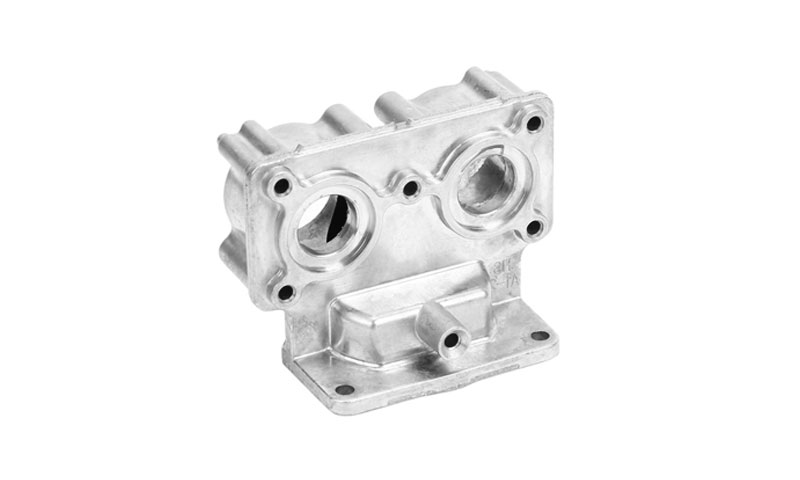
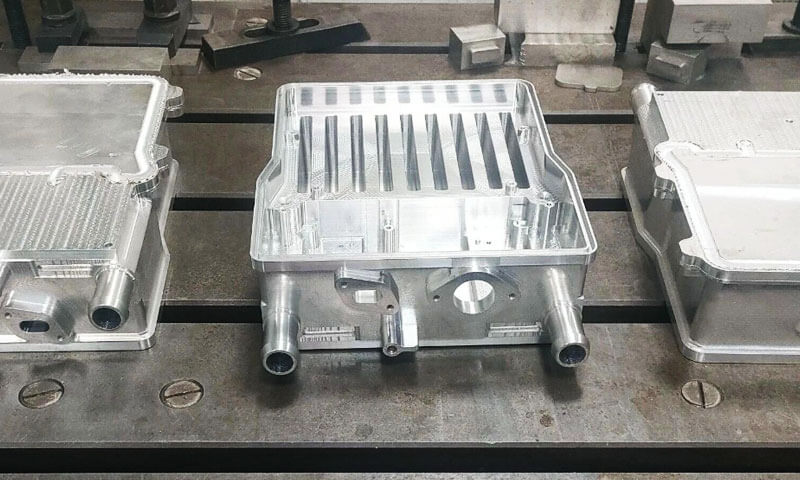
Shrinkage porosity is one of the most serious internal defects affecting the pressure tightness and structural reliability of aluminium die-cast housings.
It is particularly problematic in electronic control housings, hydraulic control units, rumah motor, and other components that contain internal oil or water passages, threaded mounting points, and precision-machined sealing surfaces.
Unlike obvious surface defects, shrinkage porosity often remains hidden beneath the casting surface.
A housing may appear sound after trimming and visual inspection, yet fail an air-leakage or pressure test once internal pores become connected or machining exposes subsurface cavities.
Untuk pengecoran mati insinyur, the challenge is not simply to reduce porosity throughout the casting.
It is to identify whether the defect is gas-related, shrinkage-related, atau kombinasi keduanya, kemudian terapkan solusi yang tepat di lokasi terbentuknya cacat.
1. Mengapa Porositas Penyusutan Merupakan Masalah Serius pada Rumah Die-Cast
Porositas penyusutan adalah diskontinuitas internal yang terbentuk ketika aluminium cair tidak dapat mengimbangi kontraksi volume selama pemadatan.
Dalam casting mati bertekanan tinggi, itu sering muncul di bagian yang tebal, persimpangan antara tulang rusuk dan bos, inti yang dalam, dan area yang mengeras lebih lambat dari logam di sekitarnya.
Dalam praktiknya, istilah tersebut porositas penyusutan gas juga digunakan ketika jebakan gas dan penyusutan solidifikasi terjadi bersamaan.
Cacat ini mungkin tampak seperti pori-pori yang membulat, rongga yang tidak teratur, atau struktur seperti spons yang saling berhubungan. Morfologi dan lokasinya memberikan petunjuk penting untuk menentukan penyebab sebenarnya.
Untuk rumah kontrol elektronik, konsekuensinya umumnya terbagi dalam tiga kategori.
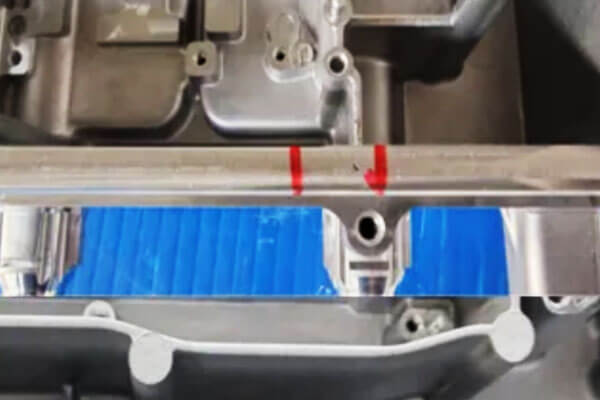
Kebocoran dan Kegagalan Kedap Udara
Banyak rumah kontrol elektronik berisi saluran oli internal bertekanan tinggi, saluran air pendingin, atau rongga tertutup.
Jika pori-pori yang saling berhubungan memanjang melalui dinding atau menghubungkan saluran internal ke eksterior, cairan atau udara bertekanan dapat melewati pengecoran.
Hal ini dapat menyebabkan kebocoran silang antara saluran minyak atau saluran air yang berdekatan, kebocoran eksternal, atau kegagalan selama pengujian kedap udara dan hidrostatik.
Untuk rumah yang dirancang untuk memenuhi persyaratan perlindungan masuknya IP67, kebocoran pengecoran dapat mencegah rakitan yang telah selesai mencapai tingkat perlindungan yang diperlukan.
Penting untuk membedakan antara pengecoran kedap udara dan peringkat IP akhir: IP67 berlaku untuk selungkup yang telah selesai pada kondisi pengujian yang ditentukan.
Namun demikian, porositas pengecoran internal dapat membahayakan sistem penyegelan dan mempersulit kepatuhan.
Mengurangi Kekuatan pada Lubang Berulir dan Atasan Pemasangan
Lubang berulir, kolom pemasangan, dan bos pengikat seringkali lebih tebal daripada dinding perumahan di sekitarnya. Fitur-fitur ini dapat menjadi titik panas selama pemadatan.
Jika rongga penyusutan terjadi di dekat bagian bawah lubang berulir atau di dalam bos pemasangan, penyadapan selanjutnya dapat memperlihatkan porositas atau meninggalkan material suara yang tidak mencukupi di sekitar benang.
Hasilnya dapat mengurangi keterlibatan thread, torsi pengencangan yang tidak memadai, sekrup mengendur, atau kegagalan pengikatan.
Porositas Terkena Selama Pemesinan
Perumahan die-cast dapat lolos inspeksi visual sambil mengandung porositas bawah permukaan.
Kapan pemesinan CNC menghilangkan kulit luar untuk membuat wajah tertutup, bantalan kursi, port berulir, atau antarmuka presisi, pori-pori yang sebelumnya tertutup bisa menjadi terbuka.
Hal ini dapat menghasilkan lubang kecil yang terlihat, jalur kebocoran, permukaan yang buruk, dan penolakan dimensi atau penampilan.
Untuk komponen dengan permukaan penyegelan yang dikerjakan dengan mesin, Oleh karena itu, pengendalian porositas harus mempertimbangkan kelonggaran pemesinan dan kedalaman permukaan akhir—bukan hanya kondisi cetakan.
2. Akar Penyebab Porositas Penyusutan Gas pada Die Casting
Porositas penyusutan gas pada rumah cetakan umumnya dibagi menjadi dua mekanisme utama: porositas terkait gas yang disebabkan oleh gas yang terperangkap, dan porositas terkait penyusutan yang disebabkan oleh kurangnya feeding selama pemadatan.
Kedua mekanisme tersebut dapat terjadi di wilayah yang sama, membuat diagnosis menjadi lebih sulit.
Porositas Terkait Gas: Udara yang Terjebak dan Gas Proses
Porositas gas terbentuk ketika udara atau gas proses terperangkap dalam lelehan aluminium dan tidak dapat keluar sebelum pemadatan.
Sumber utamanya adalah mengisi turbulensi, ventilasi jamur yang tidak memadai, dan gas yang dihasilkan oleh bahan pelepas atau bahan proses lainnya.
Pengisian bergejolak dan desain gating yang buruk
Jika posisi ingate, luas penampang, atau geometri pelari dirancang dengan buruk, aluminium cair dapat memasuki rongga sebagai jet berkecepatan tinggi.
Aliran tidak stabil, percikan logam, dan tumbukan depan aliran yang prematur dapat menyebabkan udara masuk ke dalam lelehan.
Setelah ditutup oleh logam cair, udara ini mungkin tetap menjadi pori-pori gas internal.
Masalah ini sering terjadi pada rumah berdinding tipis dengan rusuk yang rumit, banyak bos, dan jalur aliran yang panjang, dimana bagian depan logam harus berubah arah beberapa kali sebelum mencapai ujung rongga.
Ventilasi jamur tidak memadai
Selama pengisian, udara yang awalnya ada di rongga harus dievakuasi melalui ventilasi garis pemisah, daerah yang meluap, sisipan ventilasi, dan jalur pembuangan lain yang ditentukan.
Jika bagian-bagian ini terlalu kecil, posisinya salah, atau terhalang oleh penumpukan aluminium dan endapan zat pelepas, gas rongga tidak dapat keluar dengan cukup cepat.
Tekanan balik yang diakibatkannya dapat menyebabkan pengisian tidak lengkap, jebakan gas, dan porositas di dekat daerah yang terakhir terisi.
Pin ejektor dan jarak bebas pin inti juga dapat menyediakan jalur ventilasi sekunder, namun hal ini tidak boleh dianggap sebagai pengganti sistem ventilasi yang dirancang dengan baik.
Pembangkitan gas dari bahan pelepas dan pelumas pendorong
Aplikasi semprotan mati yang berlebihan, hembusan udara yang tidak mencukupi, dan pelumasan pendorong yang tidak tepat dapat memasukkan gas tambahan ke dalam rongga cetakan atau logam cair.
Air dan komponen organik dalam zat pelepas menguap atau terurai pada suhu tinggi.
Jika permukaan cetakan tidak cukup kering sebelum pengambilan berikutnya, gas-gas ini mungkin terperangkap selama pengisian. Penggunaan pelumas yang berlebihan pada shot sleeve dapat menimbulkan masalah serupa.
Pendekatan yang benar adalah dengan mengontrol kuantitas semprotan, cakupan, waktu pengeringan, dan dosis pelumas, bukan sekadar meningkatkan kapasitas ventilasi untuk mengimbangi produksi gas yang berlebihan.
Porositas Terkait Penyusutan: Pemberian Makan Tidak Cukup Selama Pemadatan
Paduan aluminium berkontraksi saat mengeras. Dalam proses die-casting, tekanan yang ditransmisikan melalui runner dan gate dapat mengkompensasi sebagian kontraksi ini, asalkan jalur pengumpanan tetap terbuka dan tekanan mencapai daerah kritis sebelum logam membeku.
Ketika suatu bagian lokal tetap cair setelah daerah sekitarnya memadat, itu menjadi titik panas.
Jika logam cair yang tersisa tidak dapat memberi makan area ini, rongga penyusutan atau mikroporositas tersebar berkembang.
Transisi ketebalan dinding yang tiba-tiba dan titik panas
Rumah kontrol elektronik sering kali berisi bos pemasangan berulir, konektor bertekanan tinggi, inti lubang dalam, dan kolom pemasangan yang diperkuat.
Beberapa fitur ini bisa tiga hingga empat kali lebih tebal dibandingkan dinding tipis di dekatnya.
Bagian yang tipis mengeras terlebih dahulu, sedangkan bagian yang tebal menahan panas dan kemudian mengeras.
Setelah jalur logam penghubung membeku, cairan yang tersisa di bagian kental tidak dapat menerima logam tambahan yang cukup untuk mengkompensasi penyusutan pemadatan.
Hal ini menghasilkan porositas penyusutan seperti spons atau rongga penyusutan terkonsentrasi, khususnya di akar bos, persimpangan tulang rusuk, dasar lubang yang dalam, dan bagian berat lainnya.
Keseimbangan termal cetakan yang tidak terkontrol
Area lokal cetakan yang tetap terlalu panas—seperti rongga yang dalam tanpa pendinginan yang memadai—akan memperpanjang waktu pemadatan.
Ketidakseimbangan suhu yang diakibatkannya dapat meningkatkan risiko penyusutan lokal dan kasar, struktur mikro yang tidak seragam.
Masalahnya bukan hanya pada suhu cetakan yang tinggi. Distribusi suhu tidak sesuai dengan urutan pemadatan yang diperlukan.
Sebuah housing mungkin memiliki suhu die rata-rata yang dapat diterima namun masih mengandung satu atau dua titik panas kritis.
Hilangnya transmisi tekanan intensifikasi
Die casting bertekanan tinggi mengandalkan tekanan intensifikasi untuk mengkompensasi penyusutan sementara gerbang dan jalur pengumpanan internal tetap cukup cair.
Jika ingate atau runner membeku terlalu dini, tekanan intensifikasi tidak dapat disalurkan secara efektif ke bagian tebal yang terpencil.
Bahkan ketika alat berat menampilkan tekanan intensifikasi target, tekanan aktual yang bekerja pada wilayah kritis mungkin tidak cukup.
Inilah sebabnya mengapa pengaturan tekanan mesin saja tidak dapat memastikan pengumpanan yang efektif. Ketebalan gerbang, lokasi gerbang, waktu solidifikasi, dan kondisi termal lokal juga harus dievaluasi.
3. Solusi Sistematis untuk Porositas Penyusutan dan Kebocoran
Lokasi porositas yang berbeda memerlukan tindakan perbaikan yang berbeda. Penyesuaian proses yang memperbaiki satu wilayah mungkin berdampak kecil pada wilayah lain.
Untuk rumah kontrol elektronik die-cast, strategi yang efektif adalah dengan menggunakan optimasi proses konvensional untuk area umum, teknologi pemerasan lokal untuk penyusutan bagian berat, dan pengisian dengan bantuan vakum serta peningkatan ventilasi untuk wilayah rawan gas.
Solusi berikut mengatasi lokasi cacat utama yang ditemui dalam produksi.
Teknologi Pemerasan Lokal untuk Penyusutan Bagian Tebal
Ketika penyusutan, porositas berulang kali muncul di titik panas lokal, penyesuaian konvensional terhadap kecepatan injeksi dan tekanan intensifikasi mungkin tidak cukup.
Hal ini terutama berlaku untuk dasar lubang yang dalam, tulang rusuk yang bersilangan, bos pemasangan yang tebal, dan area lain yang jalur suplai makanannya membeku sebelum waktunya.
Teknologi pemerasan lokal merupakan solusi efektif untuk lokasi-lokasi sulit tersebut.
Prinsip kerja
Pin pemeras dipasang pada cetakan pada posisi yang sesuai dengan daerah rawan penyusutan.
Setelah rongga terisi, namun aluminium lokal tetap dalam keadaan semi padat yang sesuai, silinder hidrolik menggerakkan pin ke depan.
Pin menerapkan tekanan lokal pada sisa logam cair atau semi padat, memaksanya menuju area rawan penyusutan dan mengimbangi kontraksi solidifikasi.
Berbeda dengan tekanan intensifikasi pada umumnya, yang harus disalurkan melalui runner dan gate, pemerasan lokal bekerja langsung pada bagian kritis.
Hal ini membuatnya sangat berguna ketika jalur pemberian makan normal terlalu panjang, terlalu sempit, atau sudah memadat sebagian.
Parameter proses utama
Efektivitas pemerasan lokal tergantung pada hubungan antara posisi pin, waktu pemerasan, stroke, dan kekuatan yang diterapkan.
Parameter ini harus ditentukan melalui uji coba cetakan, bukan disalin langsung dari komponen lain.
| Parameter | Pertimbangan Teknik |
| Posisi peniti | Place the pin close to the predicted hot spot, with sufficient access to the remaining liquid or semi-solid metal |
| Squeeze stroke | Calculate according to the local shrinkage volume and available feeding space; the reference stroke may be estimated at approximately 5–10% of the hot-spot diameter, but must be validated through trials |
| Squeeze delay | One of the most critical parameters; it must allow the surrounding metal to develop sufficient strength while the hot spot remains capable of being fed |
| Squeeze force | Determine according to the projected squeeze area, local metal condition, pin geometry, and hydraulic system capacity |
In one production example, an electronic control housing developed severe shrinkage porosity at the bottom of a lower-core blind hole because of excessive local wall thickness.
X-ray inspection revealed a concentrated shrinkage defect, and the airtightness pass rate was below 50%.
After a local squeeze structure was added at the corresponding hot spot and the squeeze timing and stroke were optimized, follow-up X-ray inspection showed that the shrinkage defect had been eliminated in the inspected area. The airtightness pass rate increased to above 98%.
Pengaturan waktu memerlukan perhatian khusus.
If the squeeze pin advances too early, the aluminum is still too fluid and the pin may simply displace the metal without generating effective feeding pressure.
If it advances too late, a solidified shell may have formed around the hot spot, preventing the pin from moving the remaining metal into the shrinkage cavity.
A production reference in the original case was a squeeze delay of approximately 1.5–2 seconds after cavity filling. This is not a universal setting.
The actual delay must be established from the machine’s position or pressure signals, the local solidification behavior, and the response observed during mold trials.
The squeeze-pressure requirement must also be calculated carefully.
A cited process reference used a squeeze-pressure level approximately three to five times the conventional casting-pressure reference—for example, 240–400 MPa when the cited casting pressure was 80 MPa.
Namun, engineers must distinguish hydraulic pressure, machine intensification pressure, and pressure acting on the squeeze-pin face.
These values are not directly interchangeable. The required force, cylinder area, pin area, and equipment rating must be checked before adopting any setting.
Gating, Ventilasi, dan Bantuan Vakum untuk Daerah Rawan Gas
Gas porosity commonly occurs near the last-filled regions of a housing, especially around remote cavities, lorong-lorong sempit, and areas where the metal flow changes direction.
In these locations, improving the exhaust path is often more effective than simply increasing injection pressure.
Tambahkan jembatan transfer untuk meningkatkan aliran logam
For long housings or structures with difficult-to-fill remote sections, a transfer bridge can be added near the end-of-fill window or in an open region of the die.
The bridge provides a more favorable route for molten aluminum to move into the target area. It can help reduce flow stagnation, premature flow-front collision, and unstable filling.
Its position and cross-section must be designed to maintain a smooth flow path without creating additional turbulence or an unfavorable solidification sequence.
Tingkatkan ventilasi melalui pin ejektor dan sisipan ventilasi tipe selongsong
Ordinary ejector pins can provide limited venting through their clearance with the die. Namun, where gas repeatedly accumulates, a dedicated venting structure may be more effective.
At suitable locations, conventional ejector pins can be replaced with sleeve-type vent pins or specially designed vent inserts.
The small clearance between the pin and sleeve forms an exhaust passage through which trapped cavity gas can escape.
A clearance of approximately 0.03–0.05 mm is a process reference for this type of venting arrangement.
The actual clearance depends on the alloy, suhu mati, flash sensitivity, and insert design.
It must be sufficient for gas evacuation without allowing excessive aluminum penetration or creating difficult-to-remove flash.
Vent passages should also be inspected and cleaned regularly. Aluminum deposits and release-agent residues can gradually reduce their effective cross-section and undermine venting performance.
Terapkan die casting vakum tinggi
Conventional die casting relies mainly on passive venting through the parting line, daerah yang meluap, dan sisipan ventilasi.
In complex electronic housings with strict airtightness requirements, this may not be sufficient.
Vacuum-assisted die casting removes part of the air from the cavity before molten aluminum enters.
By reducing the amount of gas present during filling, the process lowers cavity back pressure and reduces the risk of air entrapment.
A practical vacuum reference for high-vacuum die casting is approximately −0.06 to −0.08 MPa gauge pressure, corresponding to an absolute pressure of roughly 20–40 kPa, depending on local atmospheric pressure and the measurement system.
The actual vacuum level at the cavity should be verified rather than relying only on the vacuum pump’s nominal capacity.
Valve response, kinerja penyegelan, vacuum-line resistance, and the timing of vacuum shutoff all affect the result.
For housings requiring reliable airtightness, vacuum assistance should be considered together with optimized gating, overflow design, and venting.
Vacuum reduces gas-related porosity, but it does not replace the feeding required to prevent solidification shrinkage.
Parameter Injeksi dan Keseimbangan Termal Cetakan
Even with a well-designed gating system, unstable injection parameters or an uneven die-temperature field can cause recurring porosity.
Process control should therefore focus on both the metal-filling sequence and the solidification sequence.
Optimalkan posisi pergantian tembakan cepat
The transition from slow shot to fast shot determines when the molten aluminum accelerates toward the ingate and enters the cavity at high speed.
If the changeover occurs too early, the metal may accelerate before reaching the intended position, increasing the risk of unstable flow and aluminum buildup near the shot sleeve or ingate.
If it occurs too late, the metal may lose too much temperature before rapid filling begins, resulting in poor filling and increased porosity near the end of the cavity.
A useful initial trial reference is to set the fast-shot changeover point approximately 10–20 mm before the molten aluminum reaches the ingate.
This distance must be adjusted according to shot-sleeve diameter, kecepatan pendorong, filling volume, machine response, and the actual metal-front position.
The correct setting should be confirmed through shot-profile analysis, short-shot trials, and defect inspection—not treated as a fixed value for every die-casting machine.
Kontrol distribusi suhu mati
Thick-section hot spots need to release heat at a rate compatible with the surrounding thin sections.
If a deep cavity, boss root, or rib intersection remains too hot, local solidification is delayed and shrinkage porosity becomes more likely.
Point cooling channels or high-pressure spot cooling can be installed near these critical areas to remove heat more efficiently.
Cooling should be targeted: excessive cooling can cause premature solidification, Dingin ditutup, soldering-related issues, or an unfavorable filling pattern.
For some aluminum die-casting processes, a mold-temperature reference of 180–220°C digunakan, with temperature variation controlled within approximately ±20°C.
These values are starting points rather than universal requirements.
The appropriate range depends on alloy, geometri pengecoran, waktu siklus, die material, and the balance between filling and solidification.
Temperature monitoring should focus on the critical regions of the die, not only the average mold temperature.
A stable overall reading can conceal a local hot spot that repeatedly produces shrinkage defects.
4. Perbaikan Desain Pengecoran untuk Mencegah Porositas
Process optimization can reduce porosity, but some defects originate from the component geometry itself.
If the housing contains excessive wall-thickness variation or poorly designed structural transitions, the die-casting process will have difficulty achieving uniform filling and solidification.
Design improvements should therefore be considered early, preferably before the die is manufactured.
Transisi Ketebalan Dinding yang Halus
Abrupt transitions between thick and thin sections create localized hot spots and increase the risk of shrinkage porosity.
Where a thick boss connects directly to a thin housing wall, the surrounding metal may solidify first and isolate the remaining liquid metal.
A more gradual wall-thickness transition helps reduce this temperature imbalance. Larger transition radii should be used where the geometry permits, particularly around mounting bosses, connector bases, dan bagian yang diperkuat.
Fillets and rounded transitions also reduce local stress concentration and improve metal flow around geometric junctions.
Namun, increasing the radius alone does not eliminate a hot spot if excessive metal volume remains concentrated in the same region. Wall thickness should be reviewed together with the overall feeding and cooling strategy.
Optimalkan Penguatan Geometri Tulang Rusuk
Reinforcing ribs are necessary to improve housing stiffness, but excessive rib thickness and poorly arranged intersections can create local metal accumulation.
For long cylindrical or box-shaped housings, a rationalized grid-like rib arrangement can provide structural support while distributing material more evenly.
Ketebalan tulang rusuk, jarak, and connection geometry should be designed to avoid large concentrations of metal at intersections.
Jika memungkinkan, use thinner ribs with smooth connections rather than oversized solid sections. This reduces the risk of isolated hot spots and helps maintain more consistent solidification.
5. Simulasi CAE dan Verifikasi Cacat
A reliable porosity-control strategy should combine engineering simulation with physical inspection.
Visual inspection and pressure testing can identify rejected parts, but they do not always explain why a defect formed or where the process needs to be corrected.
Simulasi Aliran Cetakan CAE
Menggunakan FLOW-3D or MAGMASOFT to simulate the existing die and evaluate the filling and solidification behavior.
Focus particularly on the solidification field and particle tracking to identify potential gas-entrapment areas and shrinkage-prone regions.
If a local area remains liquid while the surrounding metal has already solidified, it indicates a potential isolated hot spot with insufficient feeding.
Additional localized cooling or a squeeze pin should be considered to eliminate the risk of shrinkage porosity.
This step is often overlooked when production schedules are tight. Namun, simulation can identify potential defects before trial casting begins, helping prevent problems such as the blind-hole shrinkage encountered in the electronic control housing case.
Menetapkan Standar Pemeriksaan Sinar-X
Establish a clear X-ray inspection plan for critical casting locations, particularly thick sections, blind-hole bottoms, and other areas prone to shrinkage porosity.
A practical sampling reference is to inspect the first article from each production batch, followed by two samples every two hours.
Shrinkage severity can be evaluated with reference to ASTM E505, with acceptance criteria defined according to the applicable customer specifications and quality requirements.
Standarisasi Parameter Pemerasan Lokal
For each local squeeze pin, record the squeeze delay and squeeze stroke in the die-casting machine parameter sheet.
These values should be treated as critical process parameters and monitored through Kontrol proses statistik (SPC).
Consistent monitoring helps prevent unauthorized parameter changes and ensures that the local squeezing process remains stable throughout production.
Any significant deviation should be investigated promptly to avoid recurring shrinkage defects.
6. Kesimpulan
Shrinkage porosity leakage in die-cast housings cannot be reliably solved by simply increasing injection pressure or adjusting one machine parameter.
The defect is closely related to component geometry, molten-metal flow, cavity venting, local solidification, and the transmission of intensification pressure.
For electronic control housings with strict airtightness requirements, an effective engineering approach should combine optimized gating and venting, high-vacuum die casting, stable injection parameters, and a balanced mold-temperature field.
Where conventional process adjustments cannot eliminate localized shrinkage, local squeeze technology offers a targeted solution for critical thick sections.
Yang paling penting, every corrective measure should be verified through X-ray inspection and airtightness testing.
By connecting simulation, desain cetakan, pemantauan proses, and production inspection, manufacturers can reduce internal porosity, improve casting consistency, and achieve more reliable sealing performance in aluminum die-cast housings.
FAQ
Apa yang dimaksud dengan porositas penyusutan gas pada rumah kendali die-cast?
It is an internal defect that combines the characteristics of gas porosity and shrinkage porosity.
It typically occurs at abrupt wall thickness changes or at the fill end far from the gate, and it causes hermeticity failure, structural weakness, and machined surface rejection.
Mengapa porositas penyusutan gas sangat merusak rumah kendali elektronik??
Because it causes pressure leakage through internal oil or water passages, fails the IP67 protection rating, weakens threaded bosses, and becomes visible after machining.
All three consequences lead to scrap or field failure.
Apa itu teknologi pemerasan lokal?
It is a die casting technique in which a squeeze pin at a hot spot is driven forward by a hydraulic cylinder after filling, while the aluminum is still semi-solid, forcing unsolidified metal into the shrinkage cavity to feed it.
Apa itu pin ventilasi selongsong dan bagaimana cara kerjanya?
It is an ejector pin converted to a sleeve configuration. The clearance between the pin and the sleeve—0.03–0.05 mm—acts as a venting channel to evacuate gas from locations that are difficult to vent conventionally.