A mai gyártási világban, megmunkálás vs. A casting a kiváló minőségű alkatrészek előállításához a legszélesebb körben alkalmazott folyamat.
Ezek a módszerek kulcsszerepet játszanak abban, hogy mindent létrehozunk kifinomult orvosi implantátumok hogy robusztus autóalkatrészek.
A megfelelő folyamat kiválasztása a projekthez elengedhetetlen, és számos tényezőtől függ, például a tervezés bonyolultságától, anyagi követelmények, és költségvetési korlátozások.
Ebben a cikkben, részletes összehasonlítást adunk a megmunkálás vs. öntvény,
kiemeli azok megkülönböztető jellemzőit, és segít Önnek a leginkább megalapozott döntés meghozatalában gyártási igényeinek megfelelően.
1. Bevezetés: A casting és a megmunkálás megértése
Mindkét öntvény és megmunkálás alapvető gyártási folyamatok, mindegyik saját előnyökkel és alkalmazásokkal rendelkezik.
Öntvény magában foglalja az olvadt fém öntőformába öntését összetett formák kialakítására,
míg megmunkálás olyan folyamatra utal, amelynek során anyagot vonnak ki egy szilárd munkadarabból olyan eszközök segítségével, mint a CNC gépek.
Bár mindkettő kiváló minőségű alkatrészeket tud előállítani, e két módszer közötti választáshoz meg kell érteni egyedi képességeiket és korlátaikat.
2. Mi a casting?
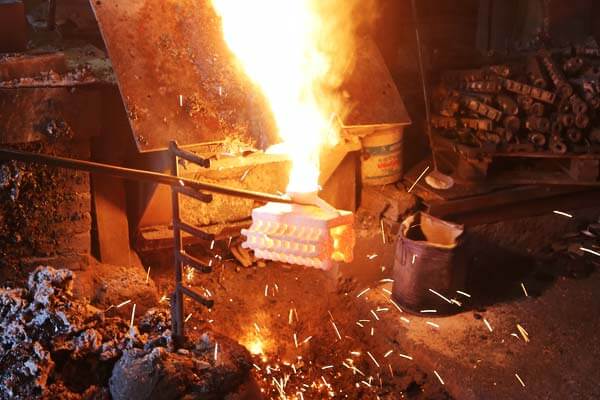
Öntvény olyan gyártási folyamat, ahol olvadt anyag– jellemzően fém vagy ötvözet – egy formaüregbe öntik, hogy megszilárduljon és felvegye a forma alakját.
Ez a sokoldalú eljárás lehetővé teszi összetett alkatrészek és formák létrehozását, amelyet más módszerekkel nehéz vagy költséges lenne elérni.
Ez az egyik legrégebbi fémmegmunkálási módszer, és ma is széles körben használják az iparban.
Casting alatt, az anyagot olvadt állapotra hevítik, és miután elérte a megfelelő hőmérsékletet, a kívánt geometriát tükröző formába öntik.
Az anyag lehűl és megszilárdul, alkotó részt, amelyet aztán kivesszük a formából.
Utána, minden szükséges simítást – például vágást, őrlés, vagy polírozás – alkalmazzák a végtermék eléréséhez.
A casting legfontosabb típusai:
Homoköntés:
- Folyamat áttekintése: A homoköntés a legelterjedtebb és legköltséghatékonyabb módszer, különösen nagy alkatrészekhez.
Az alkatrész mintája fából készült, műanyag, vagy fém és homokba van ágyazva.
A homok szorosan a minta köré van csomagolva, majd az olvadt fémet a formába öntik az alkatrész kialakításához.
Homoköntés - Alkalmazások: Általánosan használt az autóiparban, űrrepülés, és a nehézgépipar olyan alkatrészekhez, mint a motorblokkok, fogaskerék, és ipari gépalkatrészek.
- Előnyök: Alacsony szerszámköltségek, rugalmasság nagy alkatrészek kezelésére, és alkalmas különféle fémekhez.
- Hátrányok: Kevésbé pontos tűrések és durvább felületkezelés más módszerekhez képest.

Befektetési öntés (Elveszett viaszöntés):
- Folyamat áttekintése: -Ben befektetési casting, az alkatrész viaszmintája jön létre, majd kerámia héjjal vonják be.
A héjat felmelegítik, hogy eltávolítsák a viaszt, Hagyva egy üreges formát. Ezután az olvadt fémet a formába öntik az alkatrész elkészítéséhez.Befektetési öntés - Alkalmazások: Olyan alkatrészekhez használják, amelyek nagy pontosságot igényelnek, mint például a turbinapengék, orvosi implantátumok, és repülőgép -alkatrészek.
- Előnyök: Nagy dimenziós pontosság, Kiváló felszíni kivitel, és bonyolult belső geometriák létrehozásának képessége.
- Hátrányok: Magasabb munkaerőköltségek és lassabb termelési ráta, főleg kisebb alkatrészekhez alkalmas.

Die Casting:
- Folyamat áttekintése: Casting magában foglalja az olvadt fém acélformákba való kényszerítését (más néven meghal) nagynyomás alatt.
A fém gyorsan lehűl a formában, szilárd részt képezve. A matricák újra felhasználhatók, ideálissá téve ezt az eljárást nagy volumenű gyártáshoz.Die Casting - Alkalmazások: Általában kis és közepes méretű alkatrészek tömeggyártásában használják, mint például a házak, csatlakozók, és az autóipari alkatrészek.
- Előnyök: Gyors gyártási ciklusok, nagy pontosságú, Kiváló felszíni kivitel, és jó toleranciaszabályozás.
- Hátrányok: Magas kezdeti szerszámköltség és a felhasználható ötvözetek korlátai, mivel ez a legalkalmasabb alacsony olvadáspontú fémekhez, például a cinkhez, alumínium, és magnézium.

Állandó penészöntés:
- Folyamat áttekintése: Hasonló a fröccsöntéshez, hanem a nagy nyomás helyett, az olvadt fémet acélból vagy vasból készült újrafelhasználható formákba öntik.
Ezt a technikát gyakran használják olyan alkatrészeknél, amelyek jobb mechanikai tulajdonságokat igényelnek, mint amennyit a homoköntés tud nyújtani. - Alkalmazások: Gyakori az autóiparban olyan alkatrészek esetében, mint a dugattyúk, hengerfejek, és kerekek.
- Előnyök: Jobb méretpontosság és felületi minőség a homoköntéshez képest, gyorsabb hűtési sebességgel, ami jobb mechanikai tulajdonságokat eredményez.
- Hátrányok: Drágább szerszámok a homoköntéshez képest, és a közepes méretű alkatrészekre korlátozódnak.
Centrifugális casting:
- Folyamat áttekintése: Centrifugális castingban, az olvadt fémet forgó formába öntik, ahol a centrifugális erő egyenletesen osztja el az anyagot a formafalak mentén.
Ez különösen hasznos a hengeres részeknél, például csövek vagy perselyek. - Alkalmazások: Gyakori a csövek gyártásában, fogaskerék, és egyéb hengeres alkatrészek.
- Előnyök: Sűrű, egységes anyageloszlás, és csökkentett porozitás.
- Hátrányok: Kör vagy hengeres formákra korlátozódik, és kevésbé alkalmas bonyolult mintákhoz.
A casting legfontosabb előnyei:
- Összetett geometriák: Az öntés kiváló olyan bonyolult belső és külső formájú alkatrészek előállításában, amelyeket nehéz vagy lehetetlen lenne egyedül megmunkálással létrehozni.
- Költséghatékony nagy mennyiségek esetén: Miután a formák elkészültek, Az öntés nagyon költséghatékony módszer lehet nagy mennyiségű alkatrész előállítására, így ideális tömeggyártáshoz.
- Anyagi rugalmasság: Az öntés a fémek és ötvözetek széles skáláját képes befogadni,
beleértve az alumíniumot is, bronz, öntöttvas, acél, és a szuperfémek. Ez sokoldalúvá teszi a speciális anyagokat igénylő iparágakban. - Magas tolerancia és felületi minőség (Befektetési öntés): Más öntési módszerekkel összehasonlítva,
befektetési casting kiváló felületi minőséget és szűk tűrést kínál, nagy pontosságot igénylő alkatrészekhez alkalmas. - Alacsony anyaghulladék: Az öntés közel háló alakú alkatrészeket eredményez, az anyagpazarlás minimalizálása és a költséges másodlagos megmunkálás szükségességének csökkentése.
A casting legfontosabb megfontolásai és korlátai:
- Precizitás és tűrések: Míg egyes öntési módszerek jó méretpontosságot biztosítanak, a tolerancia Az öntött alkatrészek általában nem olyan magasak, mint a megmunkálási módszerekkel készült alkatrészek.
Egyes öntési eljárások, például a homoköntés durvább felületi minőséget eredményezhetnek, és további utófeldolgozást igényelnek. - Beállítási költségek: A forma kezdeti tervezése és gyártása költséges lehet, különösen összetett alkatrészekhez vagy kiváló minőségű öntőformák használatakor olyan eljárásokhoz, mint a fröccsöntés vagy öntés.
Viszont, a költség amortizálható a nagy volumenű gyártás felett. - Átfutási idő: Öntvény, különösen összetett formák vagy bonyolult kialakítások esetén, hosszabb átfutási időt igényelhet a megmunkálási vagy additív gyártási módszerekhez képest.
Ez kihatással lehet a szűkös időbeosztású projektekre. - Anyagi korlátozások: Egyes öntési eljárások csak meghatározott anyagokhoz alkalmasak,
például alumínium vagy cink alapú ötvözetek, és korlátozottak, ha magas olvadáspontú fémekkel vagy bonyolultabb ötvözetekkel dolgoznak.
Casting alkalmazása:
- Autóipar: Motorblokkok, sebességváltó, és a kipufogó alkatrészek.
- Repülőgép: Turbina pengék, motor alkatrészek, és szerkezeti alkatrészek.
- Építés: Nagy alkatrészek, például csövek és gerendák.
- Tengeri: Hajócsavarok, tengeri szerelvények, és szerkezeti részek.
- Fogyasztási cikkek: Dekoratív cikkek, főzőedény, és a hardver alkatrészek.
3. Mi a megmunkálás?
Megmunkálás egy kivonó gyártási folyamat, amely magában foglalja az anyag eltávolítását egy tömör munkadarabból precíziós vágószerszámok segítségével a kívánt forma elérése érdekében, méret, és fejezd be.
Ellentétben a casting, ahol az anyagot öntőformába öntik, a megmunkálás egy nagyobb darabból eltávolítja az anyagot, hogy pontos specifikációjú alkatrészt készítsen.
Ez a folyamat döntő fontosságú a nagy pontosságot igénylő iparágakban, mint például az űrrepülés, autóipari, orvostechnikai eszközök, és elektronika.
A megmunkálást jellemzően a CNC (Számítógépes numerikus vezérlés) gépek, amelyek meghatározott szerszámpályák követésére vannak programozva, kivételes pontosságot és ismételhetőséget tesz lehetővé.
Bár a megmunkálás kézzel is elvégezhető hagyományos szerszámgépekkel, az automatizált megmunkálás térnyerése jelentősen javította a termelés hatékonyságát, következetesség, és a sebesség.
A megmunkálási folyamatok típusai
CNC megmunkálás
- Folyamat áttekintése: CNC megmunkálás egy automatizált folyamat, ahol előre programozott számítógépes szoftver vezérli a szerszámgépeket
mint eszterga, malom, és fúrók. Széles körben használják nagy pontosságú, összetett geometriájú alkatrészek létrehozására.CNC megmunkálás - Előnyök: Nagy pontosságú, Kiváló megismételhetőség, gyors gyártási idők, és csökkenti a munkaerőköltségeket.
- Hátrányok: Magasabb kezdeti beállítási költségek a programozás és a szerszámozás miatt, és nem ideális nagy alkatrészekhez az öntéshez képest.

Kézi megmunkálás
- Folyamat áttekintése: Kézi megmunkálásban, képzett kezelők közvetlenül irányítják a gépeket, az egyes alkatrészekhez tartozó eszközök és beállítások beállítása.
Miközben több munkaerőt és szakértelmet igényel, rugalmasságot kínál az egyszeri alkatrészekhez, javítás, és kisszériás gyártás. - Előnyök: Rugalmasság egyedi munkavégzésben, alacsonyabb költség egyedi alkatrészek vagy kis tételek esetén, valamint a menet közbeni beállítások elvégzésének képessége.
- Hátrányok: Lassabb termelési sebesség, magasabb munkaerőköltségek, és kisebb a konzisztencia, mint a CNC megmunkálásnál.
Elektromos kisülési megmunkálás (EDM)
- Folyamat áttekintése: EDM elektromos szikrák segítségével erodálja az anyagot a munkadarabból, így ideális keményfémekhez és bonyolult formákhoz.
Általában öntőformákhoz és szerszámkészítéshez használják, valamint kis lyukú vagy pontos kontúrú alkatrészekhez.Elektromos kisülési megmunkálás - Előnyök: Kemény anyagokat megmunkálhat, finom részleteket ér el, és minimális hőhatású zónákat hoz létre.
- Hátrányok: Lassabb folyamat és magasabb működési költségek, kevésbé alkalmassá teszi a tömegtermelésre.

Őrlés
- Folyamat áttekintése: Őrlés csiszolókorongot használ az anyag eltávolítására a munkadarabból, jellemzően a felületek finomítására és szűk tűrések elérésére.
Gyakran ez a megmunkálás utolsó lépése a precíz felületek elérése érdekében. - Előnyök: Kiválóan alkalmas sima felületek és szűk tűrések elérésére.
- Hátrányok: Hőt termel, amely megváltoztathatja az anyag tulajdonságait, ha nem megfelelően kezelik, és lassabb, mint más folyamatok.
Boaching
- Folyamat áttekintése: Az előfeszítés egy olyan megmunkálási folyamat, amely egy fogazott szerszámot használ, amelyet feszítőnek neveznek, hogy lineáris lökettel távolítsa el az anyagot..
Ideális belső vagy külső formák, például kulcshornyok előállításához, szilánk, és rések. - Előnyök: Hatékony és gyors speciális formákhoz, magas termelékenység az ismétlődő feladatokhoz.
- Hátrányok: Egyedi formákra és magas szerszámköltségre korlátozódik.
A megmunkálás legfontosabb előnyei
- Nagy pontosság és pontosság: A megmunkálás arról ismert, hogy képes alkatrészeket előállítani rendkívül szűk tűréshatárok,
ami kritikus az olyan iparágakban, mint a repülés, autóipari, és orvostechnikai eszközök.
- A CNC megmunkálással akár ±0,0005 hüvelyk tűrés is elérhető (0.0127 mm), annak biztosítása, hogy az alkatrészek tökéletesen illeszkedjenek és a tervezett módon működjenek.
- Kiváló felület befejeződik: A megmunkálás egyik legfontosabb előnye az alkotóképesség sima, Kiváló minőségű felületi kivitel további utófeldolgozási lépések nélkül.
Ez különösen előnyös azoknál az alkatrészeknél, ahol minimális súrlódásra vagy magas esztétikai követelményekre van szükség. - Sokoldalúság: A megmunkálás sokféle anyaggal kompatibilis, beleértve a fémeket is (PÉLDÁUL., acél, alumínium, titán), műanyag, és kompozitok.
Ez lehetővé teszi a gyártók számára, hogy kiválasszák a legmegfelelőbb anyagot az adott alkalmazási igényeiknek megfelelően. - Testreszabás és gyors prototípuskészítés: A megmunkálás lehetővé teszi gyors tervezési módosítások és a gyártás közbeni beállításokat,
alkalmassá teszi prototípus- és kisszériás gyártásra.
CAD modellek és CNC programok módosításával egyszerűen készíthetők egyedi alkatrészek. - Ismételhetőség és konzisztencia: Automatizált CNC megmunkálás biztosítja, hogy minden gyártott alkatrész azonos legyen az előzővel.
Ez az ismételhetőség ideálissá teszi a megmunkálást olyan alkalmazásokhoz, ahol elengedhetetlen a részegységek egységessége.
A megmunkálás legfontosabb megfontolásai
- Anyaghulladék: A megmunkálás a kivonási folyamat, vagyis az anyagot egy nagyobb munkadarabról eltávolítják, ami pazarláshoz vezethet.
Viszont, a gondos tervezés és az optimális szerszámút minimálisra csökkentheti az anyagveszteséget. - Szerszám kopás és karbantartás: A megmunkálásnál használt vágószerszámok idővel elhasználódhatnak, különösen kemény anyagok megmunkálásakor.
Rendszeres karbantartás és szerszámcsere szükséges a pontosság és a hatékonyság megőrzéséhez. - Beállítási és programozási költségek: CNC megmunkáláshoz, gyakran vannak magasabbak kezdeti beállítási költségek programozás miatt, eszközcserék, és gépi kalibráció.
Viszont, ezeket a költségeket gyakran ellensúlyozza a tömeggyártás hatékonysága a beállítás befejezése után.
A megmunkálás alkalmazása
- Repülőgép: A megmunkálást széles körben használják repülőgépek kritikus alkatrészeinek előállítására, mint például a turbinapengék, szerkezeti elemek, és a motor alkatrészei.
Ezek az alkatrészek rendkívül szűk tűrést és precíz felületkezelést igényelnek. - Autóipar: A motorblokkoktól a felfüggesztés alkatrészekig, a megmunkálás döntő fontosságú a nagy teljesítményű, szilárdságot igénylő autóalkatrészek gyártásában, pontosság, és tartósság.
- Orvosi eszközök: Sok orvosi implantátum, műtéti eszközök, és a diagnosztikai berendezéseket megmunkálási technikákkal állítják elő, Ahol a pontosság kiemelkedő fontosságú.
- Szórakoztató elektronika: A megmunkálást okostelefonok házának létrehozására használják, laptopok, és egyéb elektronikus eszközök, biztosítja az alkatrészek pontos kialakítását és biztonságos rögzítését.
4. Fontos tényezők, amelyeket figyelembe kell venni a megmunkálás és. Öntvény
Amikor eldönti, hogy a megmunkálás vs. öntés a projekthez, több kritikus tényezőt is figyelembe kell venni.
Mindkét eljárás egyedülálló előnyöket kínál, de alkalmasságuk a projekt konkrét követelményeitől függ.
Az alábbiakban felsoroljuk azokat a legfontosabb szempontokat, amelyek segítenek meghatározni, hogy melyik módszer felel meg a legjobban az Ön gyártási igényeinek:
Tervezési bonyolultsági és tolerancia követelmények
Öntvény:
- Összetett geometriák: Ha a részed megkívánja összetett belső jellemzők vagy bonyolult geometriák, a casting lehet a jobb megoldás.
Az öntés ideális az alkatrészekhez nem szabványos formák, beleértve az üreges szelvényeket is, aláhúzások, és bonyolult minták. - Toleranciatétel: Az öntéssel ésszerű tűréseket lehet elérni, de jellemzően másodlagos műveleteket igényel (mint a megmunkálás) a nagyobb pontosság érdekében.
Befektetési öntés jobb tűrést kínál, mint a homoköntés, de általában még mindig nem felel meg a megmunkálás pontosságának.
Megmunkálás:
- Precíziós alkatrészek: If your design requires szűk tűrések, machining is the preferred choice.
CNC machining offers the highest precision, with tolerances as tight as ±0.0005 inches (0.0127 mm).
This is critical for applications such as aerospace, orvostechnikai eszközök, and automotive components where the slightest deviation can compromise performance. - Detail and Finish: For parts requiring Sima felszíni kivitel vagy detailed features,
machining is unmatched in producing high-quality, tight-fitting components with minimal post-processing.
A termelési mennyiség és az átfutási idő
Öntvény:
- Nagy mennyiségű termelés: Casting is especially effective for tömegtermelés of parts where high quantities are required.
Miután a penész létrehozta, large numbers of parts can be produced at a relatively low cost per unit, making casting the go-to choice for large-scale manufacturing. - Átfutási idő: Casting may require longer átfutási idő for mold creation, especially with complex designs.
Viszont, once molds are made, production is fast, and parts can be produced quickly in high volumes.
Megmunkálás:
- Small to Medium Batches: Machining is more suitable for smaller production runs vagy egyedi alkatrészek that don’t require large quantities.
The setup time and cost per part can be high for larger batches, making machining less cost-effective in mass production. - Faster Prototyping: If quick prototypes are needed, machining is faster.
The ability to adjust the design on the fly and make immediate changes is a significant advantage when rapid prototyping is a priority.
Anyagtípus és tulajdonságok
Öntvény:
- Anyag Rugalmasság: Casting allows for the use of a broad range of materials, beleértve alumínium, acél, bronz, öntöttvas, és Szuperfémek.
This makes casting a versatile method for industries where material choice is paramount, such as automotive, űrrepülés, és nehéz gépek. - Anyagi korlátozások: While casting supports various alloys, it may not be suitable for materials that require extreme precision,
such as some high-performance alloys, which may benefit more from machining.
Megmunkálás:
- Széles anyagkompatibilitás: Machining works well with a broad range of materials, beleértve fém (acél, alumínium, titán), műanyag, és kompozitok.
Viszont, machining is particularly ideal for hard materials that can withstand high-speed cutting, beleértve a rozsdamentes acélt, titán, and certain alloys. - Anyaghulladék: One downside of machining is that it can lead to higher material waste because it’s a subtractive process, especially with complex geometries.
This needs to be considered when dealing with high-cost or limited materials.
Költség- és költségvetési korlátozások
Öntvény:
- Kezdeti beállítási költségek: A initial tooling cost for casting, particularly for creating molds, lehet magas.
Például, creating custom molds can range from hundreds to thousands of dollars, a bonyolultságtól függően.
Viszont, once the molds are made, the cost per part is significantly lower, making casting a cost-effective solution for large-scale production. - Egységenkénti költség: Nagy volumenű előállításhoz, casting becomes much more költséghatékony as the cost of molds is
spread across a large number of parts, reducing the per-unit cost dramatically.
Megmunkálás:
-
- Higher Initial Costs: Although machining has lower setup costs compared to casting (no molds are required),
the per-unit cost of machining is generally magasabb due to the labor and equipment costs involved in material removal. - Cost for Low-Volume Production: For low to medium production volumes or customized parts, machining can be more költséghatékony mint casting.
Viszont, for larger runs, the initial cost of machining can become expensive, especially for parts requiring multiple processes.
- Higher Initial Costs: Although machining has lower setup costs compared to casting (no molds are required),
Mechanikai tulajdonságok és tartósság
Öntvény:
- Material Strength: While casting can produce parts with good mechanical properties,
the resulting material is often less dense and may have porosity or voids, which can affect its strength and durability.
Additional treatments or secondary processes such as hőkezelés vagy megmunkálás are often required to achieve the desired strength and durability. - Alkalmazási alkalmasság: Casting is highly suitable for non-structural components, or parts that don’t bear heavy loads or need high strength.
Megmunkálás:
- Kiváló Erő: Machining provides excellent mechanikai tulajdonságok as it produces solid parts free from voids.
The part’s final structure is often denser and more uniform, resulting in better durability and fáradtság ellenállás. - Szívósság: For applications requiring high strength under stress, mint például autóipari alkatrészek és űrrepülési alkatrészek, machining is a superior choice.
It delivers stronger and more reliable components that perform well under high loads or extreme conditions.
Fenntarthatóság és hulladékgazdálkodás
Öntvény:
- Less Material Waste: Casting processes, különösen fröccsöntés és homoköntés, often result in less material waste compared to machining.
Parts are created close to the net shape, requiring less secondary material removal. - Környezeti hatás: Viszont, the casting process can be energy-intensive, especially when melting metals.
Emellett, penész létrehozása can generate waste that needs to be managed or recycled.
Megmunkálás:
- Anyaghulladék: Since machining is subtractive, it generates material waste, particularly when removing large amounts of material to create a part.
For high-precision machining, scrap rates can increase. - Hatékonyság: Although machining can be wasteful, fejlett technikák and efficient tool paths can help optimize material usage.
Emellett, újrafeldolgozás machining scrap material can help mitigate its environmental impact.
Átfutási idő és fordulási idő
Öntvény:
- Longer Setup Times: Casting generally involves longer lead times because of the mold-making folyamat, which can take days to weeks depending on the complexity of the part.
- Faster Mass Production: Once molds are created, casting can produce parts quickly in high volumes, making it an efficient solution for large-scale runs.
Megmunkálás:
- Shorter Setup Times: CNC machining requires less setup time compared to casting.
Once the part design is programmed, machining can begin quickly, offering faster turnaround times -ra kis tételek vagy egyedi alkatrészek. - Faster Prototyping: Machining excels in producing rapid prototypes or small batches with quicker delivery, which is particularly beneficial for testing new designs.
5. Casting és megmunkálás kombinálása
In many manufacturing projects, a hybrid approach of öntvény és megmunkálás is the most effective method to achieve the desired results.
Combining both processes takes advantage of the strengths of each, optimizing both cost and performance.
Here’s how casting and machining work together to deliver high-quality components:
Miért kombinálja a castingot és a megmunkálást?
- Casting for Complex Shapes: Casting excels at producing nagy, összetett formák and parts with internal geometries that would be difficult or impossible to achieve through machining alone.
Például, casting is ideal for creating üreges szakaszok, bonyolult belső jellemzők, és complex contours. - Machining for Precision and Finish: While casting is efficient for creating parts in bulk and complex shapes,
it doesn’t always deliver the szűk tűrések és Sima felszíni kivitel required in certain industries. Itt jönnek be a megmunkálási lépések.
Az alapforma öntése után, megmunkálás használható finomhangolni a rész, annak biztosítása, hogy megfeleljen a pontos előírásoknak és teljesítményszabványoknak.
E két módszer kombinálásával a gyártók létrehozhatnak költséghatékony, nagy teljesítményű alkatrészek a gyártási idő és a költségek ellenőrzése mellett.
A kombinált öntés és megmunkálás általános példái
Az öntés és a megmunkálás kombinálásával általában többféle alkatrészt állítanak elő, különösen az iparágakban, ahol erő, pontosság, és bonyolultság kulcsfontosságú követelmények:
Autóipari motor blokkok
- Öntvény: A motorblokkokat általában öntötték a fő szerkezet kialakítására, amely nagy és összetett.
Az öntési eljárás ideális az alkatrész nagy részének formálására, beleértve a motort is hengerfej és forgattyúház. - Megmunkálás: Egyszer öntött, a motorblokk átmegy megmunkálás pontos jellemzők eléréséhez, mint pl szálak, házak dugattyúkhoz, hűtőcsatornák, és ujjú.
A megmunkálás biztosítja, hogy a végső méretek és felületi minőség pontosan megfeleljen a motor teljesítményéhez szükséges szabványoknak.
Turbina pengék
- Öntvény: Turbina pengék, which require fine internal features and thin geometries, are often produced via befektetési casting to create bonyolult formák.
- Megmunkálás: Casting után, the blades are machined to szűk tűrések to ensure that they fit within the engine components and withstand high-stress conditions.
Cooling channels és Finom részletek can also be added at this stage to optimize the blade’s performance.
Repülőgép-alkatrészek
- Öntvény: Aerospace parts like engine casings, zárójel, és szerkezeti támogatások are often produced through casting to form the base shape.
- Megmunkálás: These cast components then undergo machining to refine the final part, ensuring it fits precisely with other parts in the assembly and meets weight and strength requirements.
Kritikai jellemzők mint például csavar lyukak, rögzítési pontok, és fluid pathways are added through machining.
A casting és a megmunkálás kombinálásának előnyei
Költséghatékonyság:
- Casting allows for the creation of complex parts in a single step, eliminating the need for multiple processes.
Once the casting mold is made, parts can be produced quickly in high volumes.
By following up with machining, manufacturers save costs on másodlagos műveletek és az anyaghulladék. - Megmunkálás can refine the part’s geometry after the bulk material has been cast, reducing the amount of material that needs to be removed, and leading to more efficient manufacturing.
Tervezési rugalmasság:
- Combining casting and machining opens up more design possibilities.
Complex shapes and intricate internal structures can be cast, while precise features, szálak, lyukak, and finishes can be machined afterward.
This combination allows manufacturers to create parts that meet complex, real-world demands.
Időhatékonyság:
- Öntvény provides the bulk form of the part quickly, which is then finished rapidly through machining.
This reduces overall lead times compared to machining the entire part from raw material.
Továbbfejlesztett mechanikai tulajdonságok:
- Megmunkálás can help improve the mechanical properties of cast parts.
Casting után, the material may have imperfections such as porozitás vagy internal voids.
Machining can remove these defects, javítva a sűrűség és erő a végtermékből.
Pontosság elérése:
- Machining steps after casting help achieve magasabb pontosság for parts that require szűk tűrések és smooth finishes.
Például, after a turbine component is cast, machining ensures the part fits into the assembly precisely and meets rigorous performance standards.
Kihívások és megfontolások
While combining casting and machining offers many advantages, manufacturers must consider a few challenges:
Fokozott komplexitás:
- The need to perform both casting and machining increases the bonyolultság of the manufacturing process.
The design process must consider both steps, and close coordination is required between the casting and machining operations to ensure compatibility.
Átfutási idő:
- Combining both processes can increase lead times compared to using only one method.
The casting process itself takes time, and then the machining process adds additional time. Proper planning is required to minimize delays.
Beállítás költsége:
- While casting is cost-effective for large volumes, initial tooling costs for both the casting mold and machining equipment can be high.
Manufacturers must carefully assess the költséghatékonyság of combining both processes.
Anyagi korlátok:
- Certain alloys and materials may be better suited for casting or machining, but not both.
Például, certain metals may be more prone to reccsenés vagy csavarás when cast and may require special machining processes to mitigate those issues.
6. Következtetés: Melyik folyamat megfelelő az Ön projektjéhez?
Both machining vs. casting have their strengths, and choosing the right process depends on your specific requirements.
Casting is a great option for producing complex parts in high volumes at a lower cost per unit.
Másrészt, machining excels in precision and versatility, making it ideal for prototypes, kis tételek, and parts with tight tolerances.
Understanding the characteristics of each method will help you determine the best approach to meet your project’s design, termelés, and budget goals.
Whether you choose casting or machining, both processes offer unique benefits that are essential in modern manufacturing.
DEZE has extensive experience in both casting and machining.
If you need assistance in choosing the right process for your next project, feel free to contact us for expert guidance and solutions.