1. Hōʻikeʻike
NA Haawe 5 ʻo ia kekahi o ka zinc die-casting alloys i hoʻokumu ʻia i ka ʻoihana hou.
It belongs to the conventional zinc alloy family rather than the higher-aluminum ZA group, and it is widely recognized for combining maikaʻi maikaʻi, higher strength than Zamak 3, improved creep resistance, and excellent finishing behavior.
In practical manufacturing, that combination gives ZAMAK 5 a very specific and very valuable position: it is not the most fluid zinc alloy, and it is not the most ductile, but it is one of the most balanced alloys for functional die-cast parts.
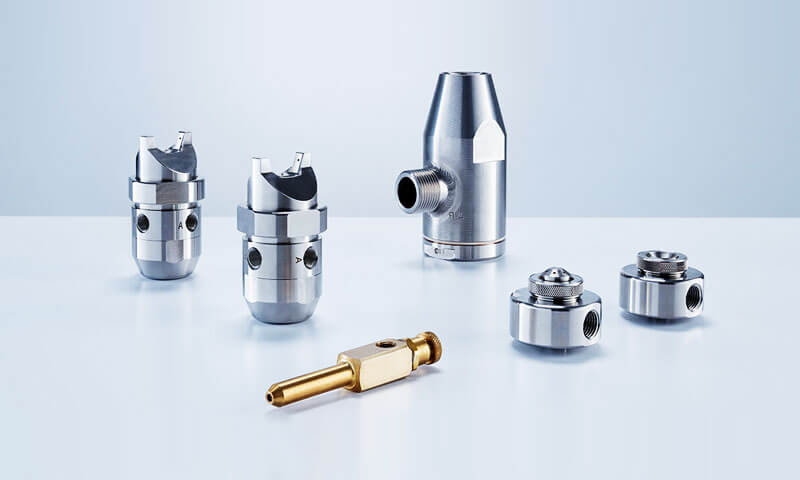
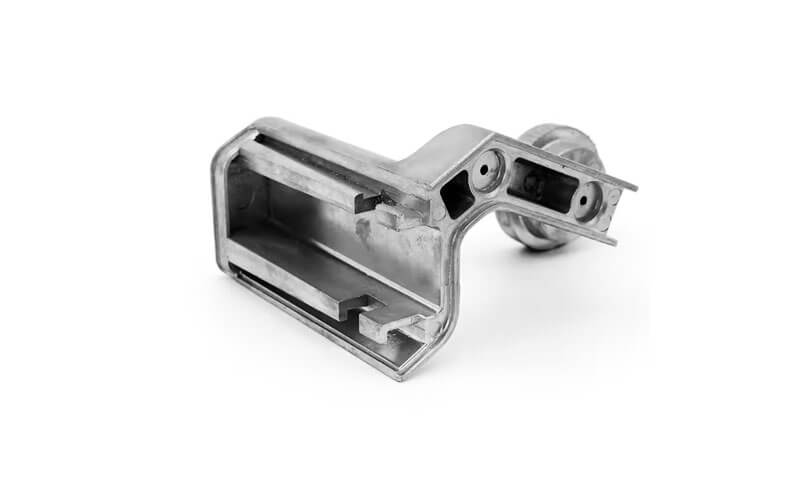
This balance explains its wide use in valves, Pumps, Hana Pūnaewele'AuantoTif, urowing, sanitary components, decorative-functional parts, and general engineering products.
When a design needs a near-net-shape metal component with reliable dimensional precision, good surface quality, and a respectable mechanical profile, NA Haawe 5 is often one of the first alloys considered.
2. What Is ZAMAK 5 Alloy?
NA Haawe 5 he zinc-based die-casting alloy with a conventional zinc-aluminum-copper-magnesium chemistry.
It is commonly known as Alloy 5, and it appears under multiple industrial naming systems.
In different markets and standards, it may also be identified as na kaumaha 5, ZP5, ZL5, ZL0410, or ZnAl4Cu1.
These different names reflect regional conventions rather than different materials.
The alloy is part of the classic zinc die-casting family, which has long been valued for the ability to make thin, Pono UUA, and relatively complex parts at high speed and low unit cost.
Among those conventional zinc alloys, NA Haawe 5 is often regarded as the stronger, more creep-resistant sibling of Zamak 3.
Nā hiʻohiʻona noʻonoʻo
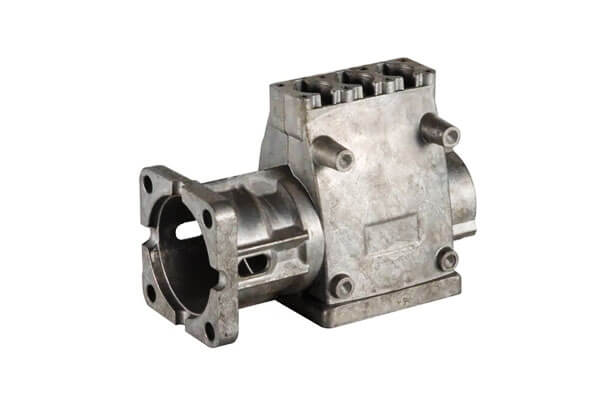
NA Haawe 5 is defined by a set of characteristics that make it particularly useful in industrial production:
- Maikaʻi maikaʻi, especially in high-volume die-cast parts.
- Higher tensile performance than Zamak 3.
- Better creep resistance than Zamak 3, which matters in parts under sustained load.
- Good plating and finishing behavior, making it suitable for visible or decorative parts.
- Useful machinability, particularly when secondary operations are needed.
- Good dimensional stability, which supports precision applications.
3. Chemical Composition of ZAMAK 5 Alloy
NA Haawe 5 is a zinc alloy whose performance comes from a carefully controlled chemistry.
Zinc is the base metal, but its properties are tuned by small, meaningful additions of aluminum, keleawe, a me ka magnesium, with strict control of impurities.
| Mua | Typical content | Hana |
| Zinc | Kaulike | Base metal and matrix of the alloy |
| Aluminum | 3.9–4.3% | Supports castability and matrix stability |
| keleawe | 0.7–1.1% | Raises strength, paakiki, a me nā pale creep |
| Magnesum | 0.03-0.06% | Helps refine structure and improve casting behavior |
| 'Eron | ≤ 0.035% | Kept very low because excess iron harms casting quality |
| Alakaʻi | ≤ 0.004% | Kāohiʻia i ka manaʻoʻino |
| Kapalakiko | ≤ 0.003% | Kāohiʻia i ka manaʻoʻino |
| Kū | ≤ 0.0015% | Kāohiʻia i ka manaʻoʻino |
4. Physical and Mechanical Properties of ZAMAK 5 Alloy
NA Haawe 5 is usually specified in e like me-lawe Oole as-cast/aged Kauoha, so its measured properties can vary slightly with casting quality, PAUKU PAUKU, and aging time.
In rigorous material selection, it is therefore better to treat the figures below as representative engineering values rather than as immutable constants.
| Waiwai | Imperial | Metric |
| Huakai | 0.240 lb / in³ | 6.6 g / cm³ |
| Hoʻohemo melū | 717–727 °F | 380–386 °C |
| Mea kūʻai uila | 26% Iac | 26% Iac |
| Ka HōʻaʻO Kokua | 62.9 BTU/ft·hr·°F | ≈ 109 W / m · c · k |
| Ka maikaʻi o ka hoʻonuiʻana i ka | 15.2 μin/in/°F | ≈ 27.4 μm / m · k |
| Elastic Modulus | 12.4 × 10⁶ psi | ≈ 85 GPA |
| ʻO ka ikaika hope loa | 48 ksi | 328 Mpa |
| Ka ikaika | 39 ksi | 269 Mpa |
| Ewangantion | 7% | 7% |
| Paʻakikī paʻakikī | 91 HB | 91 HB |
| Impact strength | 65 J | 65 J |
| Ka ikaika momona | ≈ 8.1 ksi | 56 Mpa |
| Time creep limit | ≈ 14.5 ksi | 100 Mpa |
How to read these numbers
From a design perspective, NA Haawe 5 is best viewed as a functional precision casting alloy.
It is stiff enough for housings and hardware, hard enough for many wear-related uses, and stable enough for parts that must retain geometry over time.
It is not the best choice when a part must be heavily deformed after casting, but it is very effective when the part is meant to be cast close to final shape.
5. Processing and Manufacturing Characteristics
NA Haawe 5 is one of the most manufacturing-efficient zinc alloys because it combines ʻO ka Castability maikaʻi loa, low melting temperature, strong mold-filling behavior, and good finishing response.
Die casting as the primary route
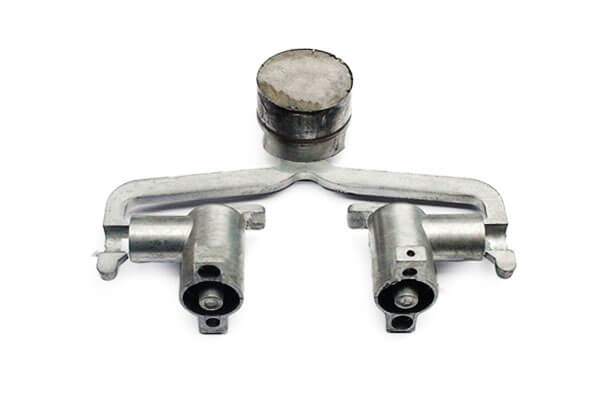
For ZAMAK 5, the dominant manufacturing route is Ka paipai make buring.
Its low melting range, ka maʻamau a puni 380–386 °C, supports rapid heat transfer, short cycle times, and lower thermal stress on dies than higher-melting metals.
That is one of the main reasons zinc alloys are so widely used in high-volume component production.
I nā hua'ōlelo kūpono, this means ZAMAK 5 is especially effective for parts with:
- nā pāʻili,
- fine ribs and bosses,
- ʻO ka geometry paʻakikī,
- nā mea i hoʻopaʻaʻia,
- and a need for relatively clean as-cast surfaces.
That process advantage often reduces the need for extensive machining after casting, which lowers total manufacturing cost.
Hot-chamber compatibility
NA Haawe 5 belongs to the family of zinc alloys that are well suited to hot-chamber die casting.
This process is productive because the metal can be injected quickly and repeatedly with relatively low thermal burden.
The alloy’s casting behavior is one of the reasons Zamak 5 remains so common in mass-produced hardware and functional castings.
The manufacturing logic here is straightforward: the alloy’s low liquidus temperature and good fluidity support stable filling of intricate cavities, while the die-casting route supports efficient throughput.
For manufacturers, that combination is a major economic advantage.
Melt handling and composition control
NA Haawe 5 is not just “melt and pour.” Like all zinc die-casting alloys, it requires careful melt control.
The chemistry must remain within a narrow window, and impurities must be kept tightly controlled because they can affect casting quality, Pūnaewele kūleʻa, a me ka hana lōʻihi.
ASTM B240 and current alloy references both emphasize low limits for unwanted elements such as lead, Kapalakiko, kū, a hao hao.
This is important because the alloy’s performance depends on maintaining the intended balance of aluminum, keleawe, a me ka magnesium.
If the melt is contaminated or poorly managed, the resulting castings may lose consistency in strength, paulapua, or dimensional stability.
In a production environment, good metallurgy is therefore inseparable from good process control.
Aging and property evolution after casting
A subtle but important feature of ZAMAK 5 is that its properties can evolve after casting.
Zinc die-casting references note that mechanical properties in the ZP5 / NA Haawe 5 family may change with time, with tensile strength and hardness tending to decline while elongation increases.
This means that the “freshly cast” condition is not always the final service condition, and engineering design should account for the stabilized property state rather than only the immediate post-casting result.
This aging behavior is not a defect. It is part of the material’s normal metallurgical life.
What matters is that the designer and manufacturer understand it and specify the part accordingly. For load-bearing or tolerance-sensitive products, this is a critical point.
Surface finishing and post-processing
NA Haawe 5 is highly favorable for surface finishing. It plates well, paints well, and supports polished or decorative finishes effectively.
This is one of the alloy’s core reasons for success in consumer products, sanitary hardware, and visible functional parts.
The alloy’s finish quality is not just cosmetic; it often contributes to the product’s corrosion protection and market appeal.
Secondary operations are also relatively manageable. Parts can often be trimmed, unuhi, hoʻopiliʻia, or lightly machined after casting, but ZAMAK 5 is not ideal for heavy post-cast deformation.
Because its ductility is moderate rather than high, operations such as bending, riveting, 'ahuʻu, or crimping must be considered carefully in design.
Tooling and production economics
From a manufacturing-economics standpoint, NA Haawe 5 is attractive because it supports near-net-shape production.
The result is less machining, less scrap from stock removal, fewer operations, and often lower total part cost. When the part volume is high, those savings can be substantial.
Its relatively low melting temperature also reduces thermal loading on dies, which helps support fast production cycles.
That is one of the reasons zinc die-casting remains such a durable manufacturing route for small and medium precision parts.
6. Advantages and Limitations of ZAMAK 5 Alloy
NA Haawe 5 is widely used because it occupies a very practical middle ground in zinc die casting.
It is not the most fluid zinc alloy, and it is not the most ductile, but it offers a very effective combination of ikaika, pale pale, finish quality, whola, a me ka hana mana.
That balance is the alloy’s real value.
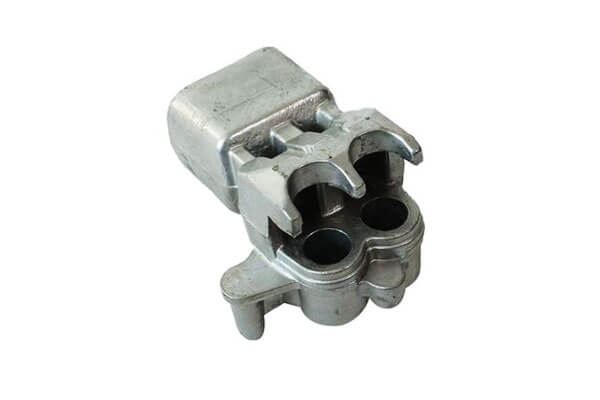
Loaʻa
Better strength than Zamak 3
NA Haawe 5 contains about 1% keleawe, and that addition raises tensile performance and hardness relative to Zamak 3.
I nā hua'ōlelo kūpono, it gives designers a little more mechanical margin when the part must carry load or resist deformation.
Hoʻomaikaʻi i ka pale ʻana i nā kolo
One of the most important benefits of ZAMAK 5 is its better creep performance compared with Zamak 3.
That matters in components that may remain under sustained force for long periods, because creep is a slow deformation problem rather than an immediate failure mode.
ʻO ka Castability maikaʻi loa
NA Haawe 5 remains highly suitable for precision die casting. It fills thin, complex cavities well and supports the production of detailed near-net-shape parts with relatively little secondary machining.
That is one reason it is so useful in high-volume manufacturing.
Strong surface finish and plating behavior
The alloy is very good for plating, Kāleka, and decorative finishing.
This makes it useful not only in hidden mechanical parts, but also in visible consumer products and hardware where appearance matters.
Good dimensional stability
Zinc die-casting alloys are valued for their stable geometry, and ZAMAK 5 is well suited to parts where dimensional repeatability and tolerance control matter over time.
Economical in volume production
Because it casts efficiently at relatively low temperature and often requires limited machining, NA Haawe 5 can lower total manufacturing cost in high-volume production.
That is one of the strongest arguments for using it.
PAHUI
Lower ductility than Zamak 3
The same copper addition that improves strength also reduces ductility.
Ma ka hopena, NA Haawe 5 is less forgiving if the part must undergo major deformation after casting, such as bending, 'ahuʻu, riveting, or crimping.
Not suited to high-temperature structural service
ZAMAK 5’s low melting range is a manufacturing advantage, but it also confirms that the alloy is not designed for elevated-temperature structural use.
It is a casting alloy for room-temperature or moderately warm service, not a heat-resistant alloy.
Properties depend on casting quality and aging
Mechanical performance can change with time after casting, and the literature notes that tensile strength and hardness may decline while elongation increases.
That means design values must be chosen with care and matched to the actual stabilized condition of the part.
Sensitive to melt quality and impurity control
NA Haawe 5 is not forgiving of poor melt practice. The specified low limits on iron and trace impurities such as lead, Kapalakiko, and tin exist because composition control directly affects casting quality and performance.
Not the best choice for aggressive forming after casting
NA Haawe 5 performs best when the part is designed to be close to final shape straight from the die.
If the application depends on substantial post-cast forming, another material may be more suitable.
7. Typical Applications of ZAMAK 5 Alloy
NA Haawe 5 is used in parts where 'Clelo pololei, good surface quality, ikaika, and economical mass production are all important.
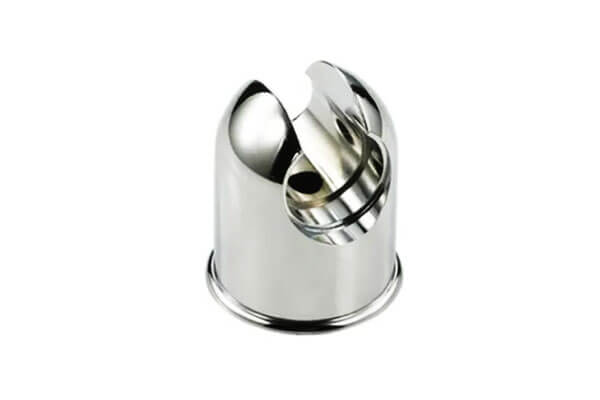
Valves and pumps
Valves and pump components are classic ZAMAK 5 applications because the alloy can produce accurate shapes, useful surface finishes, and sufficient strength for many non-severe service conditions.
Its improved creep resistance also helps in parts that remain under load for long periods.
Nā'āpana automotive
NA Haawe 5 appears in automotive hardware, trim elements, nā'āpana liʻiliʻi liʻiliʻi, and functional cast parts that benefit from repeatable geometry and good finishing behavior.
Ma kēia māhele, the alloy’s value is not simply cost reduction; it is also the ability to make complex parts reliably at high production rates.
General engineering hardware
The alloy is commonly used in general engineering parts where moderate mechanical performance and dimensional stability are more important than extreme strength.
Hoʻopili kēia i nā brackets, urowing, Nā Lole, Kauhi, uhiʻehā, and small assemblies that must be consistent and easy to finish.
Lock bodies, Kālā palekana, a me ke ahi
NA Haawe 5 is well suited to lock bodies, latches, and related hardware because those parts often need a combination of shape complexity, Kahiki Pāʻani Waiwai, and sufficient mechanical robustness.
The alloy’s finishing behavior is also useful in products where the user sees and handles the part directly.
Sanitary and bathroom components
ʻO nā hana paʻa, shower-related parts, and bathroom hardware are good examples of ZAMAK 5 use because they benefit from accurate die casting and good plating or decorative finishing.
The alloy is especially attractive when the part must look good and function reliably, but does not need the ductility of a wrought metal.
Electrical and electronic housings
NA Haawe 5 is also useful for electrical and electronic housings where a rigid, Kuhi Kūpono, and finish-friendly casting is required.
The alloy’s castability and surface quality support compact enclosures and shells that would be more expensive to manufacture by machining or fabrication.
Decorative-functional consumer parts
Consumer products often need a material that looks refined, feels solid, and can be produced efficiently.
NA Haawe 5 fits that need well because it is easy to plate and finish, and it supports high-volume production of parts such as handles, Nā Knobs, decorative covers, and appliance hardware.
8. Comparison with Other Zinc Alloys
| Mea hoʻohālikelike | NA Haawe 5 | na kaumaha 3 | na kaumaha 7 | ZA-8 |
| Ohana / identity | Conventional ZAMAK alloy; one of the standard zinc die-casting grades. | Conventional ZAMAK alloy; the standard benchmark alloy. | Conventional ZAMAK alloy; a modification of Zamak 3. | ZA-family alloy with higher aluminum content than conventional ZAMAK grades. |
| Key composition logic | E pili ana 1% copper addition, which raises strength and creep resistance. | Lower-copper conventional zinc alloy focused on balance and stability. | Lower magnesium and tighter impurity specification than Zamak 3. | Higher aluminum zinc alloy with strong strength and creep properties. |
| Whola / kaulikeia | ʻO ka Castability maikaʻi loa; well suited to precision die casting. | Superb castability; standard against which others are rated. | Improved casting fluidity, especially useful for thin-walled parts. | Good gravity casting alloy; also suitable for hot-chamber die casting. |
Ikaika / hardness emphasis |
Marginally stronger and harder than Zamak 3. | Balanced standard-strength alloy. | Not strength-focused; optimized more for fluidity and finish than for mechanical uplift. | Higher strength and creep properties than conventional ZAMAK grades. |
| Hoka / long-term load behavior | Improved creep performance over Zamak 3. | Good general service, but lower creep resistance than ZAMAK 5. | Conventional-family behavior; not primarily chosen for creep resistance. | High strength and creep properties make it attractive when load retention matters. |
| Kumaikalua / NoMame | Reduced ductility versus Zamak 3; less ideal for secondary bending, riveting, 'ahuʻu, or crimping. | Excellent balance of physical and mechanical properties, with long-term dimensional stability. | Improved ductility over Zamak 3. | Conventional zinc-alloy finishing and process behavior; ductility is not the main selling point. |
Paulapua / Wehe |
Readily plated, Uku hoopau, a me ka machini; comparable to Zamak 3. | Excellent finishing characteristics for plating, Kāleka, and chromate treatments. | Improved surface finish relative to Zamak 3. | Readily plated and finished using standard procedures for conventional zinc alloys. |
| Typical casting route | Hot-chamber die casting. | Hot-chamber die casting. | Hot-chamber die casting. | Good gravity casting alloy; also hot-chamber die castable. |
| Kūpono kūpono | Parts that need more tensile performance than Zamak 3 and better creep resistance. | General-purpose precision zinc die castings. | Thin-walled components needing better fluidity, kumaikalua, and finish. | When Zamak 3 or ZAMAK 5 performance is borderline and higher strength/creep resistance are needed. |
| Main limitation | Lower ductility than Zamak 3, so secondary deformation is more limited. | Lower strength and creep resistance than ZAMAK 5. | Less performance-oriented than ZA grades when strength or wear become dominant. | More specialized than conventional ZAMAK grades; not the simplest all-round choice. |
9. Hopena
NA Haawe 5 is a classic engineering zinc alloy that occupies a very practical niche.
It is not the most fluid zinc alloy, and it is not the most ductile, but it delivers an excellent mix of ikaika, pale pale, whola, and finish quality.
Those traits make it a dependable choice for functional die castings in automotive, Nā Palaki'ā, alike, kūleʻa, and general engineering applications.
In one sentence, NA Haawe 5 is the alloy you reach for when you want more performance than Zamak 3, without leaving the conventional zinc die-casting family.
That is why it remains one of the most widely used zinc alloys in Europe and one of the most trusted commercial zinc casting grades worldwide.