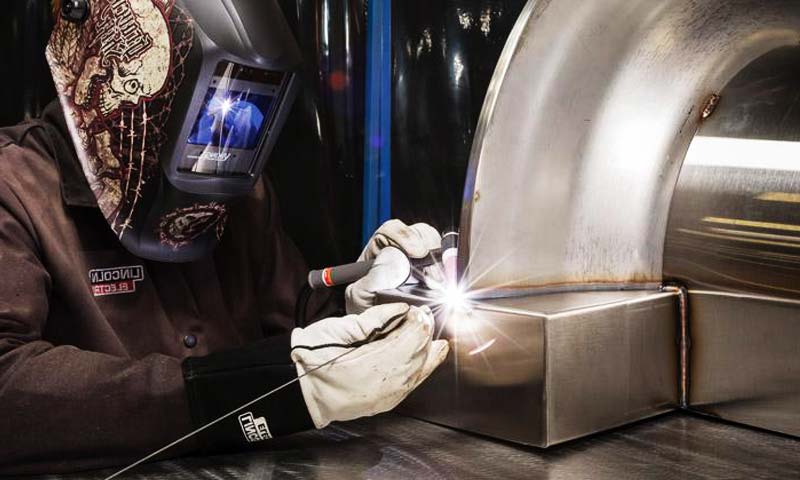
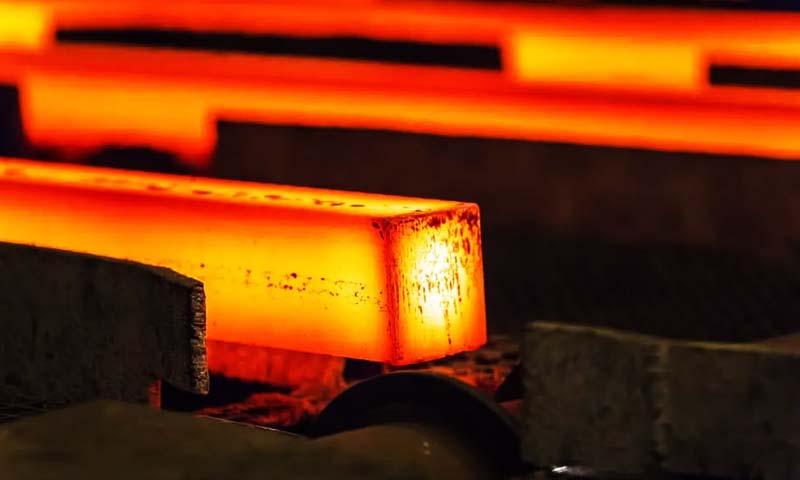
Polohana (PEEK) Noho ʻo ia i kahi kūlana kūʻokoʻa ma waena o nā polymers: he semirystalline, aromatic thermoplastic engineered for sustained performance in environments that defeat commodity plastics and frequently substitute for metals.
Its combination of high-temperature stability, chemical and hydrolytic resistance, outstanding creep performance and proven biocompatibility makes it the default choice when long-term reliability, sterilizability or extreme-service durability are required.
This article synthesizes PEEK’s chemistry, performance envelope, design and processing considerations, typical applications and pragmatic guidance for engineers who must decide when—and how—to specify it.
1. Why PEEK matters
Where standard engineering plastics (POM, PA, Holoholona, PPS) reach their limits, PEEK often continues to perform.
The polymer is chosen not because it is inexpensive but because it delivers predictable, retained mechanical properties at elevated temperatures, resists many aggressive media, tolerates repeated sterilization cycles, and sustains load with low creep over long service lives.
Those attributes make PEEK the practical material of choice for aerospace, NA KEKI ANA, pono & nā'āpanaʻona, high-temperature electrical and semiconductor-handling parts, and other mission-critical uses.

2. Chemistry and material family
PEEK is an aromatic poly(aryl ether ketone) (PAEK) whose repeat unit alternates aryl rings with ether (–O–) and ketone (–CO–) linkages.
The rigid aromatic backbone yields intrinsic thermal and chemical stability; semicrystalline morphology imparts stiffness, dimensional stability and resistance to environmental attack.
PEEK is one member of the broader PAEK family (other examples include PEK and PEKK), each offering different trade-offs between processability and thermal/mechanical performance.
Commercially available forms include:
- Neat (unfilled) PEEK — baseline mechanical and thermal properties.
- Filled PEEK — glass, KālekaʻAʻI, Ptfe, mooki, bronze or ceramic fillers to raise stiffness, reduce friction or tailor electrical and wear behavior.
- Specialty blends & compounds — flame-retardant, hana, radiopaque or otherwise modified formulations.
- Medical-grade PEEK — tightly controlled grades produced under traceable manufacturing records and validated for implantable applications.
3. Comprehensive Key Properties of PEEK Material
Thermal & Nā Pūnaewele Pūnaewele (Core Competitive Advantages)
PEEK’s combination of a rigid aromatic backbone and a semi-crystalline morphology gives it a thermal envelope and dimensional stability that place it well above commodity thermoplastics and in many cases allow polymer substitution for metal.

The two most important practical advantages are: (1) a high continuous-use temperature with retained mechanical performance, and (2) a high melting point that permits short excursions to very high temperatures without catastrophic failure.
Typical numeric indicators (maʻemaʻe, injection-moulded, Anned)
| Waiwai | Waiwai maʻamau (Neat PEEK) | Engineering Significance / Competitive Advantage |
| Huakai | 1.30–1.32 g·cm⁻³ | ʻO ka pae kiʻekiʻe-kiʻekiʻe-kiʻekiʻe; enables lightweight substitution for metals |
| Glass transition temperature (Tg) | ~143 °C | Maintains stiffness well above temperatures where many engineering plastics soften |
| Melting wela (Tm) | ~343 °C | Enables high-temperature processing and short-term exposure to extreme heat |
| Ke hoʻomau nei ka mahana o ka lawelaweʻana | ~200–250 °C (application-dependent) | Reliable long-term performance at temperatures beyond most thermoplastics |
| Heat deflection temperature (HDT, 1.8 Mpa) | ~160–170 °C | Indicates resistance to deformation under load at elevated temperature |
Ka HōʻaʻO Kokua |
~0.25–0.30 W·m⁻¹·K⁻¹ | Low heat transfer; beneficial for thermal insulation and electronic applications |
| Ka maikaʻi o ka hoʻonuiʻana i ka (Cte) | ~45–55 ×10⁻⁶ K⁻¹ (flow direction, MAKAINA WAU) | Good dimensional stability compared with many polymers; anisotropy must be considered |
| Crystallinity (kaonaʻeha) | ~ 30-40% (processing-dependent) | Semi-crystalline structure provides stiffness, E kāʻei i ke kū'ē a me ka dimensional |
| Ka hoʻoheheʻe wai (kaulike, 23 ° C) | ~0.3–0.5 wt% | Very low hygroscopicity; stable dimensions and properties in humid environments |
| Thermal aging resistance | Excellent up to rated service temperature | Retains mechanical properties over long service life under heat |
| Flammability (typical behavior) | Inherently flame resistant; low smoke/toxicity | Kūpono no aerospace, rail and electronics applications with fire safety requirements |
Nā Pīkuhi Propertinies (Ikaika ikaika & Toughness Balance)
PEEK provides a rare balance of ikaika kiʻekiʻe, luhi, ʻaʻole kūpono and hopena kū'ē for a high-temperature thermoplastic.
Filled grades extend stiffness and wear performance while maintaining acceptable toughness when properly selected.
Representative mechanical values (neat PEEK)
| Waiwai | Waiwai maʻamau (Neat PEEK) | Engineering Significance / Design Guidance |
| Ikaika ikaika (hua) | ~90–100 MPa | High strength for a thermoplastic; enables structural components and metal replacement in load-limited designs. Verify stress concentrations and orientation effects. |
| Tensile modulus ('Ōpiopio) | ~3.6–4.1 GPa | Provides good stiffness while retaining ductility; suitable for housings, brackets and load-bearing parts. |
| Elongation i ka wā hoʻomaha | ~20–50% | Indicates ductile failure and damage tolerance; beneficial for impact resistance and stress redistribution. |
Flexural strength |
~150–170 MPa | Strong bending performance; supports thin-wall or rib-reinforced structural designs. |
| Nā moduluus clexural | ~3.7–4.5 GPa | Governs deflection under load; critical for stiffness-controlled components. |
| Notched Izod impact strength | ~5–12 kJ·m⁻² | Good impact resistance relative to many high-temperature polymers; reduces risk of brittle failure. |
| Fracture resistance (qualitative) | High | Resists crack initiation and propagation compared with many engineering plastics; still design to minimize sharp notches. |
Behavior under sustained load (hoka & Kaluhi)
- Pale pale: superior to most engineering plastics; maintains a large fraction of stiffness at elevated temperatures (E.g., 150-200 ° C)—critical for load-bearing, ʻO nā'āpana lōʻihi.
- ʻO ka pilikia momona: good when stresses are below a material-dependent threshold and when processing avoids stress concentrators and brittle zones; fillers and poor processing can influence fatigue life.
Influence of fillers & Kaniona
- Glass/carbon fibre increases modulus and strength, reduces thermal expansion, but can reduce elongation and impact toughness if loading is high or fibre dispersion/orientation is poor.
- PTFE/graphite/PTFE-filled blends lower friction and improve wear but can reduce bulk strength; select filler type/level to balance tribological and mechanical needs.
Chemical Corrosion Resistance of PEEK Material
PEEK is among the most chemically resistant thermoplastics.
Its aromatic, tightly bonded chain resists attack by many classes of chemicals at moderate temperatures, and it shows excellent hydrolytic stability—one reason it is widely used in steam-sterilizable medical devices and hot fluid environments.
Typical compatibility profile
- Kūʻole: hydrocarbonord, mineral oils, many organic solvents, weak acids and bases, hūke, typical cleaning agents.
- Excellent hydrolytic stability: retains properties in hot water and steam much better than many engineering plastics (E.g., polyamides).
- Caveats / attack mechanisms: concentrated strong oxidizers (E.g., concentrated nitric acid),
certain halogenated reagents and severe oxidizing environments can degrade PEEK, kūikawā ma ke kiʻekiʻe kiʻekiʻe.
Radiation (prolonged gamma/electron exposure) can promote chain scission and embrittlement.
Electrical Properties of PEEK Material
PEEK combines stable dielectric behavior with high temperature tolerance—characteristics valuable for high-temperature electrical insulation, connector housings and components in electronics manufacturing and aerospace.
Key electrical properties (MAKAINA WAU)
- Dielectric constant (1 Mhz): ~3.0–3.5 — reasonably low and stable with temperature.
- Volume resistivity: High (insulating) — suitable for dielectric barriers and housings.
- Dielectric strength: good for thermoplastic materials; specific values depend on thickness and test conditions.
- ʻAno koʻikoʻi: Electrical properties remain stable at 260°C, no breakdown under high temperature and high voltage.
Keia Riana & Safety of PEEK Material
Certain PEEK grades are manufactured and documented specifically for medical implants and devices.
When produced under controlled, traceable processes, PEEK demonstrates favorable biological response and sterilizability, which is why it is established in spinal cages, fixation devices and other implantable applications.
Key safety characteristics
- Keia Riana: medical-grade PEEK has been used in long-term implants;
full biocompatibility claims require validated manufacturing cleanliness, traceability and appropriate biological testing. - Sterilization resistance: compatible with common sterilization methods (autoclave steam sterilization, EtO; some grades are tolerant of gamma sterilization—validate for specific grade and dose).
- 'Oiʻai lāʻau: reduces leachables risk compared to many polymers; nonetheless, finished devices require extractables and leachables testing for regulatory submission.
4. Processing and fabrication methods
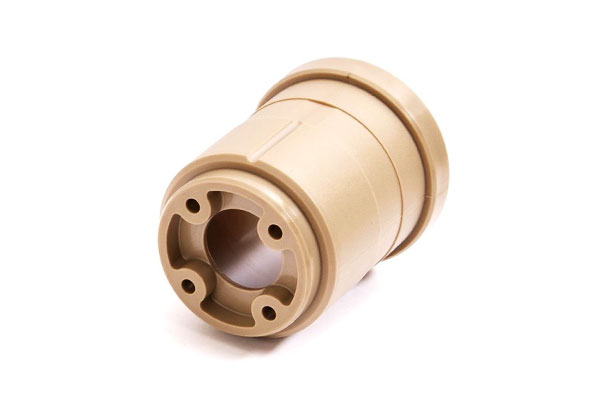
Primary methods
- ʻO nā molding molding: high pressures and temperatures; mold design must consider long cooling times and shrinkage control.
- Hānehi: for rods, tubing and profiles; extrusion temperatures are high and screw/barrel must be prepared for abrasion.
- Compression molding: used for large parts and laminates.
- Machimen: PEEK machines very well—clean chips, no significant tool wear; used for prototypes and low volume parts.
- 3D Pai (Mea hoʻohuiʻaha): PEEK is now available as filament for high-temperature FDM and as powder for laser sintering (SLS/LS).
AM requires high-temperature build chambers and careful control to achieve good crystallinity and mechanical performance. - Hui pū: PEEK can be welded (hot-plate, viguration, ultrasonic in controlled setups) and adhesively bonded with specialized primers/adhesives.
Processing considerations
- Drying before processing is required to avoid hydrolysis (typical drying 3–6 h at 120 °C depending on grade and moisture content).
- Processing windows are narrow; thermal degradation and discoloration indicate excessive residence time or temperature.
5. Modified PEEK Grades & ʻO ka nānāʻana i ka hana
This section describes how PEEK is modified to extend or tailor its performance, the trade-offs those modifications introduce, and practical steps to optimize grade selection, processing and part design.
Common modified PEEK grades
| Kaʻike / Kumu | Primary performance change | Nā hihia e hoʻohana ai i nā hihia / KA MANAWA | Principal trade-offs / Nā Kuleana |
| Glass-filled PEEK (short glass fiber) | ↑ Stiffness, ↑ strength, ↓ CTE | Structural parts needing higher stiffness/less thermal expansion | Reduced elongation/impact toughness; increased anisotropy and warpage risk |
| Carbon-filled / carbon-fibre reinforced PEEK (short fibre or continuous fibre/laminates) | ↑ Modulus & ikaika (short fibres); kiʻekiʻe loa stiffness and strength with continuous fibres; ↑ thermal conductivity | High-stiffness structural parts, metal replacement, Emi Shielding (with conductive carbon) | Uku kiʻekiʻe, reduced toughness if overload of short fibres; continuous-fibre processing (thermoplastic layup) requires specialist manufacturing |
| Ptfe / mooki / solid lubricant filled PEEK | ↓ Coefficient of friction, ↑ wear life | Kāhele, Aloha, nā'āpana, ʻO nā lāʻau haʻahaʻa haʻahaʻa | Lower bulk strength and modulus; fillers can migrate under high shear; selection critical for sliding regimes |
Bronze / metal-filled PEEK |
↑ Wear resistance and load capacity in sliding contacts | High-load bushings where metal compatibility needed | Increased density; abrasiveness for tooling; may require metal backing for heat dissipation |
| Ceramic-filled PEEK (E.g., nā aniani aniani, Nā Alluna) | ↑ Hardness, ↑ wear and dimensional stability | Nā'āpanaʻokoʻa, ʻāpana ʻaʻahu kiʻekiʻe | Increased brittleness; abrasive to processing equipment |
| Hana / antistatic PEEK (carbon black, mooki, metal flakes) | ↓ Surface/volume resistivity for ESD/EMI control | Connector housings, enclosures requiring controlled conductivity | Filler levels required for percolation can affect mechanical and wear properties; conductivity may be anisotropic |
| Flame-retardant modified PEEK | Improved flammability ratings | Aerospace, rail, electronics applications | Additives may affect mechanical properties and processing; verify smoke/toxicity behavior |
Radiation-stabilized PEEK |
Improved retention after ionizing radiation | Nleace, sterilization by gamma applications | Specialty grades; validate for intended dose range |
| Medical-grade / implantable PEEK (E.g., PEEK-OPTIMA) | Controlled chemistry, documented biocompatibility & traceitability | Nā manaʻo, long-term medical devices | Strict supplier control, traceability and process documentation required; uku kiʻekiʻe |
| Blends / copolymers (PEEK-based) | Tailored toughness, Kālā, a iʻole ke kū'ēʻana | Application-specific compromises | Properties depend on blend chemistry; verify for temperature and chemical exposure |
Performance optimization workflow
- Define prioritized performance targets — temperature, luhi, ʻaʻa, kuiahuli, mea kūʻai uila, Keia Riana, allowable mass, service life and cost ceiling.
- Map requirements to modifications — use the table above to shortlist candidate grades (E.g., carbon-fibre PEEK for stiffness; PTFE/graphite-filled PEEK for low friction).
- Assess manufacturability — check equipment capability (high-temperature barrels, wear-resistant screws, mold heating capacity), tooling material and supplier lead times.
- Run simulation & Dfm — mould-flow to predict orientation, shrinkage and hotspots; FEA including material property anisotropy for reinforced grades.
- Prototype with production-intent process — produce parts using the target grade and production settings (or nearest equivalent) rather than surrogate materials.
- Control post-processing — use annealing or controlled cooling to stabilize crystallinity and reduce residual stress. Specify finish, tolerances and any coatings.
- Validate under system conditions — mechanical, hoka, thermal aging, ka'ikemika, wear testing and (for medical) ISO 10993 Manaʻo. Include environmental cycling and sterilization cycles where relevant.
- Iterate grade or design — refine filler level, part geometry or hybrid metal-polymer solutions based on test results and cost targets.
6. Hoʻolālā, engineering and dimensional stability considerations
- Shrinkage & KOKUÜ ona: semicrystalline PEEK exhibits anisotropic shrinkage; design and tooling must account for orientation effects and controlled cooling to minimize warp.
- Annalile & kaumaha kaumaha: post-molding anneal can stabilize dimensions and relieve internal stresses.
- Creep design: PEEK has excellent creep resistance, but allowance for long-term deformation under sustained loads is still necessary — follow time-temperature superposition and long-term testing for critical parts.
- Paulapua & hoʻomanawanui: PEEK can be machined to tight tolerances; for molding, tighten gates, venting and use appropriate draft to avoid defects.
- Composite/hybrid designs: PEEK bonded to metal or reinforced with fibres enables high-performance hybrid components.
7. Applications of PEEK Material
PEEK’s performance justifies higher cost in many demanding sectors:

- Aerospace: parts in engines, Kāhele, cable insulation, lightweight structural components.
- Lapaau (implantable & surgical): Nā'āpana spinal, Nā Kahu Mokuna, surgical instrument components (medical-grade PEEK is biocompatible and sterilizable).
- Pono & aila / petrochemimical: Aloha, valve seats and components tolerant of high temperatures and aggressive fluids.
- Kaʻa kaʻa: under-hood components, Nā'āpana hoʻoili, high-temp connectors, lightweight bearings.
- Semiconductor & mea uila: wafer handling, nā pilina pili, plasma-resistant components.
- Nā mīkini mīkini: komo i nā'āpana, Kauluhi, nā mea kanu, Nā'āpana pā.
8. Loaʻa & Limitations of PEEK Material
Pono Pono
- Unmatched Thermal Stability: Continuous service at 260°C, melting point 343°C, far superior to conventional engineering plastics
- Balanced High Strength & Paʻakikī: Combines high tensile strength, ʻO ka paleʻana o ka momona, a me nā pale creep; retains performance under extreme loads
- Excellent Chemical Inertness: Resists most corrosive media, hydrolysis-stable, suitable for harsh chemical environments
- Versatile Compliance: Kaulana loa (ISO 10993), food-safe (FDA), flame-retardant (UL94 V-0), meeting multi-industry safety standards
- Māmā māmā & Hoʻolālā Hoʻolālā: Huakai 1.30 g / cm³, enables lightweight design; processable into complex shapes via injection molding and 3D printing
- Ola lōʻihi: 10–25 years service life in harsh environments, hōʻemi i nā uku mālama mālama
Nā palena nui
- Kumukūʻai kiʻekiʻe: Pure PEEK price $80–$150/kg, 10–20× that of PA66 and POM; modified grades cost higher, limiting mass application in low-value products
- High Processing Threshold: Requires specialized high-temperature processing equipment; strict parameter control, high processing cost
- Limited UV Resistance: Pure PEEK is prone to aging and brittleness under long-term UV exposure; needs UV stabilizer modification for outdoor applications
- Low Surface Energy: Difficult to bond with other materials; requires surface treatment (plasma etching, chemical priming) for reliable adhesion
- High Shrinkage Rate: Mold shrinkage rate 1.5–2.5%, higher than metals; needs precise mold design to control dimensional accuracy
9. Comparative Analysis Versus Other Materials
Hāʻawi ka papa ma lalo nei a high-level engineering comparison between PEEK and commonly considered alternative materials.
Values are indicative and intended for material selection and concept screening purposes, not for final design.
| Loko | PEEK | Ptfe | POM (Puana aloa) | PPS | Mea meta (Aluminum / Kila kohu ʻole) |
| Material class | High-performance thermoplastic | Fluoropolymer | Engineering thermoplastic | High-temperature thermoplastic | Metallic materials |
| Huakai | ~1.30 g·cm⁻³ | ~2.2 g·cm⁻³ | ~1.4 g·cm⁻³ | ~1.35 g·cm⁻³ | ~ 2.7 / ~8.0 g·cm⁻³ |
| Ke hoʻomau nei ka mahana o ka lawelaweʻana | ~200–250 °C | ~260 °C (chemically stable) | ~80–100 °C | ~180–200 °C | >>250 ° C |
| Malting Point | ~343 °C | ~327 °C (hoopnoia) | ~165 °C | ~285 °C | >600 ° C |
| Ikaika ikaika | ~90–100 MPa | ~20–35 MPa | ~50–75 MPa | ~70–90 MPa | 200–600+ MPa |
| Tensile modulus | ~4 GPa | ~0.5 GPa | ~3 GPa | ~3–4 GPa | 70–200+ GPa |
| Pale pale | Kūpono | Ilihune (cold flow) | Loli | Maikaʻi loa | Kūpono |
| E kāʻei i ke kū'ē | Maikaʻi loa (filled grades excellent) | Maikaʻi loa (piha) | Kūpono | Maikaʻi loa | Kūpono |
| Coefficient of friction | Kūpono (low with fillers) | Haʻahaʻa loa | Hoʻohaʻahaʻa | Kūpono | Haʻahaʻa-medium (depends on finish/lubrication) |
Kūleʻa kimemika |
Kūpono | Kūlana kūʻokoʻa | Maikaʻi loa | Maikaʻi loa | Good–excellent (Hoʻohui) |
| Hydrolysis resistance | Kūpono | Kūpono | Loli | Maikaʻi loa | Kūpono |
| Electrical insulation | Kūpono | Kūpono | Maikaʻi loa | Maikaʻi loa | Ilihune (hana) |
| Keia Riana | Medical-grade available | Limited medical use | Not typical | Paʻa | Alloy-dependent |
| Processability | Paʻakikī (high-T equipment) | Paʻakikī (sintering/machining) | ʻAʻaka | Loli | Machimen / hana |
| Material cost | High | High | Haʻahaʻa-medium | Kūpono | Equium-High |
| Typical role | Polymer metal replacement; high-T structural parts | Low-friction seals, gasts | Precision low-T mechanical parts | High-T housings, Nā Kākoʻo | High-strength load-bearing structures |
10. Sustaintability, recycling and regulatory aspects
PEEK is recyclable in the mechanical sense, but high processing energy and potential property degradation in regrinds limit closed-loop use for critical applications.
In many designs, PEEK’s long service life offsets a higher embodied energy when evaluated on a lifecycle basis.
Regulatoryly, several PEEK grades carry medical-grade and food-contact approvals—traceability and supplier documentation are essential for regulated applications.
11. Hopena
PEEK is a top-tier engineering polymer that fills a critical performance space between commodity plastics and metals.
Kona hui pūʻana o high temperature tolerance, ka ikaika ikaika, chemical and hydrolytic resistance, and excellent creep behavior makes it indispensable where long-term, reliable polymer performance is required.
The higher material and processing costs are offset in many applications by weight reduction, maintenance savings, extended service life and regulatory compliance (medical use).
Successful use demands careful grade selection, appropriate processing equipment, and thorough qualification.
FaqS
Is PEEK biocompatible?
Yes — specific medical-grade PEEK formulations and controlled manufacturing routes are certified for implantable uses under ISO/ASTM medical standards.
Can PEEK be autoclaved?
ʻAe; PEEK tolerates repeated steam sterilization (121–134 °C) without loss of mechanical integrity, making it suitable for many surgical instrument and implant applications.
How does PEEK compare to PTFE for seals?
PTFE provides lower friction and superior chemical inertness but suffers creep under load.
PEEK offers superior structural strength and creep resistance; combine materials or use filled grades depending on the sealing regime.
Can PEEK be injection moulded on standard plastics machines?
No — PEEK requires high-temperature capable machines, barrel heaters and molds that withstand 360–400 °C melt and hot mold temperatures; standard commodity plastic machines are usually inadequate.
Is PEEK recyclable?
Mechanically yes (thermoplastic), but economic and processing constraints limit wide recycling; regrind use and controlled chemical recycling routes are developing.