1. Hōʻikeʻike
In the realm of precision mechanical components, 'ōlelo brass bearing retainer plays a crucial but often underappreciated role.
Serving as a structural framework within rolling-element bearings, it ensures uniform spacing of rolling elements (balls or rollers), maintains alignment, and reduces frictional heat generation.
Its contribution is vital to the operational stability and lifespan of a bearing assembly.
Kahiki, bearing retainers evolved from rudimentary steel or bronze cages to precision-engineered components crafted from performance-enhanced alloys.
I waena o kēia mau, brass emerged as a preferred material, thanks to its exceptional blend of strength, markinpalibility, Ke kū'ē neiʻo Corrosionion, and anti-seizing properties.
These characteristics make brass retainers indispensable in high-precision, loa-mokula, and high-speed environments.
Hana e like me aitompetitive, AerERPPACE, 'lelo Keʻala, ʻO nā'āpana makani, Nā mīkini mīkini, a me nā noi moana all rely on the consistent performance of brass retainers.
Ma kēiaʻatikala, we explore brass bearing retainers through multidisciplinary lenses—material science, Hoʻolālā aʻoaʻo, Nā kaʻina hana hana, quality testing, nā noiʻenehana, and innovation trends—offering a comprehensive technical guide.
2. Background and Definition
What is a Brass Bearing Retainer?
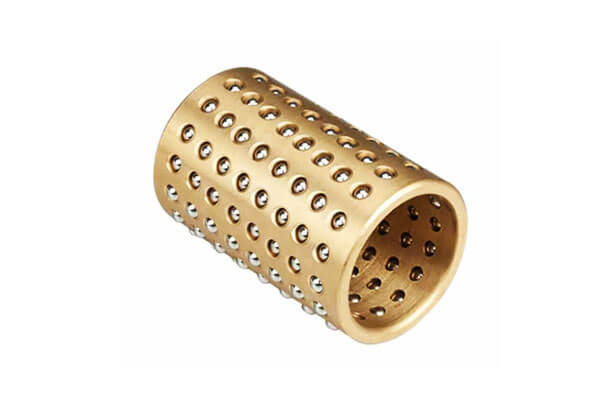
A brass bearing retainer—also known as a cage or separator—is a component inside a bearing that physically separates rolling elements while maintaining uniform spacing and motion control.
This prevents metal-to-metal contact, thereby minimizing friction, kāmaʻaʻili, and heat generation during rotation.
Key Components and Functionality
The retainer typically consists of precision-machined pockets or windows that house individual balls or rollers. These design features:
- Prevent skewing and overlapping of elements.
- Support even load distribution.
- Promote optimal lubrication flow between rolling components.
3. Material Properties and Composition
Brass Composition and Alloys
Brass is an alloy of copper (Cu) a me zinc (Zn), often enhanced with trace elements such as lead (Pb), kū (Sno), a iʻole alumini (AL) for improved performance.
The most commonly used grades for bearing retainers include:
| Kakau loa | Kūleʻa maʻamau | Nāʻano hiʻohiʻona |
|---|---|---|
| Keleawe cretridge (C26000) | 70% Cu, 30% Zn | Excellent ductility and strength |
| ʻO ke keleawe manuahi manuahi (C36000) | 61.5% Cu, 35.5% Zn, 3% Pb | Outstanding machinability and precision |
| High Strength Brass (C48500) | 58–60% Cu, rest Zn & Sno | Good wear resistance and fatigue strength |
Nā Kūlana a me nā kiko'ī
Brass bearing retainers must comply with international material and dimensional standards such as:
- ASTM B124/B16 for brass rod and forging stock.
- ISO 683-17 for copper alloys in mechanical components.
- Roohs and Pākaukau directives for environmental compliance.
4. Design and Functionality
The design of a brass bearing retainer is not merely a matter of shape and size—it is a critical component of performance engineering.
Every geometric aspect of the retainer directly affects the bearing’s load distribution, ʻO ka wehe wela, ʻO ka papaʻaina, and operational life.
keleawe, due to its balanced combination of mechanical strength, markinpalibility, a me ke kūpaʻa, allows engineers to optimize design in ways that other materials may restrict.
Structural Design Considerations
The primary design elements of a brass bearing retainer include:
- Pocket geometry (for ball or roller containment)
- Rib and bridge thickness
- Cage ring dimensions
- Clearance tolerances
- Lubrication channel integration
Each feature is tailored to the bearing’s function, whether it operates under axial load, radial load, or a combination of both.
ʻo kahi laʻana, in deep groove ball bearings used in electric motors, a crown-type brass retainer is often employed to prevent ball slippage during high-speed rotation—this can reach up to 20,000 RPM in some industrial applications.
In terms of precision, the tolerances for pocket concentricity and wall thickness can be as tight as ± 0.01 mm, ensuring that the balls remain equidistant during dynamic operation.
Brass’s ease of machining facilitates the achievement of such high-precision requirements without significant tool wear or deformation risk.

Role in Bearing Assemblies
Beyond simple spacing, the brass bearing retainer performs several complex functions that directly affect bearing efficiency:
- ʻO ka hoʻoukaʻana:
By maintaining even spacing of rolling elements, the retainer ensures the applied loads are uniformly transmitted through the bearing raceways, reducing point stresses that cause early fatigue. - Friction Reduction:
Brass’s low coefficient of friction (typically ~0.35 against steel under lubrication) contributes to minimizing internal drag, vital in high-speed or low-torque conditions. - ʻO ka papaʻaina:
The damping capacity of brass is significantly higher than that of steel or polymers, which helps reduce noise and micro-vibrations that can lead to fretting or pitting. - Lubrication Flow:
Retainer design may incorporate oil channels or slots to promote lubricant circulation.
This design feature, paired with brass’s thermal conductivity (~109 W/m·K), helps stabilize operating temperatures and prevent lubricant breakdown. - Alignment Maintenance:
Especially under thermal or mechanical shocks, a rigid brass retainer helps preserve the axial and radial alignment of rolling elements, preventing skewing or misalignment that could lead to catastrophic failure.
Hoʻolālā Cood Nautime
To meet specific operational needs, engineers use various strategies to refine retainer design. Hoʻopili kēia:
- Ka heluʻana o ka loiloi (Fea): Simulates mechanical stress and thermal effects under load conditions.
This data guides structural refinements such as rib reinforcement or pocket redesigns. - Nā Kūlana Kūʻai Kūʻai Kūʻai (Cfd): In high-speed or submerged applications, CFD is employed to evaluate lubricant flow patterns through the cage for better heat dissipation.
- Material Pairing Considerations: Engineers consider the retainer’s interaction with raceway and rolling element materials.
Brass works especially well with stainless steel and chrome steel due to its non-galling nature. - Balancing Mass and Inertia: In rotating assemblies, asymmetrical retainer mass distribution can cause imbalance.
No laila, weight optimization through pocket design and wall thinning (where structurally feasible) is a common tactic. - Nā mea kino kino: In precision aerospace or medical-grade bearings, dry film lubricants Oole plasma nitriding may be applied to retainer surfaces to reduce wear and friction even further.
5. Manufacturing and Processing Methods of Brass Bearing Retainers
The production of brass bearing retainers is a carefully engineered process that balances precision, ʻOiaʻiʻo, a me nā koi hoʻokō.
From raw material selection to surface finishing, each step is optimized to ensure that the final component can withstand demanding mechanical, thermal, a me nā kūlana kūlohelohe.
The choice of manufacturing method often depends on the complexity of the retainer geometry, Pono nā koina, and the specific application for which the retainer is intended.
Common Manufacturing Techniques
CNC Mīkini
CNC (Mana helu kamepiula) machining is widely used for manufacturing precision brass retainers, especially for low-to-medium production volumes and complex geometries.
The inherent machinability of brass alloys—such as C36000 (ʻO ke keleawe manuahi manuahi) with a machinability rating of 100%—makes Cnc huli and MilightʻAʻole ideal choices.
Machining allows for tight dimensional tolerances, pinepine i loko ± 0.01 mm, which are crucial for high-speed or high-load bearing assemblies.

Stamping and Punching
For high-volume production of simpler retainer designs, stamping is a cost-effective method.
Brass sheets are punched into shape using high-speed stamping presses, producing retainers with consistent geometry and minimal material waste.
Depending on the alloy and retainer thickness, production rates can exceed 200 parts per minute, making this method well-suited for the automotive and appliance industries.
Hoolei Make
Make buring is used when the design includes complex 3D contours or when producing retainers in large quantities.
Molten brass is injected into hardened steel molds under high pressure, allowing for the rapid production of near-net-shape components with good surface finishes.
Akā naʻe,, die casting may require additional machining or trimming for fine tolerances.
Precision Investment Casting (Less Common)
In specialized applications requiring intricate design features or hollow forms, Kāhaka kūʻai kūʻai (nalowale-wax casting) Hiki ke hoʻohanaʻia.
Though less common due to cost and lead time, it offers high-dimensional accuracy and good surface quality for niche aerospace or defense uses.
Surface Finishing and Coatings
Brass retainers benefit significantly from secondary surface treatment processes that enhance their functional and aesthetic properties.
- ʻO ka hoʻopololei: Achieves a smooth finish (Ra < 0.2 }m), which is essential for minimizing friction and wear between the retainer and rolling elements.
- ʻO ka hanaʻana o Nickel: Improves corrosion resistance and can increase surface hardness. Often applied to retainers used in humid or chemically aggressive environments.
- Electroplating and Tin Coating: These processes are employed to reduce oxidation, especially for applications where the bearing operates in saline or acidic conditions.
- Deburring and Ultrasonic Cleaning: Final cleaning steps remove sharp edges and contaminants that could otherwise cause micro-wear or premature failure.
Quality Control and Tolerances
To ensure optimal performance, brass bearing retainers undergo rigorous quality inspection procedures throughout the manufacturing process:
- ʻO ka hōʻoia o ka dimedonal: Hoʻonohonoho i nā mīkini hōʻailona (Cmms) and digital calipers verify pocket concentricity, pilenawinui, and ring roundness to within micron-level accuracy.
- Hōʻike paʻakikī: Brass retainers may be tested using Rockwell or Vickers methods, with typical hardness values ranging between HB 80–110, depending on alloy and processing.
- Ke Aniani Paintness: Profilometers are used to confirm smoothness, especially in high-speed bearing applications where rough surfaces could disrupt lubricant films.
- X-ray and Dye Penetrant Testing (for cast components): Ensures there are no internal porosities, hemahema, or cracks that could compromise structural integrity.
6. Performance Analysis and Testing
The reliability and longevity of brass bearing retainers are directly influenced by their mechanical, thermal, and environmental performance characteristics.
To ensure these components function optimally under various service conditions, comprehensive performance testing is employed.

ʻO ka hana mechanication
Brass bearing retainers are subjected to significant mechanical stress during operation. The key parameters assessed include:
- E kāʻei i ke kū'ē: Brass retainers, especially those made from high-copper alloys
like C93200 or C36000, exhibit excellent wear characteristics due to their inherent lubricity and low coefficient of friction (ma waena 0.25-0.35 when unlubricated).
This makes them well-suited for high-speed and high-load applications. - Ka ikaika momona: The cyclic loading experienced by retainers, especially in rotating machinery, requires good fatigue performance.
Brass alloys typically offer fatigue strengths in the range of 170-270 mpa, depending on the specific composition and heat treatment. - Load-Bearing Capacity: While not as high as steel, brass retainers can withstand substantial radial and axial loads.
ʻo kahi laʻana, keleawe cretridge (C26000) can handle static loads of up to 140 Mpa, depending on design and wall thickness.
Thermal and Corrosion Performance
Brass bearing retainers often operate in elevated temperatures and potentially corrosive conditions, which necessitate rigorous evaluation.
- Ka HōʻaʻO Kokua: One of the advantages of brass is its high thermal conductivity, AVERIGING 110–130 W/m·K,
which helps dissipate heat efficiently from the bearing assembly, thereby reducing the risk of thermal distortion or lubricant breakdown. - Paʻa wela: Brass retainers generally maintain structural integrity up to 250° C. Above this threshold, mechanical strength and dimensional stability begin to degrade,
making them less suitable for high-temperature aerospace or combustion engine zones without modification. - Ke kū'ē neiʻo Corrosionion: Thanks to the copper content, brass provides excellent resistance to rust and oxidation in neutral and mildly acidic environments.
Akā naʻe,, in saline or highly acidic conditions, selective leaching (Kaʻanaʻole) hiki ke hiki. No kēlā mau noi, dezincification-resistant (RDA) Nā Kūlana Koloka e hōʻikeʻia.
Testing methods for these attributes include salt spray testing (Astm b117), oxidation stability evaluation, and thermal cycling tests.
Testing Standards and Methods
To ensure performance consistency, the following internationally recognized standards are commonly applied:
| Test Category | Nā Kūlana pili | Kumu |
|---|---|---|
| Nā mea hana dimensional | ISO 286 / ANSI B4.1 | Ensures precision fit with bearing races and cages |
| Wear Testing | ASTM G99 (Pin-on-Disk) | Measures friction and material loss over time |
| Ke kū'ē neiʻo Corrosionion | Astm b117 (ʻO ka paʻakai paʻakai) | Evaluates resistance to oxidation and saline environments |
| Hōʻike paʻakikī | Astm e18 (Pōhakukwell) / Astm e384 (Nā Vickers) | Verifies surface and core hardness |
| ʻO ka ho'āʻo loa ka palekana | ISO 281 | Assesses expected life cycles under rotating loads |
7. Industrial Applications of Brass Bearing Retainers
| ʻOihana Kahuna | Noi | KA MANAWA |
|---|---|---|
| Kaʻa kaʻa | Engine crankshaft bearings, Nā Hāʻewa | Ke alakaʻiʻana i ka thermal, low wear |
| Aerospace | Nā Kūlana Kūlana, flight control bearings | Paʻa paʻa, ʻO ka papaʻaina |
| Nā mīkini mīkini | Pumps, Nā'ee, nā mea hoʻohālikelike | Resistance to shock loads and oil additives |
| Rail & Marine | Traction motors, Nā Kūlana Kūʻai | Corrosion resistance and reliability |
8. Loaʻa a me nā palena
Brass bearing retainers have earned a longstanding reputation for reliability and versatility across multiple industrial sectors.
Their distinctive material characteristics offer a balanced combination of mechanical integrity, markinpalibility, and resistance to environmental stressors.
Akā naʻe,, like all engineering components, brass retainers present both strengths and constraints depending on the specific application environment.
Understanding these facets is essential for selecting the optimal retainer material in design engineering.

Advantages of Brass Bearing Retainers
Ke kū'ē neiʻo Corrosion Corrossion
One of brass’s most notable benefits is its natural corrosion resistance, especially in neutral and mildly corrosive environments.
This makes brass retainers ideal for applications exposed to humidity, nā poʻe libriceants, and mild acids, such as marine equipment and food-grade machinery.
- Hoʻoloholo: C36000 free-machining brass exhibits corrosion resistance levels comparable to stainless steel in indoor or semi-exposed applications, with minimal pitting after 72 hours in ASTM B117 salt spray tests.
ʻO ka machiniblibility
Brass is widely regarded as one of the most machinable metals.
Its low cutting resistance enables precise manufacturing of intricate retainer geometries with tight tolerances, reducing production time and tool wear.
- Ka helu matchinbility: keleawe (C36000) scores 100 on the machinability index, which is the baseline for comparing all other metals, significantly outperforming stainless steel (C304 = 45).
Maikaʻi maikaʻi thermal
With thermal conductivity values between 110–130 W/m·K, brass retainers help dissipate heat away from the bearing interface, improving lubrication stability and reducing the risk of thermal failure in high-speed operations.
Low Friction and Noise Reduction
Brass bearing retainers possess a naturally low coefficient of friction and exhibit excellent damping properties.
These qualities reduce vibration and noise levels in rotating assemblies, particularly in high-precision and high-speed machinery.
Moderate Strength with Structural Stability
While not as strong as hardened steels, brass offers sufficient strength for medium-load applications.
Alloys like C26000 and C93200 can handle typical working stresses in automotive and industrial systems while maintaining dimensional stability over time.
Aesthetics and Anti-Galling Behavior
In addition to performance advantages, brass retainers present a clean, attractive appearance and excellent resistance to galling,
which is especially useful in mating surfaces where repeated movement and contact occur.
Limitations of Brass Bearing Retainers
Despite their many benefits, brass retainers are not universally suited for all operating conditions. Some of their limitations include:
Lower High-Temperature Resistance
Brass begins to soften at temperatures above 250° C, which can compromise mechanical strength and dimensional integrity in high-heat environments such as combustion engines or turbines.
- Softening Temperature: A puni 300° C, depending on alloy and loading condition.
Dezincification in Aggressive Environments
Exposure to high-chloride or acidic environments can lead to Kaʻanaʻole, a form of corrosion in which zinc leaches from the alloy, leaving behind a weakened, porous copper structure.
- Hopena: No ka hoʻohana 'ana RDA (Dezincification-Resistant) Keihei, such as CZ132 or CW602N, in such environments.
Lower Tensile Strength Compared to Steel
While sufficient for moderate loads, brass typically has a tensile strength range of 300-550 mpa, which is significantly lower than that of hardened steels (often above 800 Mpa).
This makes it less suitable for applications requiring extreme mechanical loads.
Cost Volatility
Brass is composed primarily of copper, which is subject to global commodity price fluctuations. This can introduce variability in raw material costs and overall production budgets.
Limited Use in Highly Abrasive Conditions
Although brass is wear-resistant, it is softer than many other metals.
In environments with abrasive particles or heavy dynamic contact, wear can accelerate unless reinforced by coatings or lubrication systems.
9. Comparative Analysis with Other Bearing Retainers
The selection of a bearing retainer material is critical to achieving optimal performance in rotating and load-bearing systems.
While brass is a well-established material, engineering professionals often compare it with alternatives such as kila kohu ʻole, aluminum, polymer-based retainers, and advanced composite materials.
This section provides a comparative analysis across key performance parameters to assist in informed material selection.
Material Comparisons
| Pākaukau | keleawe | Kila kohu ʻole | Aluminum | Kolepa Kila (E.g., Ptfe, PEEK) |
|---|---|---|---|---|
| Huakai (g / cm³) | 8.4–8.7 | 7.8-8.0 | 2.7 | 1.3-1.5 |
| Ikaika ikaika (Mpa) | 300-550 | 500-900 | 100-400 | 50-150 |
| Ka HōʻaʻO Kokua (W / m · c · k) | 110–130 | 15-25 | 200–235 | 0.25-0.30 |
| ʻO ke kuhikuhiʻana o ka matchinability | 100 (Kūpono) | 45-50 (loli) | 60-75 | Haʻahaʻa loa |
| Ke kū'ē neiʻo Corrosionion | High (with some dezincification) | Kūpono (loa 316 Kumu) | Loli | Kūpono (chemical-resistant types) |
| Kau Kahuna | Kaumaha | Kaumaha | Māmā māmā | Very lightweight |
| Kālā (pili pili) | Loli | High | Haʻahaʻa loa | Nāʻokoʻa (hiki ke kiʻekiʻe) |
| Nā Kūlana Kūʻai | -100°C to +250°C | Up to 600°C | Up to 200°C | Varies by material (up to 250–300°C) |
| Noise Damping | Maikaʻi loa | Ilihune | Loli | Kūpono |
Performance Trade-offs
Mechanical Strength vs. Markinpalibility
Stainless steel offers superior strength and fatigue resistance, making it preferable for high-load or extreme environments such as aerospace turbine bearings.
Akā naʻe,, its low machinability (45 on the index) increases production time and tooling costs.
He ʻokoʻa, brass balances moderate mechanical strength with exceptional machinability, streamlining precision manufacturing.
Thermal Conductivity and Heat Management
Aluminum outperforms all metals in thermal conductivity, which can be critical in heat-intensive applications like electric motor housings.
Eia naʻe, aluminum’s lower strength and susceptibility to galling limit its usage in precision bearing assemblies.
keleawe, with its stable thermal conductivity and anti-galling behavior, offers a middle ground in both performance and durability.
Corrosion Resistance and Environmental Suitability
When operating in harsh, salla, or chemically aggressive environments, stainless steel and engineered plastics outperform brass due to their resistance to dezincification and surface degradation.
For indoor, mildly corrosive, or lubricated applications, Akā naʻe,, brass provides excellent corrosion resistance at a lower material cost.
Nā noʻonoʻo kaumaha
In weight-sensitive designs—such as UAVs or precision optical devices—engineering plastics and aluminum offer clear advantages.
Akā naʻe,, their lower dimensional stability and higher susceptibility to thermal expansion can affect bearing alignment and life span.
Brass retains shape and tolerances better under mechanical stress and moderate thermal fluctuations.
Noise and Vibration Damping
Brass and engineering plastics both perform well in damping vibration and reducing operational noise, which is vital in medical devices and high-speed machinery.
Stainless steel and aluminum, being less compliant, often require additional dampening systems.
10. Hopena
'Ōlelo brass bearing retainer remains a critical enabler of high-performance bearing systems across multiple sectors.
Combining excellent material characteristics with design flexibility and manufacturing versatility, it supports modern engineering requirements for reliability, Lōʻihi, a me ke kūpaʻa.
As industries shift toward digital manufacturing and greener materials, brass retainers are poised to evolve with new formulations and smarter production technologies, solidifying their place in the future of motion systems.
LangHe ʻO ke koho kūpono kūpono no kāu hana hana e pono ai inā makemakeʻoe i ka maikaʻi kiʻekiʻe Keihei bearing retainers.